
In late February 2025 Ted and I visited Faro, on the Algarve coast of Portugal, at the suggestion of our friend Ken, who came with us on the trip. We had been at our place in Benalmádena for a couple of weeks, organised a visit to Sevilla then discovered there were suitable, cheapish flights back from Faro to the UK. We only had three nights and two full days in Faro so this account is a brief initial impression, which we will expand if we get the chance to return.
Getting there
Most people from the UK will ,of course, arrive at Faro airport, which is just outside the town and serves all the resorts along the Algarve coast . However, we travelled by express coach from Sevilla, which runs several times daily. It is not the most dramatic scenery en route but the coach is comfortable and it only takes three hours. Incidentally, the coach calls at Faro airport ,which makes it an alternative to Malaga airport for those travelling to or from Sevilla
The town

Historically Faro was occupied by Romans and the Moors. Like much of Portugal it was badly affected by the massive earthquake of 1755, which means there is not much remaining from before then. Today Faro has a population of about 40,000 and is the main centre for the eastern Algarve. It has grown recently, due to the airport and the establishment of a university. It is an important administative centre for the region.
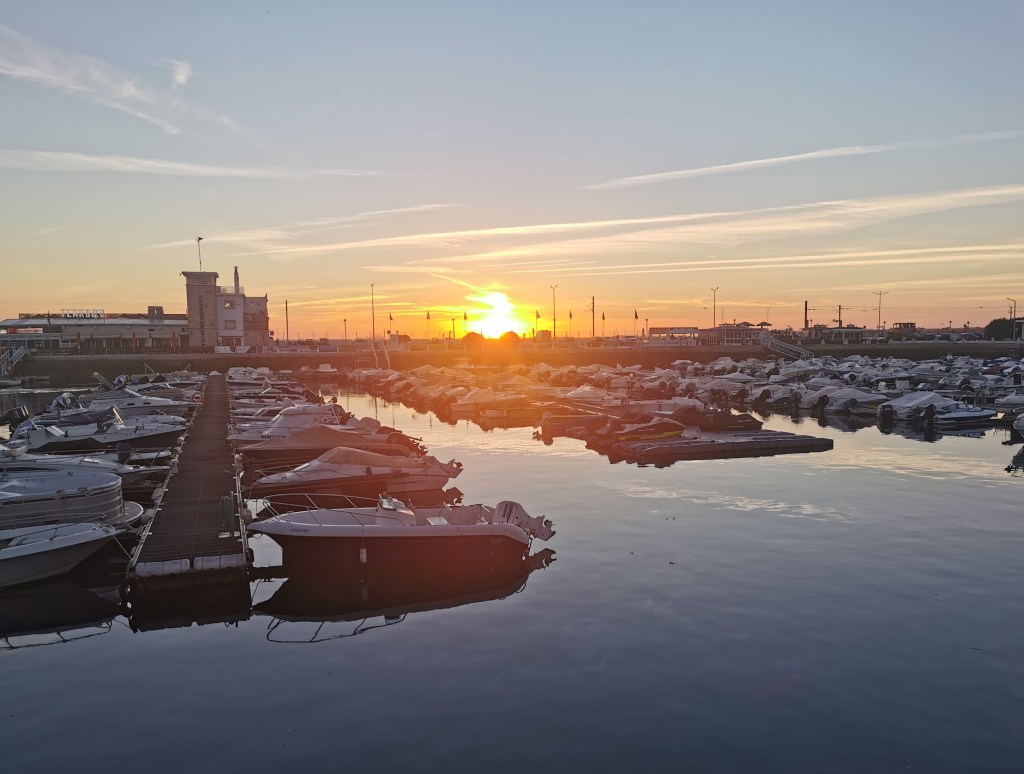
Faro stands on the Ria Formosa, not far from the sea and protected by the surrounding sandbanks, marshland and dunes. The centre of town surrounds a large marina. Alongside the marina are Praca Dom Francisco Gomes, the main square, and the extensive Jardim Manuel Biver gardens. This area of town is known as Baixa. To one side is the old town (Cidade Velha). Further back from the riverside are the modern areas of the town. The main hotels are in Baixa and this is where we were based.

The coach arrives at a dark bus station beneath a tall building, which is not very inviting. However it is only a few minutes walk to the centre of town, where we established ourselves in Bar Boheme, which became our local for the duration. Faro struck us as very much a working town rather than a resort. There are not many hotels or holiday apartments in the centre so we were surprised by the numbers of tourists and expat retirees– our guess is that most stay in nearby urbanisations, holiday complexes and resorts and come into town for shopping, eating and drinking
The tourist train
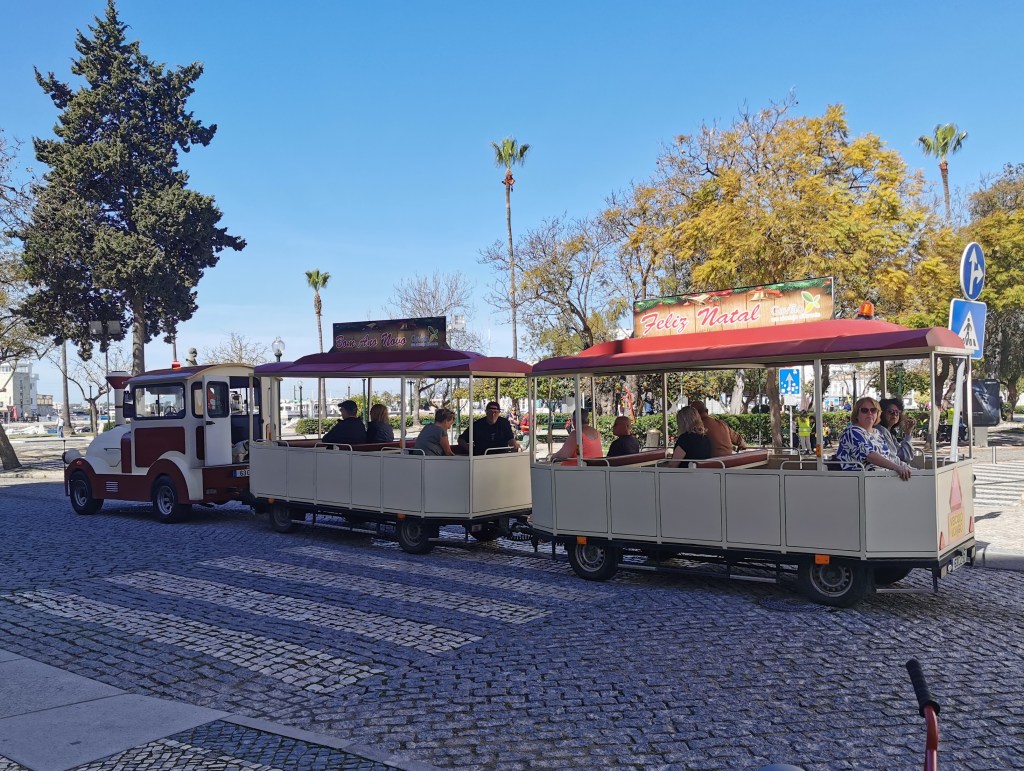
On our first full day we decided to take the road train for a trip around town to get our bearings. Apart from anything else it was cheap. We decided on a full circuit (about 50 mins) rather than hop-on hop-off, on the basis that everywhere we wished to see later would be within walking distance. It turned out to be a bizarre experience. It was incredibly noisy and bumpy as it crawled and jolted over the cobbles and it was virtually impossible to hear any of the commentary. We seemed to spend most of the time trundling round unexceptional back streets. While not to be recommended for anyone who may get travel sick or has a bad back, it is an experience and an introduction to the town.
Old town (Cidade Velha)

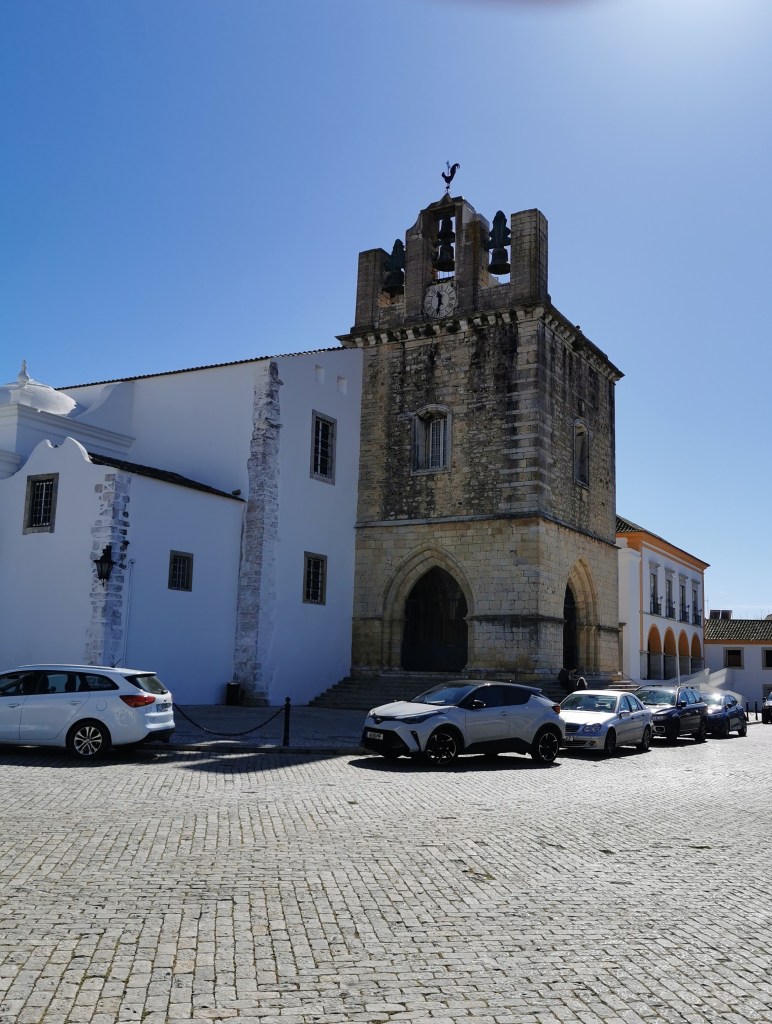
There is a small walled old town in Faro around the Sé (cathedral). From the map it looked as though it would be prominent, on a hill above the coast . We were surprised when we didn’t see it from the coach as we arrived. It turns out that the hill is only a few metres high and it wouldn’t have been the easiest place to defend. We saw part of it from the road train, though it didn’t pass by the cathedral – probably because one of the main gateways – the Arco de Vila (town arch) was closed by scaffolding. We returned to visit the area later – it is quite picturesque and there are several upmarket bars and restaurants which may be worth visiting.
The Carmo Church and the Chapel of Bones
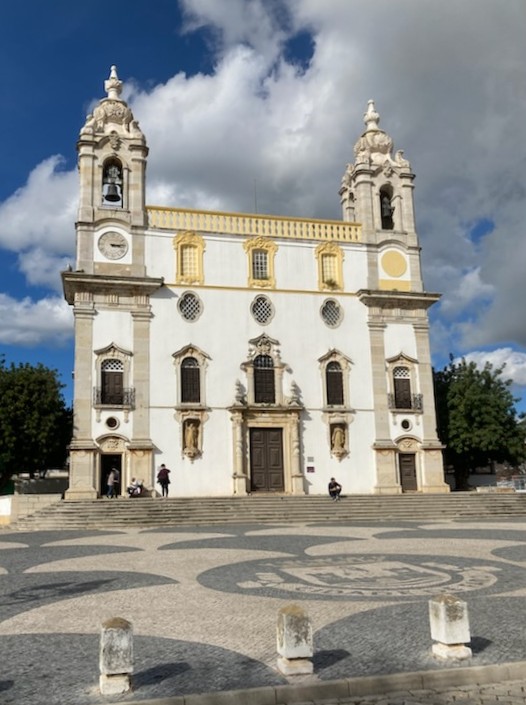

A highlight was our visit to the Igreja do Carmo (Carmo Church), which we had passed on the road train. It is only a few minutes walk from the town centre. The church itself is impressive and the altar is totally over the top – it must have cost a fortune to build while the bulk of the populace will have been living in abject poverty.

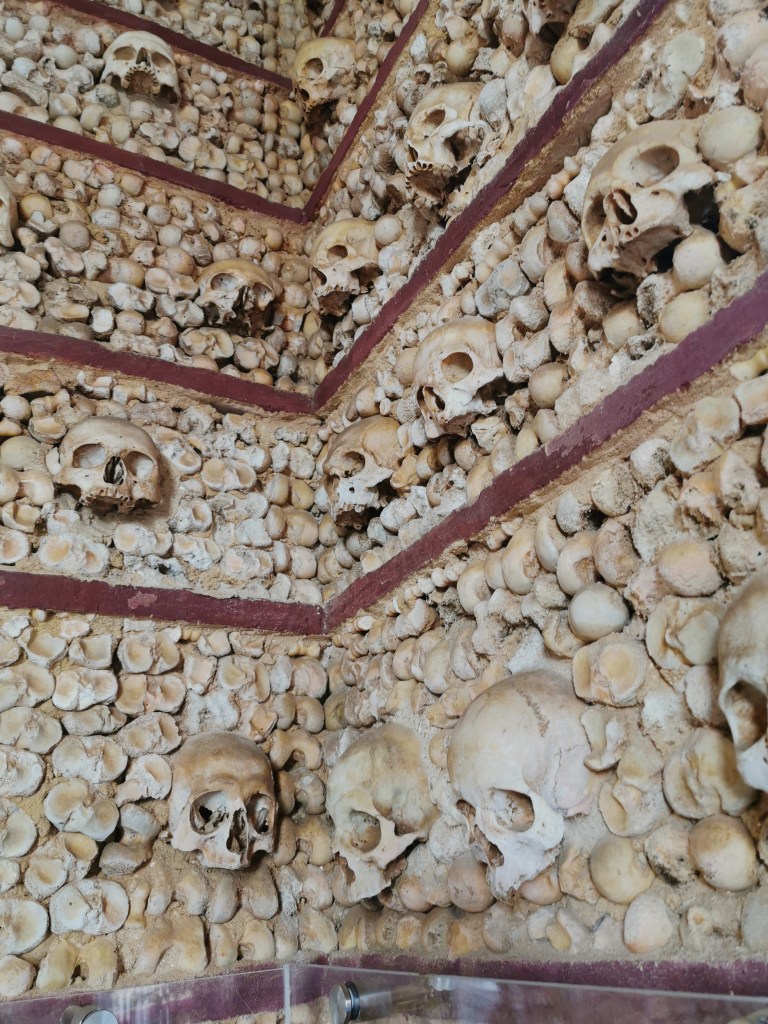
The main draw is the attached chapel of bones (Capela dos Ossos) – where the walls and ceiling are made from human bones, with skulls staring at you from every angle. A strange experience. It seems that they are the bodies of the monks from an adjacent cemetery, who ended up in the ossuary when they were disinterred due to lack of room in the cemetery.
Drinking and eating

As usual we spent much of our time sampling the beer and occasionally eating. We’ve already mentioned the Boheme Bar,a craft beer place with an excellent selection of beers. Nearby we also enjoyed and recommend the Ancora Bar. There are several Irish bars around and we liked the Irish Salt Bar because it is situated by a square ideal for people watching. Our standout meal was at the Namastey Indian restaurant. It was busy on a Tuesday evening, the curries were excellent and the menus included Goan specialities. As elsewhere in Portugal there are plenty of bakeries and cake shops in which to pass the time with a coffee before hitting the beer.

What we didn’t do,
Our time was limited so we only scratched the surface. There are plenty of restaurants that look interesting, with fish being a speciality. We picked up a free brochure in our hotel – Faro a mesa – which listed them. There is a nightlife area with plenty of bars and discoteques in a couple of narrow streets behind Bar Boheme – however it was early in the week and, besides, these days we would be in bed before these places get going.
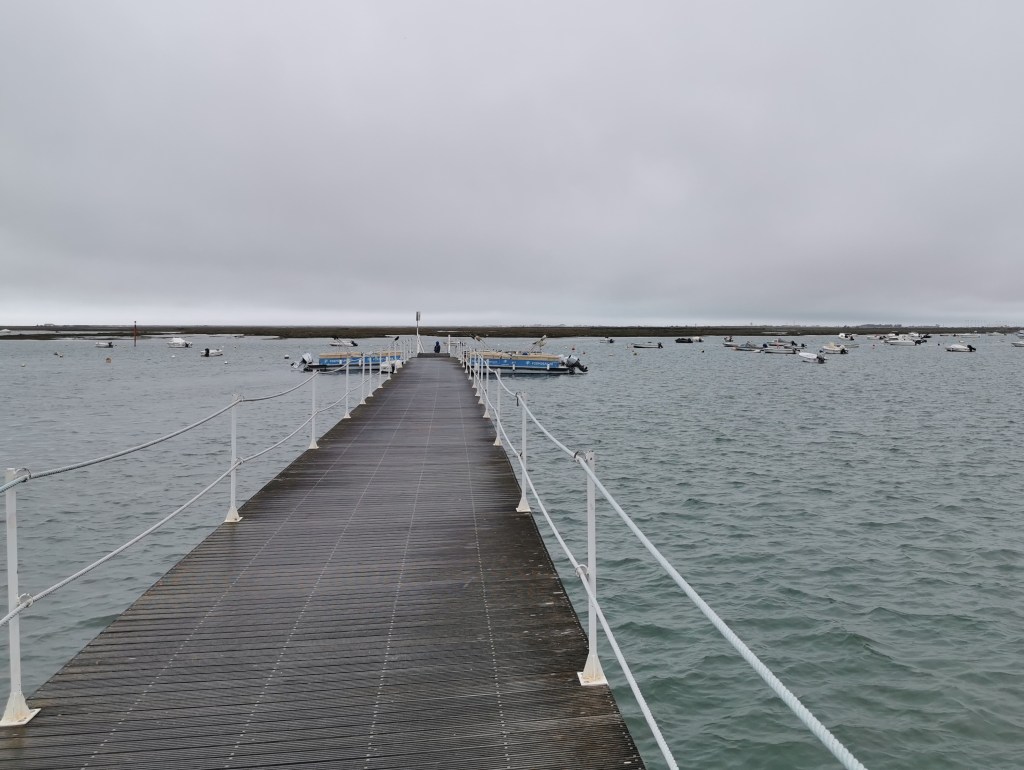
There is a local beach (Praia de Faro) by the seaside beyond the airport which can be reached by bus or by ferry from the quay beneath the old town,
The area of the river, lagoons and sandbanks is a natural park – the Parque Natural da Ria Formosa, and there are plenty of options for boat trips to spot the birds, fish and wildlife of the area, plus fishing trips.

Along the coast many of the settlements are modern resorts but to the east of Faro are Olhao and Tavira, both old fishing villages, accessible by both bus and train. From Olhao ferries run to the islands of Culatra and Armona, which, from the air as we took off from Faro airport, looked attractive. Colin and I visited Tavira in 1992 and I remember it as a picturesque small town.

Practicalities –
Getting there:
Most people will arrive at Faro airport. From there there are regular local buses into town – Proximo No.16. The coach service from Sevilla runs several times daily. For details of times and fares and booking tickets use the Alsa app or their website www.alsa.com’. There are five trains daily to Faro from Lisbon (journey time 3.5 hours), two of which commence from Porto (journey time 6 hours). For details see www.cp.pt/passageiros/en or the Comboios de Portugal app. There are regular coach services from across Portugal.

Getting around – Local buses are operated by Proximo http://www.proximo.pt . There are local train services along the coast to the west to Lagos (about 8 daily) and eastwards along the coast to Olhao, Tavira and Vila Real de Santo Antonio (about 12 daily). The line is being modernised and services are likely to improve.
The express bus station and the local bus station are adjacent to one another on Av. da República a few minutes walk from the town centre. The railway station is a little further along. The main taxi rank is at Praca Dom Francisco Gomes. Hotels can also book transfers to the airport.
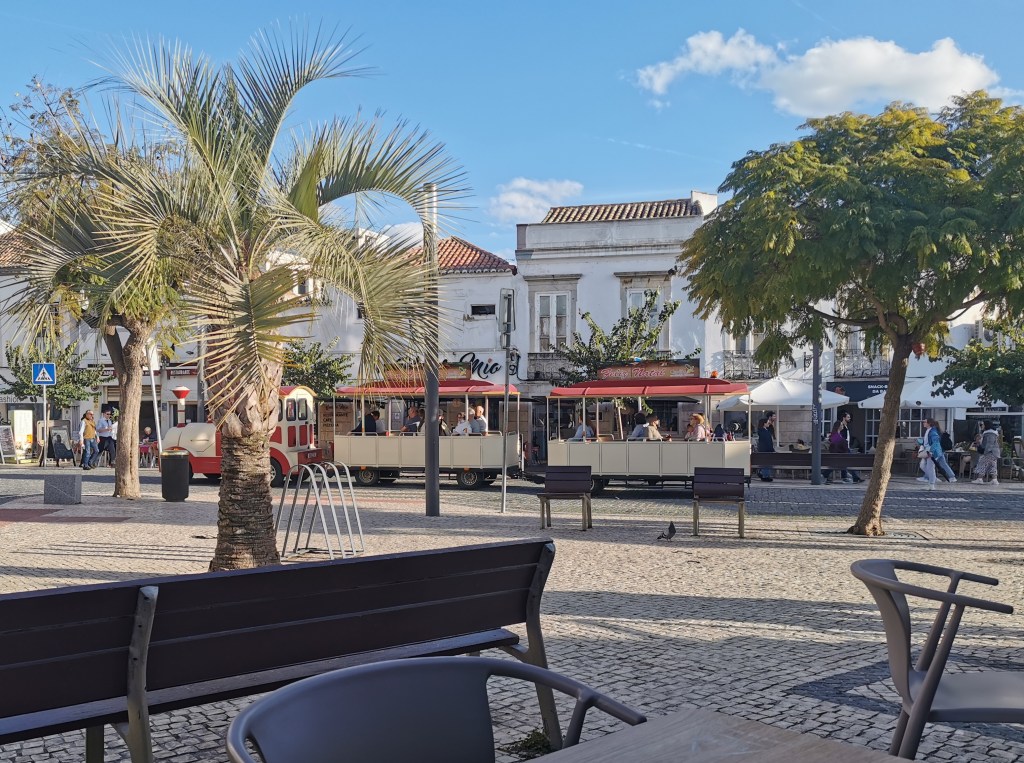
The tourist train: The Delgaturis Tourist train operates hourly on the hour from Jardim Manuel Bivar. The cost is €4 for one journey/ complete circiuit or €6 for a hop-on hop-off day ticket. Buy on boarding or on their site www.delgaturis.com/en/ .
Chapel of Bones: Pay on entry to the Carmo Church, Largo do Carmo 21. €2 (€1 children and elderly}. The opening hours are 1000 to 1300 Mon-Sat and 1500 – 1730 Mon to Fri.
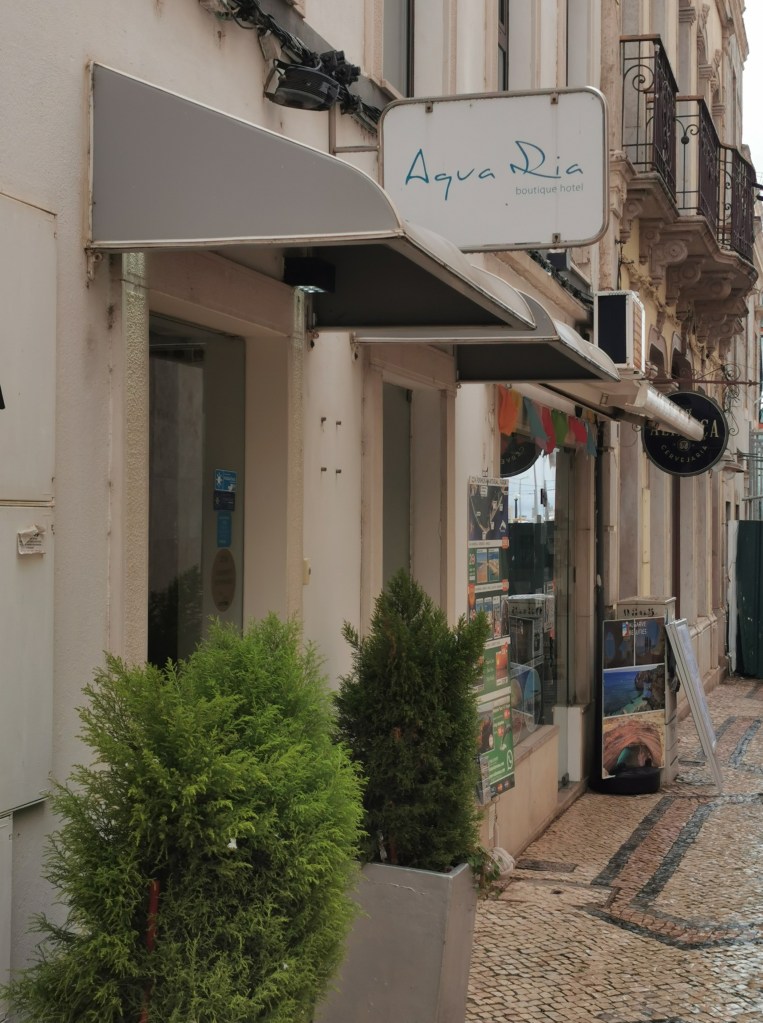
Our hotel :Our hotel was the Aqua Ria Boutique Hotel, Rua da Minha, 14, which is central, comfortable and inexpensive.
Bars and restaurants mentioned: Pub Ancora, R. 1⁰ de Maio, 11 ; Boheme Bar, R. Conselhero Bivar, 2; Irish Salt Bar, Tv. Das Flores, 18 ; Namastey Indian Restaurant, R. 1⁰ de Maio, 13.
The main shopping street is Rua de Santo Antonio. There is a modern municipal market hall at Largo Dr. Francisco Sa Carneiro.


Acknowledgements: Thanks to Ken Donald for coming up with idea, for his company, photos and reading the draft text.
Photographs: All photos are by Steve Gillon except for the outside view of the Carmo church and the inside of the Ancora Pub, which are by Ken Donald
Copyright: all text and photos (except for the two mentioned above) are Copyright ©, Steve Gillon, 2025.
Ted pretending to enjoy the road train.
 Go with Ted