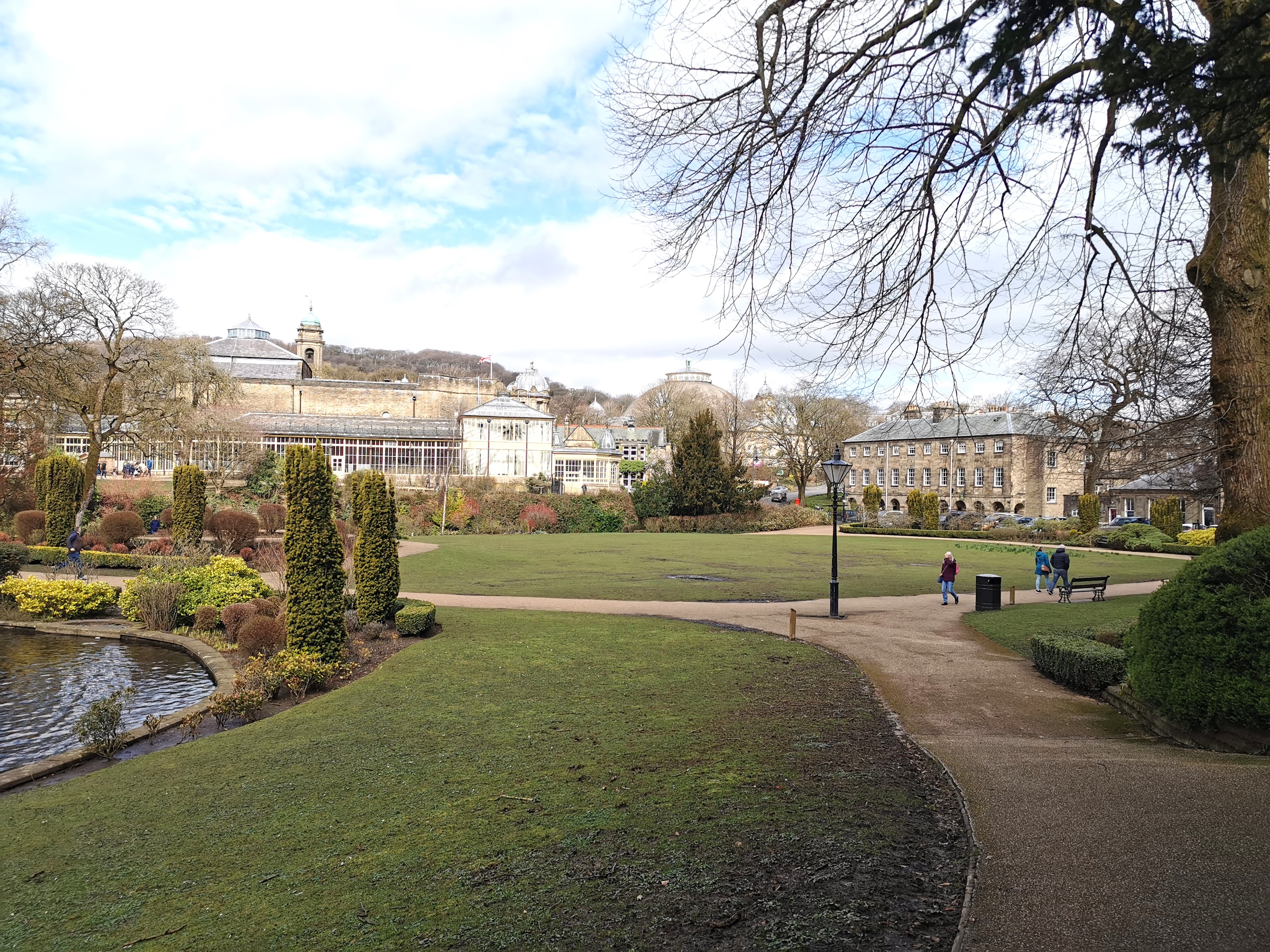
Pavilion Gardens, Buxton
In late March 2023 Ted and I and our friend Ken headed to Buxton in Derbyshire for a week to explore the Peak District area of Derbyshire. Back in the day that would have involved long walks to country pubs but Steve’s increasingly dodgy knees and hips restrict this. These days we catch the bus to the pub. This also contributed to the choice of Buxton – it appeared to be an attractive place but also had good links to the surrounding area. So we booked a cottage just off the market place in the centre of town and set off.
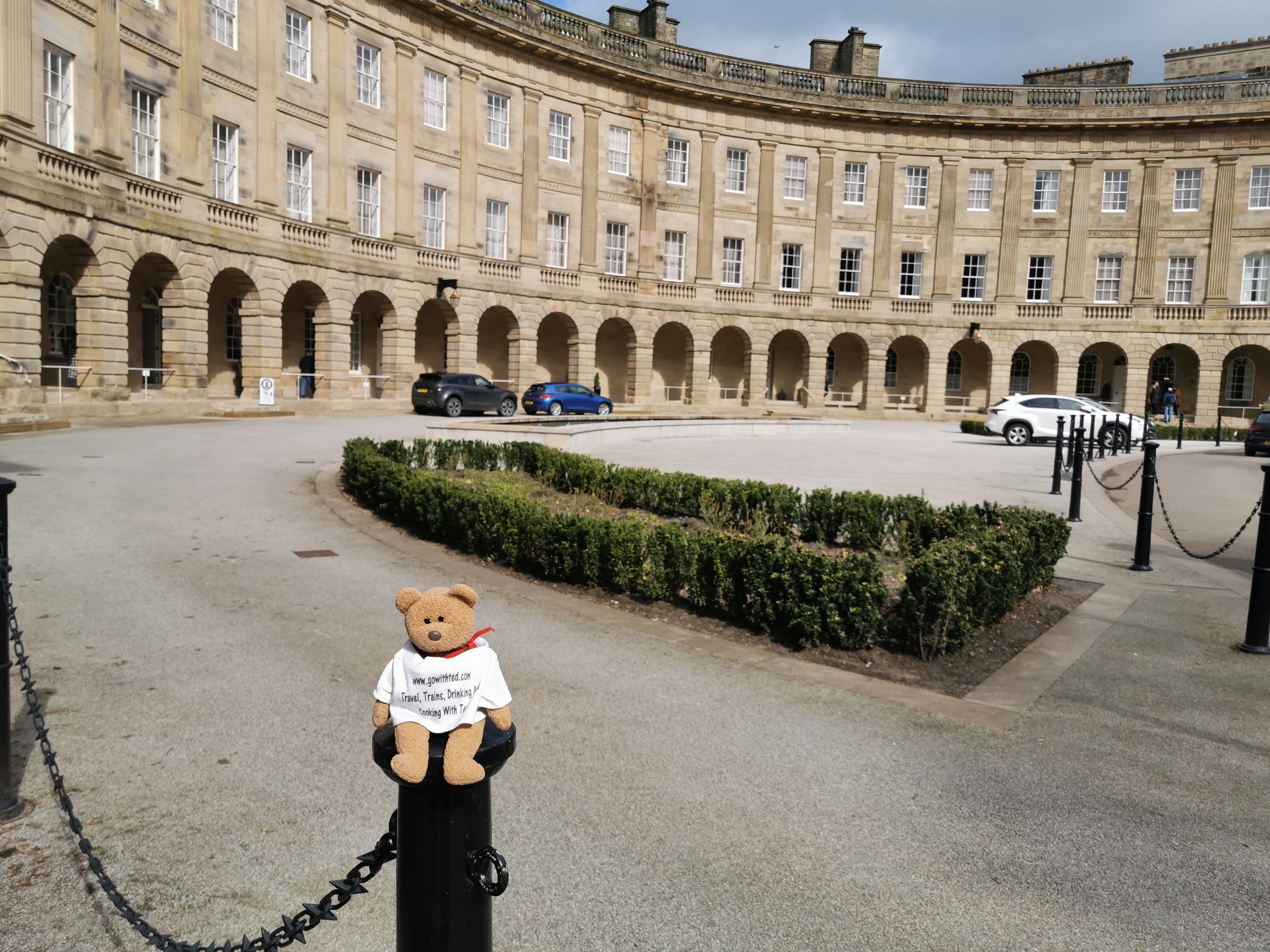
The Crescent, Buxton, guarded by Ted

These brief notes summarise our time there. Our main preoccupation (as usual) was going in search of decent beer and good pubs rather than the standard tourist sites. This was successful and several of those we visited will appear in the next edition of our UK pub guides ( Good UK Pubs 2023 ) . The area has much more besides pubs for those who are not as devoted to beer as we are. Much of the area is in the Peak District National Park and there are plenty of opportunities for walking or cycling along marked trails, visiting stately homes or the selection of caves and caverns in the limestone rock, both natural and man-made as a result of quarrying and mining.
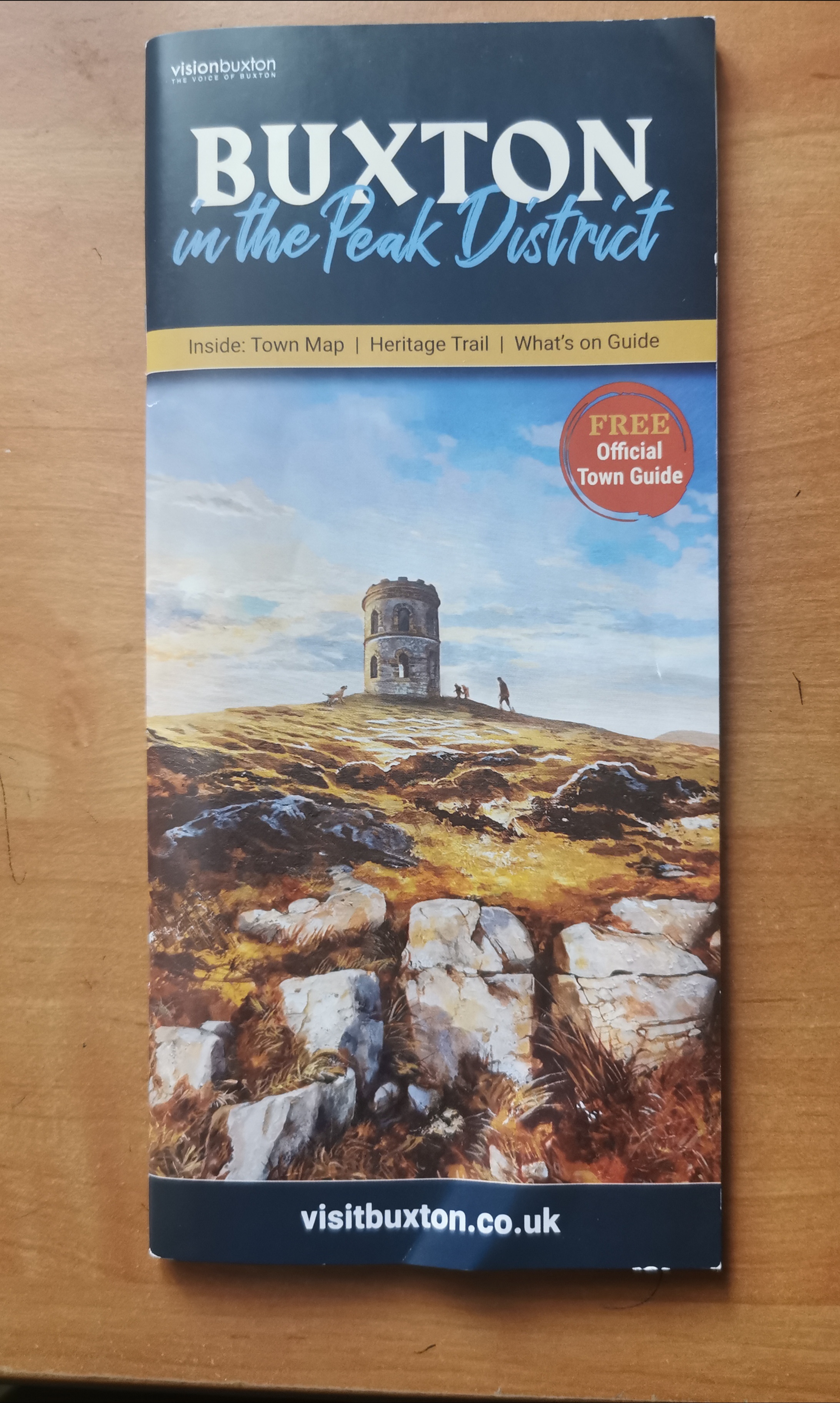
Durham to Buxton
Amazingly, the Trans Pennine Express train from Durham was running as planned (we had a Plan B ready in case, such is its current reputation) heading for Manchester. Due to work on the main line through Huddersfield, Standedge Tunnel and Stalybridge trains were being diverted via the Calder Valley Line via Sowerby Bridge, Todmorden and Rochdale, which added some interest to an otherwise routine journey. A slightly late arrival into Manchester Victoria led to a very quick dash across to Piccadilly by Metrolink tram and we just managed to catch the Buxton train.

We pootled through Stockport and the suburbs of Greater Manchester before eventually reaching open country, into Derbyshire and the Peak District and finally into Buxton. From the station it was an uphill slog to the Market Place and we eventually found our cottage – some inaccurate information had been provided and Steve hadn’t done his homework as thoroughly as usual. We spent a few minutes settling in then set out to explore.
Buxton


A few more views of Buxton….
Today Buxton has a population of 22000, is England’s highest market town and serves as a base for exploring the Peak District. It is best known as a spa town – the geothermal springs were discovered by the Romans, Mary Queen of Scots visited several times in the sixteenth century to take the waters, then further spa development in the eighteenth century became the basis of its tourist industry, reaching its height after he arrival of the railways in 1863. Visitors also used its coaching and carrier inns as Buxton was located on several turnpike roads including the main route between Manchester and London – which became the A6.


….and a few of its pubs
The town is in two parts – the lower part of town by the station and Higher Buxton around the Market Place. The lower town is where the grand spa buildings and hotels are located in attractive Georgian and Victorian buildings – the Square, the Crescent, the Quadrant, the Pump House, Opera House and the Pavilion Gardens. It also includes the main shopping street Spring Gardens (and a grotty shopping centre). The higher town has the Market Place, more traditional shopping, and the former coaching inns. While this all sounds rather grand Buxton is also an industrial centre – in particular limestone quarrying, mineral water bottling and service industries, providing employment for a substantial working class population.

Our exploration of the pubs in the area was guided as usual by the Good Beer Guide and www.whatpub.com , both produced by the Campaign for Real Ale (CAMRA). On arrival at Buxton station we discovered the Buxton Rail Ale Trail leaflet, which lists 19 pubs in central Buxton. In general, the more traditional pubs such as the Old Sun inn, King’s Head, Cheshire Cheese and New Inn are in Higher Buxton near the Market Place, together with the Ale Stop micropub. The lower town has become the focus for new bars and brewery taps including the Buxton Brewery Tap House and Red Willow. We were pleasantly surprised by the variety of beer on offer in Buxton.
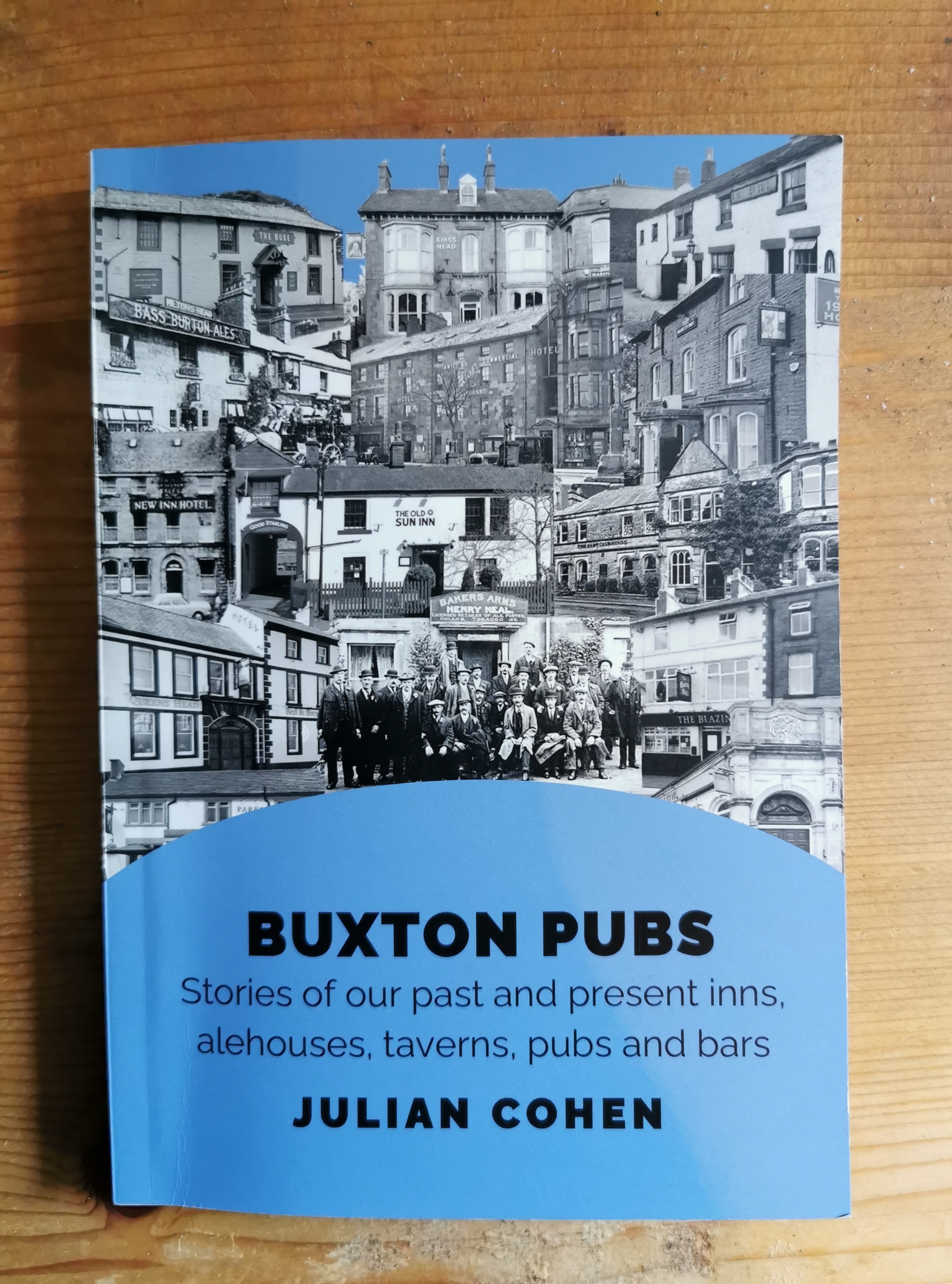
Later in the week we discovered and bought a book, Buxton Pubs, which proved to be a worthwhile read. It reveals that there has been considerable recent change, here as elsewhere. When published in 2022 there were 32 pubs in the town and nearby, though 12 others have closed since 2000. The book includes all sorts of stories of local characters on both sides of the bar and confirms that Buxton was not just a posh town with characterless pubs-cum-restaurants.
Buxton also features a selection of interesting shop names (pictured – though actually one of them is in nearby Whaley Bridge) which suggest other interesting goings-on in the town (though it turns out that Mycock is a common local name).


During our week in Buxton we managed five excursions into the surrounding area. Our first jaunt was to the villages of Litton and Tideswell. The bus route follows the A6 along the limestone valleys following the river Wye through Ashwood Dale. In the space of a few miles we are crossed four times by the railway line leading to the out of sight but enormous Tunstead Quarry. This is part of the old line between Manchester and Derby, much of which is now a well-known walking route, the Monsal Trail. The bus continued through Millers Dale and thence to Litton, where the Red Lion (pictured below) is a fine unspoilt eighteenth century pub.


On a fine afternoon we walked from Litton to Tideswell via Four Lane Ends, ending in another traditional pub the Horse and Jockey (pictured below, outside and inside), bringing back memories of country walks we used to do when Steve’s knees did as they were told. The pubs were busy with hikers and local folk enjoying their Saturday afternoon.


Macclesfield is over the border in Cheshire but only 11 miles from Buxton. It was an enjoyable trip despite the vagaries of the bus service – unreliable here as elsewhere due to a driver shortage and exacerbated by incorrect information on the company’s website. Once we got going it was an interesting journey – the road heads straight over the hills with expansive views and the bends and hills give it a reputation of being a dangerous road. En route we passed the Cat and Fiddle, a pub until 2015, now a whisky distillery – it was the second highest pub in England after the Tan Hill Inn in County Durham.


Macclesfield – the Waters Green Tavern and Church Street (above) and The Castle (below)
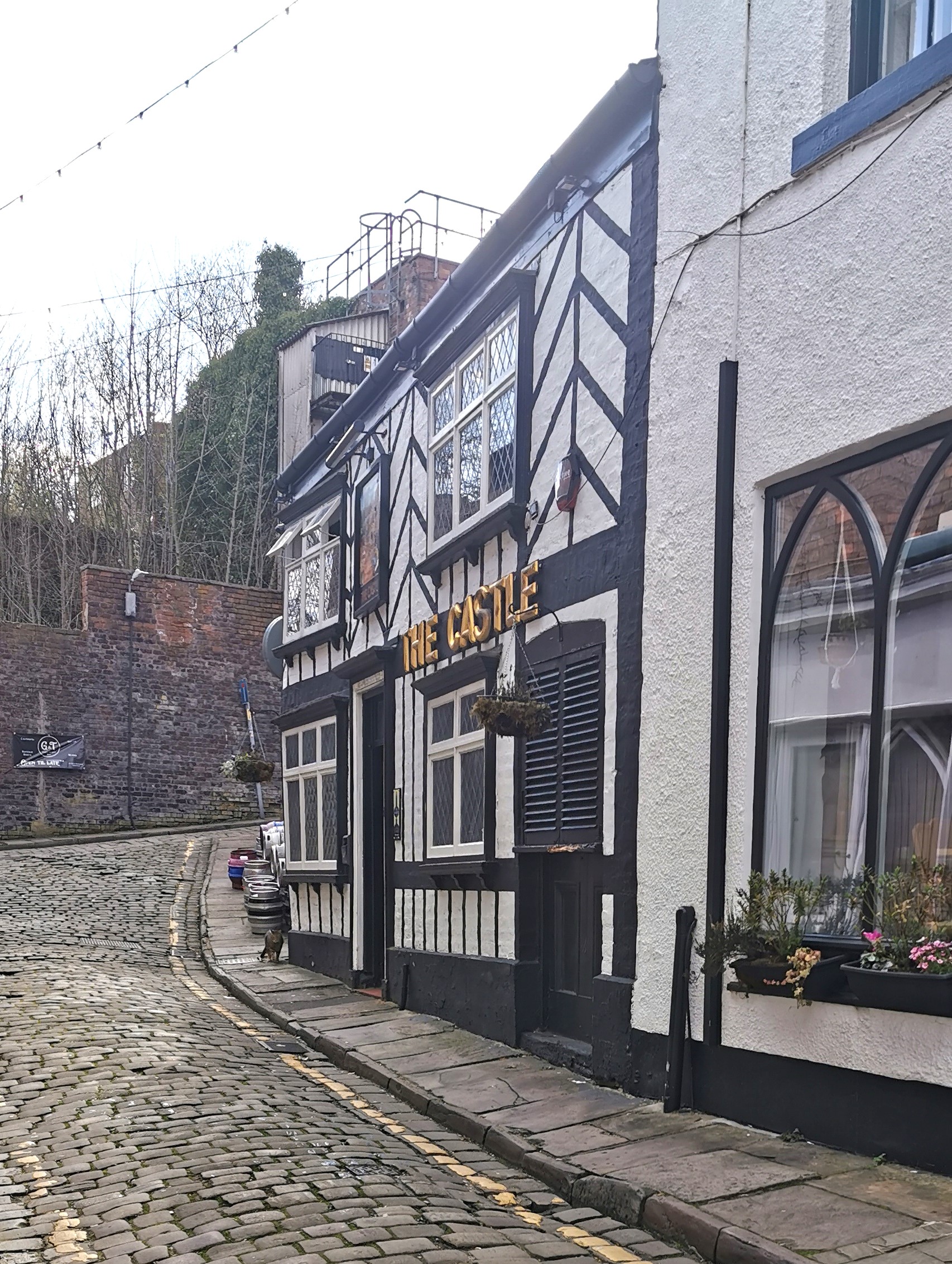
Macclesfield is a substantial town which grew up as a centre for silk manufacturing with 71 mills in the nineteenth century and today a centre for the pharmaceutical industry. However, the main shopping area was strangely quiet on what should be a fairly busy afternoon – it looks as though the traditional town centre is suffering (no doubt there’s a shopping centre which we managed to avoid). The older parts of town are attractive though. The highlight was our visit to the Castle in cobbled Church Street – an eighteenth century pub recently reopened after a long closure and recognised by CAMRA as having a nationally important historic pub interior. We also called in at the Waters Green Tavern, another traditional pub – so traditional it still closes for a couple of hours in the afternoon – and worth a visit. We left to return to Buxton just after 1700, when the bus station was as deserted as the shopping streets.

The weather deteriorated during the week and our visit to Bakewell was in heavy rain. The bus travels via the quarrying village of Harpur Hill, Taddington then along another stretch of the River Wye. After calling at the village of Ashford in the Water it arrives in the market town of Bakewell. It is obviously a tourist honeypot – it is an attractive town in its own right and the well-known stately home Chatsworth House is nearby. We had a wander around, ignored the temptation of a Bakewell tart or Bakewell pudding (two separate things we are informed) then had a couple of pints to shelter from the rain. The Joiners Arms was the best of the pubs we tried – a fine micropub playing some excellent music when we called in.


A wet day in Bakewell and one of several ‘original’ tart shops
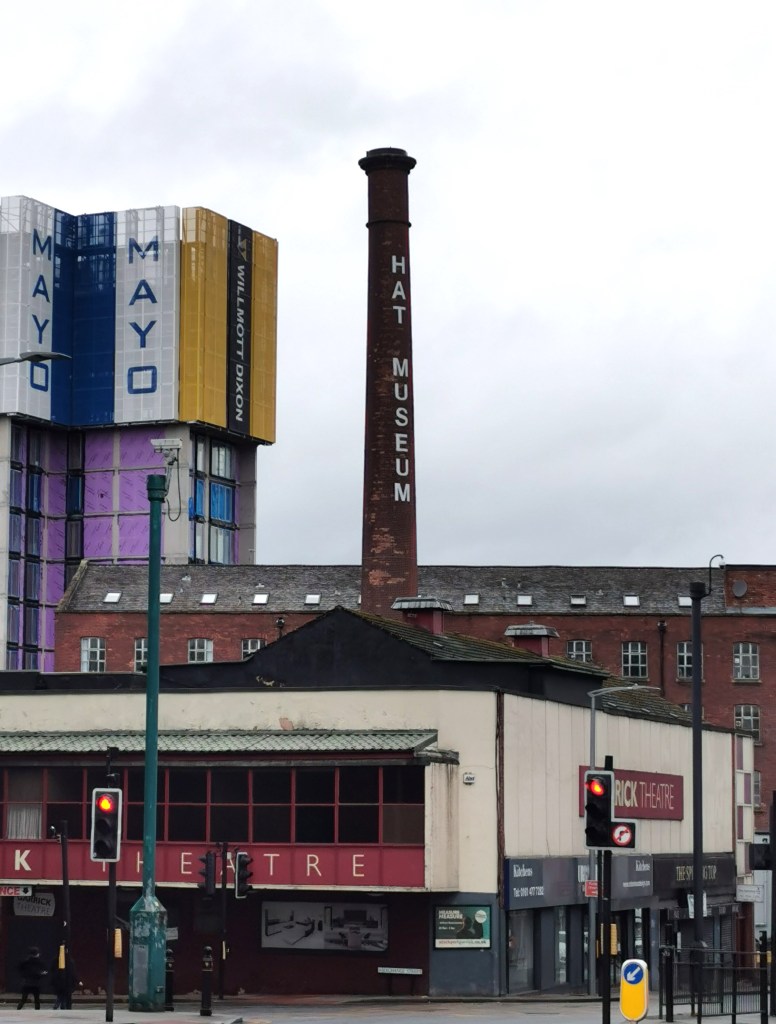
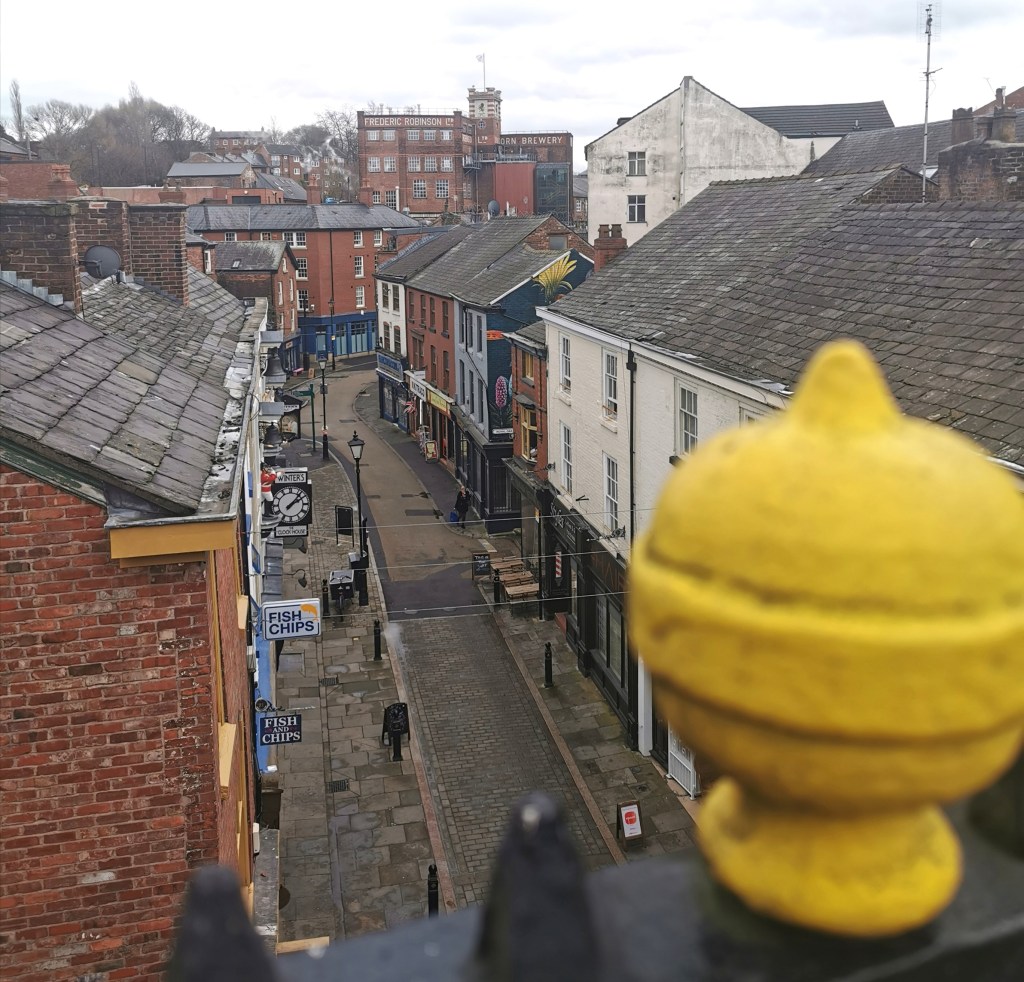
The sights of Stockport…..
We had been advised to visit Stockport (Greater Manchester) for its pubs so we caught the train and retraced our route towards Manchester. It was a significant industrial centre, based on cotton mills and, of all things, making hats, an industry which survived until 1997. The area around the station is pretty hideous (apart from the impressive railway viaduct over the Mersey). The rivers Goyt and Tame meet in the city centre to form the Mersey, though most of its first mile is in a culvert underneath the grim Merseyway shopping centre. It is not all bad – the older parts of town are being carefully regenerated particularly around the Market Place, which coincidentally is where the best pubs are to be found.


…and a couple of its pubs
The highlight of our visit was the Arden Arms, a listed building where we sat in a little hidden snug which you had to go through the bar to enter. The Baker’s Vaults is in a fine building, thoughtfully refurbished and the Petersgate Tap is a modern micropub in a former betting shop – it had just won the local CAMRA Pub of the Year award.

New Mills town centre (above) and a strange piece of machinery in the Masons Arms (below)
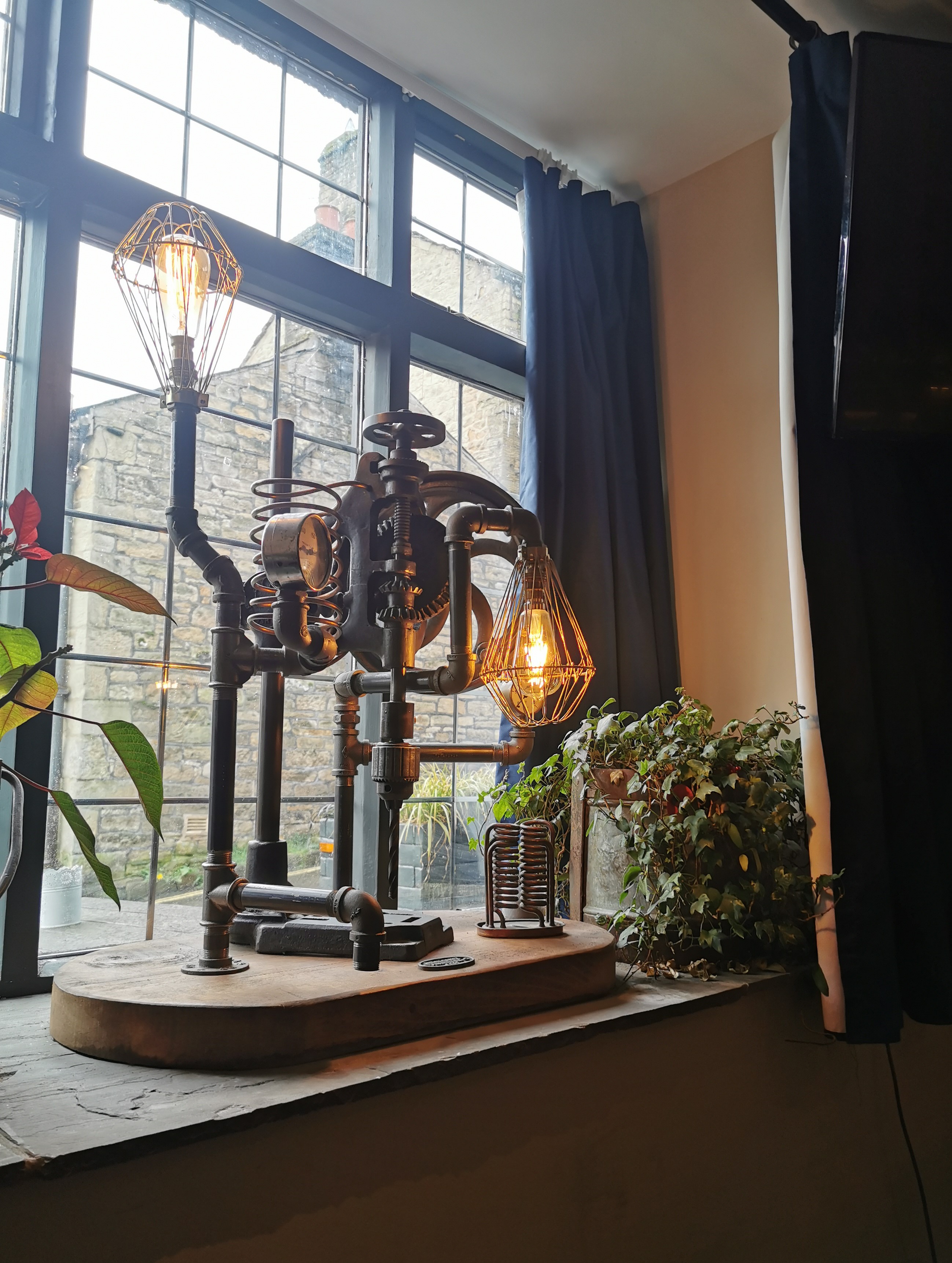
A final day out by bus took us to New Mills. The road heads over the hills from Buxton to the Goyt Valley and Whaley Bridge. A diversion took us through Chapel en le Frith which bills itself as the capital of the Peak – apparently its famous for producing brake linings. New Mills is a small town with two railway stations and three railway lines passing through, built round the Torrs, a deep gorge. It was formerly a mill town and is now known for producing childrens sweets. The Masons Arms was the best of the pubs we visited before we caught the bus back to Whaley Bridge, past a closed pub called the Soldier Dick – we wondered what went on there late at night. Whaley Bridge is a former coal mining and cotton mill town attractively set out around the Peak Forest Canal basins. It achieved fame recently – evacuated in 2019 when a storm-damaged local reservoir threatened to flood the town. We spent some time in the Shepherds Arms (always a good idea if you can find an amenable shepherd) – a traditional pub with the appearance of a farmhouse.

Information
Getting There
The easiest way to reach Buxton is by train from Manchester Piccadilly via Stockport. It is not the fastest service on the planet – it takes just over an hour to travel the 25.5 miles. Trains run hourly every day with some extras at rush ours and the journey is a pleasant introduction to the area. At the time of our visit cheap advance fares were available up to 5 minutes before departure from the Northern Trains app or station ticket machines. For the full timetable see www.networkrail.co.uk/running-the-railway/the-timetable/electronic-national-rail-timetable/ and download timetable 095.There are direct though slow buses from Derby, Sheffield, Manchester Airport and Stockport.
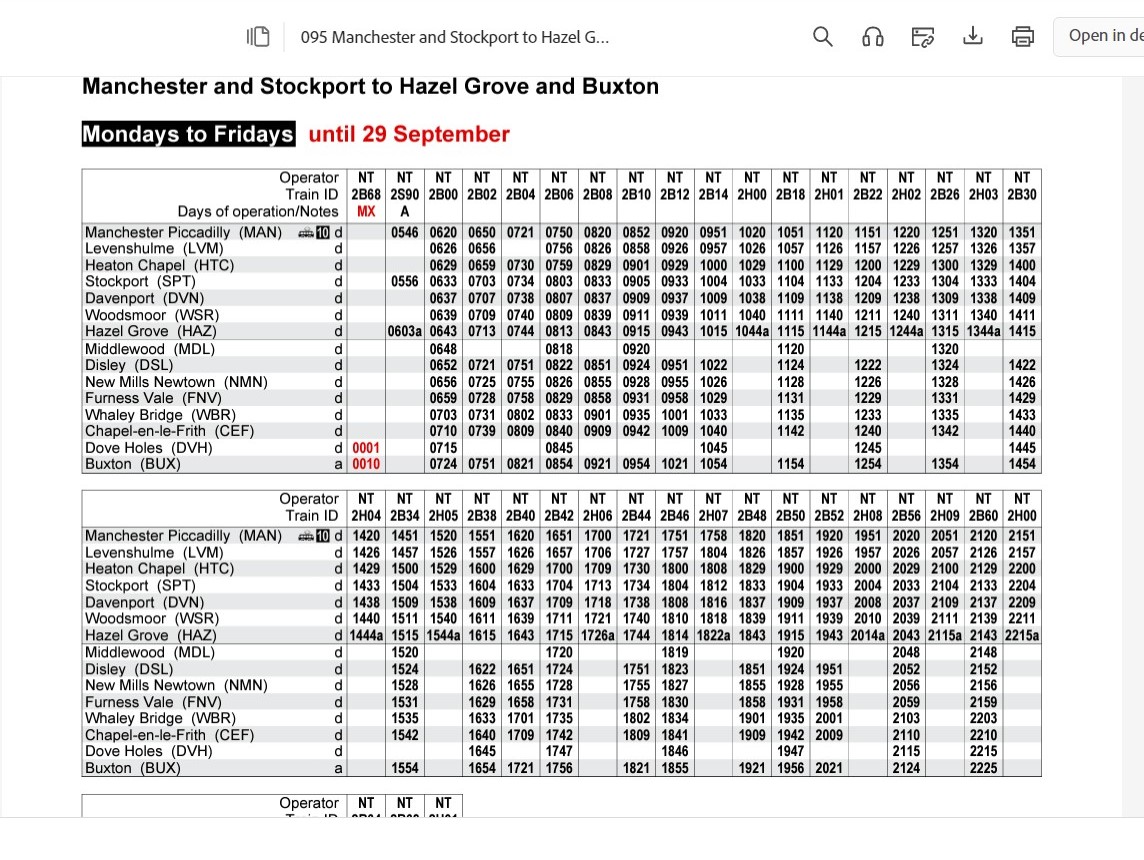
An excerpt from Table 095, summer 2023
Information, shopping, eating and accommodation
Tourist information plus maps, walking and cycling guides and gifts are available at Buxton Visitor Centre in the Pump Room, The Crescent, SK17 6BH. A selection of free leaflets is available at the railway station. In Bakewell the Visitor Centre in the Old Market Hall, Bridge street, DE45 1DS is similar and is the main information centre for the Peak District National Park. Useful websites are www.explorebuxton.co.uk , http://www.visitbuxton.co.uk , www.visitpeakdistrict.com and www.peakdistrict.gov.uk .
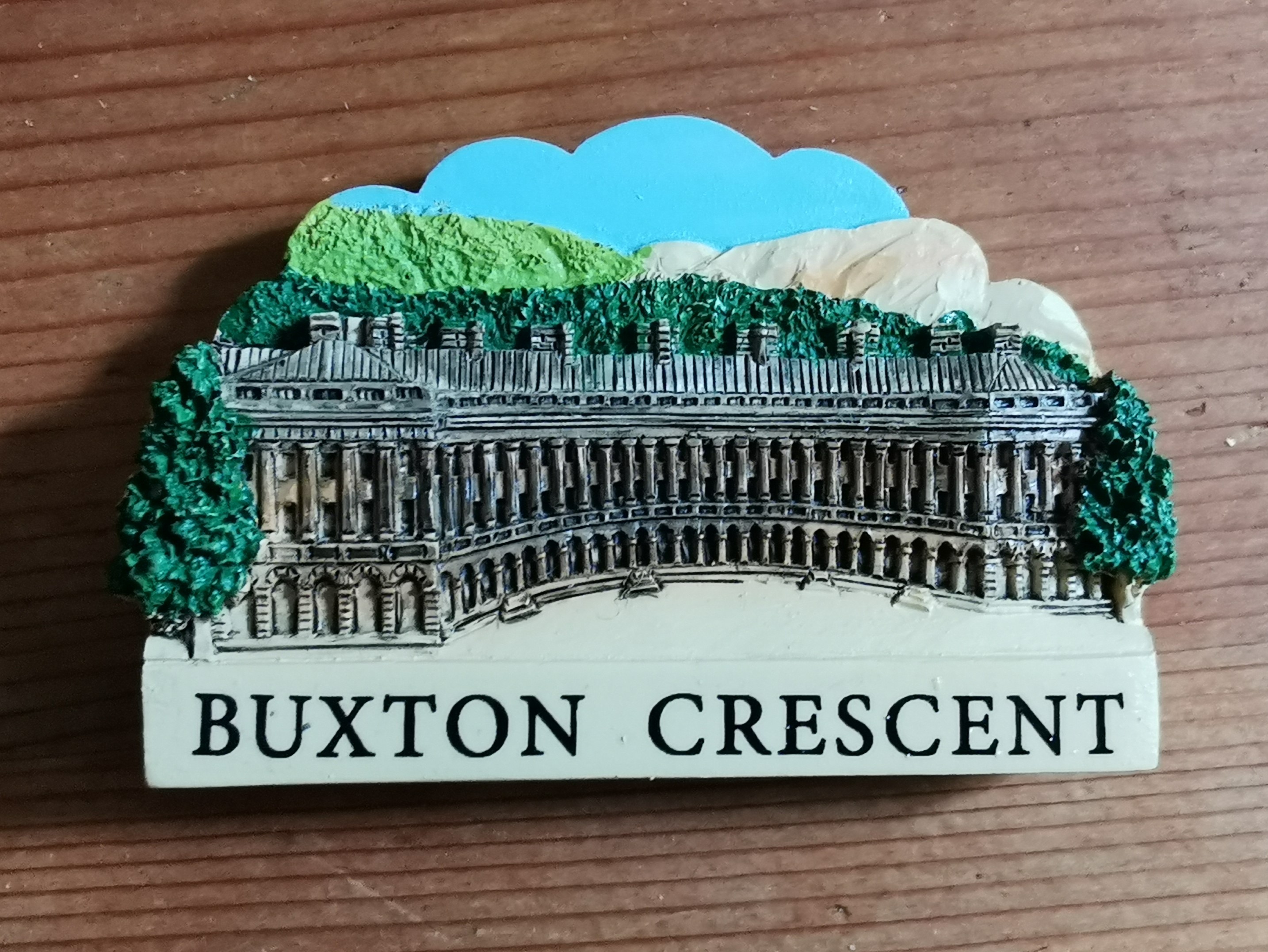
Buxton is large enough to have all the facilities you may require. The shops include small Sainsburys and Morrisons in the town centre, plenty of places selling hiking and walking gear and, should they take your fancy, a plethora of alternative therapy shops. There is the usual selection of restaurants and takeaways and pubs selling meals – we were particularly happy with the Khomkhai Thai, 9 Market St. The market place chip shop was OK but closes at 1900.
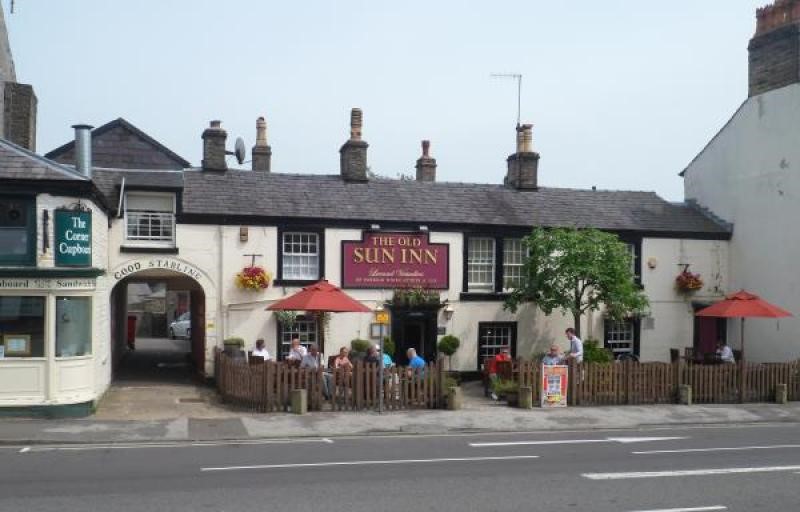
The Old Sun Inn, Buxton
There is a full range of hotels. We rented a cottage, Botu House ,via Sykes Cottages www.sykescottages.co.uk which was reasonably priced and the very central location was a bonus for anyone without their own transport. Other agencies also have cottages in and around the town.
Getting around
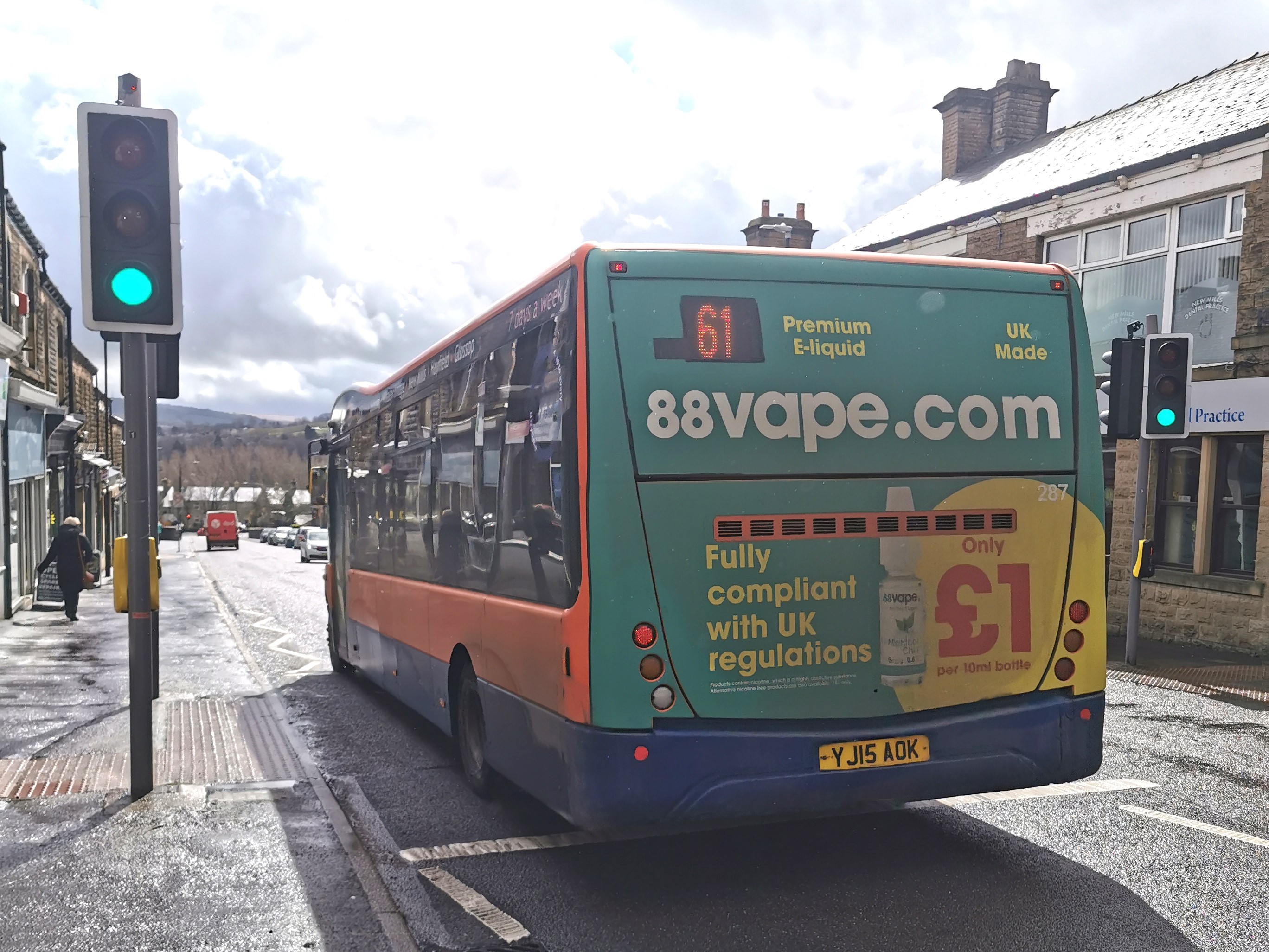
We chose Buxton because of the reasonable bus links. They aren’t always on time, occasionally don’t turn up, evening services are virtually non-existent and Sunday services are few and far between, but we only had one problematic journey out of eight. Derbyshire County Council provides comprehensive bus timetables at www.derbysbus.info . Check the bus map on the site for the route number you require. Most services are operated by High Peak Buses www.highpeakbuses.com . Buses to Litton, Tideswell and on to Sheffield (no 65/65A) run 5 times daily (3 on Sundays) – this service is operated by Stagecoach. To Macclesfield the No. 58 runs hourly (5 journeys on Sundays).

The Castle Inn, Bakewell
To Bakewell the TransPeak (TP) service is hourly (5 on Sundays), and the service continues to Matlock. New Mills is reached by the No. 60, about every 2 hours. Whaley Bridge can be reached by train or by bus 119, every 30 mins Mon-Sat daytimes and hourly evenings and Sundays. The trains and 119 also serve New Mills Newtown, a bit of a walk from New Mills town centre. There are also services to Ashbourne (441-442 – 7daily Mon-Sat) which takes 75 mins, so bladder control is necessary for those who like a pint. The scenic Hope Valley and its villages are not far away but require a change of bus or train and careful planning.

Acknowledgements
Thanks to Ken Donald for his company on the journey. Thanks also to Mike Davenport for his guide to pubs in Stockport. The Buxton Rail Ale Trail leaflet is produced by the Friend s of Buxton Station (2022). The Buxton Pubs book is by Julian Cohen and published by Buxton Civic Association, 2022.
Photographs
All photographs are by Steve Gillon except for the following: The train at Buxton station is from Wikipedia, the New Inn, Buxton is by Ken Donald, the Old Sun Inn is from whatpub.com and the picture above of the three travellers is by Ken Donald.
Copyright
The text and all photographs except for those listed above are (c) Copyright Steve Gillon, 2023
 Go with Ted