In early 2020 we planned to return from our home in Benalmádena, Spain to the UK by train. Everything was booked when Covid 19 appeared on the scene and the trip was cancelled. We travelled back by train in 2023 via a different route.(see Spain to UK by train 2023). Finally, in July 2024 Ted, I and our friend Ken, returned via the original planned route and this is the account.


Zaragoza
Our first stop was Zaragoza, reached by direct train from Málaga. We had been before but Ken hadn’t, so it was a chance to show him around. For our previous visits to Zaragoza see Zaragoza and Tarragona. We checked in to our hotel, with fine views of the Basilica and the Plaza del Pilar square (pictured), then spent a pleasant evening wandering around the Casco Viejo (old town) having a few beers and tapas along the way. Following some more sightseeing in the morning we set off for the station to catch our high-speed AVE train to Barcelona, fortunately travelling in the opposite direction to the crowds of lads heading for the Running of the Bulls in Pamplona.

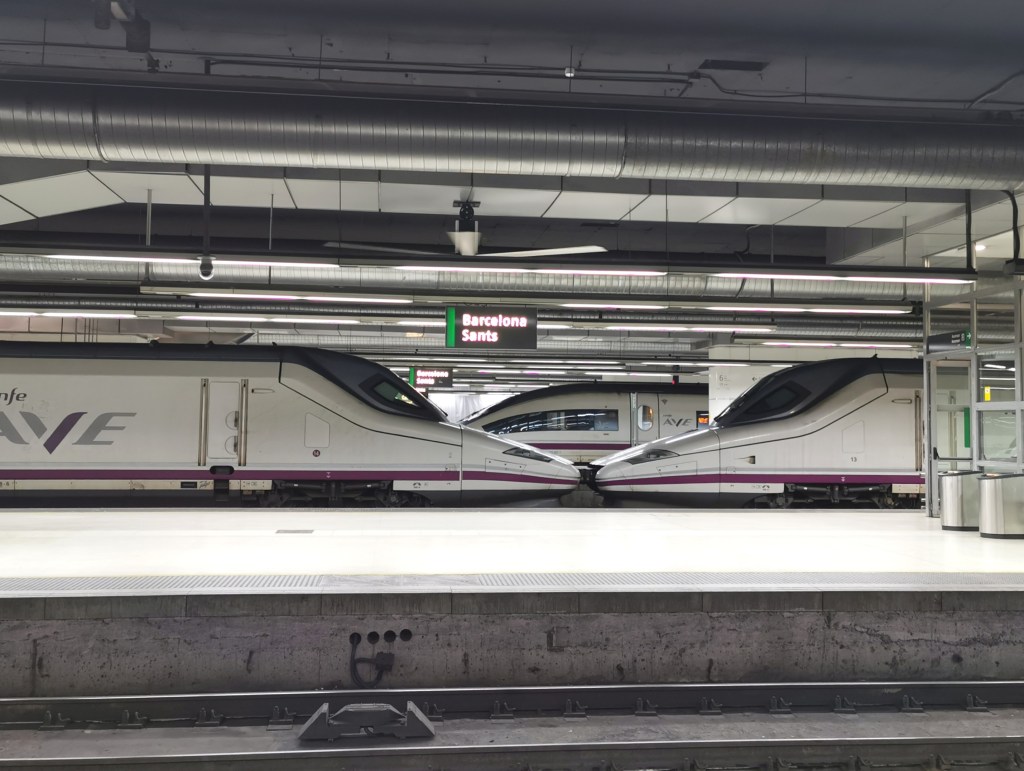
It took about 1 hour 45 minutes to reach Barcelona calling at Lleida (which we visited on our previous trip to Zaragoza) and Camp de Tarragona. It is not as scenic a route as the slow one via Caspe (which takes 4 hours to reach Tarragona), though the countryside is pleasant, particularly once the line leaves the valley of the Rio Ebro and passes through a range of hills to reach the coast. For Lleida and Tarragona see Zaragoza and Tarragona .

Barcelona and Vall de Nuria
On arrival at Barcelona Sants we found our way out of the huge station, got our bearings, and reached our hotel. We’ve been to Barcelona several times before and visited the main tourist sights. On this occasion we were using Barcelona as a base for Ted and I to take a day trip to the Pyrenees and we decided to spend our two evenings exploring the local area.
It transpires that Sants, the district, to the south of the station, is worth a visit, particularly as it is not on the usual tourist itinerary. To reach the area, the most convenient metro station is Plaça de Sants. Walking through the back streets we reached a little square, Plaça d’Osca, surrounded by bars and restaurants and lively both afternoon and evening. On the square we spent time at a craft beer place, Homo Sibaris, watching a kids’ party outside and trying some fine beers.


Nearby, on Carrer del Guadiana was Craft Beer ArteSants, with friendly staff and over 20 taps of beer. Finally, on the main road, Carrer de Sants, is Sants Beer, which has a varied tapas and meals menu all day. All are worth a visit if you are in the area.

At 0830 on a Sunday morning (the next train wasn’t until 1130) Ted and I set off towards the Pyrenees. Though branded a suburban train – the line is Rodalies R3 – the destination was La Tour de Carol, just over the French border. We were travelling to Ribes de Freser, almost three hours away. We expected a peaceful journey but at the first, city centre, station, Pl. Catalunya, the train became packed with jolly walkers off for a day in the mountains. To be fair it was ideal walking weather – sunny spells and not uncomfortably hot – the people were friendly and chatty but we spent the journey squashed into our seat.
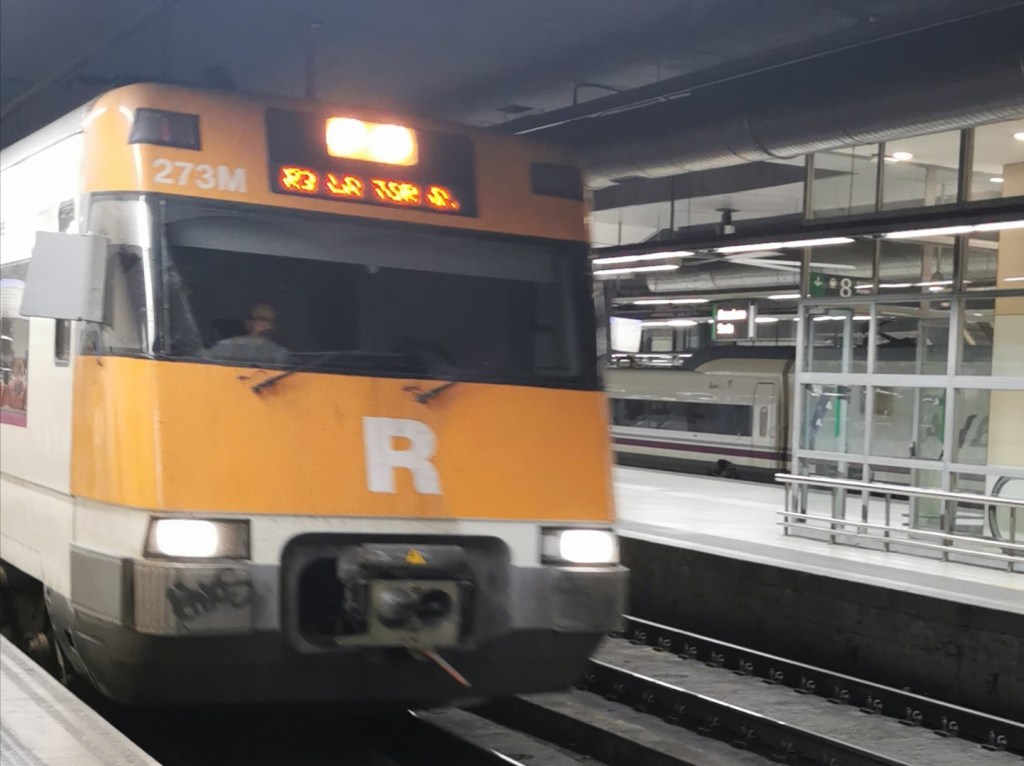
After tunnelling under the city centre the train travels through endless suburbs. Several station platforms had crowds of African guys heading into the city to sell their wares on the beaches – presumably hostel or apartment rentals are much cheaper out in the suburbs. On the edge of the city the line becomes single track which slows down the busy service, There is a clear need for investment in the line and some signs of improvement work taking place.

Beyond the town of Granollers the first range of hills begins and the line passes through a gorge to reach the plain around the town of Vic. We then reached the Pyrenees proper and headed onward through Ripoli to reach our stop at Ribes de Freser. Fortunately, the walking groups left us at the previous station and only a few people alighted at Ribes to transfer to La Cremallera de Nuria.


The Cremallera (‘the zipper’) is a 12km long rack railway which climbs from Ribes into the mountains to Vall de Núria, which is surrounded by peaks almost 3000m high. The journey is scenic as the line climbs above Ribes, through a gorge, and into the mountains. For more about the Cremallera see Rail and Tram Buffery 1.

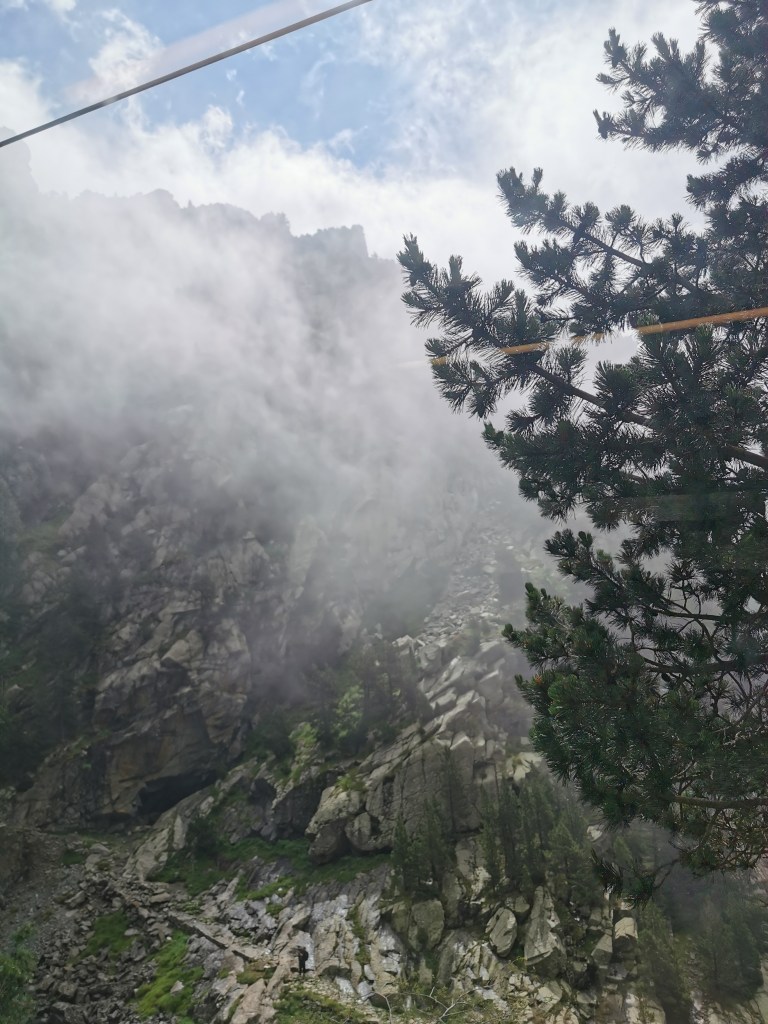
Views from La Cremallera as it climbs
Vall de Núria is now a leisure area but was established as a sanctuary and monastery. There is a gondola to take people up the mountain but the area was in cloud, so we satisfied ourselves with buying some tat and a beer and sandwich in the picnic area. Our return journey to Barcelona was much more comfortable – the walkers were still somewhere in the hills.


Vall de Nuria


Onward to France – Collioure
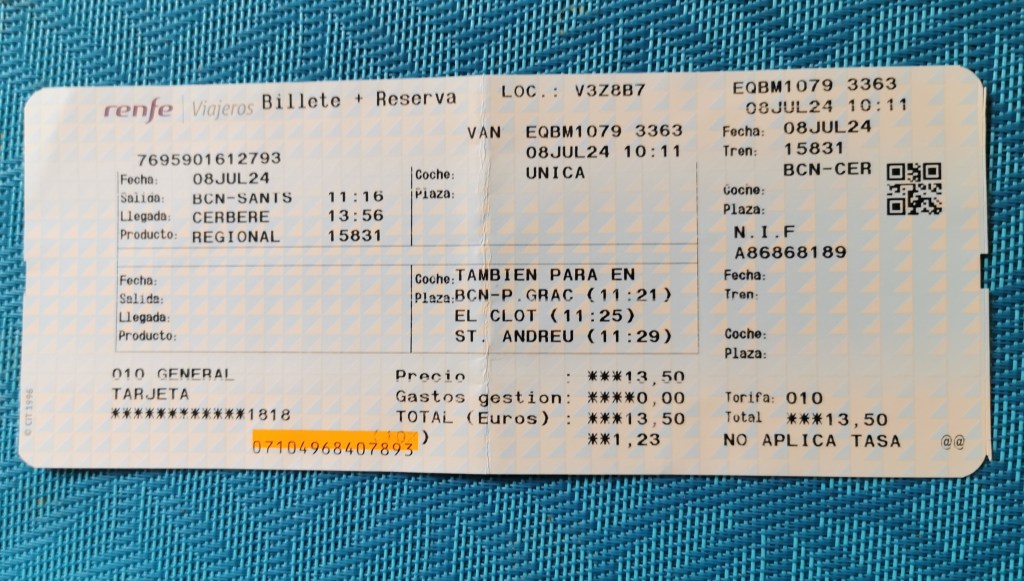
The following day the three of us set off for France. Once again we caught a suburban train, which called at many local stations along the way. There is a high-speed line to Girona, Figueres and onwards to Perpignan, but on the old line you see much more of the area you are passing through. Once away from the city there are good views of the countryside and coast. After Girona the train calls at every field but it gets to France eventually. The train calls at Port Bou, the Spanish border station, then crosses the border to Cerbére where it terminates. Both border stations are large with adjacent freight yards, due to the former need for customs facilities and the necessity for international trains to change gauge.


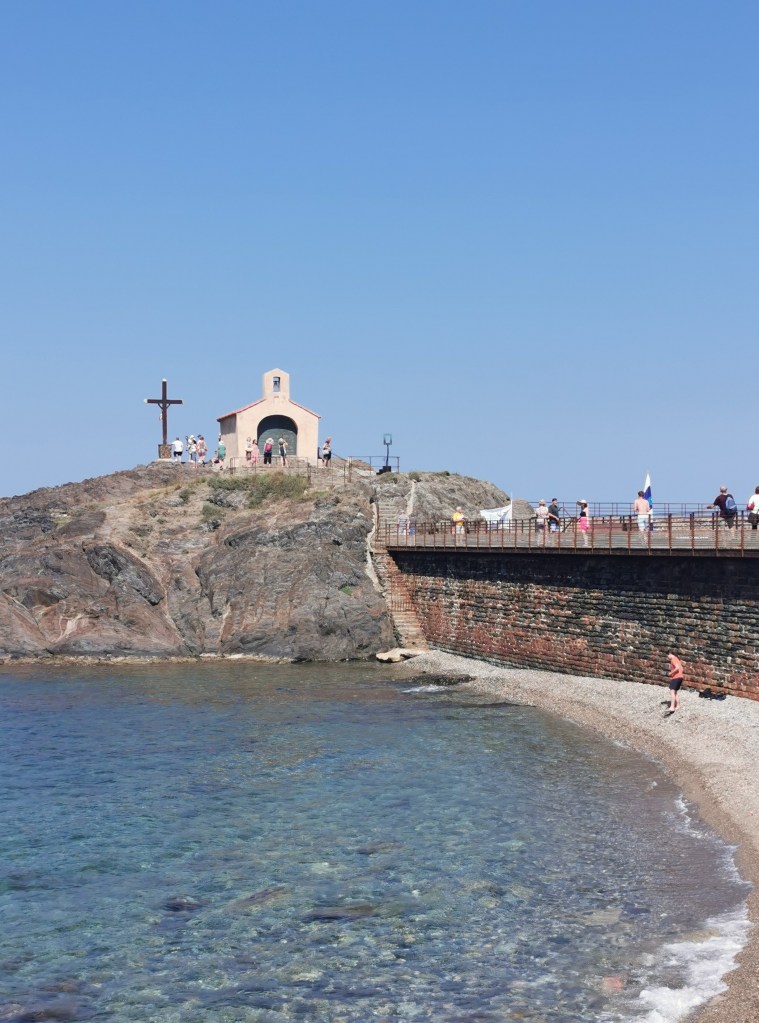
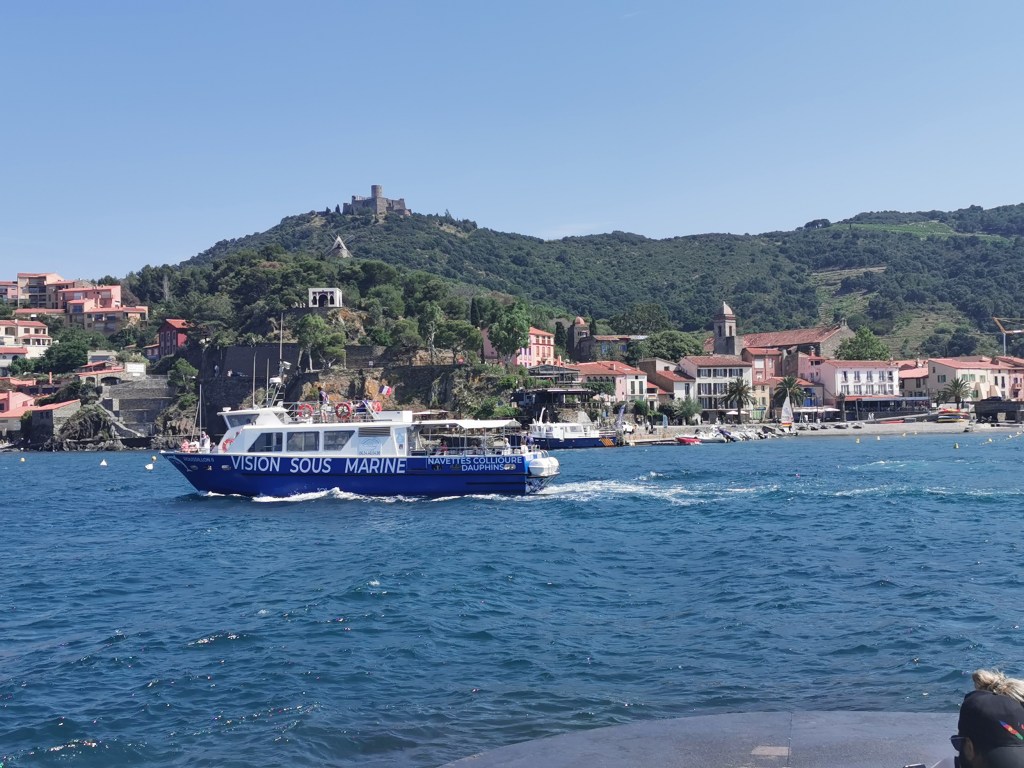
From Cerbére it was a short three-station hop to our destination Collioure (pictured). This area of French Catalonia (Catalogne Francaise) looked attractive when I passed through previously – Ken had visited the region and confirmed this – so we had planned to stop there for a couple of days. Today the series of villages are small tourist resorts built around coves and harbours. I had selected Collioure purely because the station was closest to the town centre. It proved to be an excellent choice for a restful stay to break our journey. We toddled into town, checked into our hotel and set out to explore.
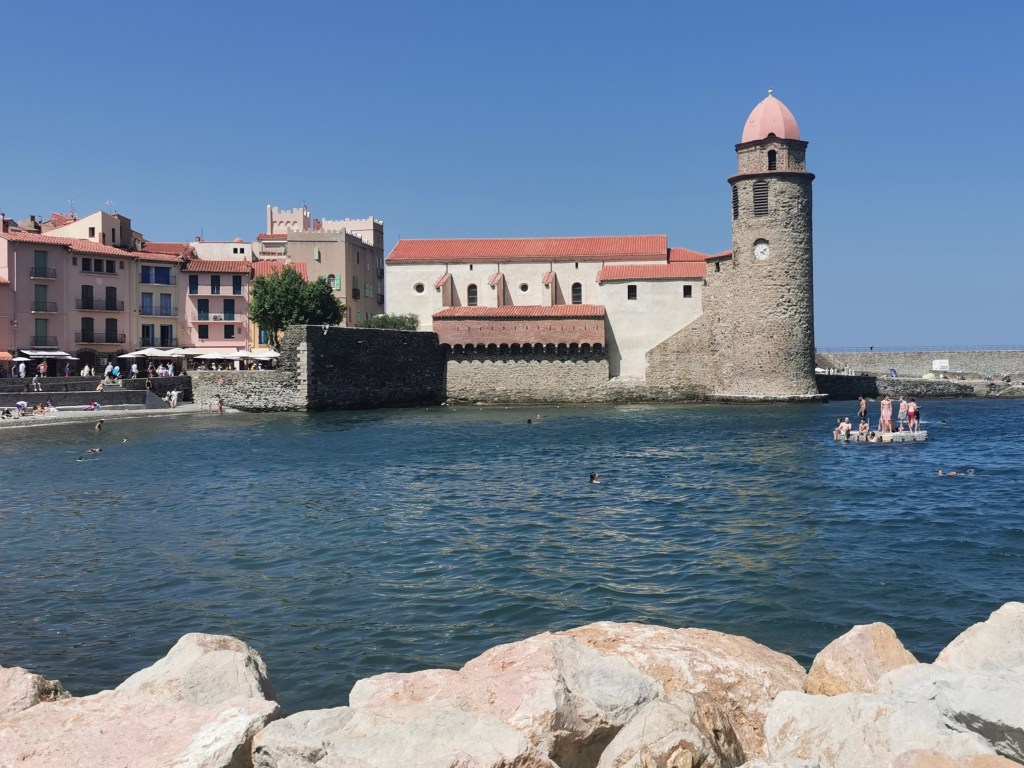

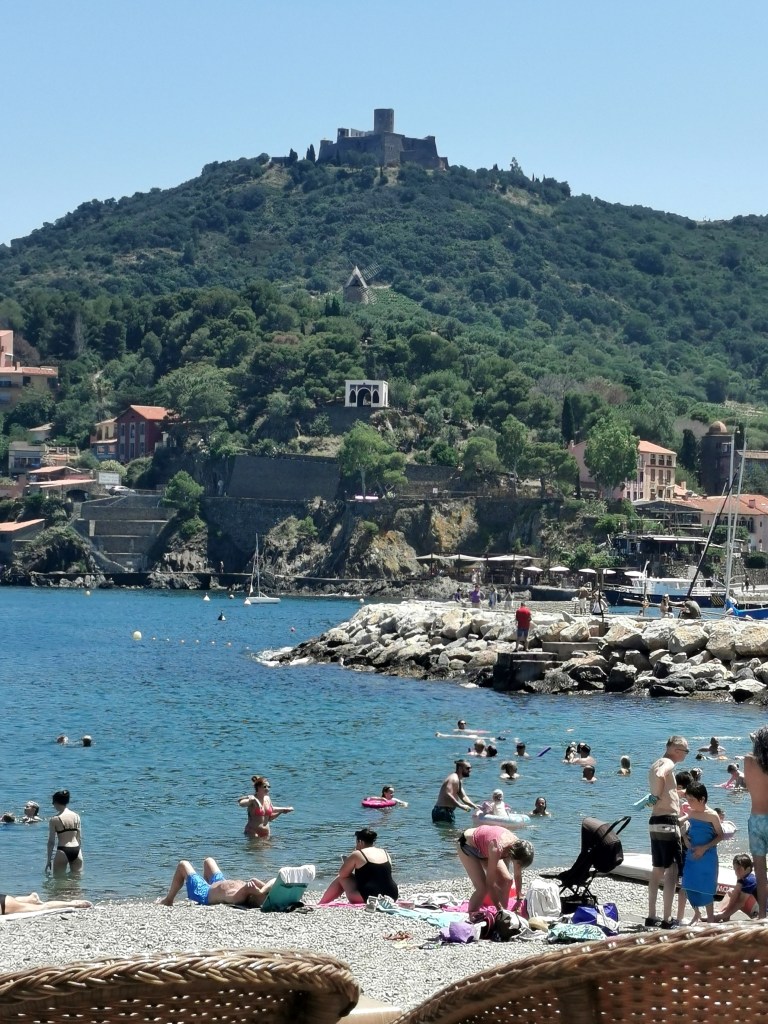

Collioure has a population of about 2500 and is well known for the local wines and anchovies, though the economy depends on tourism. The strategic location meant that historically there was competition between France and Spain for control of this part of Catalonia – resulting in the construction of large fortifications.
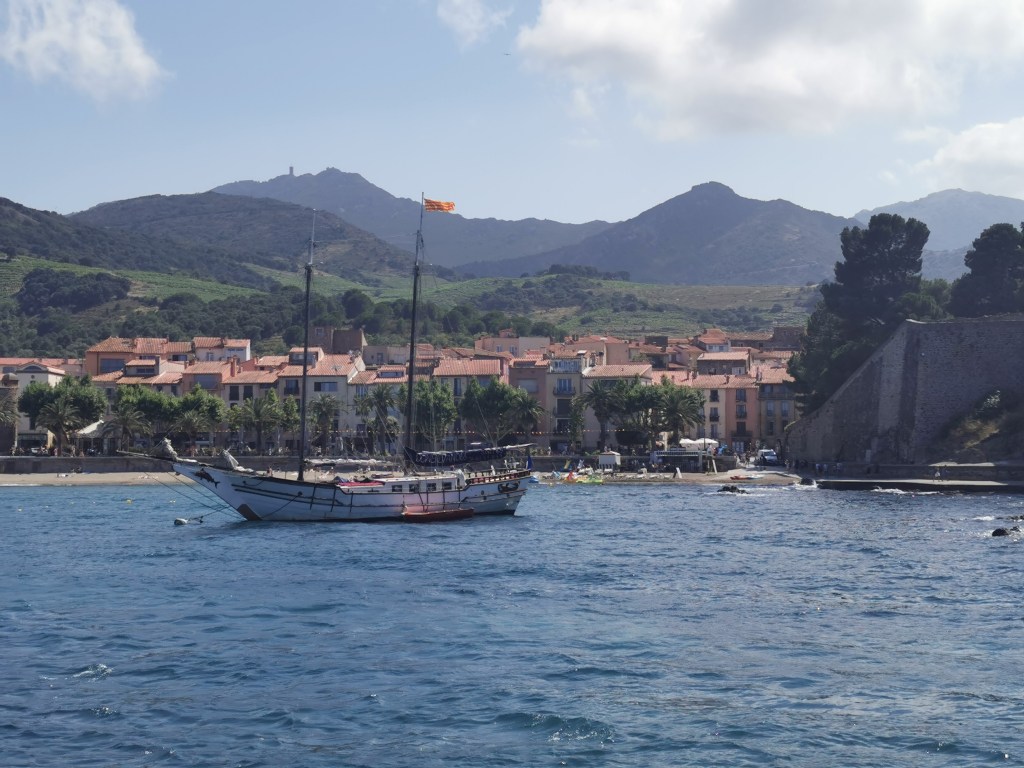

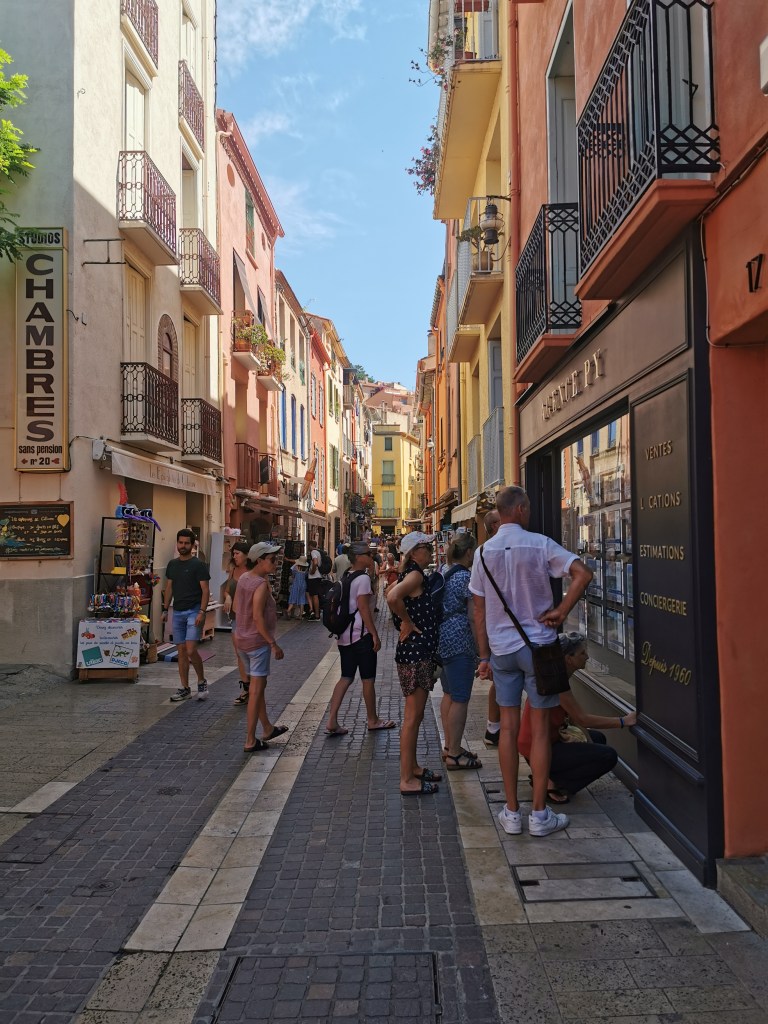
We wandered along the lanes of the old village down to the harbour and the main beach. The harbour was bustling with pleasure boats and the beach was busy with holidaymakers enjoying the weather. Behind the beach and alongside what had been a river through the village (now bizarrely culverted and converted into a car park) are rows of bars and restaurants. At one end of the bay is the church of Notre Dame des Anges, which was formerly a lighthouse – these days it looks like a willy. To one side of town is the Chateau Royal fort and on the other is Fort Miradou. Today they are partly used for marine commando training,presumably in case Spain decides to retake French Catalonia.

Of course we sampled a few of the bars and restaurants. Sitting outside one of the many beach-side bars passed a pleasant couple of hours. In town we enjoyed Les Templiers and Café Sola and, of course, we sampled the local beers, Cap d’Ona and Mil.lenari. We had a decent evening meal in L’Aquarelle (and the kebab the following evening was good too). There are several shops where you can taste the local Collioure wine. Ken is particularly keen on the red wine from the neighbouring village of Banyuls – also famous for its vinegar – and ended up with a couple of bottles to take home.
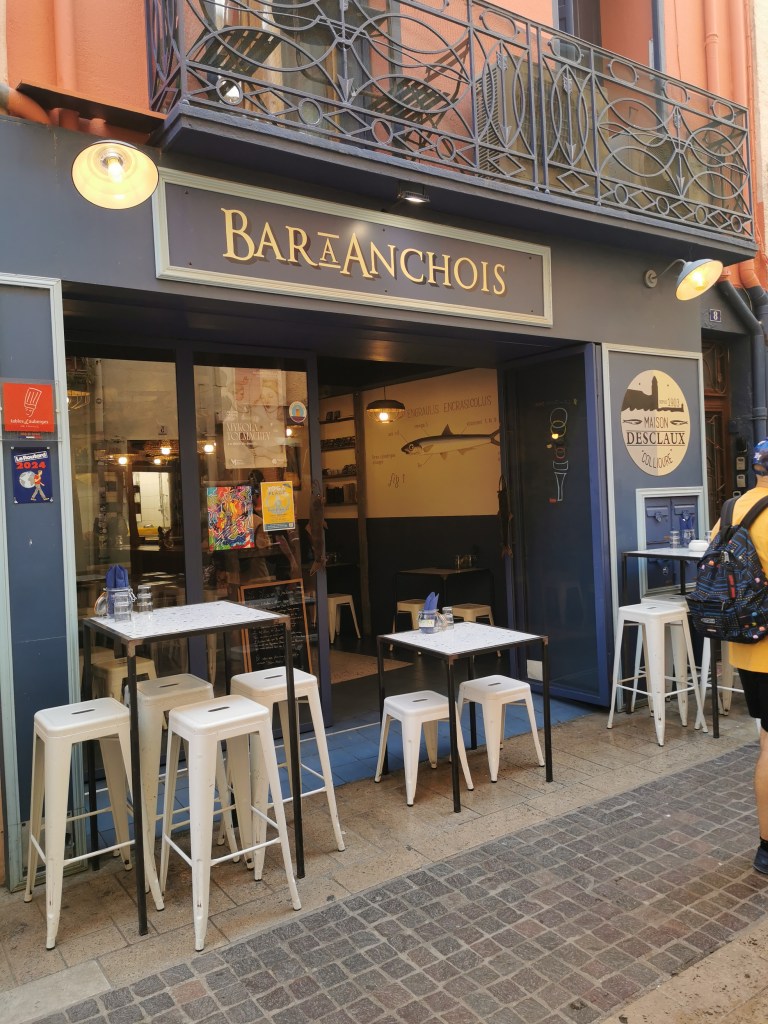

As befits a seaside resort Collioure has a plethora of tat shops (sorry – artisanal craft shops) selling all sorts of things you wouldn’t otherwise have thought of buying. There is also an anchovy bar and an anchovy concept store selling all things anchovy.

Nimes and Clermont Ferrand
Our next stop was Nimes. To get there we took two regional TER trains, with a change at Narbonne. The train called at Perpignan then entered the area of coastal lagoons or étangs. The line often follows a narrow stretch of land between the sea and the lagoons – it can become quite confusing trying to work out which side is the sea. At Narbonne we had a 40 minute wait for the connection so we headed for the main hall – full of people because there were some long delays on TGV trains.
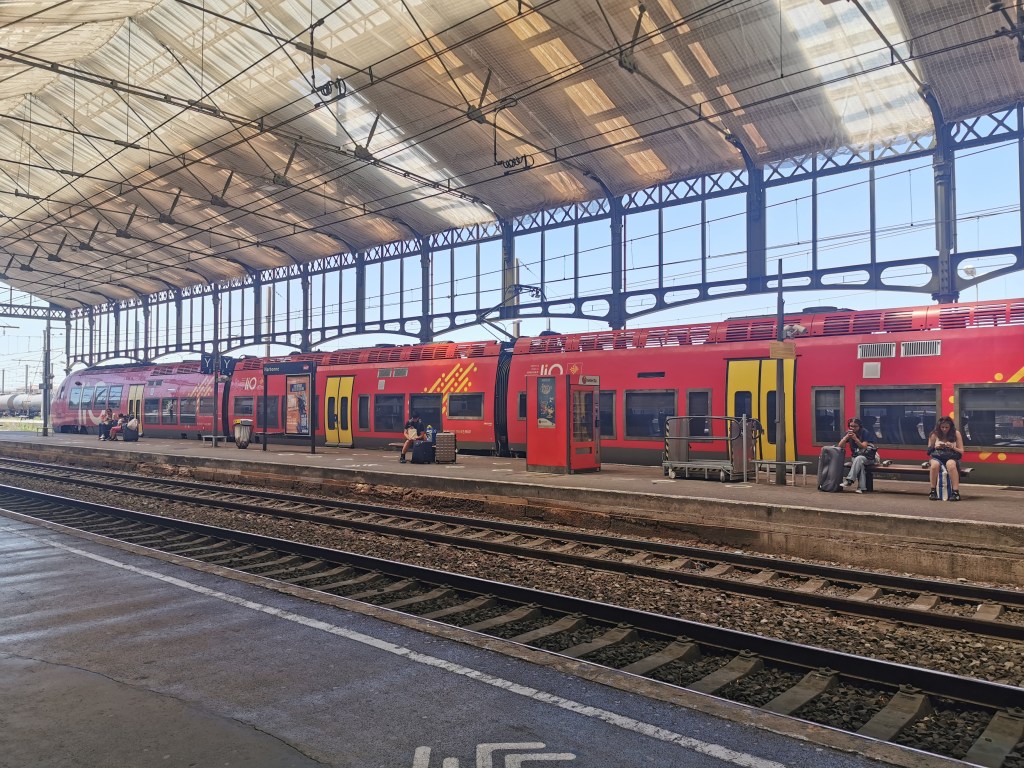
Our second train left from the same platform as we arrived, so back down and up the stairs to discover that it was actually the same train. Off we trundled, through Bezier, another étang, Sète and Montpellier to Nimes Centre station and our nearby hotel.


On our journey each day was hotter than the one before. On our first evening in Nimes we made our way carefully along the grand Avenue de Feucheres towards the centre of the city, trying to keep in the shade. We crossed a park to the Fontaine Pradier, stopped for our first beer, than carried on into the historic centre.

We skirted the Roman amphitheatre – Nimes was a substantial Roman settlement – and entered the shady lanes of the old town. Each night the amphitheatre was being used for concerts so the town was busy . One night it was a rapper, so not quite in the same class as the opera in the amphitheatre at Verona (he said snootily).
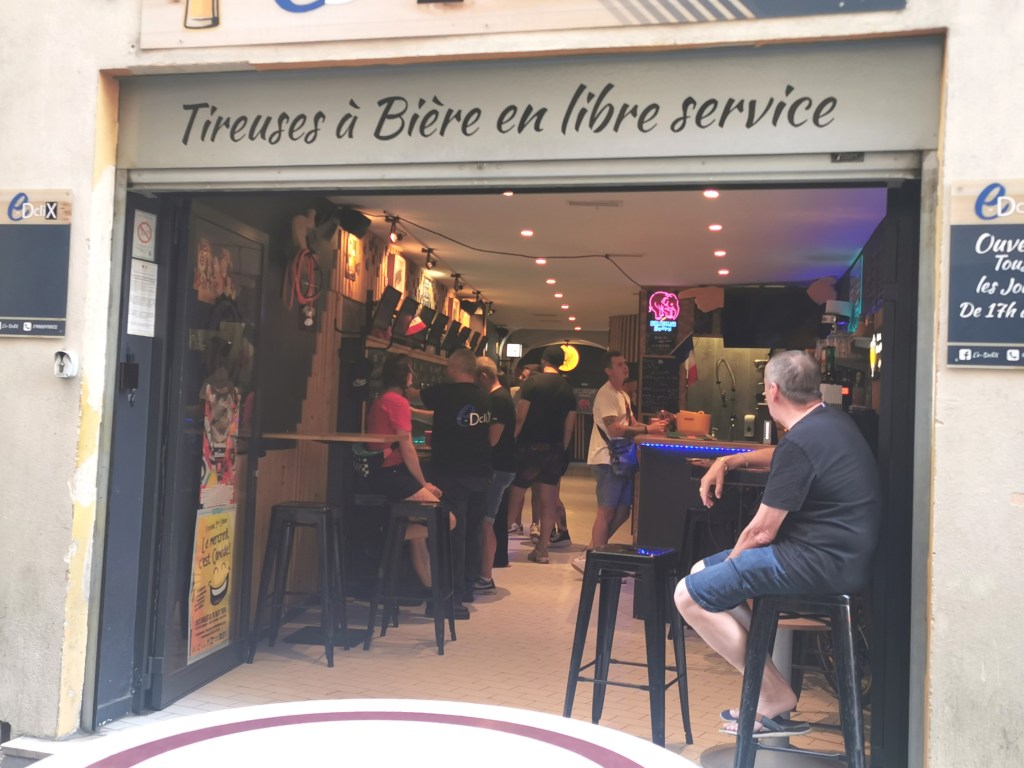
We found ourselves sitting outside a bar, L’e Dclix, where you could serve your own beer from a choice of twelve. Regulars bought a card which gave a discount, but we decided to be boring and just ask the bar staff for a beer. We ended up in the bar-tabac by the station, where the key to the toilet was collected from the bar staff – the handle from a door round the corner. The evening was completed by an Asian meal in a cheap and cheerful place near the hotel.

The following day Nimes was even hotter – it reached 38°C – so we confined our exploring to the morning. We found the Roman Maison Carrée which was constructed in the first century, though it looks like it has been refurbished one or twice since then. From there we walked alongside the canal to reach the Jardin de la Fontaine and watched the comings and goings from the café terrace.


We spent the afternoon napping in the hotel before returning to the old town for a few more beers. We discovered La Bonne Mousse, which had an excellent beer selection, then had an early night.

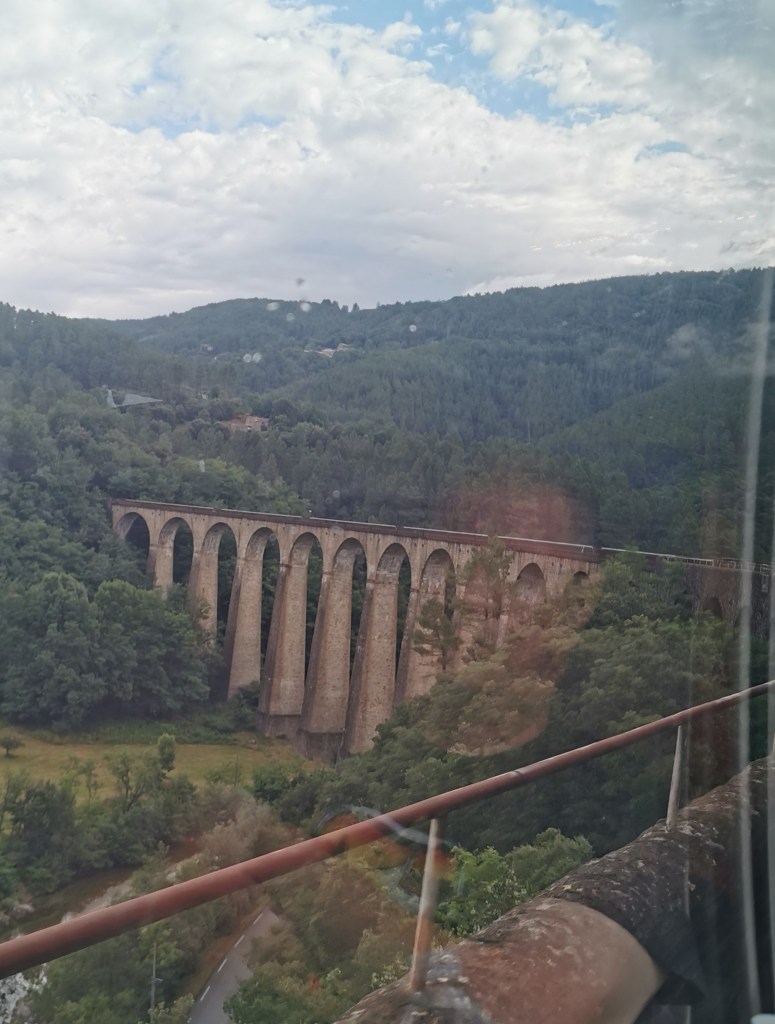
The high-speed TGV train from Nimes to Paris takes 3 hours. We decided to take the scenic route, the Cevennes railway (pictured), which takes 5 hours to Clermont Ferrand (followed by a further 3.5 hours to Paris the next day). The line is one of the most spectacular in France, cutting through the Massif Central. The first section to Alès is unremarkable, then it begins to climb, crossing spectacular viaducts, between isolated towns and villages, until it reaches 1018m above sea level.

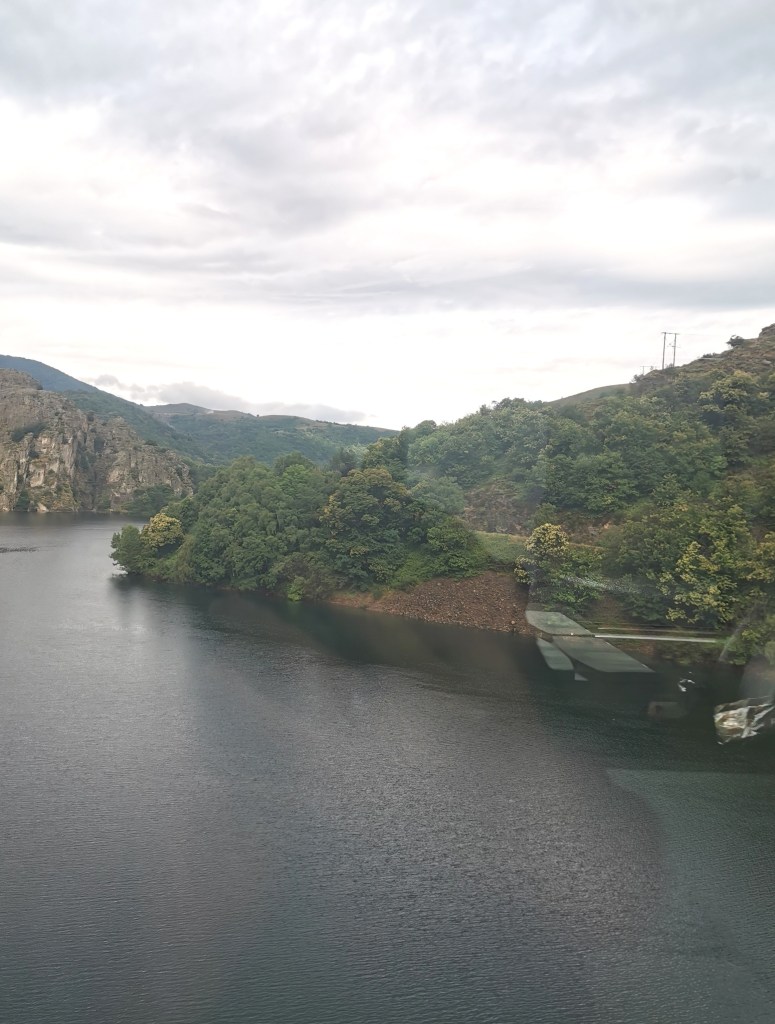
The most dramatic stretch of the line is as it travels downhill, constructed on a narrow ledge through the gorge of the River Allier – a route which must have been a challenge to build. The final part of the journey is through the (extinct) volcanic countryside towards Clermont Ferrand, where every settlement seems to have a substantial chateau or manor house. It was during this journey that I began to experience discomfort in my left eye, though at this stage it didn’t detract from the enjoyment of the journey.


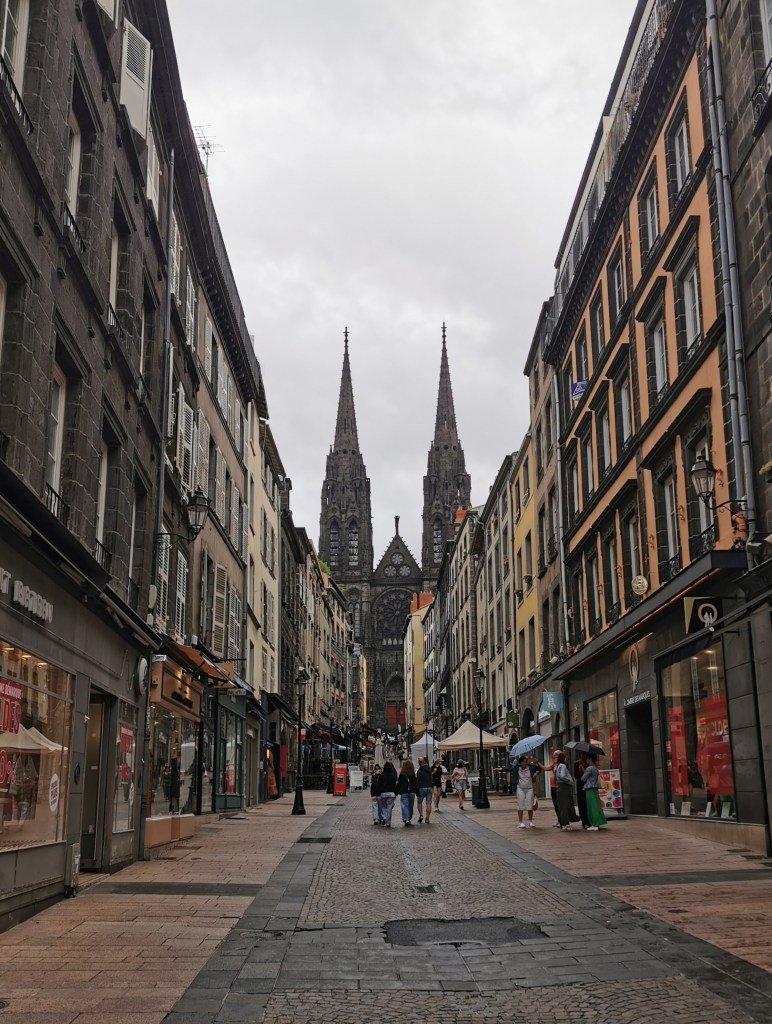
Clermont Ferrand has been primarily an industrial and commercial city rather than a tourist destination. However, we decided to have an overnight stop there before travelling on to Paris and Lille the following day. We caught a tram into town – an unusual tramway where the vehicles appear to run on only one rail – for more detail see Rail and Tram Buffery 2. As usual we had a wander round the city centre, stopping for a beer or two along the way. We climbed uphill to the oldest part of the city, which stands on a hill and surrounds the cathedral.

The next morning we caught the train to Paris. The route runs through attractive countryside via Vichy and Nevers and is one of the remaining Intercity (i.e. not TGV) lines in France . By this time I had lost most of the sight in my eye and realised it could be serious. Crossing Paris was the usual hassle – a walk from Gare de Bercy to Gare de Lyon then finding our way, despite poor signage, to the RER station. An absolutely packed train took us to the Gare de Nord, where we hung around the crowded concourse until we could board our train to Lille.
Lille and home
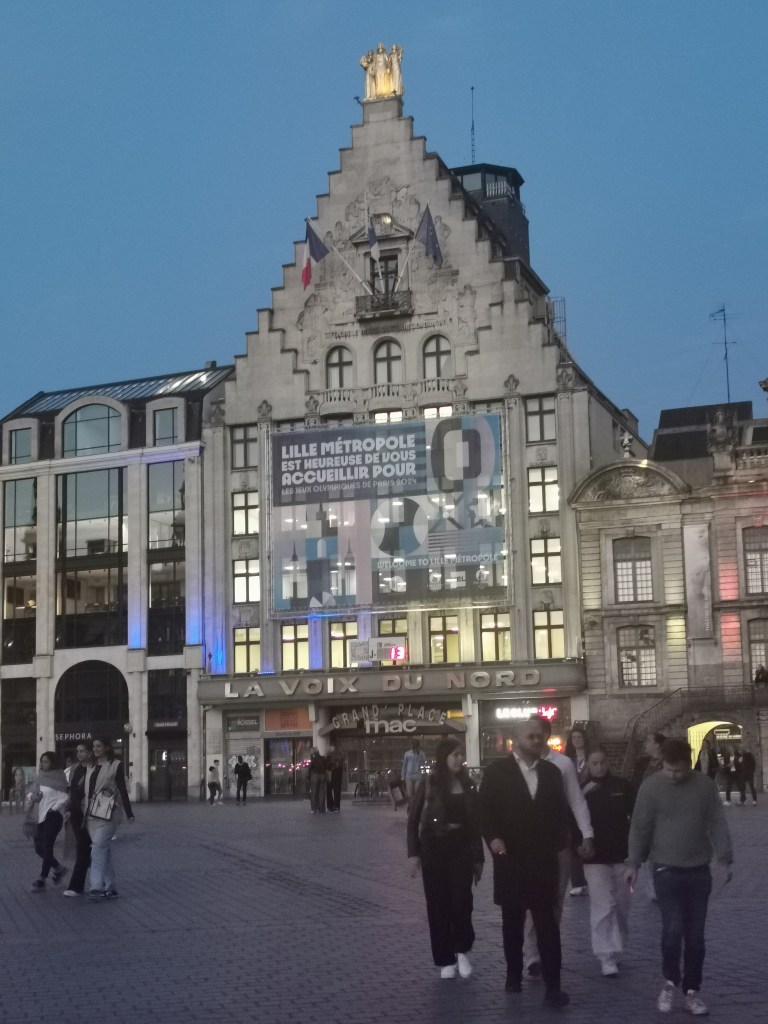
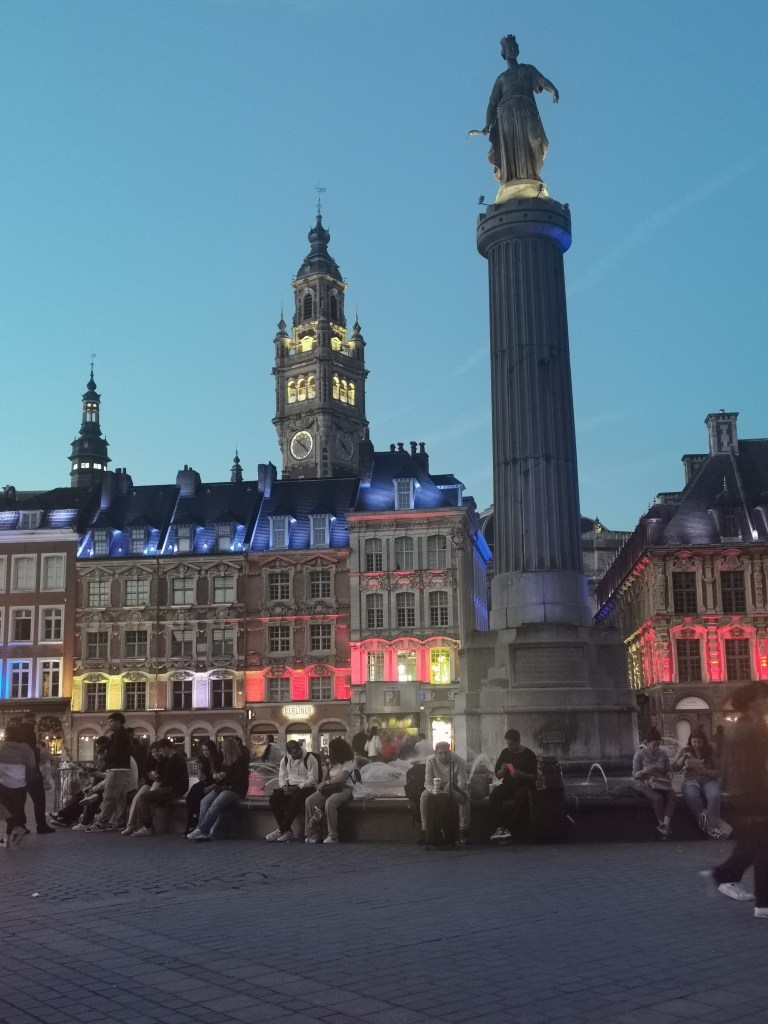
From there it was a repeat of our 2023 journey back to the UK (See Spain to UK by train 2023 ). I had time in Lille to visit the Ophthalmology Accident and Emergency doctor who confirmed I had a detached retina. On the plus side we were also able to revisit our favourite bars in town, L’Illustration and Le Palais de la Biere. For more about Lille see Leiden, Brugge and Lille.


L’illustration, Lille
We took the Eurostar to London in the morning and on to our trains home, Ken to Perth and Ted and I to Durham (and a successful operation at Sunderland Eye Infirmary). All in all (despite the eye issue) an excellent trip.
Rail journeys

Train nerd time: As an indication of how our train journeys varied we’ve put this table together, showing the distance travelled, the number of station stops en route and the average speed.
| JOURNEY | TIME TAKEN | STOPS EN ROUTE | LENGHTH (KM) | AVE SPEED (KM/HR |
| Málaga – Zaragoza | 4hrs 5 mins | 4 | 700 | 171 |
| Zaragoza – Barcelona | 1hr 50mins | 2 | 314 | 171 |
| Barcelona – Ribes de Freser | 2hrs 29Mins | 16 | 124 | 50 |
| Ribes Enllac – Vall de Núria | 44 mins | 2 | 12 | 16 |
| Barcelona – Cerbère | 2hrs 35mins | 26 | 171 | 66 |
| Cerbère – Collioure | 16mins | 2 | 15 | 56 |
| Collioure – Narbonne | 1hr 12mins | 7 | 90 | 75 |
| Narbonne – Nimes Centre | 1hr 39mins | 8 | 147 | 89 |
| Nimes Centre – Clermont Ferrand | 5hrs 3mins | 20 | 303 | 60 |
| Clermont Ferrand – Paris Bercy | 3hrs 24 mins | 4 | 420 | 124 |
| Paris Nord – Lille Europe | 1hr 16mins | 1 | 227 | 179 |
| Lille Europe – London St Pancras | 1hr 27mins | 0 | 267 | 184 |
| London Kings Cross – Durham | 2hrs 55mins | 5 | 409 | 140 |

Train and Tram Buffery
1 La Cremallera de Núria

The line was opened in 1931 and was electric from the start. It is a metre gauge railway using the abt rack system, as seen in the photograph. It is 12.5km long, the maximum gradient is 15% and the height difference is 1063m. Vall de Núria station is 1964m above sea level and it is the highest rack railway in Europe. It enables the Vall de Núria area to remain car-free. It is owned and operated by Ferrocarrils de la Generalitat de Catalunya (FGC).
2 The Clermont Ferrand ‘tram’ network

The network currently consists of one line 15.7km long and opened in 2006. It employs the Translohr system – the vehicles are rubber-tyred (these are well-hidden), powered by overhead electricity and dependent on a single guide rail. The adoption of this system rather than a traditional tram is said to be the result of pressure from Government and the local major employer Michelin. The Translohr system is no longer marketed. There is some debate over whether it is actually a tram or a guided bus (but it looks like a tram to us).
Hotels

The hotels we used on this journey were:
Zaragoza – NH Ciudad de Zaragoza. Fine, central modern hotel.
Barcelona – Expo Hotel, near Sants station. Modern but cramped rooms and expensive.
Hotel la Frégate – comfortable, small, traditional hotel in centre of town. Expensive but it was the only place in town offering a twin room
Nimes – Ibis Styles Nimes Gare Centre – convenient, but a bit basic compared to the Ibis Styles used in Nice and Ajaccio earlier this year
Clermont Ferrand – Ibis Styles Clermont Ferrand Gare – OK, but even more basic. Small hotel, no bar, but cheap
Lille – Hotel Chagnot – we used in 2023 also. Basic but OK for one night and close to stations.

Photographs:

The photographs are by Steve Gillon, except for the following:
The Pl. d’Osca is from Diari de Barcelona and Homo Sibaris is from Trip Advisor, sourced via Google Images. Cerbere station and yards is by Paul Anthony Moore (c), via Flickr. The photographs of L’Illustration, Lille are by Ken Donald.

Acknowledgements: Thanks to Ken Donald for his company on the trip.
Copyright: Text and photos (except those mentioned above) are copyright © Steve Gillon, 2024.
 Go with Ted