
The idea of a visit to Corsica had been in our heads for a while and we finally got around to organising a trip in June 2024. It wasn’t the easiest of journeys to put together, due to the lack of direct flights and the cost and complexity of some of the travel options we looked at. We settled on a cheap Ryanair flight from Newcastle to Milan Bergamo, reaching Corsica by ferries to and from Genoa (which we had visited in 2023 and were happy to return to). We had also thought about visiting Nice and the discovery of a direct flight from there to Málaga and our Spanish home in Benalmádena added Nice to our plans. So off we went, accompanied by our friend Dave Webster.

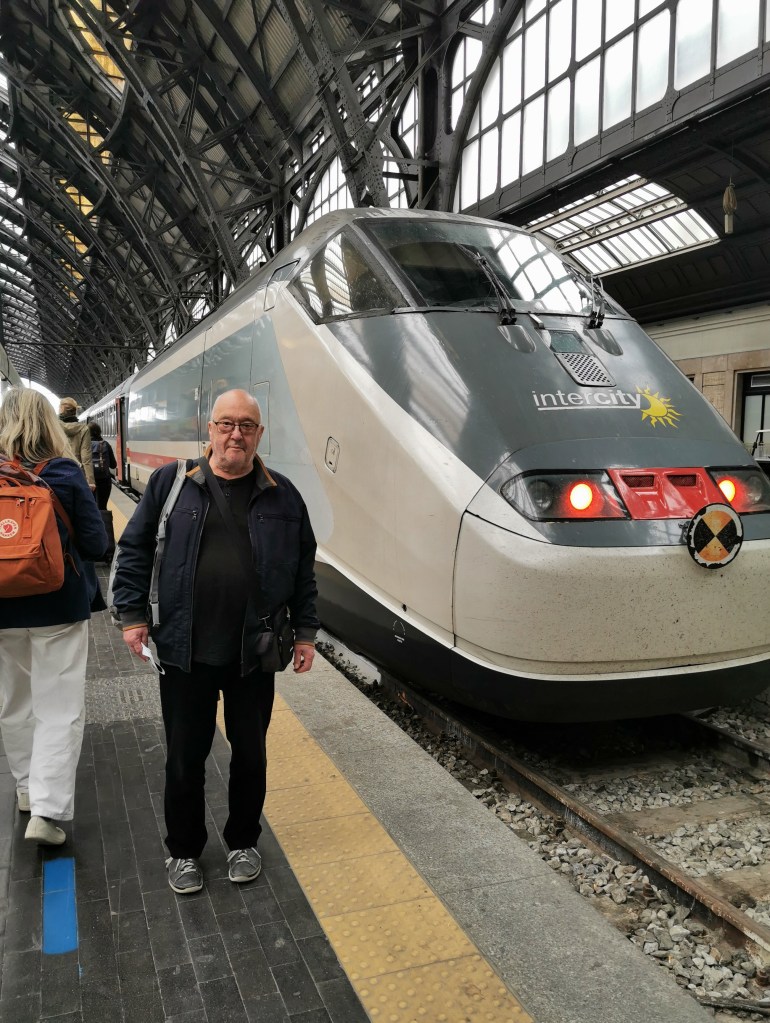
From Bergamo airport we caught the bus into Milan and spent the evening there with Dave, his friend and her dog, enjoying an excellent curry and decent beers (typical Milanese fare) – for our 2023 visit to Milan and Genoa see Tuscany, Genoa and Milan. The following afternoon we caught a train to Genoa – the photo shows Dave, not the train driver. We made our way straight to the ferry terminal to wait for the overnight ferry to Bastia, Corsica. That proved to be a bad idea. The ferry terminal is in a grotty area of the city which reeks of traffic pollution (though we did find a decent bar to pass some time in). The terminal is within a shopping centre and has very limited facilities for travellers – one permanently full café bar, long queues for the tiny toilets, a total lack of information and unhelpful people from the ferry companies.

The ferry was running late (no one told us), the route for foot passengers from the terminal to the ship was tortuous, and once on board on board we queued for nearly an hour for the key to our cabin. By this time it was midnight. We were woken up at 0530 so the boat could be emptied quickly on the 0700 arrival in Bastia. We were shattered, but we had arrived in Corsica and after that it could only get better – it did.

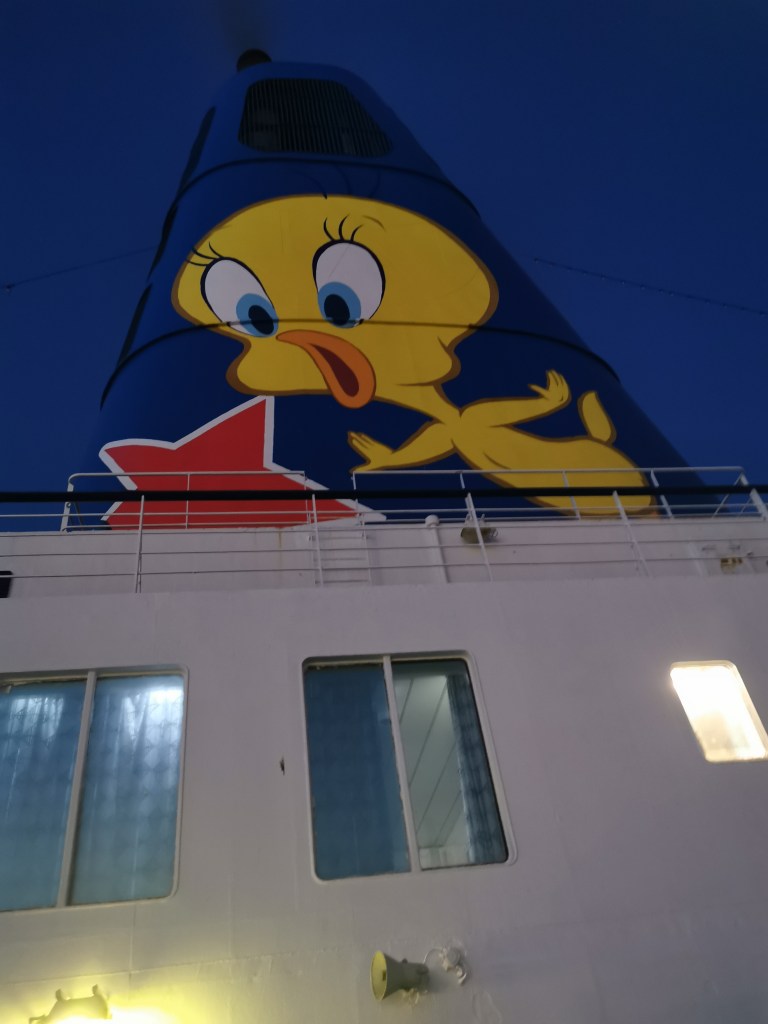
Corsica
We knew very little about Corsica but had done a little research. The history is convoluted – for many years it belonged to Genoa, was independent from 1755-1768, since when it has been (often reluctantly) part of France. Today it has a population of 355,000. There has been plenty of support for independence – we saw plenty of graffiti for the FLNC (the National Liberation Front of Corsica, Frente di liberazione natiunale di a Corsica). Their campaign was sometimes violent (recently Corsica had the highest murder rate in Europe) though today mostly peaceful, with increased autonomy for the island supported by local politicians. It has its own language – a sort of cross between Italian and French – spoken by much of the population.

It attracts two main groups of tourists. Many head for the beaches in the North and West of the island. However, Corsica is a mountainous island (the highest peak is 2706m) and the unpopulated inland areas attract walkers, cyclists and motorcyclists.

On our arrival in Bastia we found a quayside café selling a cheap breakfast of juice, croissant and coffee. We left our bags at the hotel and set off to explore the town for the seven hours before we could check in. Bastia is the second largest city in Corsica with a population of 44000, is the commercial centre of the island and, according to Wikipedia, is the second busiest port in France, after Calais.
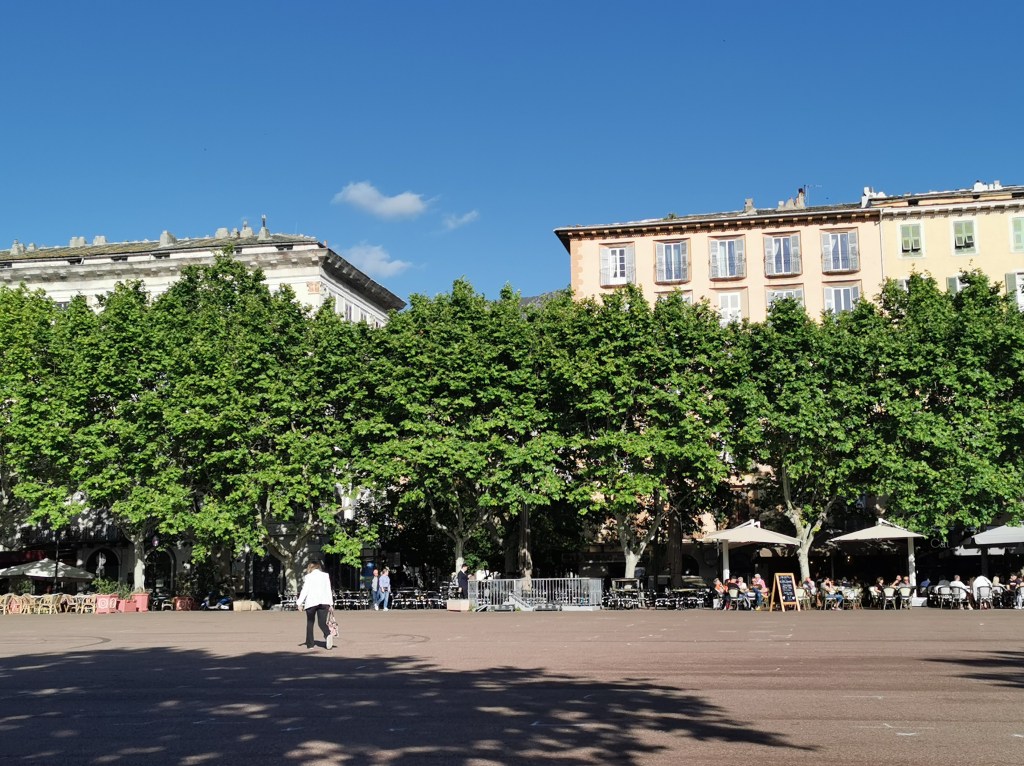

Bastia – Place St Nicolas and the modern port
The modern centre is the large Place Saint Nicolas lined with café-bars and restaurants, overlooking the ferry port. From there we walked along the promenade to the older part of town – the sheltered old port (Vieux Port, Portu Veceju).

It is a pretty, sheltered harbour, with a line of restaurants – we had our second breakfast in Le Mediterranée – overlooking the yachts towards the old Citadel. For lunchtime food and beers we discovered Le Café du Centre in Rue Miot, where we tucked into spaghetti a la buttarga (fish roe – probably mullet). It was noticeable that there were few foreign tourists in the town – most drive off the ferries and into the mountains, knackered though the drivers must be – and we had to rely on very rusty French.


The Vieux Port
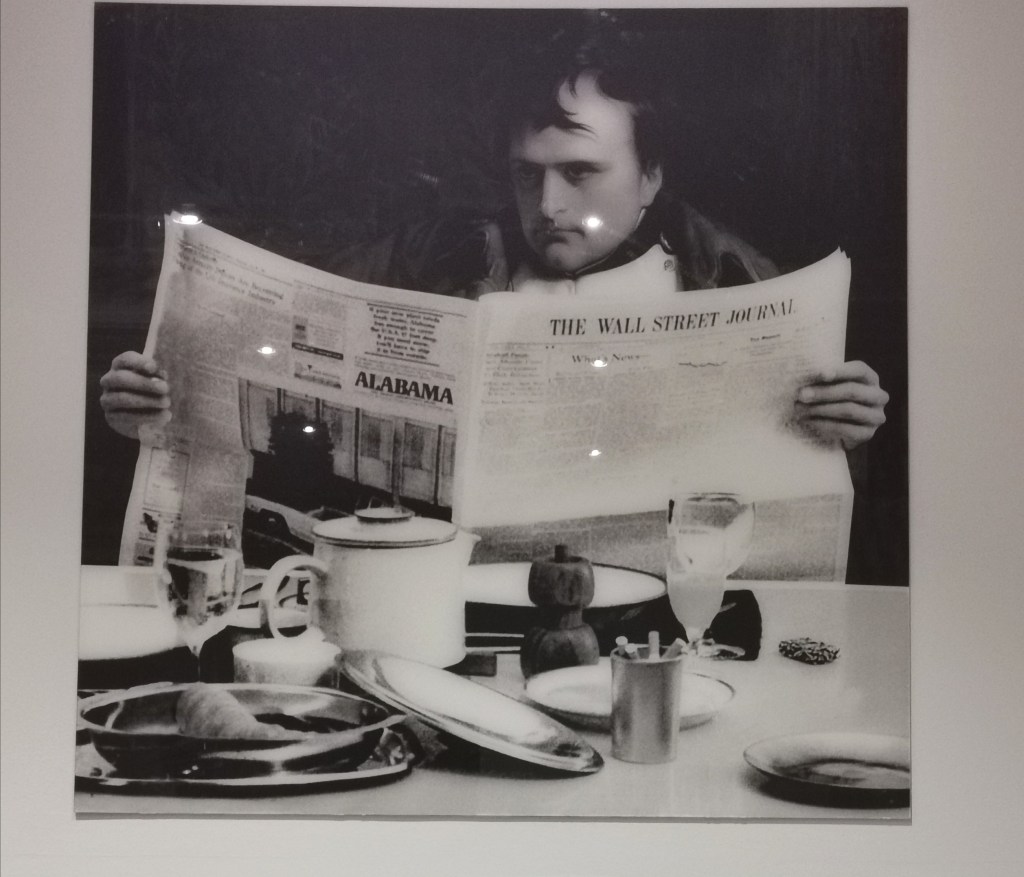
We checked into our hotel – Les Voyageurs. Each room is named after a travel destination with décor chosen to match. We were in the New York room which featured a photograph of Napoleon (born in Corsica in 1769) reading the Wall Street Journal. After a rest we wandered around some more, ending up in a pizza place, with the un-Italian name of Petit Montmartre, where the proprietor and his mates were getting slaughtered on the local anis (though the pizzas were fine).

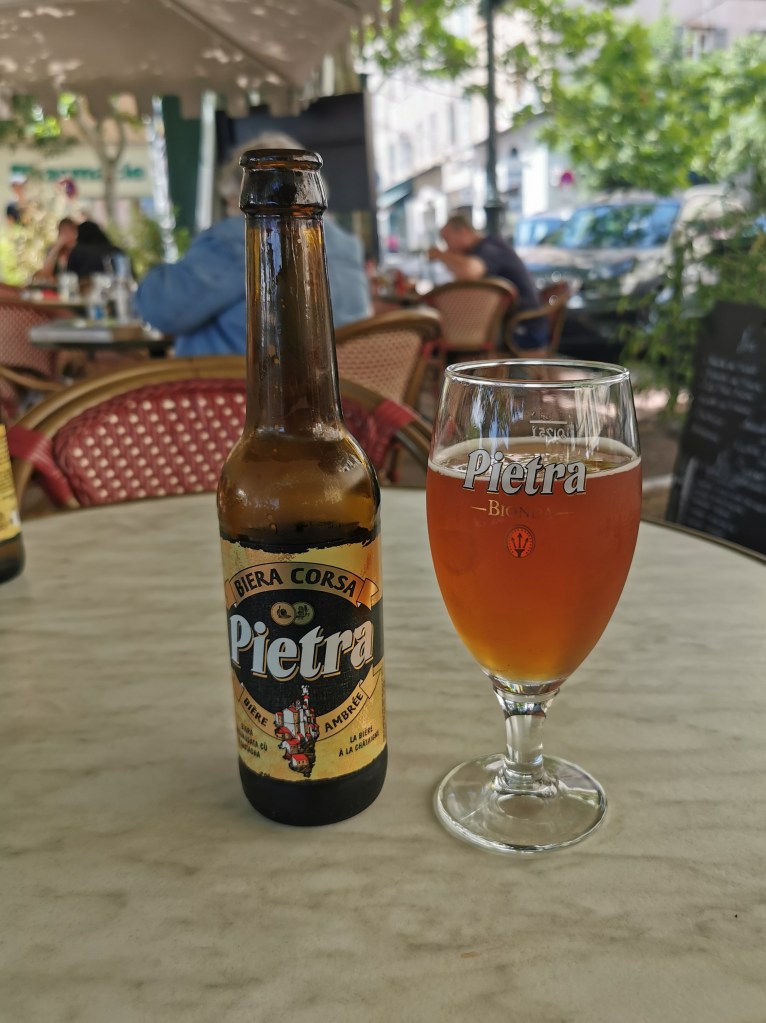
Food and drink in Le Cafe du Centre
The following day we travelled from Bastia to Corte by train. It was Sunday and the options were departures at 0756 or 1541, so we opted for the second. After breakfast we wandered around some more. In the morning the Place Saint Nicolas had a large and busy flea market, though when it finished that area of town closed down for the day. We arrived at the Café du Centre just as it closed – at noon. However, we managed to find a couple of other places to pass the time, then headed for the train.

The local railway company is the narrow-gauge Chemin de Fer de la Corse, which runs from Bastia to Corte and on to Ajaccio. The company describes this as their Grande Ligne (main line) and the 5 trains a day (3 on Sundays) take 3 hours 45 minutes for the 158 km journey. The railway is the main form of public transport on the island – for more about the railway see Railway Buffery 1.


……and Ted enjoys the journey
The first half hour of the journey is through the settlements along the plain south of Bastia to Casamozza and is unremarkable. However, as soon as the line turns inland and begins to climb the landscape is spectacular – isolated villages, forested hills and views of the distant mountains. Eventually we reach Ponte-Leccia, the Crewe junction of Corsica, where a line from Calvi joins us – actually it is more reminiscent of Georgemas Junction. More fine scenery follows until we arrive in Corte.
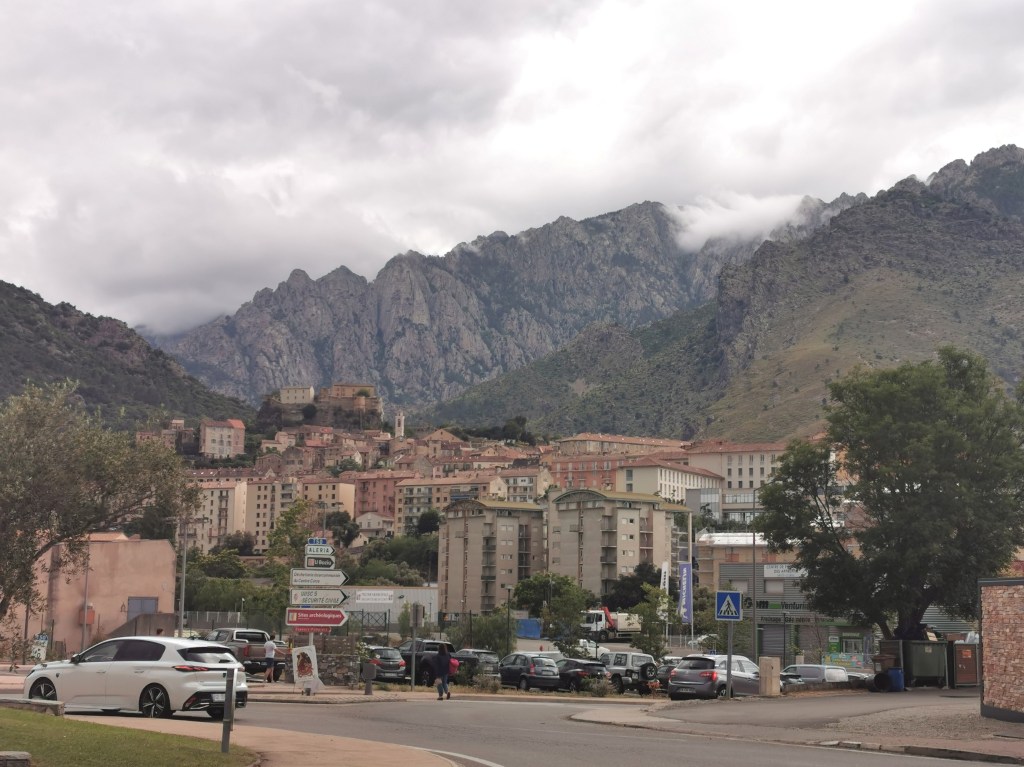
The station is at the foot of the town by the river, the centre of town is up the hill, with no bus service between them. The station bar is the Bar de la Plage (Beach Bar), located in possibly the furthest place in Corsica from the sea. We trudged up the hill, found our hotel and checked in, followed by a quiet evening in a café-bar close by.


Corte (Corti), with a population of 7500, is the fourth largest town in the island and is an historic defensive site. It was the capital of the eighteenth century short-lived Corsican republic. You can’t avoid the name of Pascal (Pasquale) Paoli, the leader of the republic – the main street is Cours Paoli and there’s a statue of him in the main square (both pictured). Today, Corte is home to the only university in Corsica which means it is lively for its size. It is also the base for those exploring the surrounding mountains.

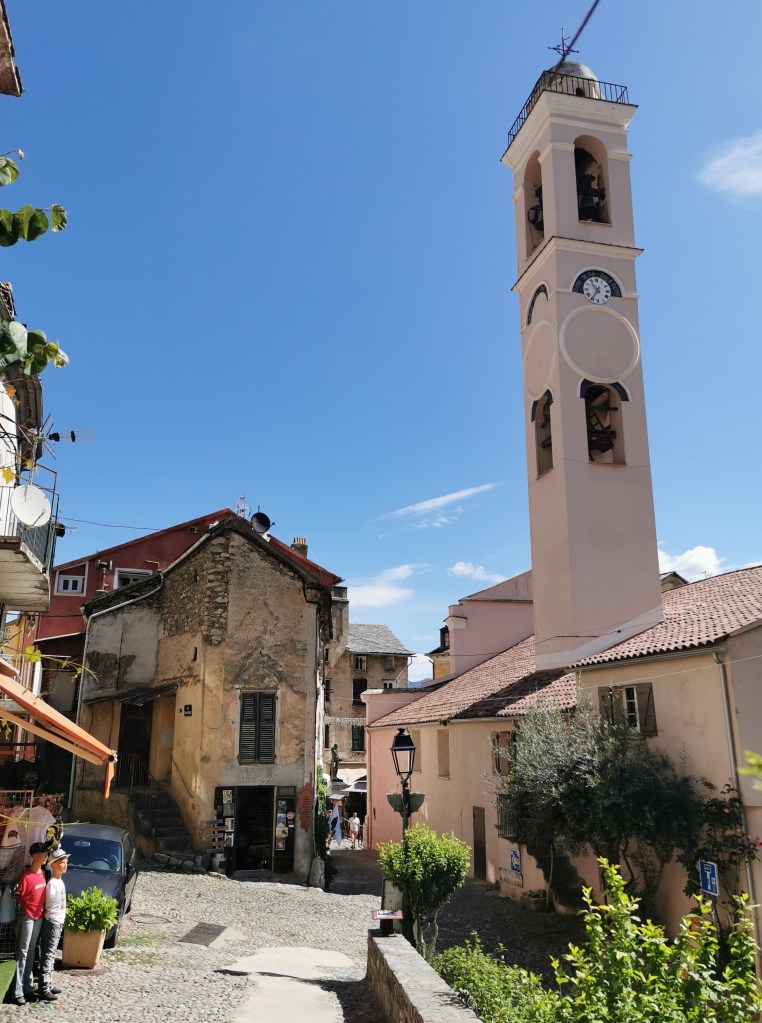
We spent a very pleasant day wandering around the town. The oldest part is at the top of the town, around the church and, above there, is the old citadel. We spotted a belvedere (viewpoint) on the map and decided that there was no way we were going to walk up there in the heat.

However, we made it, as the old, narrow streets leading uphill were largely in shade. And the view of the citadel, the town and the surrounding mountains was impressive, as the photographs show.
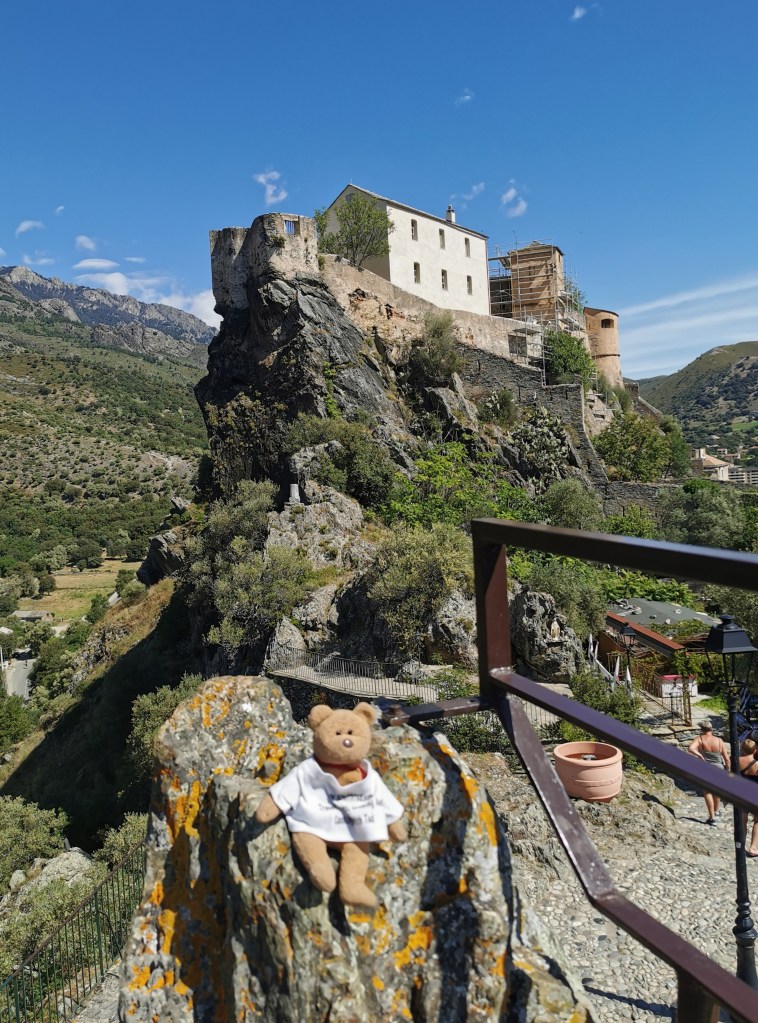

The citadel and the surrounding countryside from the belvedere


It looks like excellent walking country, though we confined ourselves to walking down to a bar for a light lunch. The Bar de la Haute Ville is a welcoming. friendly place with a mixture of locals and tourists, good local Paolina beer and fine snacks and food. We then spent the rest of the day pottering about – we bought some tat, had a few more beers and a tasty evening meal as we wandered along the main street.
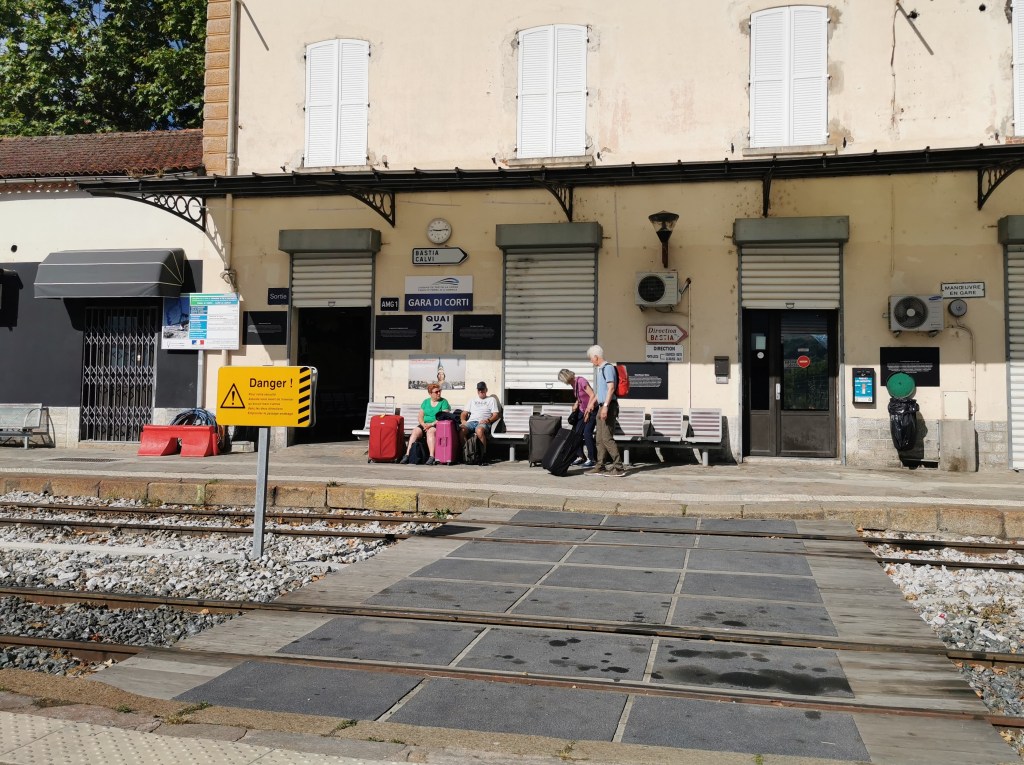
After our second night in Corte it was time to catch the train to the island’s capital, Ajaccio. After breakfast we trundled down to the station and joined the groups of walkers heading out for the day. They alighted at various halts along the way with many getting off at the highest station on the line – Vizzavona which sits on the watershed between the east and west coasts and is linked to the GR20 long distance path through the mountains.

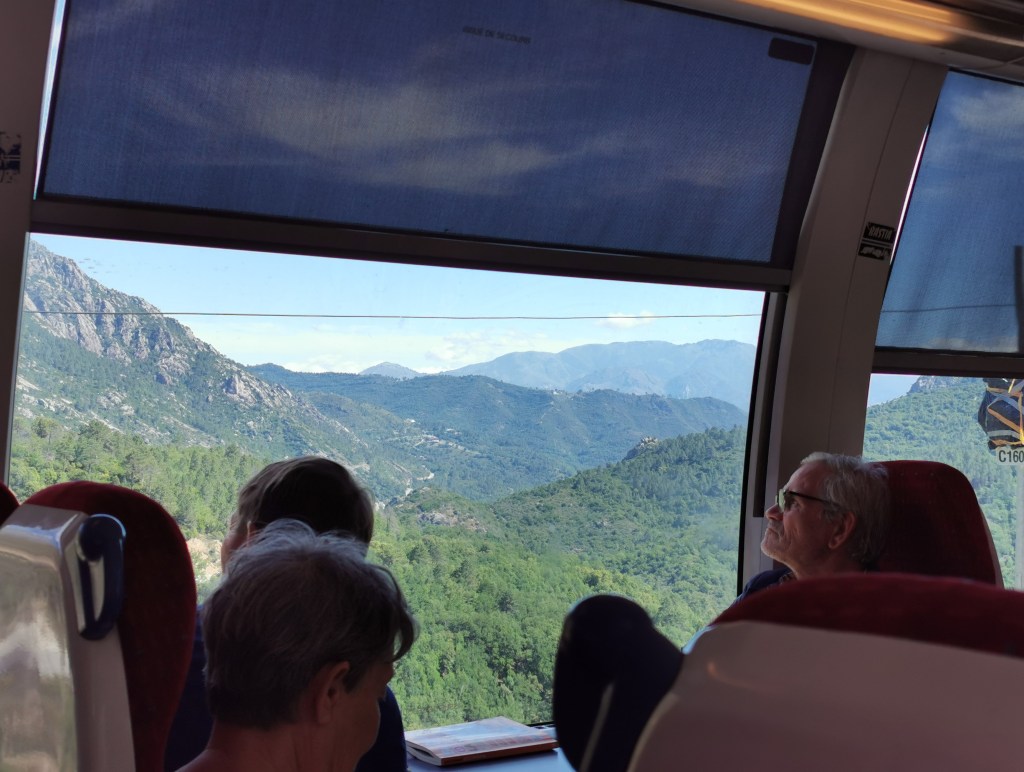

The scenery was even more impressive than our first journey, as the line wound round valleys and through tunnels, with views across the forested hills to the sharp mountain peaks. It is one of the best railway journeys in Europe, though not as well-known as it deserves to be. The photographs don’t do it justice – without a good knowledge of the route it is easy to miss the best views through the occasional gaps in the trees.
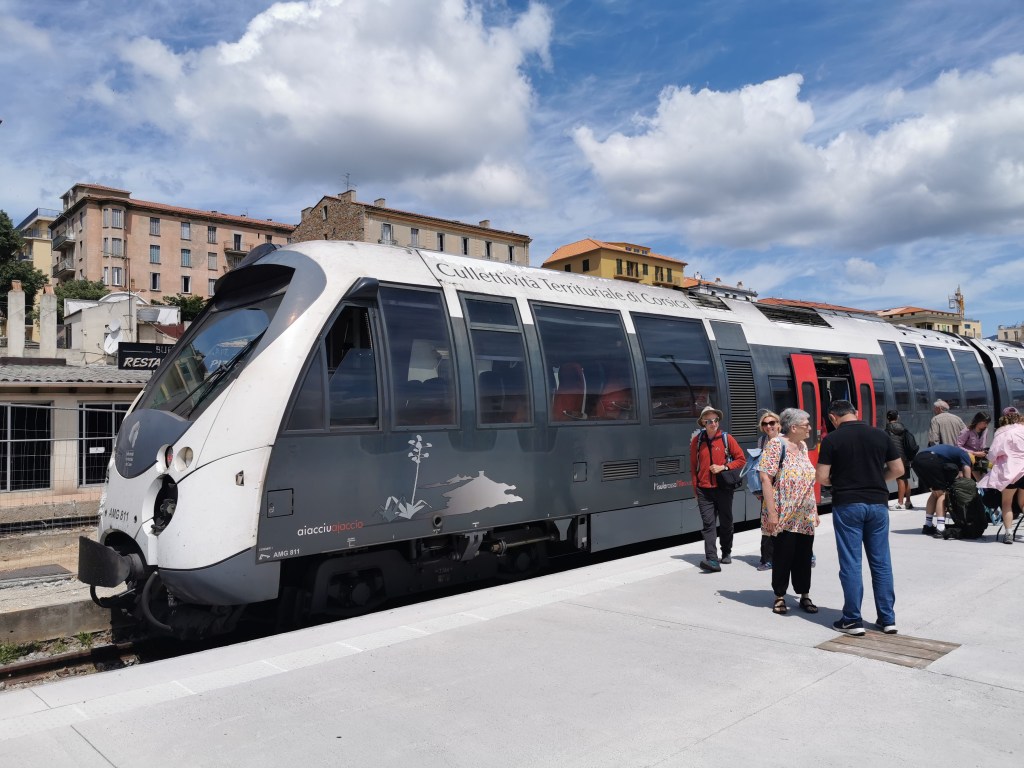
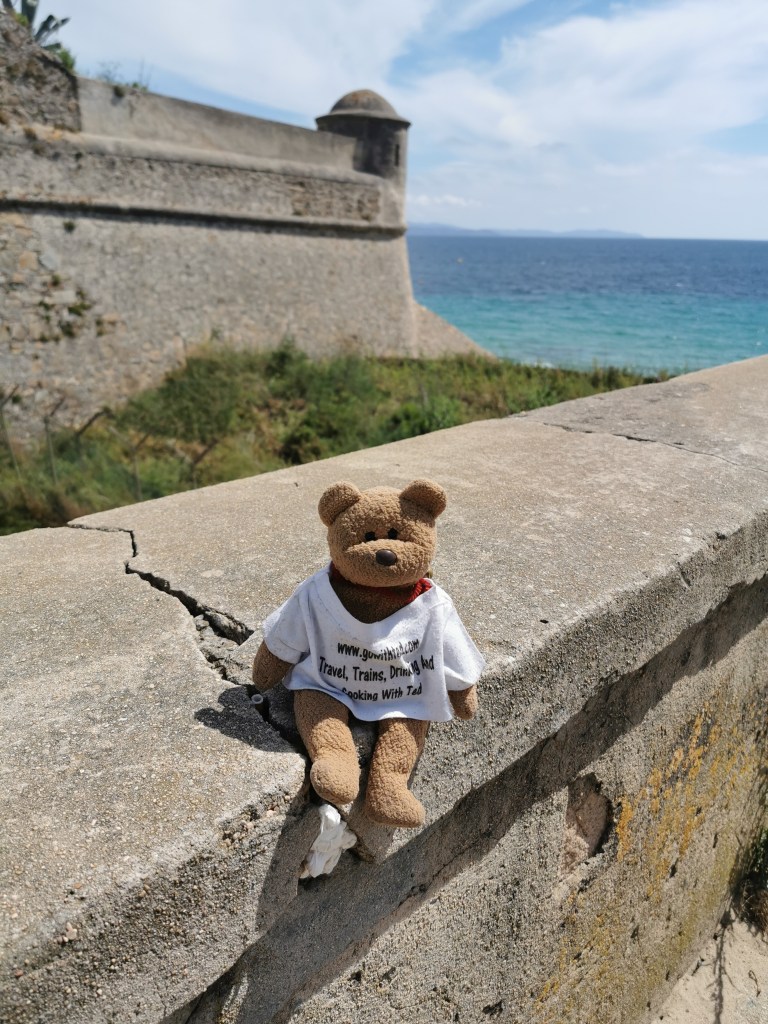
Eventually, the line descends to the plain, pootles through suburbs and arrives in Ajaccio (pictured). Ajaccio (Aiacciu) is pronounced achachioo – with the first Ch a soft Scottish sound and the second a hard ch – it sounds like sneezing. I was given a pronunciation lesson by the ticket seller at Corte station. Today Ajaccio has a population of about 74,000, having grown in recent years through rural depopulation and immigration. It is the administrative and shopping centre for the island and has a substantial tourist industry. It is built on the west side of a sheltered bay, now the port, overlooked by the fifteenth century Genoese citadel. It is famous as the birthplace of Napoleon, whose name appears everywhere..
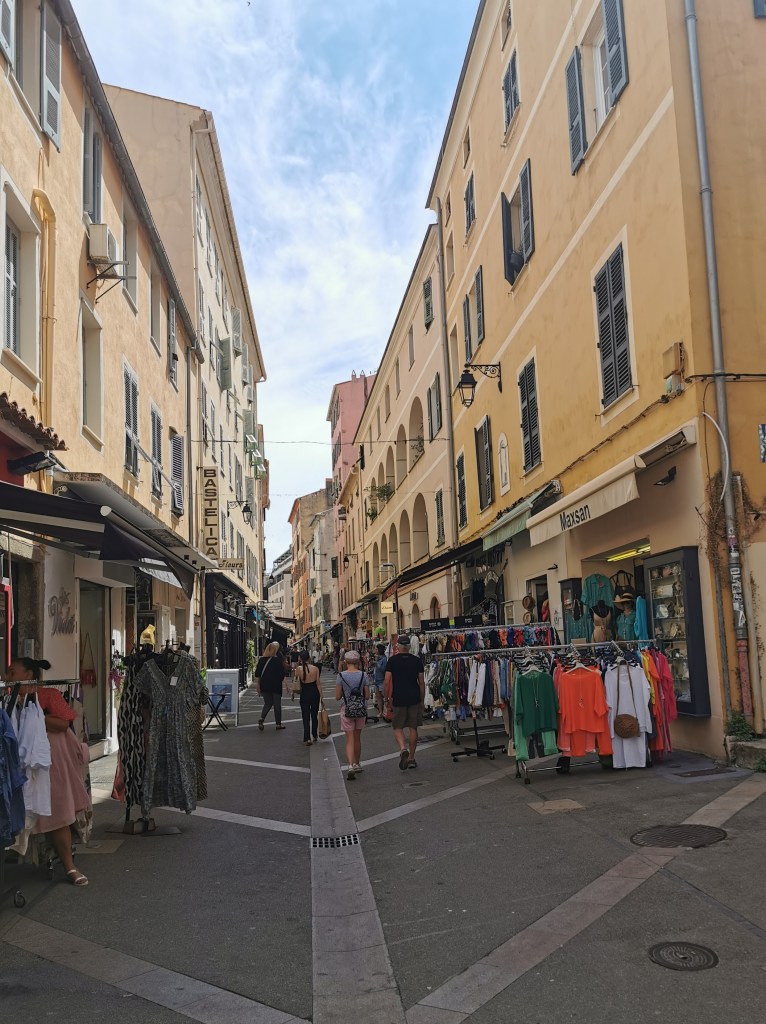

As usual we spent our time wandering around. Ajaccio was definitely more touristy than our other Corsican stops, so we were less dependent on our hopeless French – probably because of the number of cruise ships which visit. From our hotel we headed along the Cours Napoleon into town. As we neared the centre we spotted the narrow Rue Cardinal Fesch (pictured), which leads into the older part of town. It turned out to be lined with café-bars, restaurants and independent shops. We stumbled across Le Mimo which became our base – a little place with a friendly owner which sold a selection of decent beers (and enormous bruschettas). It was ideal for people watching and looking at the bizarre collection of oddities outside Brocatypik, the antique and curio shop across the road.
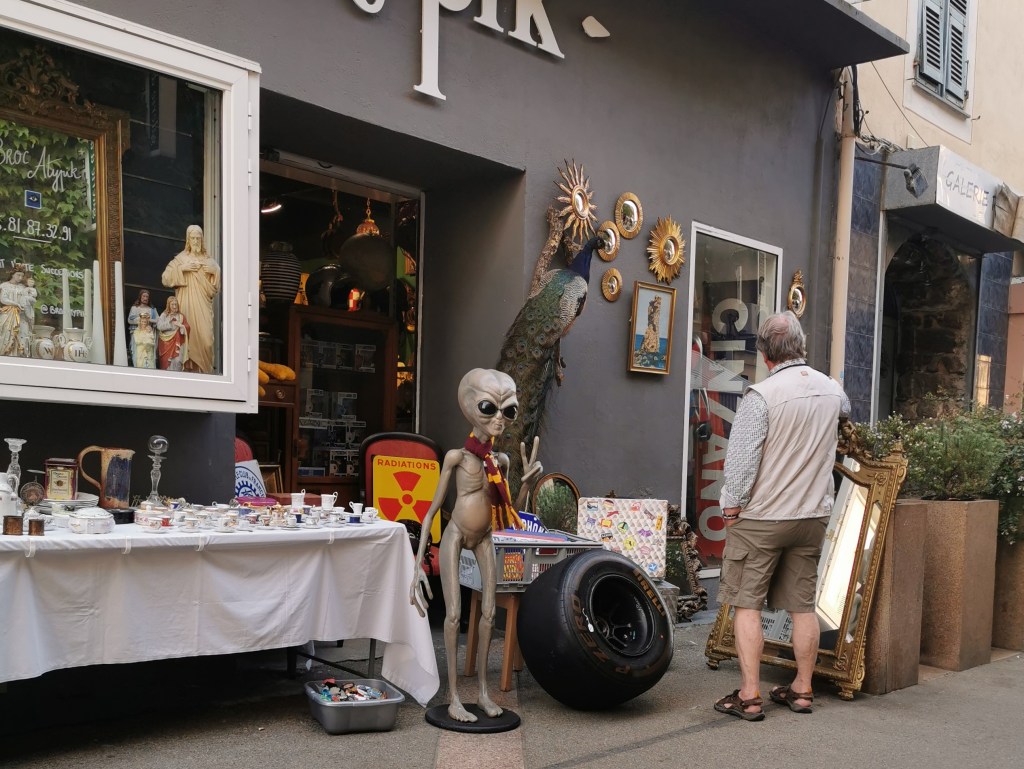
The street continues to Place Foch, with its inevitable statue of Napoleon (Paoli is plinthed round the corner by the citadel), beyond which is the oldest part of town. The bay is at one end of Place Foch and nearby is the market hall. Open each morning, there are stalls selling local wines, cheeses and so on – we had to try. Alongside the harbour is a row of bars and restaurants, where the waiters dodge the traffic between the counters and their terraces across the road. Further along, we had a quick look at the citadel, beyond which the beach begins.

On our way back to the hotel we had a couple of drinks on the terrace of La Balagne by the Place Abbatucci gardens. Near the hotel we spotted a Chinese restaurant on Google Maps, Le Mandarin which turned out to be an excellent buffet restaurant.
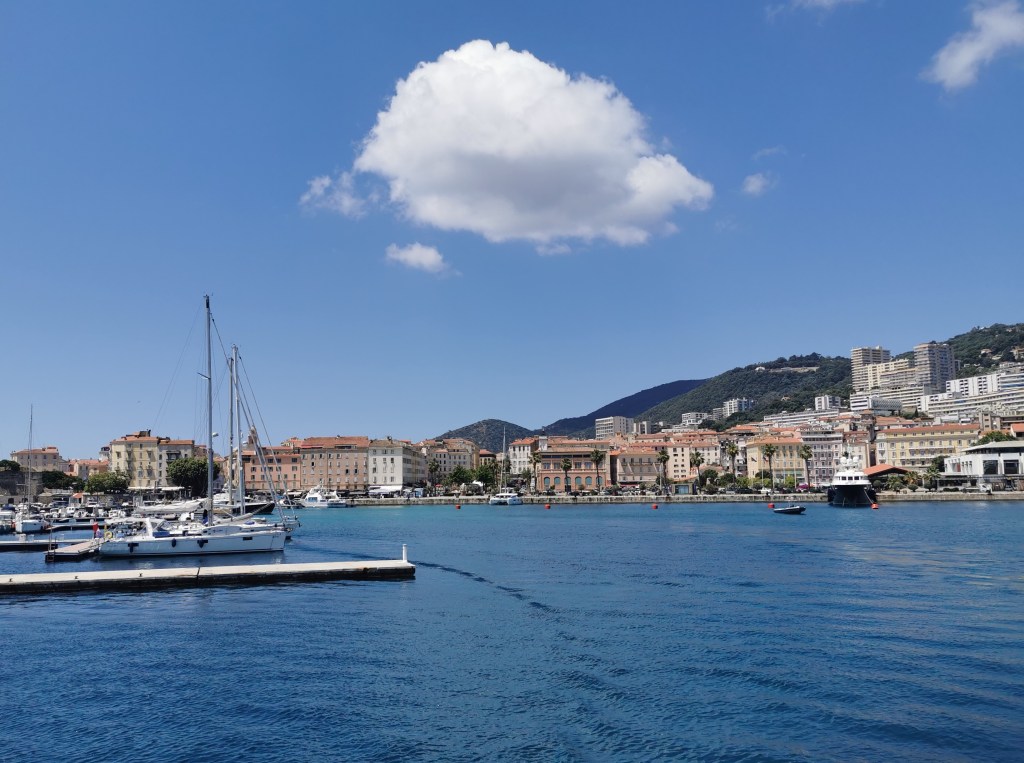
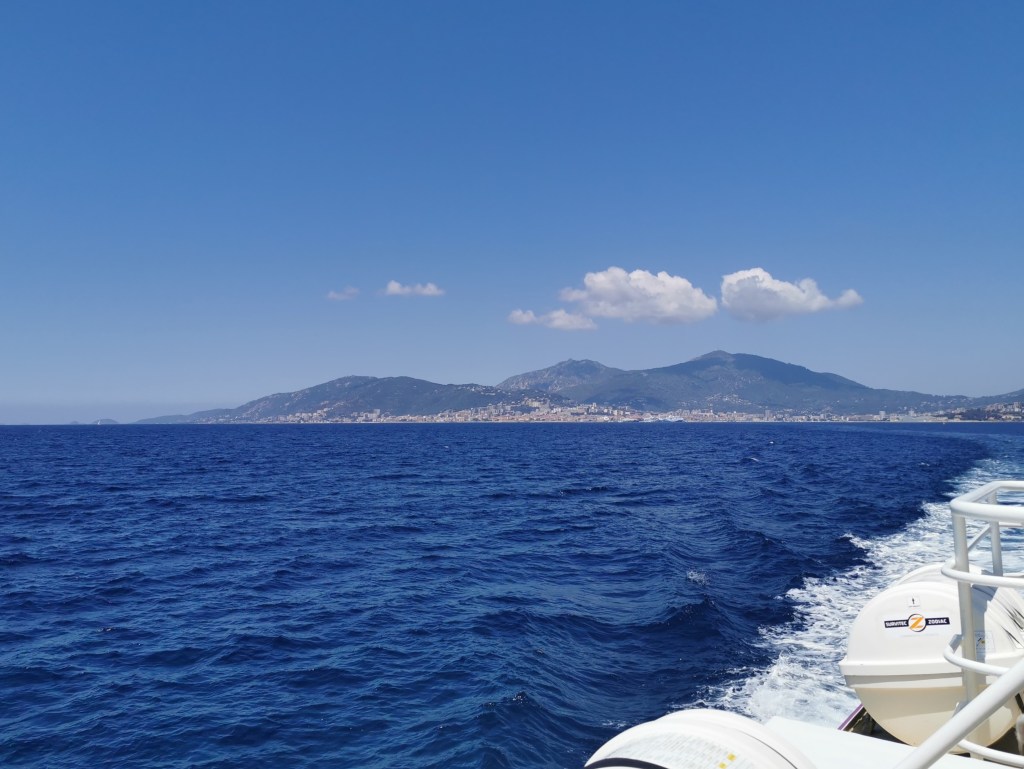
We discovered that there was a ferry across the bay to Porticcio and, once we found out which kiosk to buy tickets from, we headed off on the twenty-minute journey.
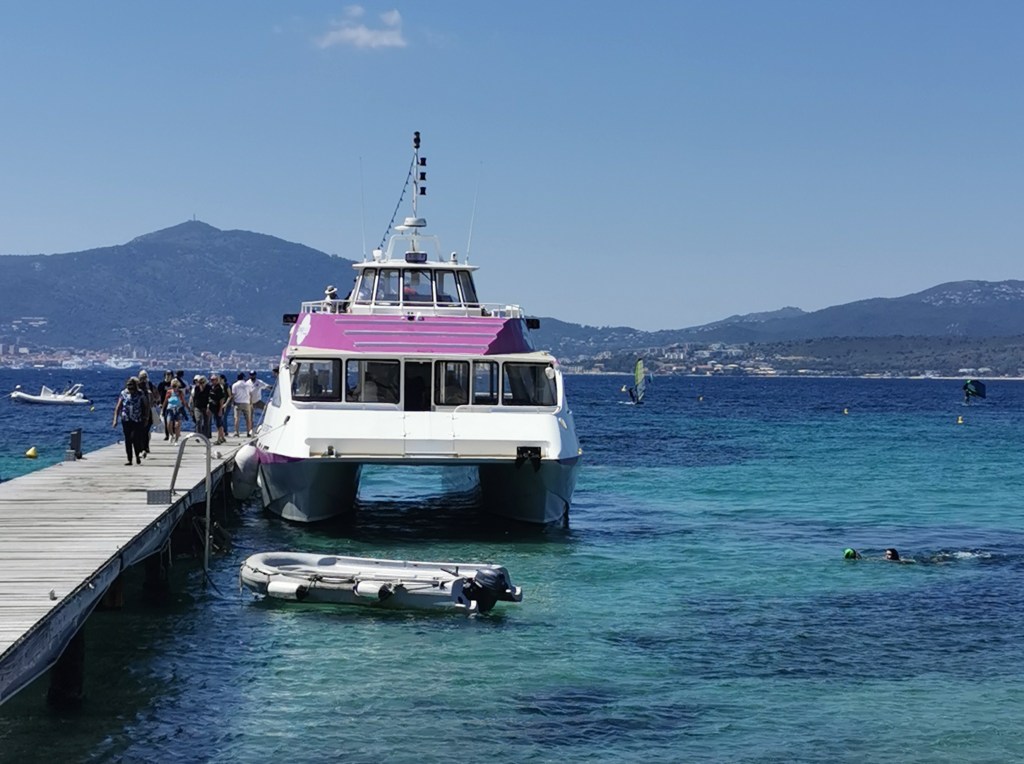
Porticcio turned out to be an upmarket suburb of posh villas. However, there is a string of bars and restaurants along the beach, where we passed a relaxing hour or two.

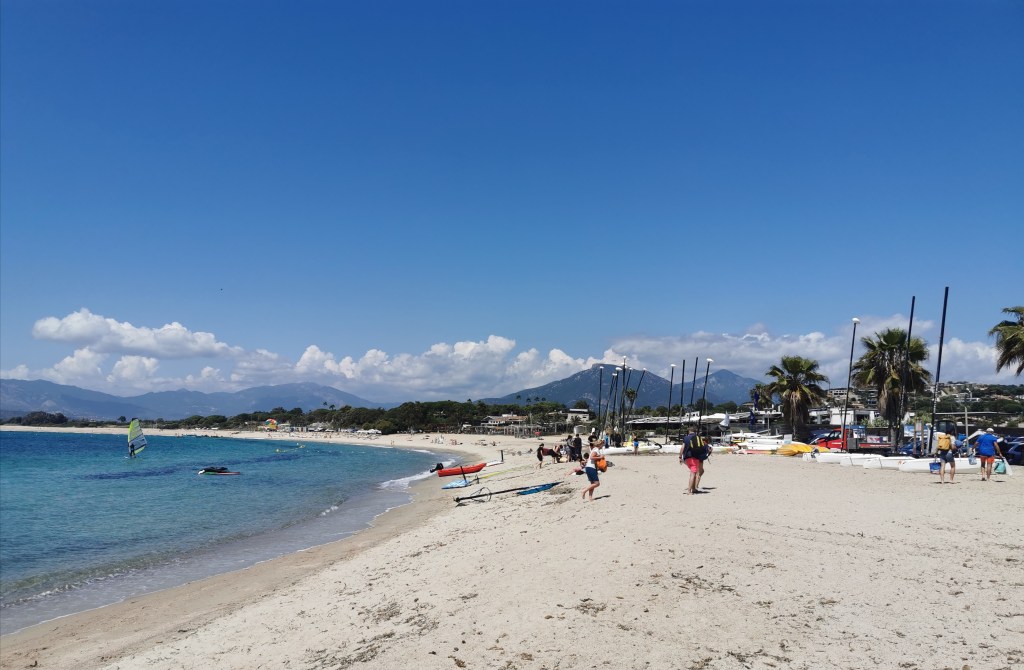
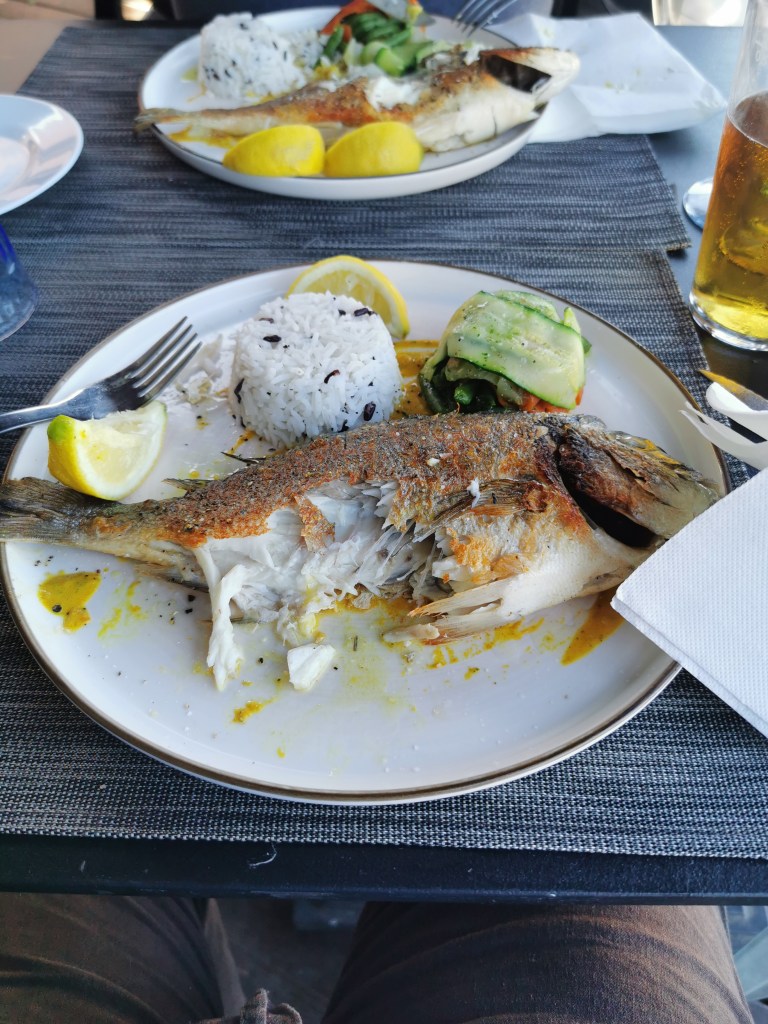
Between sitting on the top deck of the ferry looking back at the views of Ajaccio and the hills behind and choosing a beach bar with no shade from the sun on the hottest day of the trip, Ted and I I ended up with burnt noses. We’ll never learn. Back in Ajaccio we headed for one of the harbourside fish restaurants, A Vista, which turned out to be very tasty.

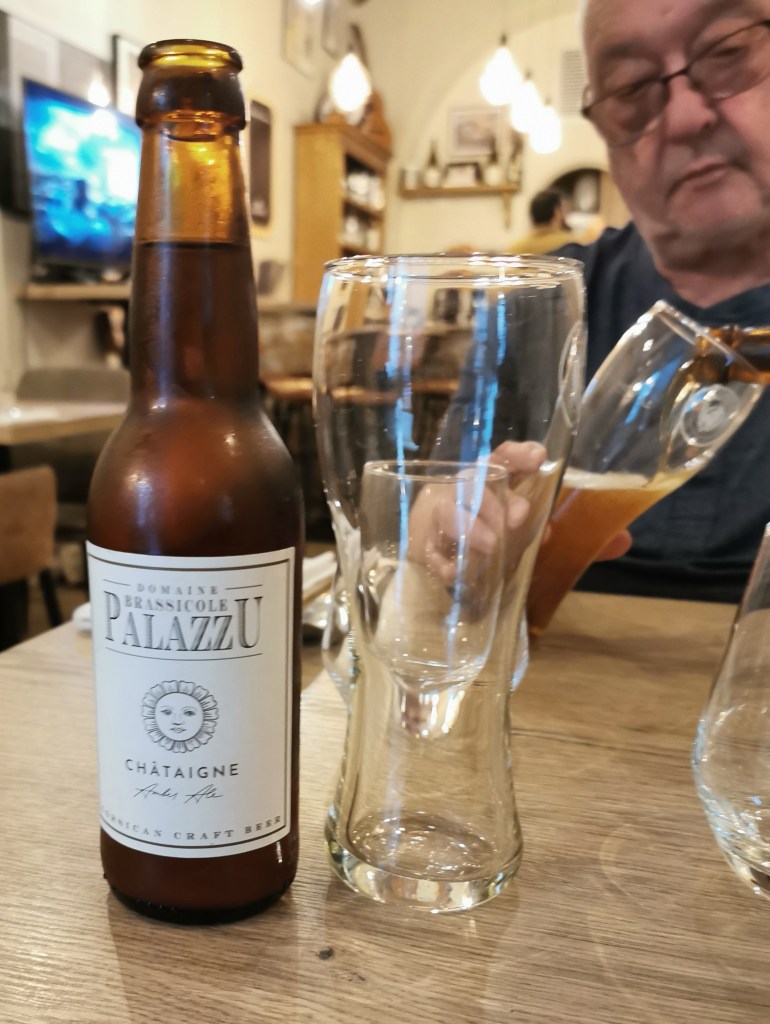
It is worth mentioning Corsican beer. We had no expectations of anything apart from cold, fizzy lager, but it turns out that Corsica has taken part in the growth of craft beers. Pietra was the first and is the largest craft brewery. We also found that many bars stocked a variety of bottled or draught beers from other breweries such as Paolina (from Corte), Brassicole Palazzu and Corsina. It was easy to get hold of amber (ambrée) beers and a speciality is beers with a chestnut flavour using the local chestnut flour. A pleasant surprise.

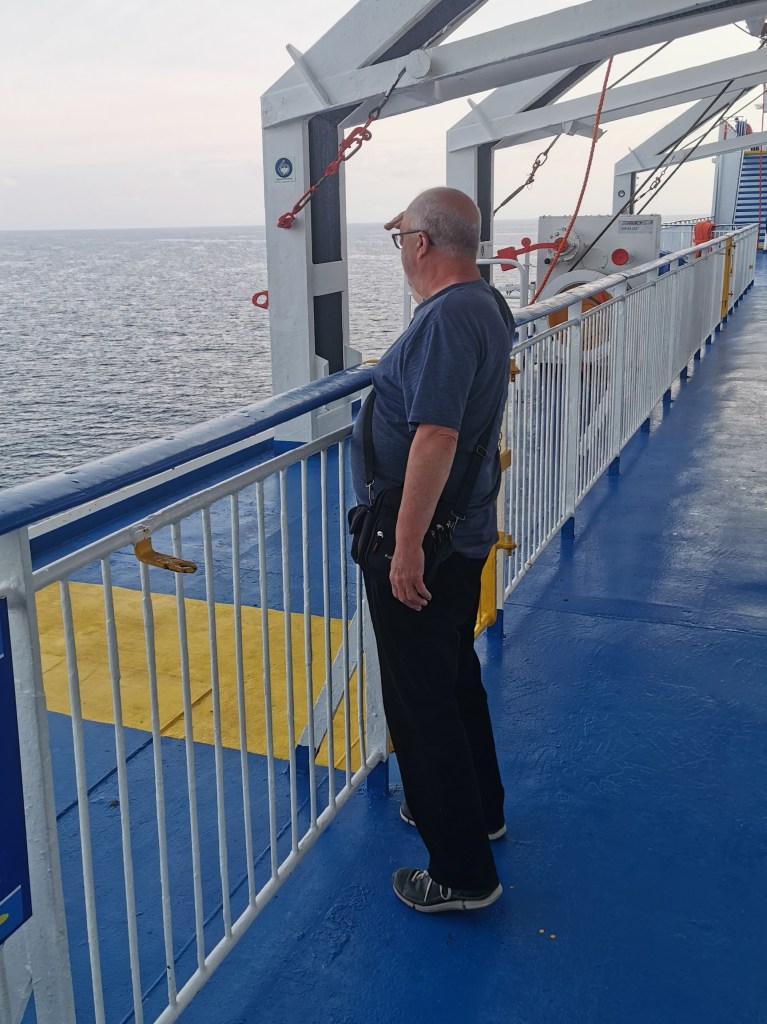
We were woken up because we were approaching Genoa – but where is it?
Once more we had booked an overnight ferry, this time from Ajaccio to Genoa, due to leave at midnight and arrive at 0900. More hanging around waiting for boarding, though the ferry port and terminal are central to Ajaccio and much more civilised than Genoa. The ferry was less crowded and the cabins were more comfortable. However, virtually everything on board closed as soon as we departed and once more we were woken up long before arrival.
Genoa
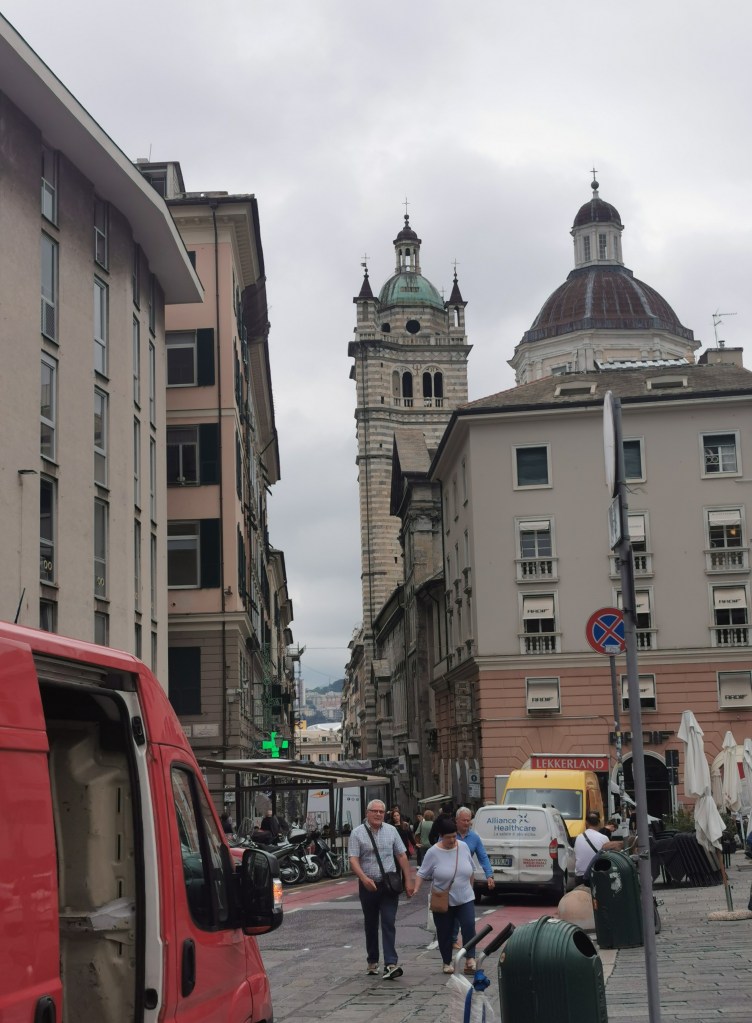
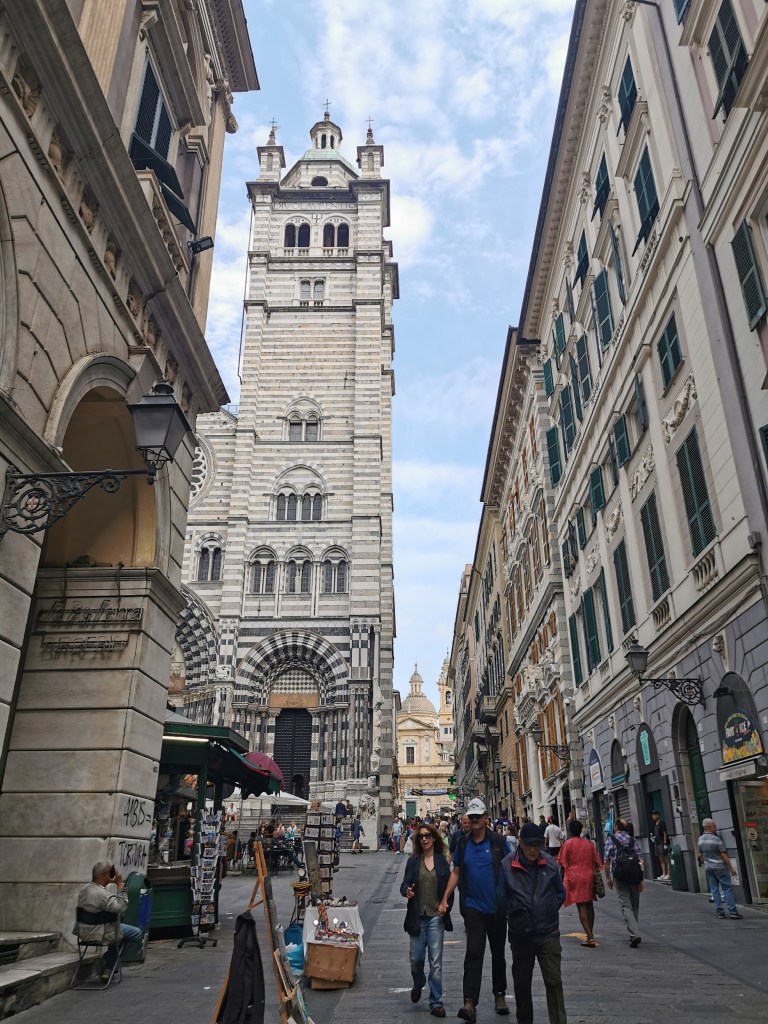

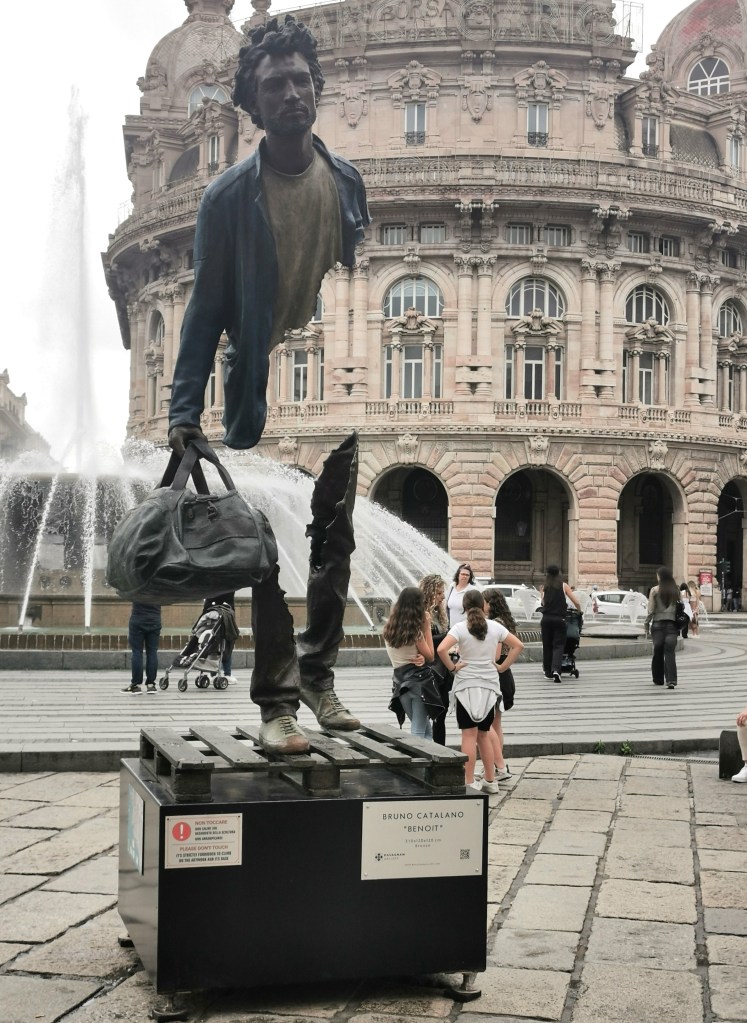
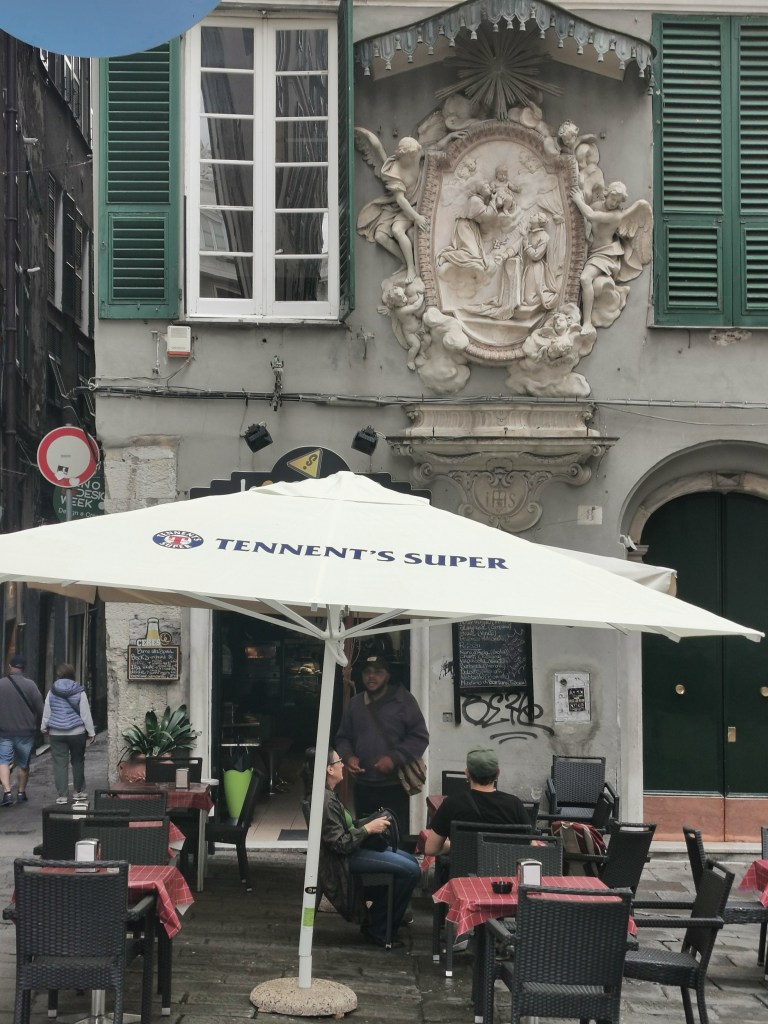
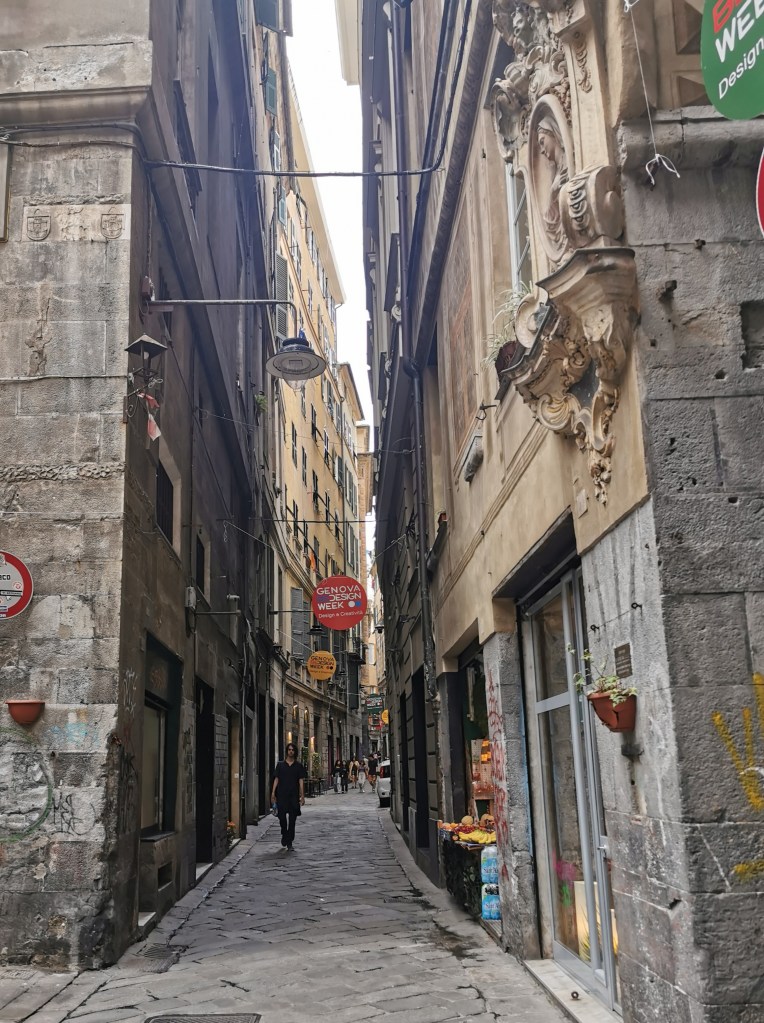
A selection of photos of Genoa – for more about the city see Tuscany, Genoa and Milan
On arrival in Genoa we made our way to the nearest metro station (a bit of a hike, and no working ticket machines), left our bags in the hotel and set off into the old city. We visited Genoa in 2023 and the visit is described here – Tuscany, Genoa and Milan. This trip provided the opportunity to revisit the parts of the city we enjoyed, but also to add two new experiences – a bar (of course) and a railway trip.


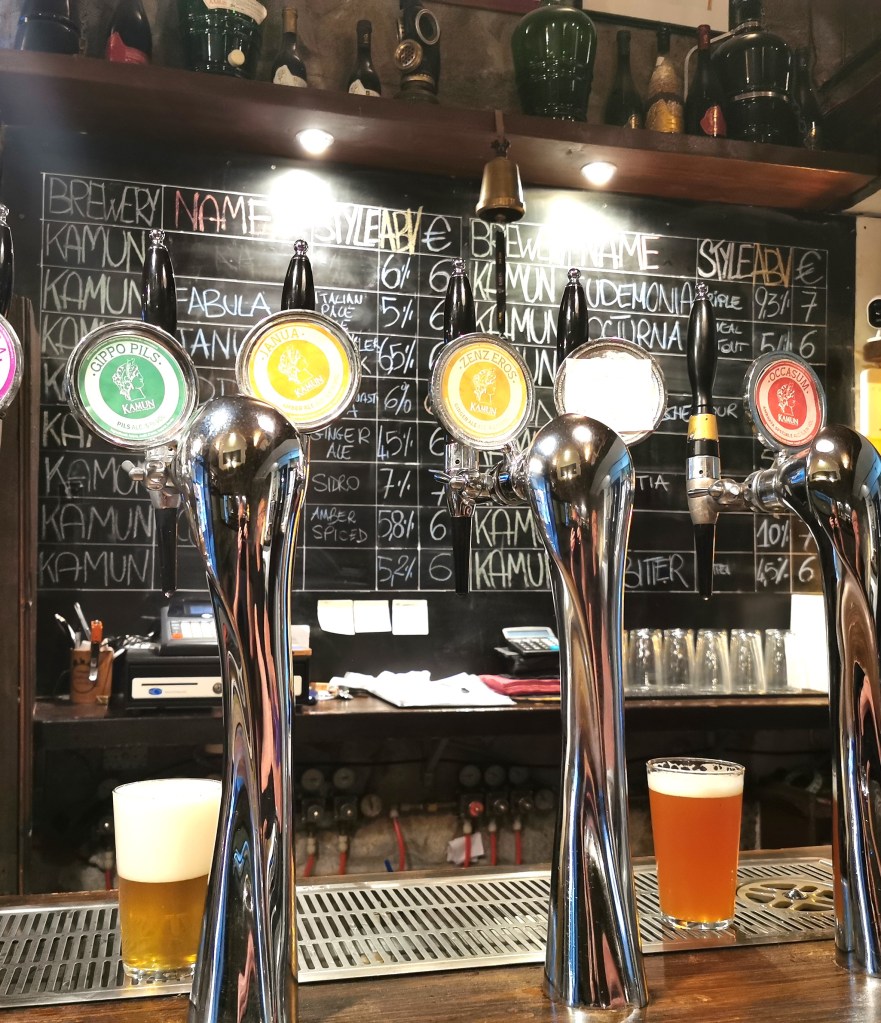
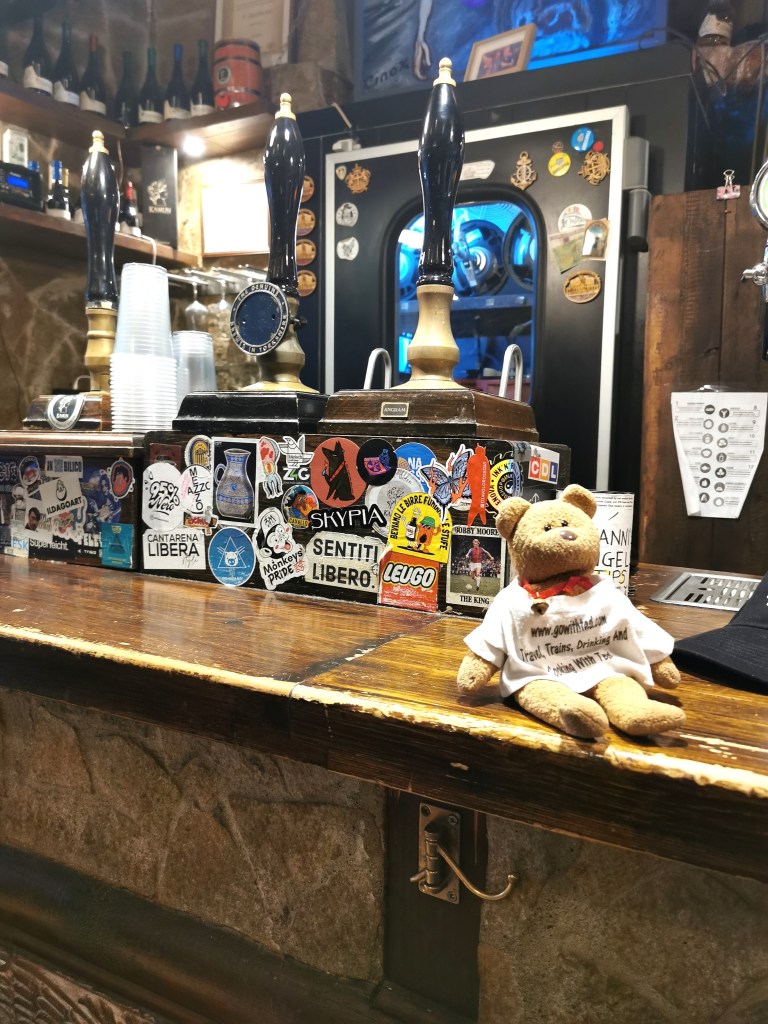
We found our way to Kamun Lab in via di San Bernardo, one of the narrow lanes in the old city, which turned out to be a cosy and atmospheric little pub which we can highly recommend (pictured above and below). During our visits there were 12 craft beers on tap, all brewed by the local Kamun brewery, including an oatmeal stout on handpump. The staff were friendly and the food was good so we returned the following evening. Our second visit coincided with Genoa Pride, with plenty of interesting characters in the bar and passing by.


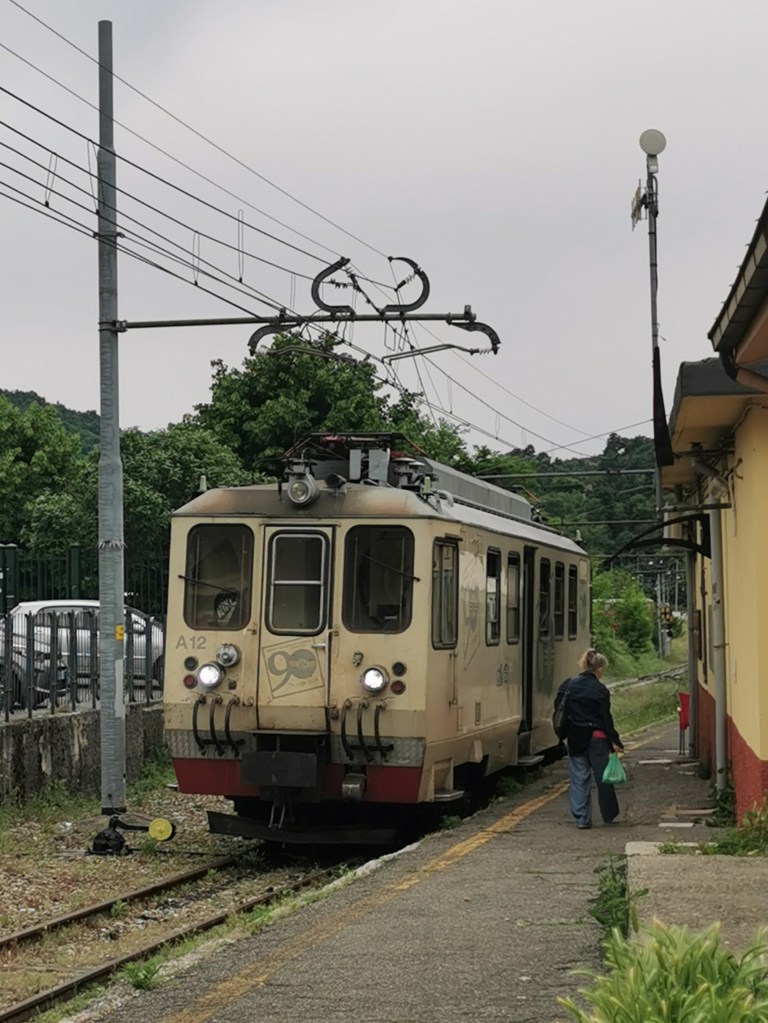
We took a trip out of the city on the narrow gauge Ferrovia Genova Casella. It runs for 24km into the mountains behind the city, commencing with views down to the coast, followed by a landscape of mountains, forests and small villages, The railcars pootle along the route every couple of hours, reaching Casella after an hour. As we arrived the Saturday morning market was just packing up, after which not a lot happens in Casella. After a brief walk around we spent a pleasant ninety minutes in Bar Centrale. On our return journey it became clear that Genoese in the know use the line for lunchtime visits to trattorias in the lineside villages. For more about the railway see Railway Buffery 2.

From Genoa Dave returned to Milan and Ted and I carried on to Nice. We bade farewell at Piazza Principe station and caught our respective trains. Ted and I had splashed out on a (cheap) first class ticket to Ventimiglia, the last station before the French border. Though all seats are meant to be reserved on Intercity trains, it is clear that people just turn up, and there is no way of telling which are reserved, so chaos ensues as people move seats and luggage.

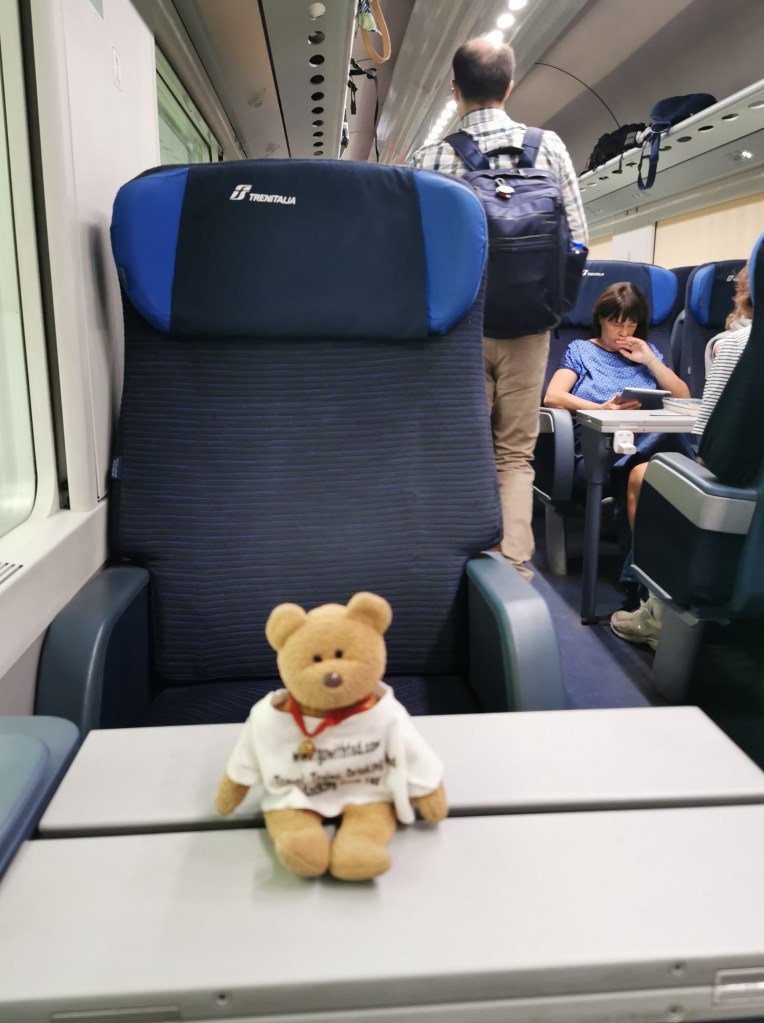
For an intercity service it is not fast – it takes over two hours for the 151km journey, with many intermediate stops. Once the industrial suburbs of Genoa are left behind much of the line is scenic, following the coastline through a series of resorts. However, some sections have been moved inland and rebuilt in tunnels so there are towns where all you see is an underground station.

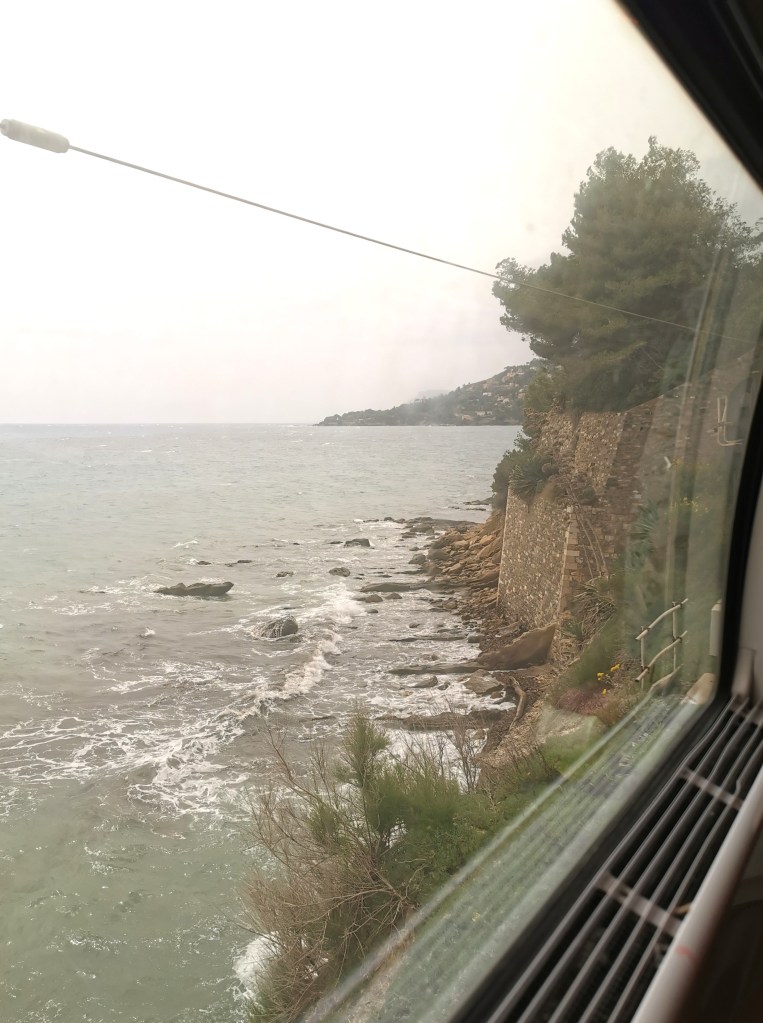
For some reason there are no regular through trains from Genoa to Nice and everyone has to change at Ventimiglia (pictured) to the frequent double-deck local French Railways (SNCF) service to Nice and Cannes. Strangely, it cost one euro less for a ticket purchased from an Italian Railways ticket machine at Ventimiglia than it would have done on the SNCF app. Anyway after a beer and food break we set off through more pretty coastal scenery interspersed with tunnels.

We passed through Monaco, or rather beneath it, as the line through the entire (tiny) country is in tunnel. However, we had good views of Menton, Beaulieu-sur-Mer and Villefranche-sur-Mer, as the train became packed with people returning to Nice from the beaches.

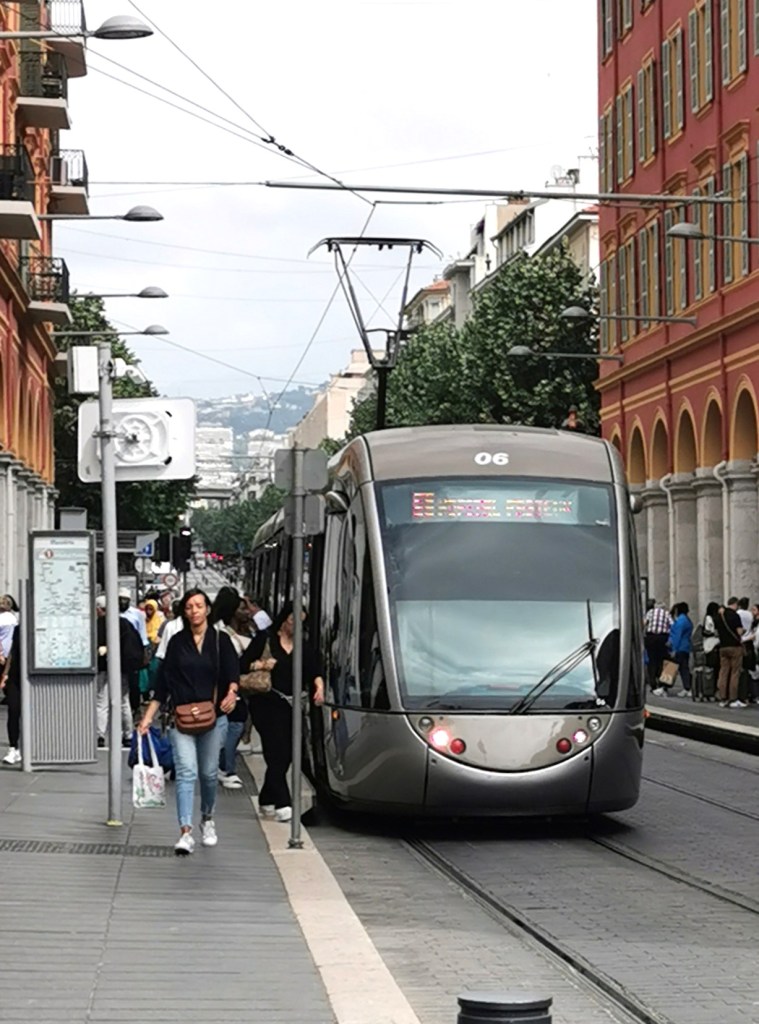
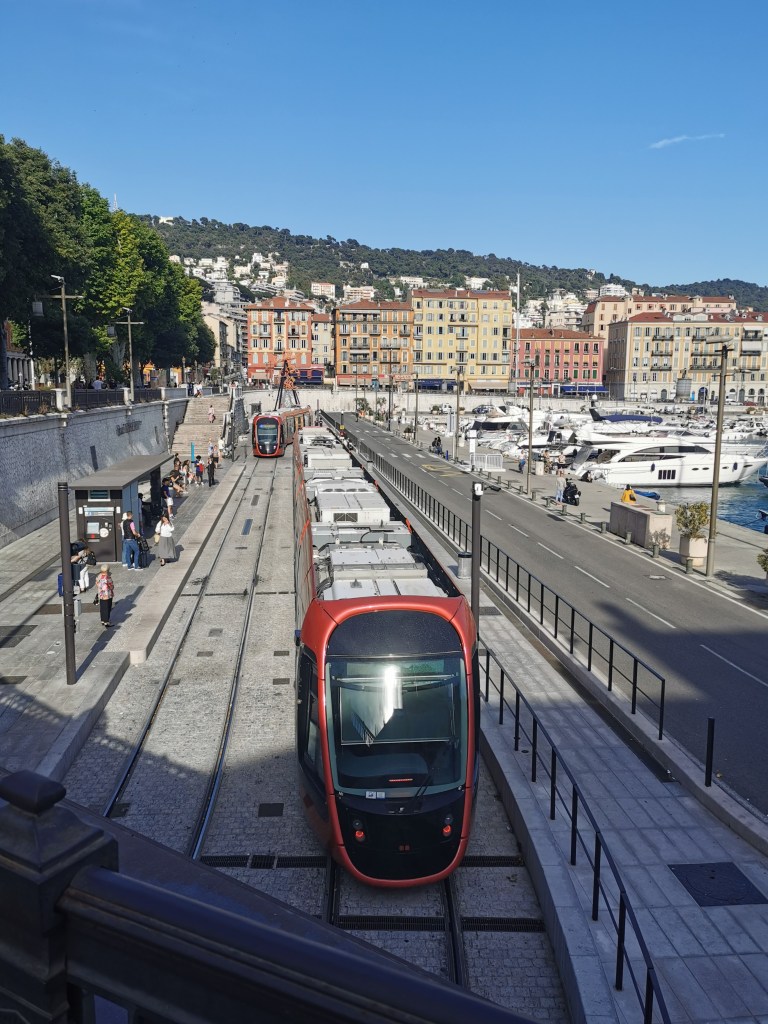
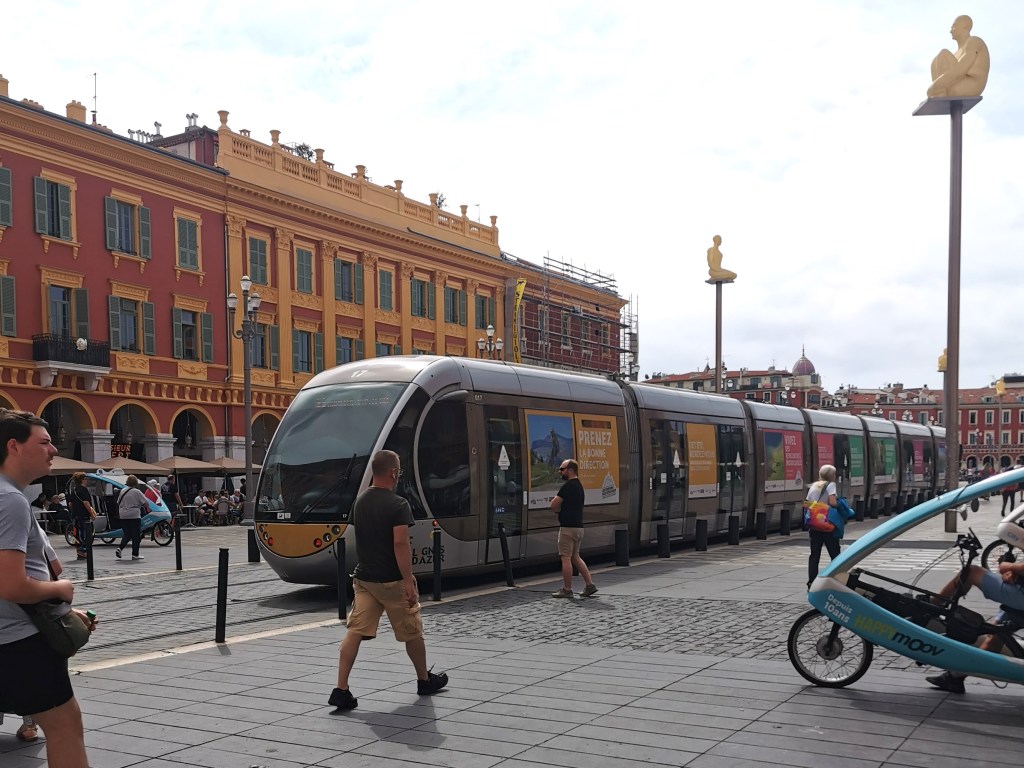
Our hotel was close by Nice Ville station, a little way from the city centre and the coast. We sorted out a tram ticket for the duration of our stay at the nearest tram stop. We made good use of the tram service, particularly line 1 which links the station area with the old city. The service is very frequent but, even so they are always packed – getting a seat is a rarity. I don’t think I’ve never seen so many people with prams on the trams and the streets – there must be something in the air to produce so many babies.
While Nice is a historic city it expanded greatly from the eighteenth century, when the benign climate, the clear light and air led to its attraction for artists and writers and its development as a major resort for the English, Russians and others who could afford to winter there. It finally became part of France in 1860 after periods as part of Italian kingdoms such as Piedmont and Sardina. Today, tourism remains a major part of its economy, with busy beaches along the seafront.

Over the next couple of days we explored the area. The main shopping streets are unexceptional, though much of the architecture is interesting and widespread pedestrianisation makes wandering around a pleasure. We sauntered along the Promenade des Anglais (pictured) at the heart of the resort. There are several impressive buildings, but it is the one place where they haven’t managed to get rid of heavy traffic which separates the promenade from the town.
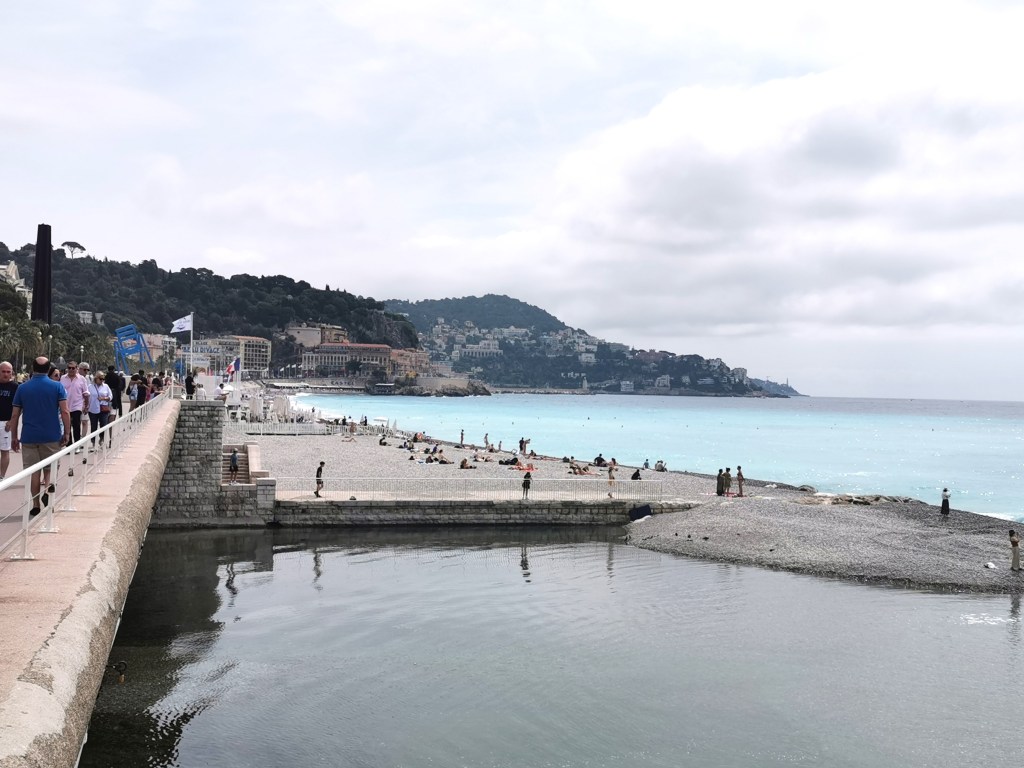

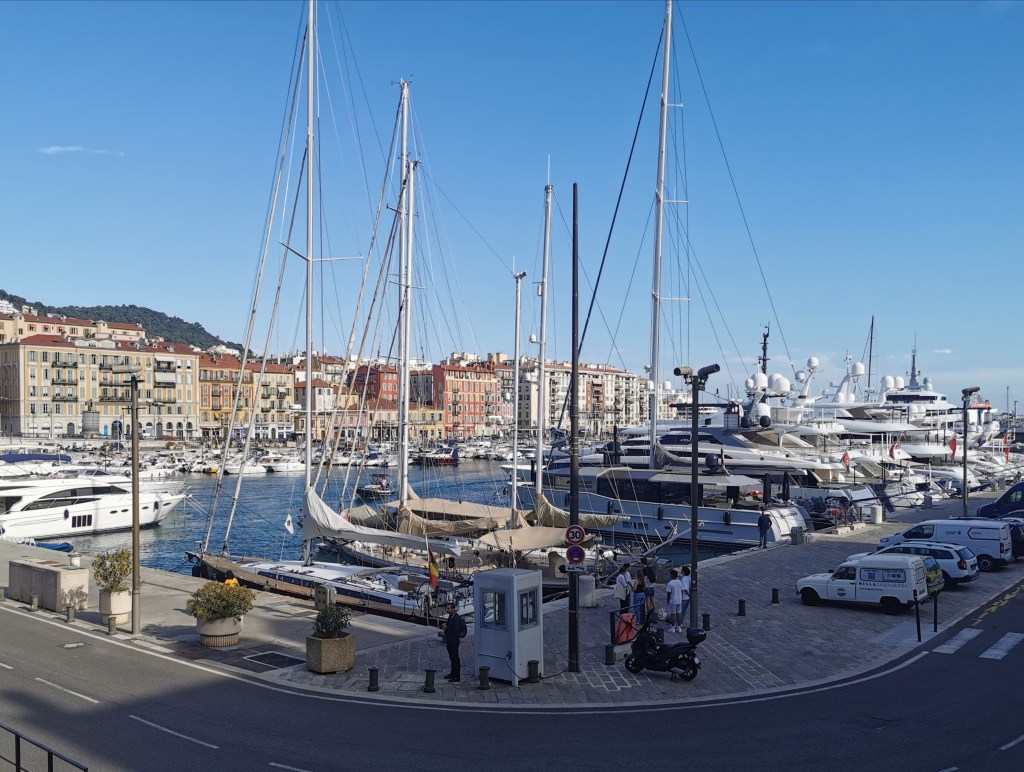
We continued further along the seafront, round the point beneath the castle hill to the sheltered port – Port Lympia, still in use for use for ferries to Corsica and some very posh yachts.

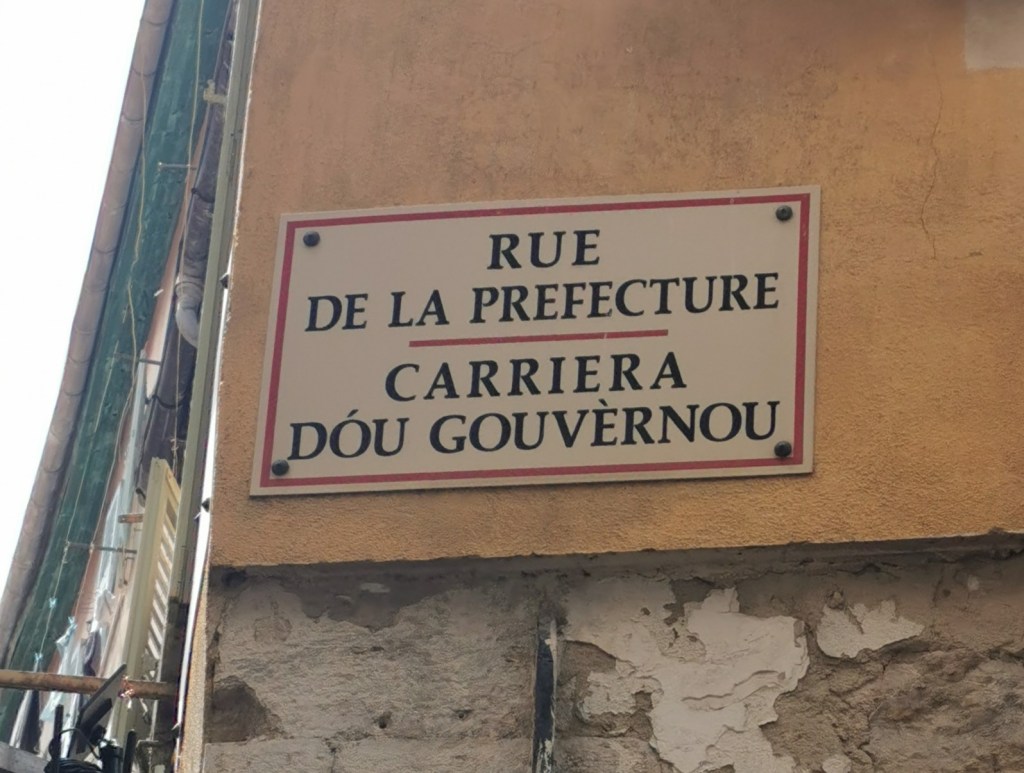
Behind the seafront and beneath the castle hill is the old town – Vieux Nice, a warren of narrow streets which includes the cathedral, opera house and Palais du Justice. It is full of café-bars, restaurants and independent shops and is the hub of the nightlife area. The street names are written in the old dialect of the city – Niçard – as well as French. Today, it is a magnet for tourists when they tire of the beach.

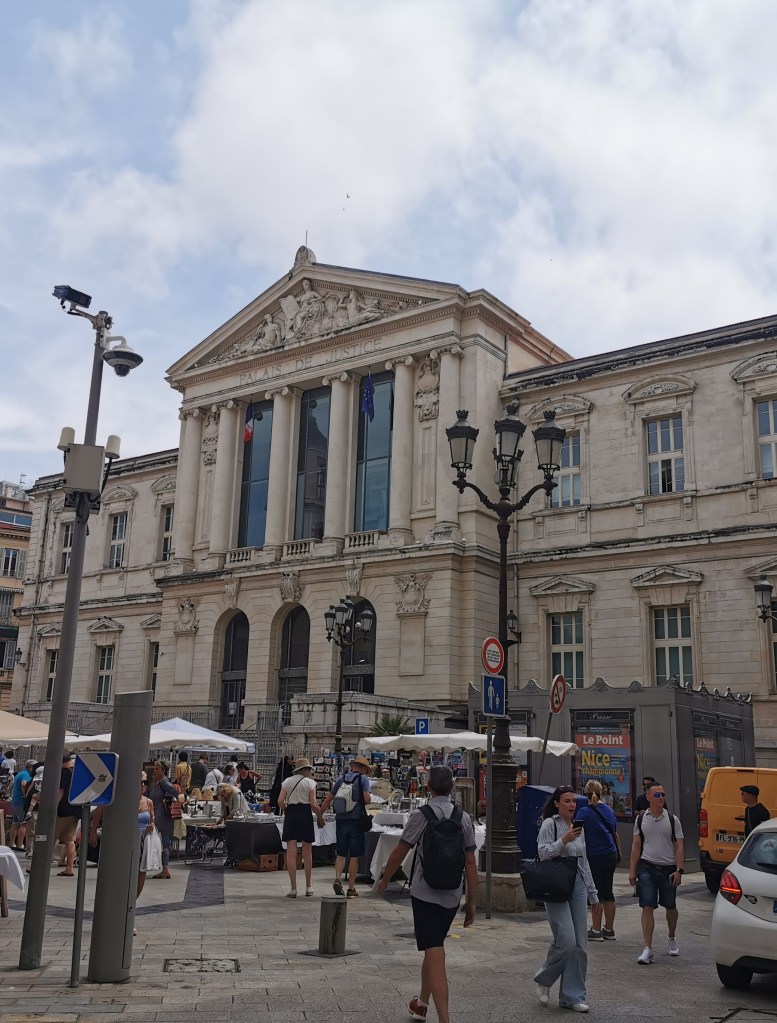
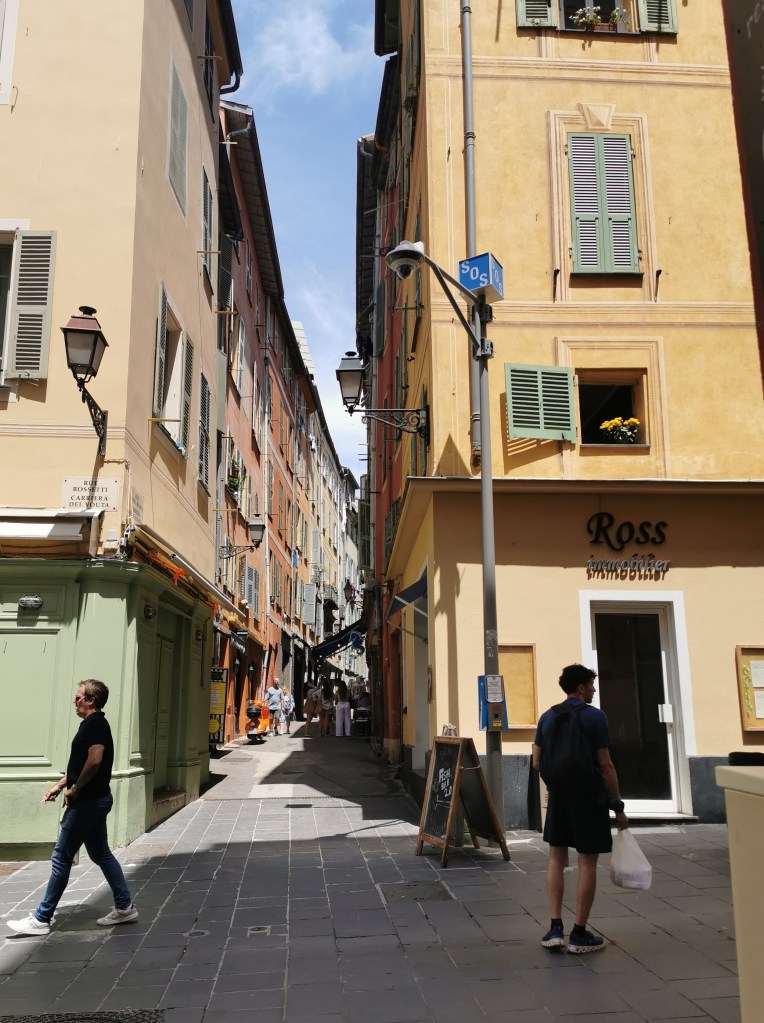

Vieux Nice (above) and the open top bus visits Villefranche-sur-Mer
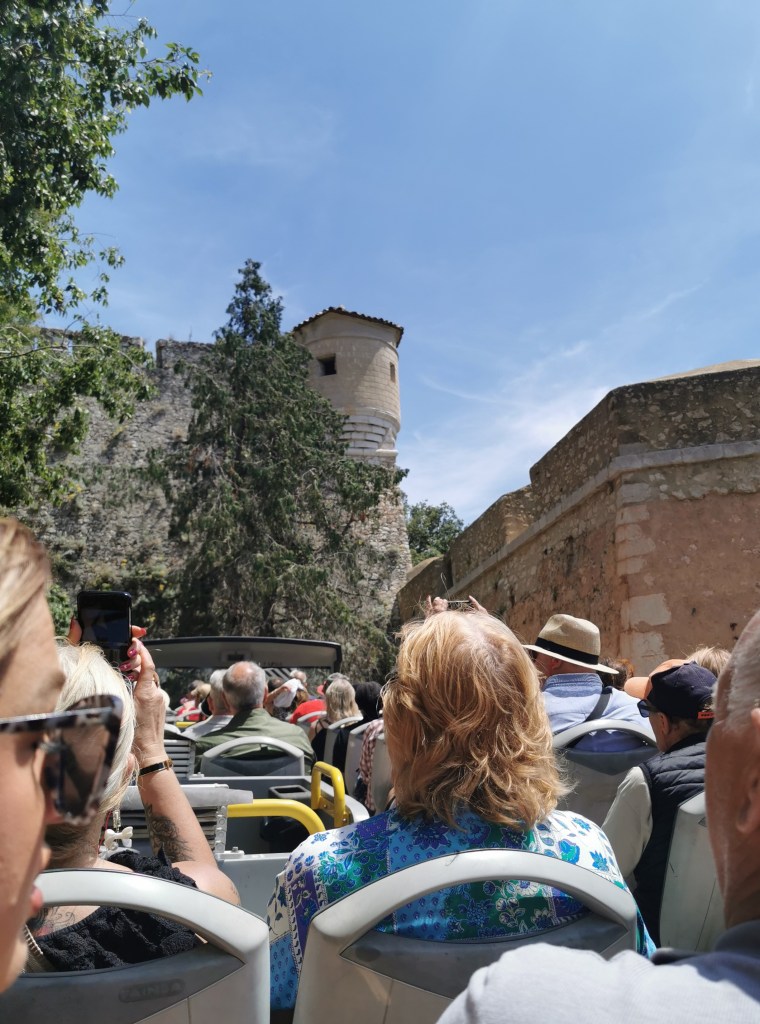
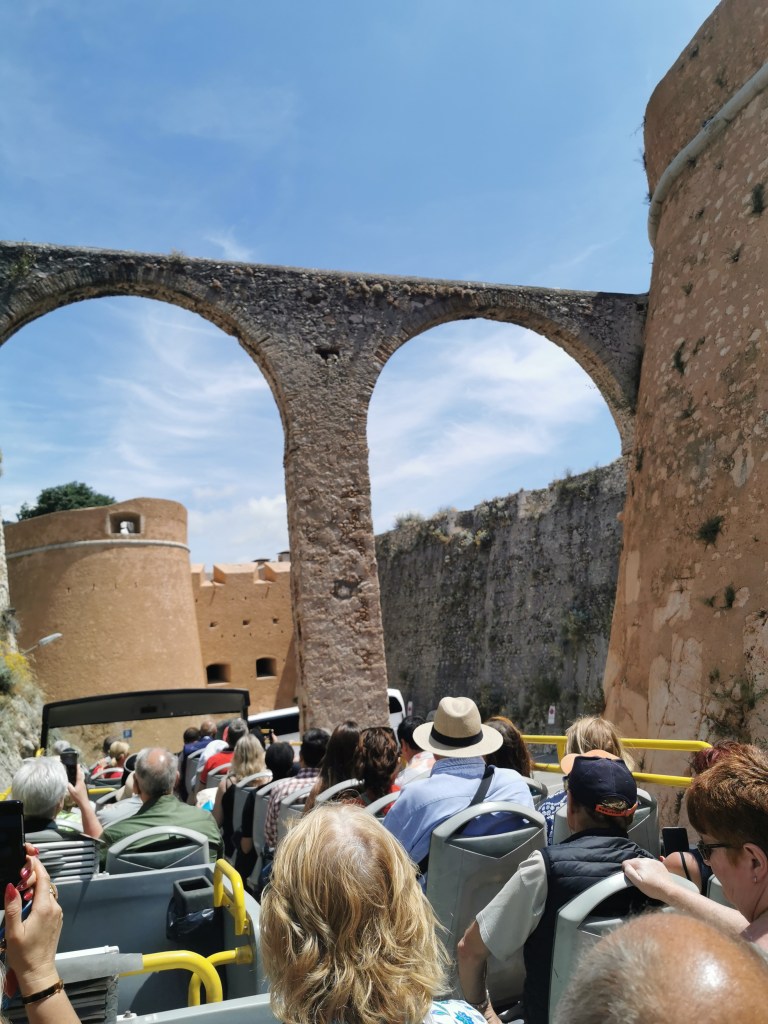
On our final day in Nice, faced with a long wait before we headed to the airport for an evening flight and trying keep the number of beers under control, we splashed out on the open top bus tour – it was a ludicrously expensive but enjoyable 90 minute trip which took us a little further afield round the Cap de Nice to the beautiful old town of Villefranche-sur-Mer, with its marina, beach and citadel.


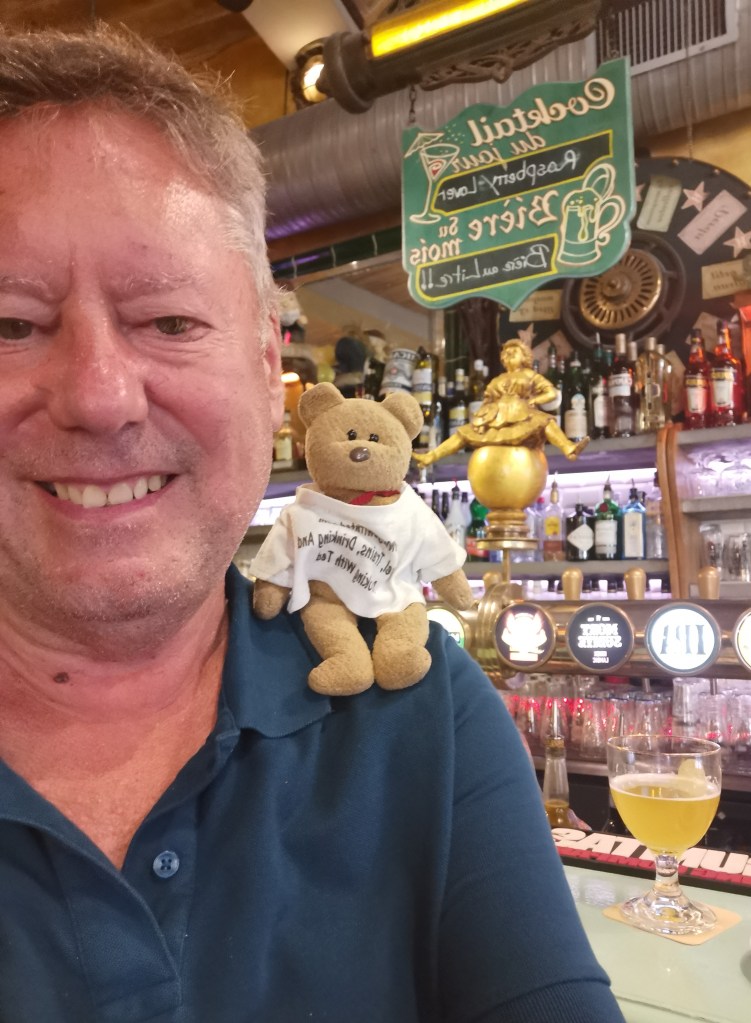

There is no shortage of places to eat and drink in Nice and, as usual, we indulged our liking of decent beer. Anyone should find something to their taste in Vieux Nice – we particularly enjoyed Les Distilleries Idéales in Rue de la Préfecture with its fine range of French and Belgian beers, open all day unlike many craft beer places. Lou Pilha Leva in Place Centrale, was excellent for cheap local snacks. There is also a group of café-bars, pubs and restaurants along the east side the Port Lympia. Nearby, in the evening, we found BDA bar, on Rue Cassini which leads from the port to Pl. Garibaldi. The best selection of beer in town turned out to be close to our hotel, on the other side of the station, Beer District Libération on Pl. Philippe Randon.
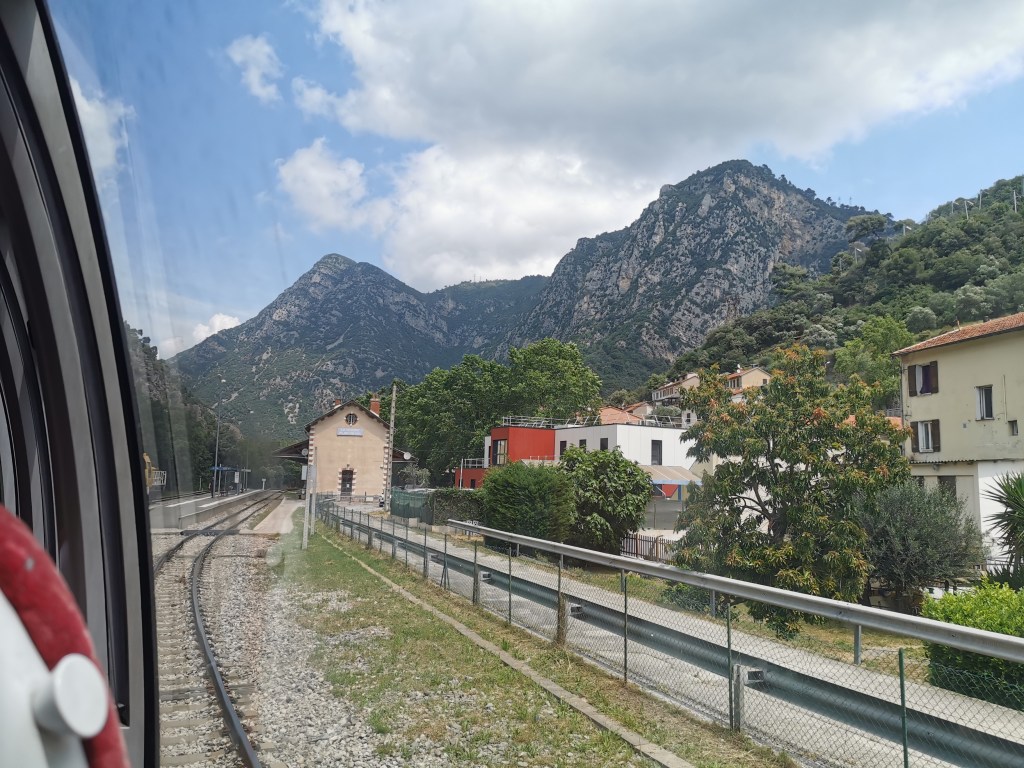
While in Nice we took our third narrow gauge train journey of the trip, this time on the Chemin de Fer du Provence (CP). The CP line runs from Nice to Digne, taking over three hours for the journey. However, the final section has been replaced by buses for a couple of years due to tunnel repairs – it should reopen by 2026. We therefore decided to travel as far as Entrevaux, and it was a worthwhile journey. Once the line leaves suburban Nice it closely follows the River Var. Beyond Plan-du-Var it travels through the spectacular Chaudan Gorge, and continues to follow the river as it climbs into the mountains.


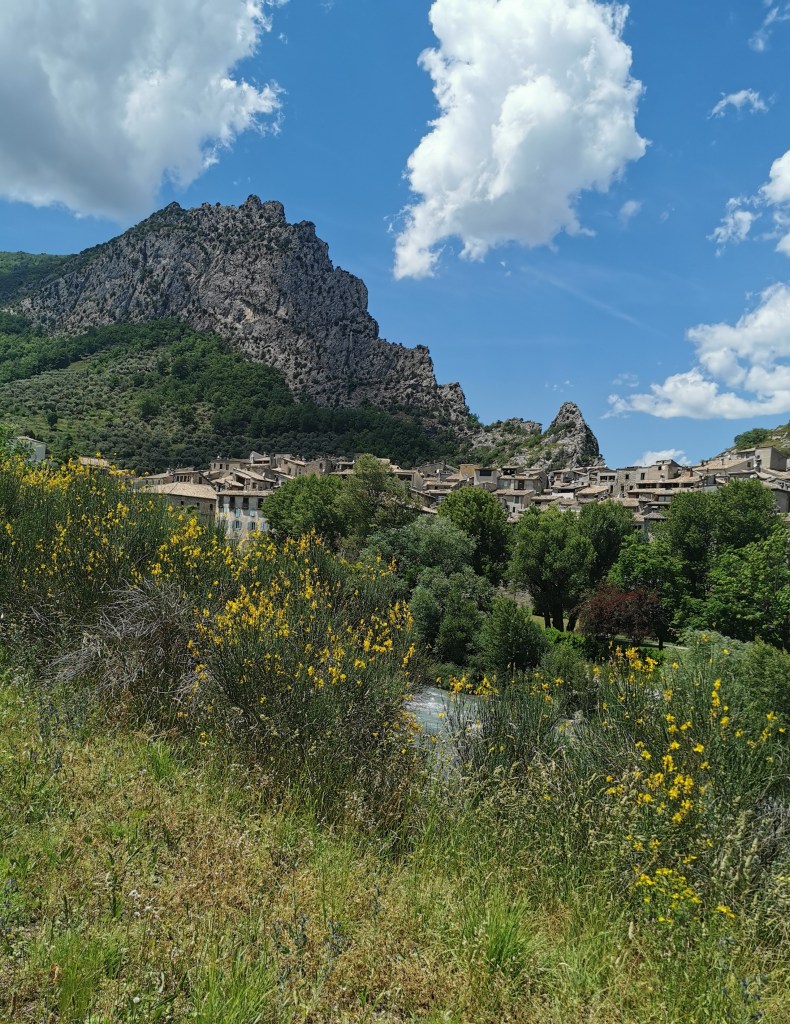
The limited service meant that we only had half an hour in Entrevaux or a five hour wait for the next train. The village looks very attractive with well-preserved medieval streets and fortifications, overlooked by a citadel. Maybe some other time we’ll have a longer visit. There’s more about the line in Railway Buffery 3.


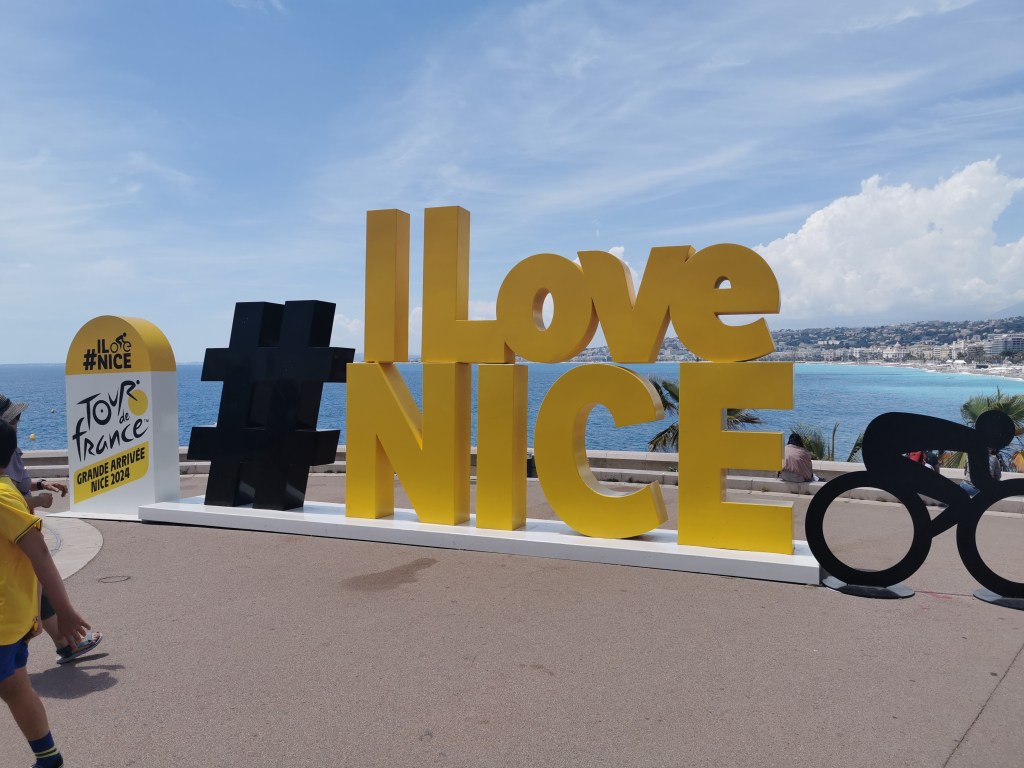
Our final journey of the trip was by tram to Nice Airport and our flight to Málaga, followed by some restful days in Benalmádena, before our next journey. All in all, an excellent trip – Corsica exceeded expectations, we enjoyed our second visit to Genoa and our first visit to Nice, several unusual train journeys and plenty of decent beer and food.
Railway Buffery
1 Chemins de Fer de la Corse / Camini di Ferru di a Corsica (CFC)

The line from Bastia to Ajaccio was opened in stages between 1888 and 1894. It is metre gauge and there are 32 tunnels on the network – the longest at Vizzavona, where the line reaches 906 metres above sea level. From Ponte Leccia a branch runs to Calvi. In addition to the through services there are some suburban services between Bastia and Casamozza, Ajaccio and Mezzana, and from Calvi to Ile Rousse. The line has survived despite various proposals for closure. The railcars on the route are modern and there are proposals to reduce the time taken for the journey. In October 2024 a new traffic management and signalling system is being installed and tested.
2 Ferrovia Genova – Casella
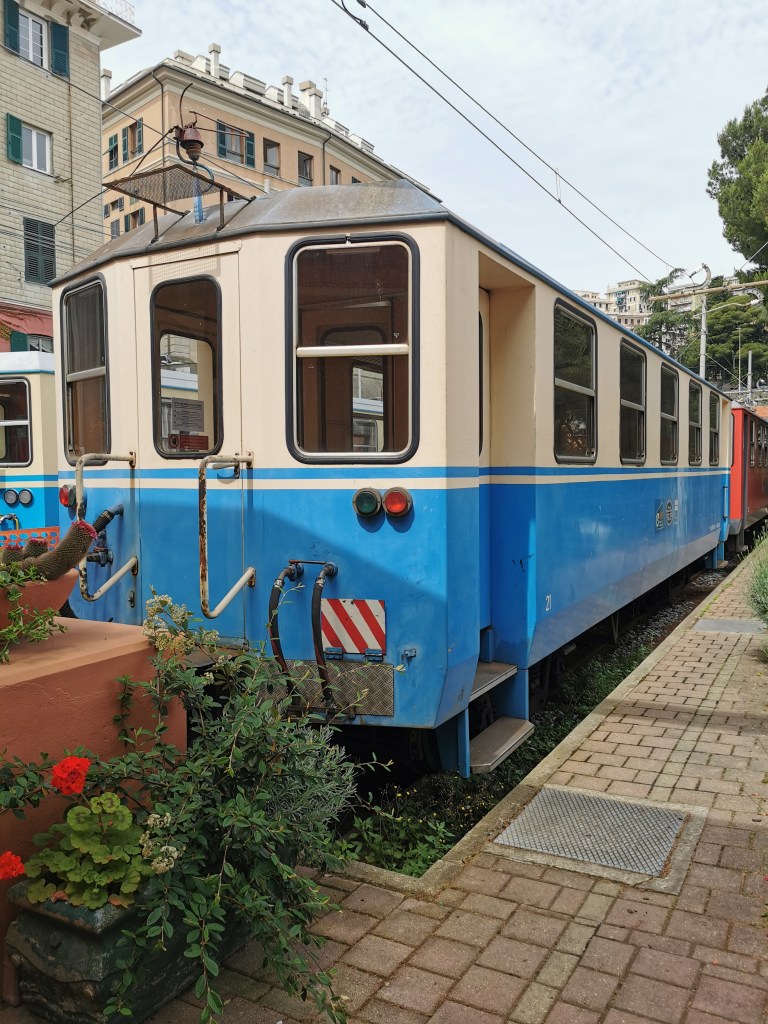
The metre gauge Genoa – Casella railway opened in 1929, as part of plans to improve links through the mountainous terrain. It is 24km long and was electrified from the start. The journey takes just over an hour, there are 18 intermediate stations and halts, most of which are request stops. There are 9 trains daily (7 at weekends). It departs from Piazza Marin station in Genoa, above the city centre, and was originally intended to link to the city tramway network, though this never happened.
3 Chemins de Fer de Provence (CP)

The Chemins de Fer du Provence line from Nice to Digne is a metre gauge line which opened in stages between 1892 and 1911. It is 151km long and includes 27 tunnels. The previous Nice terminus, the Gare du Sud, was closed in 1991 and replaced by a smaller station nearby. The old station is now part of a shopping centre. There are only three trains a day covering the entire route (currently replaced by buses at the Digne end), though there are more frequent services in the Nice suburban area, There are 48 intermediate stations and halts (24 between Nice and Entrevaux), many of which are request stops. Occasional steam trains operate along part of the line during the summer. There are plans, funded by the local authorities, for modernisation of the line and new rolling stock.
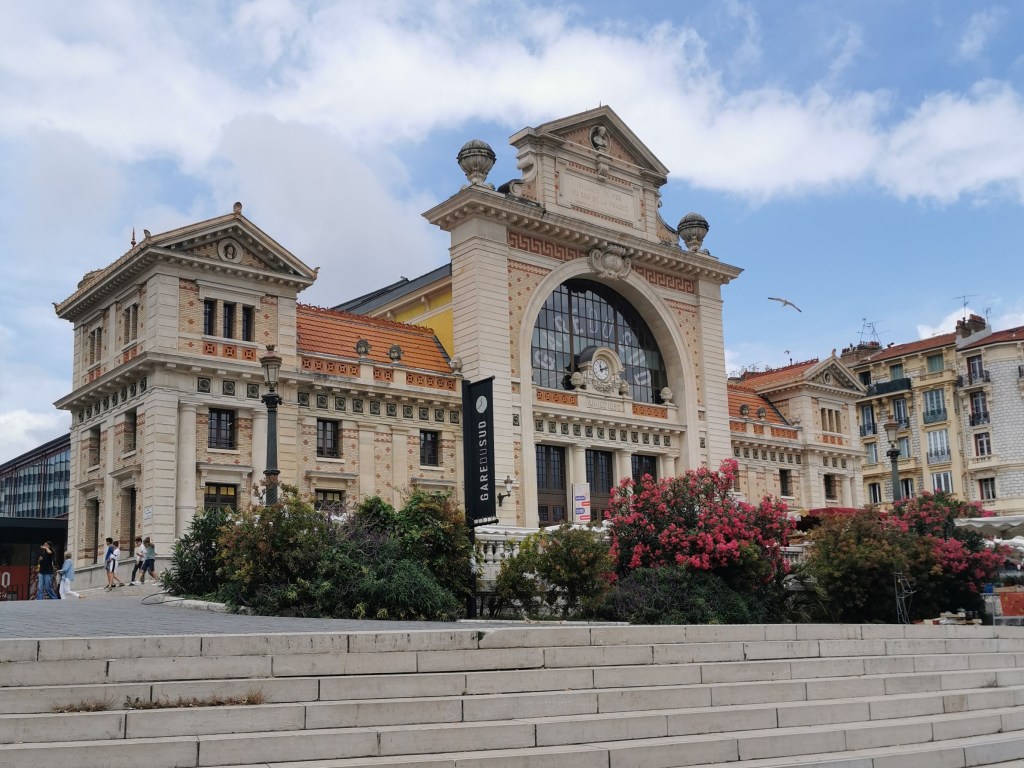
Practicalities – Getting around
Getting to Corsica

Our advice is to avoid overnight ferry journeys and avoid Genoa ferry terminal at any time of day. Previous journeys, for example across the North Sea or the Bay of Biscay, have been fairly civilised affairs but the Moby Lines overnight services are an exercise in cramming as many people and cars into the smallest space possible, providing the least possible information, poor customer service both online and on-board and minimising the time passengers can sleep. It would have been better to turn up at the last minute for boarding instead of hanging around terminals, but that can be difficult when you have to wait until midnight, having left a hotel in the morning.

In retrospect, the best ferry option for us on the outward journey would have been to stay on the train from Milan as far as Livorno, spend a night in a hotel there with an evening to explore the city, then catch the morning ferry to Basta, reaching there in the early afternoon. Our advice is to check the daytime ferry options to and from Corsica – Ajaccio, Bastia and Ile Rousse have sailings to and from Italian and French ports on various days. For details of times and fares see Moby Lines at www.mobylines.com and Corsican Ferries at www.corsica-ferries.co.uk .
We had looked at flight options. Direct UK-Corsica flights are very limited – there were none at the time of our trip but it is worth checking Skyscanner as this can change. Air Corsica operate direct flights daily between Ajaccio and Nice. They can be fully booked well in advance and can be extremely expensive – hopefully Corsican residents get reduced fares.

To sum up – research this section of the journey carefully to find the best deals, in terms of both price and timings.
Travelling in Corsica
The train service, limited as it is, is the best public transport option for getting across the island. Fares are cheap – we paid €10.10 from Bastia to Corte and €11.50 from Corte to Ajaccio. Seats cannot be reserved so just turn up in reasonable time for the train and buy the ticket at the ticket office. Details of times are at www.cf.corse.corsica/horaires .
Apart from some town services bus services across the island are very limited or non-existent.
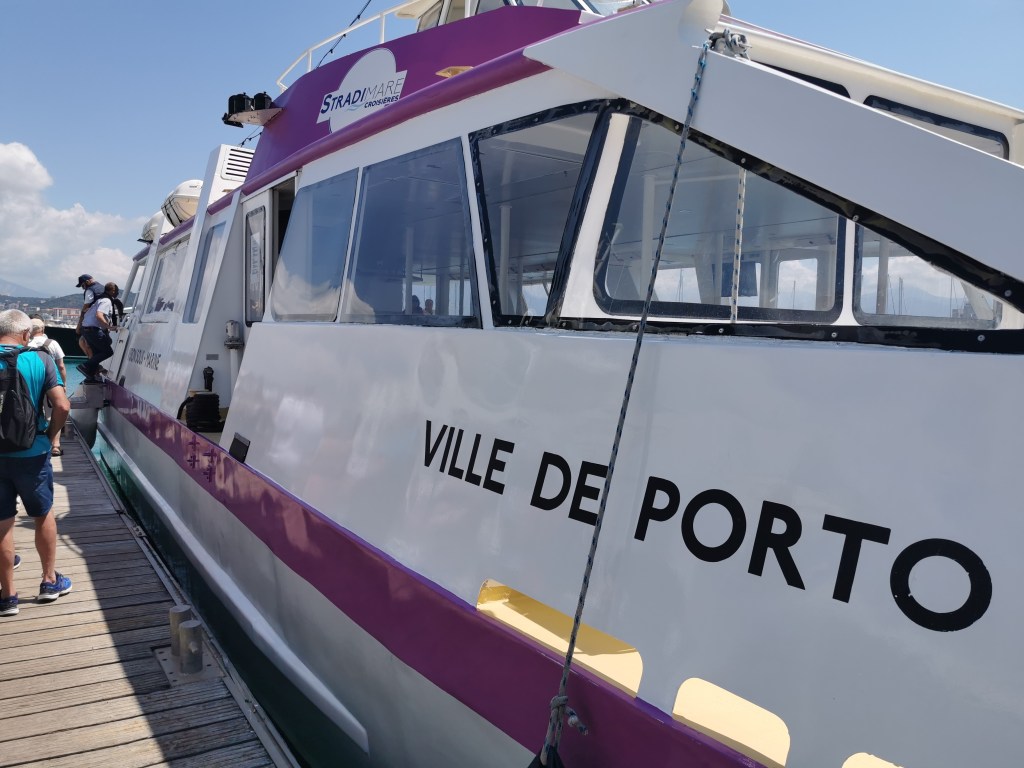
The ferry from Ajaccio to Porticcio is operated by Muvimare and the times (about 9 journeys daily) are available from www.muvimare.cosica . We had to specify a return time when we were buying the outward tickets from the ticket office on the quayside.
Genoa
Genoa has a comprehensive network of buses, a metro line, and funiculars and lifts to reach the upper part of the city, operated by the municipal transport company AMT. Details are at www.amt.genova.it . The city is spread out and hilly so it is likely that you will need to use public transport. The best option is to buy a day ticket, which costs €10 and is valid for 24 hours from first use. We bought ours from the tobacco kiosk at the bus station outside Brignole station, close to our hotel.

The Genoa – Casella railway is operated by AMT and the day ticket is valid on the trains. An ordinary return from Genoa to Casella is €9. For train times see www.ferroviacasella.it/geca/orari/ . In Genoa trains depart from Piazza Manin station. To reach it catch bus 49 from the bus station outside Brignole train and metro station. Alight at the Giardino/Montegrappa stop and a footpath up to the station is signposted.
Nice
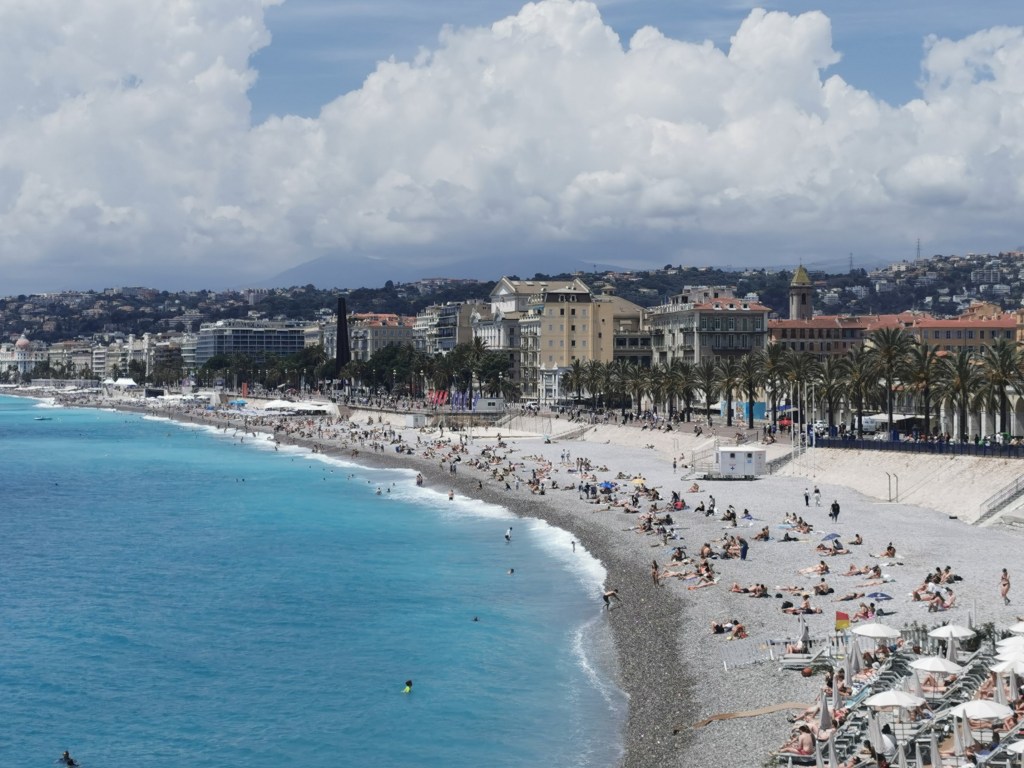
The centre of Nice is walkable but the tram service is very frequent and ideal for hopping on and off. Line 1 links the city centre with the station (Gare Thiers stop), the Libération area (for the CP line), Vieux Nice and Place Garibaldi. Line 2 runs from the Airport via the city centre to Port Lympia. The city centre interchange between the two lines is Jean Méidecin. Buy your tickets from the machines at tram stops – a single ticket is €1.70, 24 hour ticket €7, 48 hours €13 and 7 days €20.
The hop-on-hop-off bus tour departs from the Esplanade Georges Pompidou, 99 Quai des Etats-Unis, on the seafront and costs €24. Details are at http://www.nicegrandtour.fr . The service reaches Villefranche-sur-Mer, which can also be reached by local bus and train, without the commentary of course.
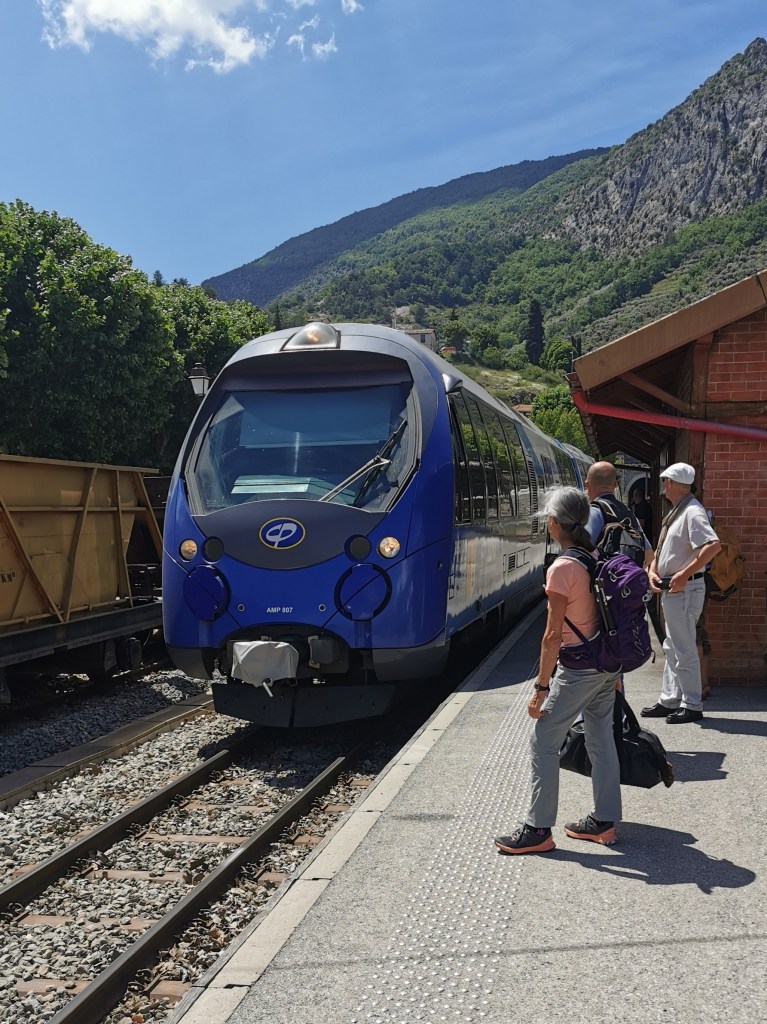
The Chemins de Fer de Provence station, is a short walk from Libération tram stop. Our 90 minute journey to Entrevaux cost €11.20 each way. Turn up and buy tickets at the station -services are not reservable. The timetable is available at www.cpzou.fr/en/timetables-and-documents/ . The service is infrequent so check the times carefully.
Hotels
The hotels we used were:
Milan: Best Western City Hotel, Corso Buenos Aires 42/5:In pleasant area, reasonably close to Centrale station. Not cheap but Milan is expensive. We also stayed there in 2023, and it was best option locally.
Bastia: Hotel les Voyageurs, 9 Av. Marechal Sebastini: Independent hotel with character, close to town centre and railway station. Comfortable room and good breakfast.

Corte: Hotel de la Paix, 15 Av du Général de Gaulle: Two star hotel and the price reflected that, Perfectly adequate and benefits from being in the town centre, where there are limited options.
Ajaccio: Ibis Styles Ajaccio Napoleon, 91 Cours Napoleon: Slightly out of centre but bay front location. Good room and pleasant communal areas.
Genoa: Starhotels President, Corte Lambruschini 4.: Modern multistorey hotel close to Brignole station. We stayed there in 2023 and were happy to return. Not cheap but good value.
Nice: Ibis Nice Centre Gare, 14 Av. Thiers: Adjacent to Nice Ville station. Modern hotel. Not cheap but comfortable room, good breakfast and pleasant bar.
Acknowledgements: Thanks to Dave Webster for his company on the Corsica and Genoa parts of the trip.
Photographs: The following photographs were taken by Dave Webster: Steve and Ted on the Bastia – Corte train, Steve on the ferry to Genoa, Steve outside Kamun Lab, the entrance to the bar and Steve with baseball cap inside the pub. The base map for Our Journey is Rail Map Europe, 3rd edition, 3rd revision, by the compilers of the European Rail timetable, 2024. All other photos are by Steve Gillon
Copyright: Text and photos (except those listed above) are copyright (c) Steve Gillon, 2024.
 Go with Ted