We’ve been intending to travel back from our home in Benalmádena to our home in Durham by train for some time now. In early 2020 we had a trip planned and booked, which was scuppered by Covid. In October 2023 Ted and I and our friend Ken finally got round to it – we have other routes planned for the future. This is the account of the trip, plus some practical advice for anyone wishing to follow in our footsteps. We took a week over the journey, with overnight breaks in Burgos, Bordeaux, Angers and Lille.


Málaga to Burgos
The first day took us to Burgos by AVE high-speed train from Málaga to Madrid Atocha, across Madrid by local suburban train to the other principal station, Chamartín, and then by Alvia express train to Burgos (see note 1). The journey to Madrid is familiar to us (see, for example Alicante and Cuenca), from Madrid onwards much less so. Chamartín station is in the northern suburbs – even after many years it doesn’t feel like a major transport node and there is not much in the way of facilities locally. However, during our wait we found Cervecería Pepe a few minutes walk away, for a couple of beers and tapas.

The high-speed line from Madrid to Burgos opened in stages between 2007 and 2022. The downside of the new route is that it tunnels beneath the Sierra de Guadarrama (the fourth longest train tunnel in Europe), missing out much of the scenery. However, it now less than 2 hours to Burgos instead of more than 4 by the old route via Avila (see note 2). The train emerges from the tunnel near Segovia then crosses the plains via Valladolid to reach Burgos. The station, Burgos Rosa Manzano, is well out of town and, despite the arrival of a busy Saturday evening train from Madrid, there were no taxis and an infrequent bus service into town and our hotel. – we got there eventually.
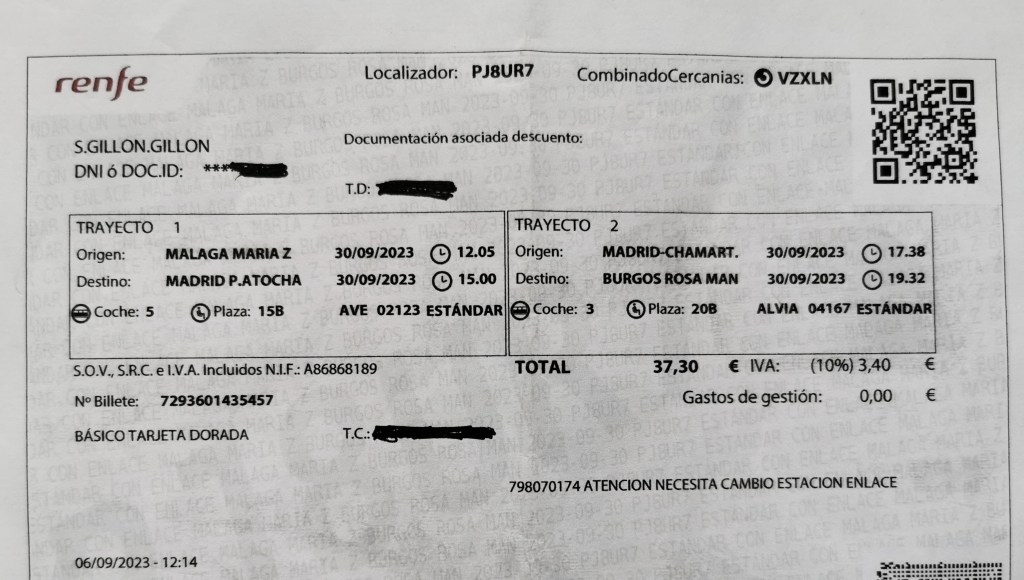
Note 1. AVE (Alta Velocidad España) trains are the fastest in Spain, operating on the network of high-speed standard gauge lines built since the 1990s. Alvia trains are high speed trains which can operate on both standard gauge and Spanish broad gauge track, and are therefore able to serve more destinations.
Note 2. There are still trains several times daily which operate via the old, scenic, route. We visited Avila in 2002 and it is worth a stopover.
Burgos

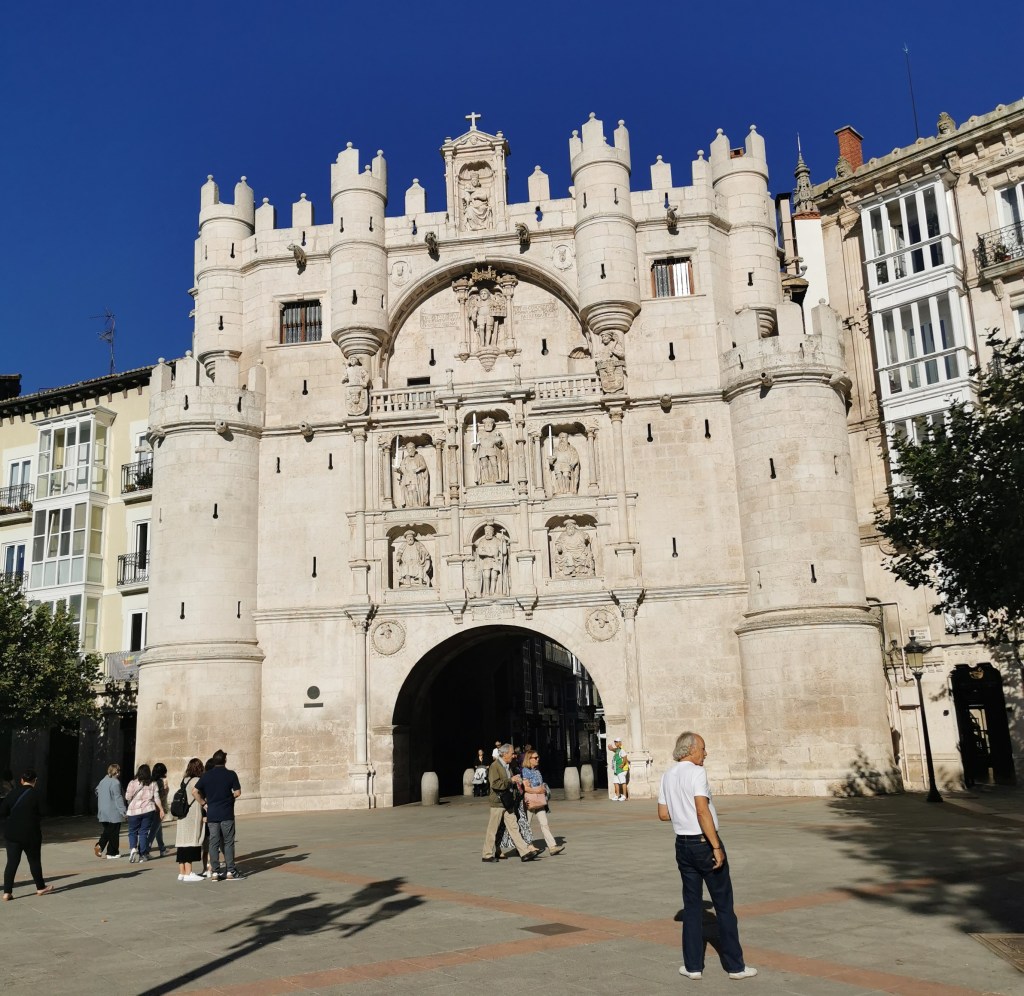
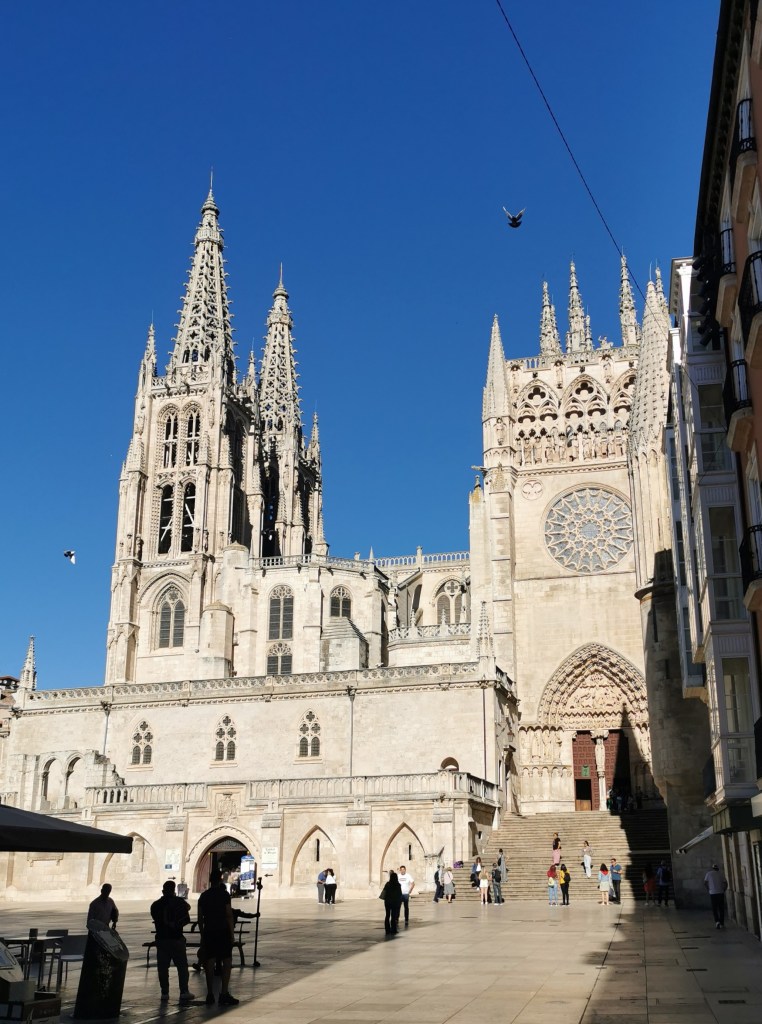
The Norte y Londres is a traditional hotel (so traditional it has sheets and blankets, not duvets) catering mainly for walkers on the Camino de Santiago, which passes through Burgos The heart of the city is historic, with a cathedral, medieval streets and squares overlooked by castle remains. Today it is surrounded by recent apartment blocks and has a population of 180,000. We spent some of our time wandering around the old city – by the Plaza Mayor, the paseo by the Rio Arlanzón, the Santa Maria Arch and the cathedral area. We couldn’t face the hike up to the castle area – only after our return did I discover that the tourist road train would have taken us up there to see the views for a few euros.


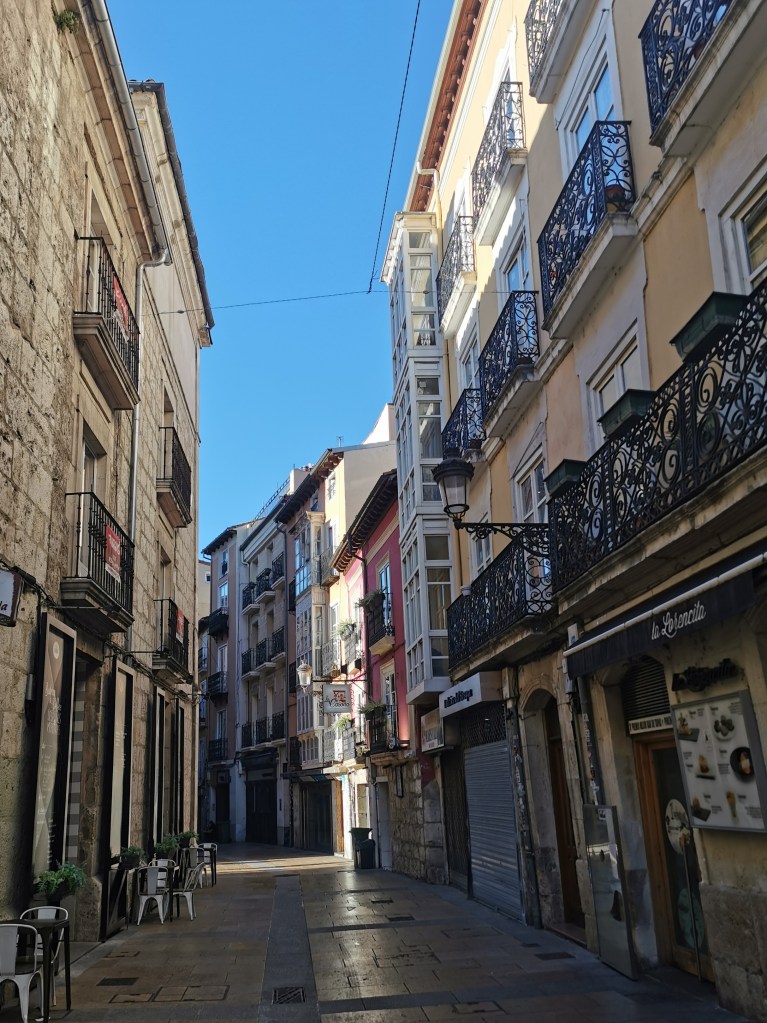
The main attraction for Ted and I was the food, specifically the tapas, to see how it compared to last years visit to Bilbao and Logroño (Bilbao and Logroño). Around the corner from the hotel is Calle San Lorenzo, lined with tapas bars. Apart from breakfast in the Plaza Mayor we ate all our food there, including the local specialities – Morcilla de Burgos (black pudding) and Queso de Burgos (a soft white whey cheese).


Like the locals we hopped from bar to bar and sampled their specialities, including morcilla with apple and alioli, morcilla with quail eggs, scallops in cheese sauce, patatas bravas, stuffed peppers and cuttlefish ink croquettes. We particularly enjoyed La Comidilla, La Quinta del Monje, Ría Arosa and Mesón Los Herreros. We sampled the beers also – several tapas bars had a reasonable selection and we also managed a visit to a craft beer bar, the Golden Garden.



Burgos to Bordeaux
The first train of the day took us from Burgos to San Sebastián-Donostia in 3 hours. Just outside Burgos there is a gauge changer and from then on we were on the classic railway line. The landscape became more varied as we crossed a low pass into the Ebro valley at Miranda and then entered the Basque Country. We called at Vitoria-Gasteiz, the Basque capital, then through mountainous country and narrow industrialised valleys to San Sebastián-Donostia. This route was the main line from Madrid to Paris. Today high-speed trains travel via Barcelona, and there are no through trains to France. Construction work is ongoing and a high-speed line may be completed by the 2030s.
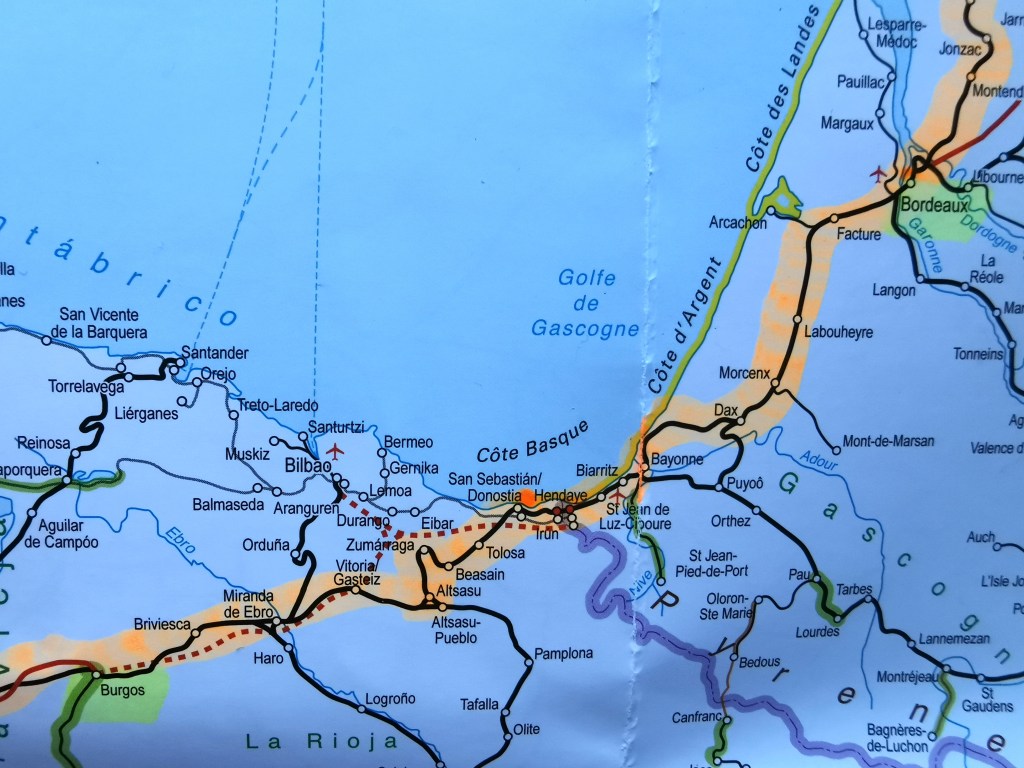
San Sebastián- Donostia station is currently a huge building site with only two platforms in operation. To reach France we had to transfer to a suburban train to Irún, walk to the separate EuskoTren (Basque Railways) station, where a narrow gauge train took us on a four minute journey across the river and the border to Hendaie / Hendaye. Across the road from the Hendaye stations (EuskoTren and SNCF) there are several café-bars – we took advantage of them for a food and drink break.

Next was a double-deck TGV to Bordeaux. We travelled via Biarritz, Bayonne and Dax, then across Les Landes de Gascogne, a large flat sandy plain mainly covered in pine forests, and arrived at Bordeaux Saint Jean after 2½ hours (see note 3), The train, though modern, was the least comfortable of our journey, perhaps because it was full of people with copious luggage. We made our way to our hotel in the area behind the station, in a district which looked as though it had fallen on hard times. It is now being redeveloped for offices and flats, demolishing many of the traditional properties in the process.

Note 3. The Hendaye – Bordeaux line is a conventional line, so TGV services, despite their high-speed capacity, are only slightly faster than the regional trains on the route.
Bordeaux

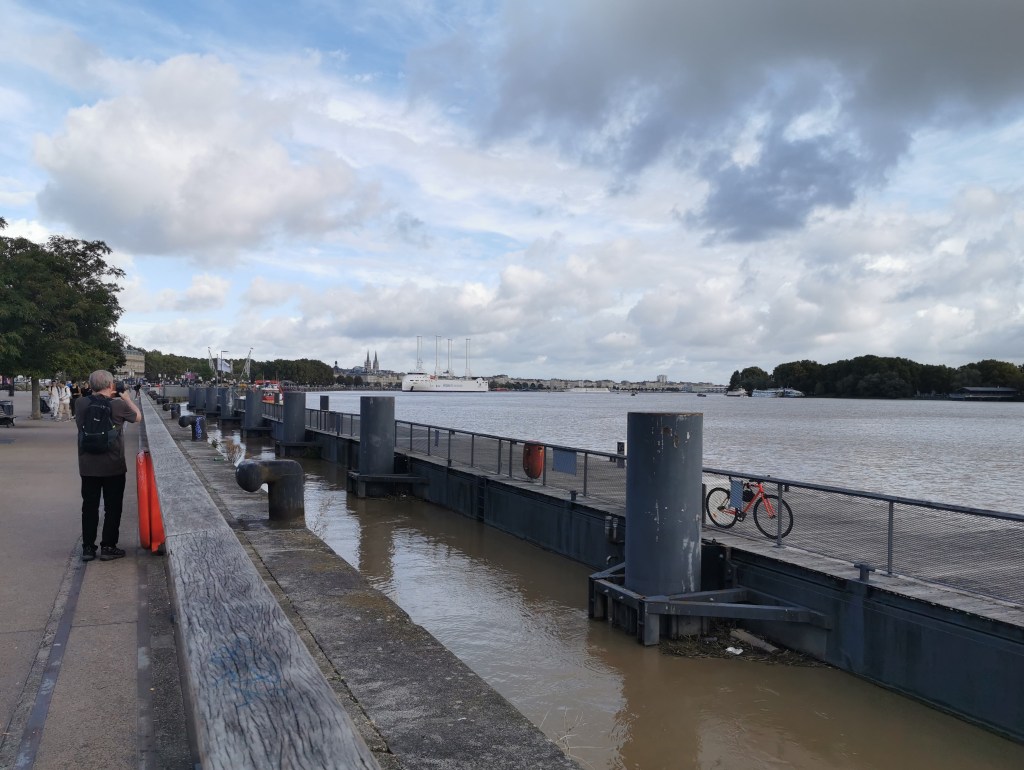

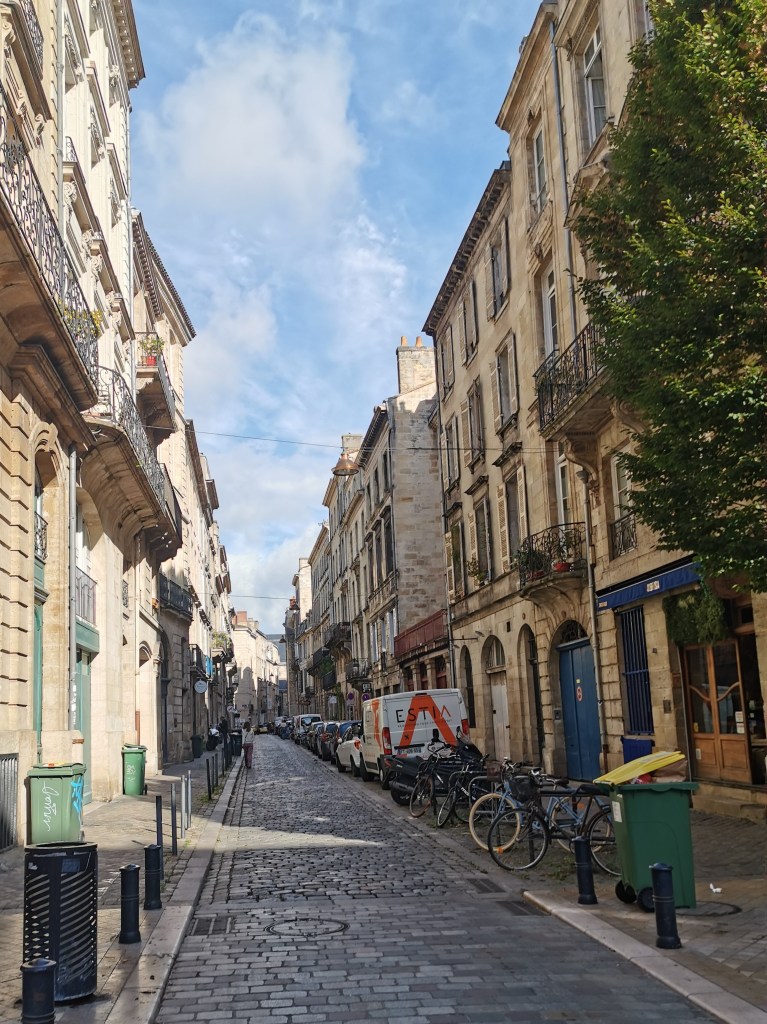

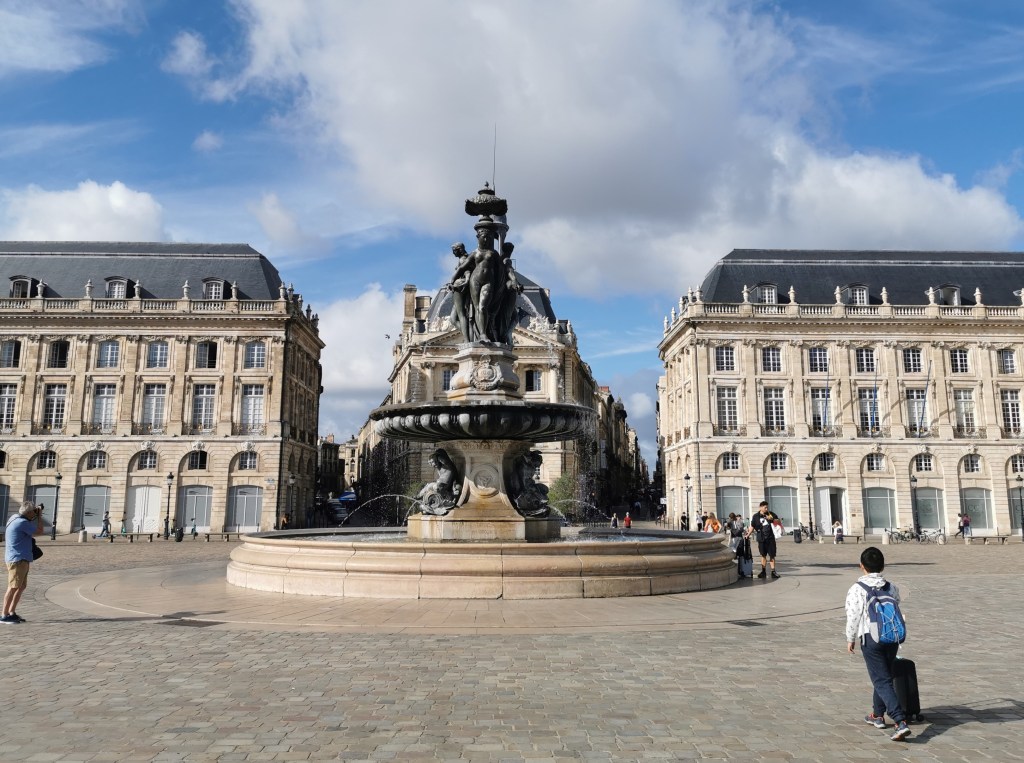
We had two nights in Bordeaux, therefore a full day to explore and we were suitably impressed. It is an attractive city with fine architecture and the centre is pedestrian friendly. We caught the tram into town – the service is very frequent and efficient. From the Pont de Pierre we walked along the Garonne riverside, through the Porte de Cailhau gate and around the medieval Saint Pierre district. From there we visited the Place de la Bourse and walked through the city centre via the Grand Théâtre to the cathedral and the Hôtel de Ville. By then it was time for an afternoon drink, people watching from the terrace of Chez Fred in the Place du Palais.


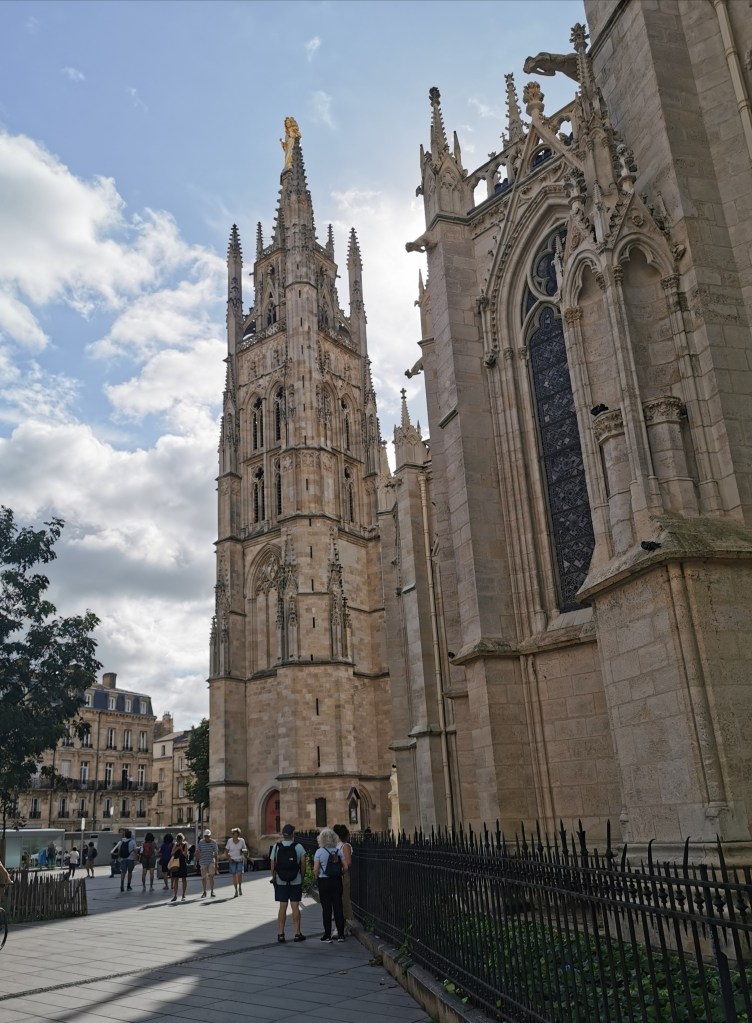
We had made the assumption that Bordeaux would be dominated by the wine trade (and there are indeed many good options). We were pleasantly surprised by the availability and variety of good beer. We visited several places and , in addition to, Chez Fred, we can recommend the craft beer bar Space Factory in particular. There are plenty of other options around the centre and riverside, from the corporate Frog and Rosbif and Les Berthrom to local cafe-bars and a wide variety of restaurants.



Bordeaux to Angers
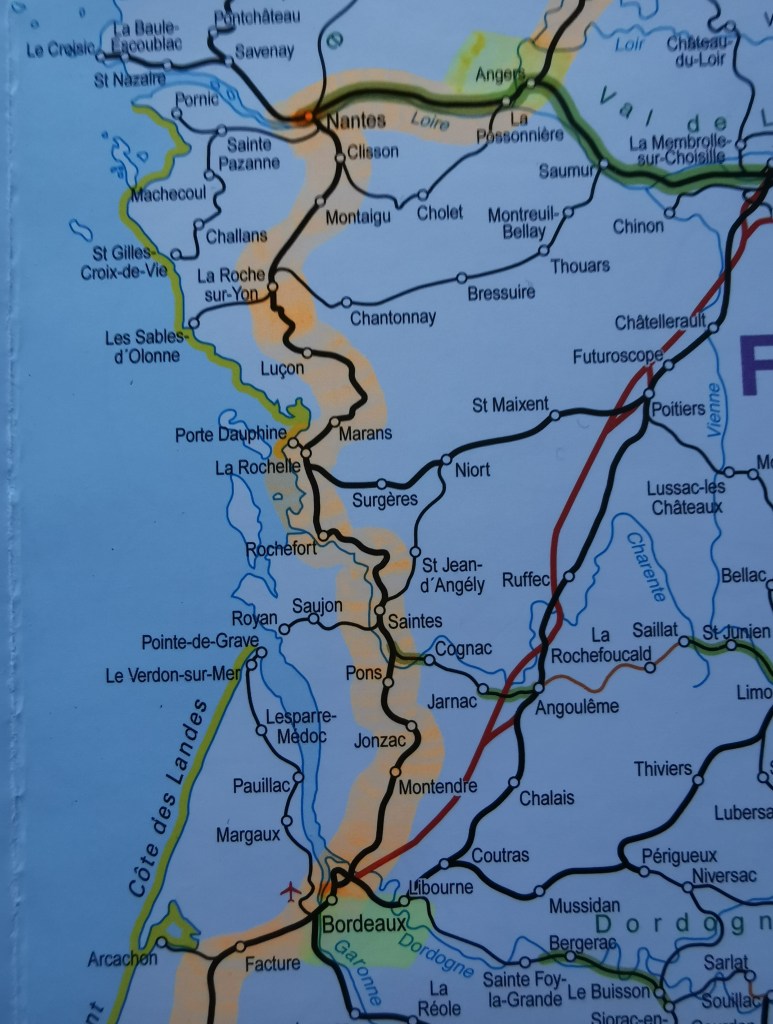
We didn’t want to travel direct to Paris – our original plan was to stopover in Nantes but the accommodation was full due to a concert, so we settled on Angers instead. We travelled to Nantes by Intercités train via Saintes, La Rochelle and La Roche sur Yon through pleasant if unexceptional countryside, reaching Nantes after just over 4 hours. From there it was a short journey along the Loire Valley to Angers – a place about which we knew very little.
Angers
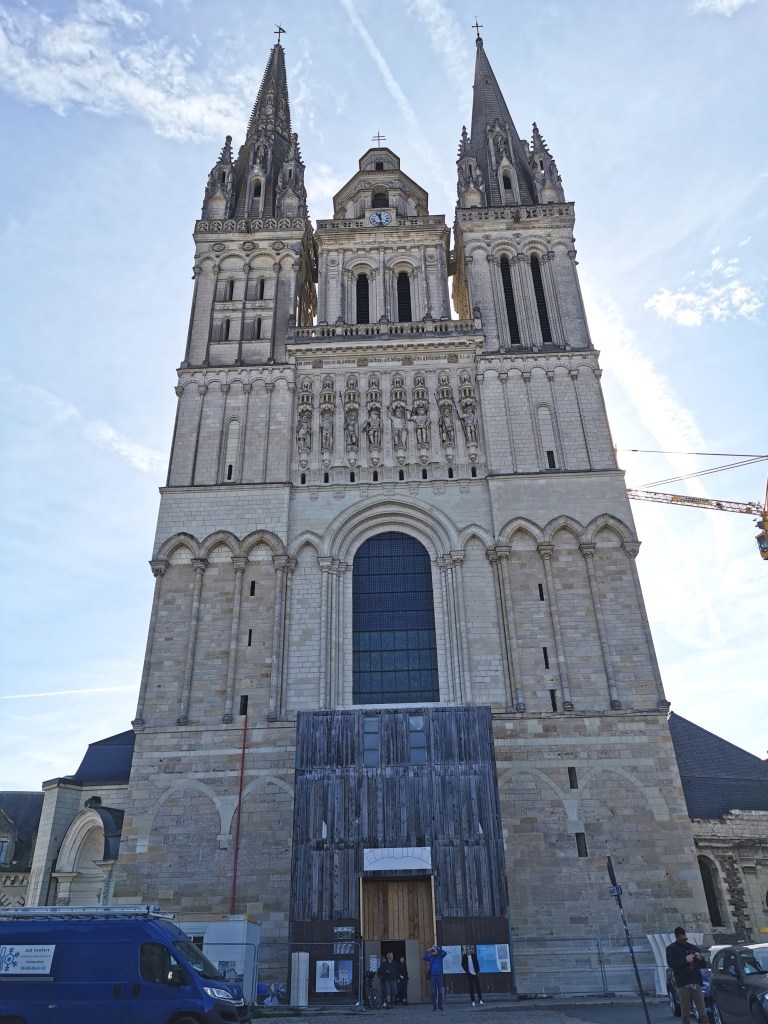

Angers was the capital of the ancient county of Anjou and today has a population of 154,000 and is an important commercial and university city. We only stayed one night but the timings of trains meant that we had almost 24 hours from our late afternoon arrival to explore.
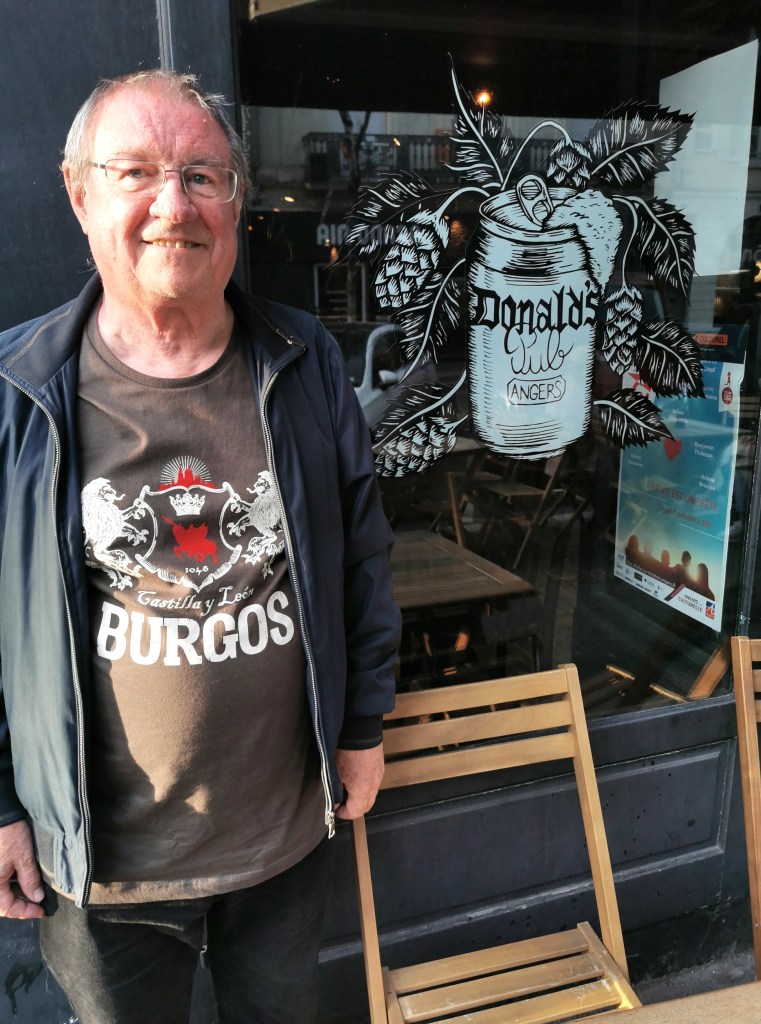
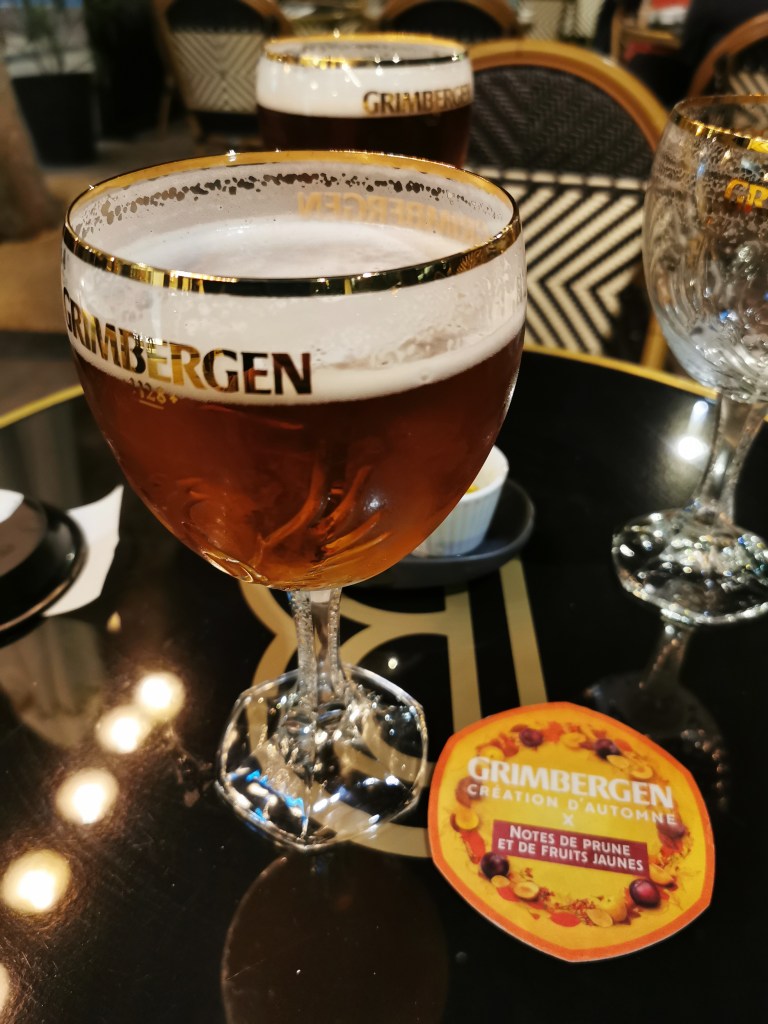
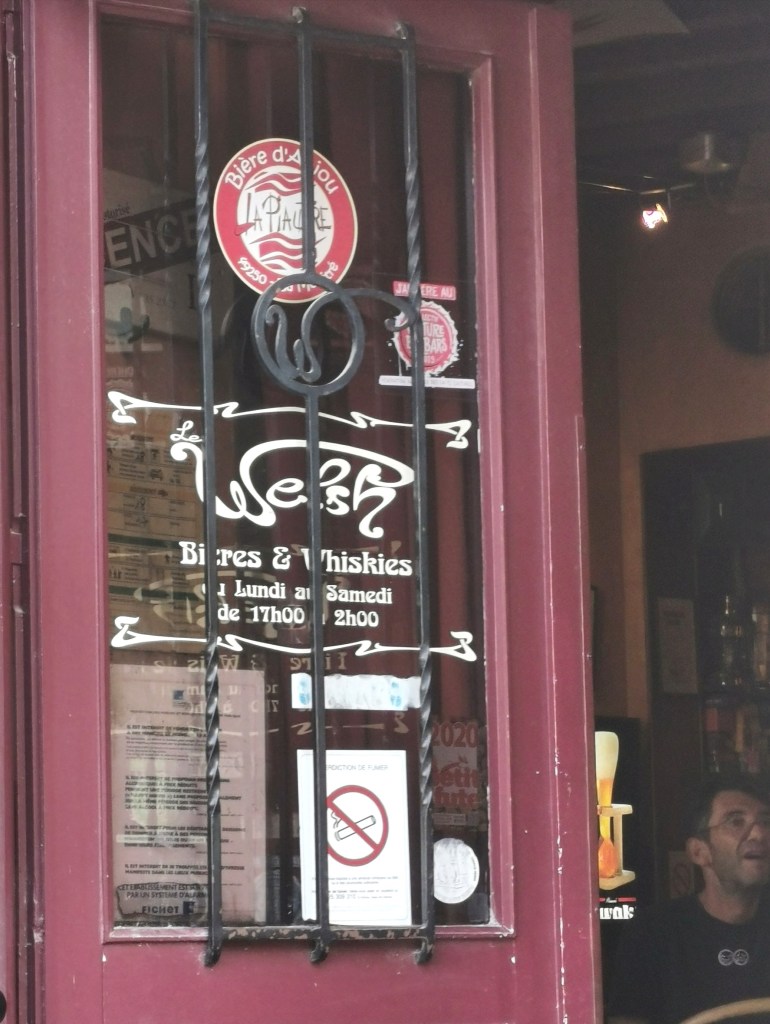
Our evening was spent trolling the bars (no surprise there -you can’t keep Ted away from the beer). In addition to local places there was a bizarre collection of mock Australian, Welsh, Irish, Scottish and Moroccan bars, catering mainly for students with happy hours and a good selection of French and Belgian style craft beers. The students had just returned from vacation and were out to enjoy themselves. We discovered Donald’s Pub, named after Ken (his surname is Donald). Later, we discovered the latest seasonal beer by Grimbergen – Création d’Automne – which was excellent and available in the terrace bars of the Grand Hôtel de la Gare and the Hôtel de France by the station


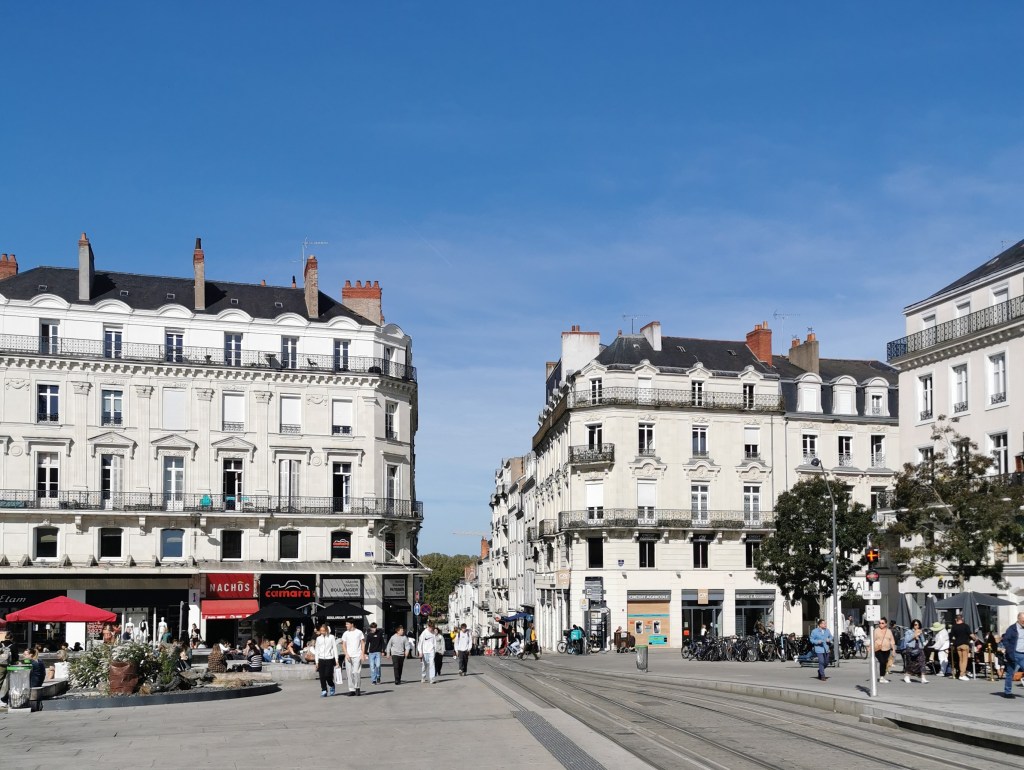
In the morning we wandered round the older part of the city by the cathedral and the massive castle of the Plantagenêts, the riverside and the nineteenth century city centre around the Place du Ralliement. The large student population keeps the city bustling. Finally, it was time for a couple of drinks and some snacks from the boulangerie in the Place de la Gare before catching our train.


Angers – Lille – London – Durham

That completed the destinations which we had planned the trip around. It was time for the trek home – with an overnight break in Lille. There is a direct train from Nantes and Angers to Lille. However, there were no tickets available when we tried to book, almost a month in advance. So we caught a TGV to Paris Montparnasse. The purpose-built Ligne a Grand Vitesse (high-speed line) begins shortly after leaving Angers so it only took 84 mins for the 302km journey. A metro journey followed, across Paris, watching the clock, to the Gare du Nord where we (just) caught another TGV to Lille Flandres.

We’ve stopped in Lille before (Leiden, Brugge and Lille) and find it a better option than Paris for a night prior to catching the Eurostar. Our hotel was across the road from the station, directly above the 3 Brasseurs microbrewery (not by chance). We also tried le Palais de la Biere across the square before an early night. The next morning we were up early, walked to Lille Europe station, boarded the Eurostar and reached London in time for breakfast, before catching our LNER train home to Durham.

It was our first visit to Burgos, Bordeaux and Angers. We enjoyed this trip and would happily go back to any of them to get to know them in more depth. We’ve also got other ideas for returning from Spain by train in the coming years.
Travel Practicalities
We booked our Spanish train tickets via the Renfe (Spanish Railways) site www.renfe.com – while I have an account it is easier to act as a one-off customer if using a foreign credit card – my guess is that using the account doesn’t require you to enter the CVV number of a saved card and it is then knocked back by the card provider. The Málaga – Burgos ticket includes the suburban train between Atocha and Chamartín (and our journey from Benalmádena to Málaga).

From Burgos station there are two bus routes into town (nos. 2 and 23) – neither particularly frequent – which both call at the central Plaza de España. Journey time is 20-30mins. The fare is €1.20 (cash only at present). On the return journey they depart from different stops at the Plaza de España. There is a taxi rank nearby on Av. del Cid Campeador, where you might be lucky and find a waiting taxi. The fare to the station is about €8. Leave plenty of time for either option. In Burgos the Tren Turístico road-train leaves from nearby the cathedral hourly and costs €6.50.

Many Burgos to Irún journeys currently involve a change to the suburban service at San Sebastián-Donostia. This is included in the fare and the train leaves from the same platform you arrived at. At Irún, go along the station approach road, turn right into Colon Ibilbidea, across the railway bridge and the EuskoTren station Irún Colón is on the left after about 200m. Trains run every half hour and cost €1.85. Anyone who breaks their journey at San Sebastián – Donostia (a good place to spend some time) should catch the EuskoTren to Hendaie / Hendaye from San Sebastián-Donostia Amara station, to avoid the change at Irún..

We booked the French long distance tickets via www.raileurope.com simply because I’ve used them regularly and find them efficient. However, I downloaded and used the sncfconnect app (easy to use) to book Nantes to Angers.

Note that the TGV ticket Hendaye-Bordeaux and the Intercités ticket Nantes-Angers were both cheaper than the slower local trains (presumably because of advance booking discounts). Our Angers – Lille ticket only gave us 63 minutes to cross Paris by metro. This was tight, due to the queues for metro tickets and the long walk within Montparnasse metro station to the platform for line 4 – catch the twice daily direct train from Nantes or Angers to Lille if possible.

In Bordeaux a 24 hour tram ticket costs €5, in Angers a 24 hour tram ticket costs €4.50, available from machines at tram stops (contactless payment available). In both cities the railway station is quite a distance from the city centre.

In Lille we stayed across the road from Lille Flandres station. We know the route to Lille Europe but, for first-time visitors the entrance to Lille Europe is not well signed – it involves going down a ramp then up an escalator. There is no information at the entrance re where the Eurostar to London departs – follow the signs to Halle 4, to the left of the main entrance.
As usual, for detailed information about train travel in Spain and France visit the Man in Seat 61 site www.seat61.com .
Hotels
The hotels we used were:

Burgos: Hotel Norte y Londres, Pl. de Alonso Martinez 10. Pleasant traditional hotel in the city centre.
Bordeaux: Meininger Hotel Bordeaux Gare St. Jean, 12 Rue du Commerce – modern hotel in quiet location close to the railway station. The bar sells an impressive variety of beers – useful when you arrive at 2000 and don’t have time to explore. Trams to the city centre leave from the front of the station.
Angers: Odalys City Angers Centre Gare, 20 Rue Fulton, Modern aparthotel a few minutes walk from the railway station, on the opposite side of the tracks from the city centre. Trams to the city centre stop on the bridge outside the railway station.
Lille: Hotel Chagnot, 24 Place de la Gare, Small rooms and fairly basic but OK for one overnight, directly opposite Lille Flandres station.
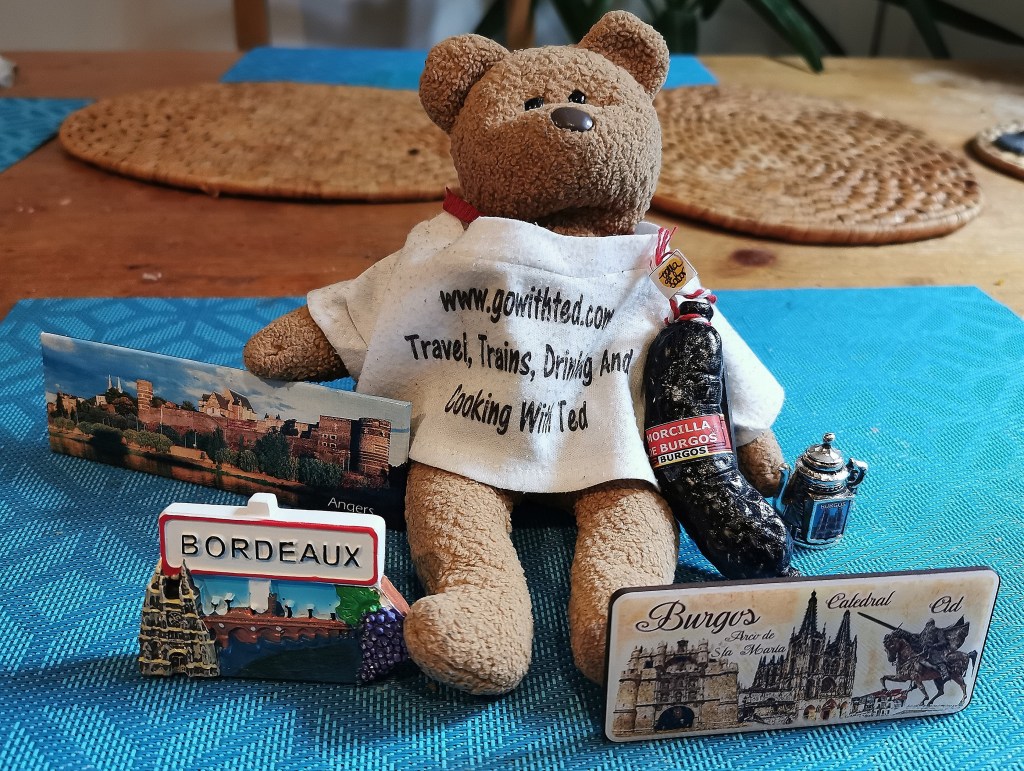
Personal note
Back in 1990 Colin and Steve travelled to Benalmádena by train out via Paris, the Pyrenees and Barcelona and back via Madrid, Bayonne and Paris. Back then you simply turned up at the Continental desk at London Victoria, specified the route and they sold you a return to Málaga which was valid on any train for a couple of months. Not so simple now.

Between 2008 and 2014 as a tour manager with Great Rail journeys Steve led several tours to Spain. Interestingly the journey was quicker then than now, using the Tren Hotel sleeper trains from Paris to Barcelona or Madrid – expensive, but the groups travelled first class. The trains ceased with the opening of the high speed line and, for example, to travel from Málaga to Durham now has to include an overnight stay in Paris, Madrid or Barcelona. However, as this account shows, it is much more interesting not to hurry and stop off along the way.

Photos:
All photos are by Steve Gillon except for the following, sourced via Google Images: The Alvia at Burgos station is from Wikimedia Commons – flickr – transitpeople.jpg. Hendaye station is from Wikipedia. The base map for the photos of our route is the Rail Map Europe, 3rd edn, by the compilers of the European Rail Timetable.
Acknowledgements: As usual, thanks to Ken Donald for his company on the journey.
Copyright © Steve Gillon, 2023.
 Go with Ted