Coimbra and Porto
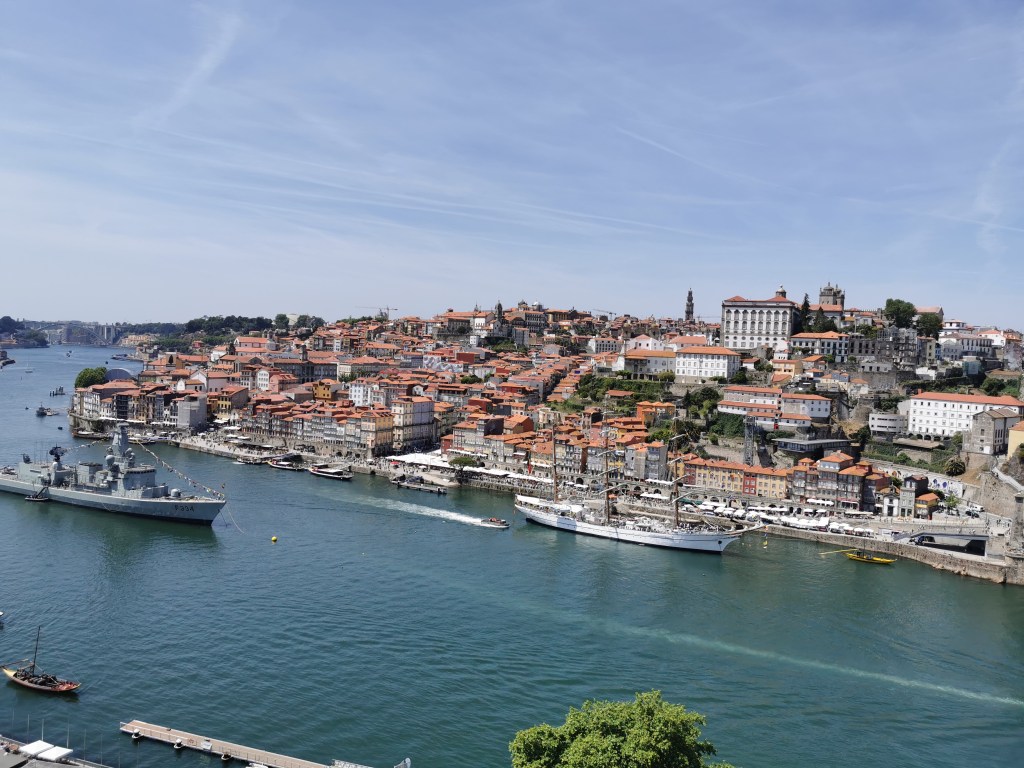
This trip, in May 2023, starts just over the border in Spain. We (Steve, Ted and our friend Ken) had travelled from Málaga to spend a few days in Portugal in the cities of Coimbra and Porto before flying back to the UK. And this is what we found. The account of the trip is followed by some practical information, plus we’ve added a few pieces of transport buffery for fellow nerds. The journey begins in the Spanish city of Badajoz in the region of Extremadura.
We reached Badajoz via Sevilla and Mérida and, as a result, we have made a few updates to our City Guide to Sevilla (Guide to Sevilla) and the Mérida section of our 2016 journey through Western Spain from Galicia to Andalucía. Ted and I visited Badajoz in 2018 and we have also updated the Badajoz section of that journey (Huelva and Badajoz).
Badajoz to Coimbra
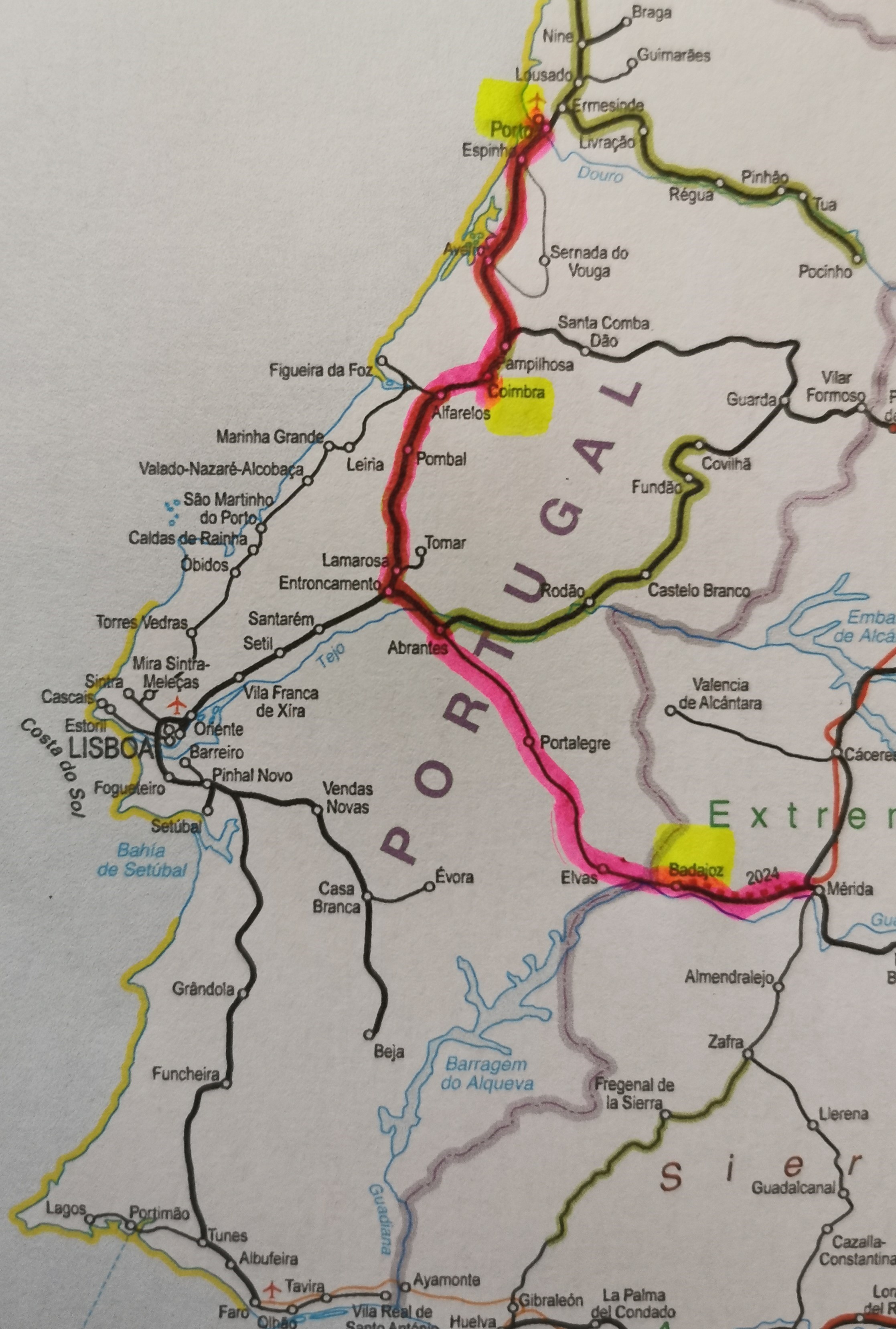
Our journey is shown on the map. Getting across the border from Spain to Portugal by train is an adventure in itself. The direct route by rail from Madrid to Lisboa/Lisbon crossed the border about 70km north of Badajoz. I travelled by that route on the day train in 1992 and again on an overnight sleeper in 2010. However the day train gave up quite a few years ago and the night train in 2020 and the route closed ,with no prospect of revival.

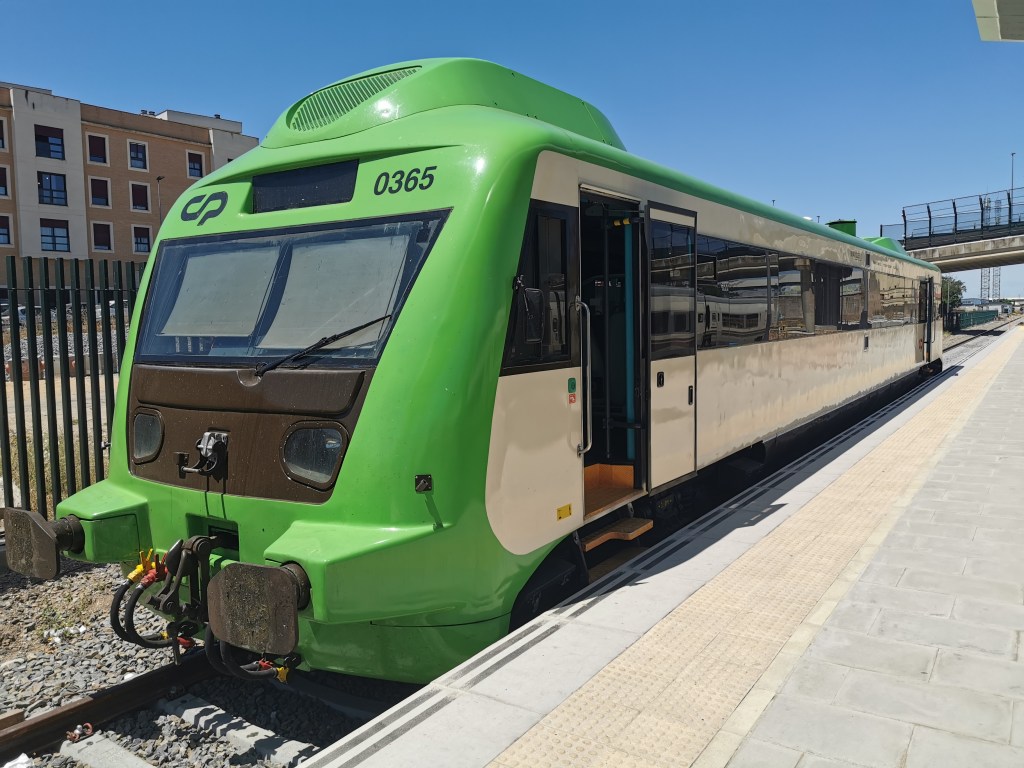
Today, to travel by rail from Madrid to Lisboa (or Porto) involves two or three changes of train, including at Badajoz and Entroncamento, where there are connections south to Lisboa and north to Coimbra and Porto. The Badajoz – Entroncamento line is a minor branch line, operated by single coach railcars (pictured above) which run twice a day and stop at every hamlet en route. The ‘trains’ are modernised 1950s railcars which manage to include air conditioning and a toilet (a relief after a couple of beers at Badajoz station). See Transport Buffery 1 for a little more about this link past and future.
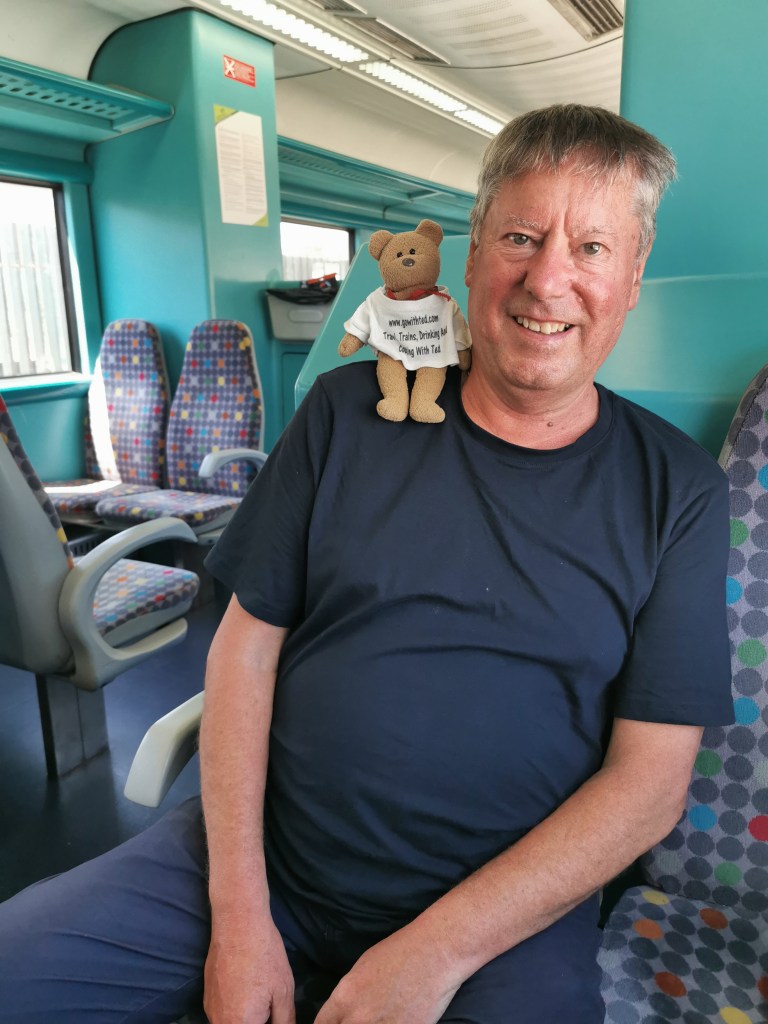
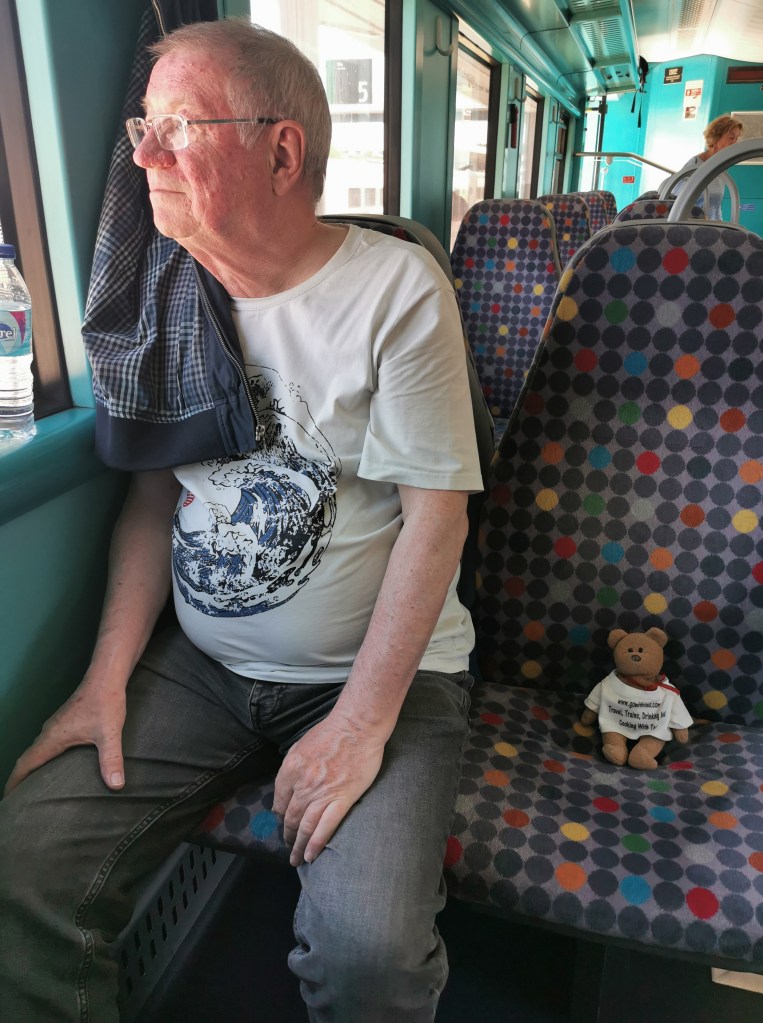
Steve, Ted and Ken settle in for the journey
We set off on the Sunday afternoon train – there were 16 of us on board leaving Badajoz. The Portuguese conductor coped well with selling tickets, checking passes and answering queries in Spanish and English. At each of the 17 stops, some in the middle of nowhere, we picked up a few people (mainly youngsters who we guessed were returning to the city after a weekend at the family home) and by the time we reached Entroncamento 2hours 45 minutes later the railcar was full.
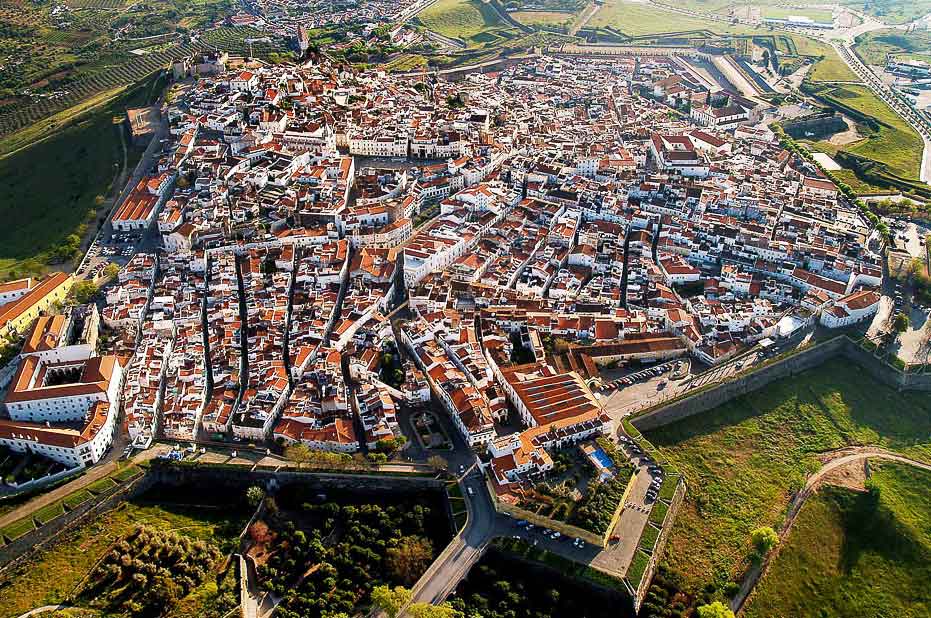
A few kilometres after leaving Badajoz we crossed the unmarked border between Spain and Portugal. We passed huge Leroy Merlin and Amazon warehouses which suggests that there are some tax or VAT differences between two counties. We put our watches back an hour (Portugal is in the same time zone as the UK) and we pootled into the first stop, Elvas. We didn’t stop to explore, but Elvas has a hilltop castle, – huge walls and battlements protecting Portugal from marauding hordes from Spain – Badajoz has similar fortifications to protect Spain from marauding Portuguese hordes.
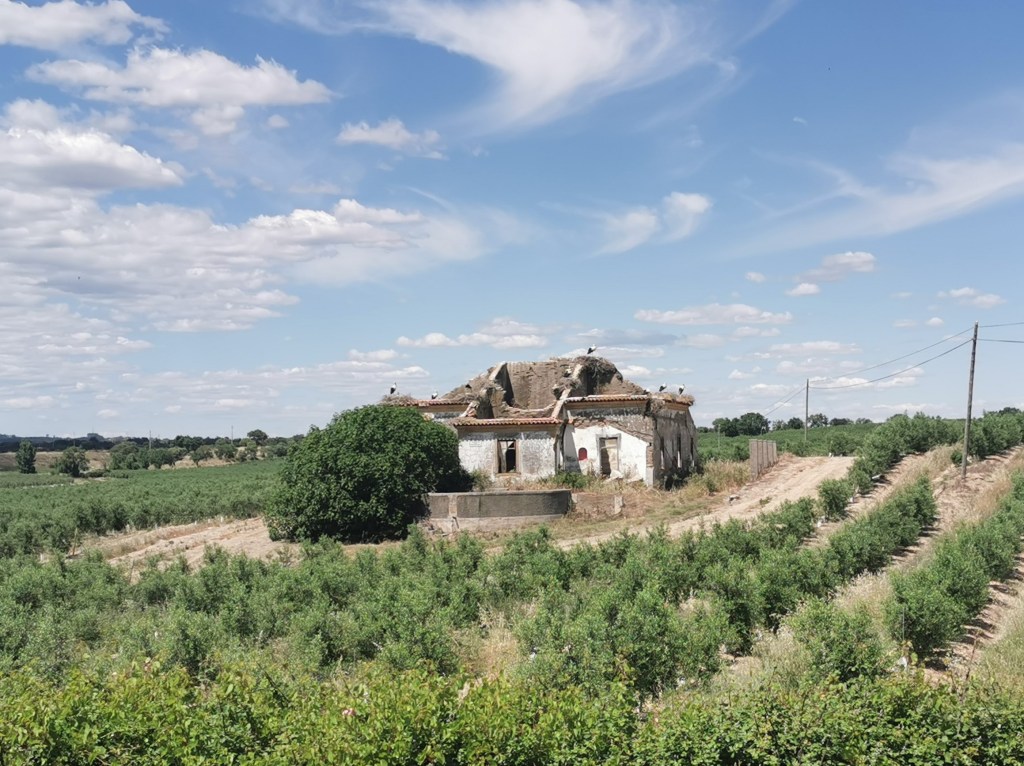
The scenery was initially pastureland, with cows grazing among the trees and rocky outcrops, though later the land became more arable. At Torre das Vargens the disused line from Caceres and Madrid joined us and the station has a crossing loop where we meet the other railcar heading for Badajoz. From Pont de Sor onwards the countryside became more inhabited until we reached Abrantes where we joined the valley of the Rio Tejo (Tagus). Soon we crossed the river and followed the north bank into Entroncamento – the journey has taken 165 minutes to cover 169 kilometres.
Everyone piled off at Entroncamento and waited for connections. After 40 minutes we caught the busy Lisboa – Porto – Intercity train and managed to persuade someone to move out of our reserved seats without using a word of Portuguese (they were in the wrong coach). This journey was quicker – 58 minutes for 111 kilometres to Coimbra – on a modernised double-track electrified line.
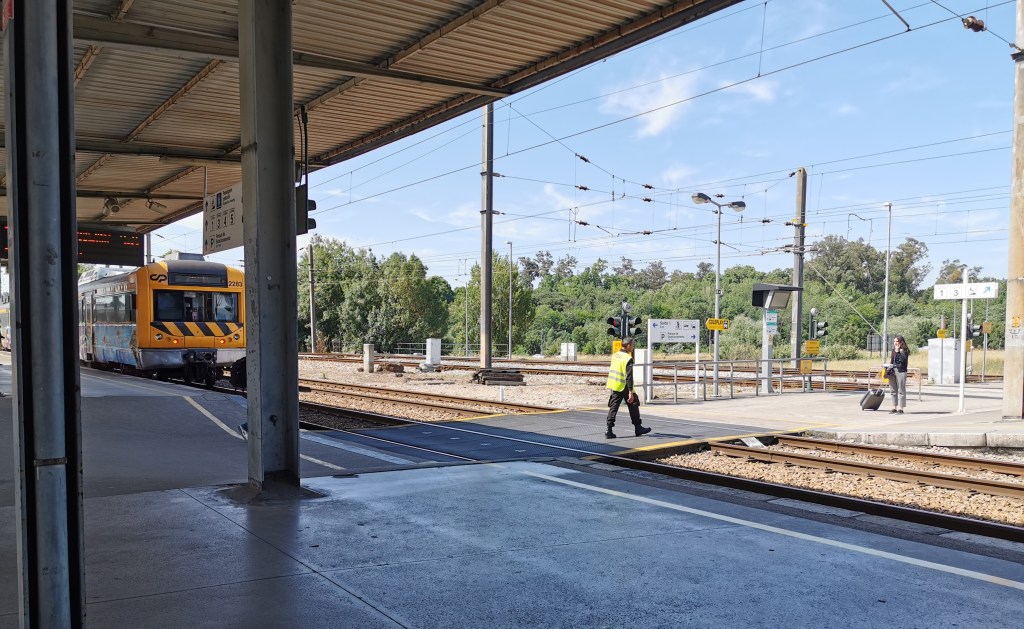
Main line trains call at Coimbra B which, despite being a busy station on a busy line has no bridge or subway, the only crossing being across the tracks (pictured above). We had just over half an hour to wait for our connection to the city centre Coimbra station (since closed – see Transport Buffery 2), so time for a quick beer in the cafeteria before our five minute journey along the riverside into town and a short walk to our hotel.
Coimbra
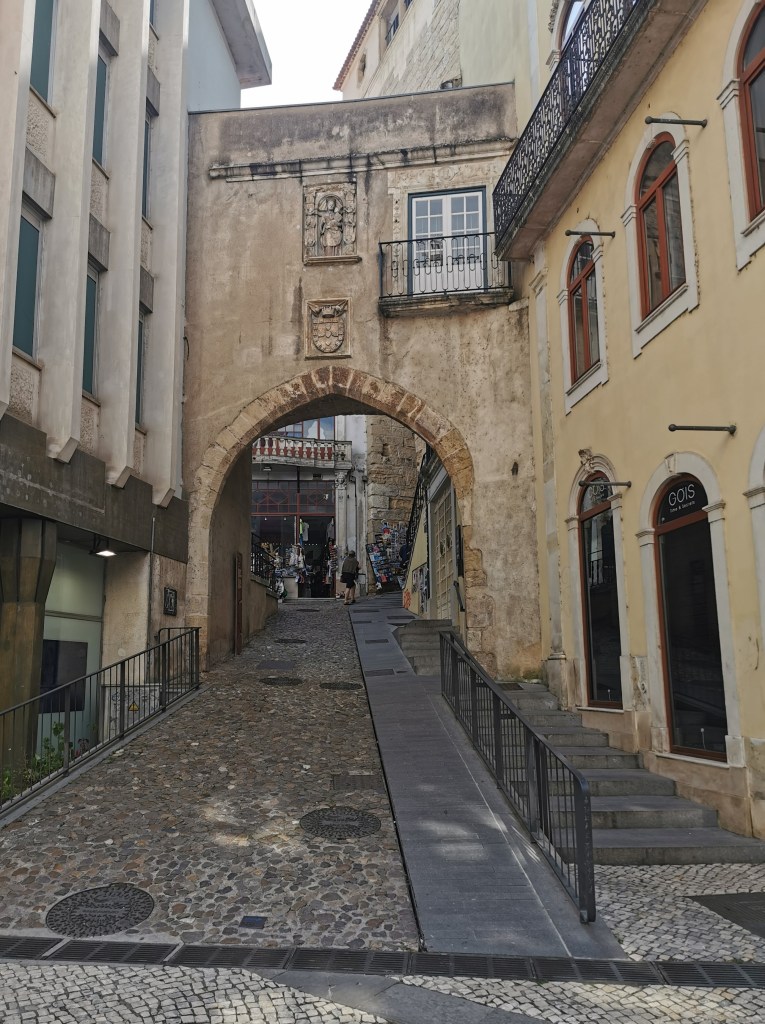
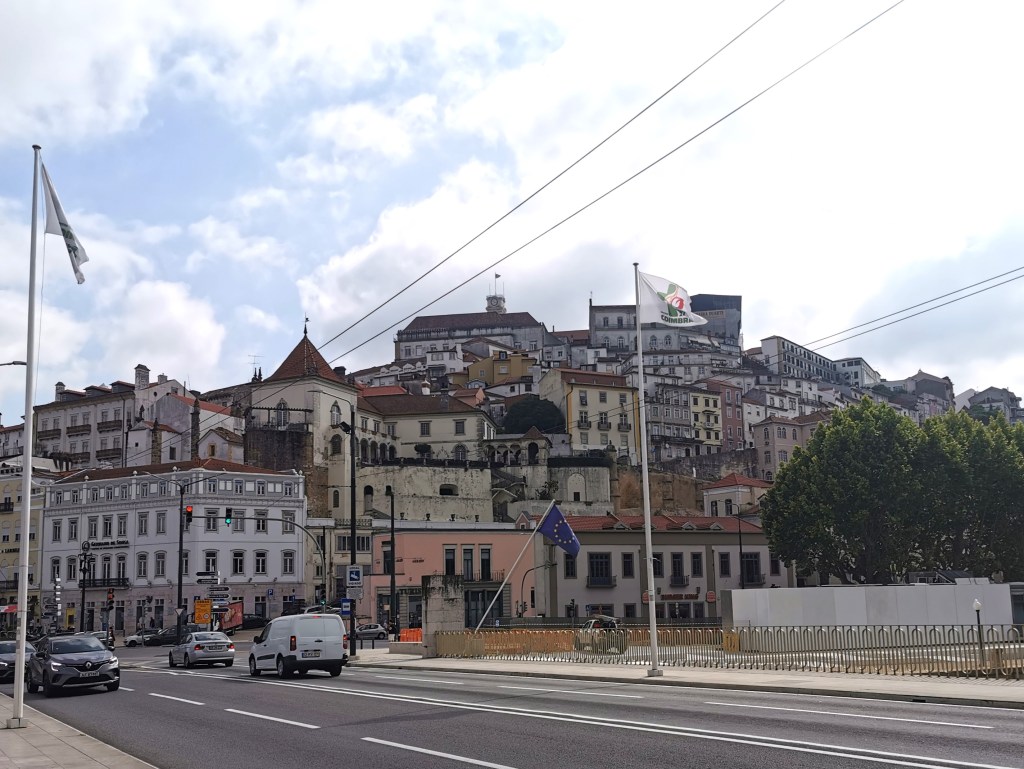
Coimbra is the fourth largest city In Portugal with a population of 143,000. In the thirteenth century it was briefly the capital of Portugal. It is home to a major university dating from the fourteenth century which now has some 23000 students. It sits on the River Mondego with the older districts on the north bank. The modern city by the river is Baixa (lower town), at the foot of a steep hill, though the older parts of it are a warren of little lanes small shops and taverns. The old city – Alta (upper town) – climbs the steep sides of the hill, leading up to the old cathedral
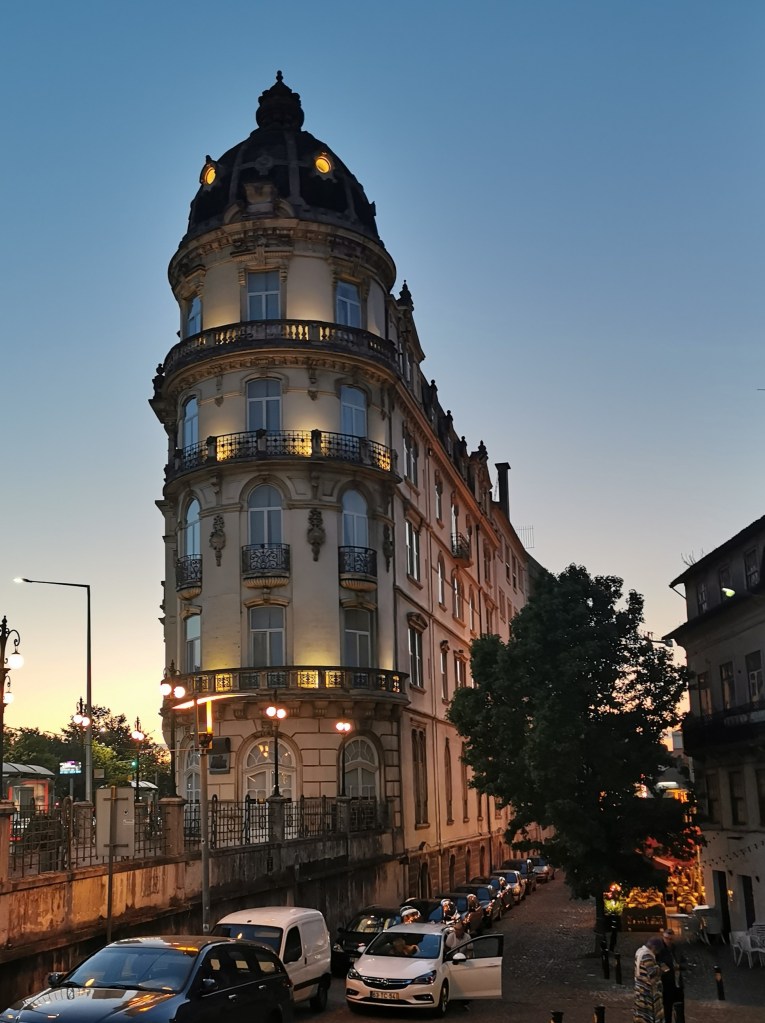
(Sé Velha), which dates from 1162. The two districts are separated by the Rua Ferreira Borges shopping street which leads from the main bridge, the Ponte de Santa Clara, and the riverside Largo de Portagem a square lined with bars and cafes ideal for people watching. On top of the hill sits the university, and the new cathedral (Sé Nova), a youngster dating from 1772. The older buildings of the university are a UNESCO World Heritage Site.

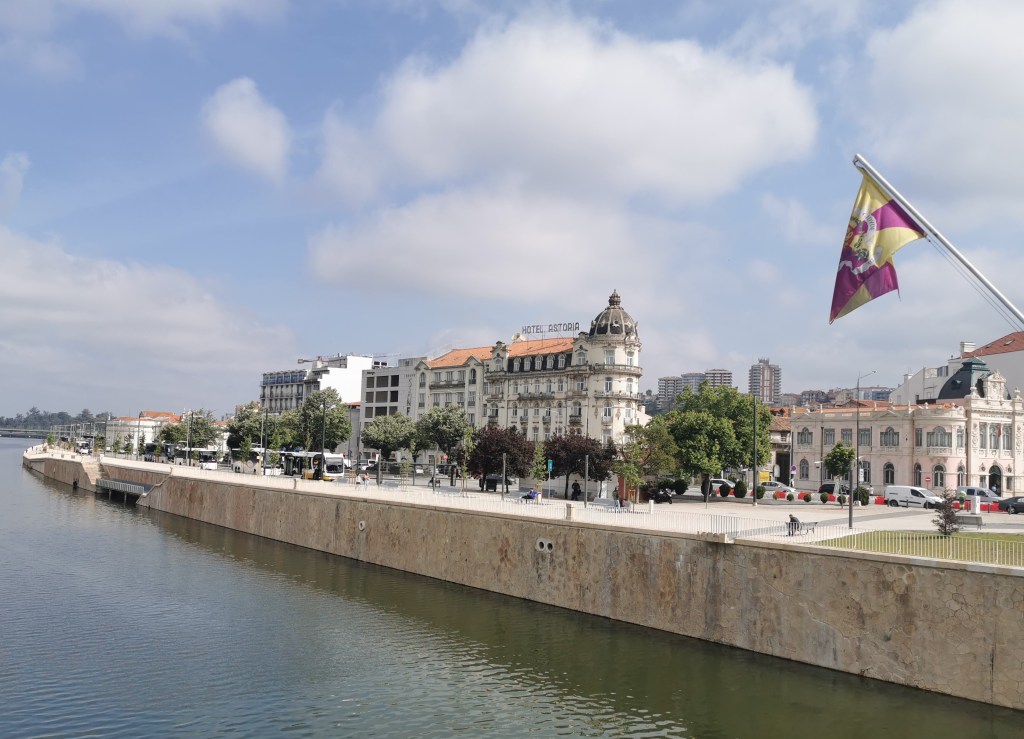
The riverside boulevard, Av. Emidion Navarro is the location of our hotel, the Hotel Astoria. It is a flatiron Art Nouveau building, opened in 1926 as a luxury hotel. Among its claims to fame is that it was the first in Portugal to offer in-room telephones to guests – phew. Nowadays it is somewhat faded though the rooms and lobby are large and comfortable, there are plenty of original features including the lift, and the buffet breakfasts were ample. Along the boulevard are signs of the railway that used to run along the street and some disused trolleybus catenary – transport buffery 2 has more information.

Exploring the city.
We decided the best way to explore the city was to head for the top and work our way downhill. We walked the length of the streets separating Baixa and Alta and headed for the easy way up, the Elevador do Mercado. The ticket machine was out of order and it took a good half hour waiting in the queue at the municipal transport office next door – there was a line of people sorting out their pensioners passes which involved photographs and proofs of ID and residence. However, we eventually were able to hand over our €1.70 each and head for the top – the journey provides good views over part of the city.
The University

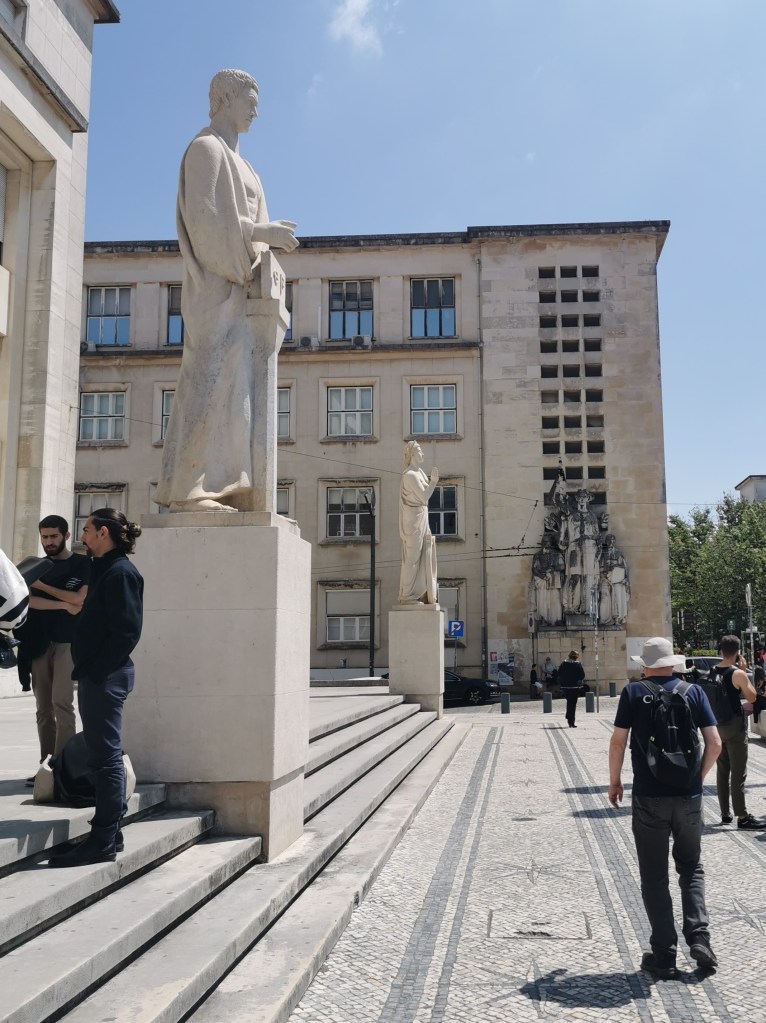
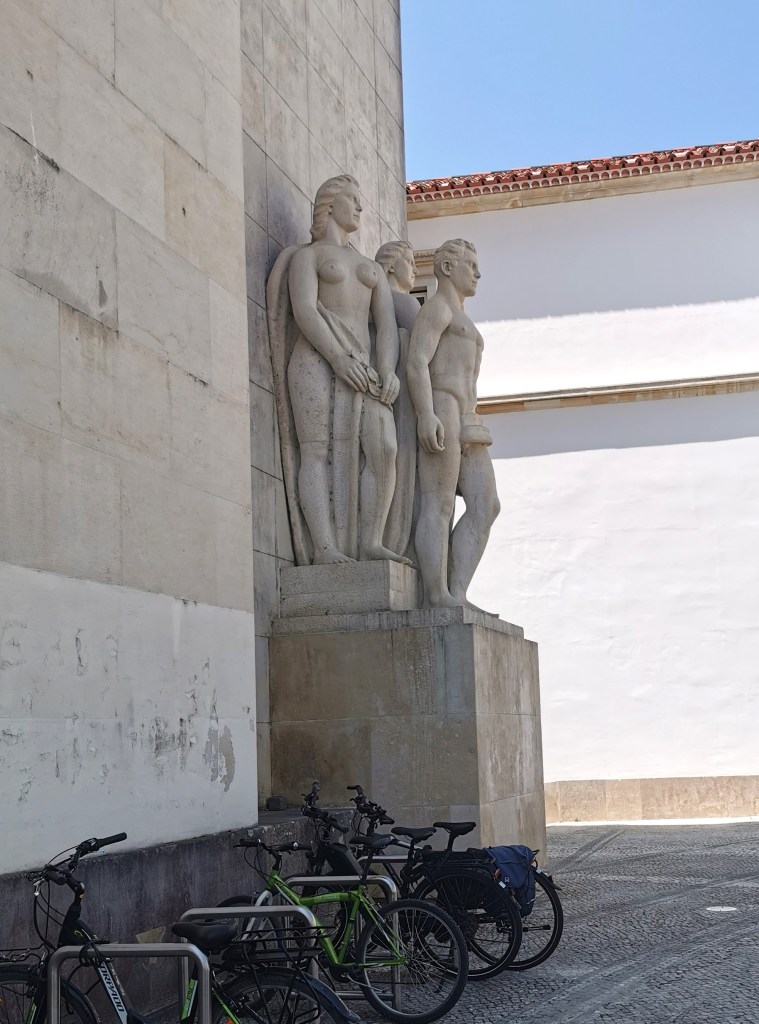
Various statuary around the University area (above) and the New Cathedral (below)
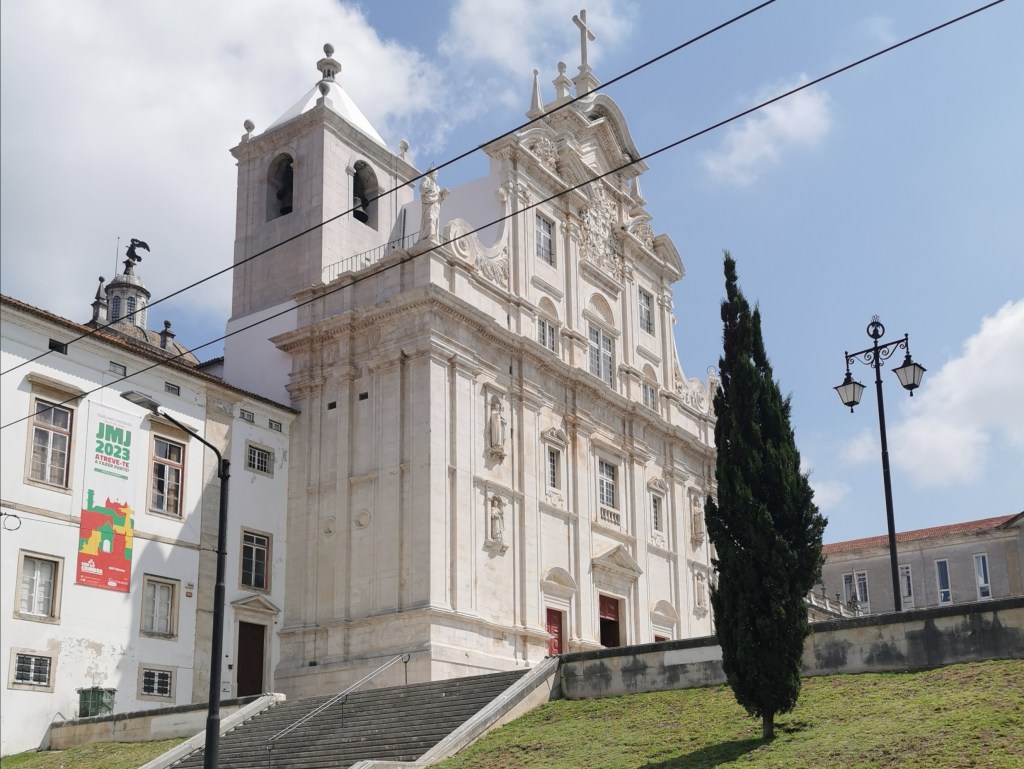
Most of the buildings on the hilltop belong to the university. The term had just finished so there weren’t many students about up there. We had missed most of the end of term celebrations, though in the evening there were students in gowns parading around, and others forming conga lines around the streets. We were told by one soggy student about the practise of first year women students finding a ‘godmother’ from among the second year students, who would look after them as friends and also ‘baptise’ them by chucking them in the river.
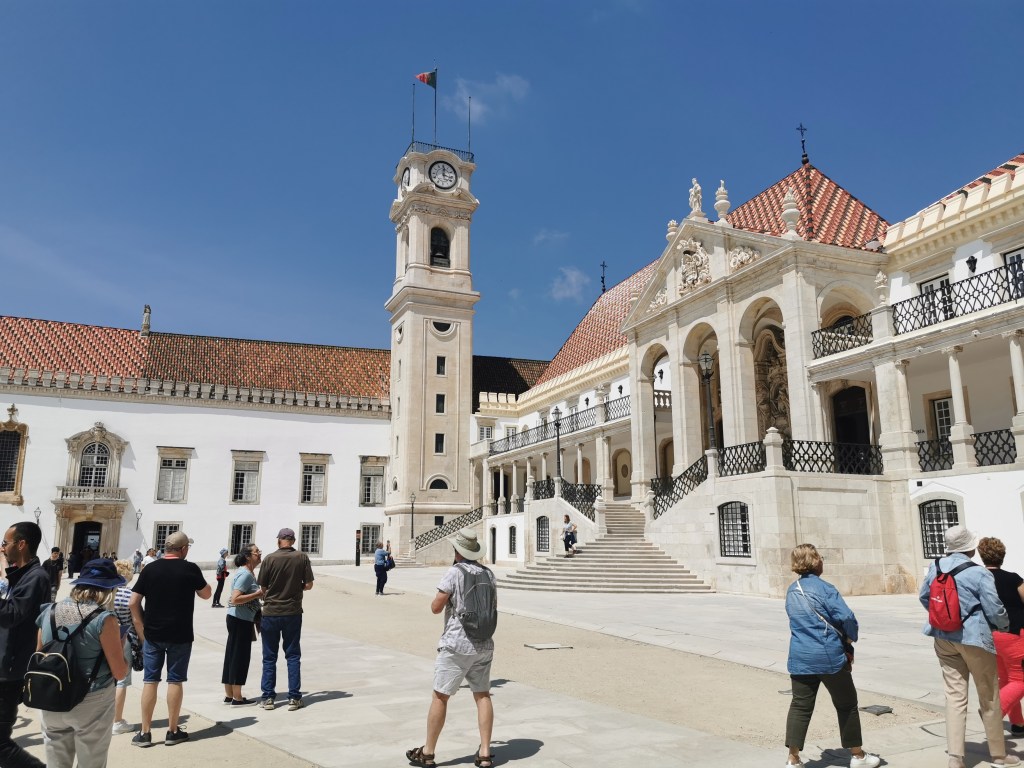
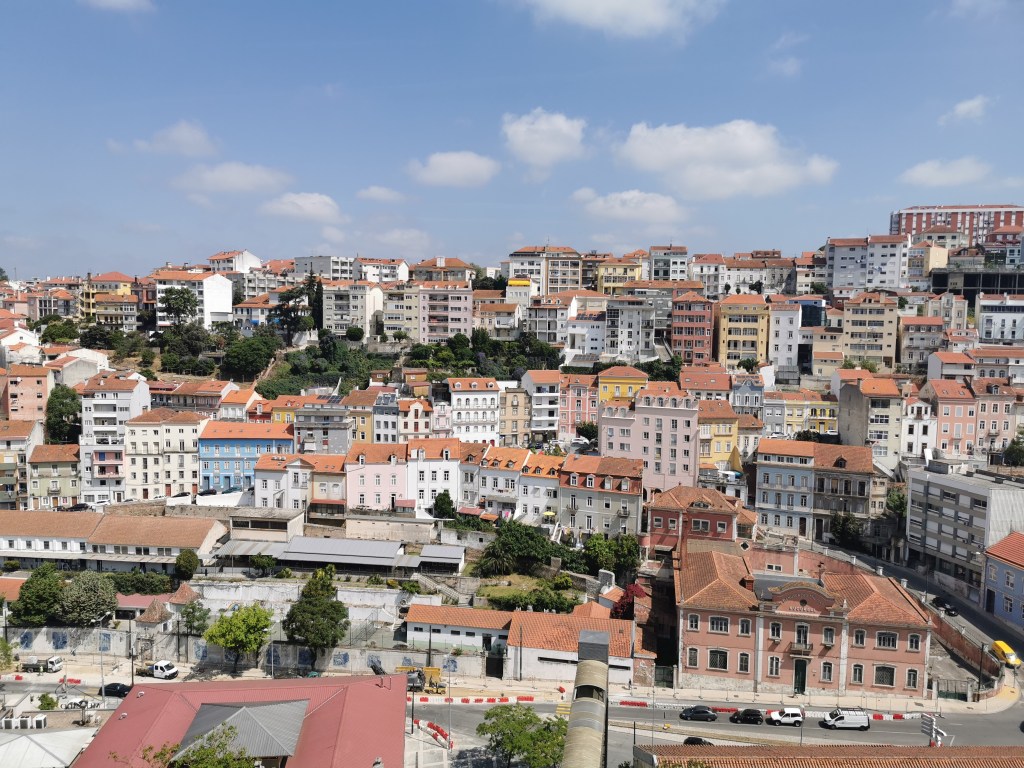
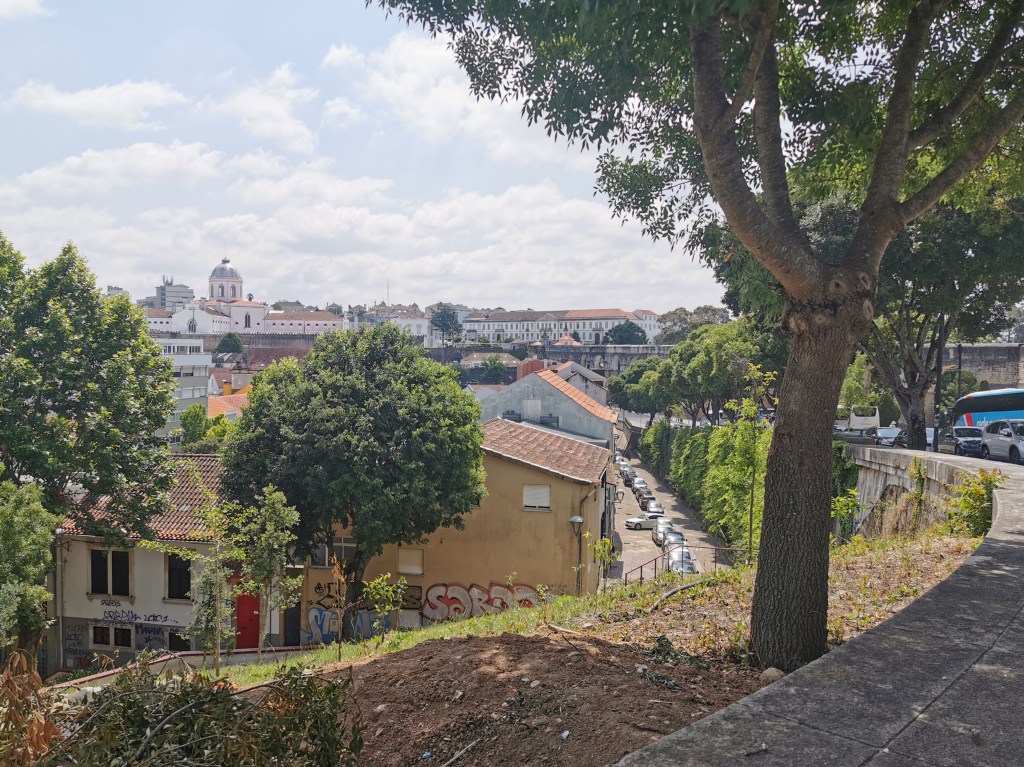
The oldest original buildings (pictured) – the old university and the library – date from the sixteenth century and were busy with tourist groups. Several buildings date from the years of the Portuguese dictatorship in the last century and look the part with typical fascist/communist overbearing exteriors and statues. The hilltop site is completed by the New Cathedral and some modern faculty blocks. Unsurprisingly, the site provides a series of viewpoints and vistas over the city and surrounding area (pictured).

Food, beer and socialising.
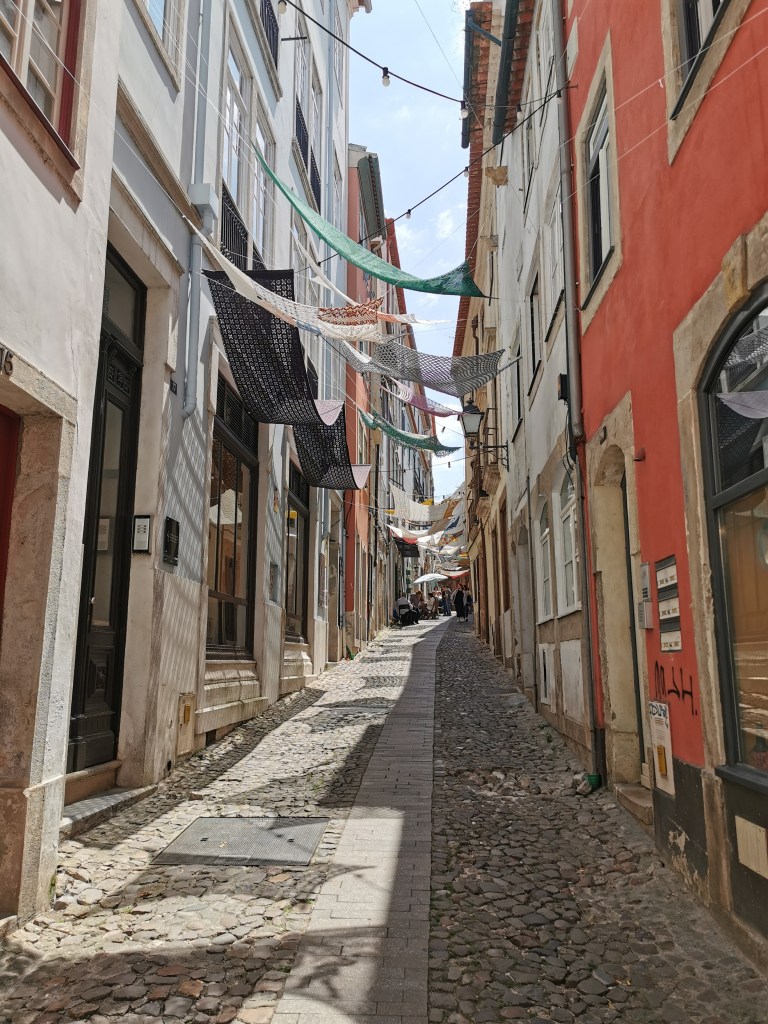
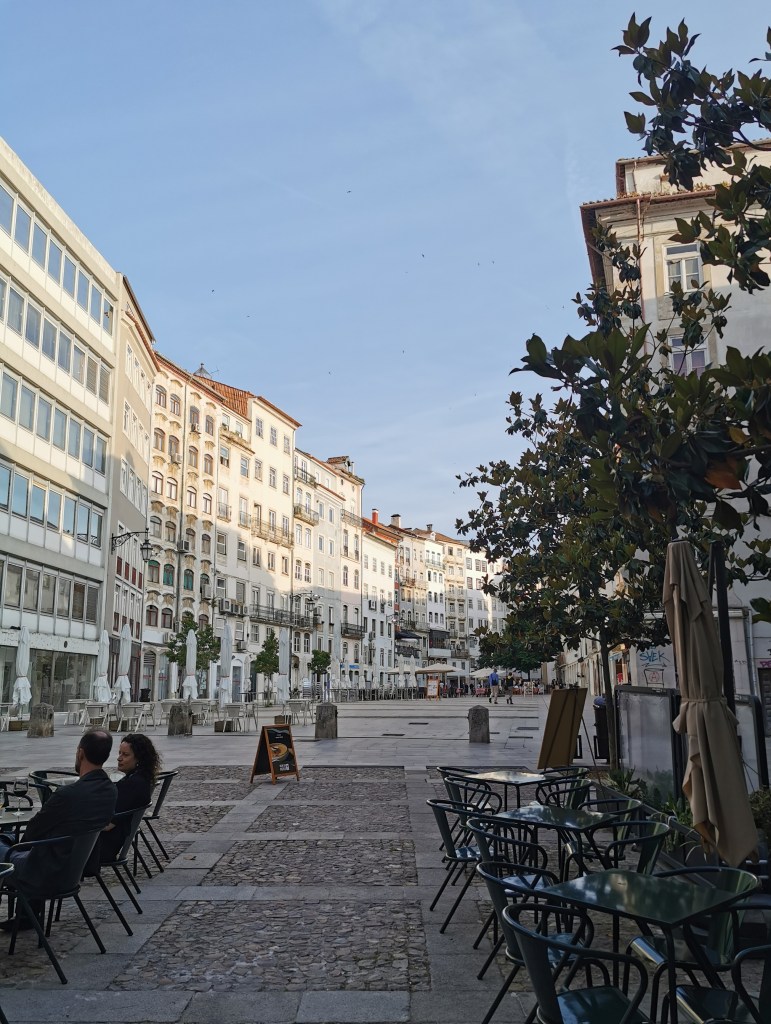
A typical Alta street and the Praca do Comercio
After exploring the hilltop we started to make our way downhill to the upper town (that’s not a mistake) stopping off on the way for a €9.50 Menu do Dia in an inexpensive restaurant O Sé Nova– the belly pork was tough but the meal was worth it. Then it was time to go in search of some decent beer – we had discovered that there were a couple of local craft breweries. Near the old cathedral we stumbled upon a recommended place, Quebra do Galho, a tiny place where the beer (Epicura American Pale Ale) was good stuff.
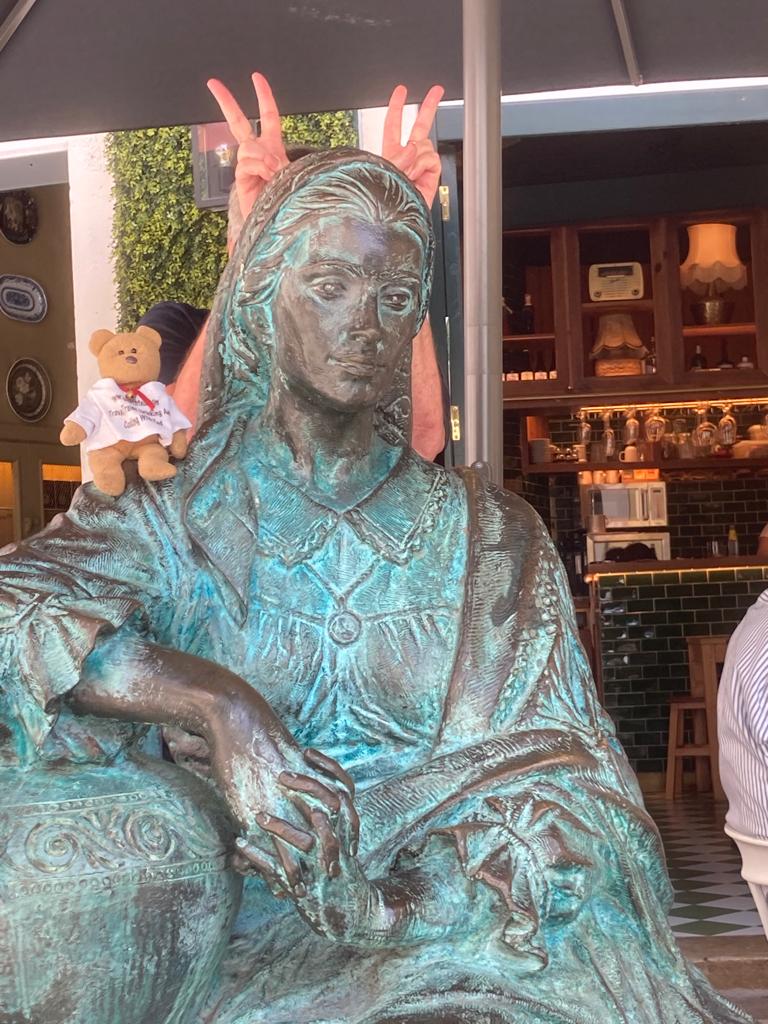
The café-bars in that square specialise in fado music –we’re told it is different in Coimbra from elsewhere. Later, we discovered Praça do Comércio in Baixa, close to but hidden from the main street. In the square is Coola Boola a combination bar, bottle shop, tattooist, vintage clothes and vinyl store. It describes itself as ‘a way of modern lifestyling surrounded by the glamour of vintage and retro design’. That makes it sound horrendous but it’s friendly, the bar has 5 different craft beers from local brewery Praxis and the terrace outside is ideal for people watching. More people watching took place from terraces in Largo da Portagem (Café Montanha was good) and Rua Ferreira Borges.
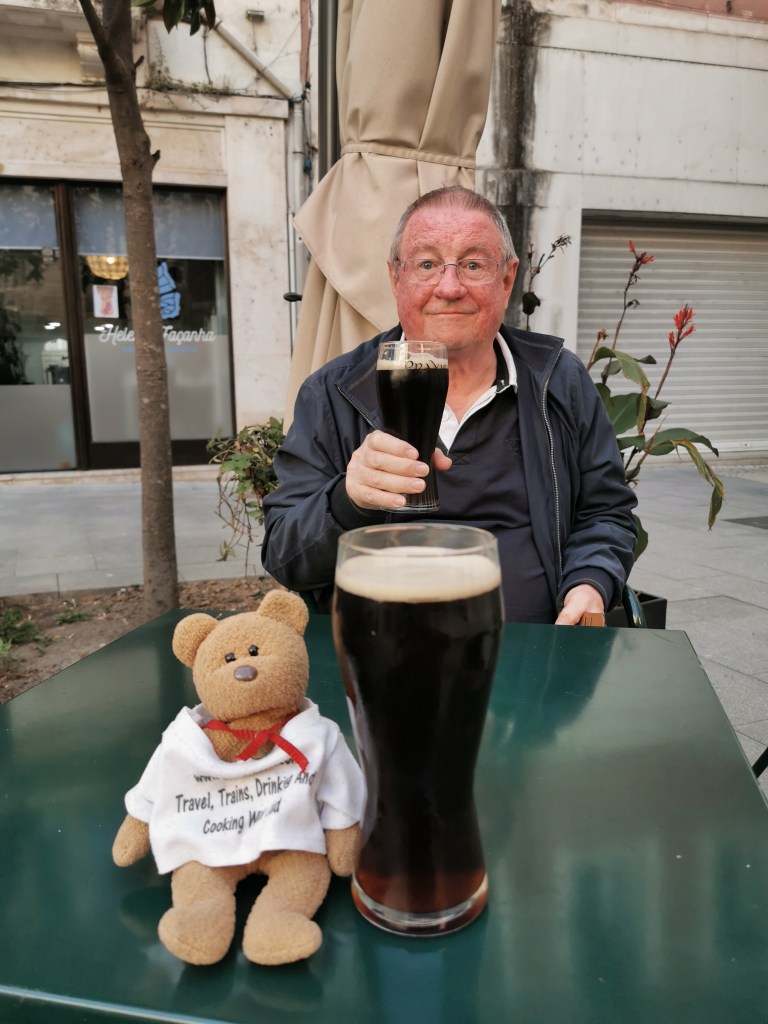
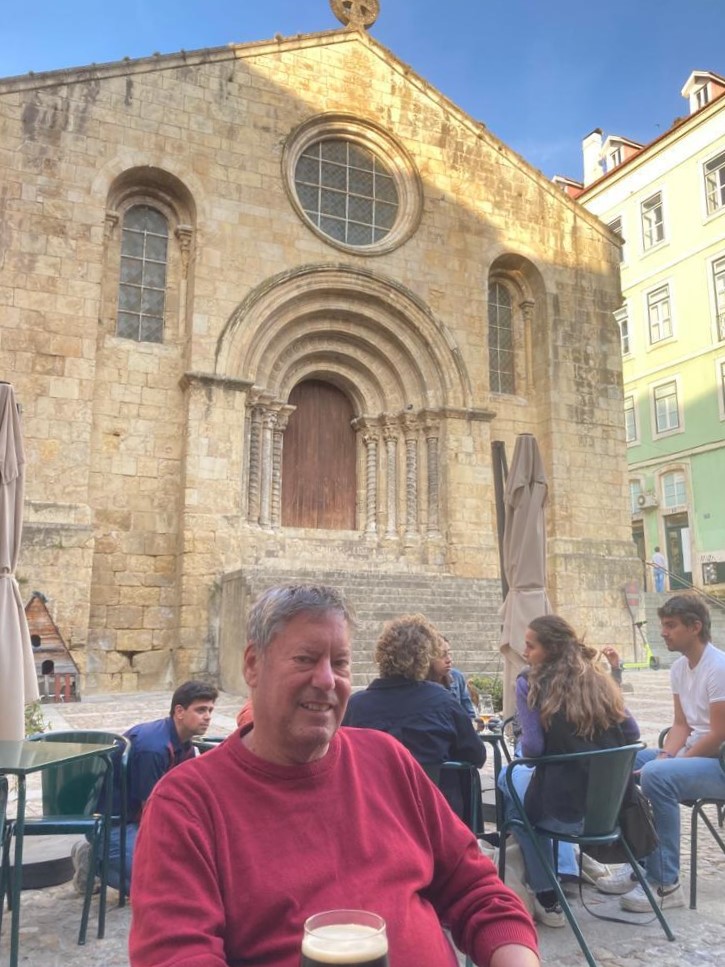
Relaxing outside Coola Boola
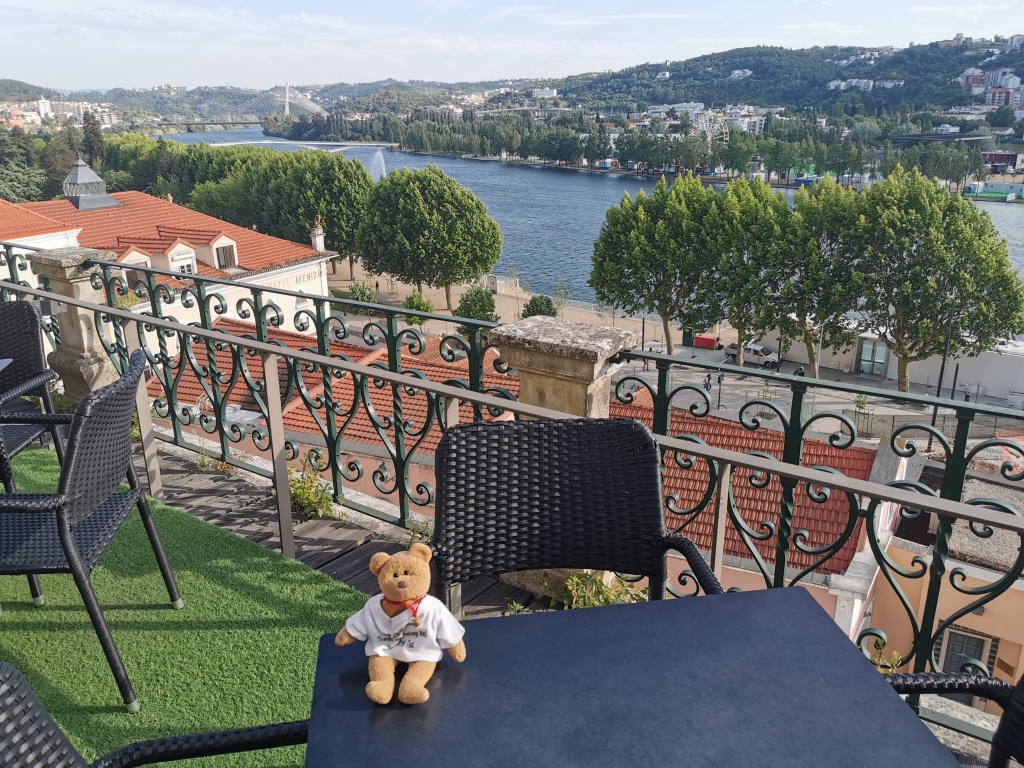
On our second full day in Coimbra we had arranged to meet Lesley, a friend from Durham and former licensee of the Tap and Spile. She is now living in the wilds not too far from Coimbra in a ruin, which is very slowly being made habitable, and loving it. It gave her an excuse to come into town for some odds and ends and she agreed to stay over and have a few beers. We showed Lesley the places we had found then later had a curry in Gul and Guls which was surprisingly good – it came recommended by friends of Lesley – preceded by a drink in Passaporte, an upmarket pub / restaurant with views over the city. An enjoyable and relaxing day.
Coimbra to Porto
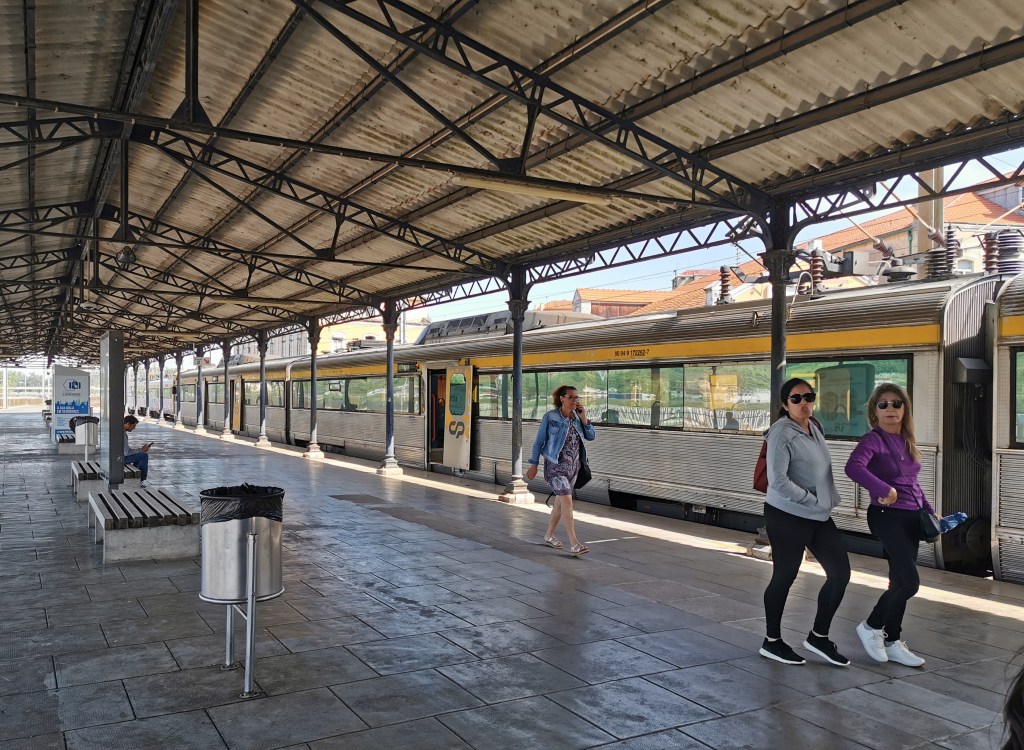
The following day we headed for Porto, which involved three trains – Coimbra to Coimbra B, Coimbra B to Porto Campanhã, and Porto Campanhã to the city centre station Porto São Bento. The two five minute journeys added over an hour to the journey time – the connections aren’t great, but they are included in the ticket price which was ludicrously cheap for an inter-city journey. It wasn’t particularly fast, mainly due to large scale modernisation works at the Porto end to rebuild stations and abolish level crossings. The countryside wasn’t spectacular but it’s always interesting to travel somewhere new. There has been a wave of recent housebuilding on largish individual plots, built once people could afford cars and move out of urban areas. The main intermediate town, Aveiro, is meant to be attractive but we couldn’t see much from the station. Part of the route follows the coast before heading back inland and finally across the bridge over the River Douro and into Campanhã.
Porto

It isn’t common for a station to be a tourist attraction but São Bento is a magnificent early twentieth century building – the highlight being the azulejo tiles depicting Portuguese history and rural scenes, which were being explained to tourist groups when we arrived. At present the whole area around the station is a building site for a new metro line. We eventually found the route to our hotel, though it involved climbing steep hills in full sun. But we got there, necked a beer in the hotel bar to recover, and in addition the hotel provided a free glass of port for new arrivals.

Food and beer
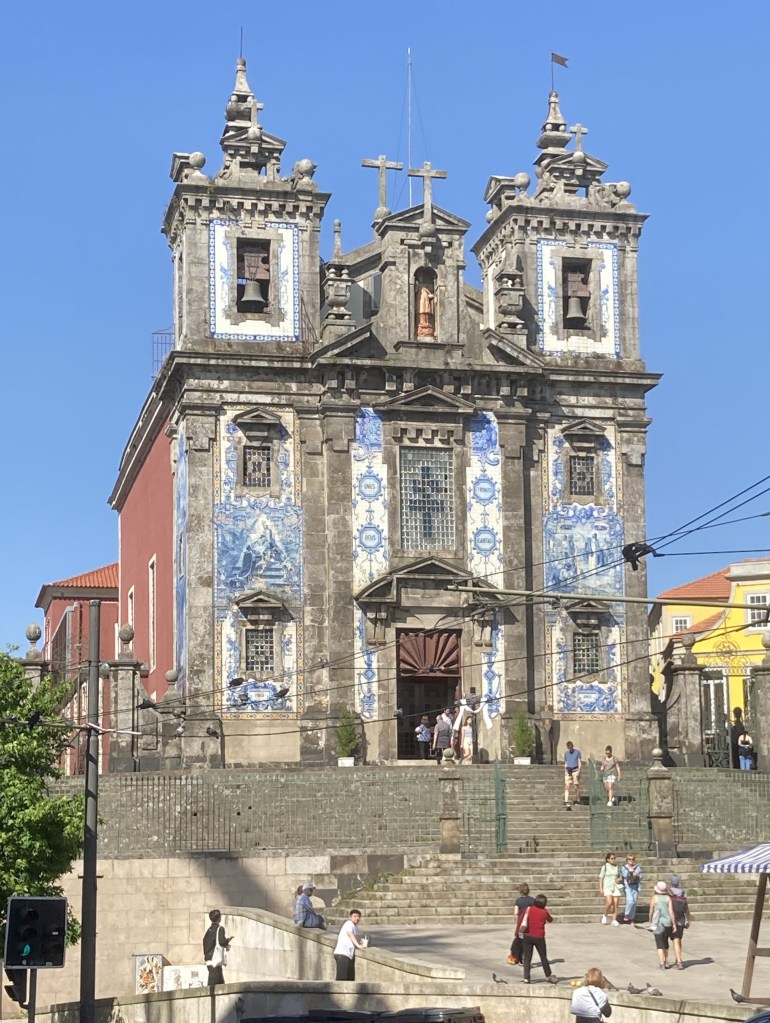
On our first evening we stayed close to the hotel around the Praça de Batalha, an area with plenty of hotels, bars and restaurants. We visited the terrace of Café Java on the square and both branches of Cervejaria Gazela, a bar which is famous for inventing the Cachorinho – a Portuguese version of a hot dog with sausage, ham, cheese and a spicy sauce. We then bought souvenirs for the fridge and tat shelf at home and ate in Rios Bar and Tapas – pricey but excellent tapas – then finished with a beer in the garden of the hotel.
A day in Porto

We had only one full day in Porto to explore. So we wandered down towards the riverside, calling in for some breakfast on the way – the hill was a struggle for my old knees but they made it. Most other tourists seemed to be doing the same. It was crowded – May is a peak time for the older people without kids to travel and people are grabbing the opportunity after the Covid years.

On the north bank of the river is the district of Ribeira. Formerly a poor district of warehouses and low quality housing it has been gentrified and the quayside is now a row of restaurants, though some old, narrow alleys climbing the hillside remain.
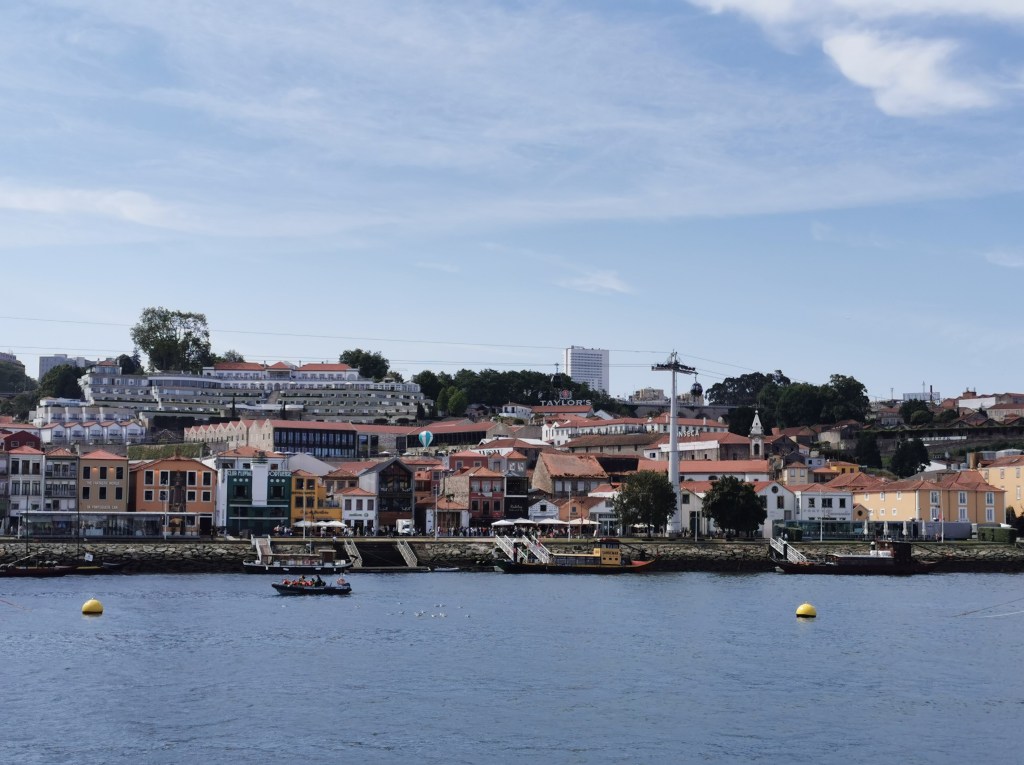
Across the river is Vila Nova de Gaia, technically a separate municipality, best known for its port wine lodges, which offer tours and tastings, and another row of restaurants along the quayside.
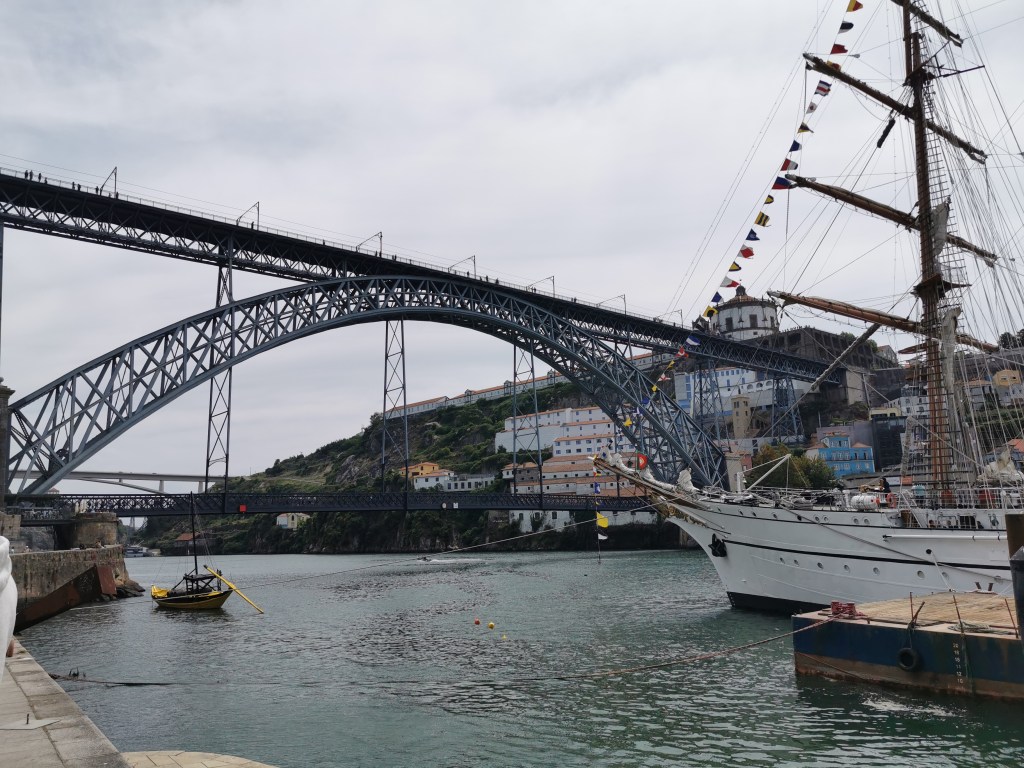
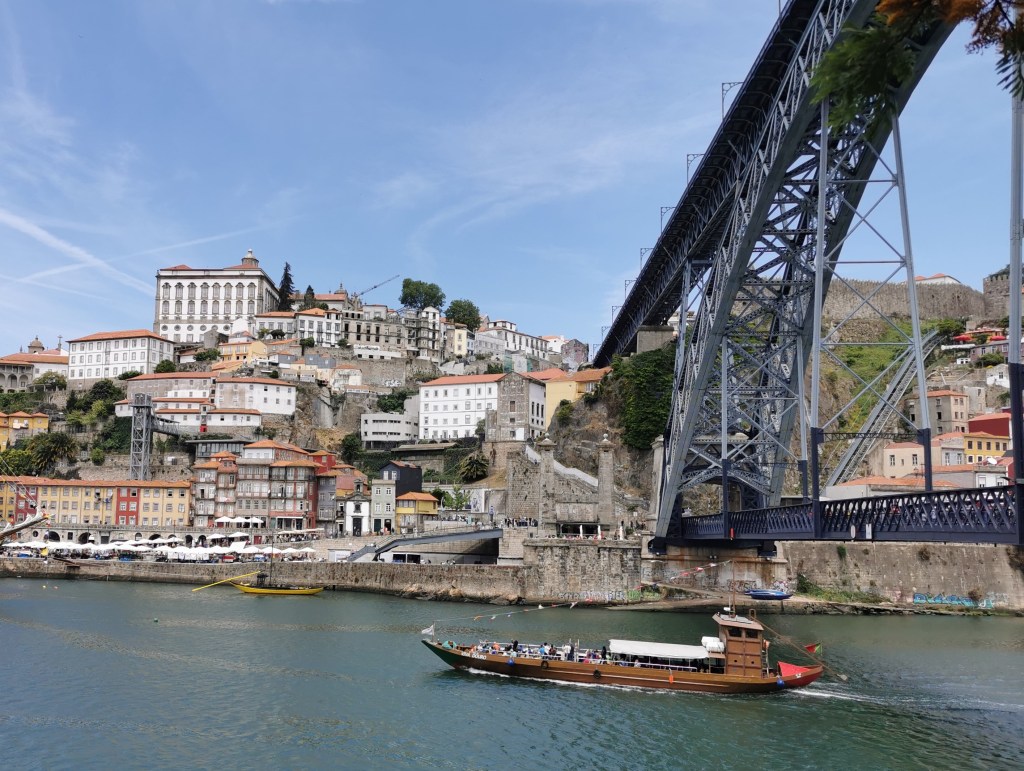
The river is crossed by Ponte Luis I, a double decked bridge (pictured above). A road on the bottom level links the quaysides. 60 metres above, the top deck is used by a metro line which links the centres of both towns. There are footways on both levels. Near the bridge on the Porto side is the Guindais funicular, the easy way to avoid the climb.


Ted learns to drive the high-tech Porto trams.
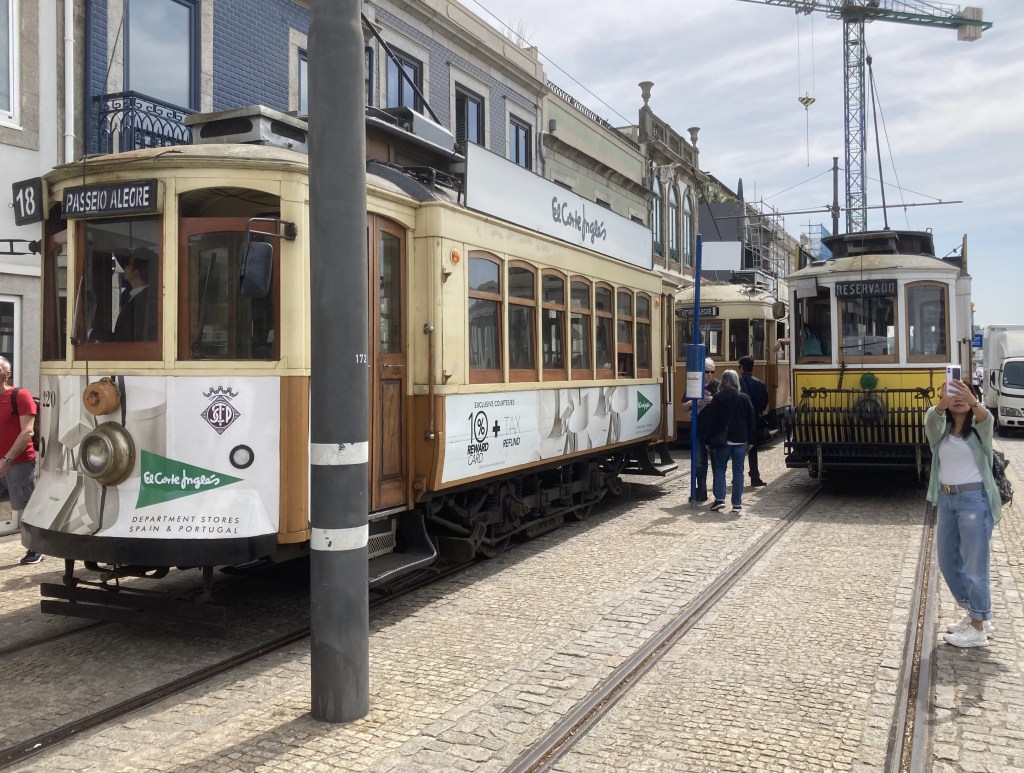
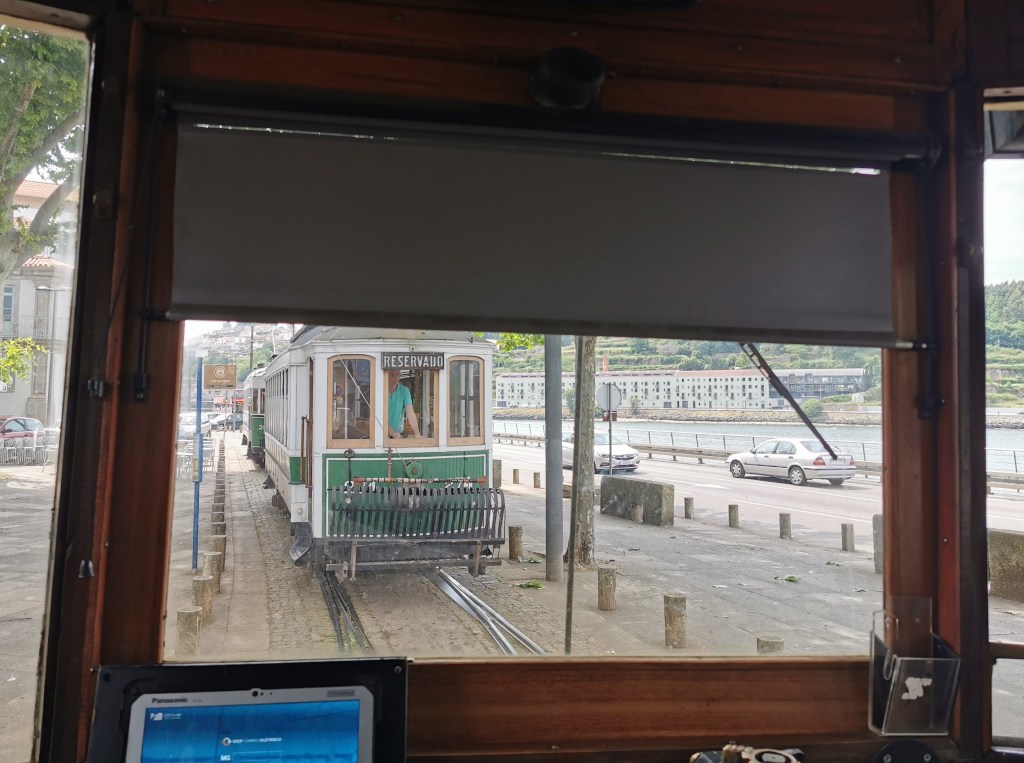
We couldn’t resist taking the tram along the riverside from the Infante terminus in Ribeira to the fishing harbour and beach suburb of Foz do Douro. Unlike Lisbon, where vintage trams remain a form of everyday transport the three routes in Porto are primarily a tourist attraction, though the occasional local hops on board if there isn’t a bus in sight. The service isn’t very frequent and catching a tram can involve queuing. However, it is an enjoyable ride along the riverside and the trams are historic (though there is some new technology in the driver’s cab).
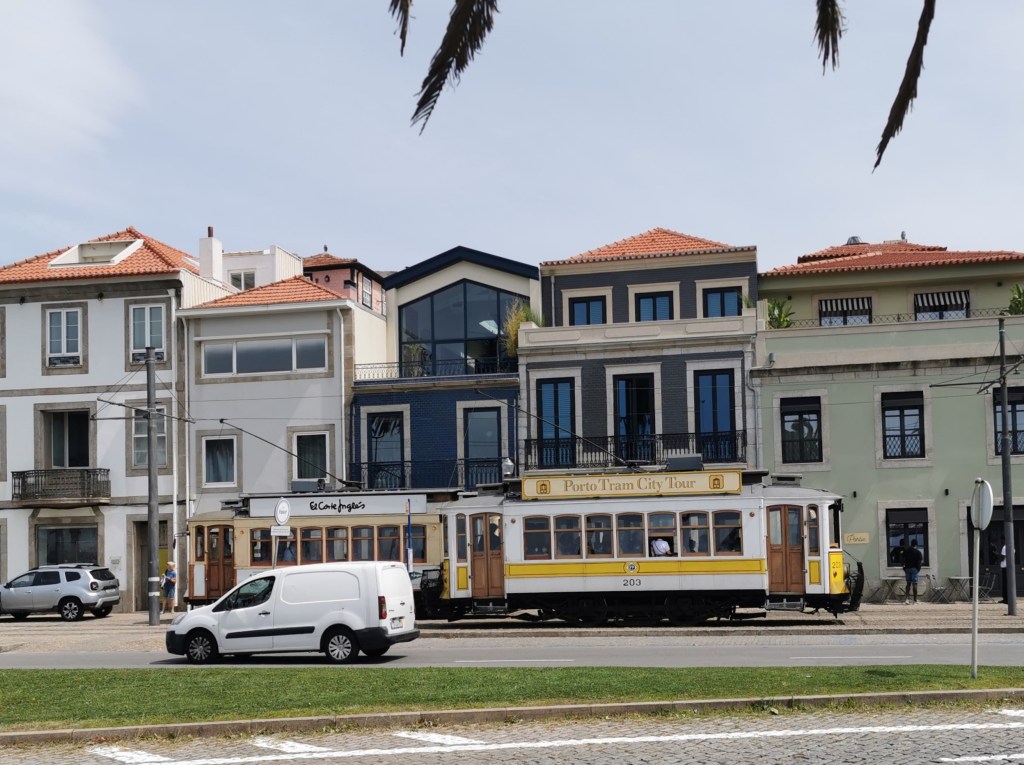
We had a wander round the harbour and riverside gardens at Foz – others head for the beaches – then caught a return tram back to the city in time for lunch. Ribeira was thronged by this time so we decided to cross over the bridge to Gaia. For more about the trams and other transport in Porto see Transport Buffery 3.
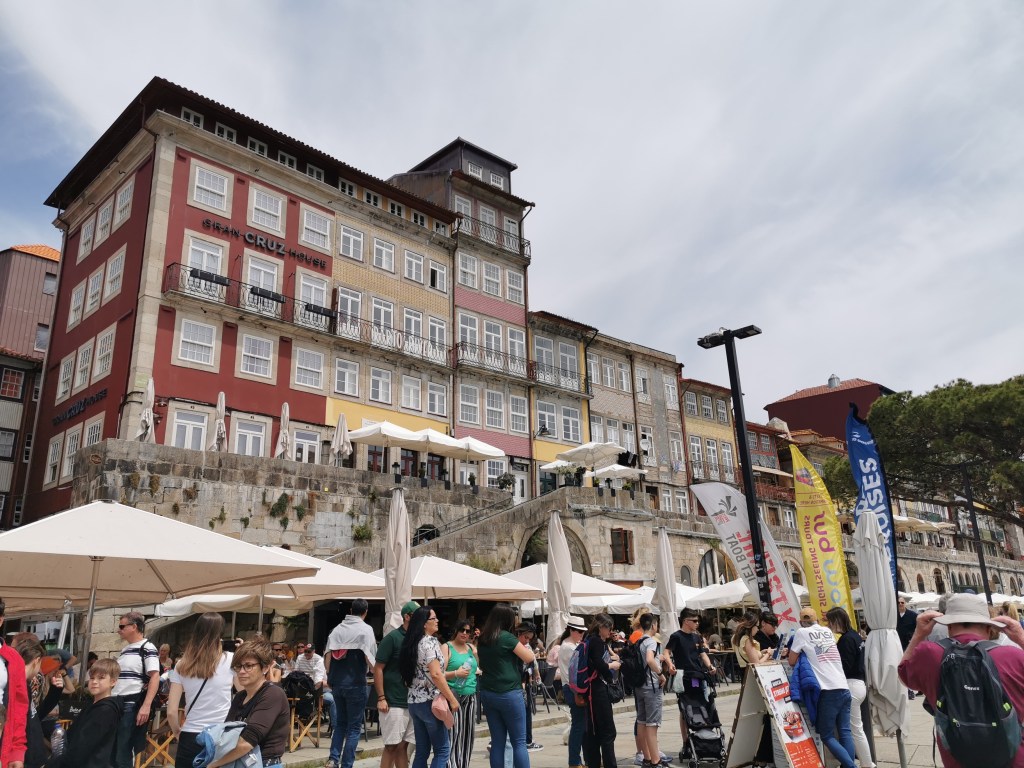
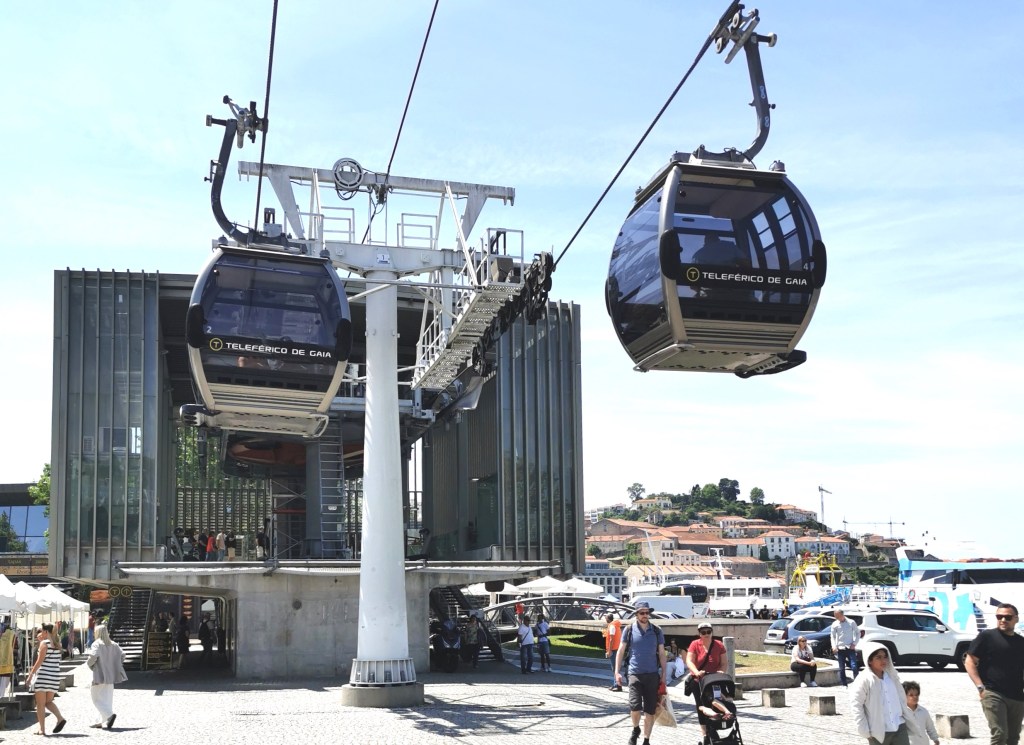
We crossed by the lower level of the Ponte Luiz I bridge to the Gaia side, thinking that there is a slight resemblance between Porto and Newcastle upon Tyne, apart of course from the weather. It was busy with tourists too, but the advantage of the restaurant terraces on the Gaia side are the fine views over to the Porto cityscape. After some port, beer and food we headed for the cable car to take us uphill. The cable car was built recently and runs from the Gaia quayside up to the Jardim do Morro metro station, for the metro over the top deck of the bridge back to Porto.
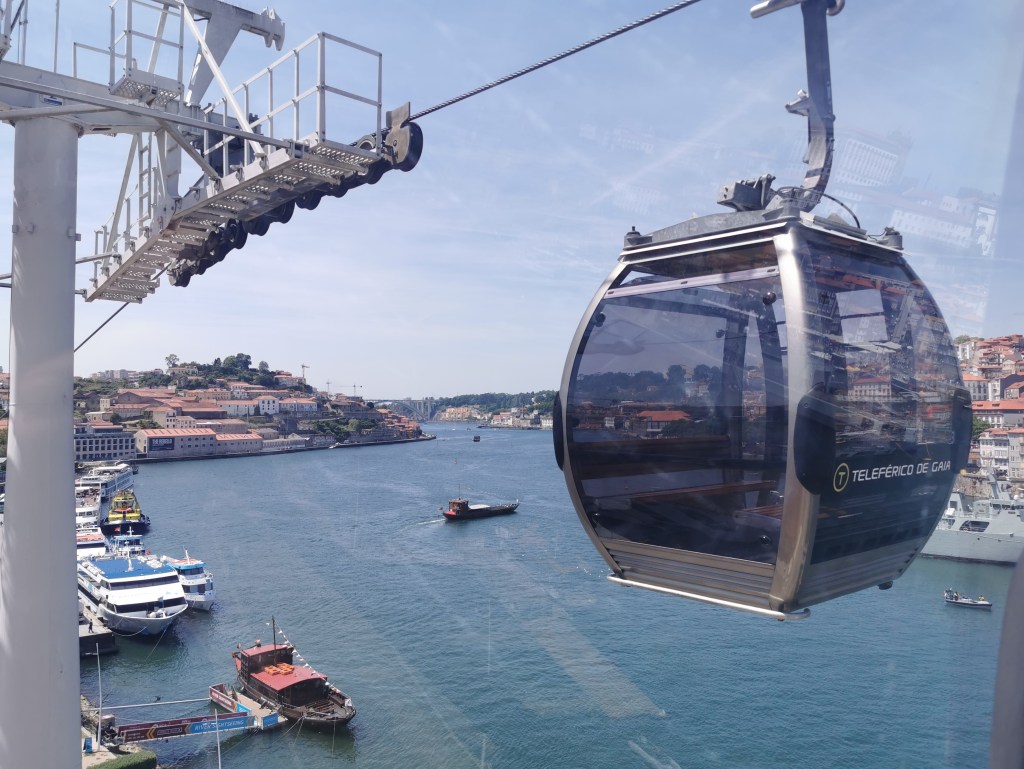
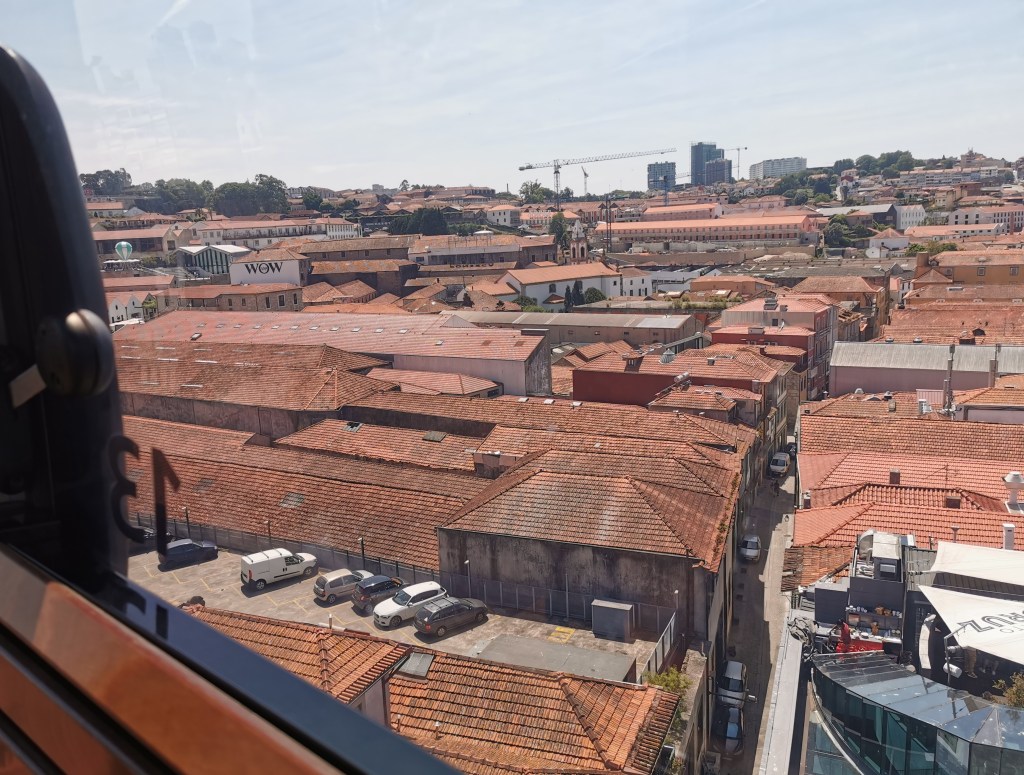
The views of Porto, the river and the port warehouses of Gaia are tremendous from the cable car, the viewpoint at the top station and from the bridge. After the metro crosses the bridge it dives underground to São Bento and Trindade, where we changed lines to Bolhão and walked through the commercial area of the city back to the hotel.
On our final evening we went in search for craft beer – we had done our research and there are several recommended bars spread around the city. We opted to concentrate on those nearest the hotel and paid a visit to Letraria, Rua de Alegria and Armazém da Cerveja, Rua Formosa. They both had a very good selection of Portuguese and foreign beers on tap and in bottle, which could be enjoyed in their beer gardens as well as the bars

And that was it. On our final morning we had an earlyish start, took the metro to the airport and caught our flight to Edinburgh, full, mainly with tourists heading to Scotland. We were impressed by Porto and would have appreciated more time. There is much more to be seen in the city and plenty more beers to be drunk, so we hope to return at some point in the future.
Practicalities:
Getting around

Trains in Portugal are operated by Comboios de Portugal and they have a useful app and website at www.cp.pt . An overview of using trains to and in Portugal is provided by the Man in Seat 61, Mark Smith www.seat61.com .

I opened an online account to buy the tickets for our Badajoz – Coimbra journey, which took a bit of effort. It asks for a postcode, which has to be six numbers, so I used 123456. It also asks for a tax number, which I also made up and, bizarrely, the number in my family and the number of sons (but not the number of bears).
As Badajoz is a Spanish station you cannot buy tickets for the Portuguese Badajoz- Entroncamento train there. However, you can buy tickets on board from the conductor. Note that there are no refreshments on the train – the cafeteria at Badajoz station is fine and popular with locals.
Reservations are essential on Intercity serves, for example Lisbon – Entroncamento – Coimbra B – Porto. My guess is that on most days it would be possible to get a ticket and reservation on the next train at the booking office. If they are fully booked there are slower non-reservable regional services on the routes Entroncamento – Coimbra, Coimbra – Aveiro and Aveiro – Porto.
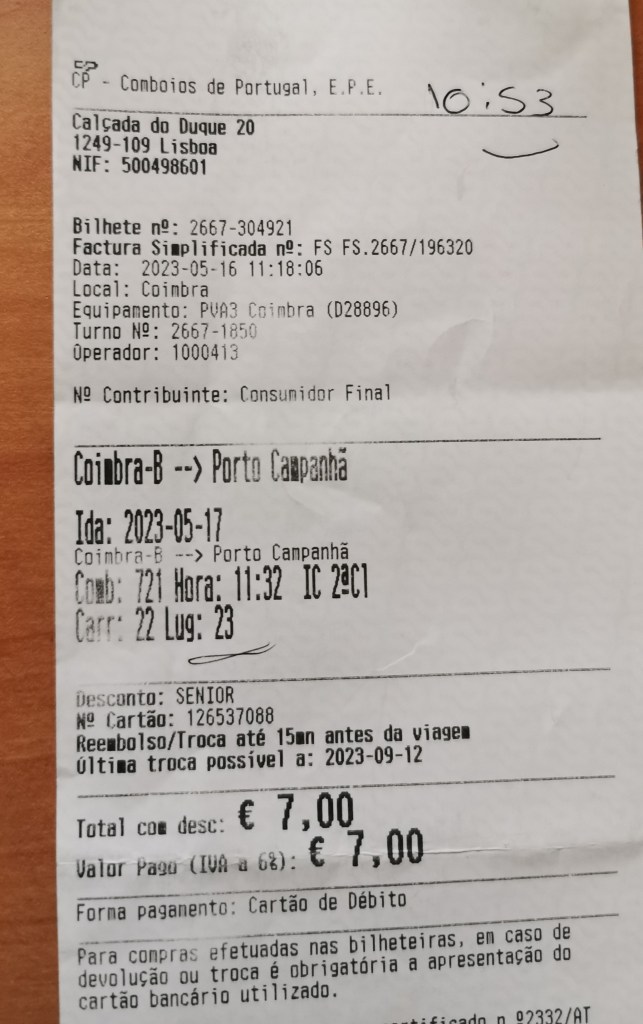
Normal fares are cheap and there are half price fares are available for pensioners, which meant that the journey from Coimbra to Porto cost us all of €7 each. The website said these tickets are available for people with EU passports (we assumed another Brexit problem), however the booking clerk at Coimbra gave us the reduced fare on production of our UK passport.
At the time of our visit any ticket to and from Coimbra B station gave free travel on the local trains to the central Coimbra station – now closed, see transport buffery 2. In Porto any ticket to and from the main station Porto Campanhã gives free travel on local trains to the more central Porto São Bento. Guides and websites say there are trains every few minutes on these lines, but be aware that there are some longer gaps and check times on the website or app.

Public transport in Coimbra is operated by the municipal company Transportes Urbanos de Coimbra and information is on their website www.smtuc.pt . The city centre is walkable, but to avoid climbs you may wish to use the bus or the Elevador do Mercado (single fare €1.70) to reach the hilltop university area.
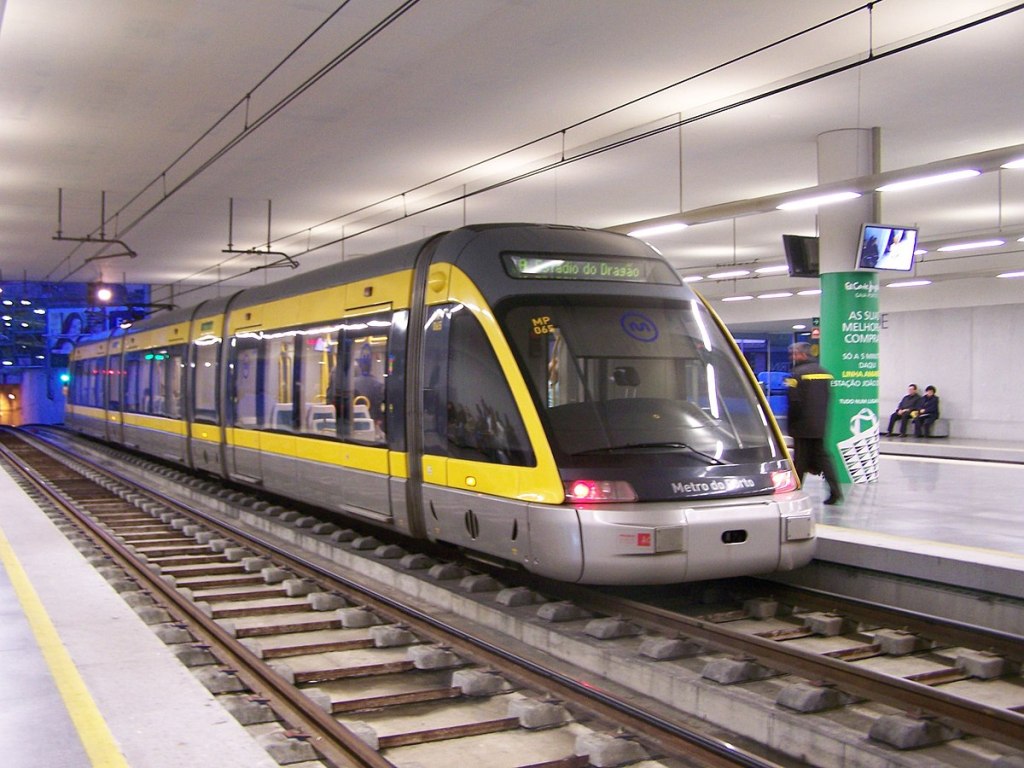
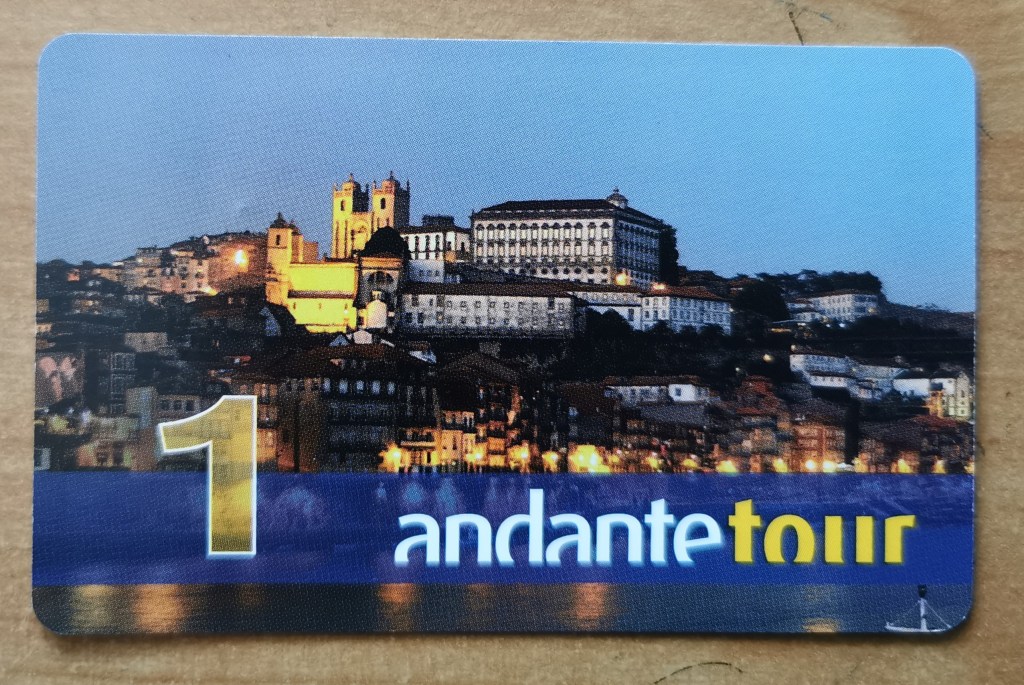
Public transport in Porto. The metro (pictured above) is operated by Metro do Porto www.en.metrodoporto.pt and the buses and trams by by STCP www.stcp.pt . Andante Cards are useful for travel by metro, bus and some local trains, including the metro to and from the airport. They can be purchased from ticket machines in metro stations and also from a desk inside the ticket office at São Bento station. The staff can advise on the best option, as there are various cards available. For tourists the recommended option is the Andante Tour 24 card (pictured), valid for 24 hours. We used this card, which covered our metro journeys from Gaia and the journey to the airport the following morning. Note that you have to tap in and out on the card readers, including when changing from one metro to another.
Tram fares are €5 for a single journey and €7 for two journeys on same day €7. They can be purchased from the driver. The Gaia Teleferico (cable car) fares are €7 single, €10 return.
Hotels
The hotels we used were:
Coimbra – Hotel Astoria, Av. Emidio Navarro 21 (we booked via booking .com). For the history of the hotel see www.almeidahotels.pt/en/hotel-astoria-in-coimbra/history/ .
Porto – NH Porto Jardim, Rua Duque de Loulé 66 (we booked via www.nh-hotels.com ).
Transport buffery
Transport buffery 1 – Madrid to Lisbon by train
Until they were withdrawn the direct Madrid – Lisbon trains used a line from Cáceres in Extremadura to the border at Valencia de Alcántara, then on through a mountainous areas of Portugal to Torre das Vargens, where it met the line from Badajoz and Elvas. The route was completed in 1880 and international trains commenced in 1881. On the Spanish side, a train runs between Cáceres and Valencia de Alcántara three times a week; there are no services on the Portuguese side.

The current timetable (summer 2023) for those wishing to travel overland between Madrid and Lisbon or Porto is reproduced here from the European Rail Timetable. The line from Badajoz was disused for a number of years but reopened in 2017 with a single daily journey, recently increased to twice daily. The timetable shows that the train journey is about three hours slower than the direct coach services. Unsurprisingly, the vast majority of people fly between the two capitals.
There were plans for a high-speed line between the two capitals, but they fell by the wayside during the economic recession, since when both railways have focussed on their own priorities. Work is continuinging on a Spanish high-speed line from Madrid to Badajoz but there were few signs of progress since our visit to Badajoz in 2018. At Elvas there were signs of construction of a new high-speed line to the port of Sines, primarily for freight, which may eventually have a spur to Lisbon. Don’t hold your breath.
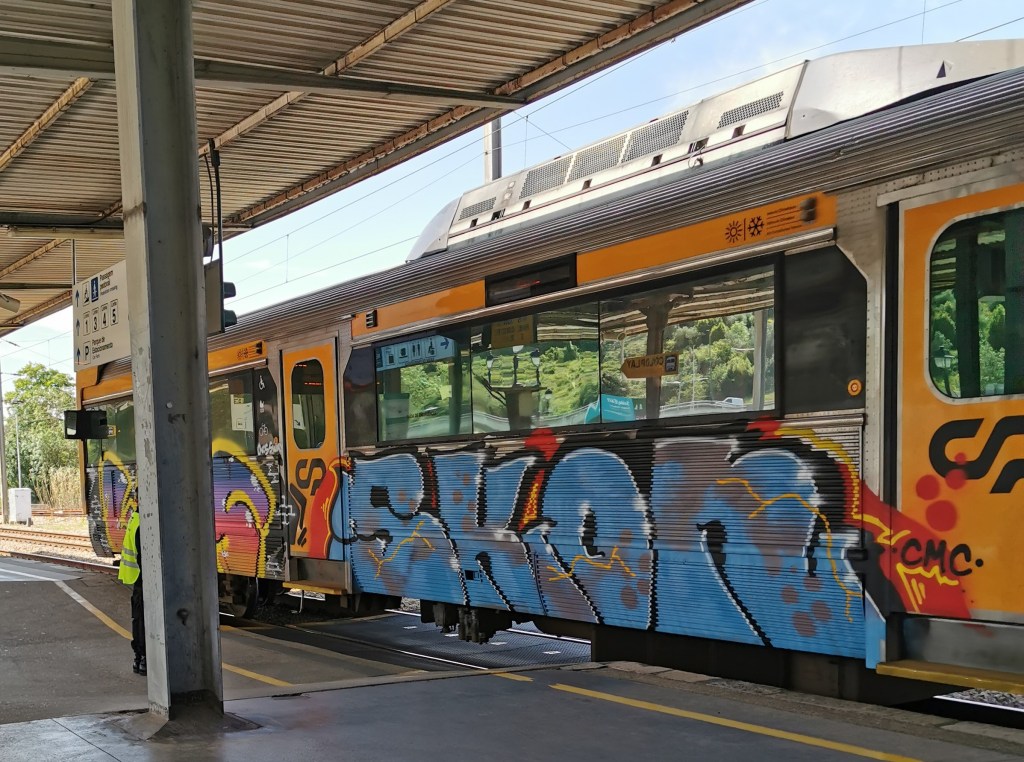
For an up-to-date review of the current state of Portuguese railways since our visit see ‘Portuguese railways at a crossroads’ by Manuel Tão and Carlos Fonseca, Todays Railways Europe 329, July 2023, which reveals the slow pace of improvement.
Transport buffery 2 – Coimbra
The quayside railway mentioned in the text was a link between the central Coimbra station and an isolated line from Coimbra Parque (some way out of the centre) to Serpins. It was used mainly to transfer stock to and from the Serpins line and ran along the street, sometimes against the traffic flow – we saw a photo of a steam train on the line. The line was closed during 2011 and the economic crisis of the time scuppered the planned light rail line which would have replaced it. The current plan is for a guided bus service on the route. Coimbra Parque station was demolished in 2022 and the quayside is currently being remodelled.
The line between Coimbra B and Coimbra was closed in January 2025, to be replaced by the guided bus route, which is planned to open later in 2025. Coimbra B station will be renamed as Coimbra.
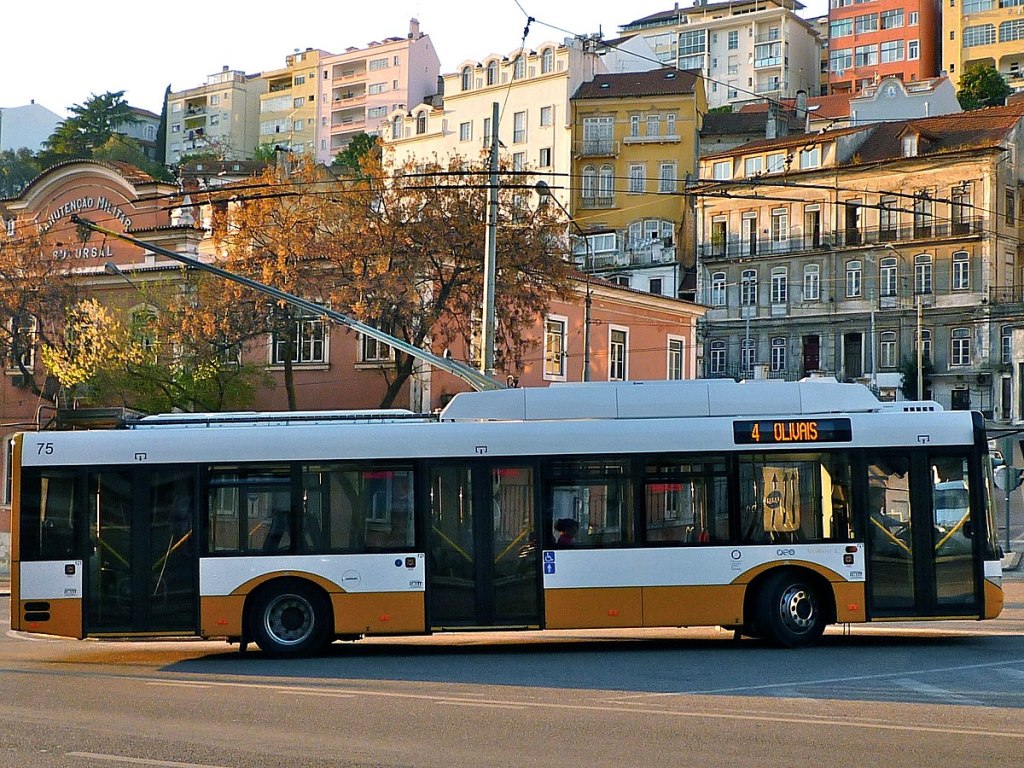
The trolleybus network, the first in Portugal, ran from 1947 until it was suspended in 2021 due to road works. By 2021 there were two routes, though stretches of catenary going nowhere indicate that there were others. The service may resume in 2024.
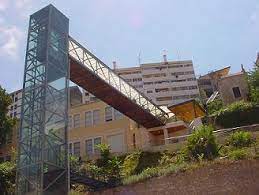
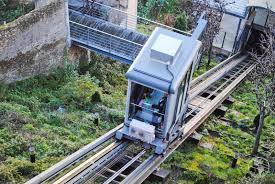
The Elevador do Mercado was built to improve access to the university area and opened in 2001. It is in two sections – a vertical lift followed by a lift on an inclined plane.
Transport buffery 3 – Porto

The Metro do Porto commenced in 2002 and currently consists of 6 standard gauge light rail lines, A to F, intersecting at Trinidade station. Five lines run broadly east-west and the sixth (line D) runs north-south, crossing the top deck of the Ponte Luis I. Much of the network uses the routes of former overground lines, linked by 8km of new underground construction. A seventh line – (line G- a four station totally underground line providing access to more of the city centre) is under construction and is currently planned to open in 2025.
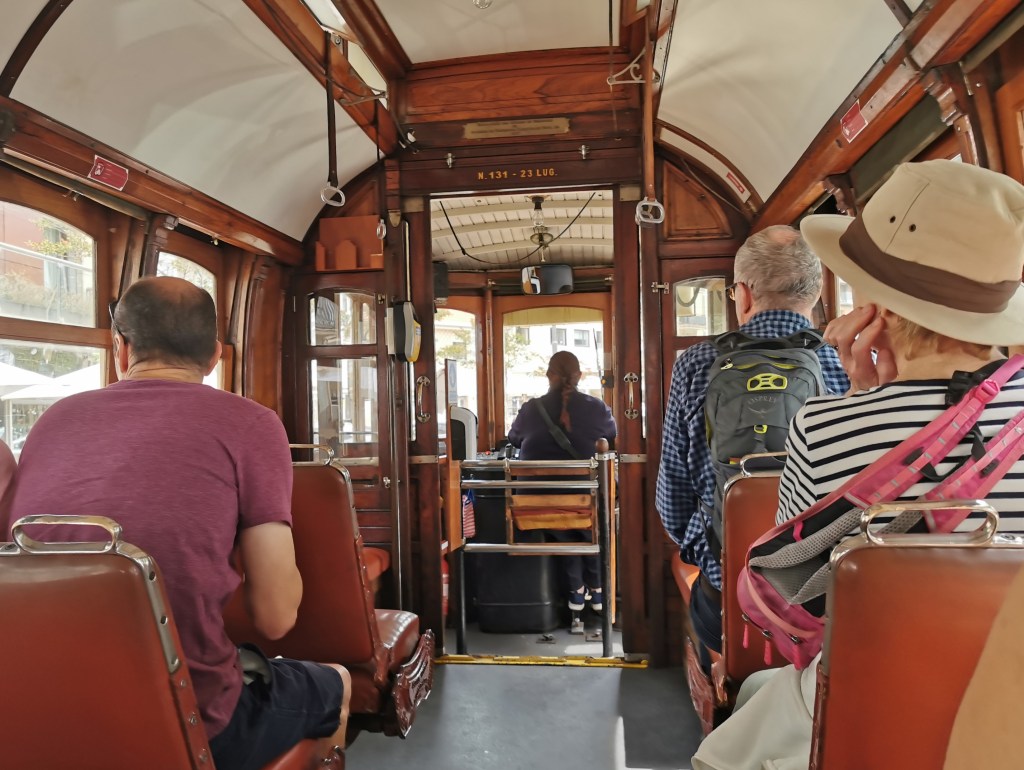
There are three heritage tram routes. The No.1 from Infante by the riverside, along the north bank of the Douro to Passeio Alegre in Foz de Douro. The No.18 runs to Passeio Alegre from Carmo in the city centre and line 22 runs from Batalha Funicular station to Carmo on a city centre loop. The 22 has been closed since 2021, due to the construction of metro line G, and will reopen when possible. All three are principally for tourist use using vintage trams. They are the remnants of a network which once had a maximum of 30 routes, most of which closed in the 1960s and 70s.
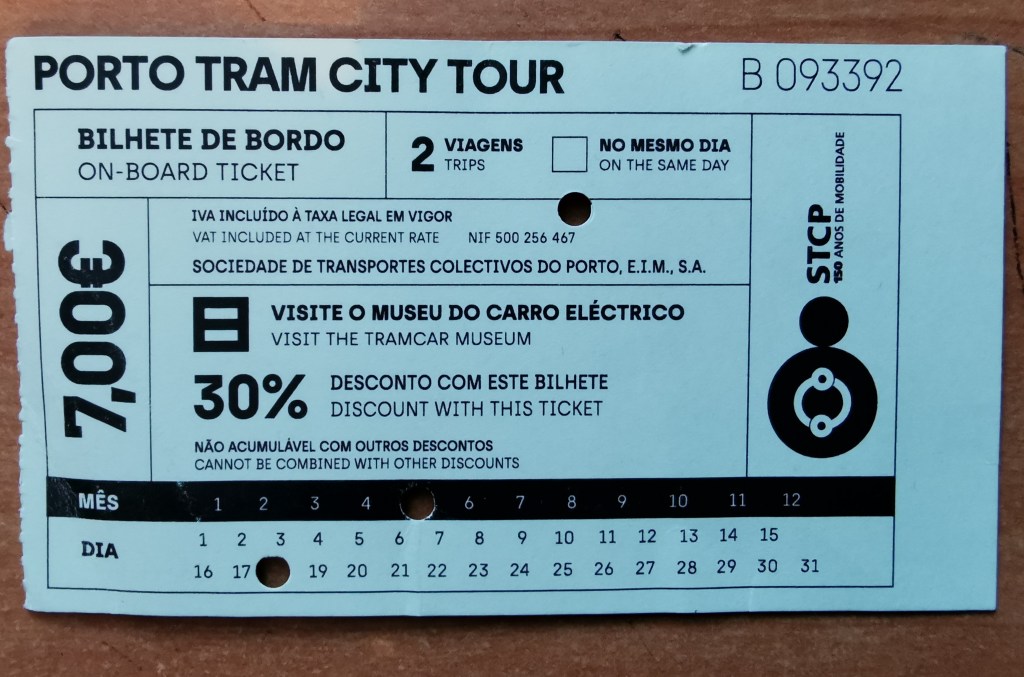
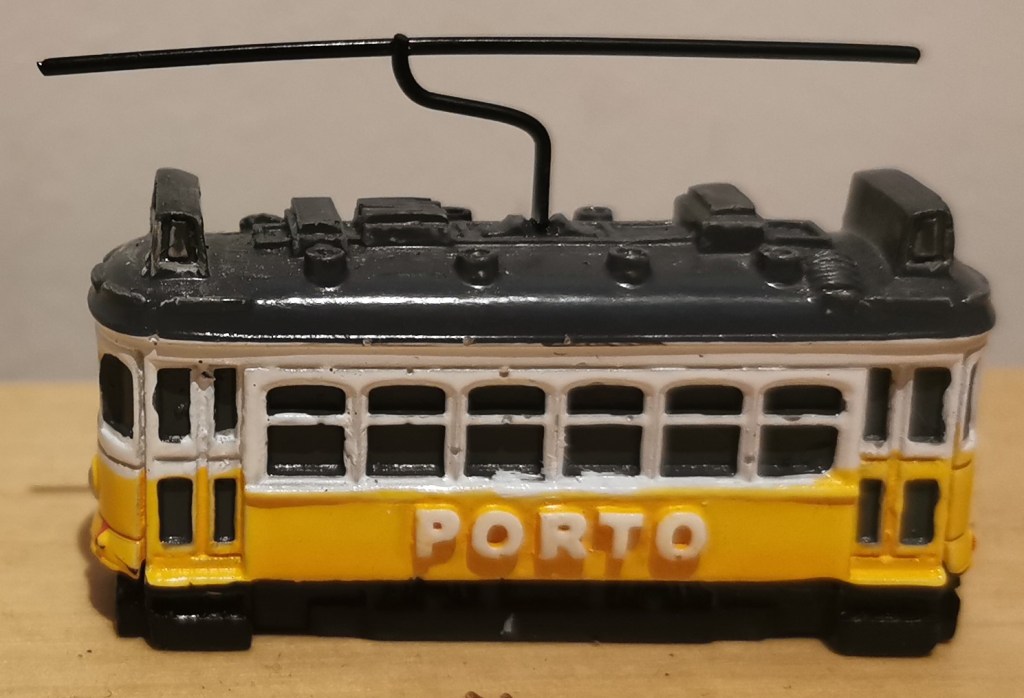
Souvenirs of Porto trams – Steve’s ticket and a model tram (which I think may be made in China and is a replica Lisbon tram with Porto on the side).
The Guindais Funicular climbs the cliff from Ribeira on the north bank of the river to Batalha. It originally opened in 1891 but closed soon after following an accident. It was rebuilt and reopened in 2002.
The Teleferico de Gaia cable car is on the south bank of the river and rises 60m from the quayside to the level of the top deck of the Ponte Luis I bridge. It opened in 2011.
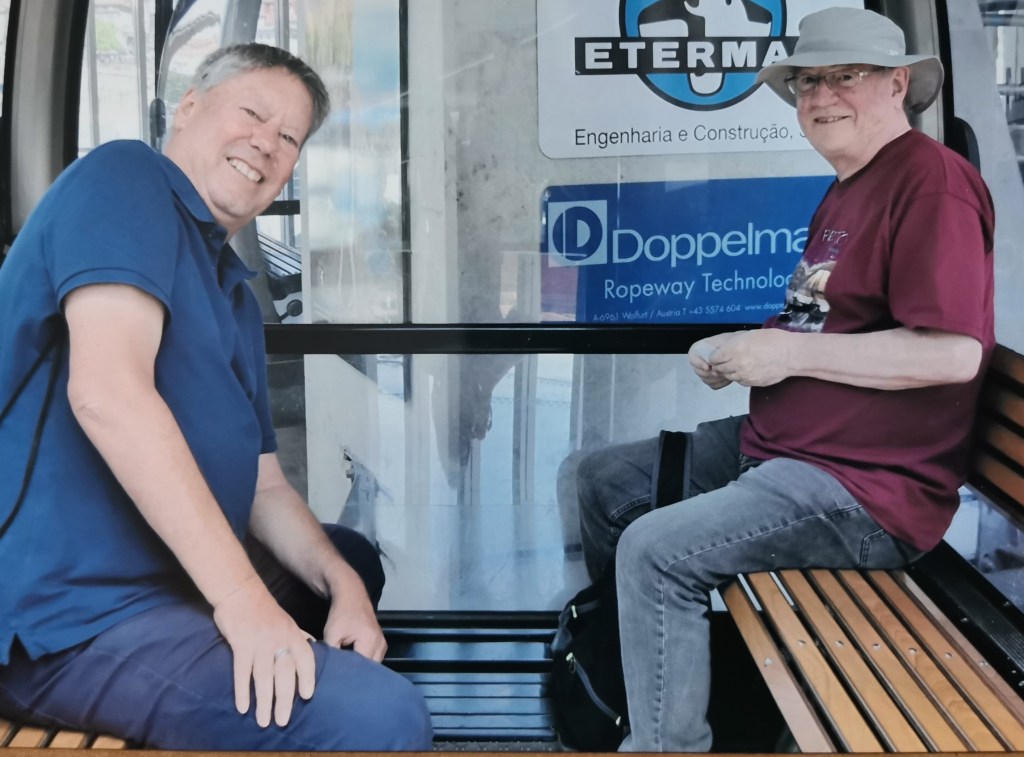
Photographs. All of the photographs are by Steve Gillon except for the following. The photograph of Elvas is from Portugal Travel Guide. The Comboios de Portugal logo and the Porto Metro in an underground station are from Wikipedia. The Coimbra trolleybus is from Wikimedia Commons. The two photos of the Elevador do Mercado are from SMTUC (vertical lift) and raphanomundo (inclined lift). These were sourced from Google Images. The photo of Steve and Ken on the Teleferico de Gaia is by the staff photographer. The base map for Steve’s photo of our journey is from the Rail Map Europe, 3rd Edition and the timetabler excerpt is from the European Rail timetable, summer 2023 edition, both by Europrean Rail Timetable Limited and available from http://www.europeanrailtimetable.eu . The Porto port boats photo is from a postcard by http://www.grupogala.pt . The photos of Santo Idelfonso church and the three trams at Foz de Douro (and possibly a couple of others) are Ken Donald.
Acknowledgements. Thanks Once again to Ken Donald for his company on this trip and for commenting on the text, and to Lesley Fyfe for a fine day out in Coimbra.
Copyright: The text and all photos except those listed above are (c) Copyright Steve Gillon, 2023. Updated re Coimbra B – Coimbra railway line 2025.
 Go with Ted