In September 2023 Ted and I paid a week-long visit to Northern Italy, to have a brief look round a few places that we hadn’t visited before – the final decision was to visit Florence, Siena and Genoa. We were accompanied by our friend Dave Webster, who visits Milan regularly to see his friend and her dog, so we agreed that the trip would include a couple of days there. Here are some notes and photographs of our trip.

We flew from Edinburgh to Pisa – it wasn’t the smoothest of journeys – we arrived at Pisa three and a half hours late. At the airport we realised that no planes were moving and eventually found out from media sites that a hole had appeared in the runway and was being repaired – at no time were there any announcements. We were delayed further when the refuelling tanker overfilled the plane, resulting in a spill on to the runway which had to be cleared up by the fire brigade. The joys of air travel.

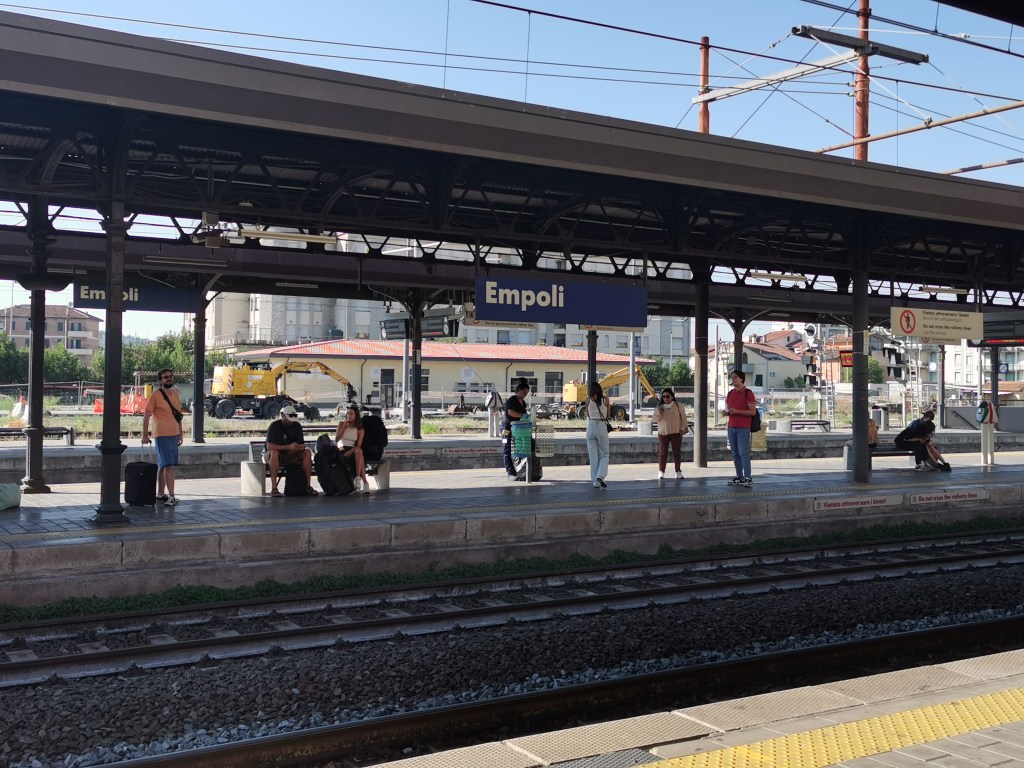
From Pisa airport we took the recently opened people mover to Pisa Centrale and caught a packed train to our first destination, Empoli. We had realised that Empoli would make a good base. It was convenient for trains to Pisa, Florence and Siena, is not a major tourist destination and therefore accommodation was much cheaper than Florence or Siena. We had chosen the Hotel Il Sole, directly across from the station, checked in and set out to explore.
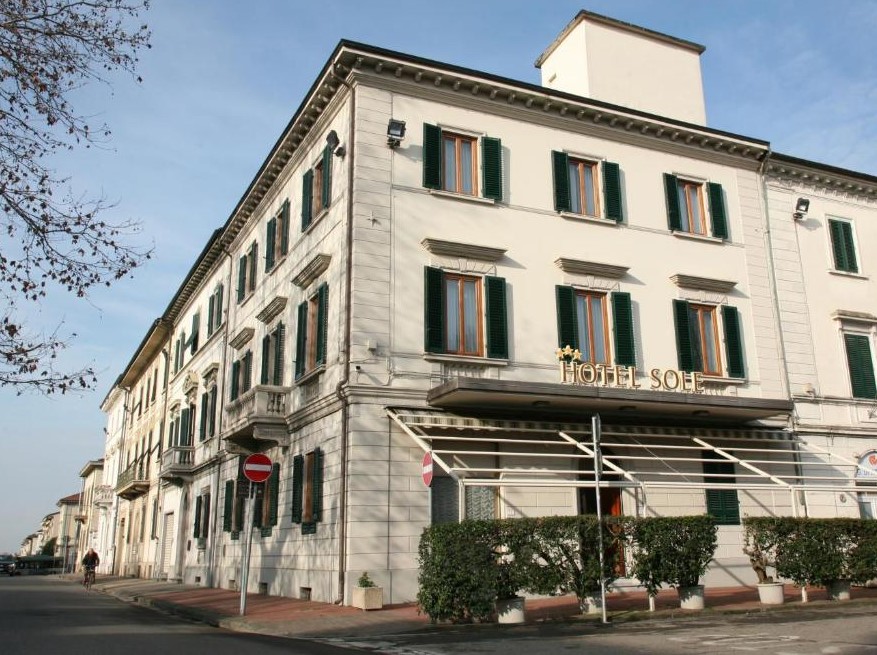
Empoli today has a population of 48000, with a long history as an agricultural centre and more recently known for its glassworks. The old town is pleasant and the lack of tourists meant that we were able to experience small town Italian life.


Over the course of three evenings wandering round the town we explored the options for eating and drinking. The craft beer pub, La Birroteca was outstanding – a good choice of draught beers and very friendly – we quickly became locals.
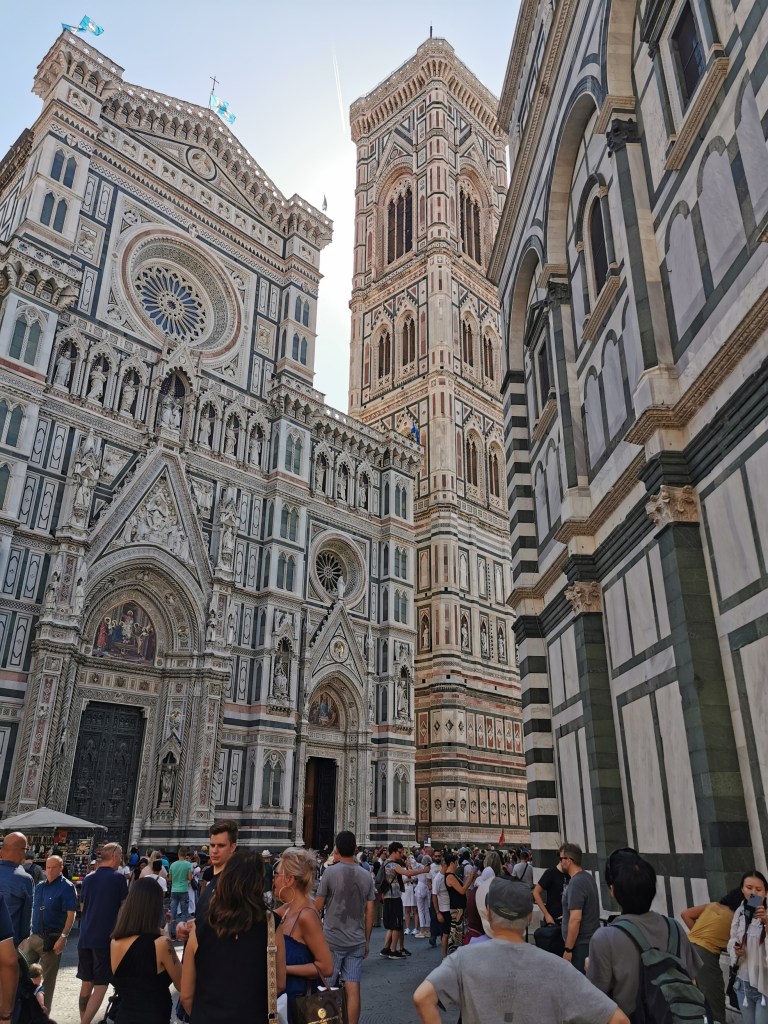
Our first day trip from Empoli was to Florence, half an hour away by train. The idea was to have a quick look round and then decide whether it would be worthwhile to return in the future.
Over the course of the day we did a circuit of the city centre. We visited the Duomo (cathedral) and Basilica area, then headed for the riverside and crossed the River Arno by the Ponte Vecchio. We returned over the Ponte alla Carraia and eventually headed back to the Piazza Santa Maria Novella and the station.
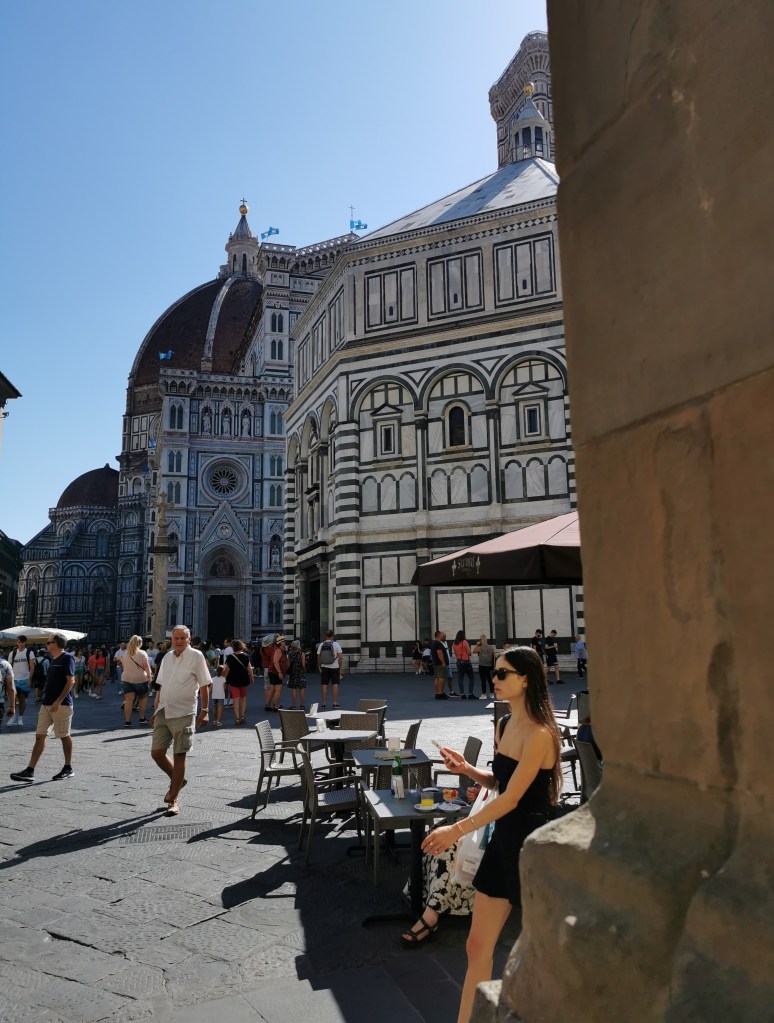

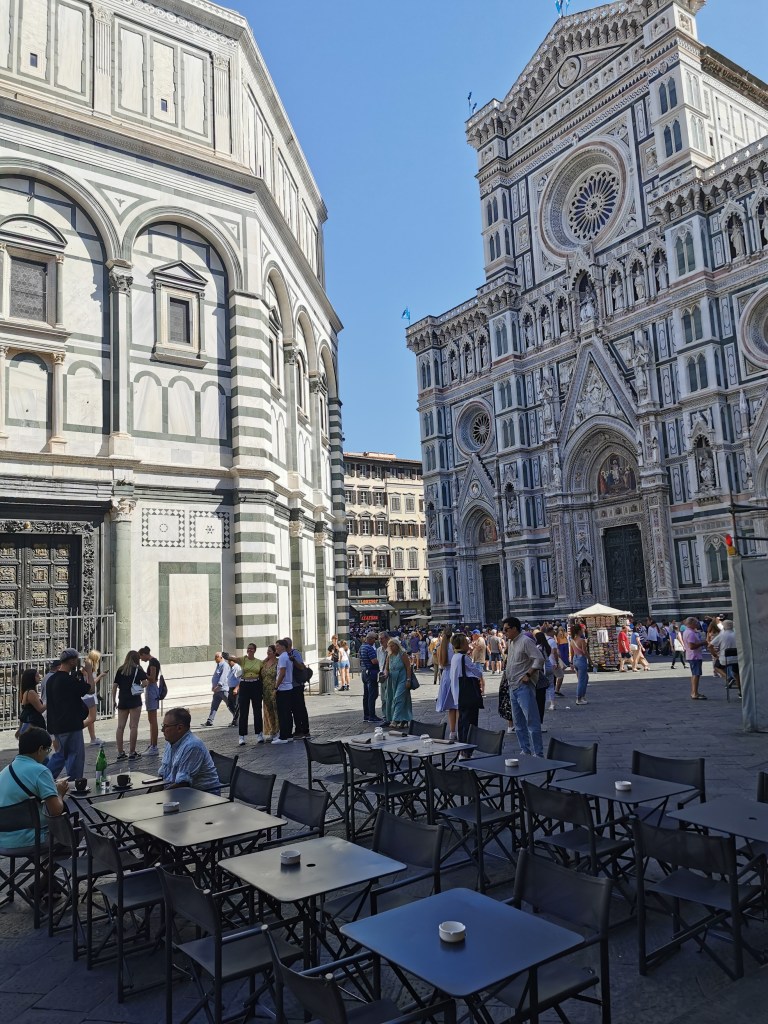

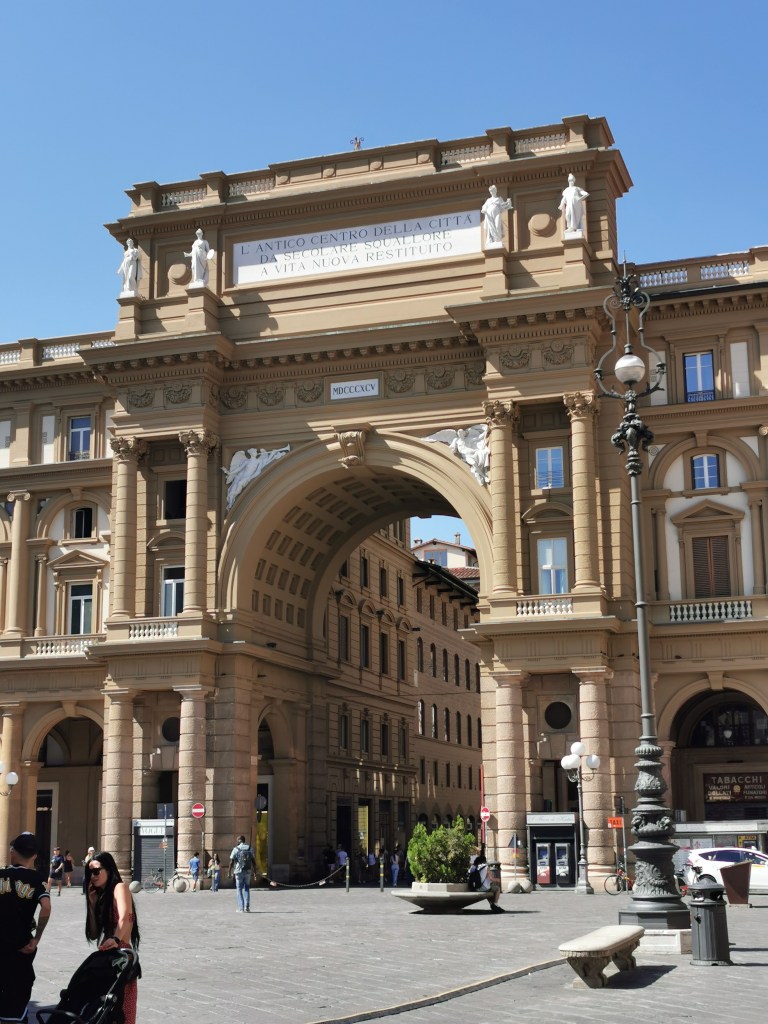


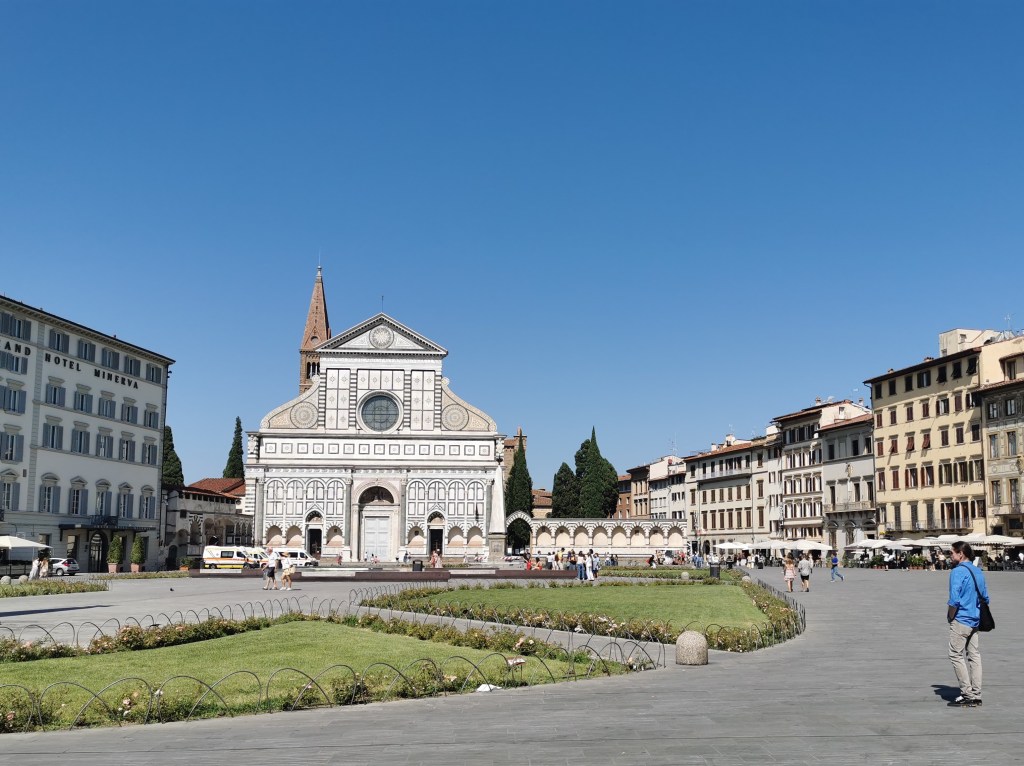
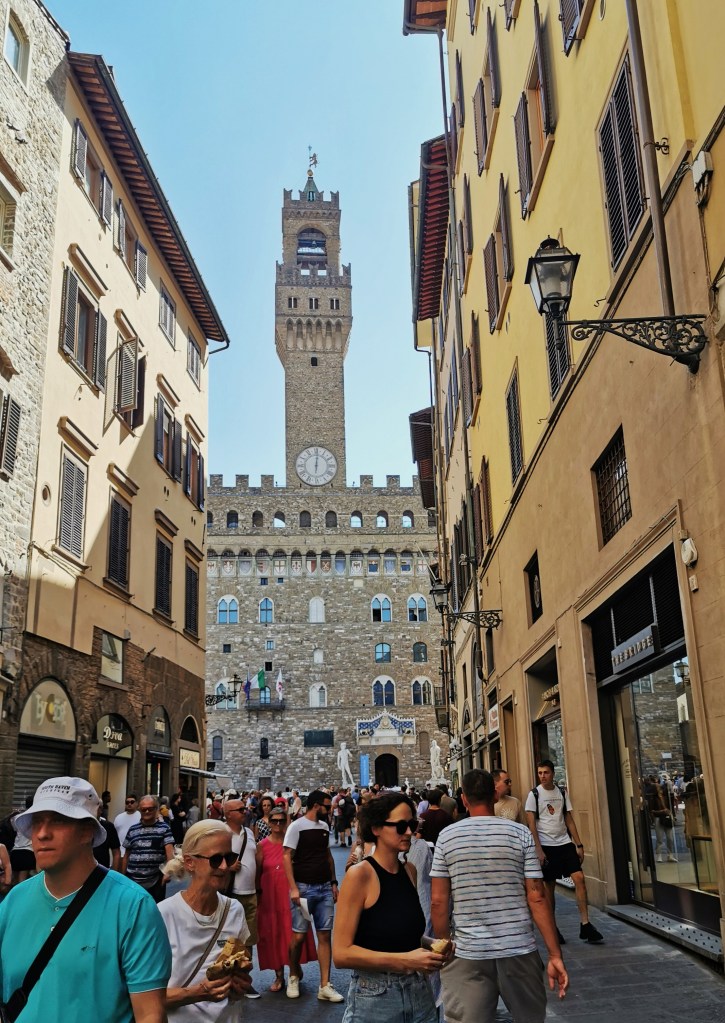

Of course we stopped for a drink or two and a meal along the way, ending the trek at the Josua Tree Pub – which of all things had a couple of working handpumps (and plenty of other decent beers). Florence was packed – it looks like it may have reached the stage where the locals will become fed up with tourists.


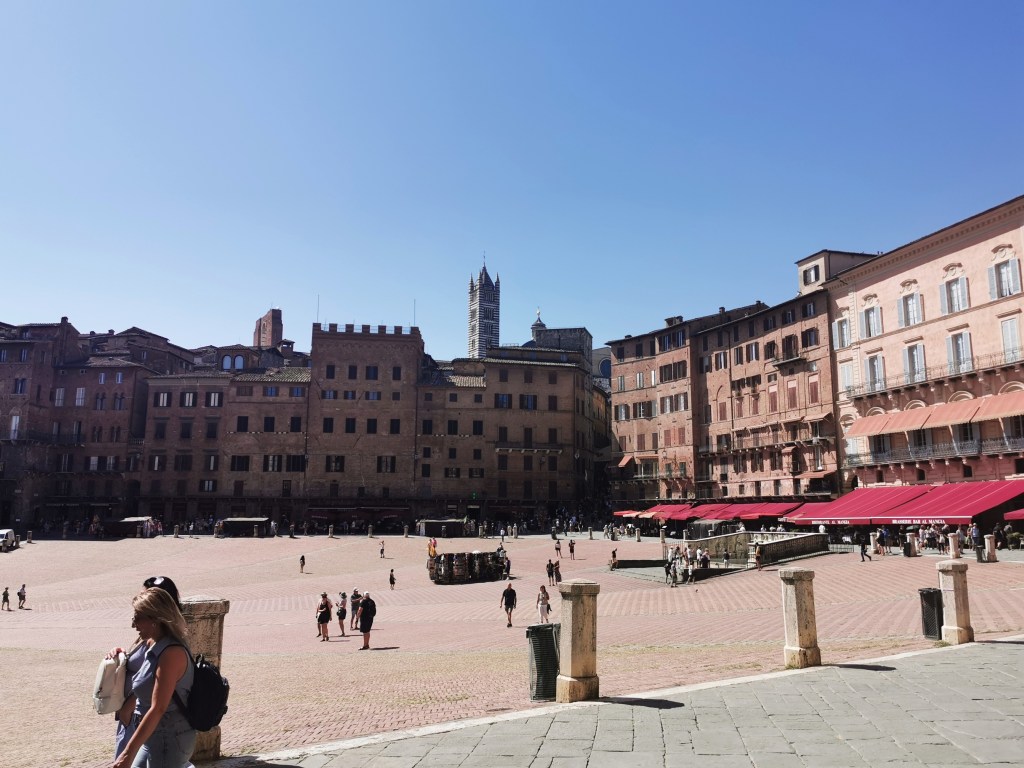
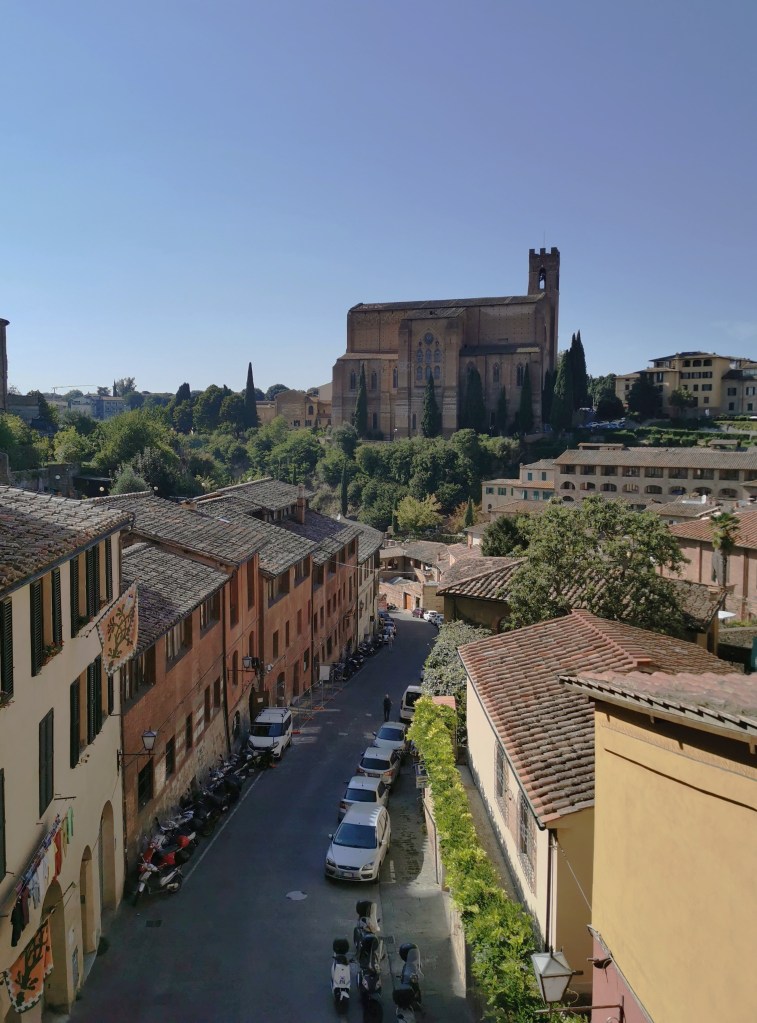
Our second day out was to Siena, one hour by train through some very attractive and presumably typical Tuscan countryside. The city centre is a World Heritage Site and its focus is the huge Piazza del Campo, which includes the Palazzo Pubblico (town hall) and the Torre del Mangia.
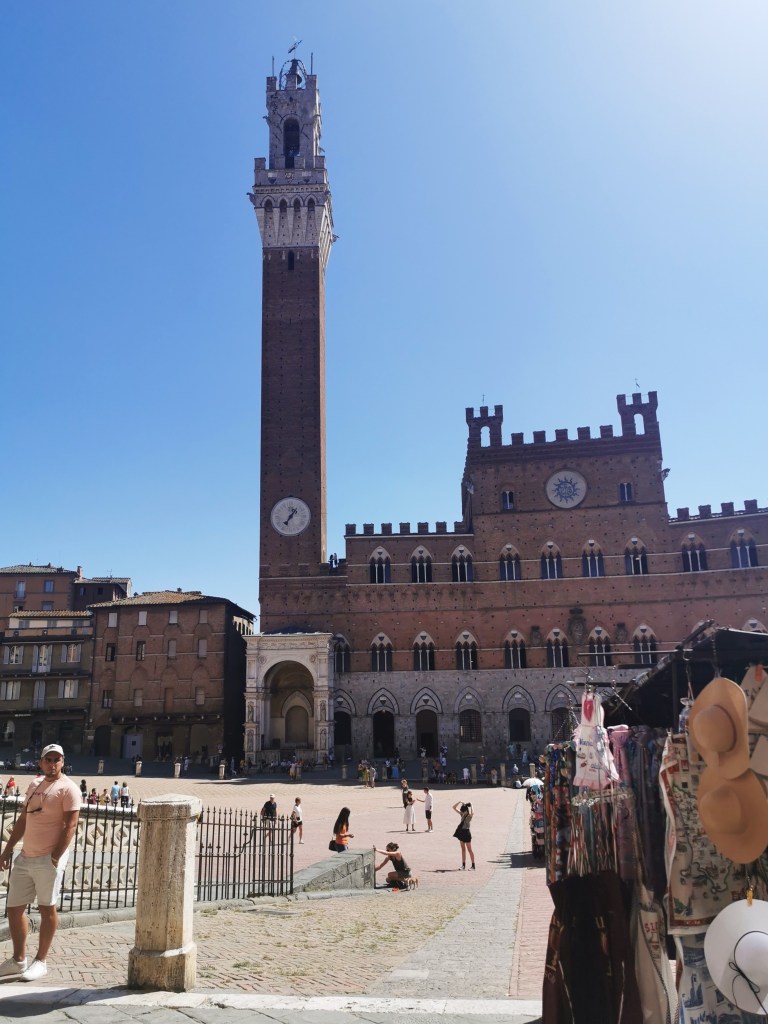
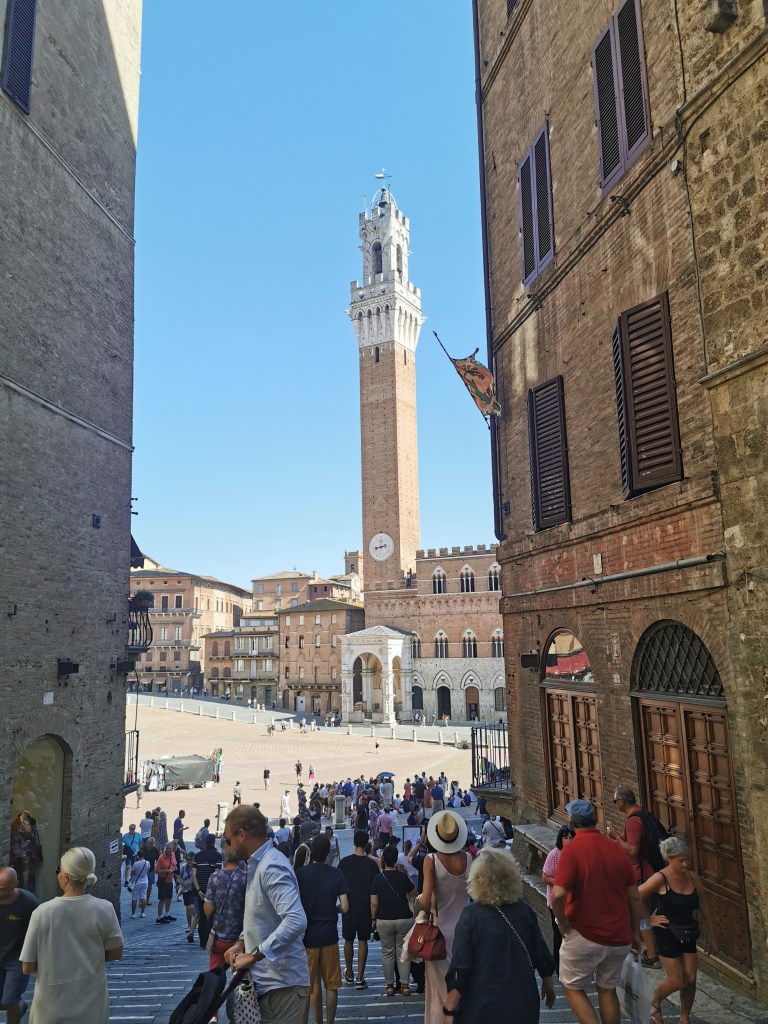
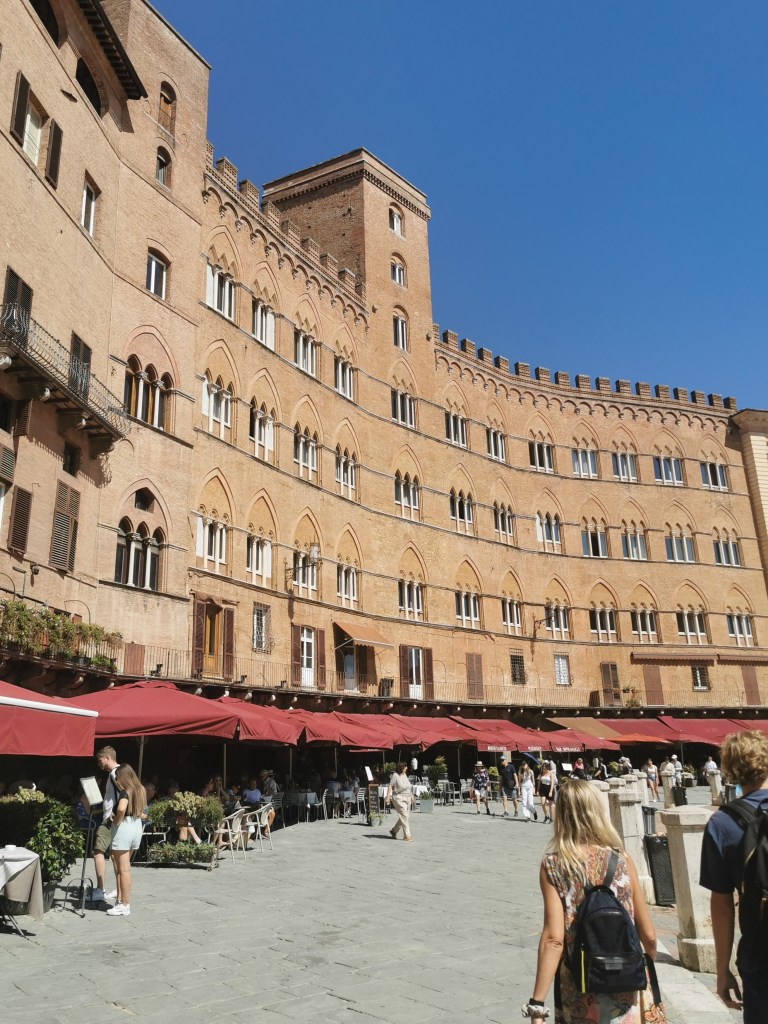
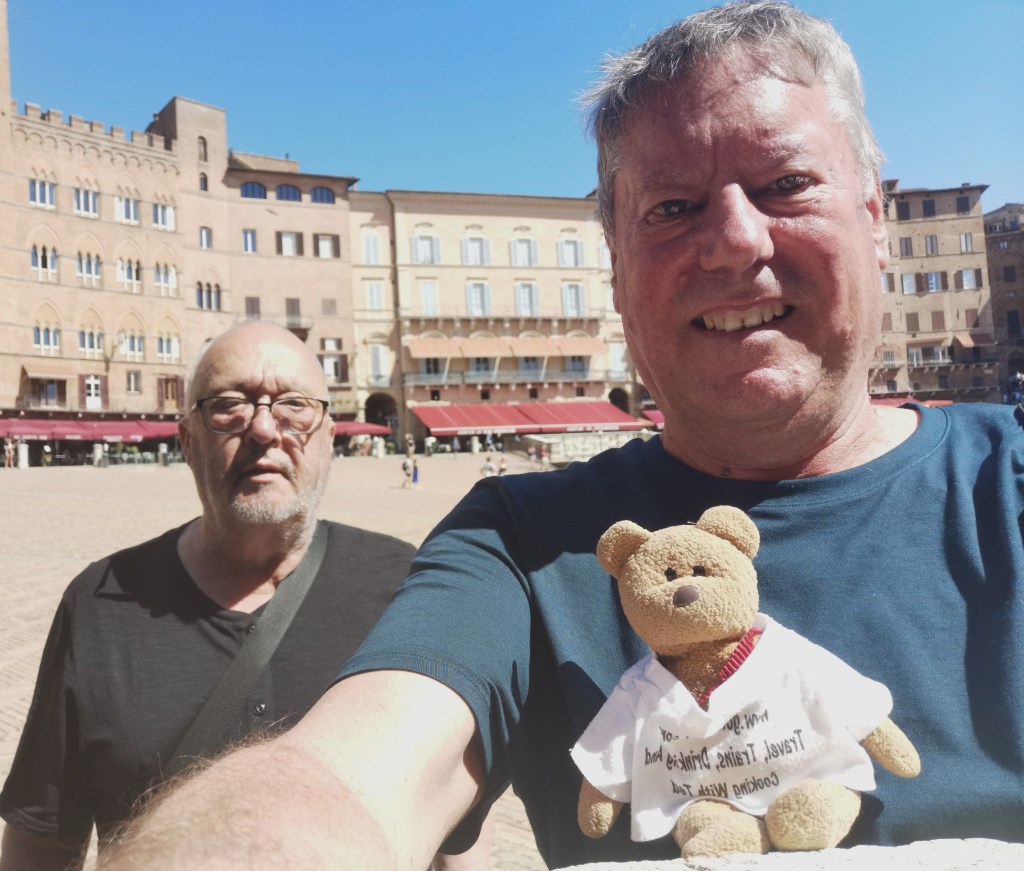
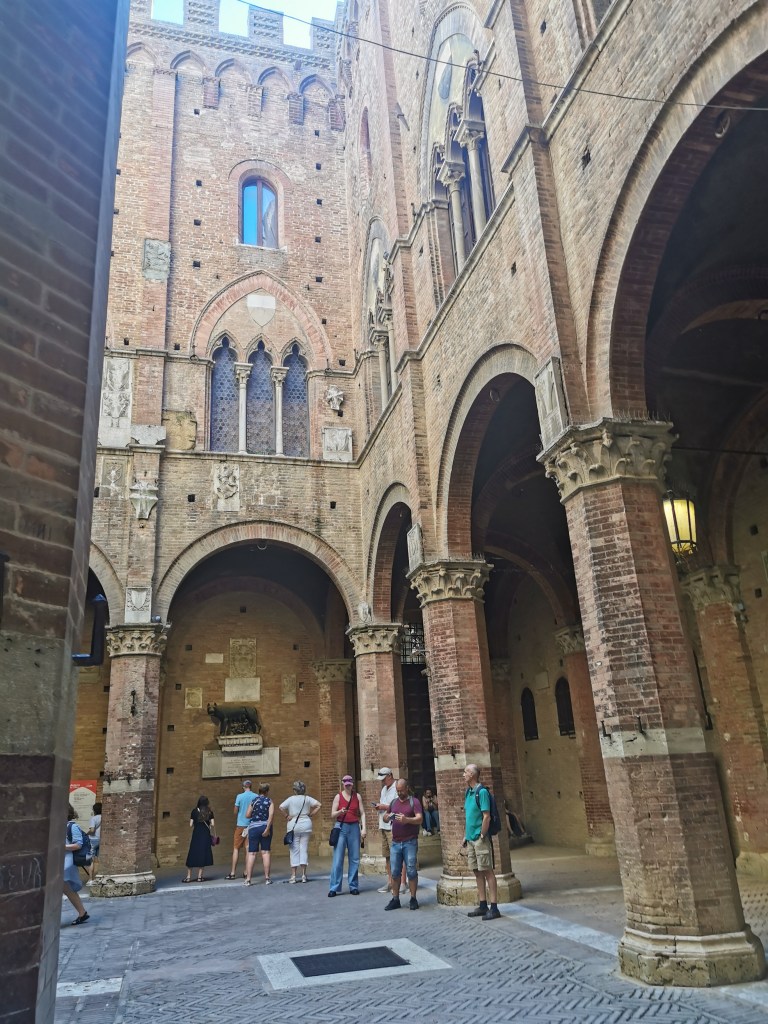

The Piazza is the scene of the twice-yearly Palio horse race between the various contrade (districts) of the city – you can see their emblems and flags all around town. The sheer size of the Piazza means that it doesn’t feel overcrowded. There are also many attractive back streets to wander around and, of course, plenty of options for eating and drinking.


From Empoli we travelled to Genoa by local train to Pisa and then by an Intercity service. We didn’t stop in Pisa as we’d been there before ( see Italian journeys ). The train crosses the plain to La Spézia, calling at Carrera – you can see the white mountains and their marble quarries from the train.

From La Spézia to Genoa the line hugs the coast – much of the 87 km is tunnelled through the cliffs. We passed through the Cinque Terre – a series of 5 dramatic coastal towns clinging to the cliffsides, formerly isolated but now busy resorts – our intended visit in 1996 was thwarted by a train strike. We then caught glimpses of towns such as Sestri Levante and Rapallo until we arrived at Genva Brignole and made our way across the road to our hotel.

We sorted out our local transport tickets then set off to explore Genoa. Brignole station is in a modern, commercial area of the city, but the historic old town is only a short bus or metro ride away.
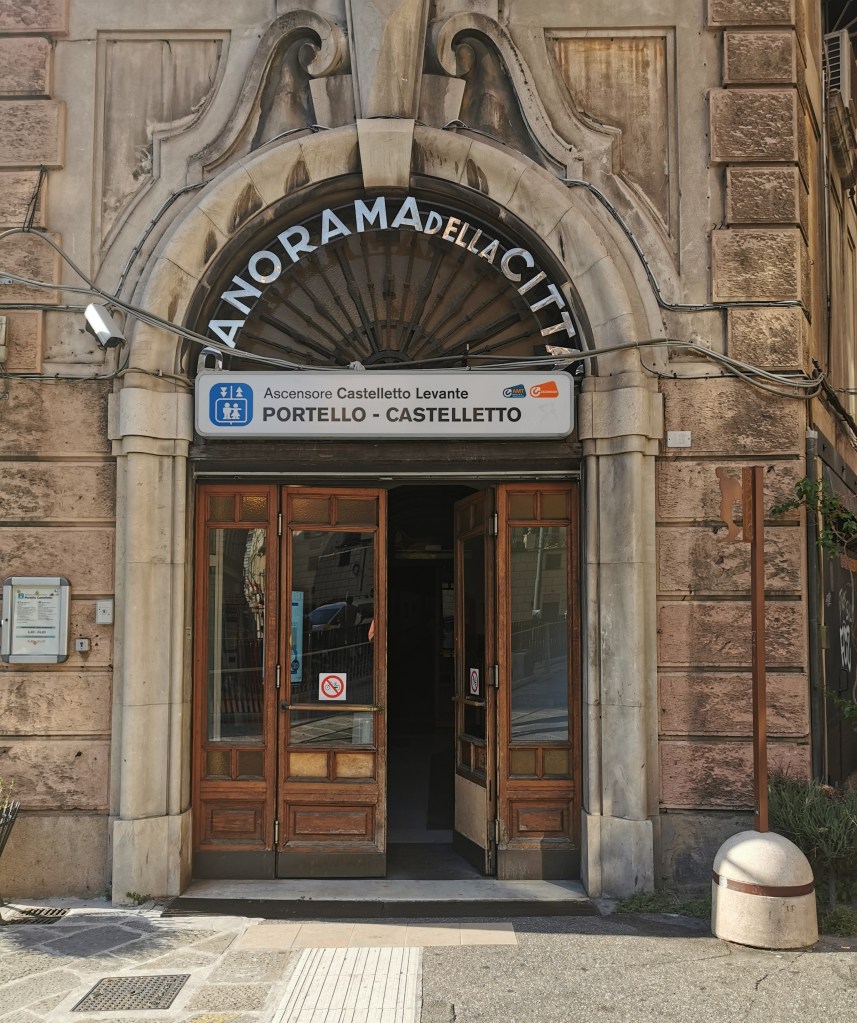


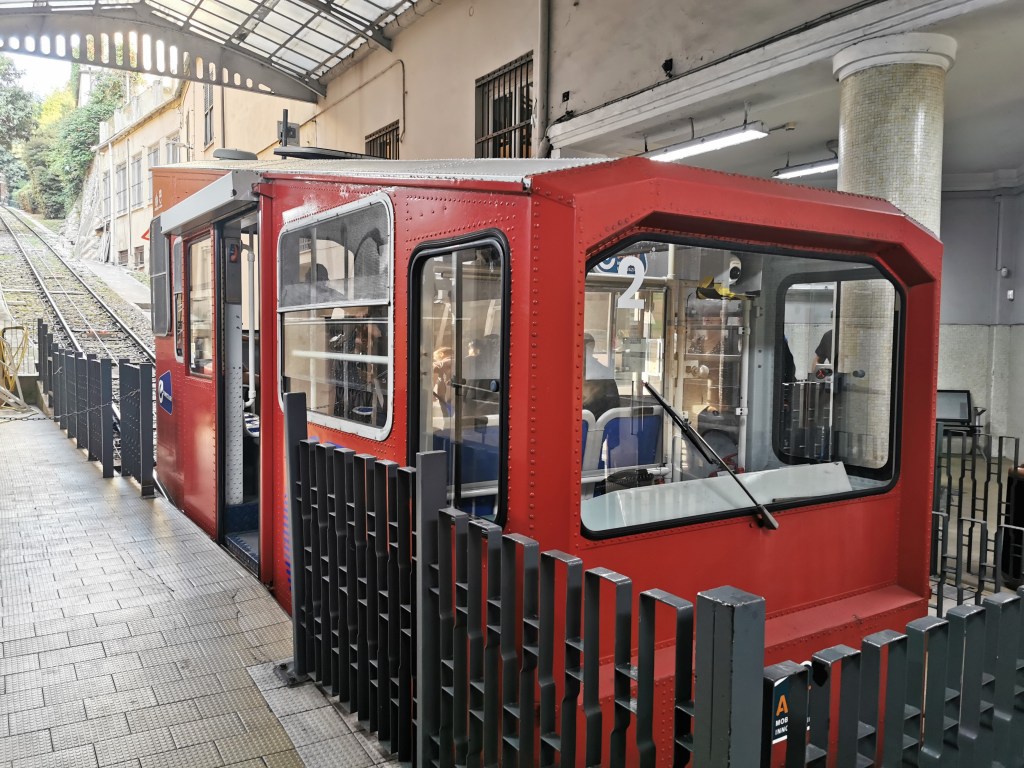
To get our bearings, we caught a bus to Piazza Portello and the Ascensore (lift) Castelletto for a fine view over the city. Castelletto is a pleasant district with several bars and restaurants. Back at Piazza Portello we caught the nearby Funiculare Sant’ Anna up to Via Bertrani – not much of a view but the bar at the top station provided a convenient break.


The following day we headed for Boccadasse on the Genoa seafront. It’s a picturesque former fishing village with a pebbly beach surrounded by bars and trattorias, though we were there too early for most of them to be open.


We headed further along the coast to Nervi where there wasn’t much so see or do, before heading back into town. Looking at Google Images, it seems that we missed the attractive parts of the town.


The evenings were spent in the old town which is a busy warren of narrow streets lined with high buildings from grand houses to dingy tenements. The area has a good vibe despite (or perhaps because of ) its rough edges and we wandered the car-free dark alleys in search of food and drink. Our favourite bar was Ai Troeggi with a wide selection of craft beers and bruschettas and a collection of (empty) beer cans including Mc Ewan’s export. We visited Genoa again in 2024 – see Corsica, Genoa and Nice – and this time found another excellent bar – Kamun Lab.


Our final destination was Milan. The train journey was uneventful, first through the Ligurian mountains then across the flood plain of the River Po. I’d been to Milan before, leading Great Rail Journeys groups to see the sights (see Italian journeys) so this visit was spent relaxing. We were based on Corso Buenos Aires, a busy upmarket area not far from the main station.


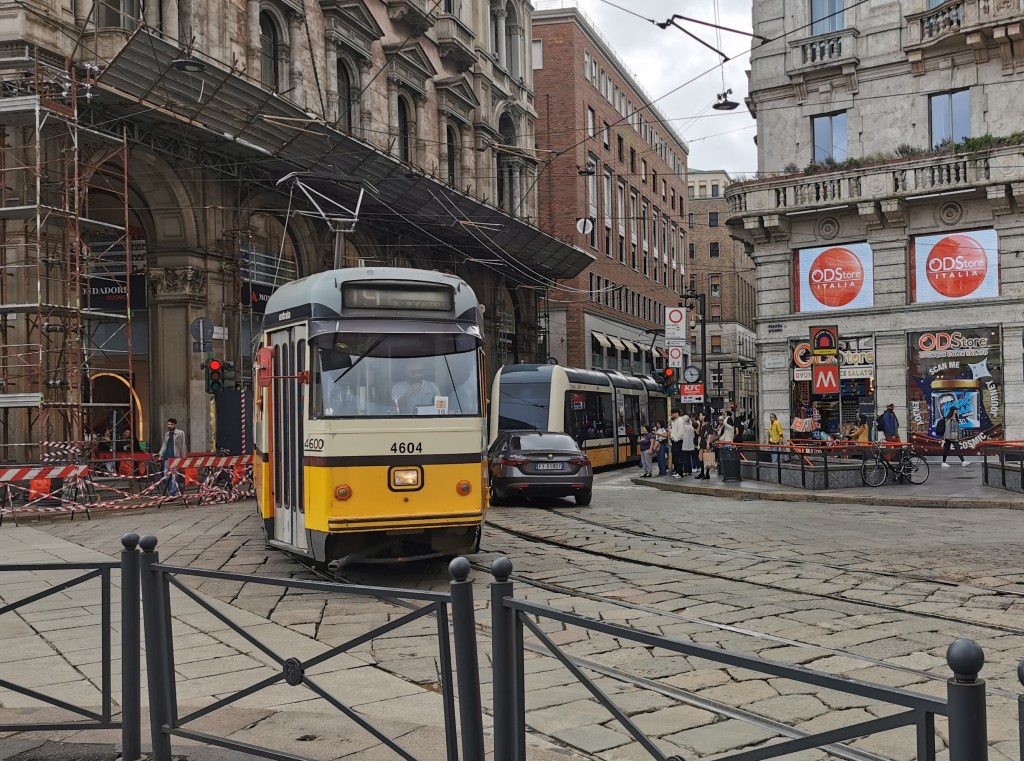

We took the opportunity to ride the trams – there is a substantial network and some of the oldest trams are approaching their centenary. We visited a couple of the main sights – the Duomo (cathedral) and its piazza and the Galleria Vittorio Emanuele II (pictured).


We also spent an afternoon in the Navigli area where the canals are lined with restaurants and bars.

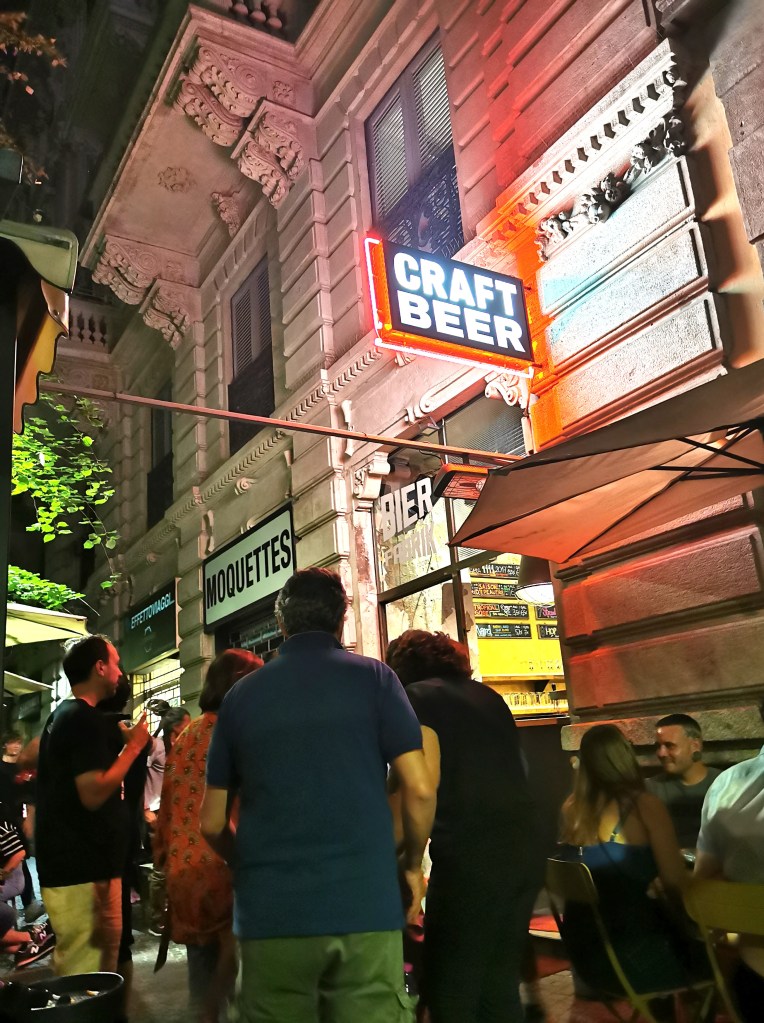
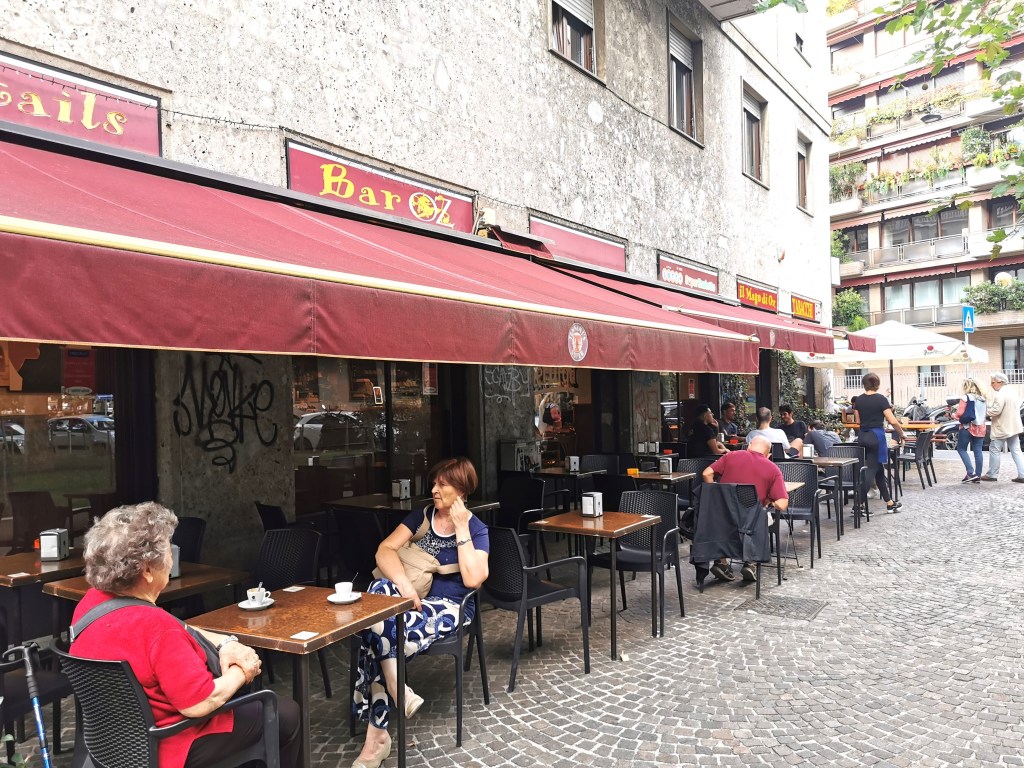
Dave has two favourite bars just off Corso Buenos Aires and, needless to say, we spent the evenings there. Bier Fabrik was celebrating its fifteenth birthday while we were there, with fifteen beers on tap. Along the road, Il Mago di Oz serves good food as well as a variety of beers.

Early on Sunday morning early it was time for Ted and I to catch the coach to Bergamo Airport and travel to Spain and our home in Benalmádena. We intend to return to northern Italy at some point, particularly Genoa which deserves another visit and I’m sure that we’ll be passing through Milan.

Practicalities
Hotels
The hotels we stayed in were:
Empoli: The Hotel il Sole, Piazza Don Minzoni 18, is fairly basic hotel but friendly, breakfast is included and the location and price can’t be beaten.
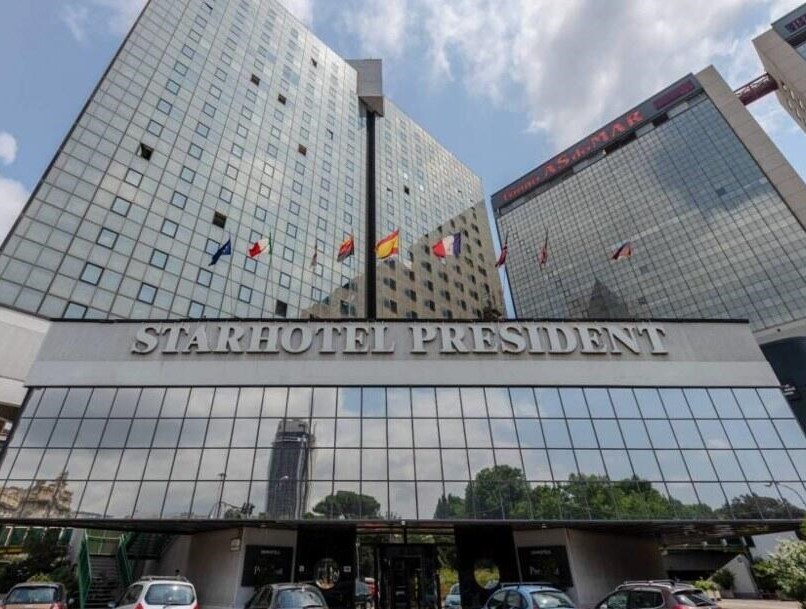
Genoa: Starhotels President, Corte Lambruschini 4, is a modern multi-storey hotel of very high quality close to Genova Brignole station. It is not cheap but it is good value for money. We stayed there once more on our 2024 visit.
Milan: Best Western City Hotel, Corso Buenos Aires 42/5. Close to Lima metro station and within walking distance of Milano Centrale station. Milan is an expensive city, our room was fairly small, but it was the best deal we could get at a busy time of year.
Beer and Food


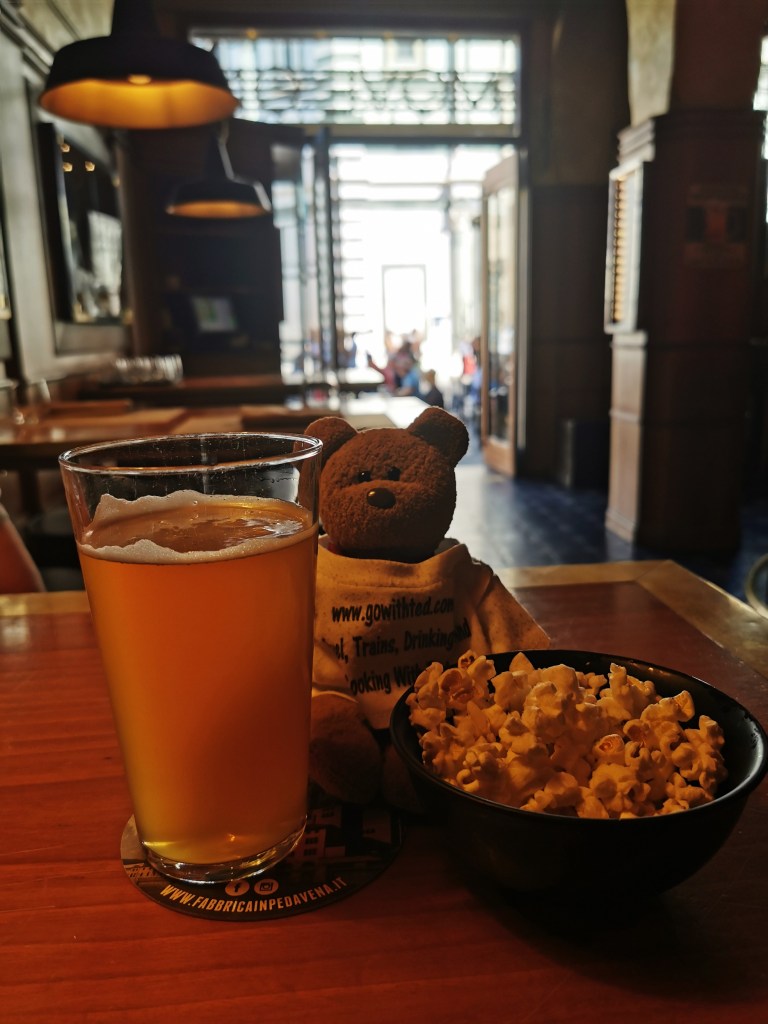
These are our favourites from the places we visited:
Empoli: La Birroteca, via Cosimo Rudolfi – very friendly and best place in town for beer; Vinegar, Piazza della Vittoria.
Florence: Move On, Piazza San Giovanni 1R, by the Duomo; I Tre Merli, via Fossi 12R, good for lunch; Joshua Tree, via della Scala 37, good beers, including on handpump.
Siena: Pub San Paolo, Vicolo de San Paolo 2, in an alley leading to the Piazza del Campo; Bar Manganelli, Piazza del Campo 53/54, looked like the best value for beer and food on the Piazza.

Genoa: Cafeteria Don Paolo, Spinata de Castelleto 57R, near the top of the lift, snacks such as arancini; Antica Vaccheria, at the top station of the funicular. In the old town:- Bar Berto, Piazza delle Erbe 6/r, we had a selection of Genoese Antipasti, several places on the square look good; Pizzeria Antica Napoli Da Pasquale, Piazza Della Raibetta 10, we had the mixed fried fish (the pizzas looked tasty); Ai Troeggi, via Chiabrera 61r, for craft beer. Following our 2024 visit – see Corsica, Genoa and Nice – we can add Kamun Lab, via di S. Bernardo 53r for excellent beer and A Cantinn-a Ostaja Zeneize, via di Canneto Il Lungo, 134r, for excellent food – the risotto with truffle oil was excellent.
Milan: Bierfabrik, via Federico Ozanam 8 and Bar Il Mago di Oz, via Federico Ozanam 15, both off Corso Buenos Aires by Lima metro.
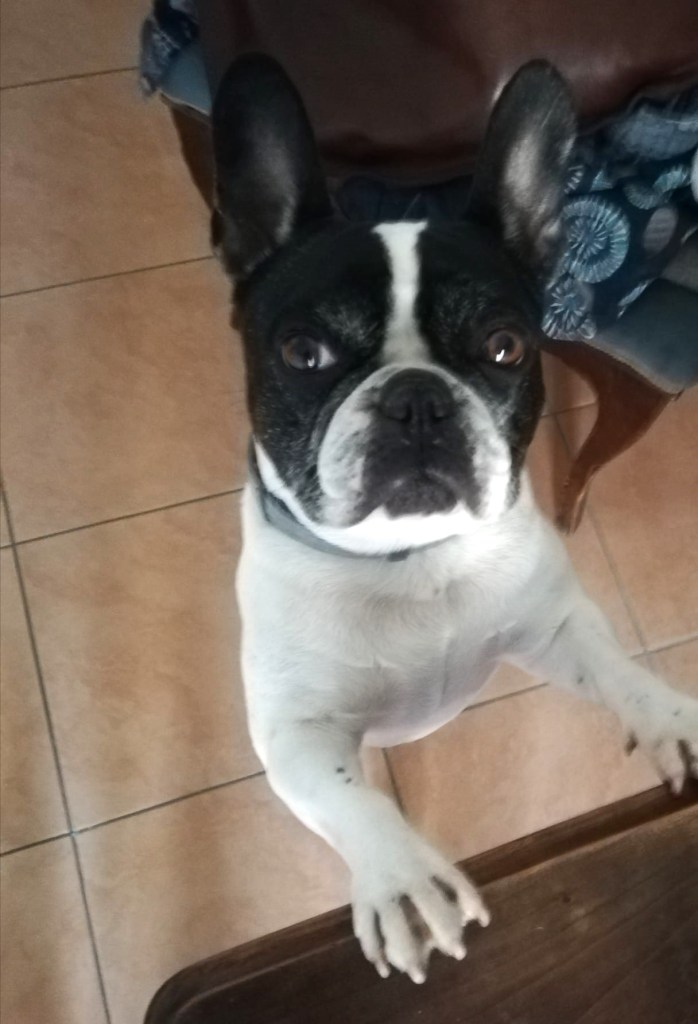
This is Bu, who met us in Milan.
Electric sockets; Many places in Italy use standard European sockets but Italian three pin sockets are also common, which UK to Europe adaptors may not fit – two of our three hotels had them. Fairly easy to buy Italian three pin /USB adaptors locally.
Getting around

Rail travel. Italian train services are frequent and reasonably reliable, but often very busy in our experience. Main stations have ticket offices and ticket machines (with an English option ) which take a little getting used to. Intercity trains have compulsory reservation – in theory this should be possible at the last minute, though the trains we (on a Tuesday and Thursday) were fully reserved in advance. We used Rail Europe (www.raileurope.com) to book the intercity journeys. More information on train travel in Italy is available from the Man in Seat 61 (www.seat61.com). The Trenitalia app is useful for checking train times, and should be easy to use to buy tickets.
Public transport in cities.


Siena. On arrival at Siena station finding the bus into town is a pain, but it is highly recommended – it is a long, steep hill up to the centre. Buy your tickets at the Autolinee Toscane office on the station concourse where the staff are helpful. To reach the bus stop: cross the road, enter the shopping centre, ignore the first walkway down (which leads to the car park), continue to the far end of the shopping centre and on the left are stairs and a lift down to the bus stop, where all services lead to the city centre, Most buses go to Piazza del Sale. To return to the station from there use the same stop – not the stop across the road.

Genoa and Milan. As elsewhere, the transport operators are trying hard to persuade people to use their apps – not much use to tourists who don’t know the names of stops, but it gives them an excuse not to produce decent maps or timetables (the websites aren’t much better). There are cheap 24 hour (and for longer periods) tickets that cover all public transport, available at metro stations and some kiosks and tobacconists (at Genoa Brignole bus station the tobacco kiosk sells tickets).

Acknowledgments: thanks to Dave Webster for his company and for showing Ted and I round Milan.
Photos. All photographs are by Steve Gillon except for the following: The Pisa People Mover is from Meridiam, the Hotel Il Sole is from booking.com, the Starhotels President is from ItalieOnline.eu, all sourced via Google Images. The photo of Bu is by Dave Webster.
Copyright: The text and all photographs except for those mentioned above are copyright (c) Steve Gillon, 2023, 2024.
 Go with Ted