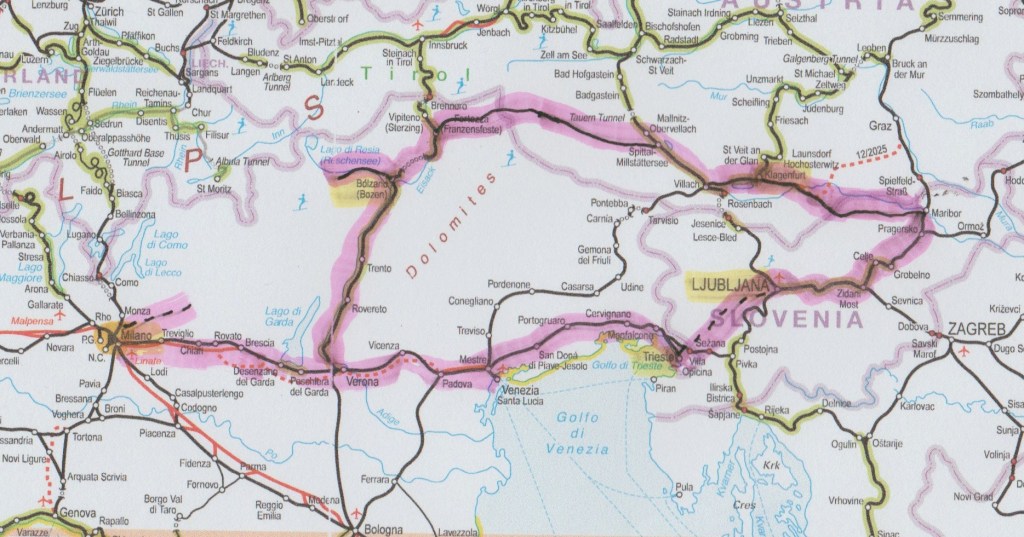
In March 2026 it was time for Ted and I to have another European jaunt. Our friend Dave Webster was also keen on a European train journey, helped to us to agree the route and joined us on the trip. We eventually agreed on a circular route from Milan, taking in Northern Italy, Slovenia and Southern Austria and staying in Trieste, Ljubljana, Klagenfurt and Bolzano / Bozen.
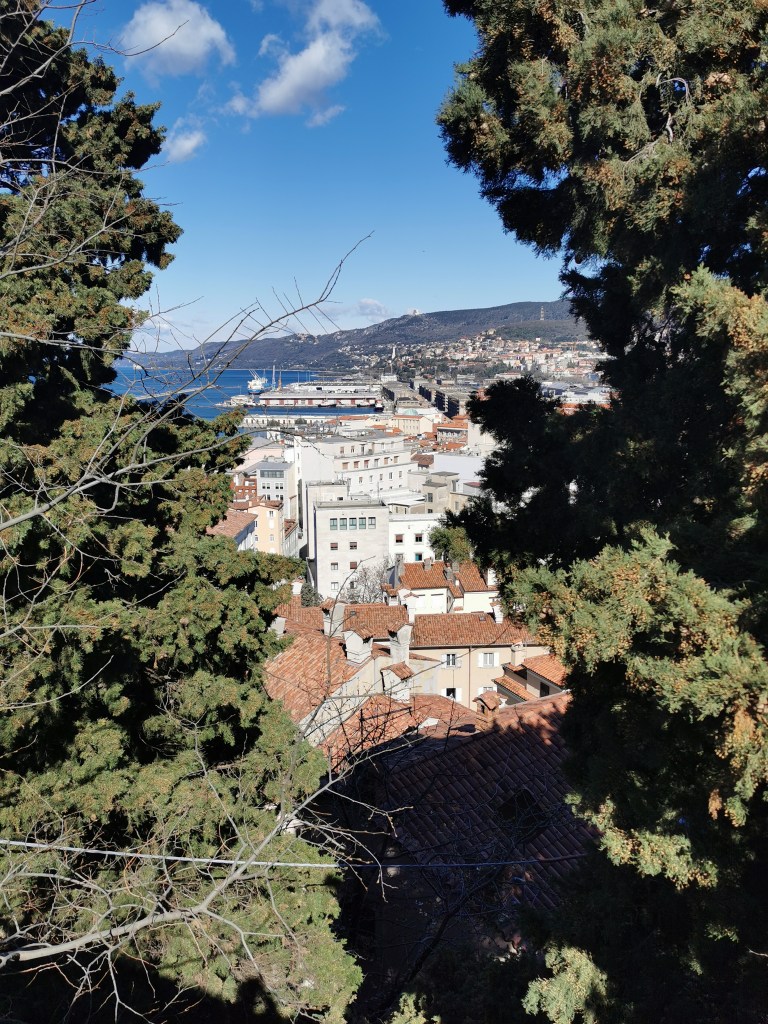
Apart from Steve spending a few hours in Ljubljana years ago (long enough to decide I wanted to return) we had not visited any of these places before. Some initial research plus flight, hotel and train reservations firmed up our itinerary and we set off,
The account of our trip follows. After the main account we’ve added practical information on travel plus details of where we drank , ate and stayed, followed by some railway buffery
Milan to Trieste
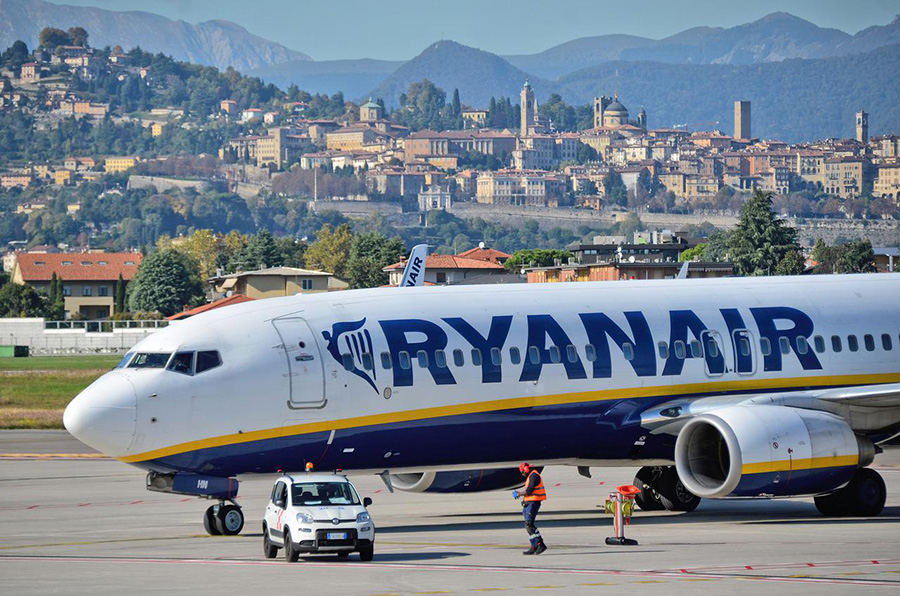
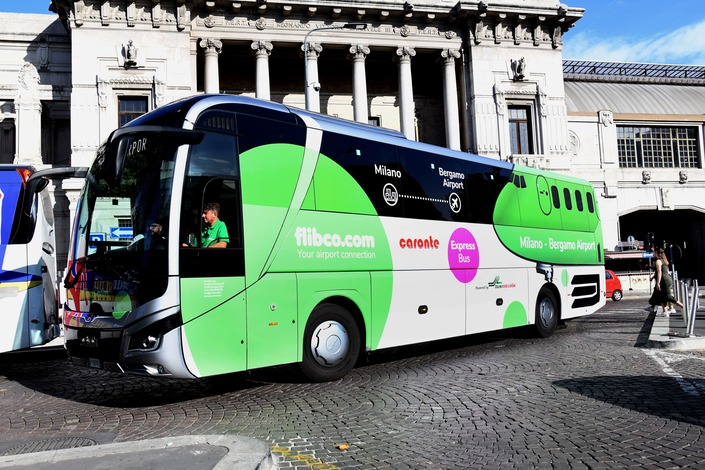
We flew from Newcastle to Milan Bergamo airport (see note 1). It is widely used by Ryanair and, while it is well out of the city, there are frequent express coach services into Milan, terminating adjacent to Milano Centrale station. We caught the first bus and bowled along the motorway, the driver spending much of the time on his phone (hopefully hands- free), and arrived in Milan about 45 minutes later. From there we caught the metro to our accommodation for the night. Milan can be an expensive city but Dave had booked us into a reasonably priced hostel – our room was fine (and en-suite – which I was slightly concerned about when he told me where we were staying) – ideal for anyone on a limited budget.
Since we had been to Milan several times previously, on this trip it was solely for overnight stops on arrival and prior to departure. (For more about Milan see Tuscany, Genoa and Milan ). However, our hostel was located in the Carrobbio area, which was new to us. It is a pleasant mix of upmarket and more bohemian places with a good local vibe and largely tourist-free. We passed our evening with a drink outside the Tutti Fritti bar (‘everything fried’ except there didn’t seem to be anything…but the beer was good), followed by a nduja & burrata pizza in Berbere pizzeria, ending up in the hostel bar.
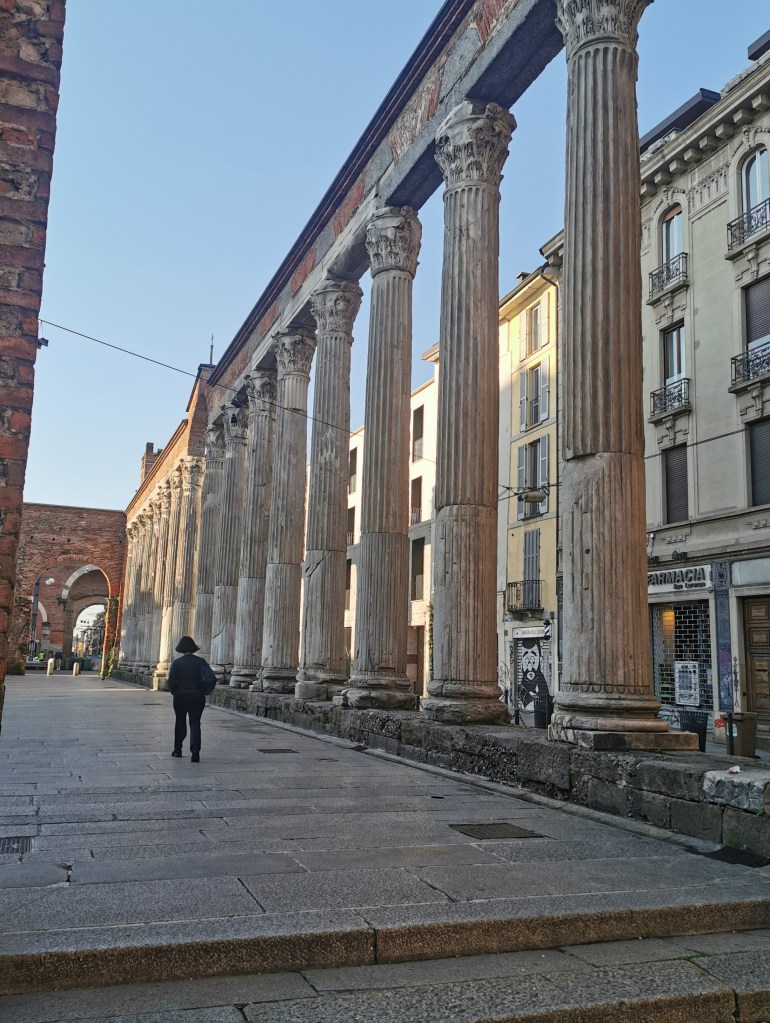
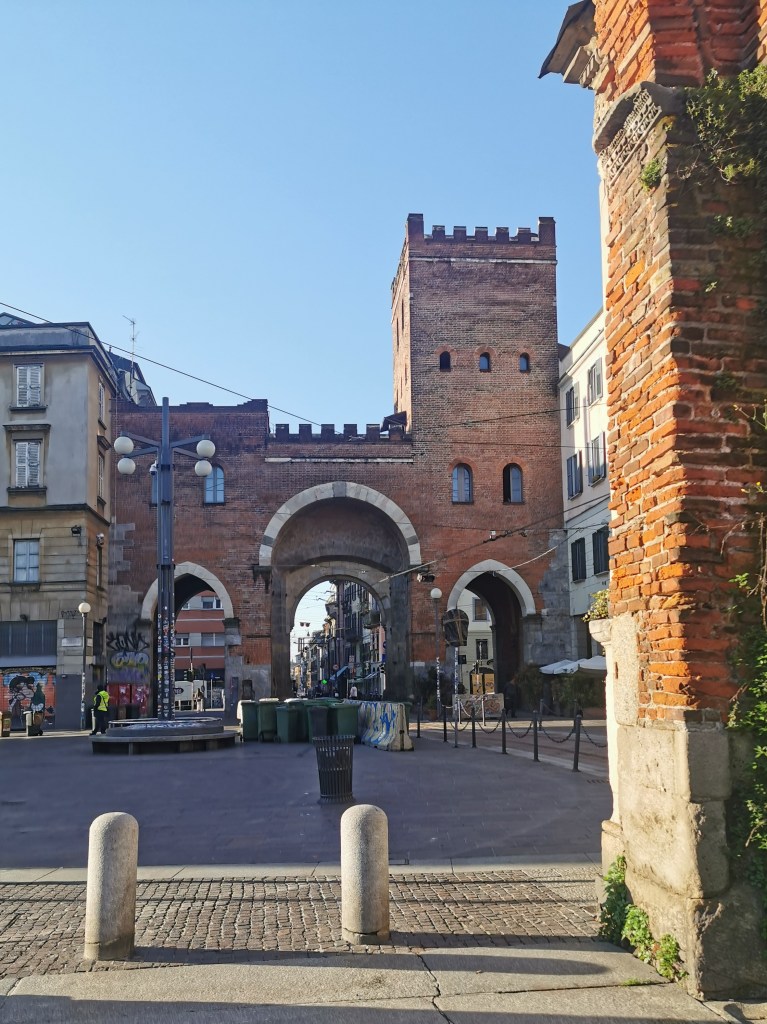
Nearby are the Colonne di San Lorenzo – ancient Roman columns – and the medieval city gate, the Porta Ticinese, (pictured), which we looked at briefly on Monday morning before catching a rush-hour metro back to Centrale to set off on the trip proper.
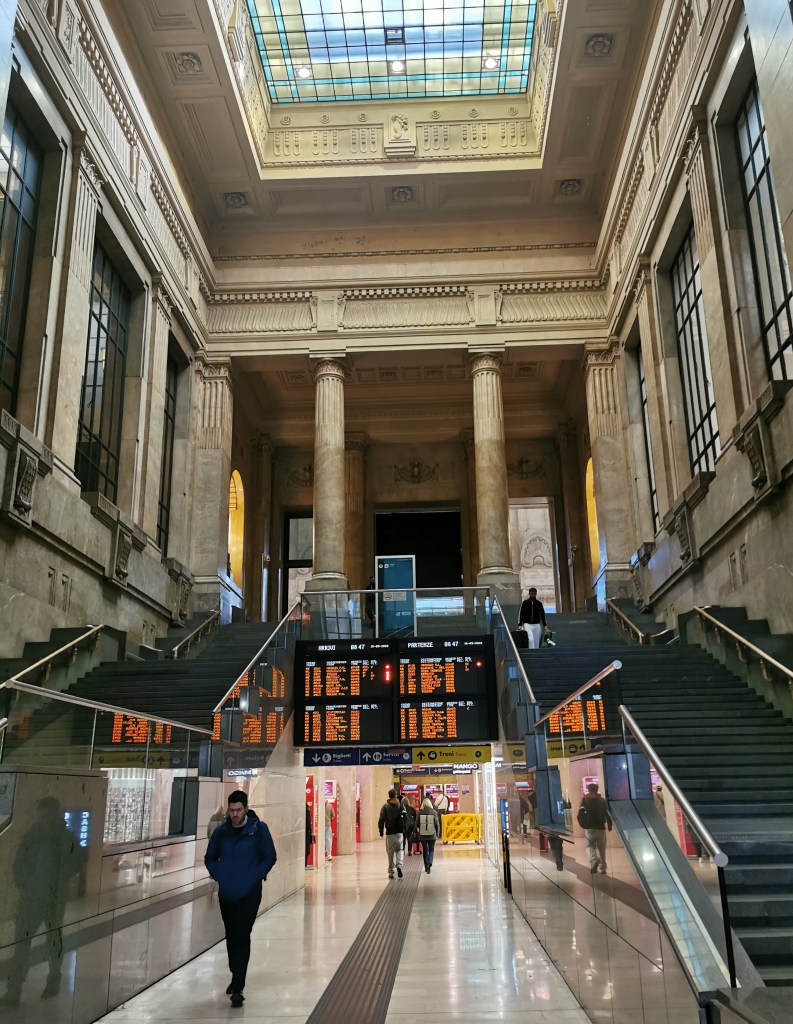
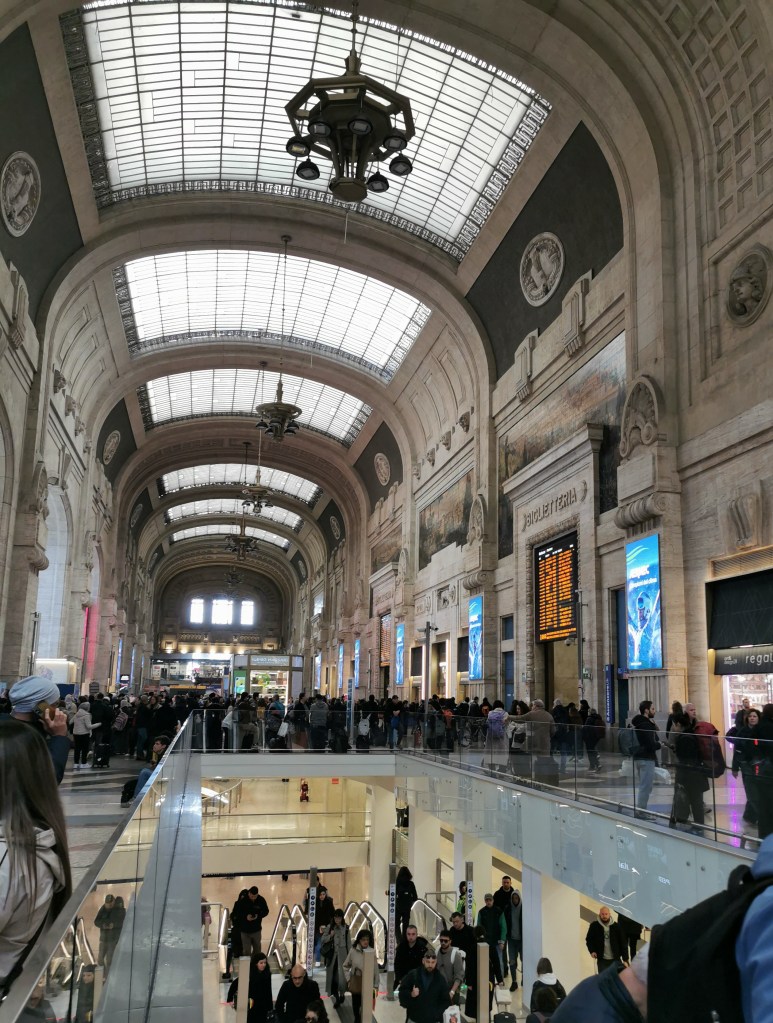
Milano Centrale station
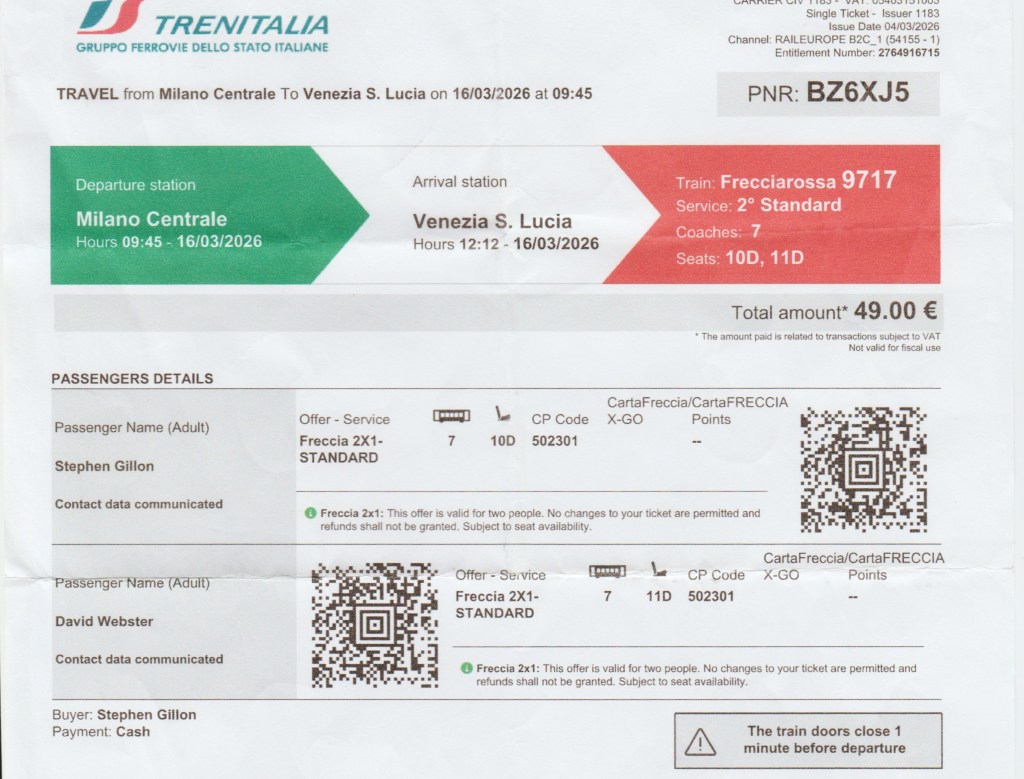
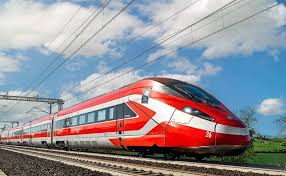
Our destination was Trieste, though we had timed the journey to include a lunch break in Venice. Our train from Milan was a high-speed Frecciarossa high-speed train and we had managed to book very cheap tickets in advance. The journey of 267km took 2½ hours through uninspiring countryside and we arrived at Venezia S. Lucia shortly after noon. The approach and arrival in Venice by train is a highlight – across the lagoon on a long causeway with views of the city, followed by exiting the station and the Grand Canal is straight ahead.
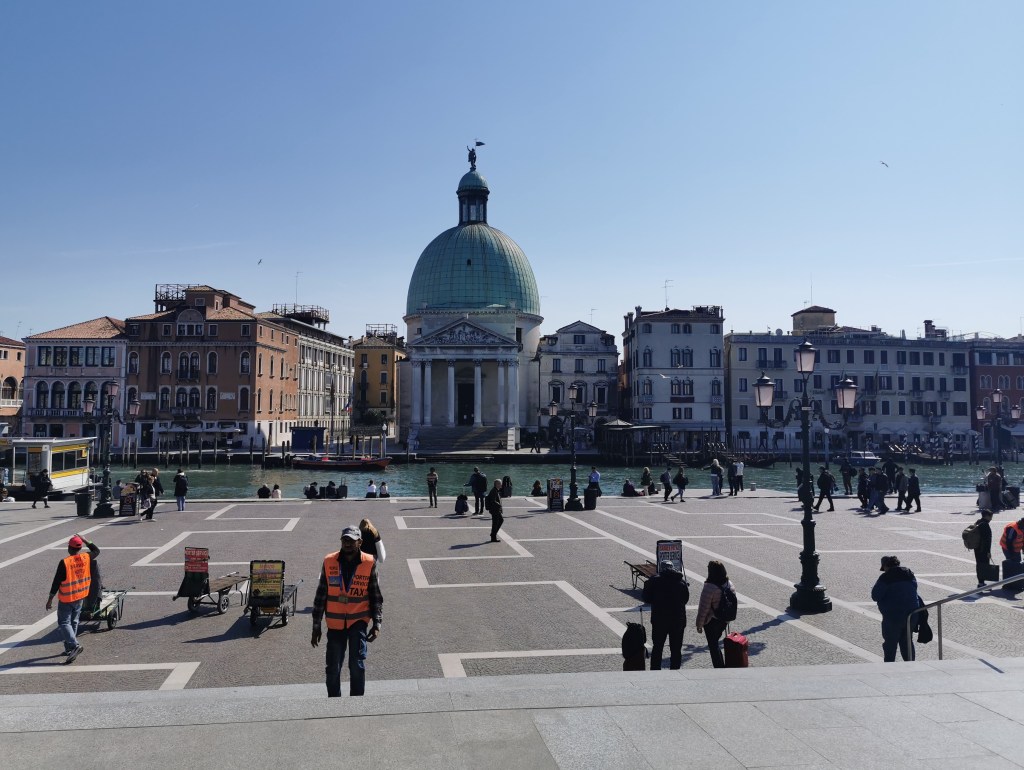
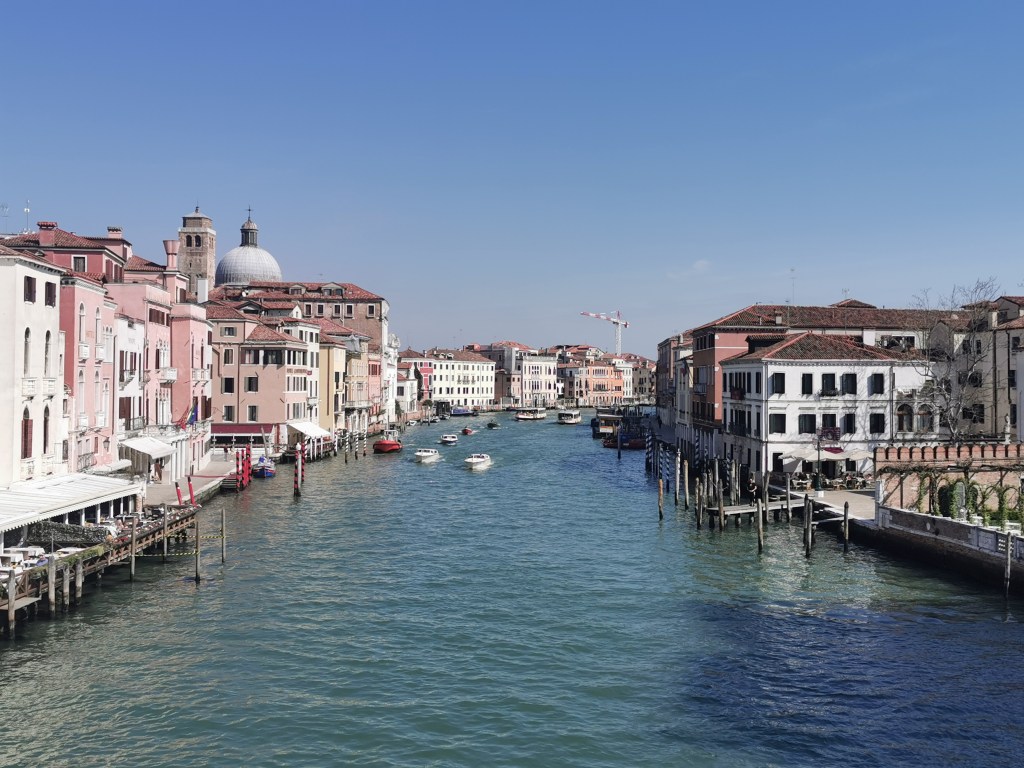
We walked across the Grand Canal by the nearby Ponte degli Scalzi and found a restaurant on a side street where we had an excellent mixed fried fish platter. Afterwards, we returned to the station side of the canal and ambled around for a while. Ted was thirsty so we stopped for a beer, until it was time to return to the station. For some photos from our previous visits and stays in Venice see Italian journeys (see note 2).
A regional train took us to Trieste, 157km from Venice, in just over 2 hours. The area is mainly flat land around the lagoon. Further from Venice the countryside becomes more rural with views of the mountains in the distance. The train was double-deck so we had good views. The most dramatic part of the journey is the final stretch between Monfalcone and Trieste, where the mountains border the sea and the railway and motorway occupy a narrow strip of land between them.
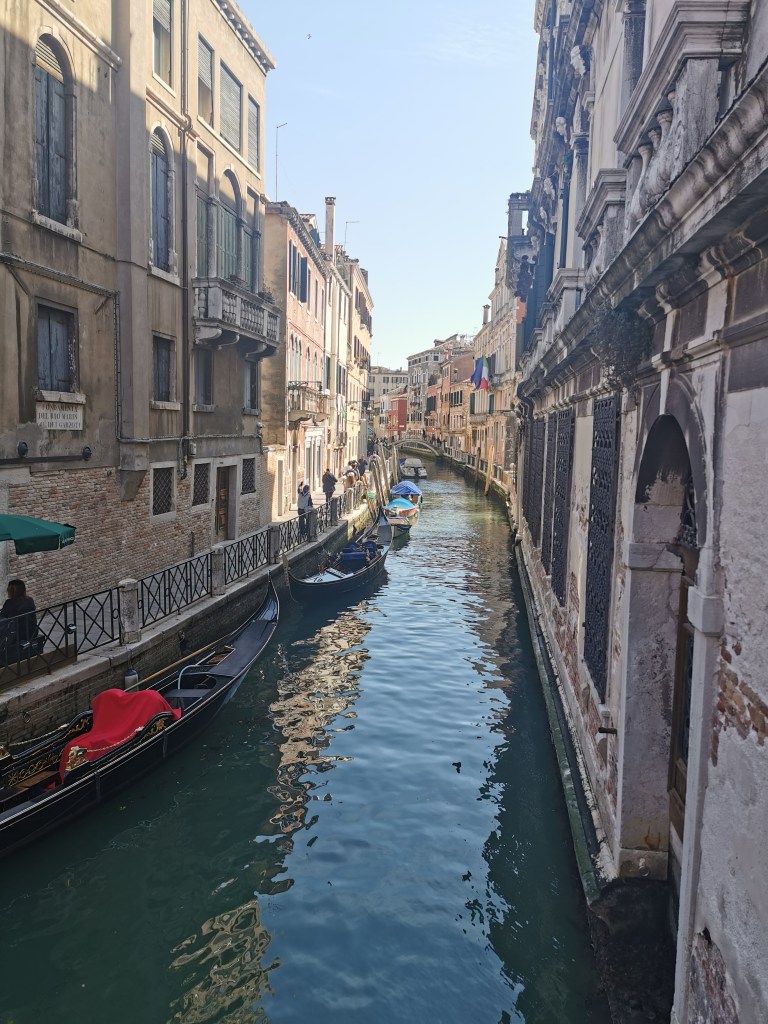
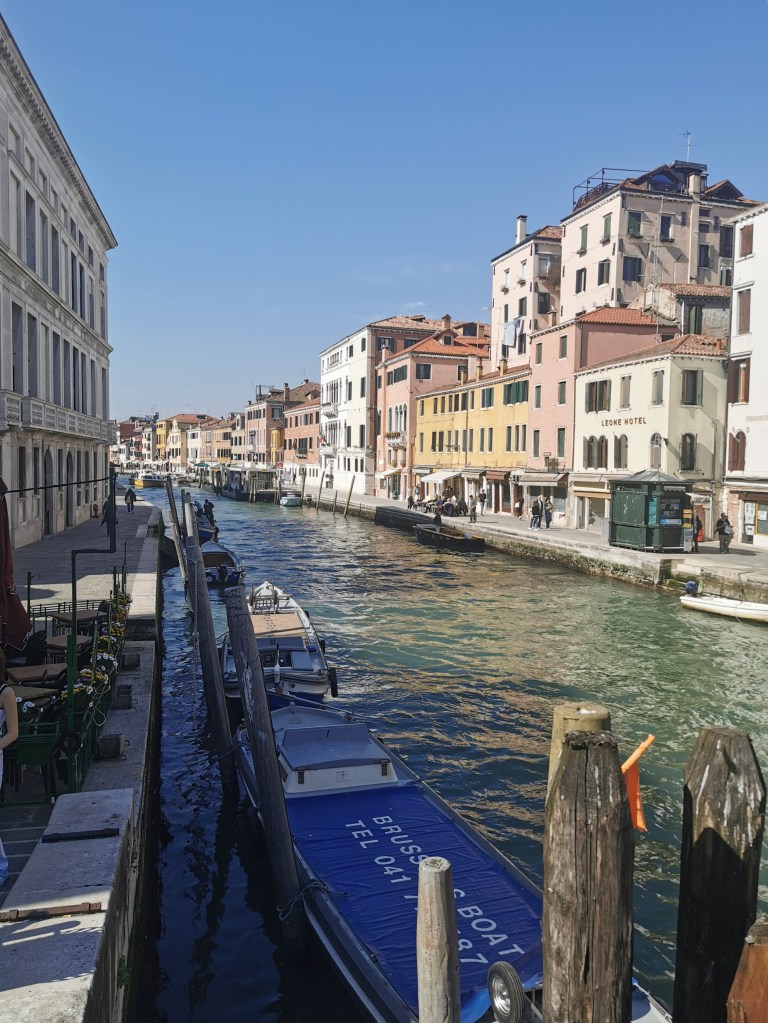
Not-so-grand canals
Notes
(1) The airport was formerly known as Orio Al Serio Airport and is now officially known as Il Caravaggio International. However, the principal user, Ryanair, calls it Milan (Bergamo). The airport is close to the city of Bergamo itself, which is well worth a visit – see Bergamo, Innsbruck and Salzburg .
(2) Despite the overtourism Venice is a great place to visit. If you spend a couple of days there, get off the main tracks to explore the back streets, the less frequented boat routes and visit a couple of the lagoon islands.
Trieste
Trieste today is a small city of 200,000 people in the far northeast corner of Italy, built on a narrow strip of land between the sea and the mountains. From the fourteenth century until the end of the First World War it was the most important seaport for the Austro-Hungarian Empire. It then became part of Italy. However, between 1947 and 1954 it was the Free Territory of Trieste, a UN Protectorate, then became part of Italy once more. The line of the nearby border with Yugoslavia (now Slovenia) was finally agreed in 1975.
The station is on the northern edge of the city centre. Between there and the Città Vecchia (Old Town) is the Borgo Teresiano, named after the Empress Maria Theresa, built in the second half of the eighteenth century as a series of commercial blocks. It is split by the Canal Grande. It remains the commercial heart of the city. Beyond the grand Piazza Unità d’Italia is the oldest part of the city, narrow streets overlooked by the castle and cathedral of San Giusto. Trieste remains a major port with a series of quays along the waterfront.
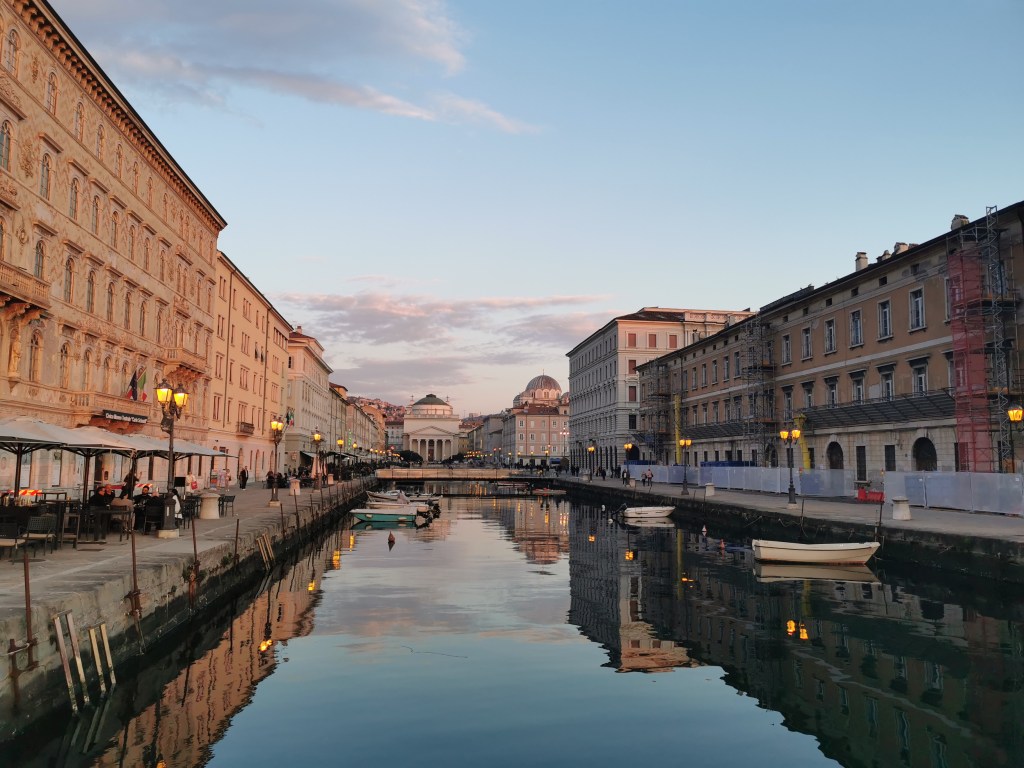
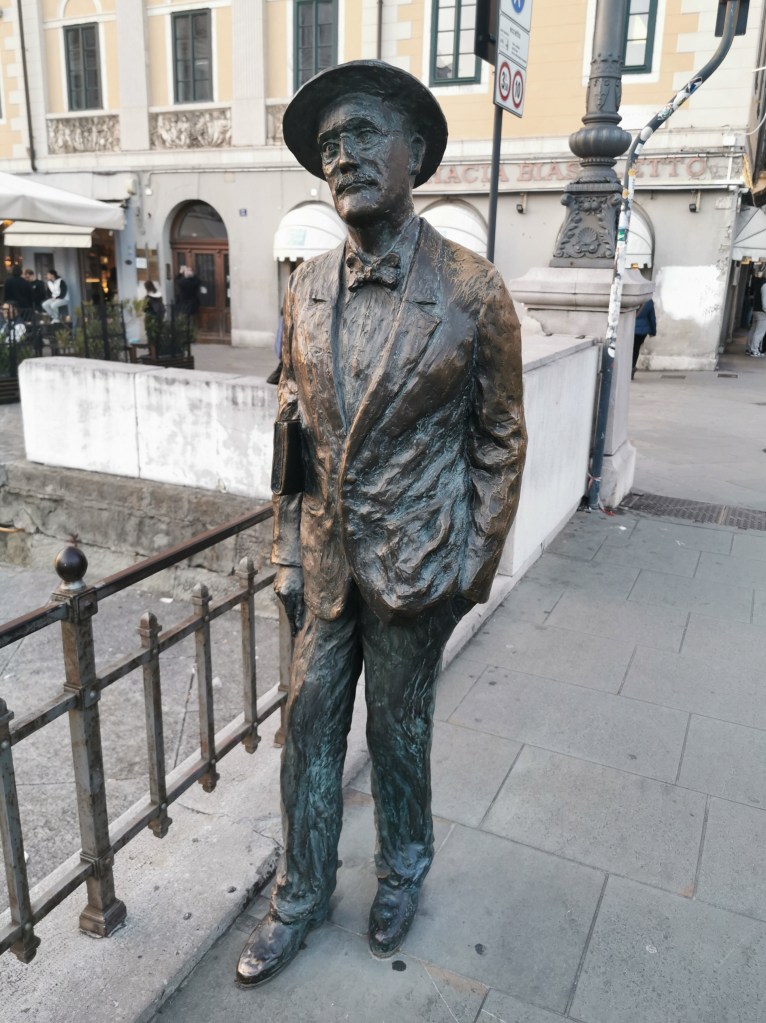
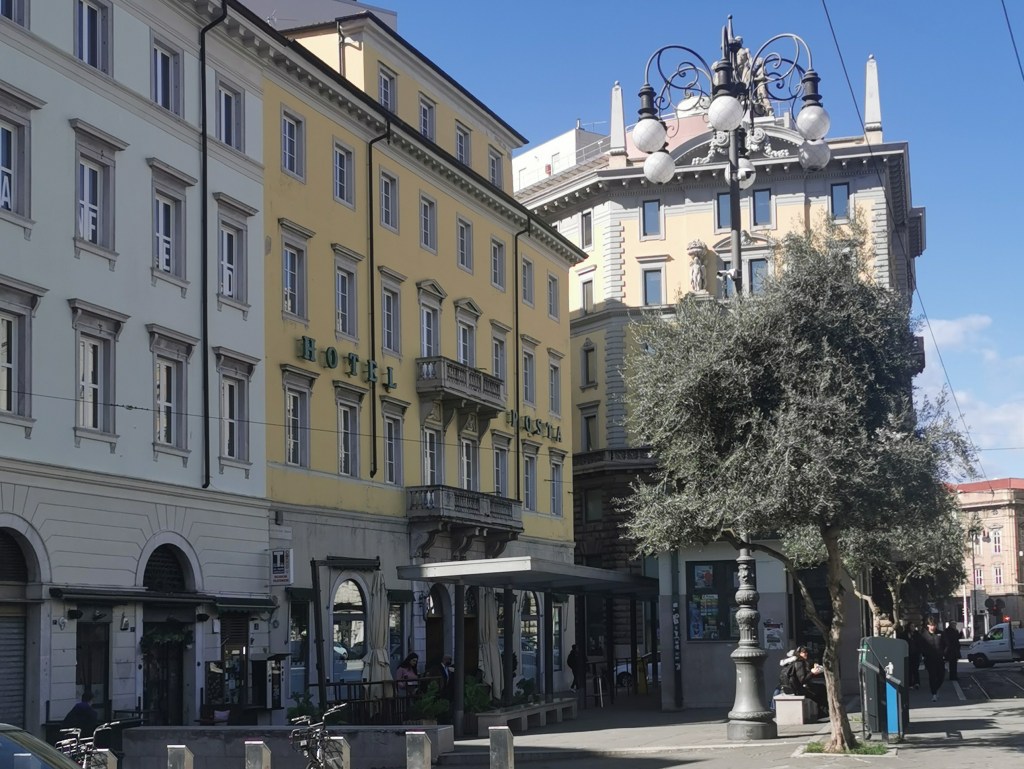
We checked into our hotel, the Albergo Alla Posta, a few minutes walk from the station then, after a rest, set out to explore. We walked through the Borgo Teresiano to the canal (see note 3), stopping by the statue of James Joyce, who lived in Trieste between 1904 and 1920. Today the canal is lined with restaurants and cafes, which were busy in the early evening. Along with many others we watched the sunset over the sea – afterwards the canal area is quiet.
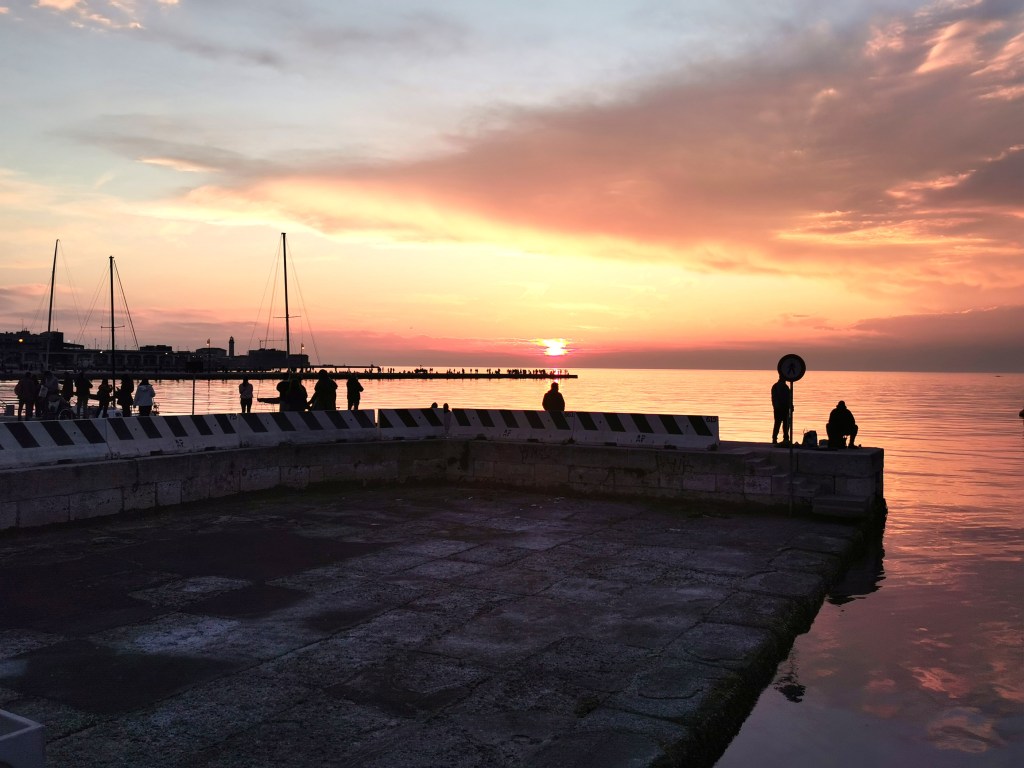
It had been a long day so we returned towards the hotel and spent the remainder of the evening in Birreria Forst next to the hotel, which is a large pub-cum-restaurant. It is Austrian style, the food is both Italian and Austrian, the beer is good and it became our home bar.
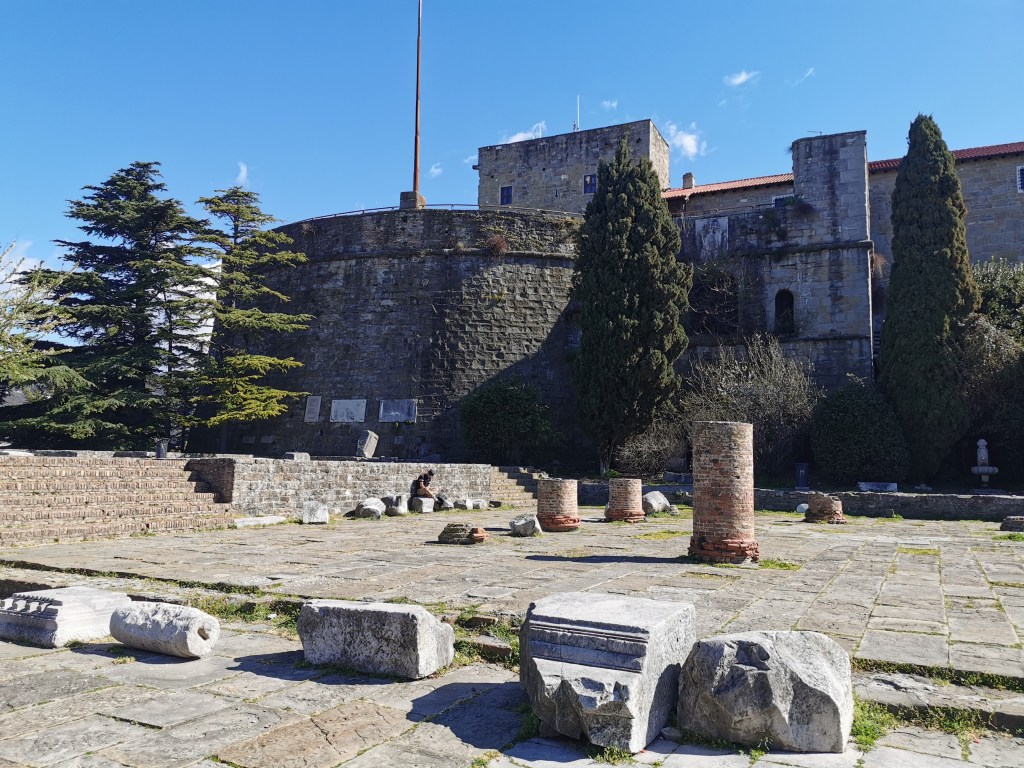
The Castello di San Giusto, and the view of Trieste from the castle
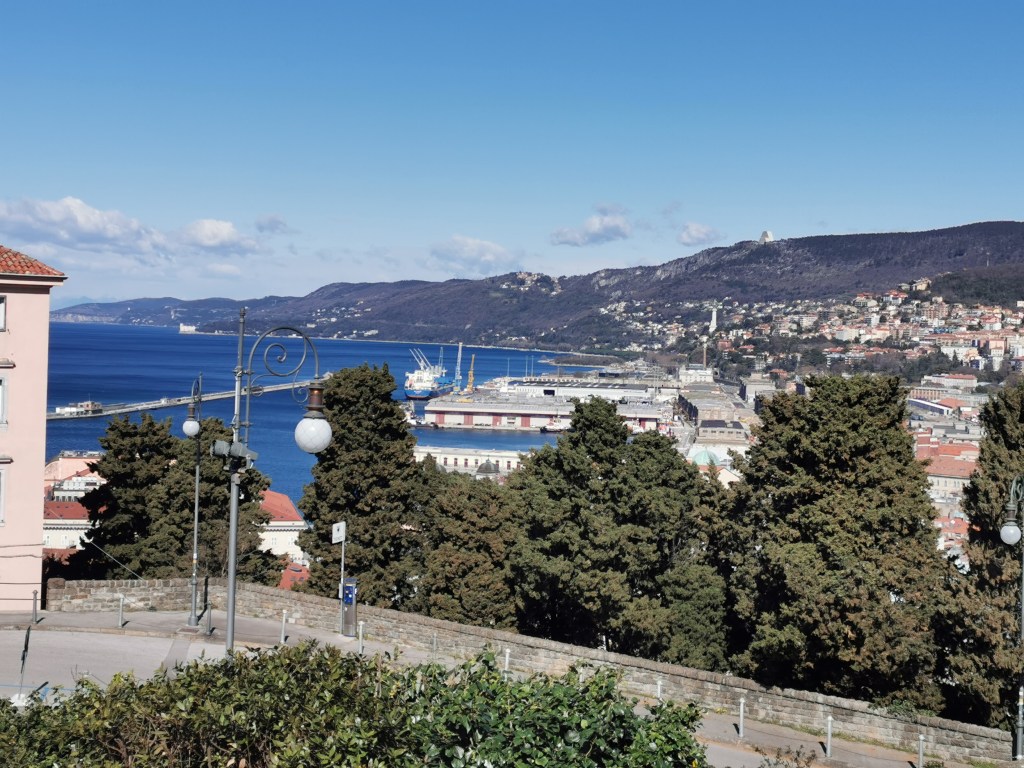
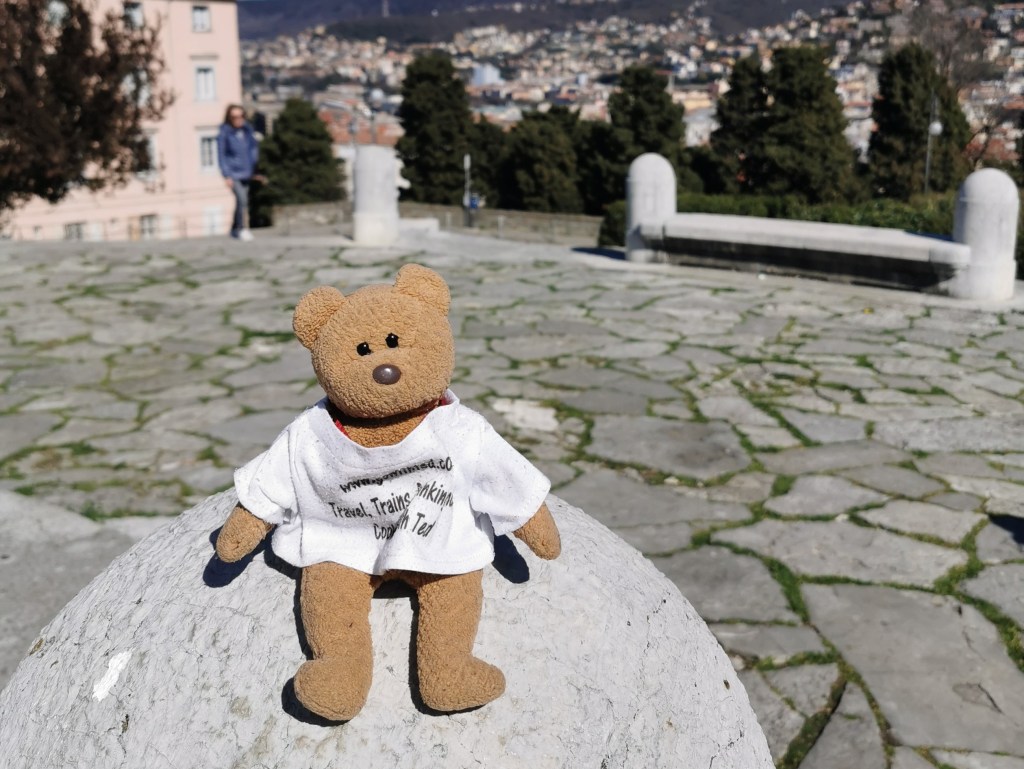
The following morning we decided to head for the old town. We first caught a local bus from the Piazza della Liberta, outside the station, to the top of San Giusto hill, to look at the panoramic views over the city and the Gulf of Trieste. The hill is home to the Castello di San Giusto, built in the early days of the Austro-Hungarian Empire to protect the city, and the Cattedrale di San Giusto, constructed from the fourteenth century on the site of a Roman temple.
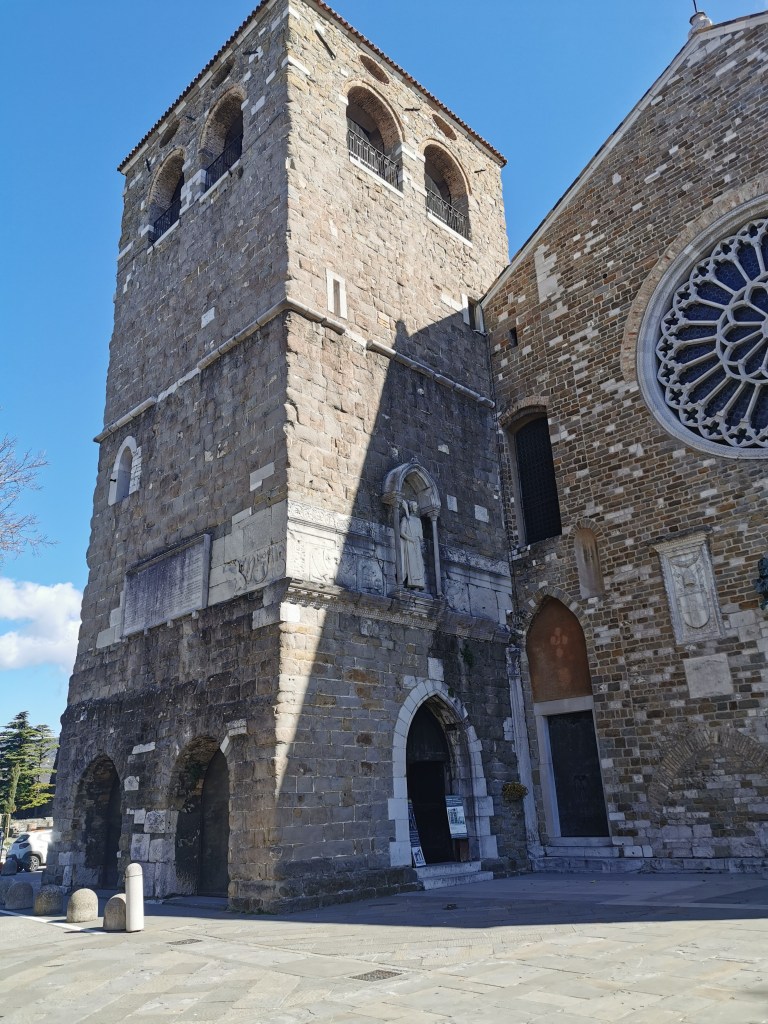
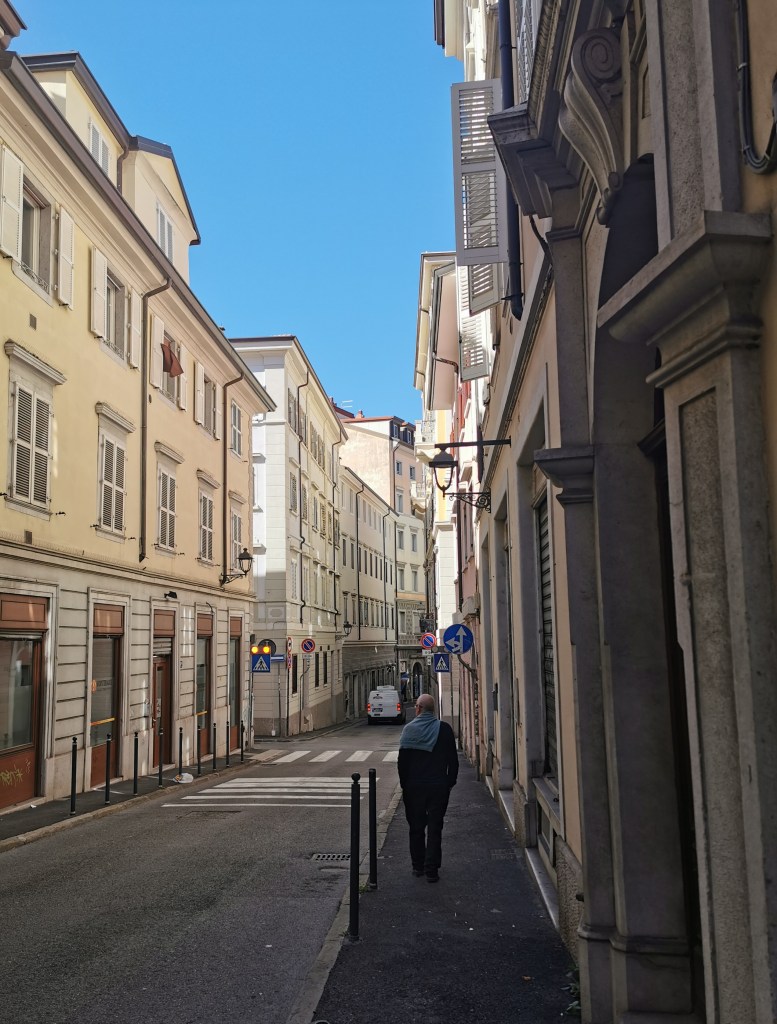
We then wandered down into the old town on bumpy paths and lanes, explored the back streets, then loitered in the large sea-facing Piazza Unità d’Italia until it was time for beer and food. We sat outside Hops Beerstro, a craft beer bar with a good range of beers and interesting Asian tapas and snacks.
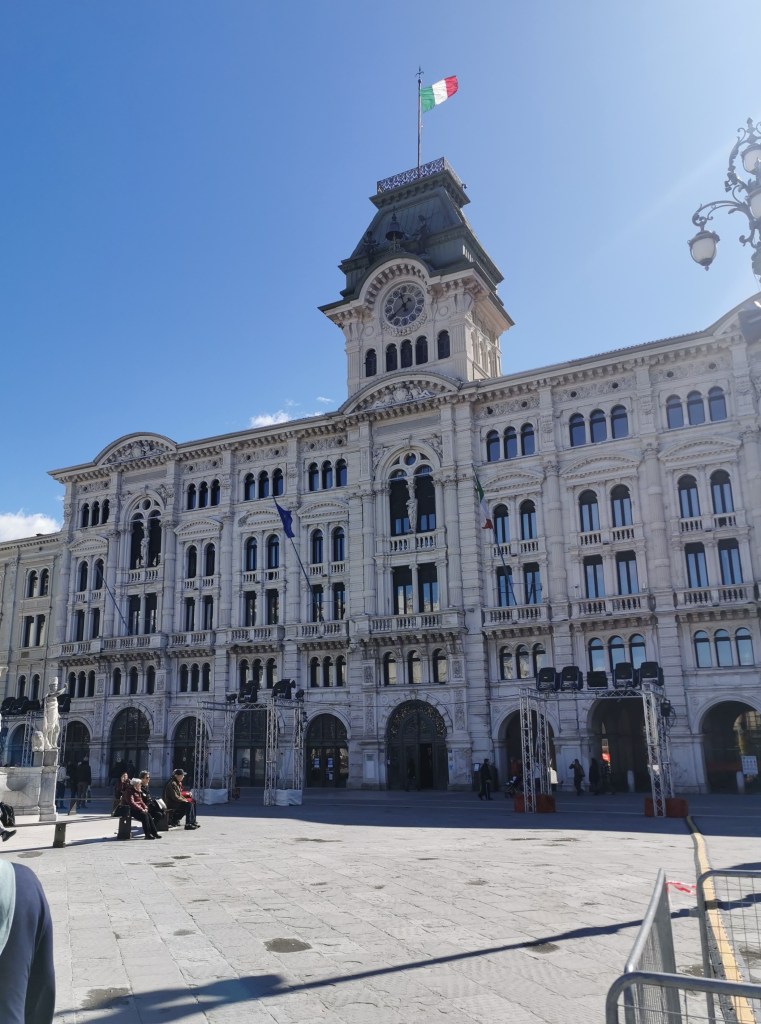
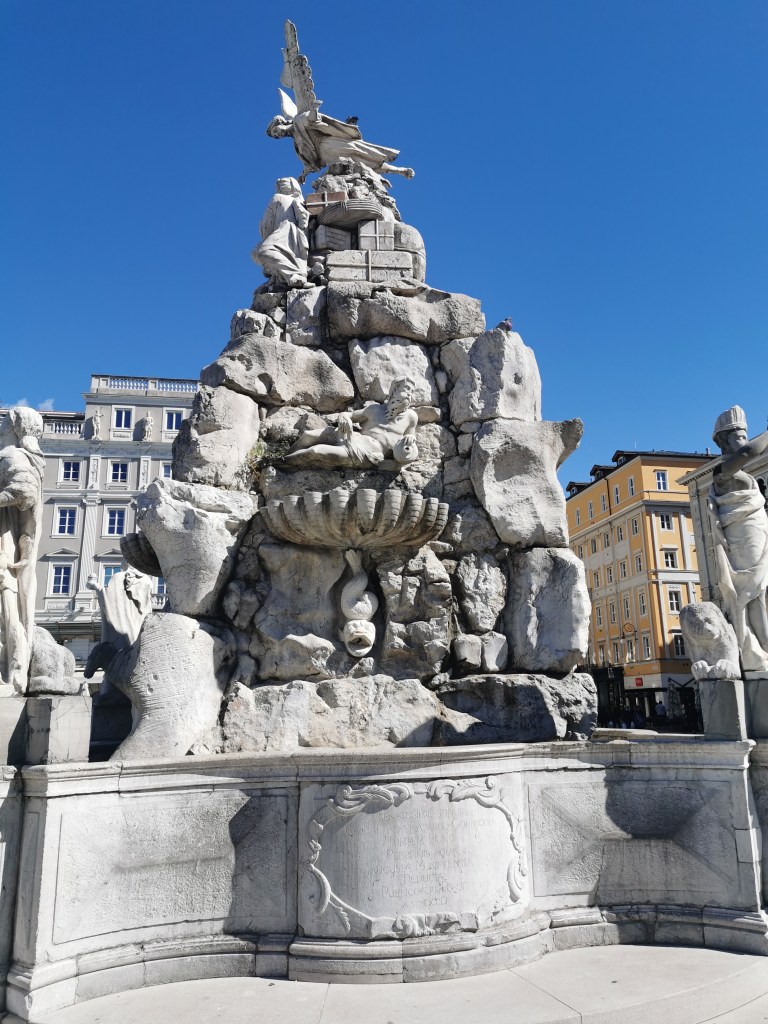
Piazza Unita d’Italia
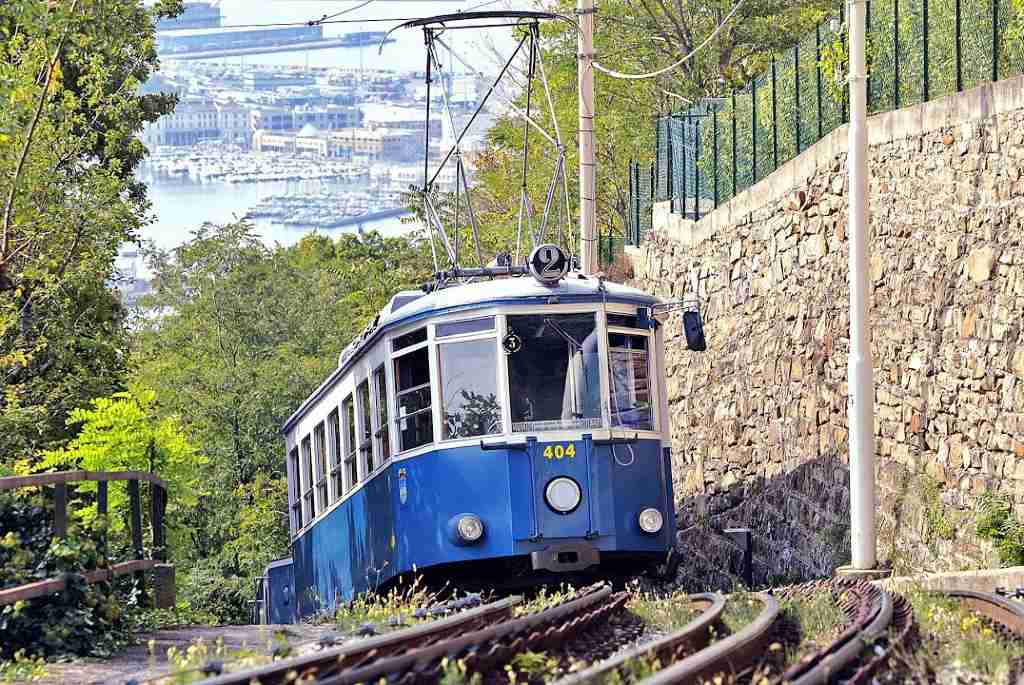
We returned by bus to the hotel for a siesta, but we spotted a street (via Trenta Ottobre) of bars close by and tried one. We had hoped to have a ride on the Villa Opicina tram, which leaves from Piazza Oberdan beside our hotel, but it was out of service for maintenance work (see note 4). Later we had an early dinner of goulash, sauntered back to the old town to try the Birrifico Cavana brewpub and ended the evening in Birreria Forst for a final couple of beers.
Notes
(3) Choose your route through the Borgo Teresiano carefully. Many of the the broad, straight streets have heavy, fast and polluting traffic. Use the largely pedestrianised via Trento rather than via Roma or via Fabio Filzi.
(4) The Villa Opicina metre gauge tramway connects Trieste with the village of Villa Opicina in the hills above. It was built in 1902 and combines a standard tramway with a section where the trams are pushed up and braked down by cable tractors on funicular principles. It is 5.2 km long (the railway to the same village takes 32km to slowly climb the hills) and uses heritage stock built in 1935. It should reopen in June 2026.
Into Slovenia
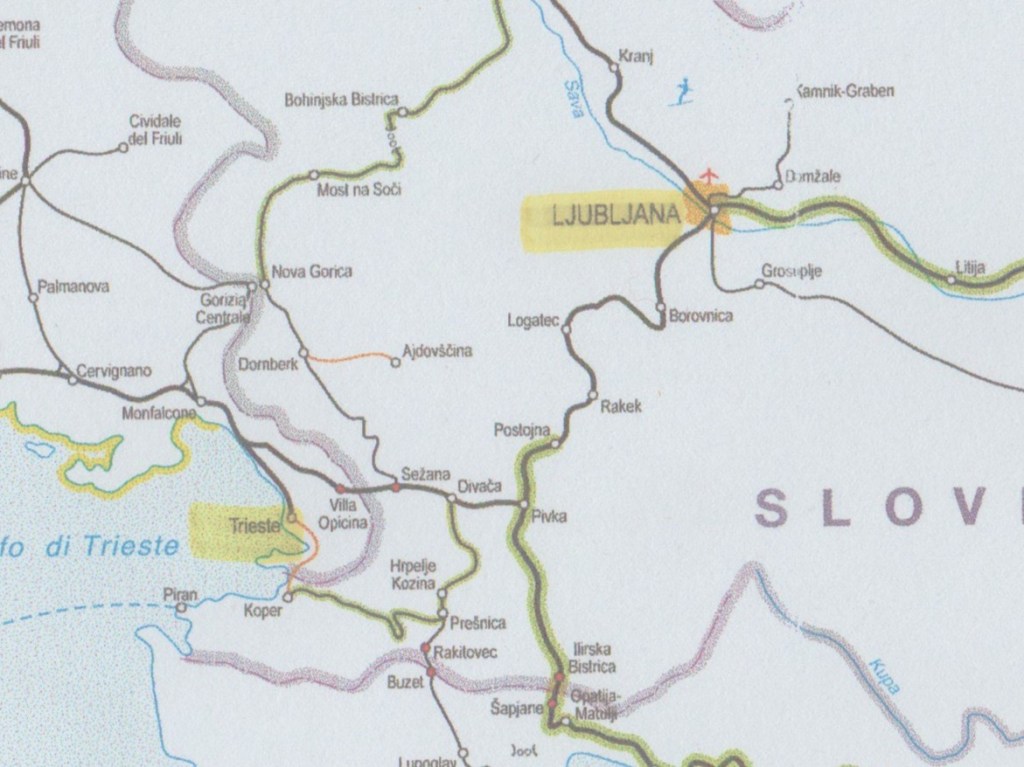
For some reason trains between Trieste and the Slovenian border were suspended so there were no direct services to Ljubljana. Railway ticket websites were recommending a journey of more than 6 hours via Villach in Austria – the direct route takes 2¾ hours. We looked at other options (bus across the border to Sežana or Koper then train) but they were infrequent and slow. We then discovered that Flixbus runs a direct coach service which takes only 1 hour 35 minutes so we booked that. Looking at the map, the railway looks like a more interesting journey, climbing from sea level to the karst limestone plateau then threading its way through unpopulated mountainous areas. (see Railway Buffery 1).
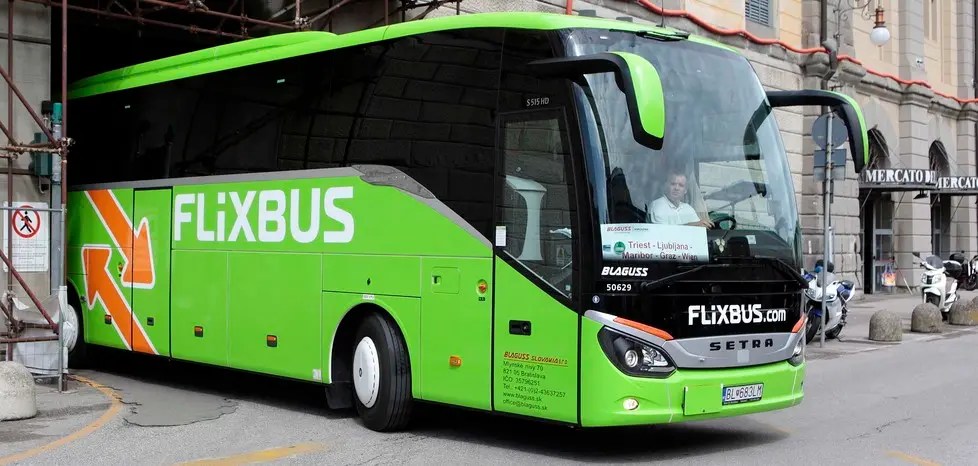
The coach, which had Budapest as its final destination, left from the dingy Trieste bus station, climbed through the suburbs, crossed the border and followed the motorway through hilly scrubland. It arrived on time in Ljubljana, and set us down at the bus station, directly outside the railway station.
Ljubljana
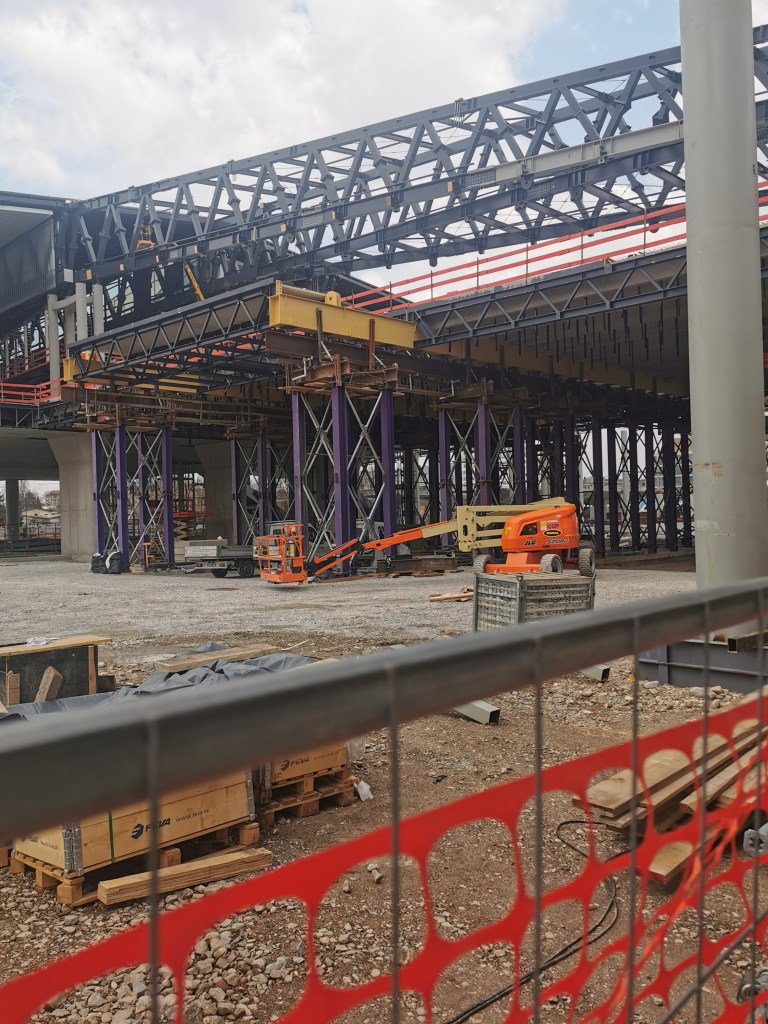
We knew from our research that Ljubljana station was being rebuilt and that most trains were replaced by buses or departing from temporary platforms well away from the, now demolished, station. On arrival we decided to explore the station area when we were not tight for time. It turned out that the one building that remains is the ticket office and information desk and they confirmed that our train in two days time was one of the few leaving from a nearby platform (see note 5)
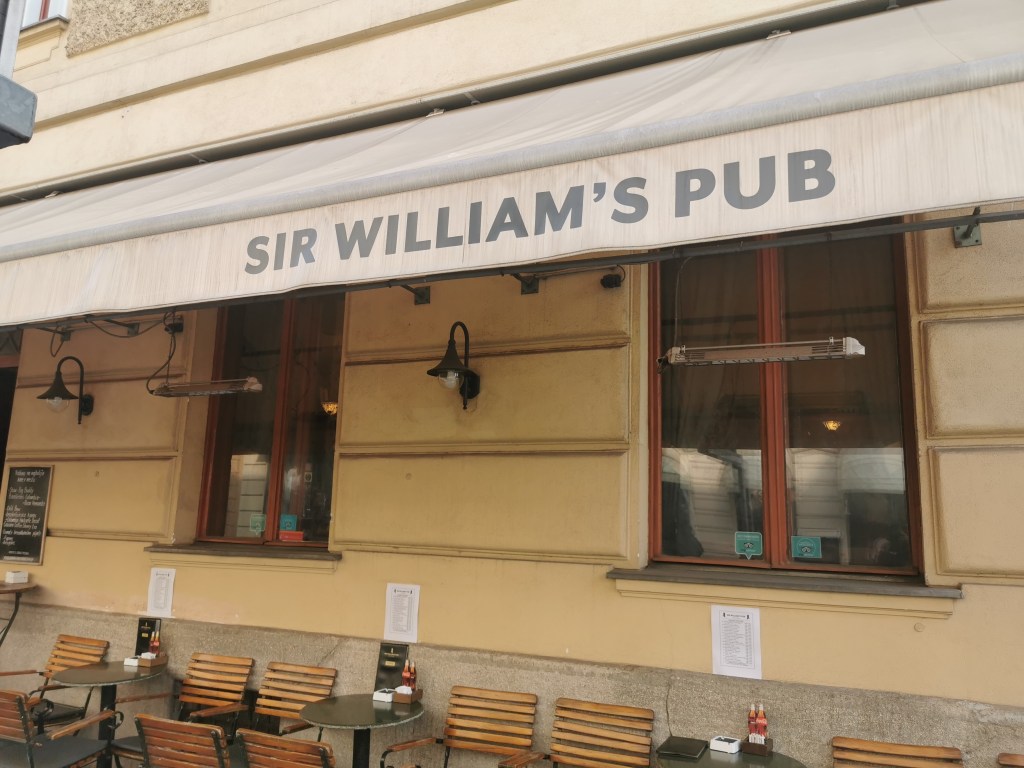
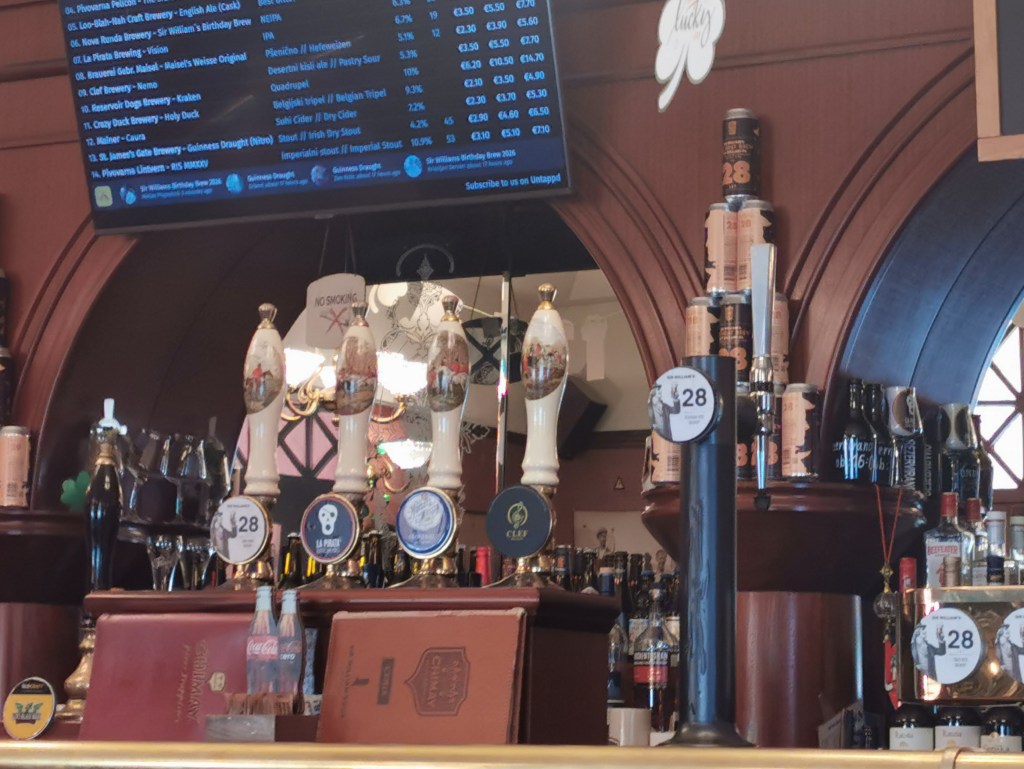
Reassured, we headed for our hotel, planning to stop for lunch along the way. We spotted Sir William’s Pub, which had been recommended, so we called in for a couple of beers and a toastie. It turned out to be a smashing place which we made our home base for the next couple of days. Despite what you may think from the name, it is not full of expats and tourists but attracts locals who like their beer and has a fine atmosphere and friendly staff. There is even a handpump selling a cask beer among a range of beers at good prices. Suitably refreshed we headed for our hotel and checked in.
Ljubljana is the capital of Slovenia and today has population of 288,000. It shares the complex history of this part of the world. There were prehistoric dwellings nearby, followed many years later by the Roman settlement of Emona. As Laibach, it was under Hapsburg rule from the Middle Ages, From 1918 it was part of the Kingdom of Serbs, Croats and Slovenes, then capital of the Socialist Republic of Slovenia, part of the Yugoslav Federation, until Slovenia gained independence in 1991, after a brief ten-day war.
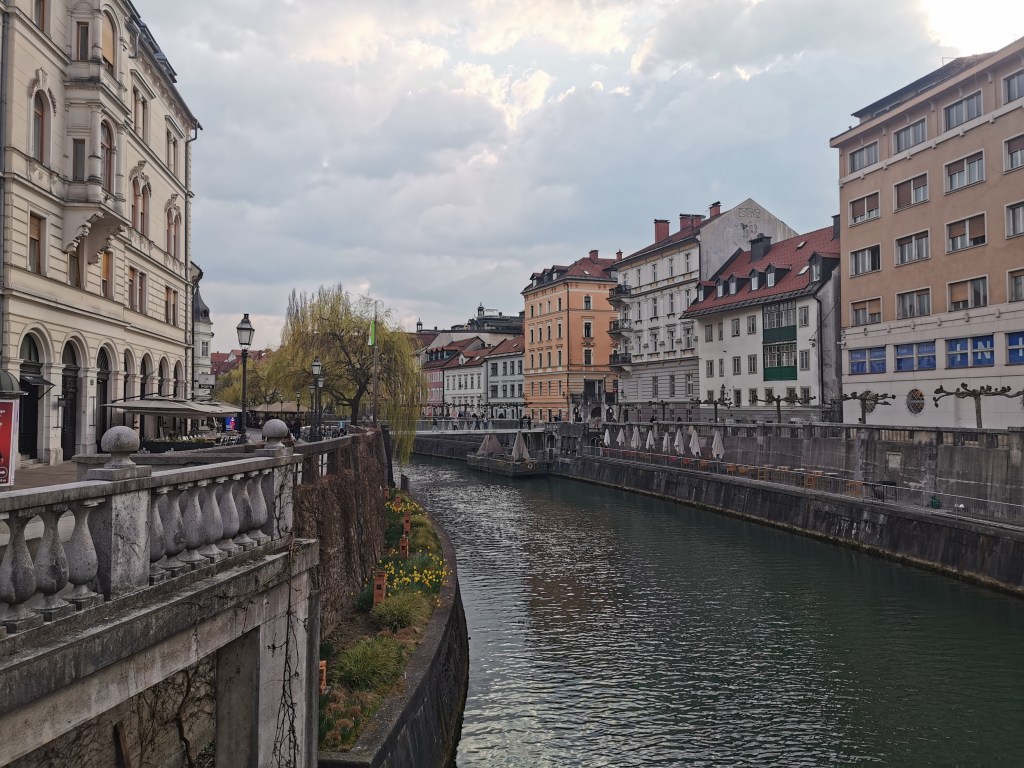
The city is located along the banks of the River Ljubljanica. On the right bank is the car-free old town, overlooked by the castle. The modern city centre is on the left bank (though it includes part of the medieval city along the riverbank). It contains the main shopping area, commercial and government buildings and many attractive buildings and squares.
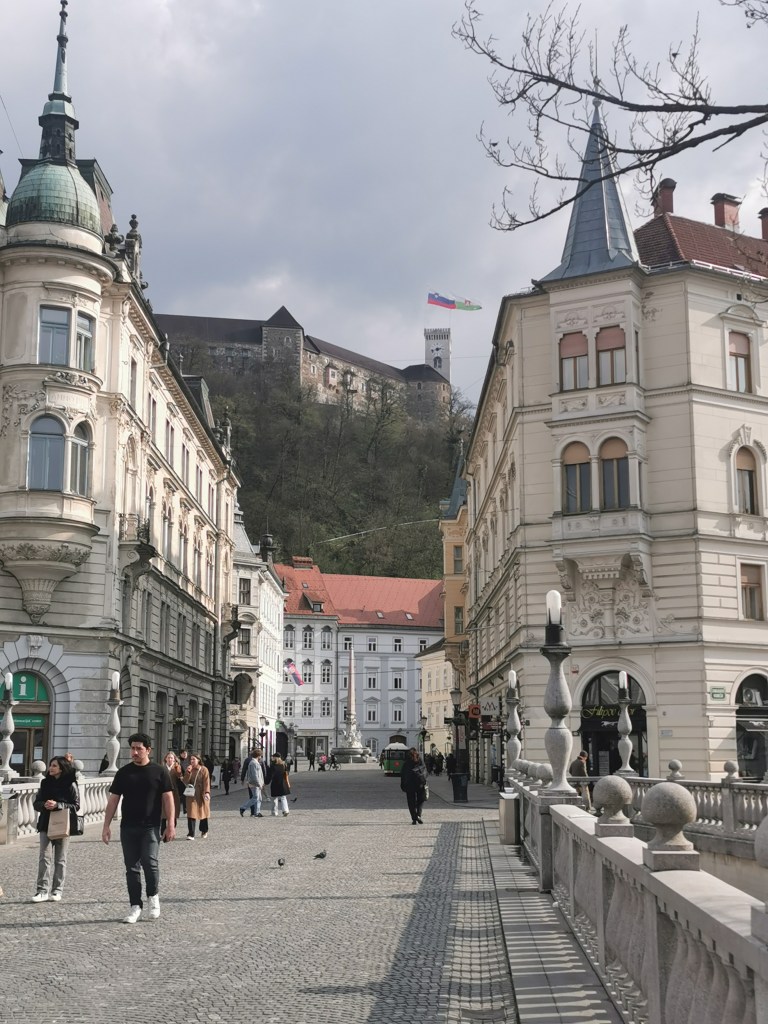
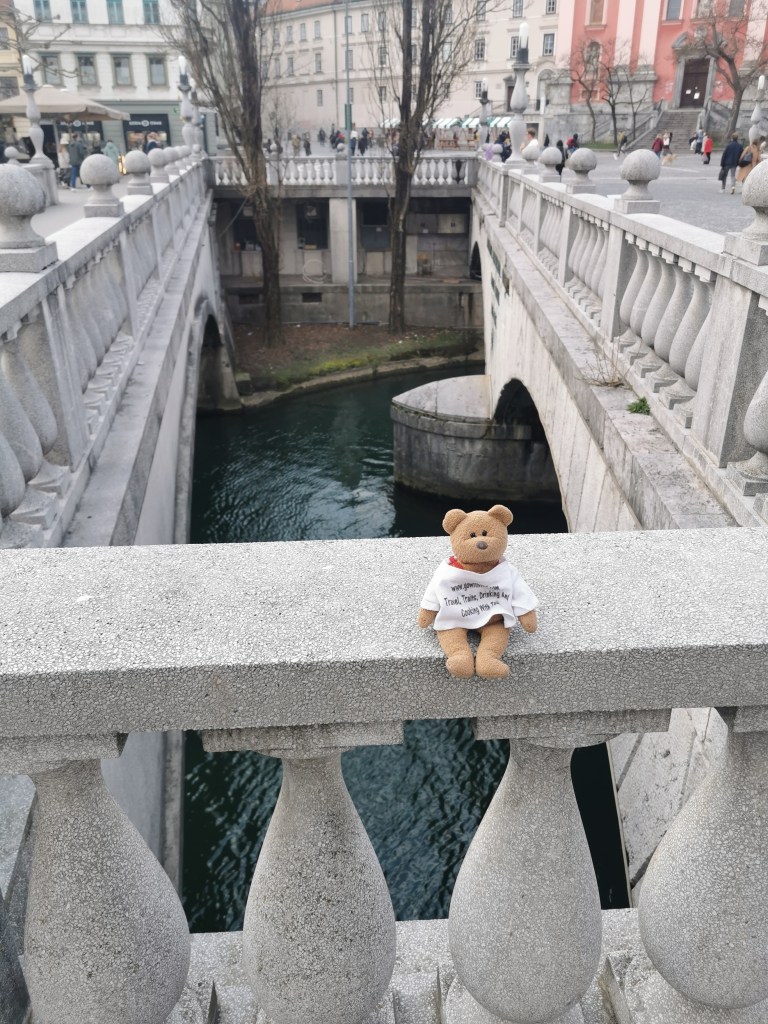
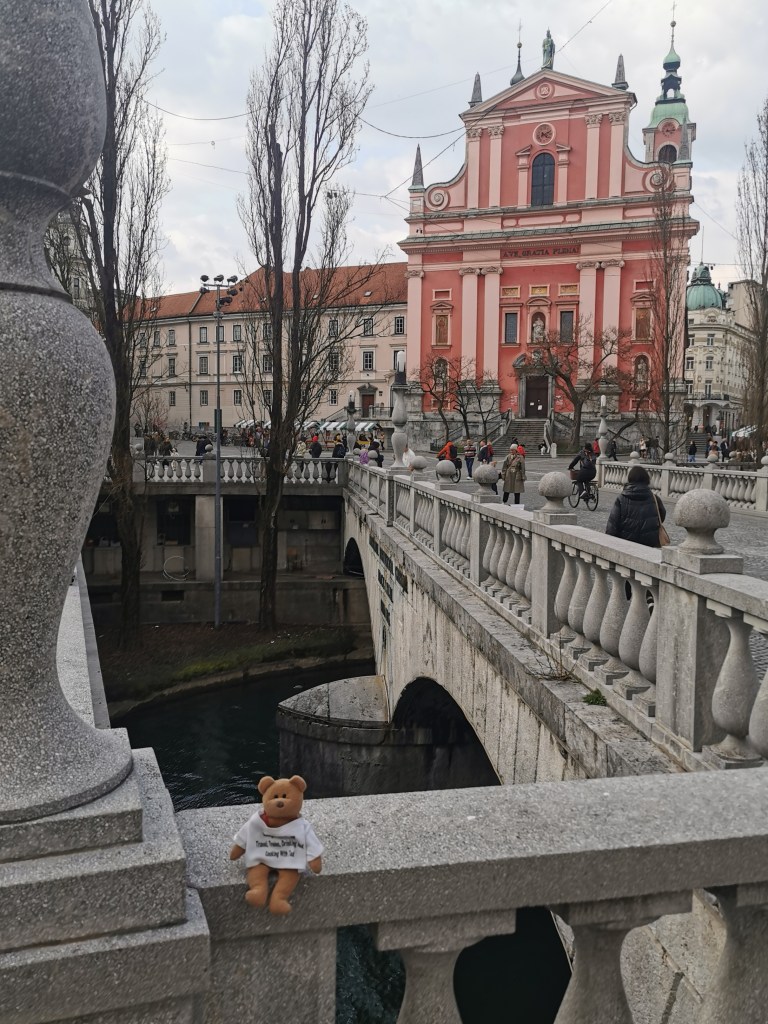
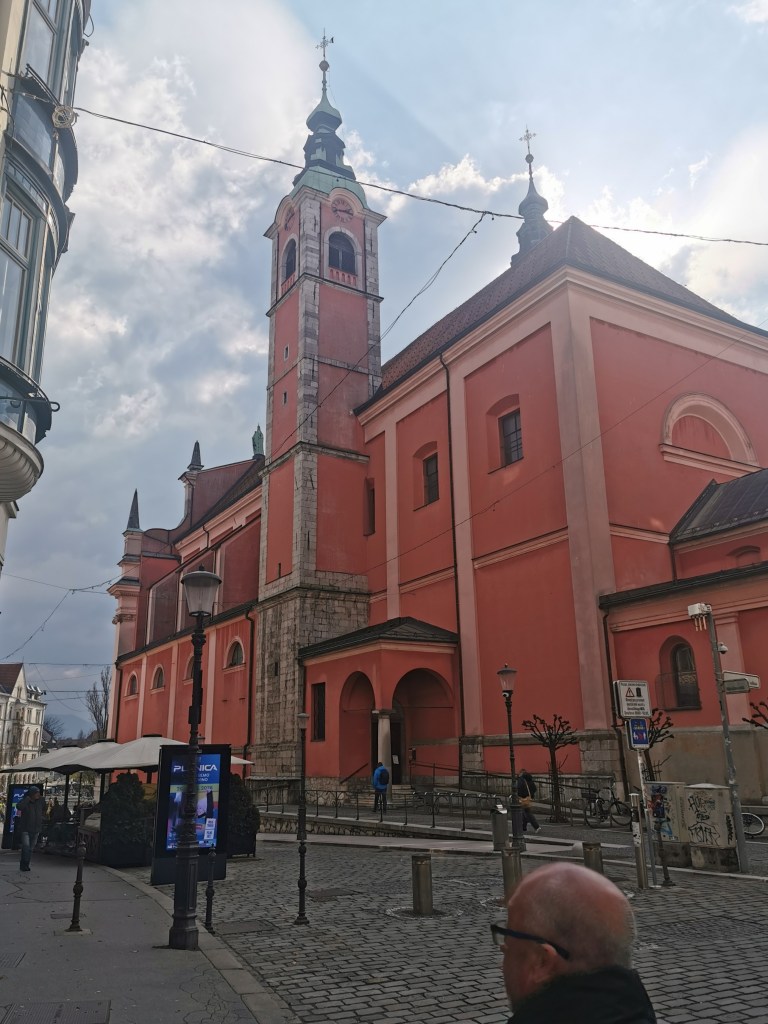
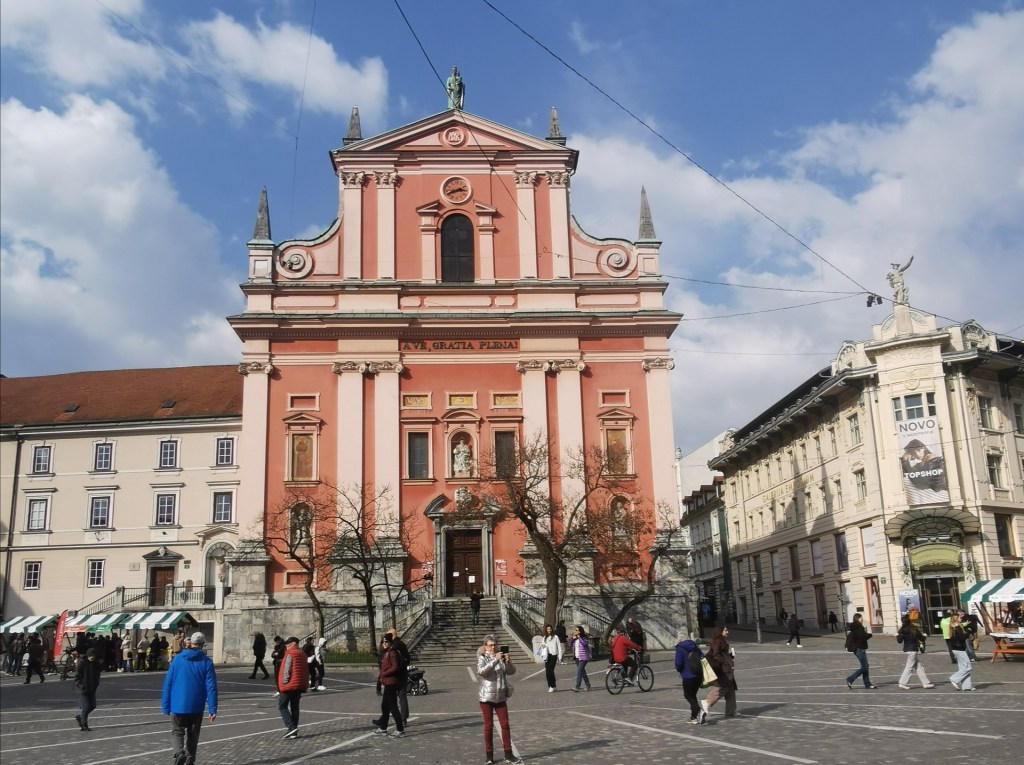
The river is spanned by a series of bridges, of which the most famous is the Triple Bridge (Tromostovje), the focus of tourist Ljubljana. It links the old town with Prešeren Square and the Franciscan Church of the Annunciation, from which it was a two-minute walk to our hotel.
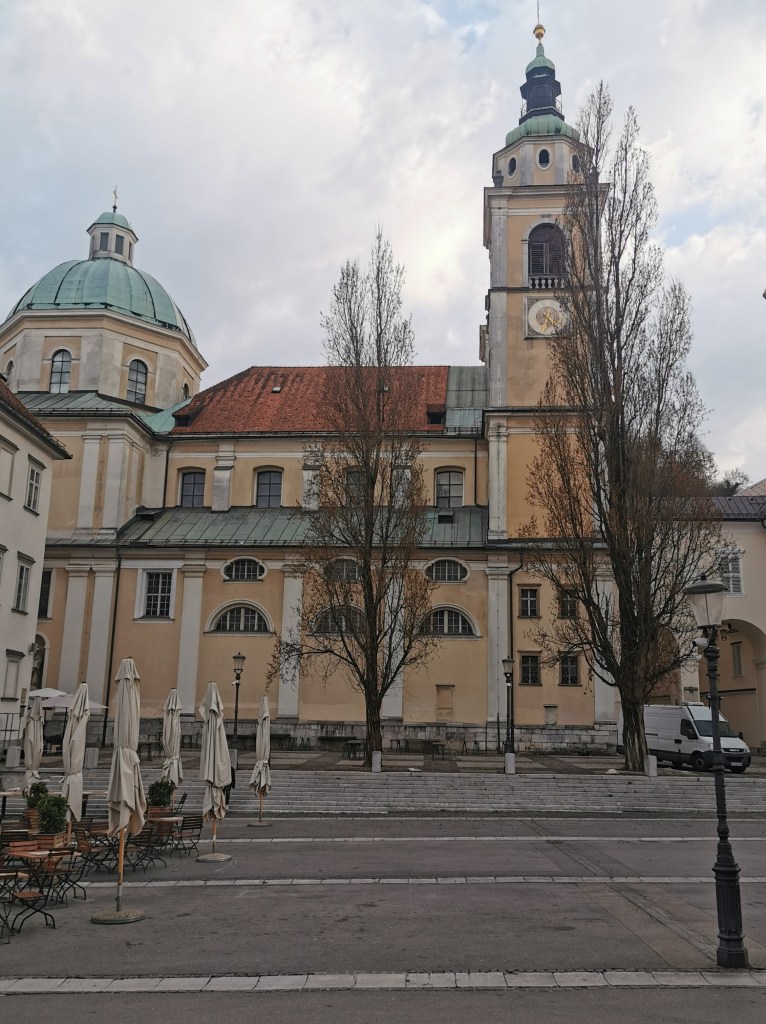
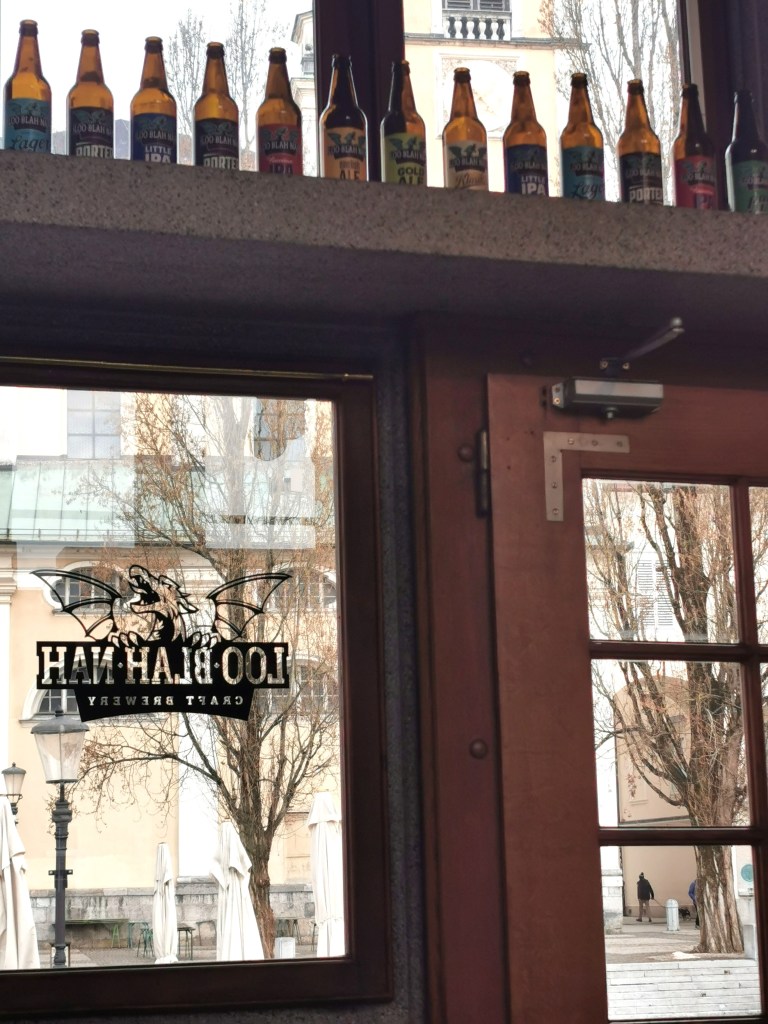
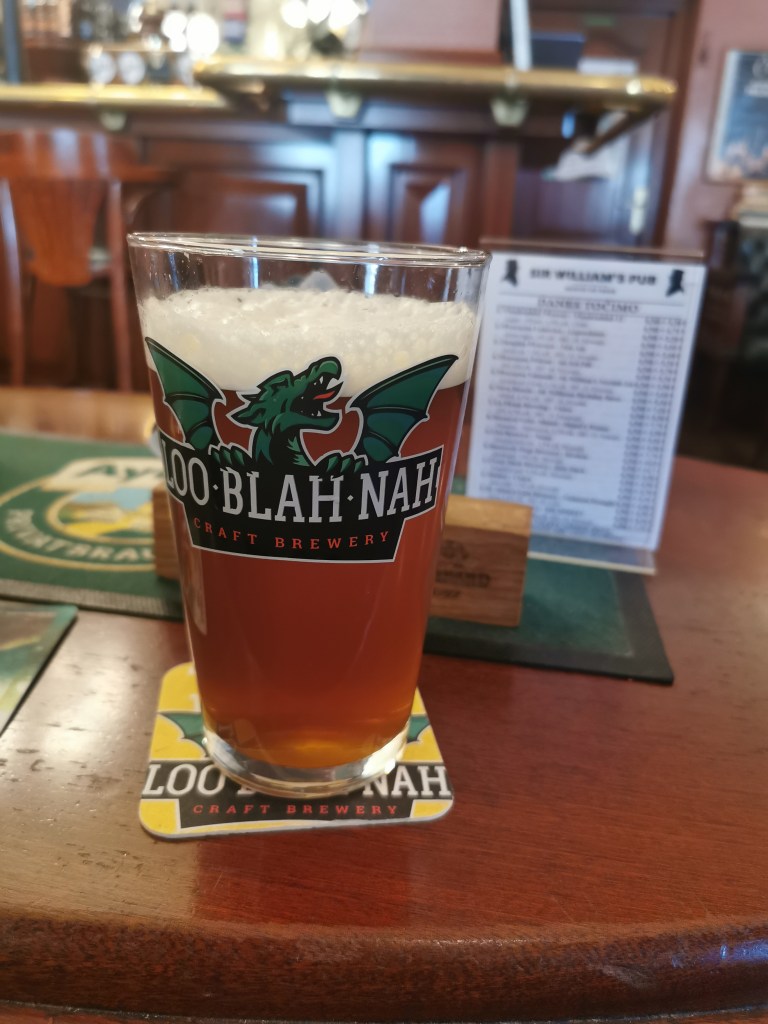
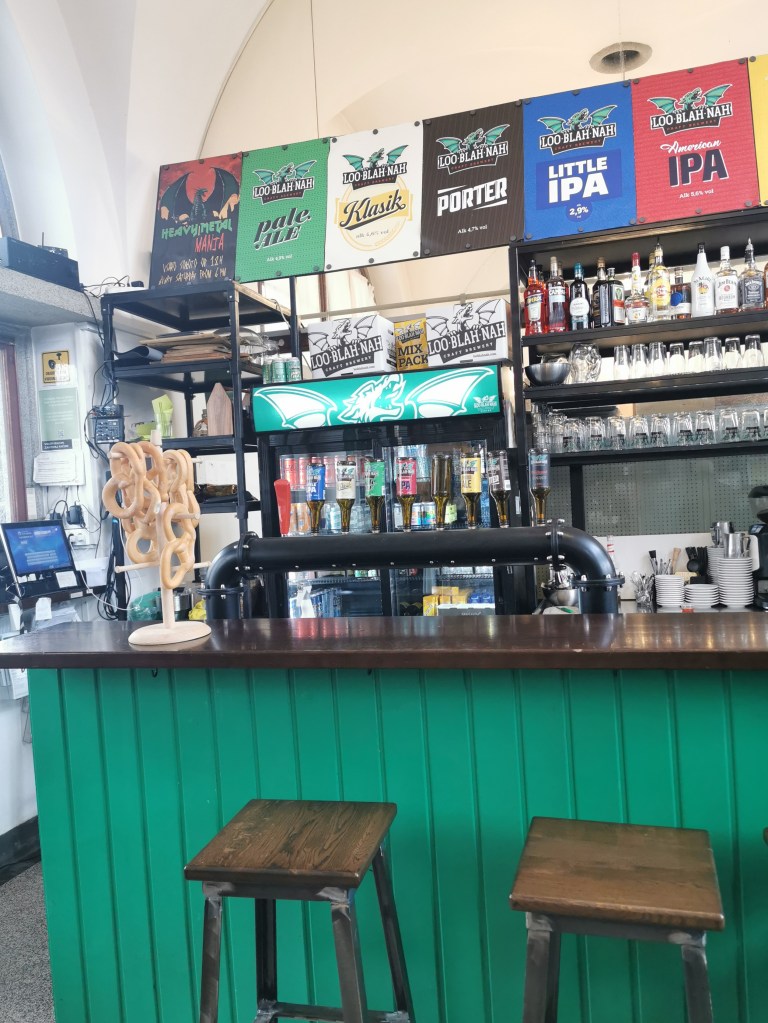
After settling in we set out to the explore and had a wander round the part of the old town by the cathedral area. When it was time for a break we found ourselves in the Loo Blah Nah pub, in an arcade beside the river. Loo Blah Nah, presumably a pisstake of how tourists pronounce the name of the city is a local brewery which produces a range of excellent beers. It was managed by a friendly woman who had a pet pigeon which came to the pub every day and sat by the door or window waiting to be fed. It turned out that several years ago it had injured a leg, she had looked after it and the bird has visited daily ever since.
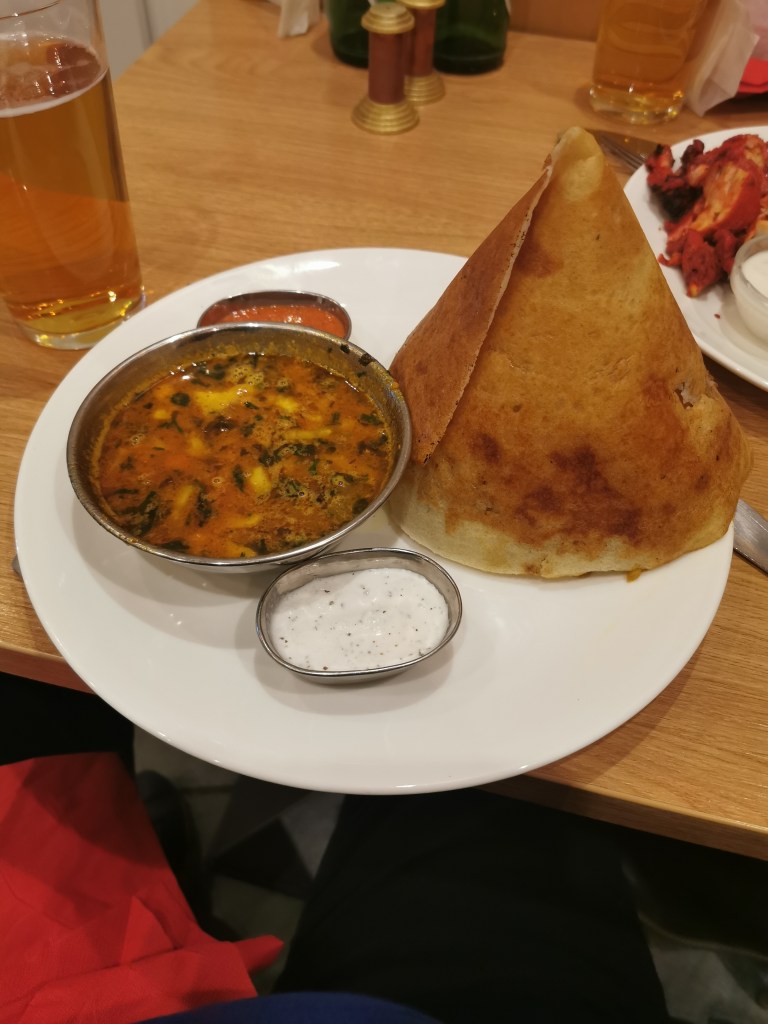
The evening continued with an interlude in a noisy Irish Sports Bar and a fine South Indian curry in Namaste Express (we fancied a break between Italian and Austrian food, saw an ad and decided to go for it). Then we made our way back to Sir Williams Pub, en route having an interesting but lengthy conversation with a difficult-to-escape-from local drunk (actually he was Serbian, but enjoyed living in Slovenia).
The following morning, after been woken early by the nearby church bells, we nipped out to buy some snacks from a nearby minimarket (the hotel didn’t do food). The lad behind the counter heard us speaking English and asked if we were Scottish. This was the second occasion on the trip that our accents gave us away. During the trip we were also mistaken a couple of times for being Dutch – again it must be the accents. Everywhere nowadays it is very common for people of two separate nationalities to converse in English as the common language – something that makes us English-speakers even more lazy about learning other languages.
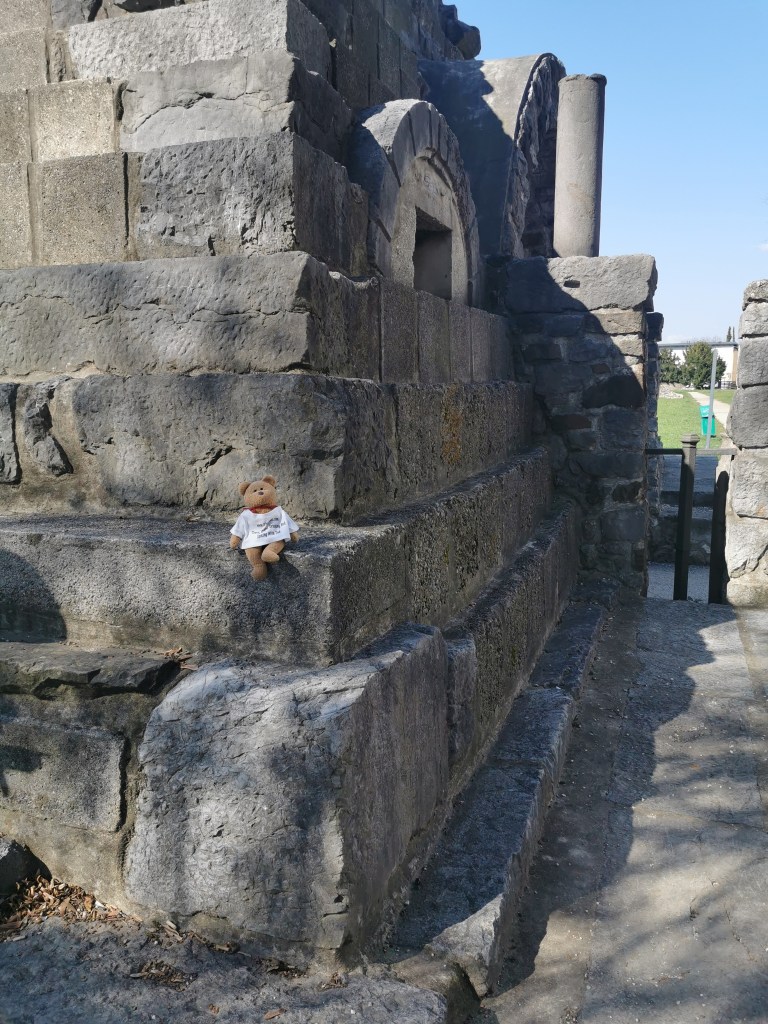
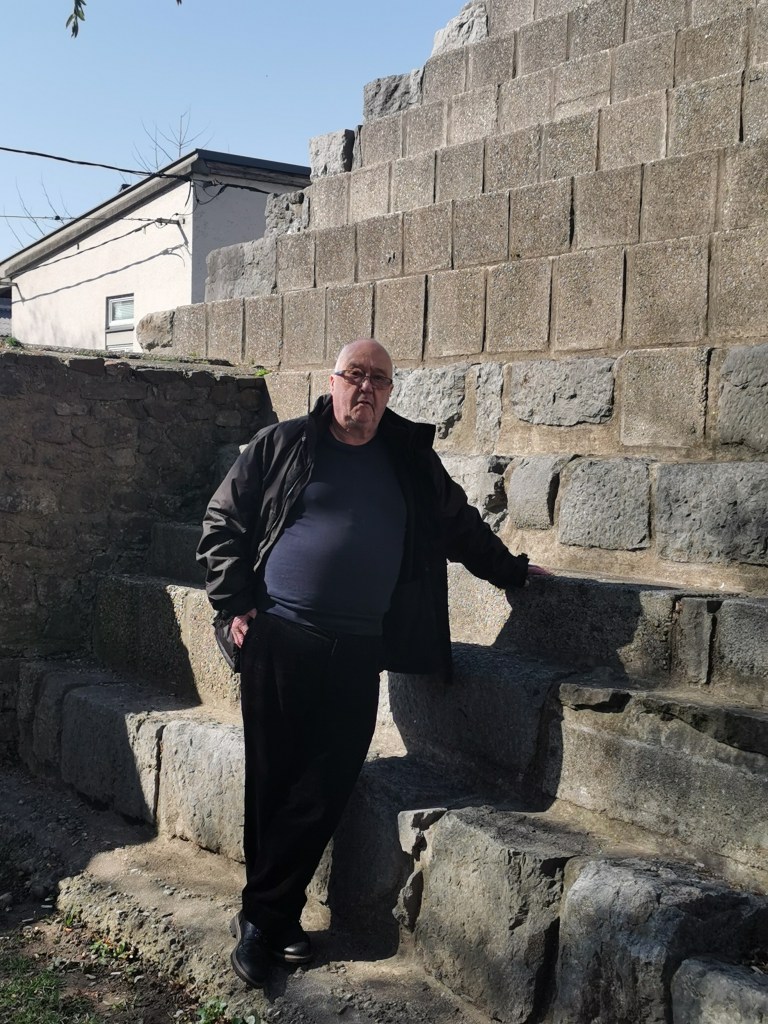
Ted, Dave and some restored Roman Wall
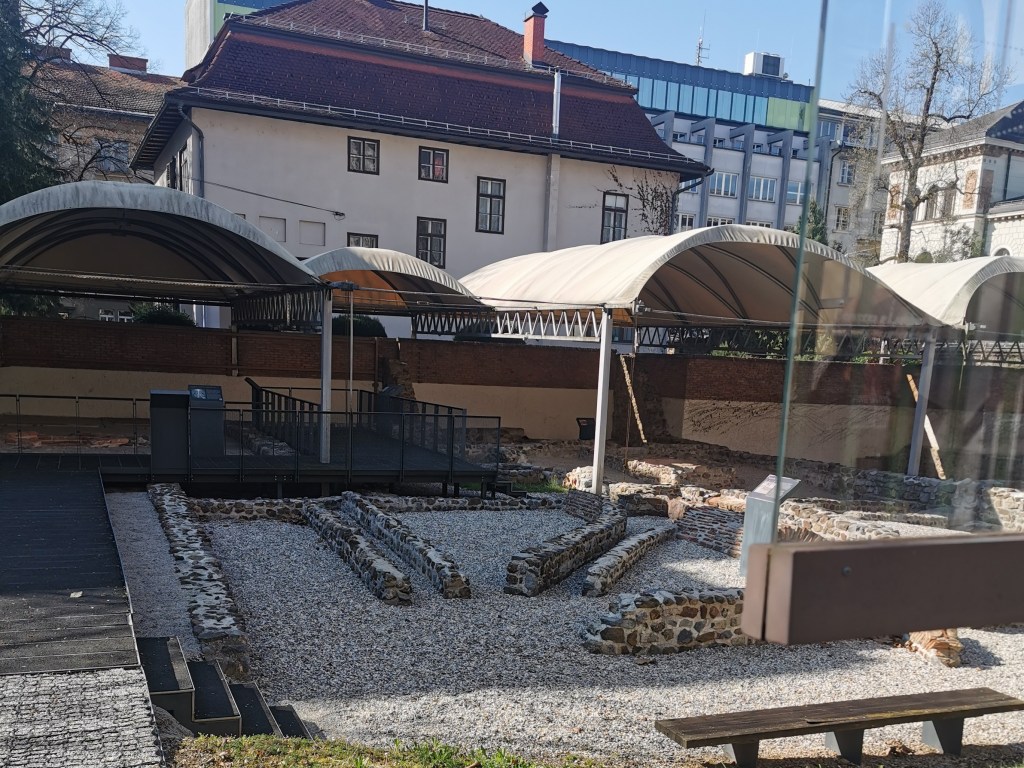
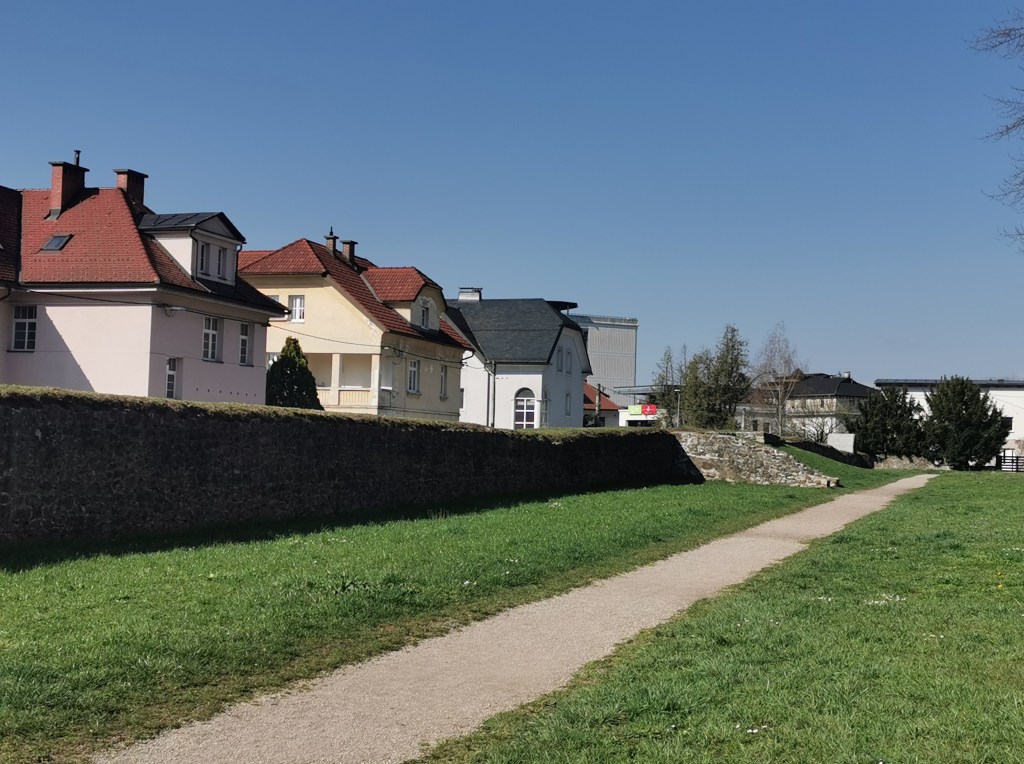
That morning we became proper tourists and visited the sights. We began by strolling around the modern city centre. Then we visited some of the Roman remains. This was the Roman settlement of Emora, founded around 14CE, built to the usual square grid plan. The ruins are scattered around an area of the city just south of the centre. We saw the main remains of buildings through the Archaeological Park fence (it didn’t open until the afternoons) and followed the remaining (and restored) stretch of the Roman wall (see note 6).
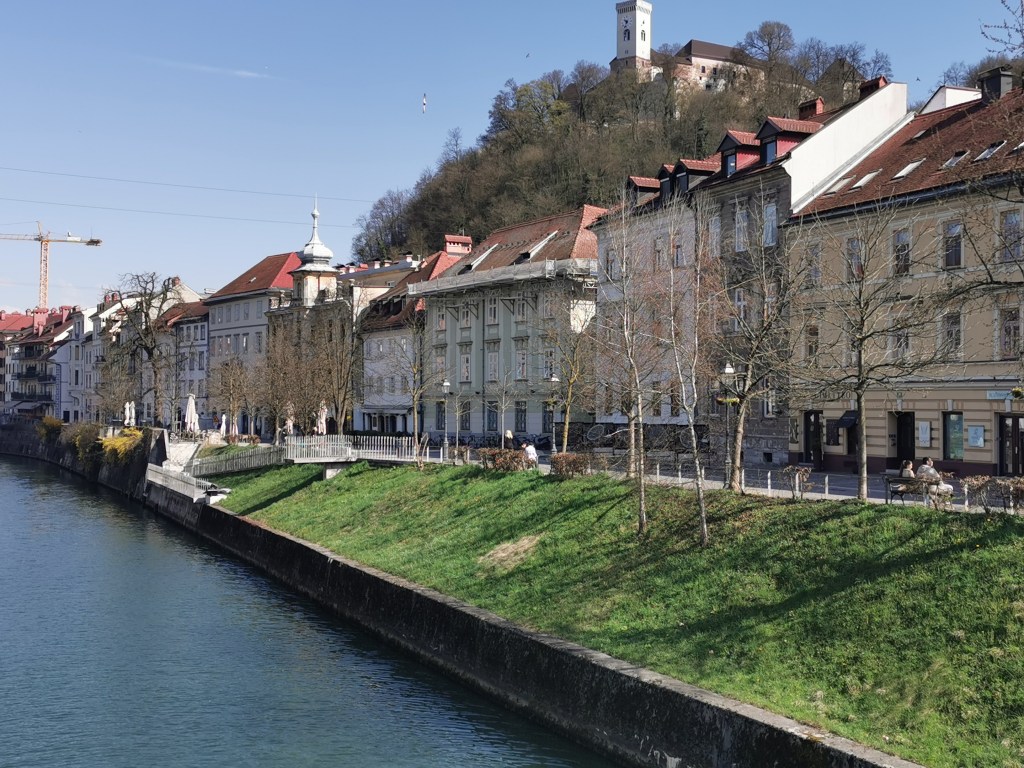
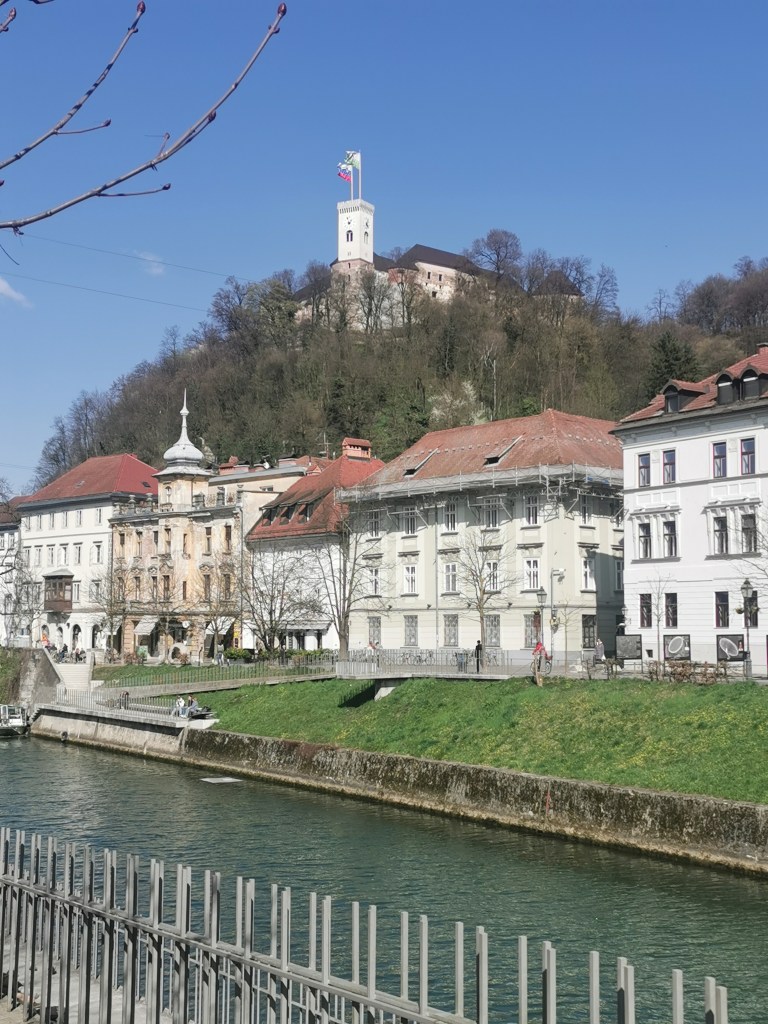
We then made our way across the river to the south end of the old town and walked along the riverside – most of the buildings now form a line of bars and restaurants. We carried on past the Triple Bridge and cathedral, through the open market and caught the funicular up to the castle.
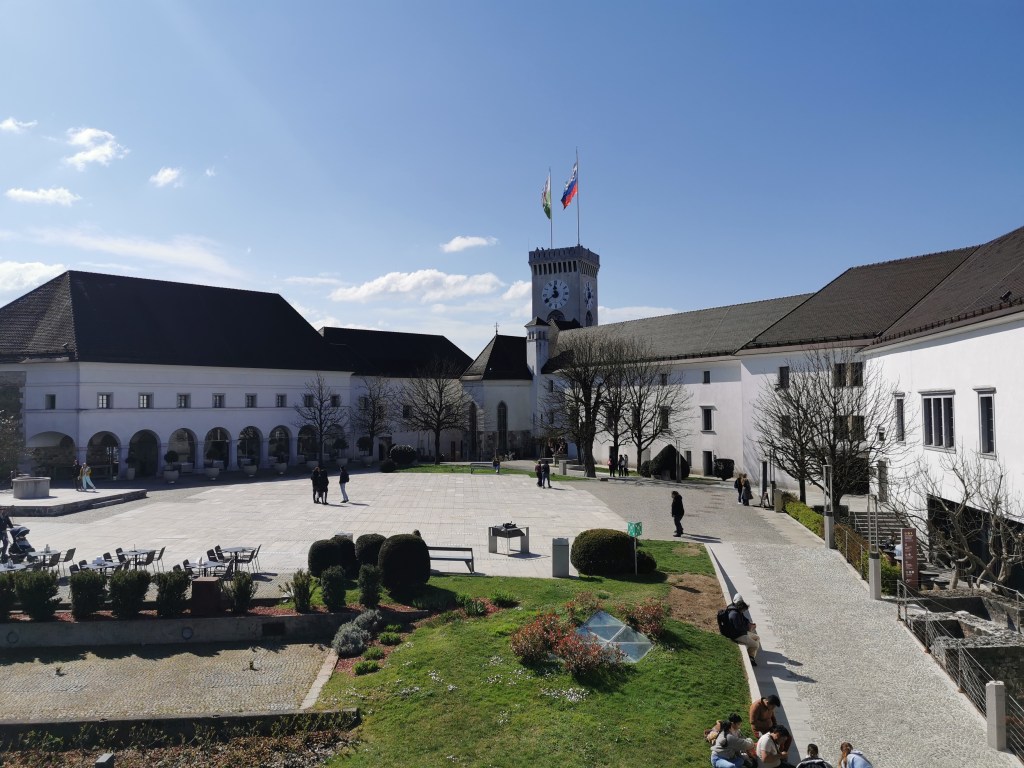
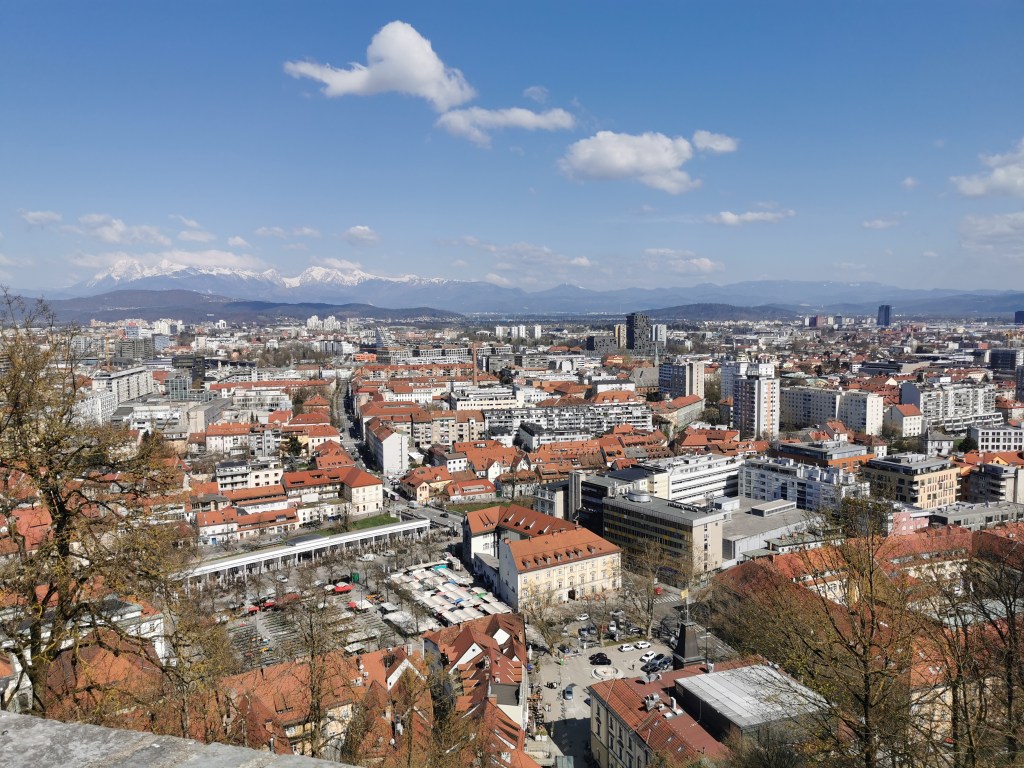
I managed to fall flat on my face (didn’t do any damage) tripping over a step while I was too busy focussing on the funicular descending. At the castle we wandered around the courtyard area (pictured) and climbed up to the walls and the viewpoint looking over the city towards the snow-capped peaks to the north.
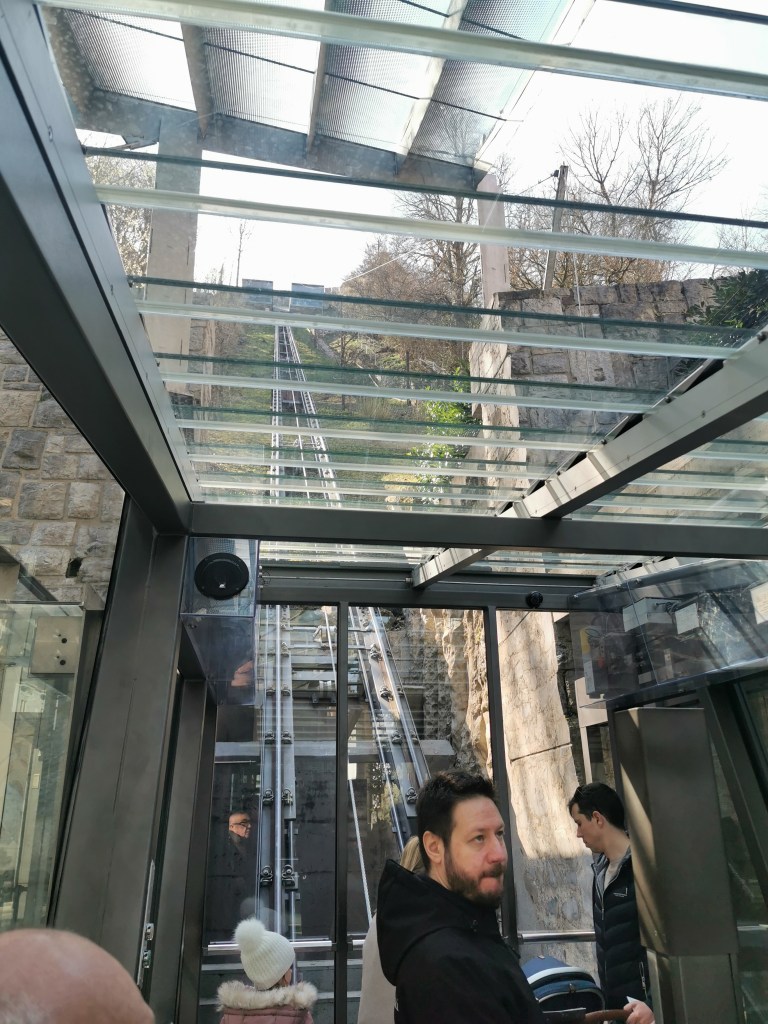
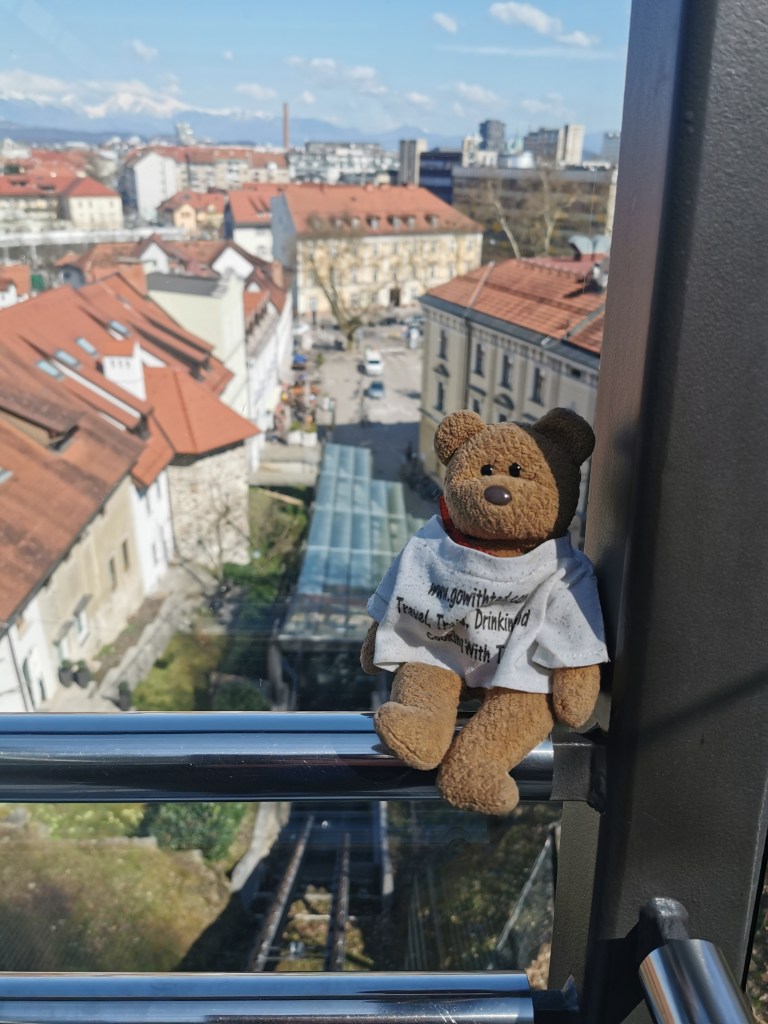
Waiting for, then riding on, the castle funicular
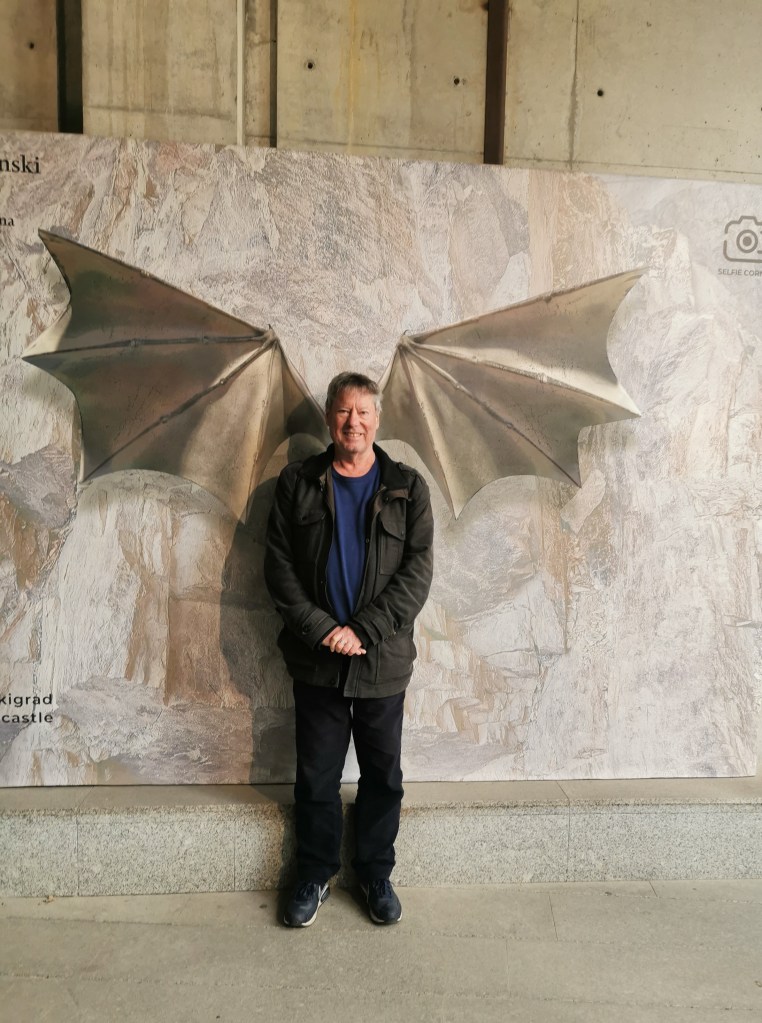
We kept hearing about the Ljubljana Dragon which is the symbol of the city, depicted on the Castle and the Dragon Bridge. There are various theories ranging from Slavic myth to Greek Legend to the story of Saint George – dragon slaying representing Paganism overcome by Christians.
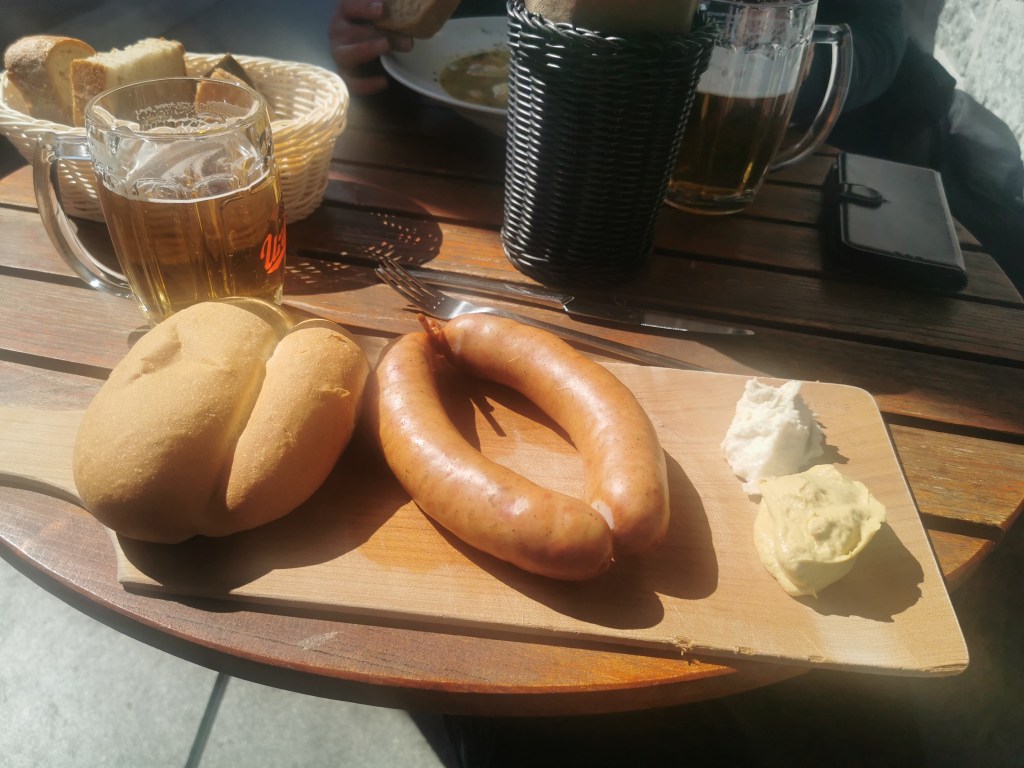
After a late lunchtime snack of local Carniolan sausage with excellent extremely spicy horseradish, we devoted the rest of the day to relaxation.
We walked along the attractive main street of the Old Town, Stari trg, in search of a bar to the south which came recommended – Pivnika Lajbah. At that time of day it lacked atmosphere and the large selection of draught beers was dominated by a plethora of American IPAs which are not to our taste. After a rest in the hotel we had another curry in the other branch of Namaste (yes…it is that good), drinks in Loo Blah Nah (we were too late for the visit of the pigeon) and a final few in Sir William’s Pub (we were now recognised and welcomed) chatting with locals.
Notes
(5) Slovenian Railways website indicates that the new station should be completed and reopen by 30 June 2026. However, it looked to us that this is unlikely, given the amount of building work remaining.
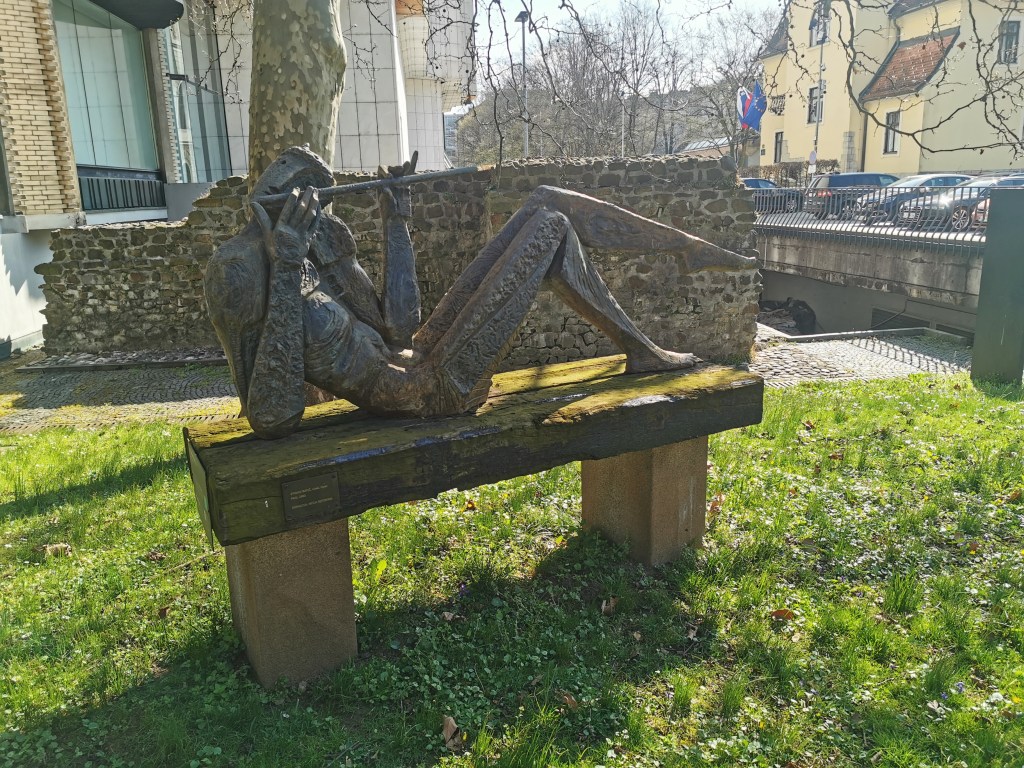
(6) There is a circular Roman walking trail around ten Roman monuments, providing detailed information about each. Details and tickets are available from the City Museum of Ljubljana, Gosposka ulica 15.
Onward to Austria…..
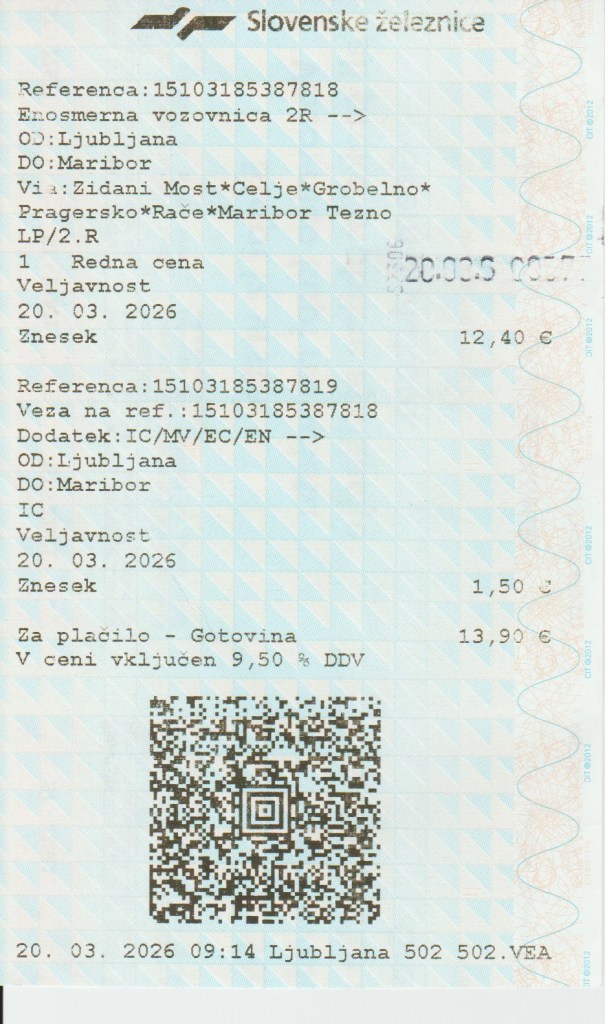
Friday morning arrived and it was time to leave Ljubljana. We had planned a route to our next stop, Klagenfurt in Austria, which was indirect but would let us see parts of rural Slovenia. We made our way to the station-cum-building site, bought our tickets, found our platform and set off. The train was a comfortable five coach modern electric unit bound for Graz. It couldn’t be described as an express but it called only at principal stations and arrived in our lunchtime destination, Maribor after just over 2 hours.
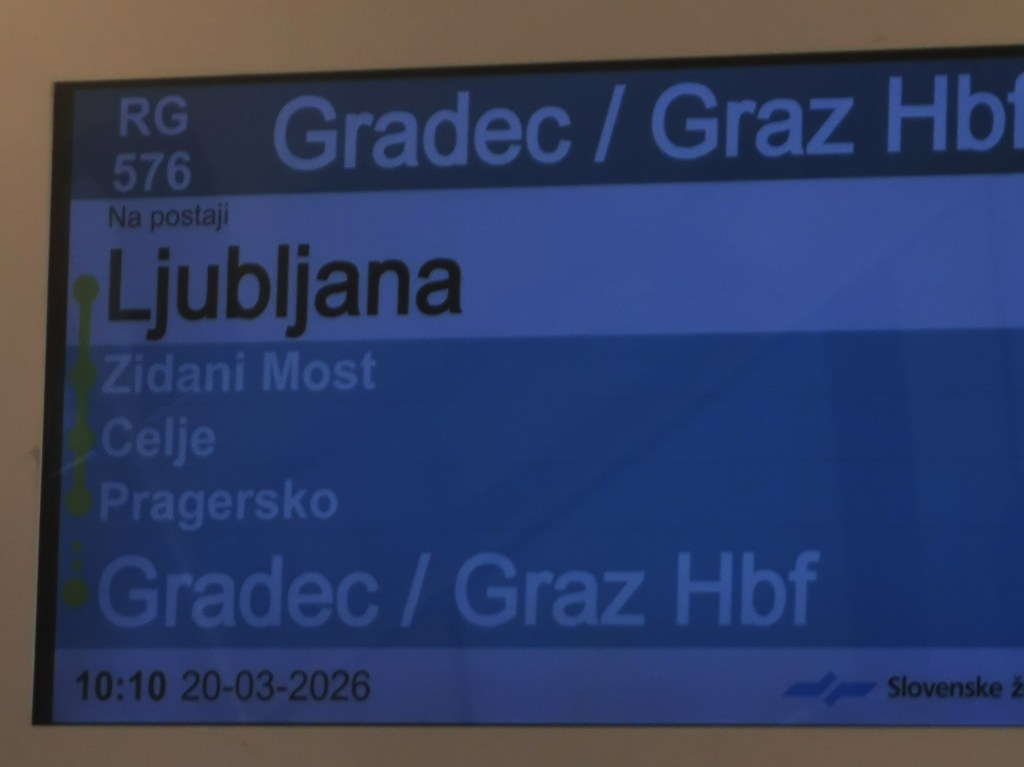
We very quickly left the suburbs of Ljubljana and followed the valley of the river Sava as far as Zidani Most, through a mixture of pleasant, hilly countryside, a section of narrow gorge and a series of industrial and mining towns The river flows off towards Zagreb and Belgrade where it joins the Danube while we followed its tributary, the Savinja, to Celje. After passing through a range of hills the final stretch is across plains to Maribor, the second city of Slovenia, 156km northeast Ljubljana, with a population of just under 100,000. The main line the carries on to Graz and eventually Wien / Vienna (see railway buffery 1).
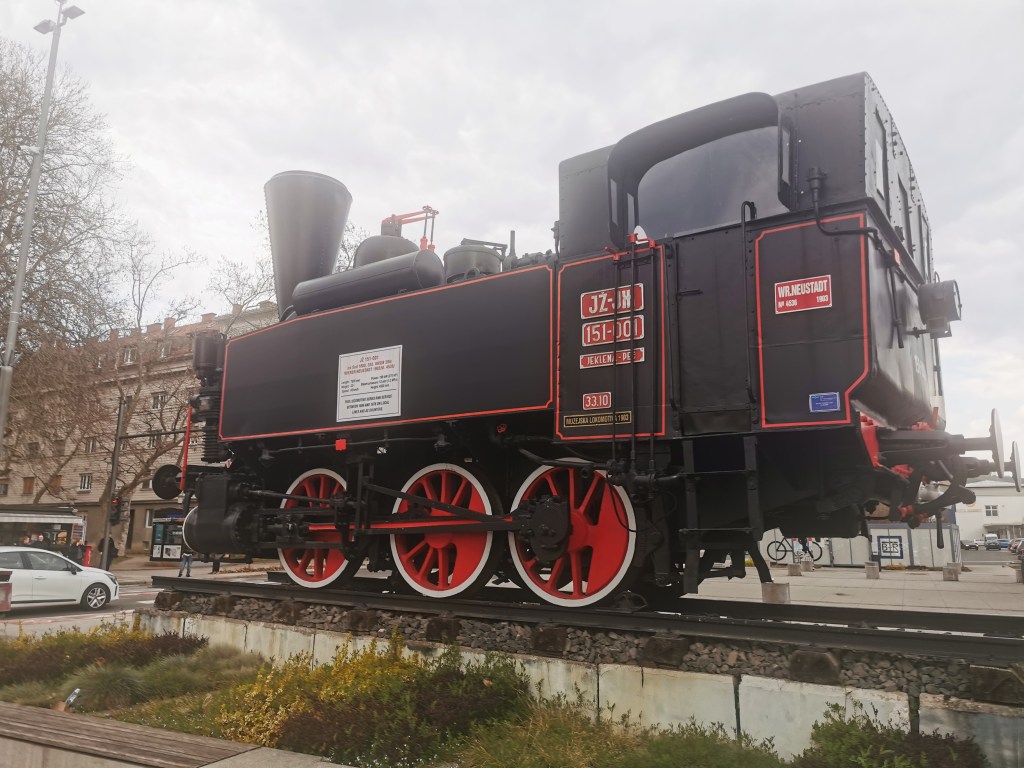
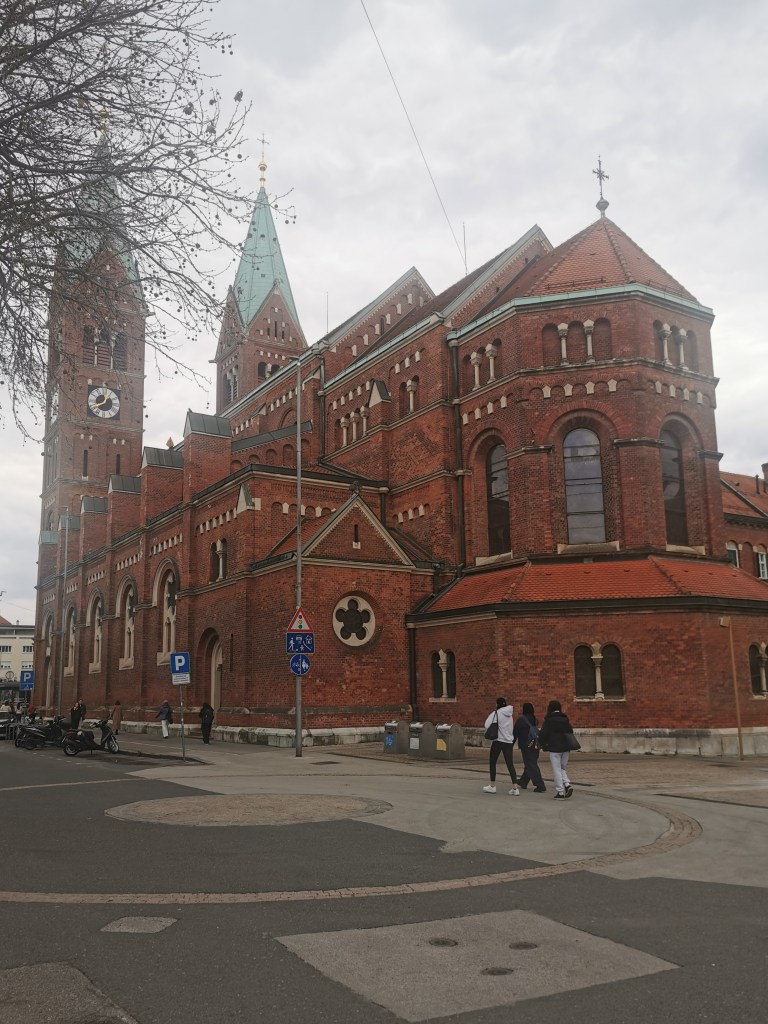
We only had a couple of hours in Maribor, not enough time to get much of a feel for the place. The station is slightly out of the centre and as we walked into town it looked somewhat depressed with many closed shops. This was a total contrast to Ljubljana – perhaps a large out of town centre has recently opened. We passed the time with interesting sandwiches, chocolate cake and a couple of bottled beers in a trendy brunch restaurant called Nana.
We headed back to the station for our journey along the Drava Valley railway to Klagenfurt. The River Drava is another tributary of the Danube and we would be following it to its source over the next few days. Slovenian Railways trains run four times a day (Monday-Friday only) along this minor line, up the valley to Bleiburg, just across the Austrian border, with a connecting Austrian Railways (ÖBB) local train into Klagenfurt.
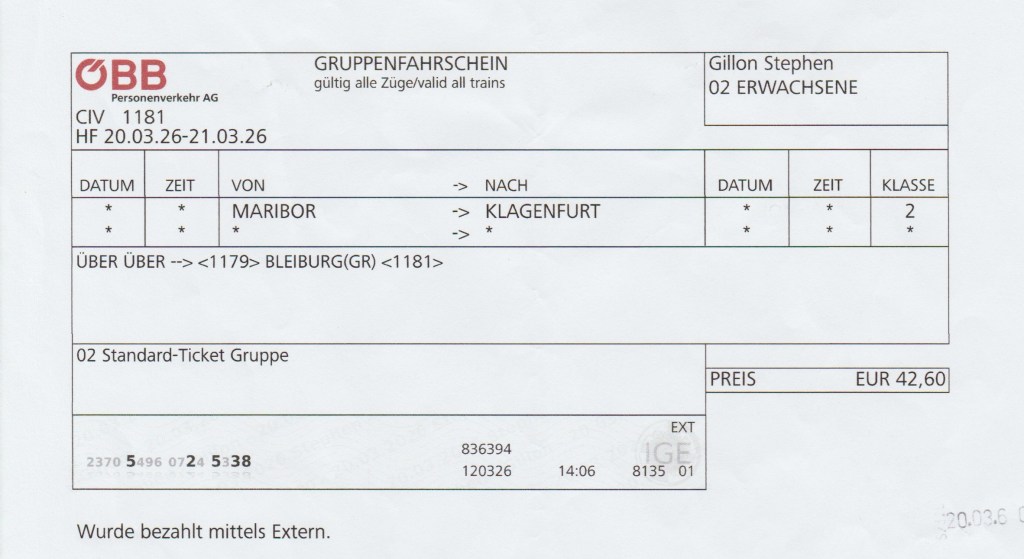
We soon discovered our first cock-up of the trip – there’s always at least one. We had paid €21.30 each for our tickets. I thought we had found a bargain so had booked in advance. The price on the Slovenian Railways site was €24.80 but I had found the cheaper fare on the ÖBB site. However, when the conductor saw our tickets she told us that if had we bought them at the ticket office just before setting off they would have cost €10 (see railway buffery 2 and note 7).
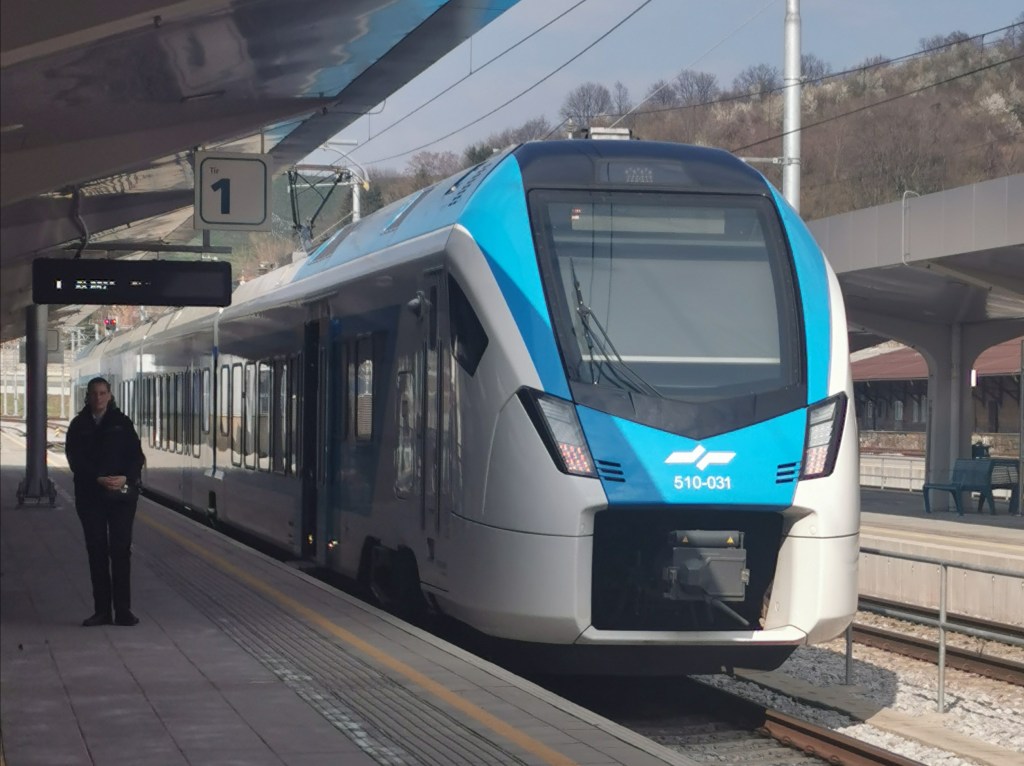
The train was quite busy when it left Maribor. It was a Friday and most passengers seemed to be students returning home to their home villages for the weekend. The train takes 2¼ hours to cover the 86km to Bleiburg with 25 stations and halts along the way – some a basic short platform in the middle of nowhere. However, it is a fine scenic journey, with the river on one side (sometimes dammed for hydroelectricity to form lakes) and the high Pohorje Mountains on the other. In several areas the line appears at risk from falling trees – the adjacent forests look unmanaged. Most of the villages are pretty though there were a few small industrial ironworking towns near the border. The train gradually emptied out and when we reached Bleiburg there were only 5 of us (plus a bear) left on board.
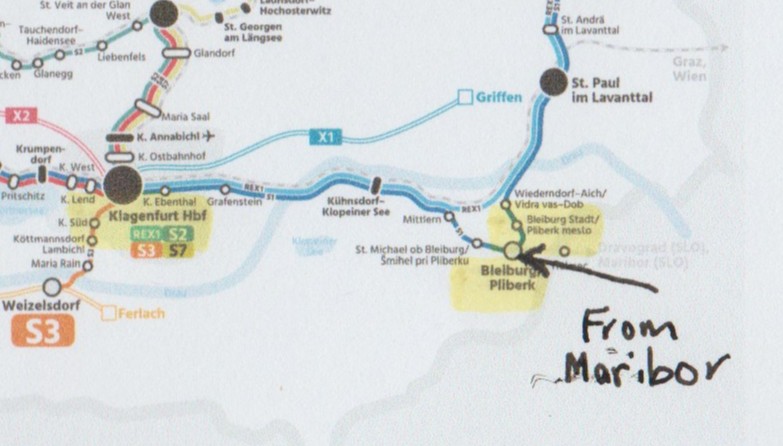
Time for the second cock up. We were 3 minutes late so only had 2 minutes to catch the connecting train. There was a train on the adjacent platform, so we jumped on that, sat down, then it pulled out in the wrong direction. At the same time we noticed a third train and it pulled out in the right direction. I doubt that anyone from our arriving train would have had time to reach it through the subway. We confirmed our mistake by asking a local lad. Fortunately, there is an hourly service on the ÖBB line. The train rounded a corner and after a three-minute journey we alighted at Bleiburg Stadt, located in the centre of the small town. We found the nearest pub, had a beer then caught the next train for the short journey to Klagenfurt and made our way to our hotel.
Notes
(7 ) The €24.80 fare is described on the site as the ‘standard single’ fare. There is a mention of a €10 fare, described as the ‘Regio As single ticket’ with no explanation of what that means.
Klagenfurt
After settling into our room it was after seven, so time to eat. First stop was Hofbrau zum Lindwurm on the main square, Neuer Platz, and ordered sausages and beer (we were in Austria after all). It was mainly a daytime venue and was soon preparing to close so we headed into the old town – where most of the drinking venues and nightlife are to be found around Herrengasse and Pfarrplatz.
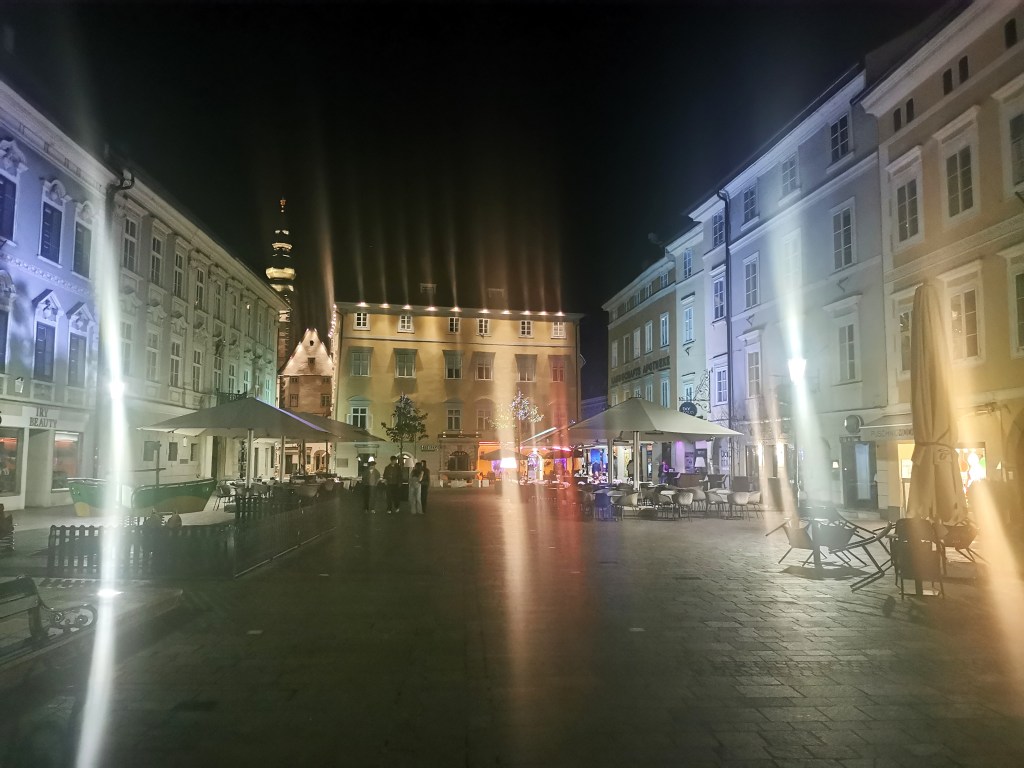
Bierhaus Zum Augustín was recommended by beer guides and by the hotel receptionist and it was packed with drinkers and diners on a Friday night. Once we found a seat we spent a very pleasant evening, chatting to locals and the staff and drinking the tasty hausbier. It was such a good place that we returned there the following afternoon and evening and didn’t make much effort to explore what else Klagenfurt had to offer.
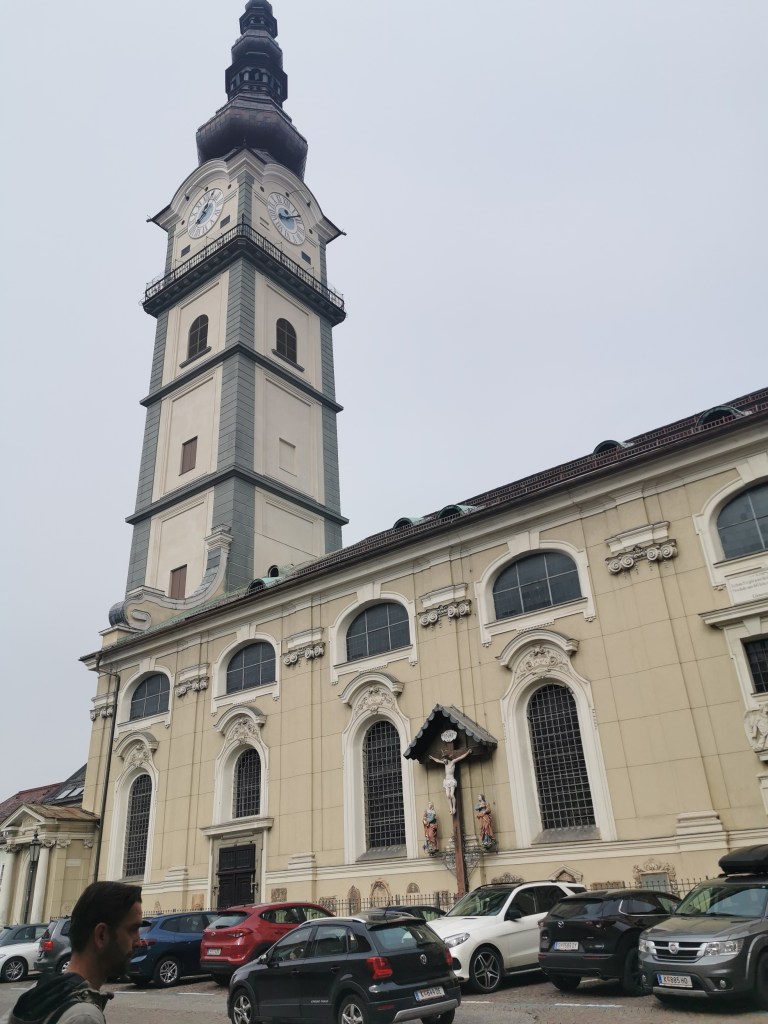
Klagenfurt am Wörthersee, to give it is full name, is the capital of the Austrian province of Carinthia (Karnten), which historically included parts of what is now Slovenia. Today it remains bilingual with Slovenian the second language. It has a population of 106,000, the sixth largest city of Austria. The old town has many impressive Baroque and renaissance buildings and churches.
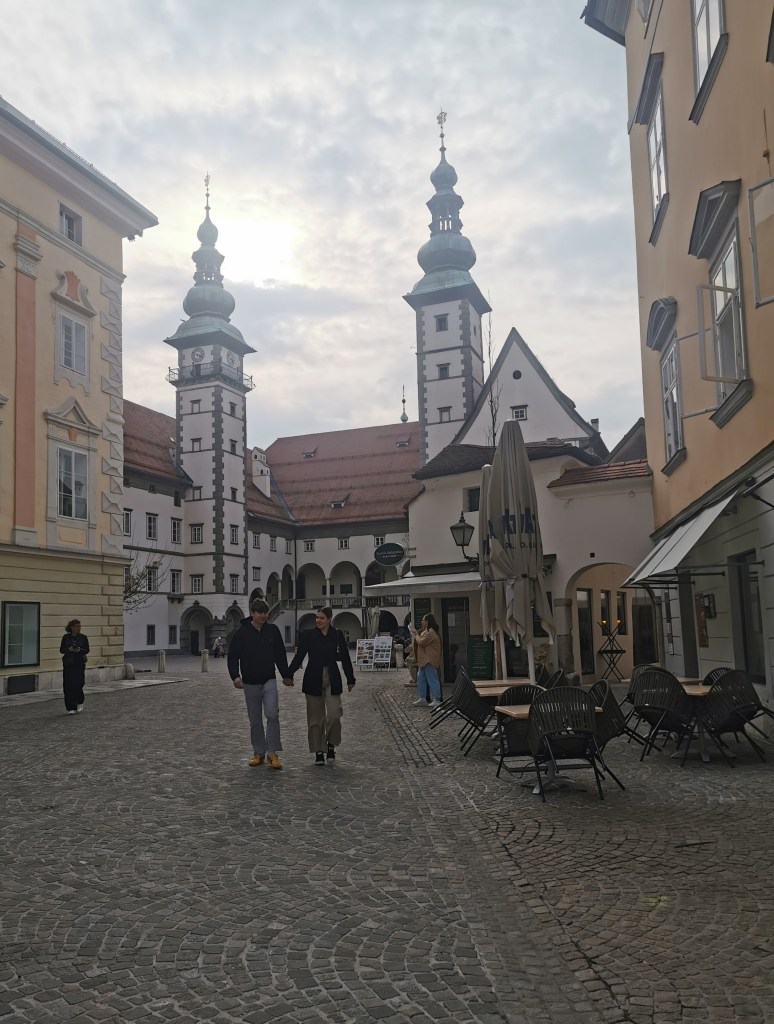
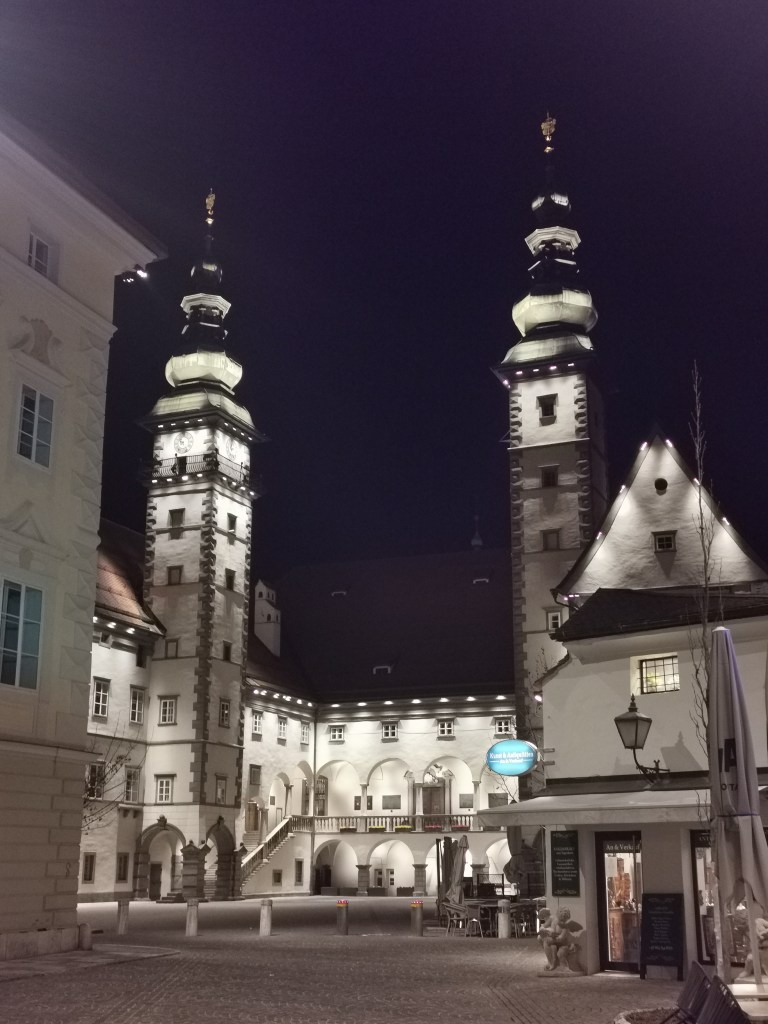
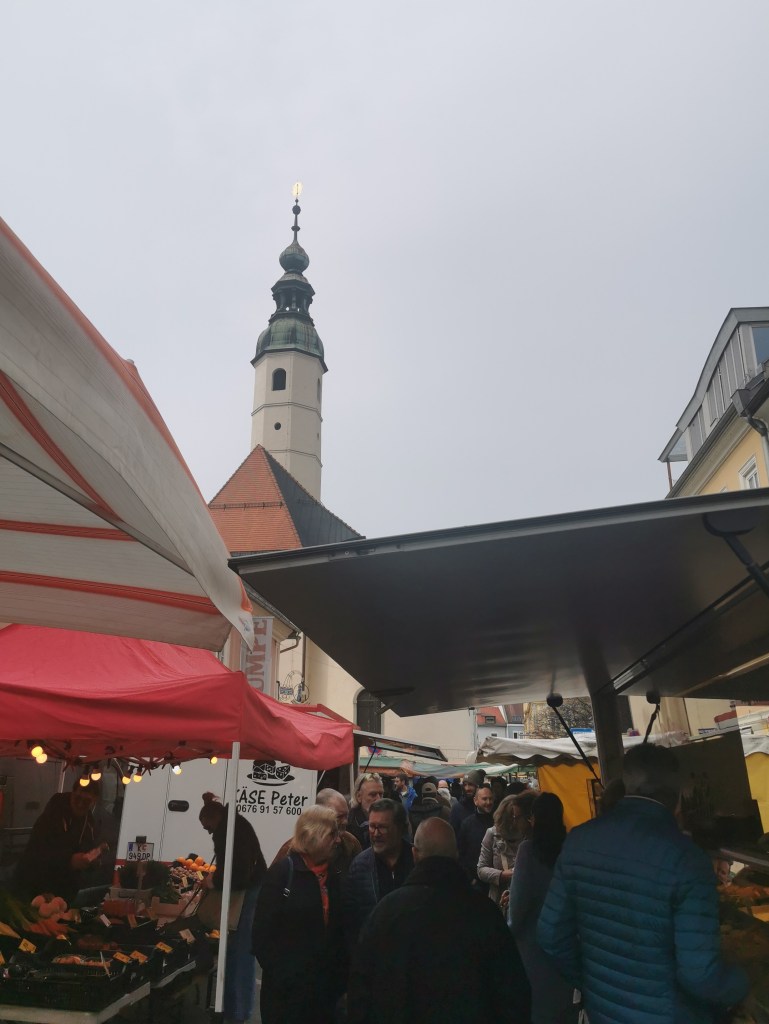
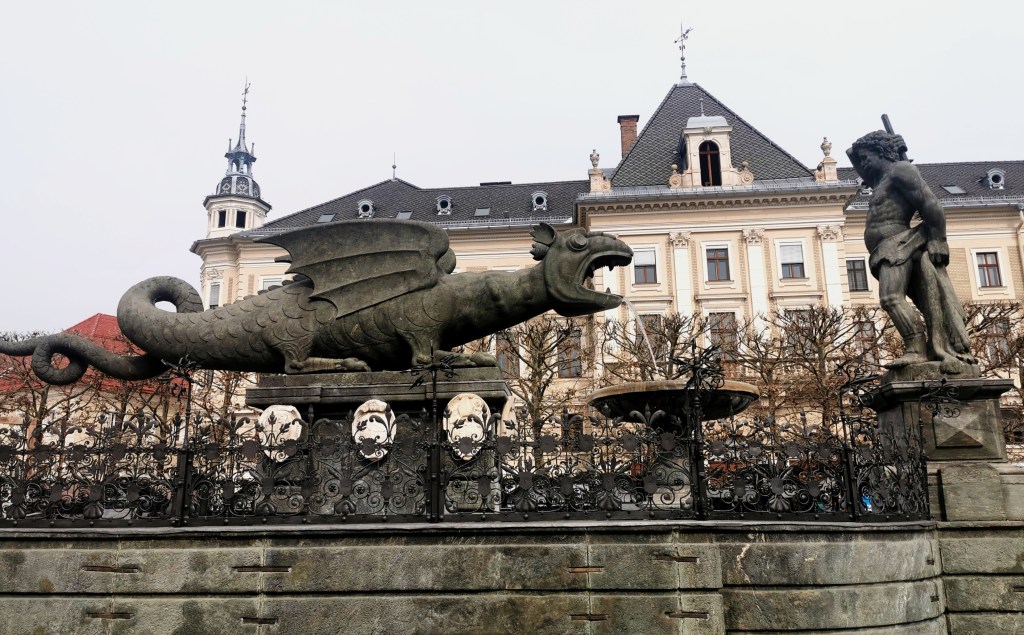
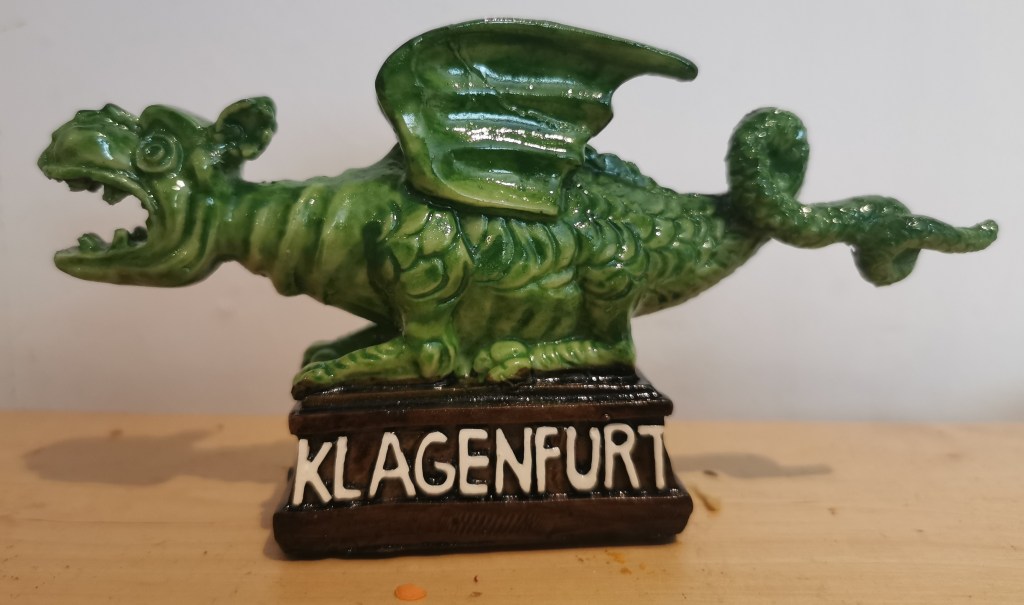
After breakfast in the hotel we had a saunter round the city centre. The Neuer Platz square has as its centrepiece the sixteenth century Lindwurmbrunnen. The Lindwurm is another dragon (not the same one as Ljubljana) and the story is that the city was founded after it had been defeated. The square was packed, due to a huge Easter market which filled it and surrounding streets and squares. We then had a daytime look round the old town, after which we decided to visit the Wörthersee. We found the bus stop in Holy Ghost Square (Heilingengeistplatz) and headed out to the lake, about 3km from the centre of town, travelling alongside the Lendkanal, built to link the centre with the lake, then through the university district.
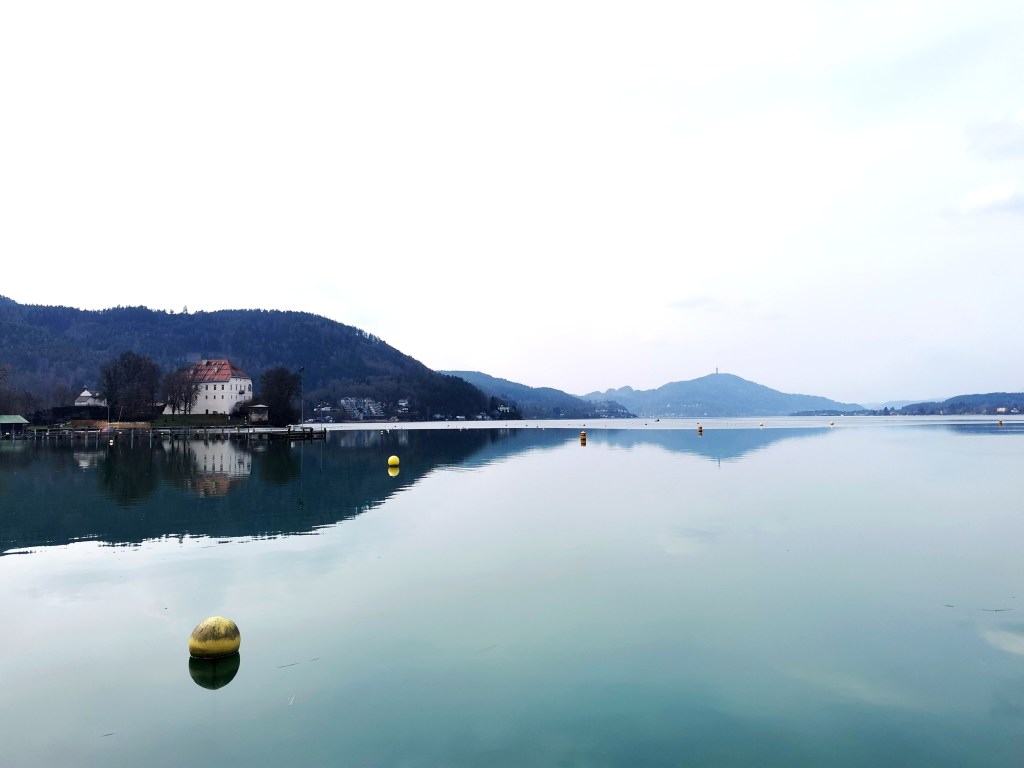
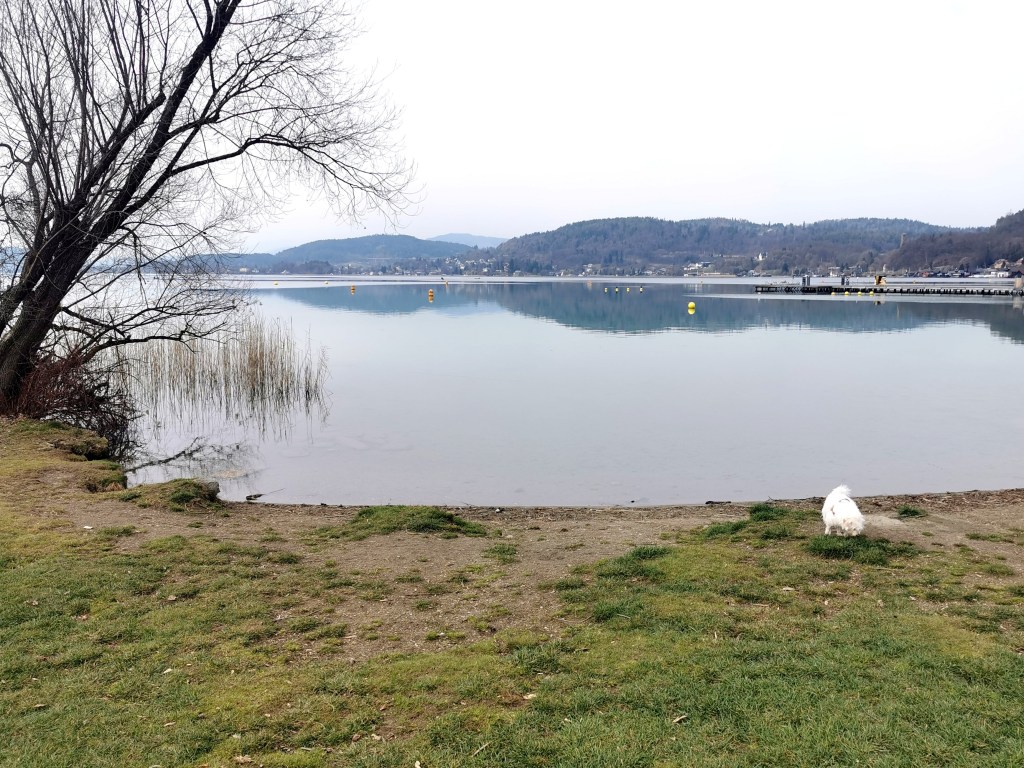
The area beside the lake is popular in summer – the Strandbad is Europe’s largest non-sea beach and lido – but we were out of season and hardly anywhere was open. However, the parkland beside the lake is pleasant.
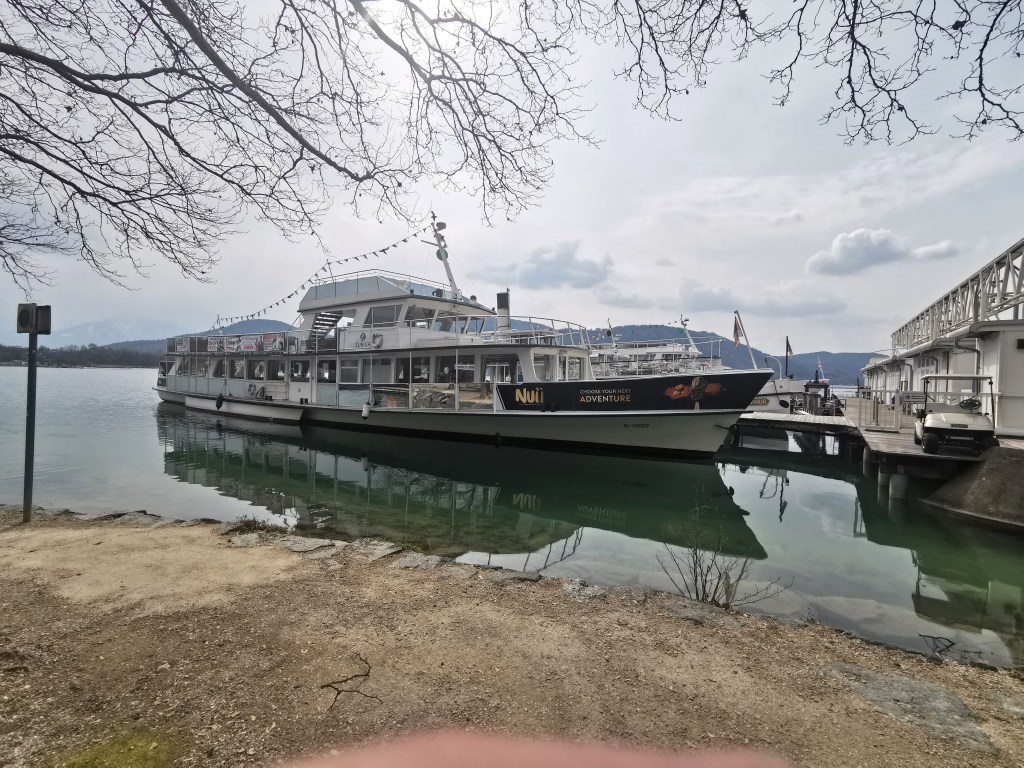
We took a walk along the lake shore, watched a group of lads having a dip in the freezing water and saw the lake cruise boats laid up for the winter. After getting our fill of fresh air we went back into town for a very late lunch at Zum Augustin. After a couple of hours rest back at the hotel, we returned there for the evening.
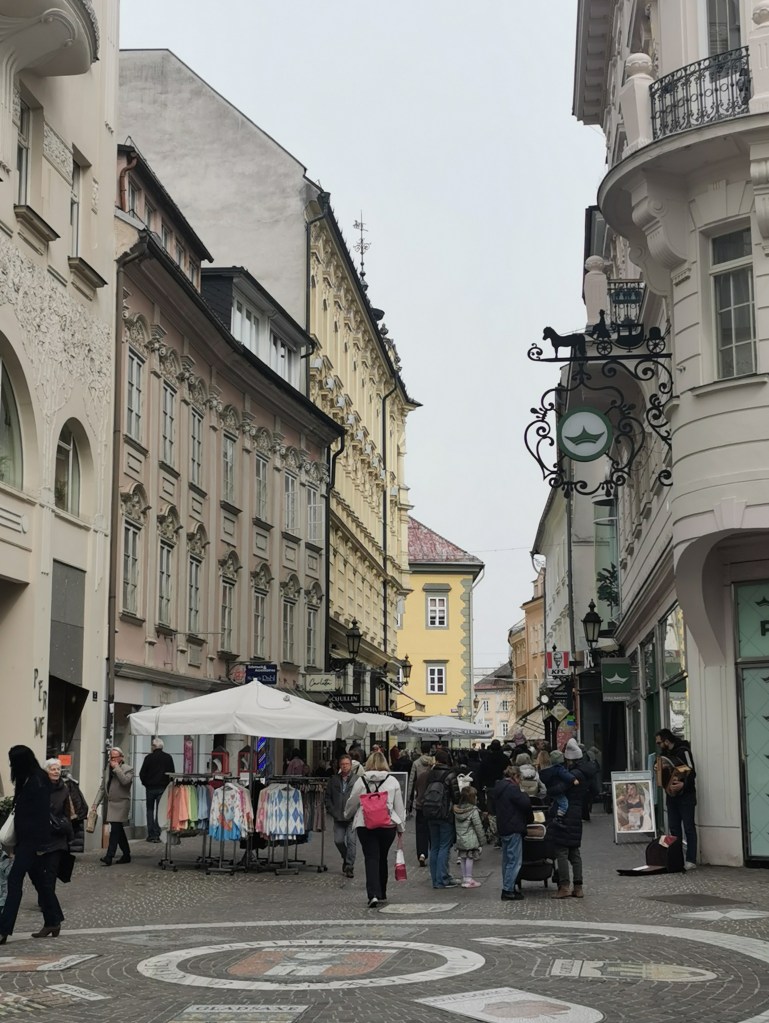
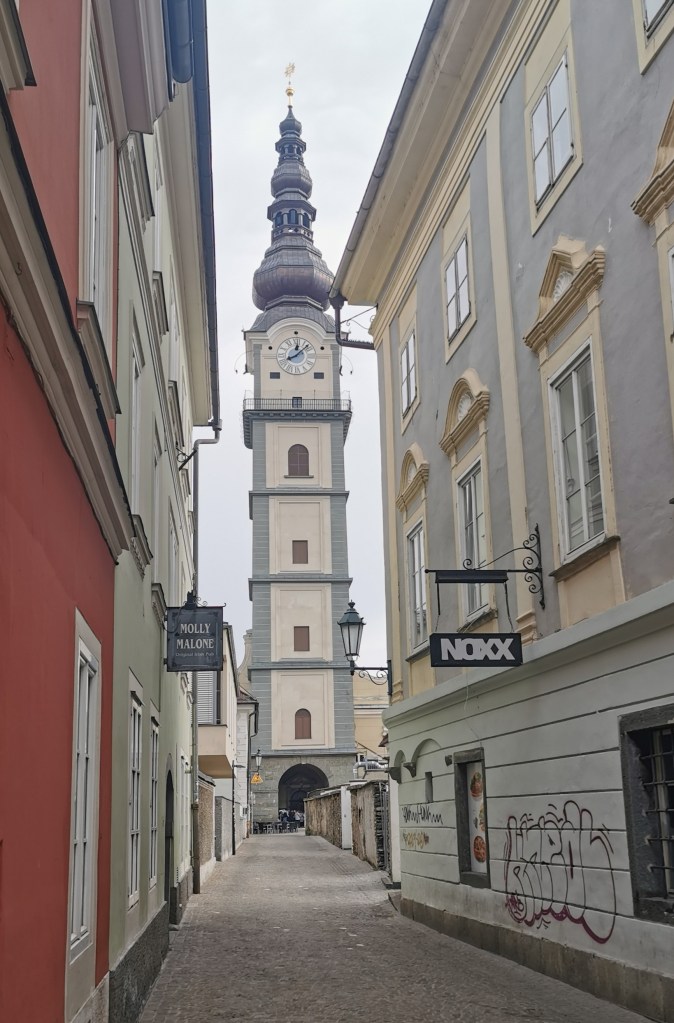
A couple more views of Klagenfurt old town
….then back to Italy
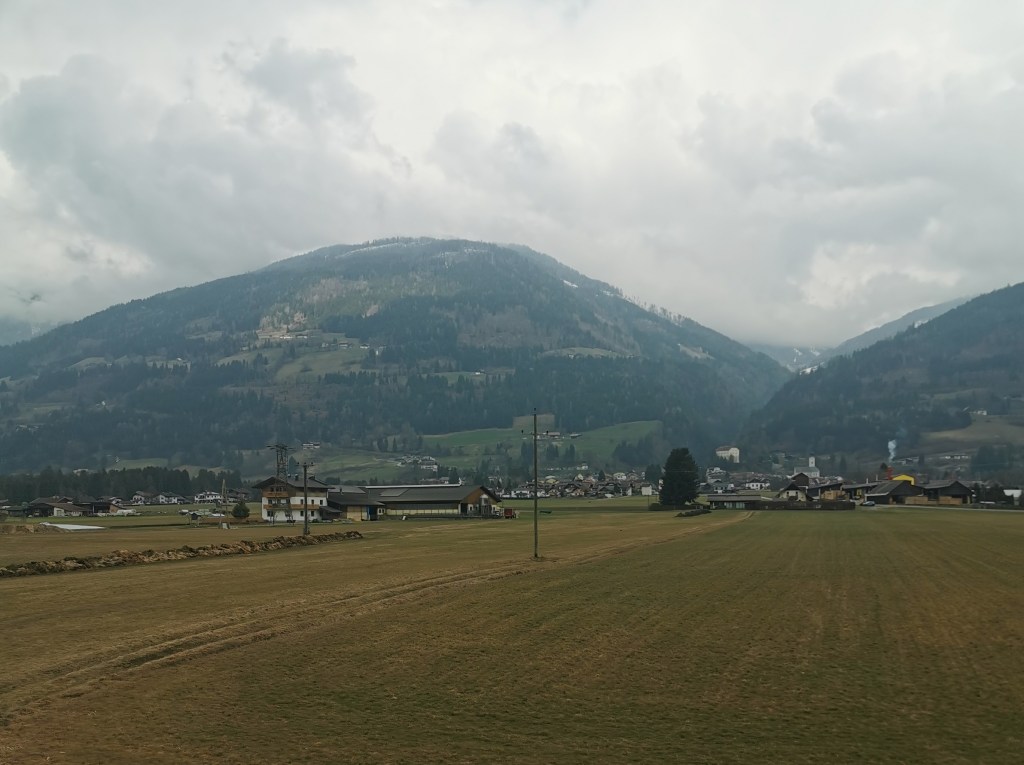
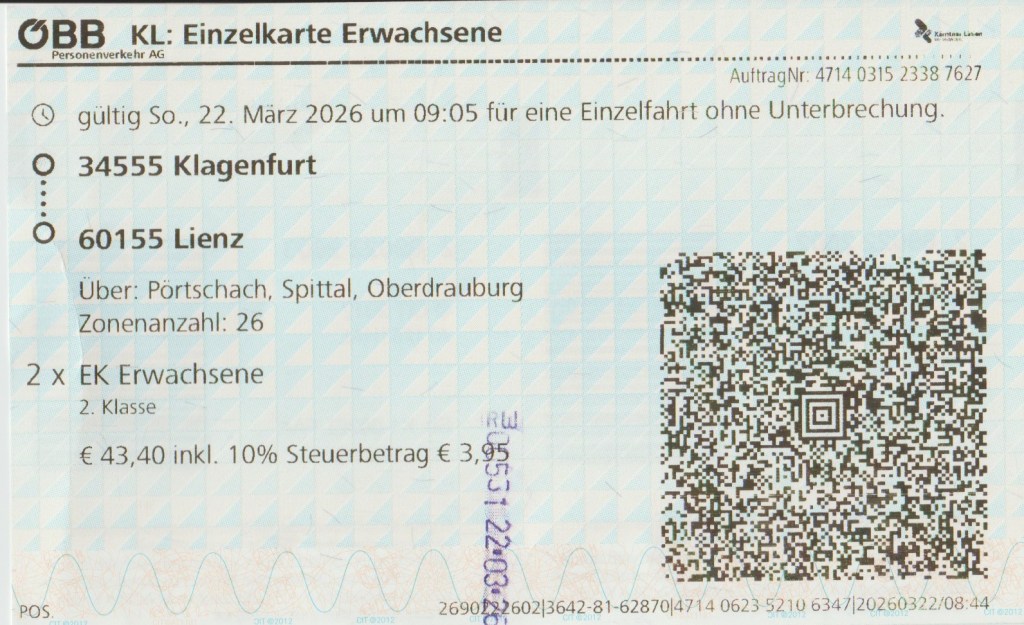
The next day (Sunday) we moved on to our final base for the trip – Bolzano / Bozen (see note 8) – travelling by by a series of trains. Fortunately the Sunday service in this region is virtually the same as weekdays. First was a short journey by express train to Villach, the nearby capital of the province of Südtirol, following the north bank of the Wörthersee. There we changed to a local train – there is an hourly service to Lienz, along a further section of the Drava Valley Railway (see railway buffery 2). After we left the main line (which heads for Salzburg) at Spittal-Millstättersee the line is single track and the train stops at every halt along the picturesque valley and terminates at Lienz in Östtirol 1 hour 40 minutes after leaving Villach (see note 9).
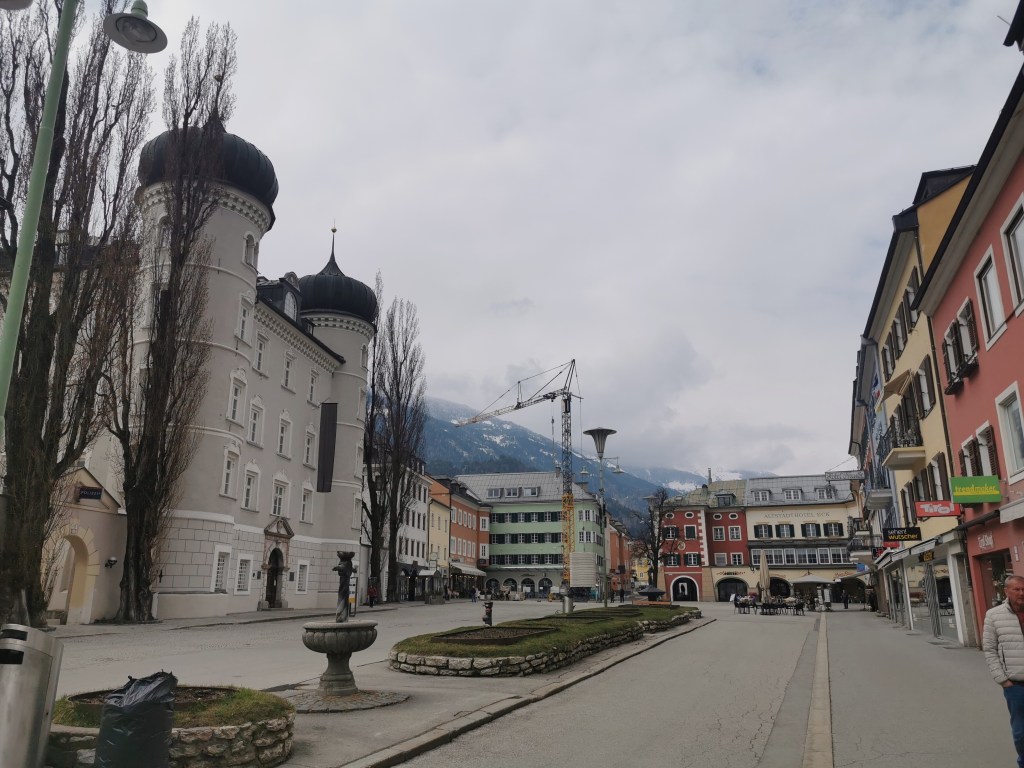
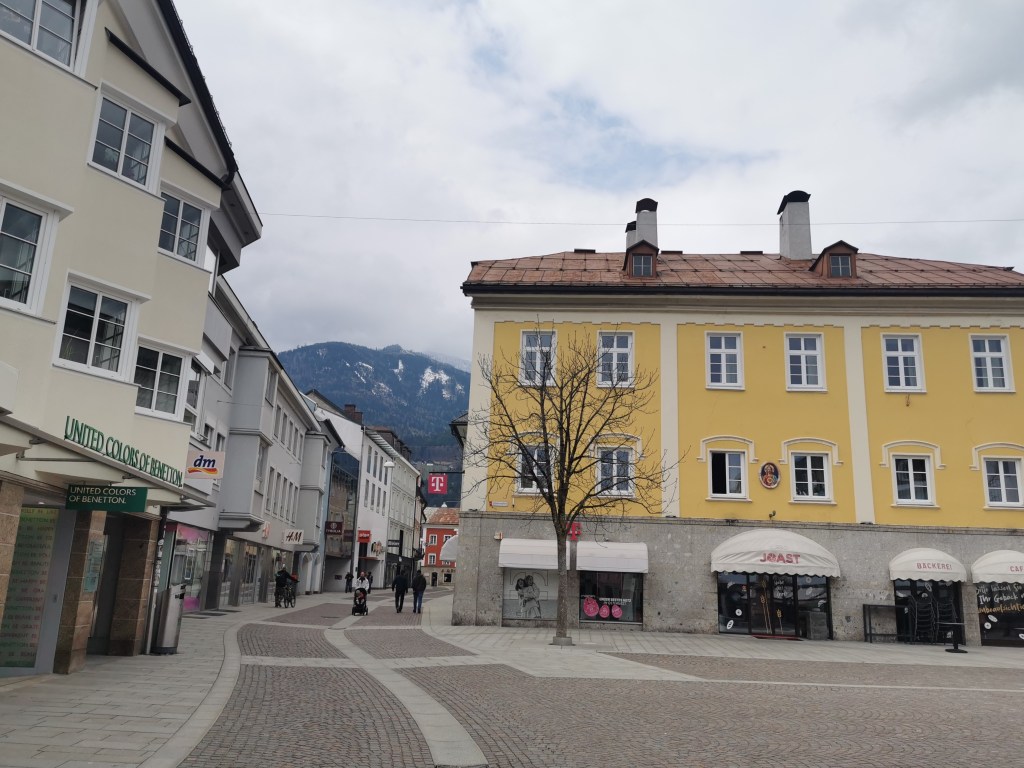
Lienz is a small, historic own of 12,000 people. We arrived there at 1115 and, as we didn’t expect anywhere to be open, we had a coffee in the station buffet before wandering into town and exploring the Hauptplatz and neighbouring streets until it was time for a beer. We had passed a place near the station where the local alkies were having an early drink, decided against it and found the pleasant Cafè Eck.
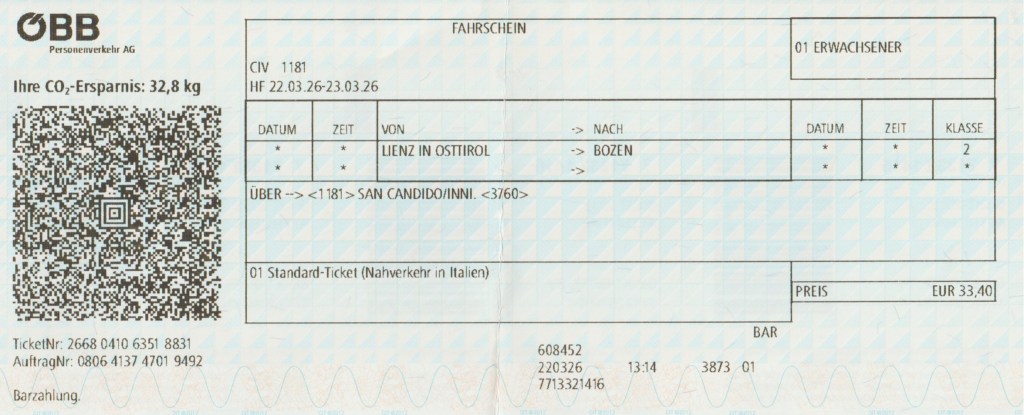
We returned to the station and tried to buy onward tickets to Bolzano / Bozen from the ticket machine, but it turned down 3 separate cards, telling us we had entered the wrong PIN – which we hadn’t. We found the ticket office, where the human was much more helpful than the machine and boarded the next train along with a few others, for the journey to Fortezza / Franzensfeste.
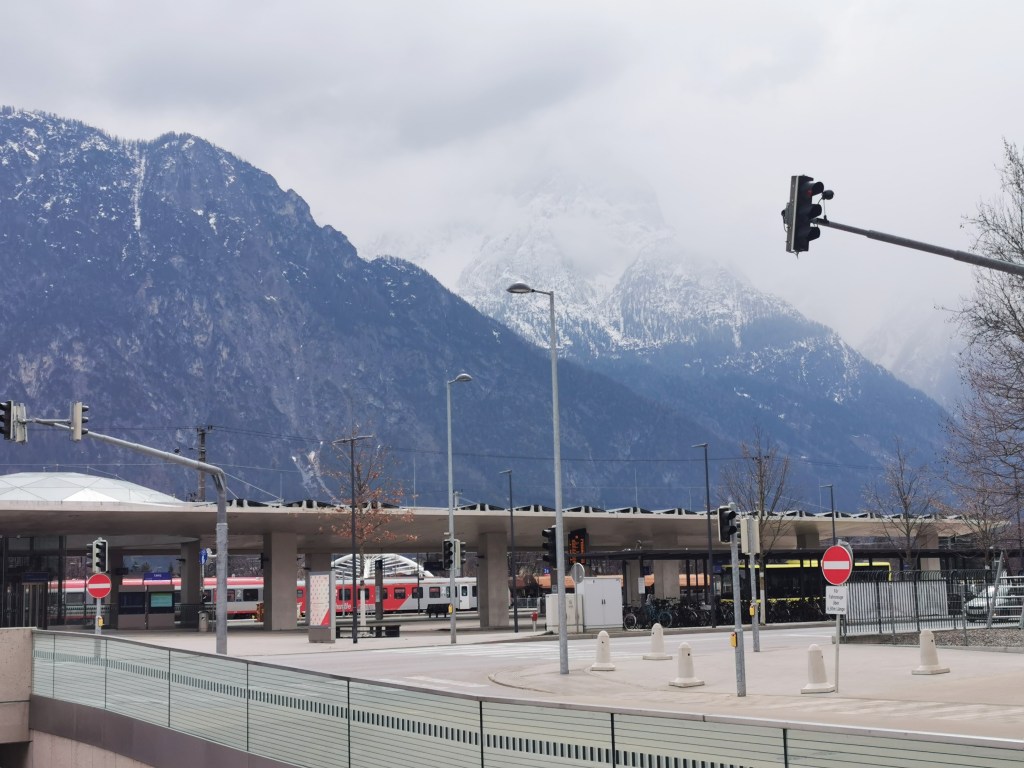
The journey was very similar to the previous one – pootling along through scenic countryside, calling at every village along the way. After almost an hour the train leaves Austria and soon arrives in the town of San Candido / Innichen (see note 10). We are now in the Italian province of South Tirol (Südtirol locally and in German, Alto Adige in Italian). The province was part of Austria until 1918, remains bilingual and has a mix of both cultures. Each settlement and station has both an Italian and German name.
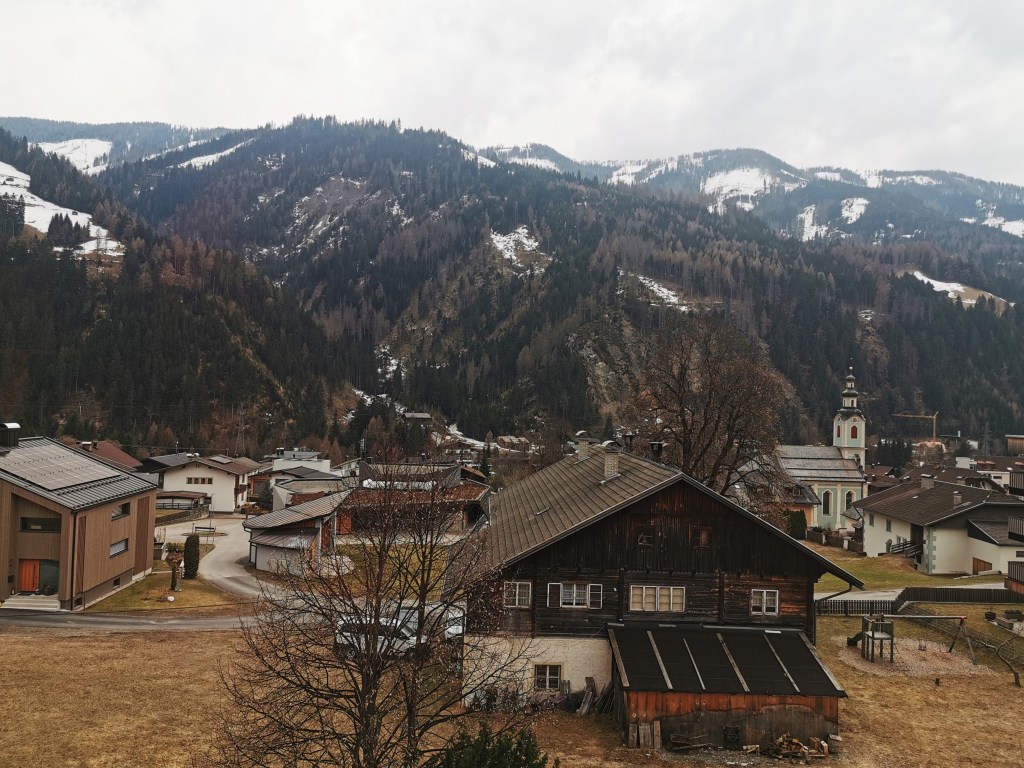
The border is close to the highest point in the journey and the ski resorts of San Candido / Innichen and nearby villages in the Dolomites were still in their winter season. This is also where we reached the source of the River Drava. From San Candido / Innichen onwards we were travelling downhill along the Puster Valley railway (see railway buffery 3). We had crossed the watershed and were following the River Rienza /Rienz, a tributary of the Adige which eventually reaches the Adriatic south of Venice.
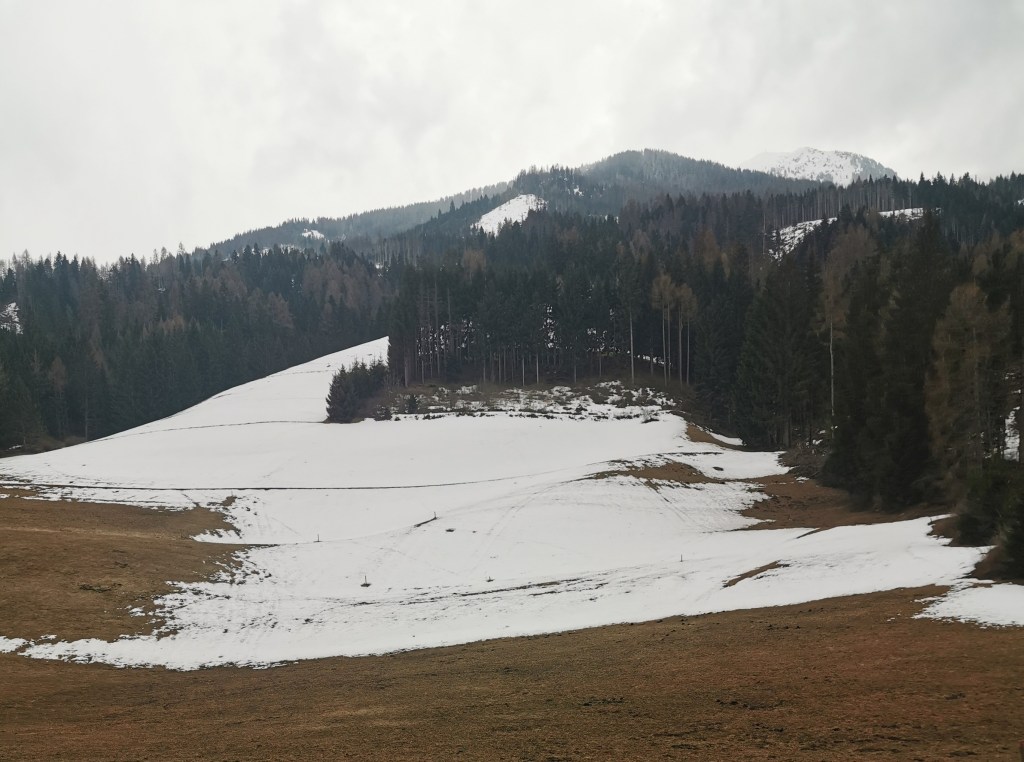
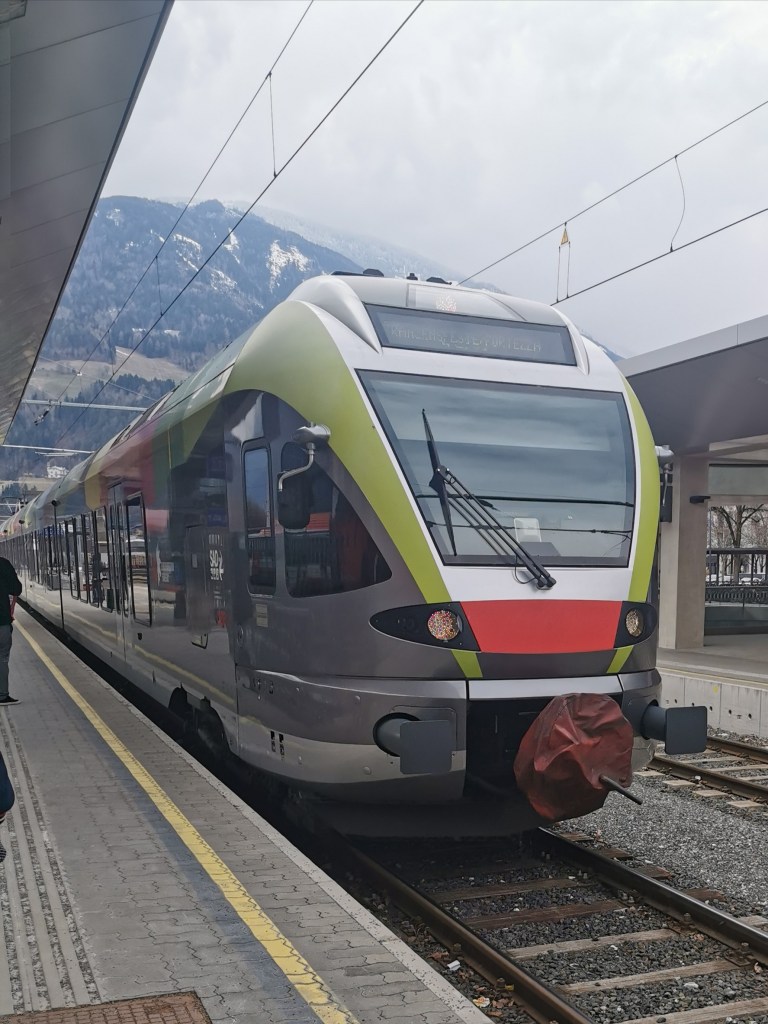
The train pootled on and eventually reached the main town of this valley, Bressanone / Brixen. The train service is every half hour, with the limited number of passing places slowing progress. A couple of the station names were announced in a third language, which turned out to be Ladin, spoken by about 30,000 people in the Dolomites. Eventually we reached Fortezza / Franzensfeste, 2½ hours and 108km from Lienz.
This is where we joined the main Innsbruck – Verona line and there should have been a 5 minute wait for the connecting train – it was running slightly late so it was more like 15 minutes, It is less than 45 minutes to Bolzano / Bozen along a narrow valley which is shared with a motorway. Much of the line has been rebuilt in tunnels, including the 13km Sciliar / Schlern Tunnel, limiting our views of the area (See railway buffery 4). This train was packed with people are returning home from their weekends away. Soon we pulled into Bolzano / Bozen and made our way into the city centre and the Hotel Figl.
Notes
(8) Throughout our travels in this bilingual region we have given both the Italian and German names for places. We have put Italian first, even though most people in parts of the area would use the German spelling, because the Italian names are generally those used and recognised in English.
(9) We bought through tickets from Klagenfurt to Lienz and there was no difference in price whether we used local or express trains from Klagenfurt to Villach.
(10) For our other visits to Austria see The Austrian Trip – Linz, Gmunden and Graz and Bergamo, Innsbruck and Salzburg .
Bolzano / Bozen
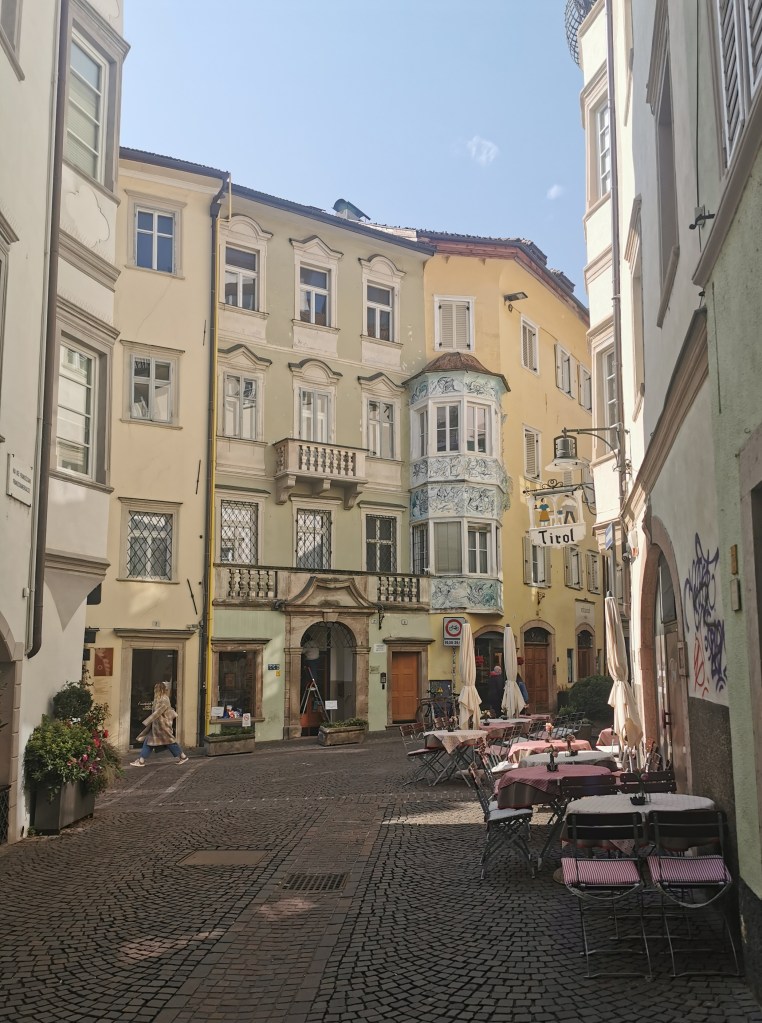
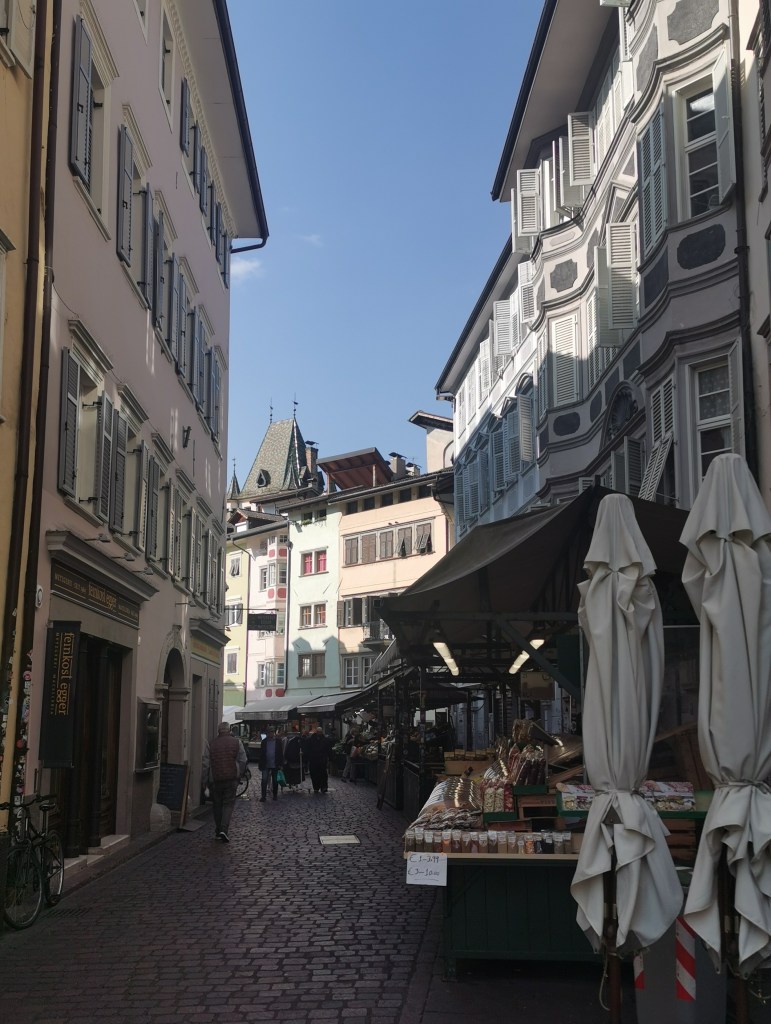
Bolzano / Bozen old town / centro storico
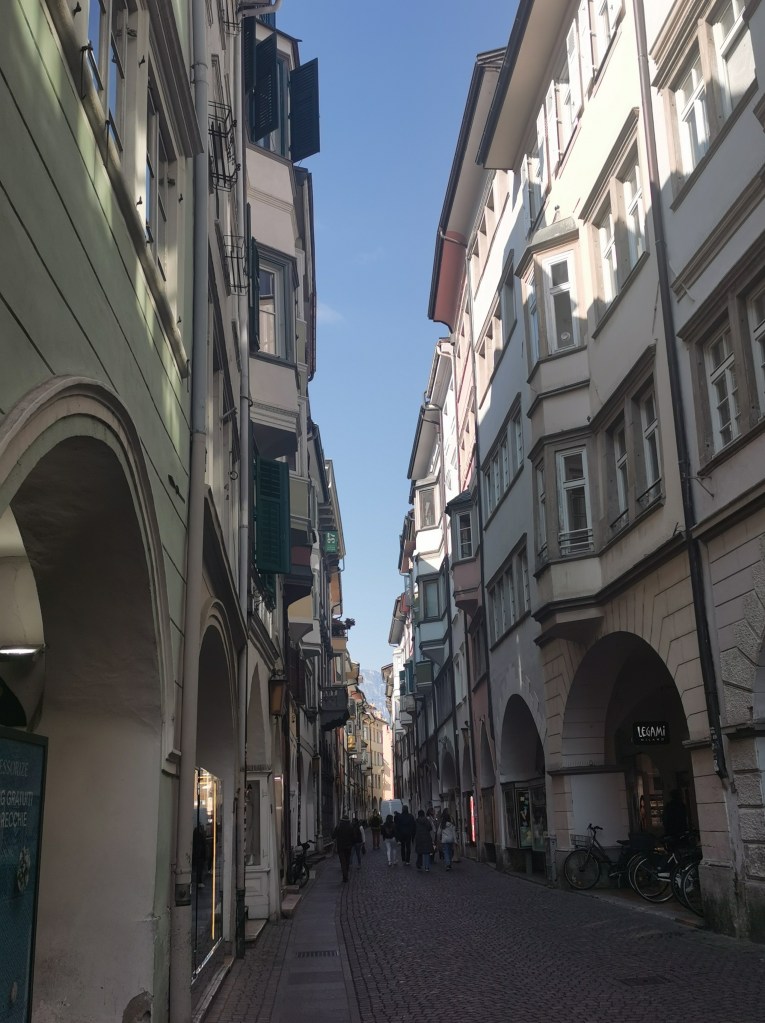
Bolzano (Bozen in German) is the capital of the Italian province of Südtirol, today with a population of 106,800. It is an historic small city hemmed in between hills on either side. Like the remainder of the Südtirol it was part of Austria until 1918 when it became Italian. The fascist government of the 1930s operated a strict process of Italianization. However, since the end of World War 2 this has gradually been reversed and the now autonomous province has a bilingual culture.
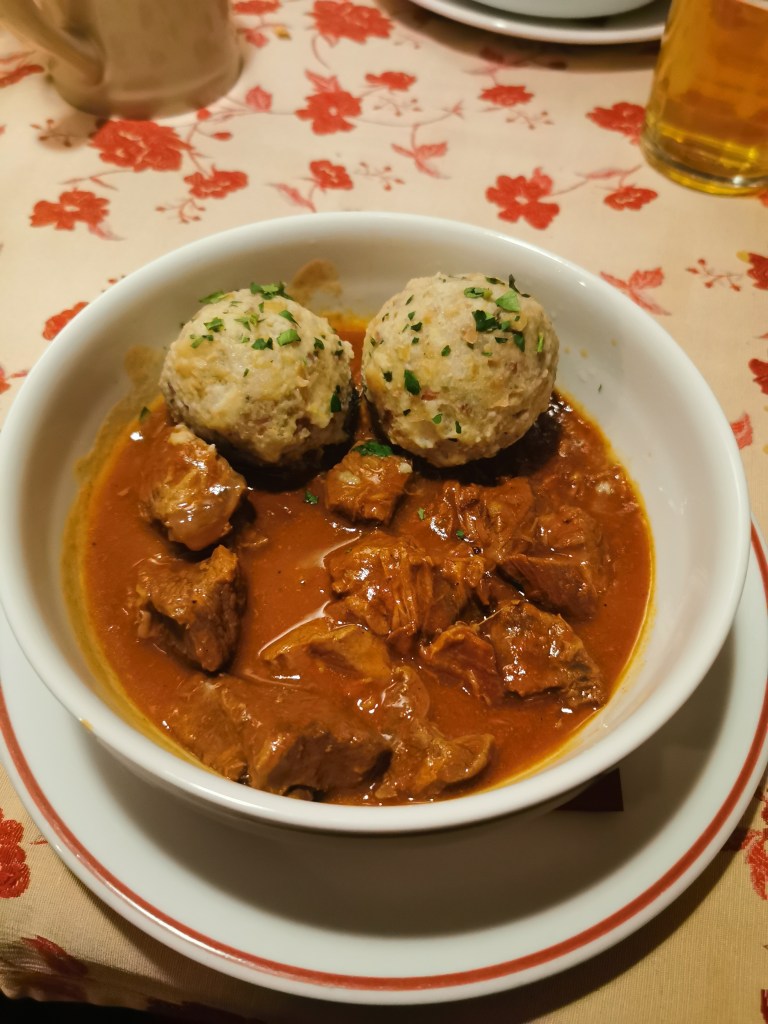
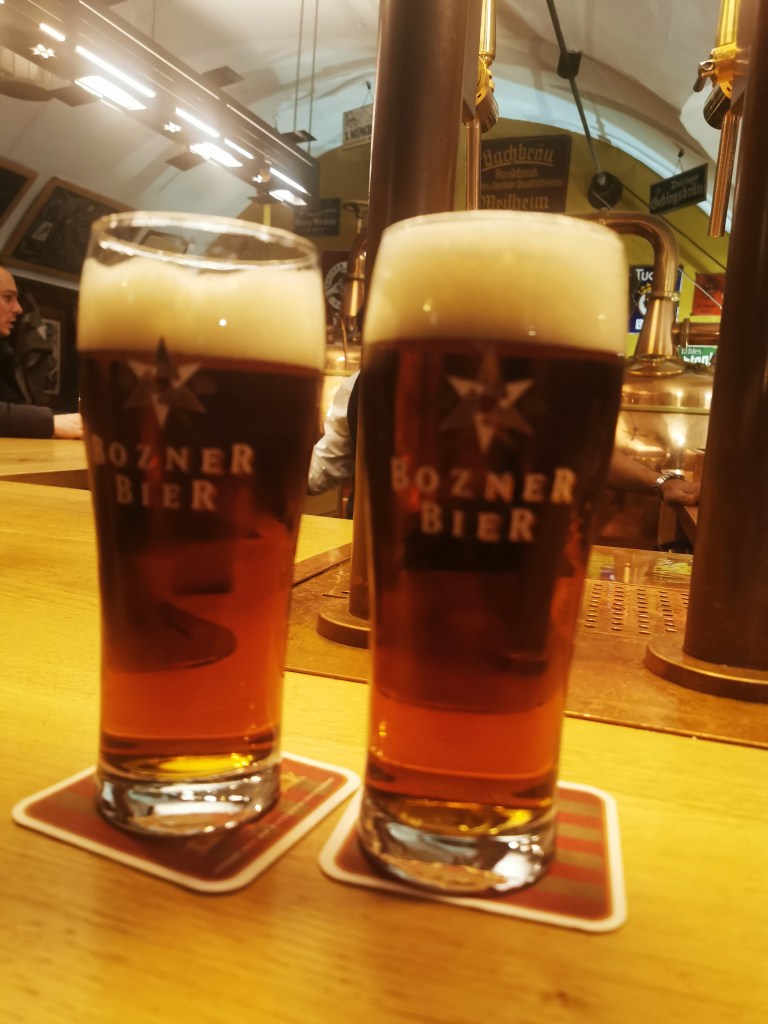
As usual, after we arrived, we went out in search of food and beer. Our hotel was close to a recommended brewpub, Hopfen & Co, so in we went. It was very much Austrian in style, with the bar staff wearing lederhosen and dirndls (not both together). The Bozner Brau brewery is on the premises and brews a range of beers including a helles, marzen, and a series of specials. There are two large and popular restaurant areas plus the bar area, mainly used by drinkers though they are happy to serve food at the tables. We found it very friendly, the beers were excellent, when not eating we could sit at the bar and be included in conversation, so it became our home for the next couple of days.
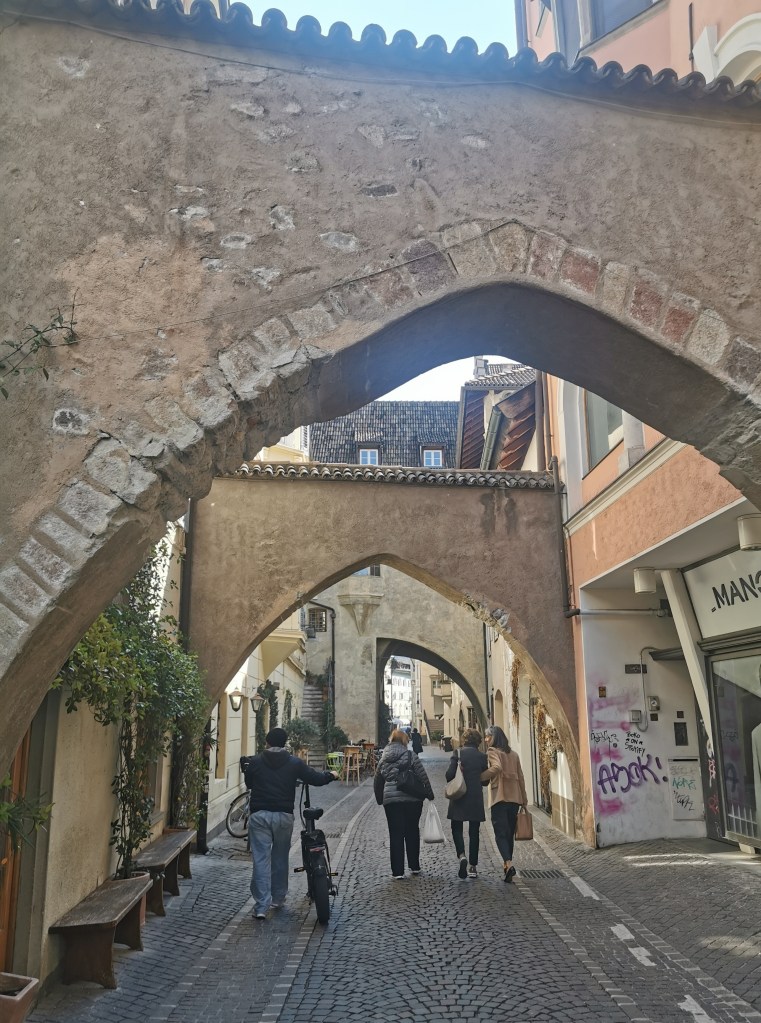
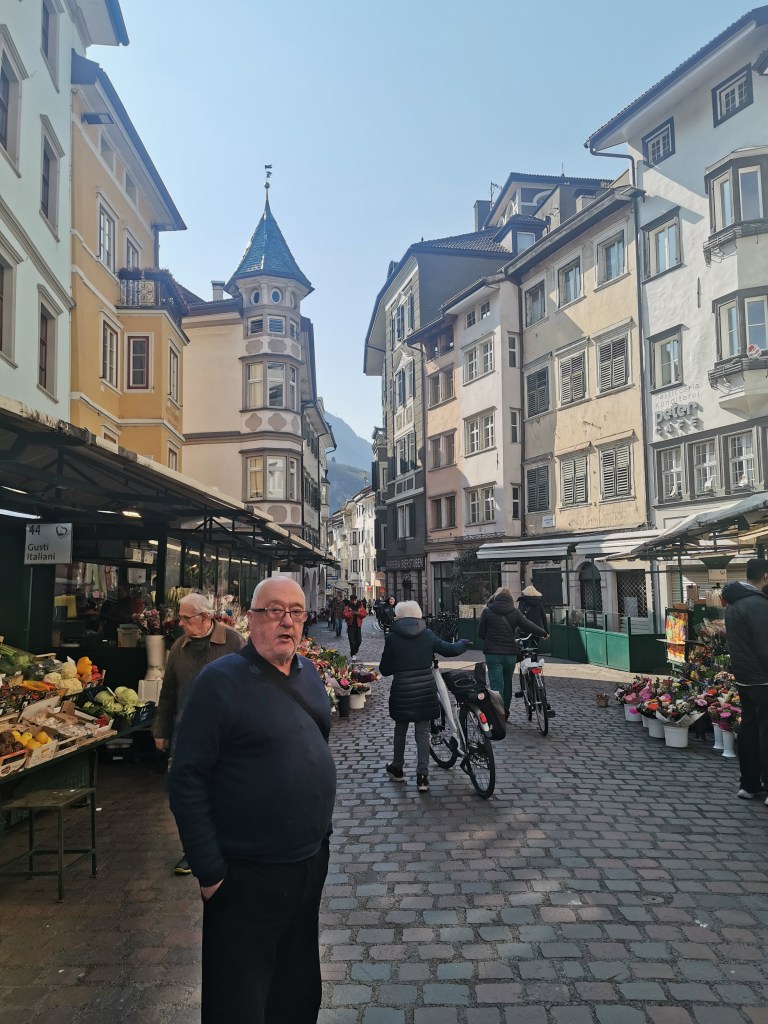
The following morning we took a walk round the picturesque back streets of the old town. Apart from a surfeit of posh clothes shops in a couple of street streets, there were plenty of independent shops for the locals. The street market in Piazza Erbe / Obstplatz (outside Hopfen & Co) had an series of excellent stalls serving fruit, veg, herbs and spices. From there we walked to the railway station via the cathedral (duomo / dom), as we had decided on a trip to Merano/Meran, the local museums being closed on a Monday.
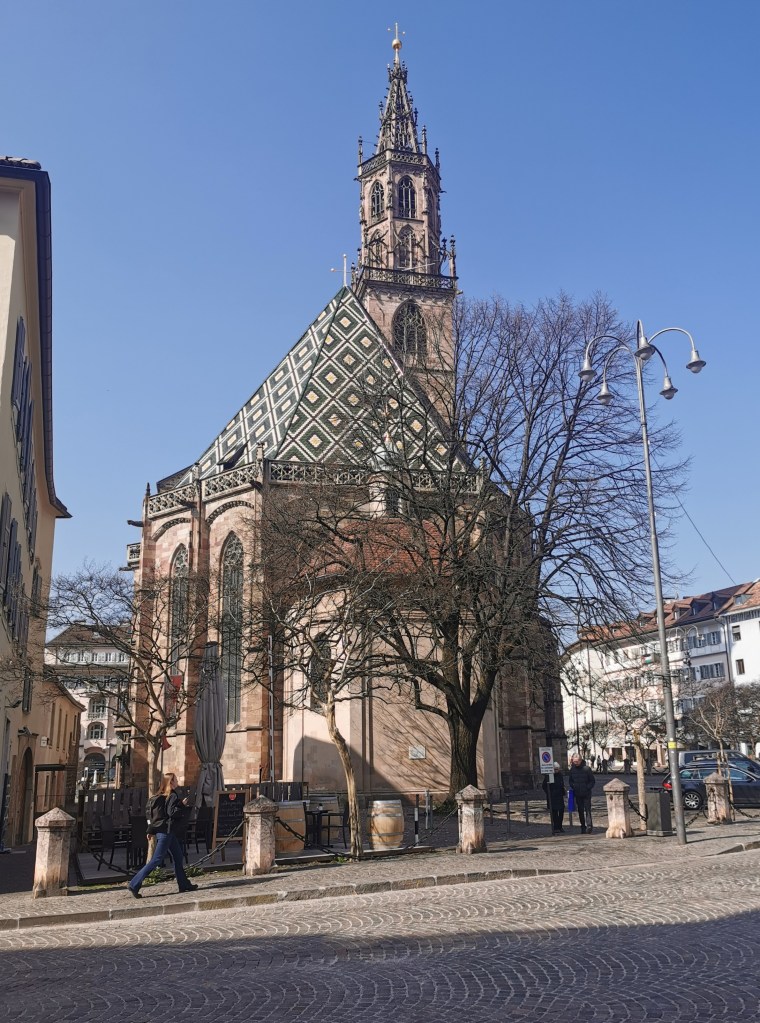
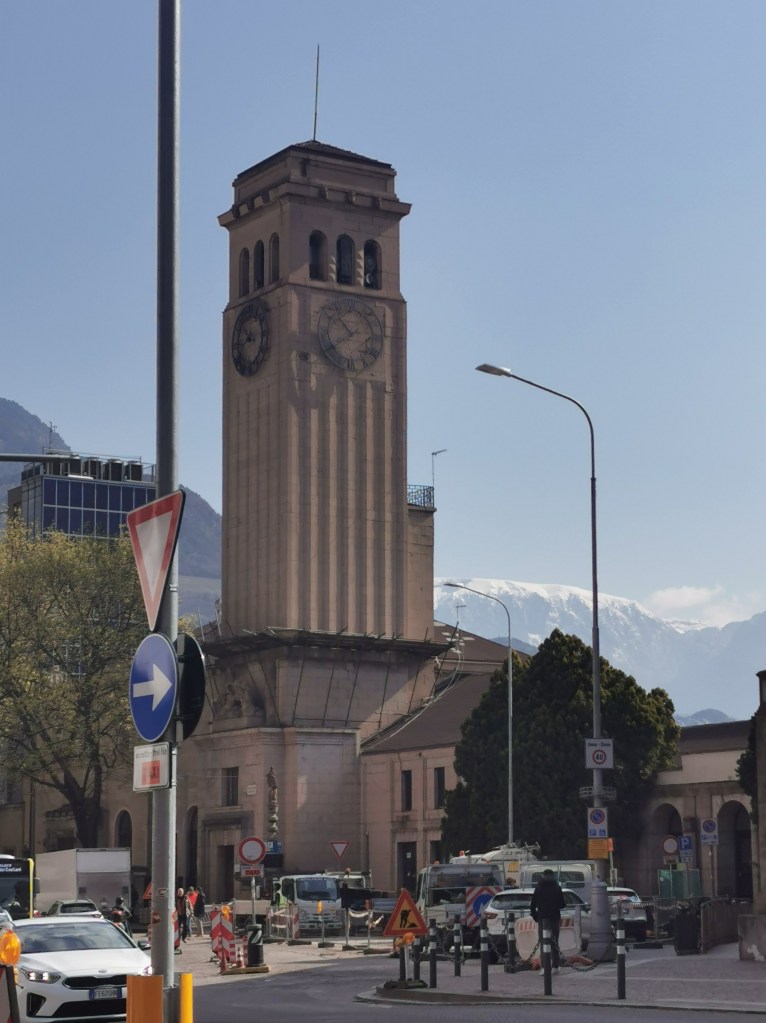
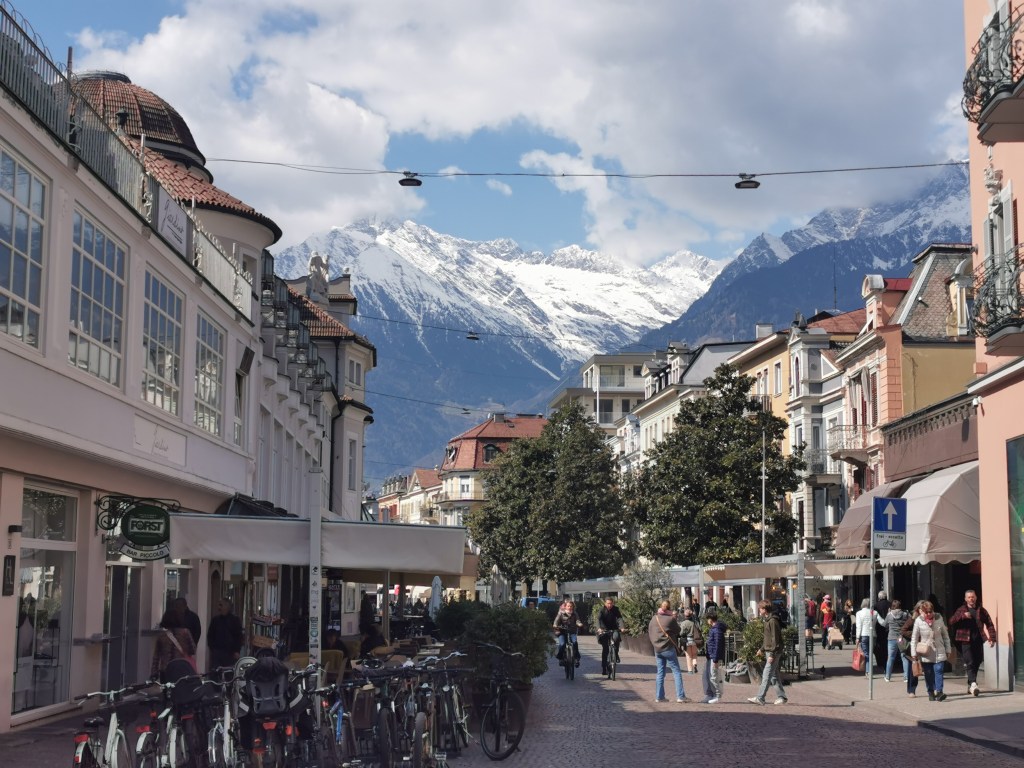
There are two trains an hour up the valley of the River Adige taking about 45 minutes to reach the small city of Merano / Meran (see note 11 and railway buffery 5). The whole of the valley floor is given over to vineyards and views of the snow-covered mountains in the distance increased as we travelled up the valley. The railway line extends further up the valley beyond Merano / Meran into the mountains, but it was closed for modernisation, so we alighted and walked into the town centre.
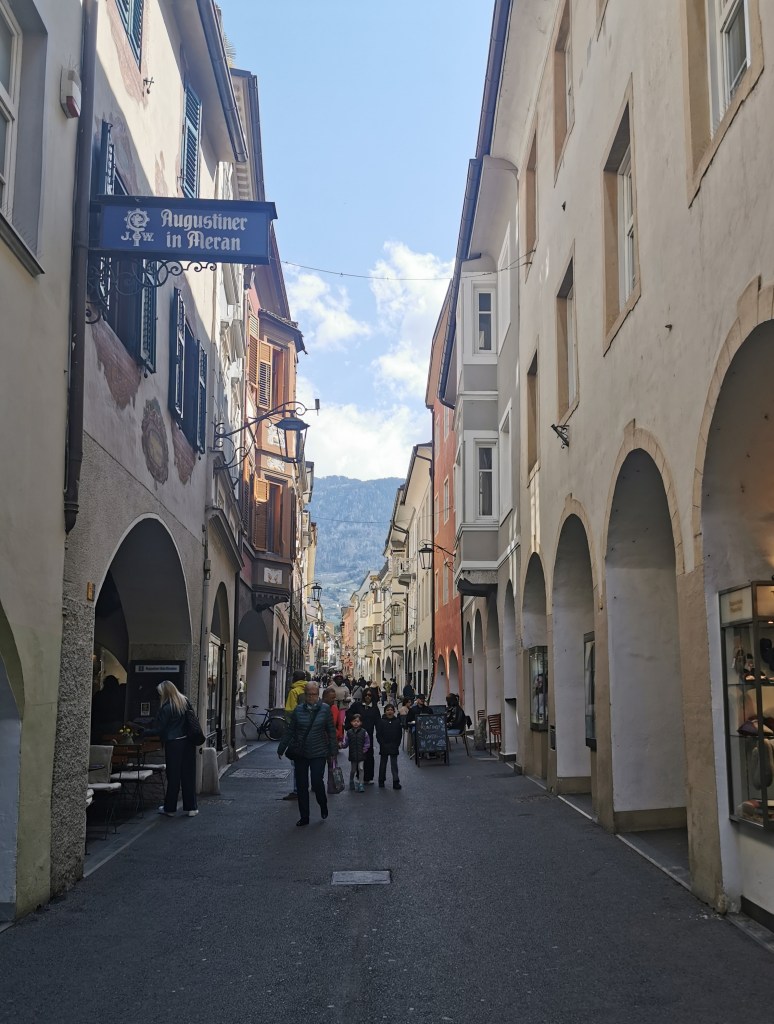
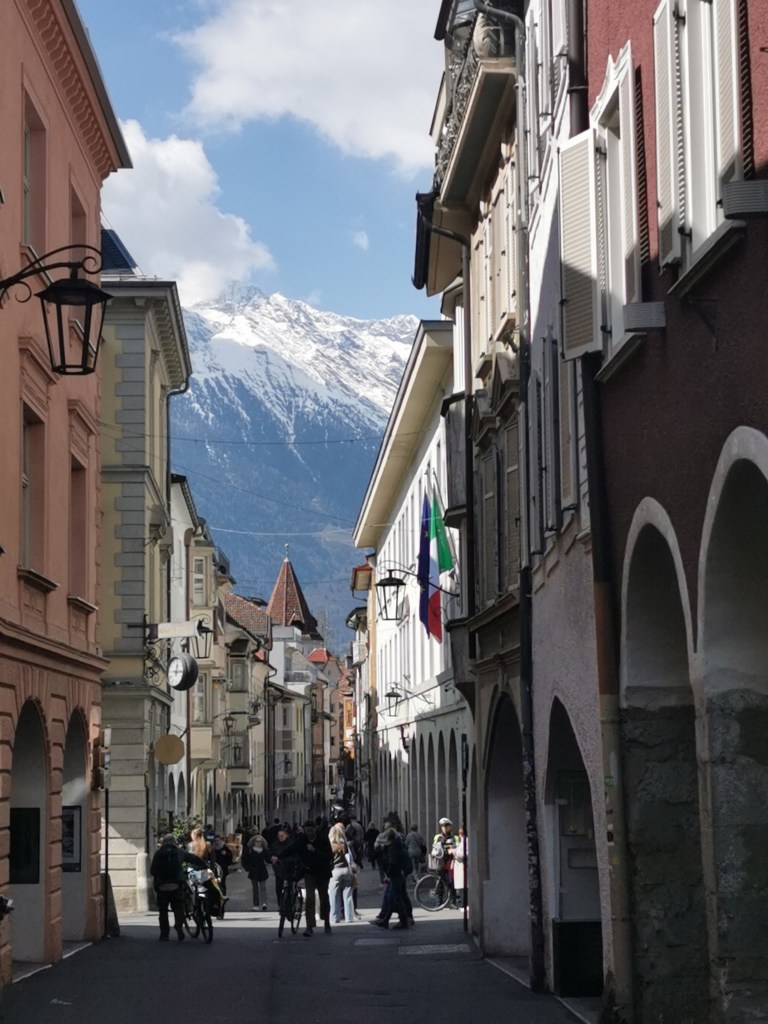
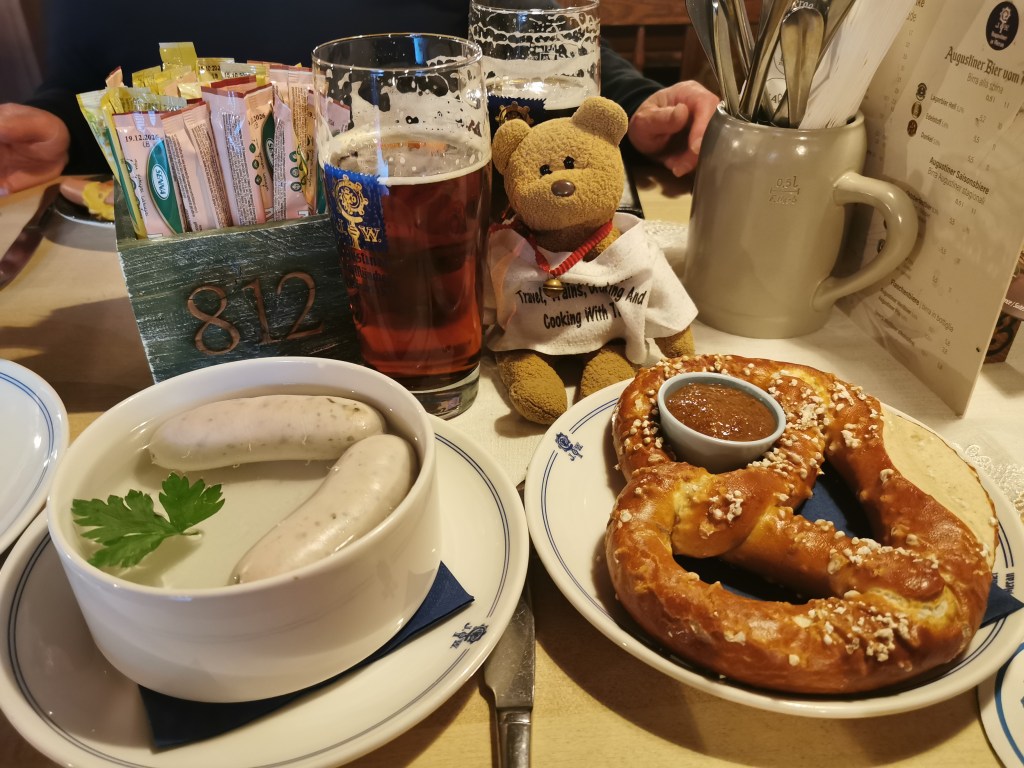
Merano / Meran (pictured) is a historic town which has also been a spa resort since the nineteenth century. We wandered round the streets and arcades looking at the architecture and paused by the riverside and Kurhaus until it was time for lunch. We found Augustinerkeller and settled in for a lunch of beer and Münchner weißwurst (white sausage – pictured). Mmm.
Back in Bolzano / Bozen that evening we explored more of the old town and found ourselves at another brewpub – Bätzen Hausl. Another fine place with its own beers and good Austrian and Italian food. Then it was back to Hopfen and Co, much quieter on a Monday night, where we sat at the bar and chatted to people, including a group of Belgian students here on a field trip.
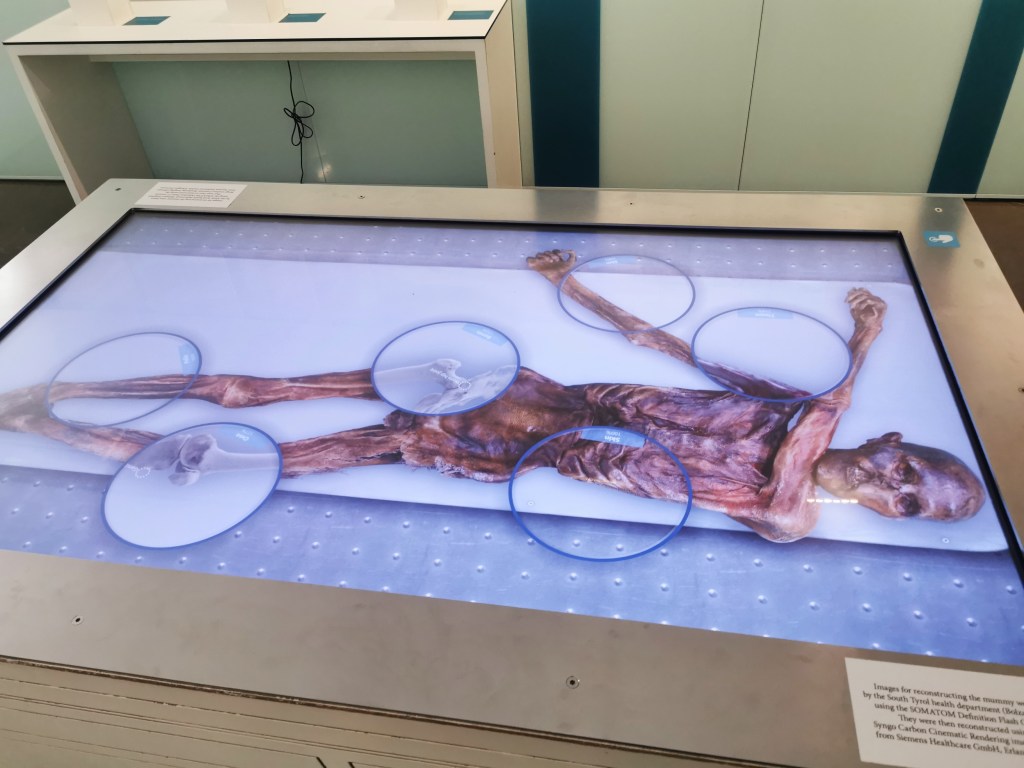
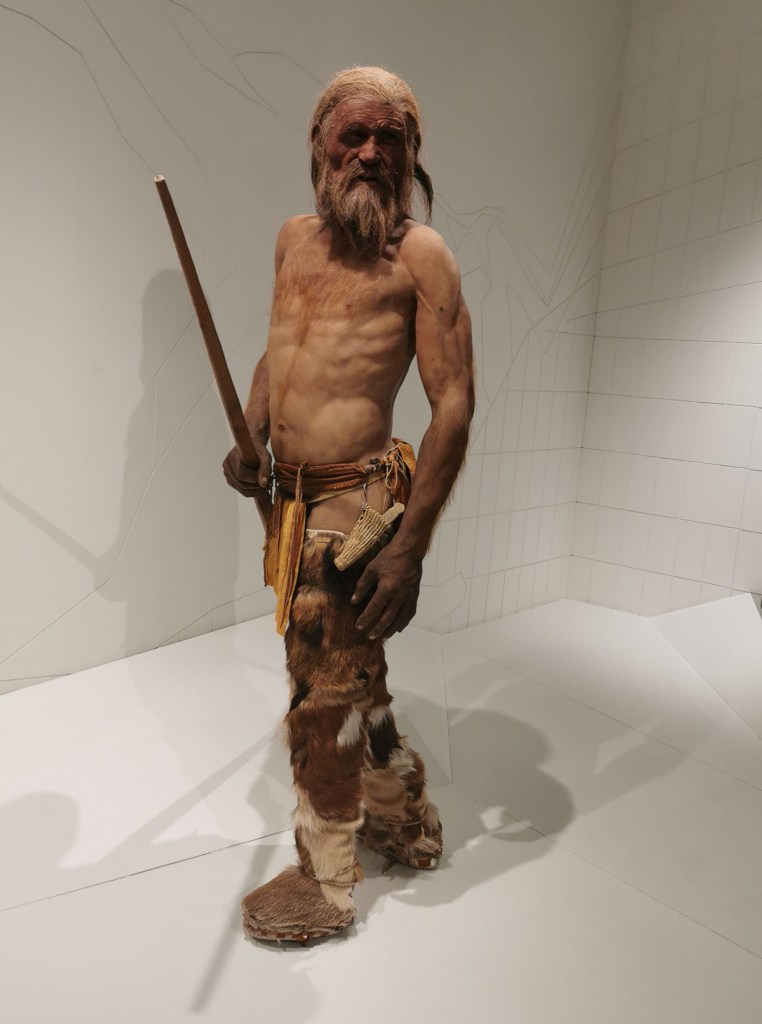
First stop the next day was the Archaeological Museum for a visit to Ötzi the Ice Man, which is the focus of the museum. The mummified body was discovered in 1991 by two hikers in a glacier high in the nearby Ötztal Alps on the Italian / Austrian border. It was initially thought that he was a missing climber and there were various other theories. However, once the body was recovered and tested, it was discovered that the body was 5300 years old. A series of tests on his body, clothing, tattoos, tools and the contents of his bag have revealed fascinating details of his life, times and culture. It transpires he was killed by an arrow and a blow to the head as he trekked through the mountains.
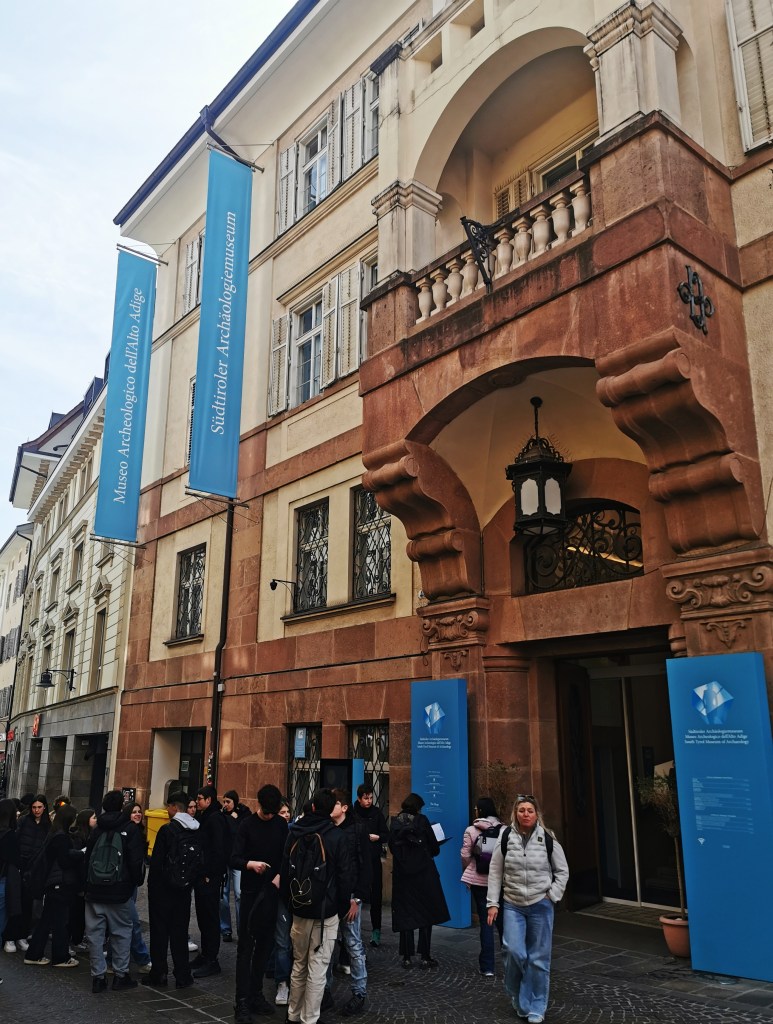
The mummified body is kept in the museum in a sealed, cold cell which can be viewed, though photographs are forbidden. The museum also includes a model of him as found, pointing out the health conditions he had, including a dodgy knee and a full-scale reconstruction of him as he would have appeared – pictured. .Fascinating stuff.
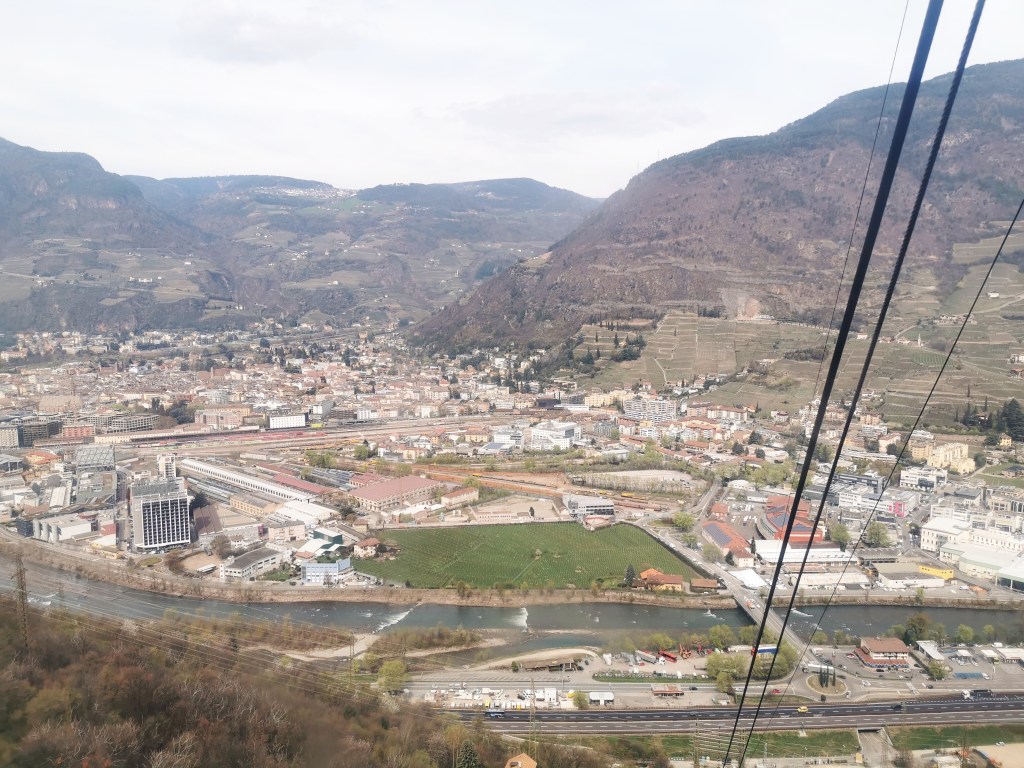
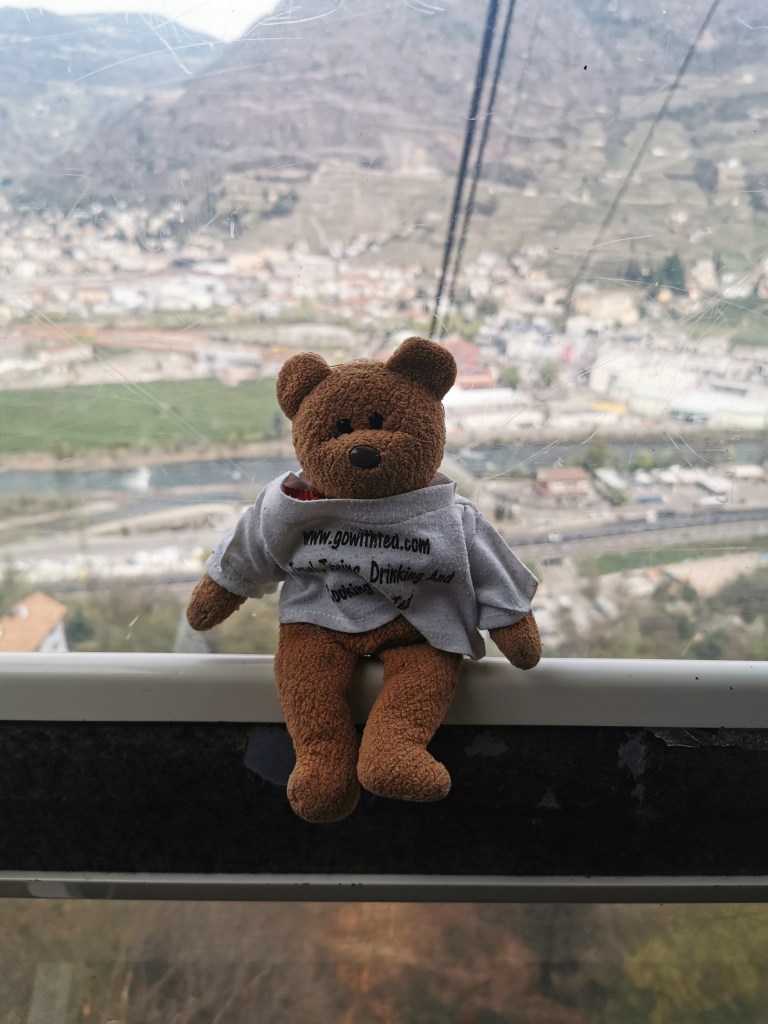
After the museum we caught a bus across town to the lower station of the Colle/Kohlern cable car (Funivia del Colle / Seilbahn Kohlern) and took it uphill for views over the city and the surrounding mountains. It claims to be the oldest cable car in Europe. The current cars themselves are modern but one of the original cars is preserved at the top station.
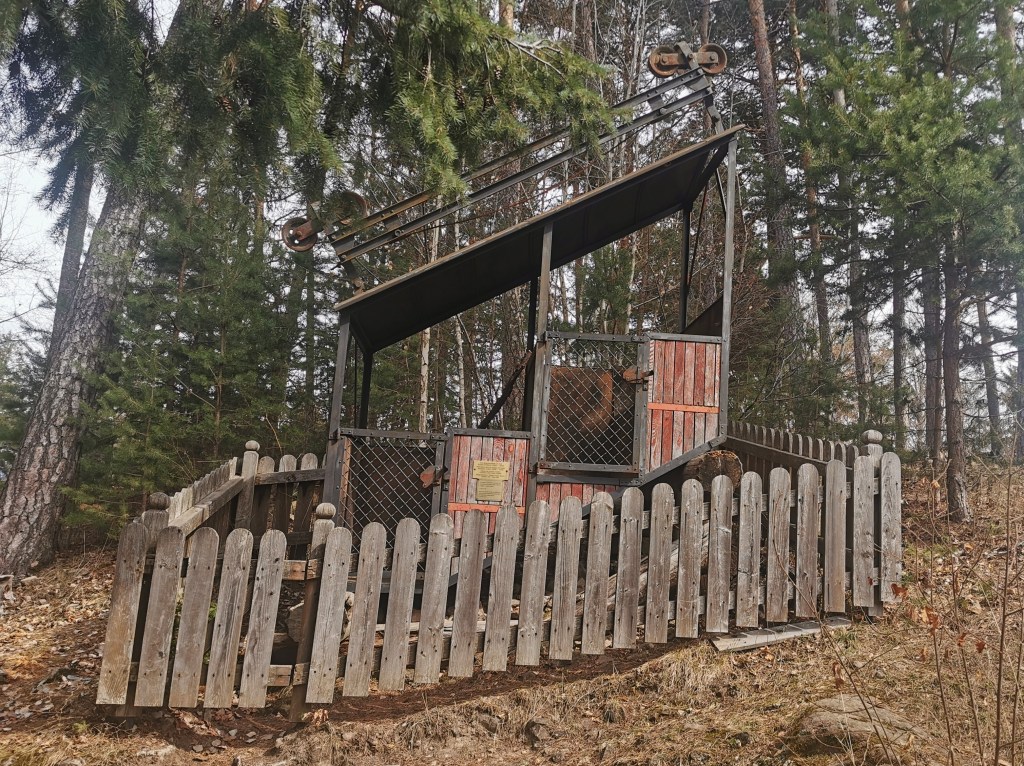
There is a small settlement at the top and we had intended to have lunch there. Unfortunately, all four inns were closed out of season. However, there is a Montessori school and, just as we decided to head back down, a crowd of schoolkids emerged and headed for the cable car. The cars hold a maximum of 20 people and we thought we were in for a long wait. However, the operator cleared the queue by ignoring the 15 minute timetable and getting everyone down as quickly as possible (see note 12)
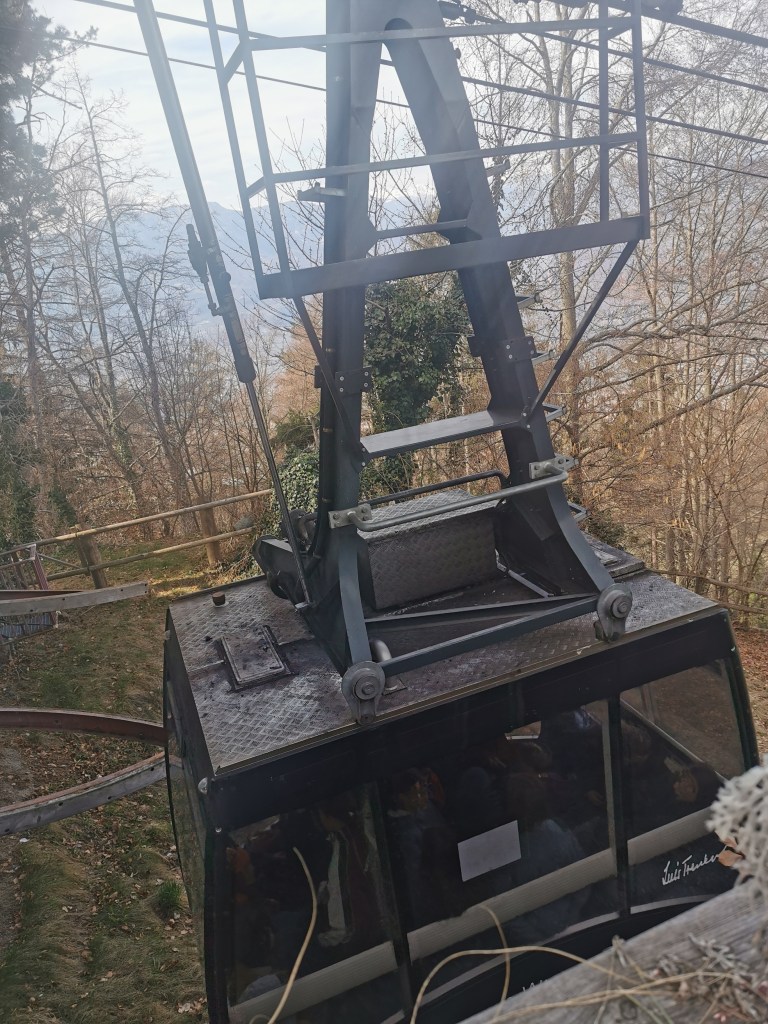
After descending, along with 18 schoolkids and their teachers (Ted didn’t count towards the 20), we bussed back into town and had a late lunch in Bätzen Hausl. The remainder of the day passed quietly – a rest at the hotel, a few drinks and food at Hopfen and Co, a final drink in the hotel and an early night.
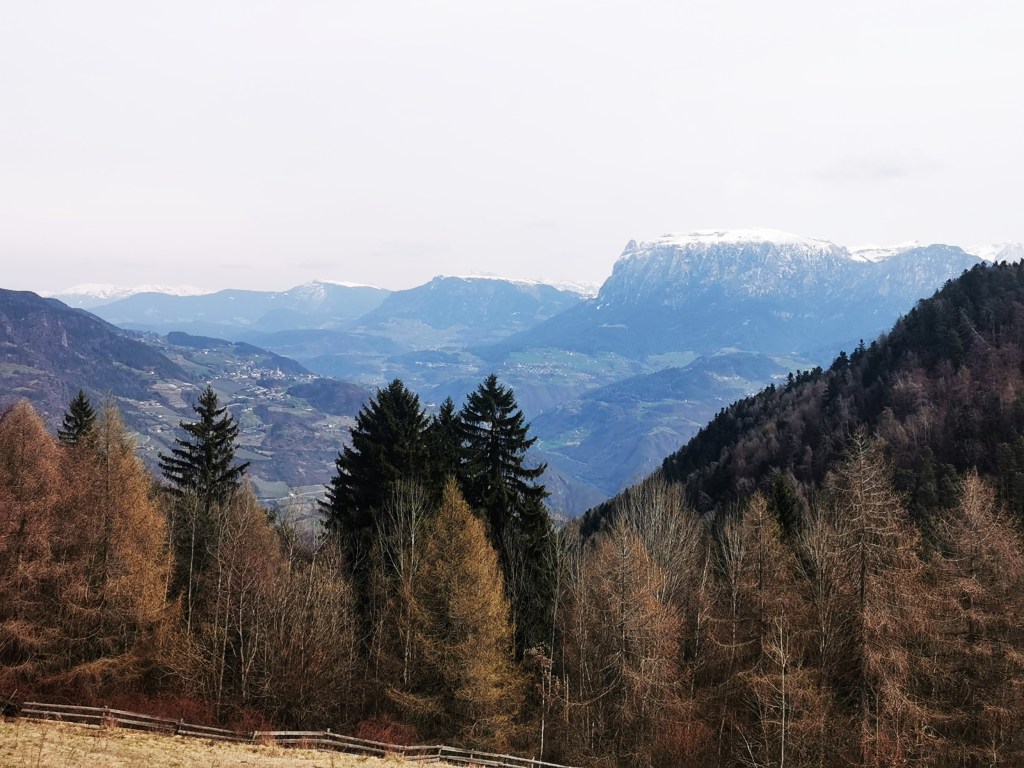
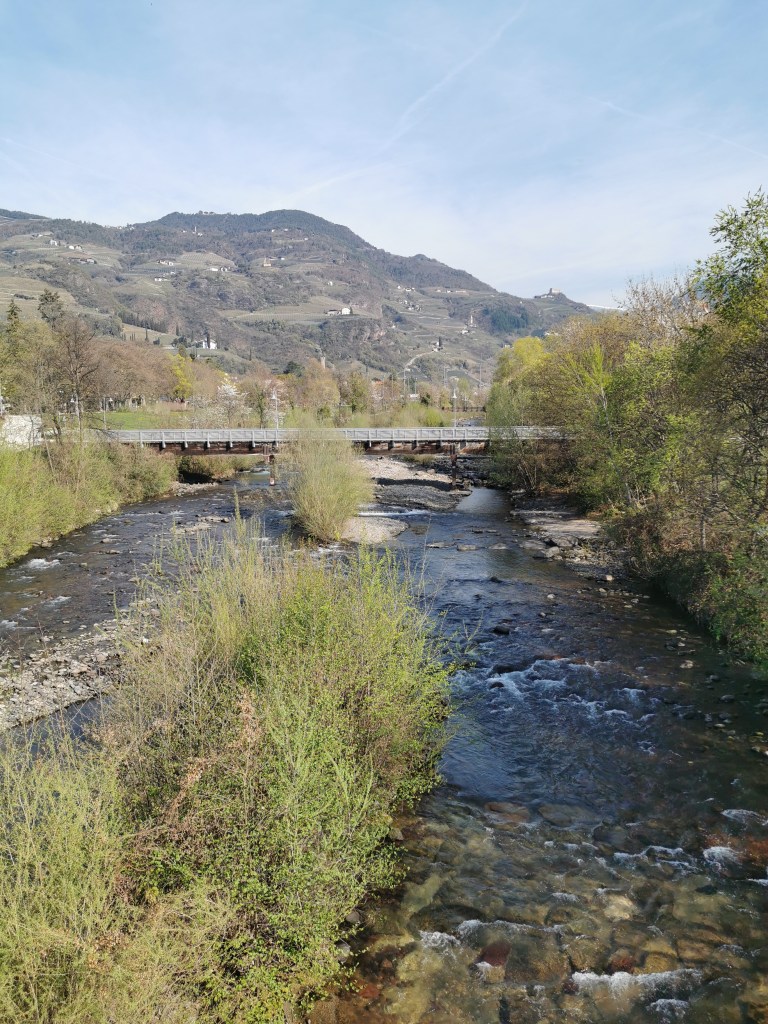
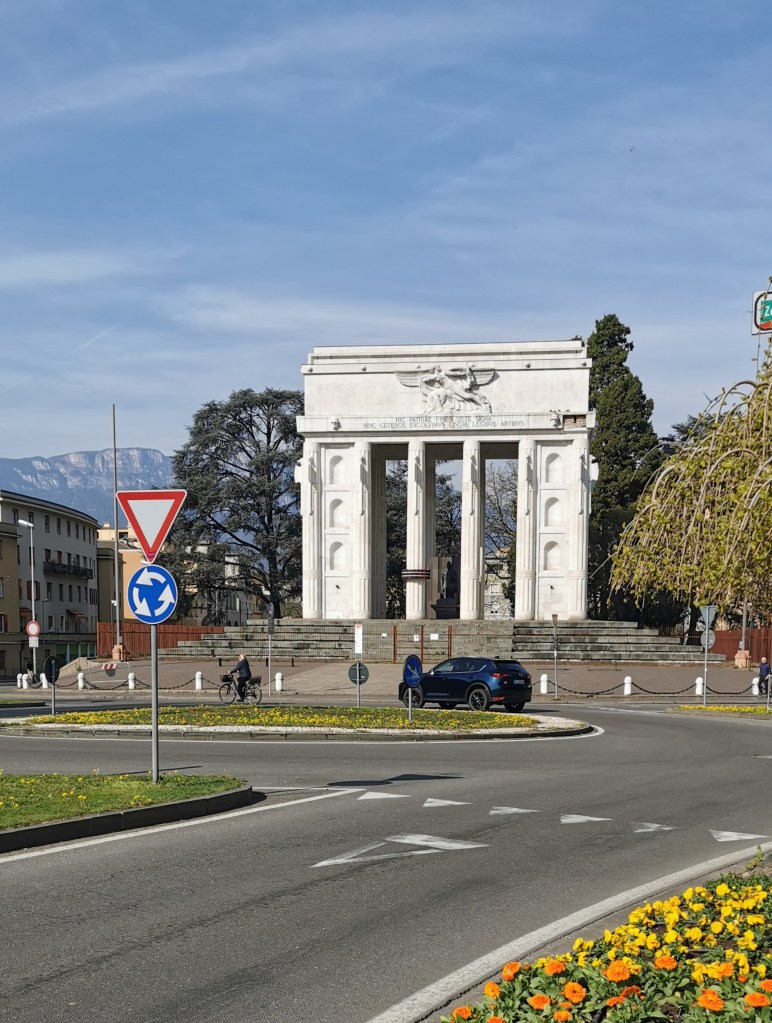
We had a couple of hours to spare in the morning, so we explored a little bit more of Bolzano. Beyond the Archaeological Museum is a river (Talvera / Talfer), along which there is a pleasant park. Across the river we looked at the Victory Arch (Monumento alla Vittoria / Siegesdenkmal). It was built in the fascist era and was a source of tension between local communities, though nowadays the exhibition within the arch focusses on tolerance and democracy. By then it was approaching our time to leave Bolzano / Bozen, we collected our bags, checked out and headed for the station.
Notes
(11) On checking in I was given a Bolzano / Bozen card which gives guests in partner hotels free transport in Südtirol for the duration of their stay. Though it only had my name on it and states that is not transferable, the hotel was clear that it was valid for both of us sharing the room.
(12) There is another cable car in Bolzano / Bozen – the Renon / Ritten cable car which leads to a plateau north of the city. At the top station there is a narrow-gauge railway which connects the settlements on the plateau. Unfortunately, March is when the cable car is closed for maintenance. Next time maybe.
Back to Milan
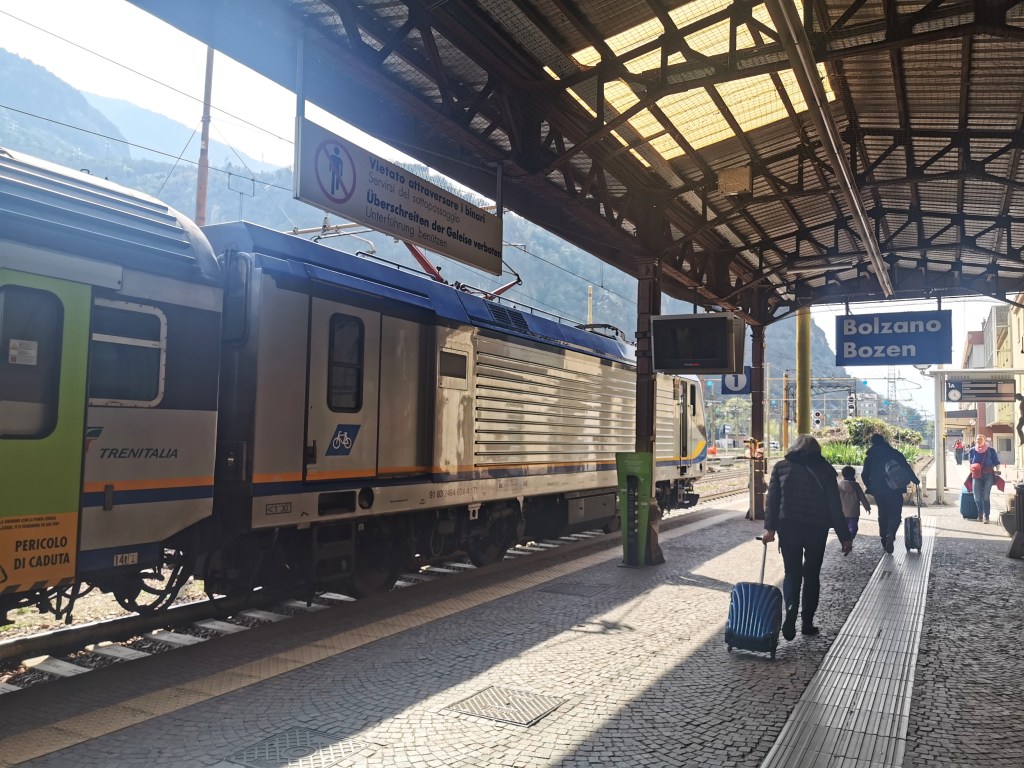
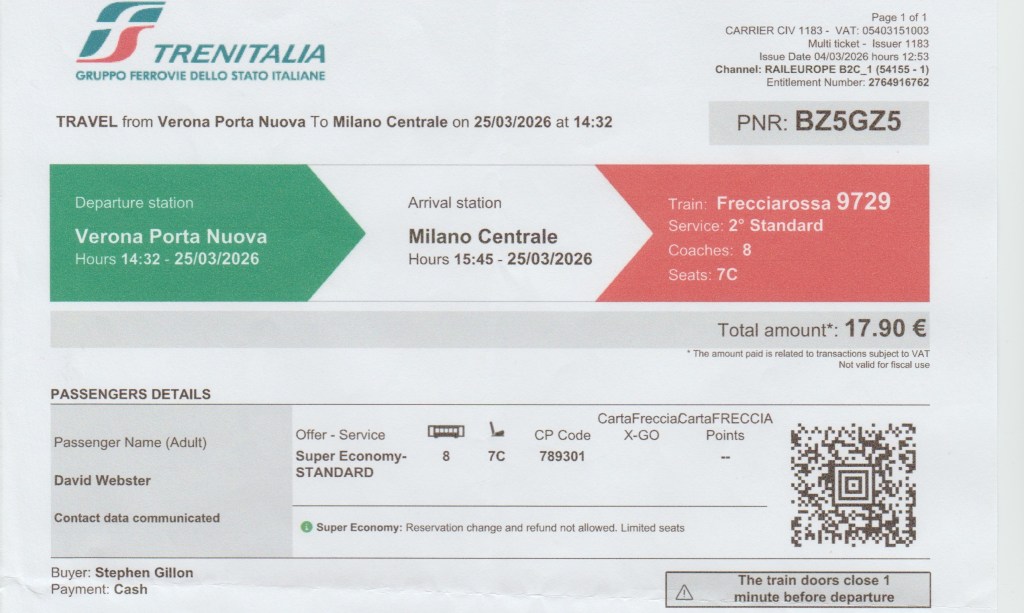
The trip wasn’t quite over. We had to return to Milan, stay overnight, then head to Bergamo airport. A regional train from Bolzano took us down the valley to Verona Porta Nuova where we changed to a connecting Frecciarossa service, arriving back in Milano Centrale by 1600. We had booked a hotel (cheap for Milan) close to the station. The Hotel Bolzano (of all names) was basic but it was also close enough to walk to the part of Milan we know best – the area around Lima metro station.
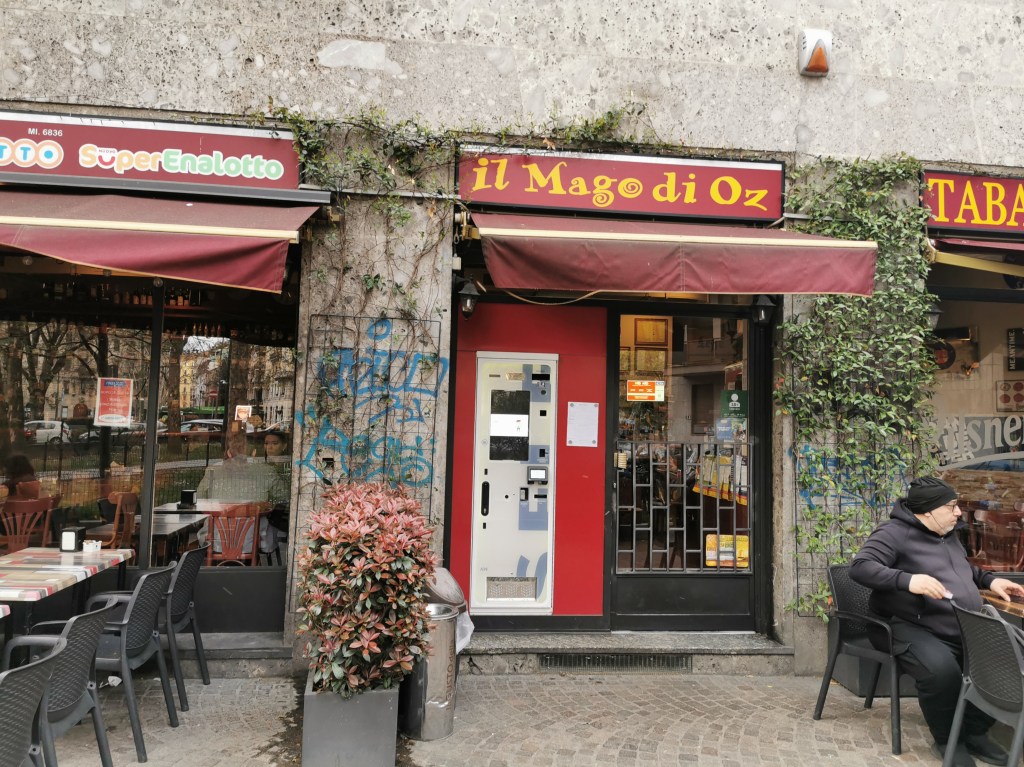
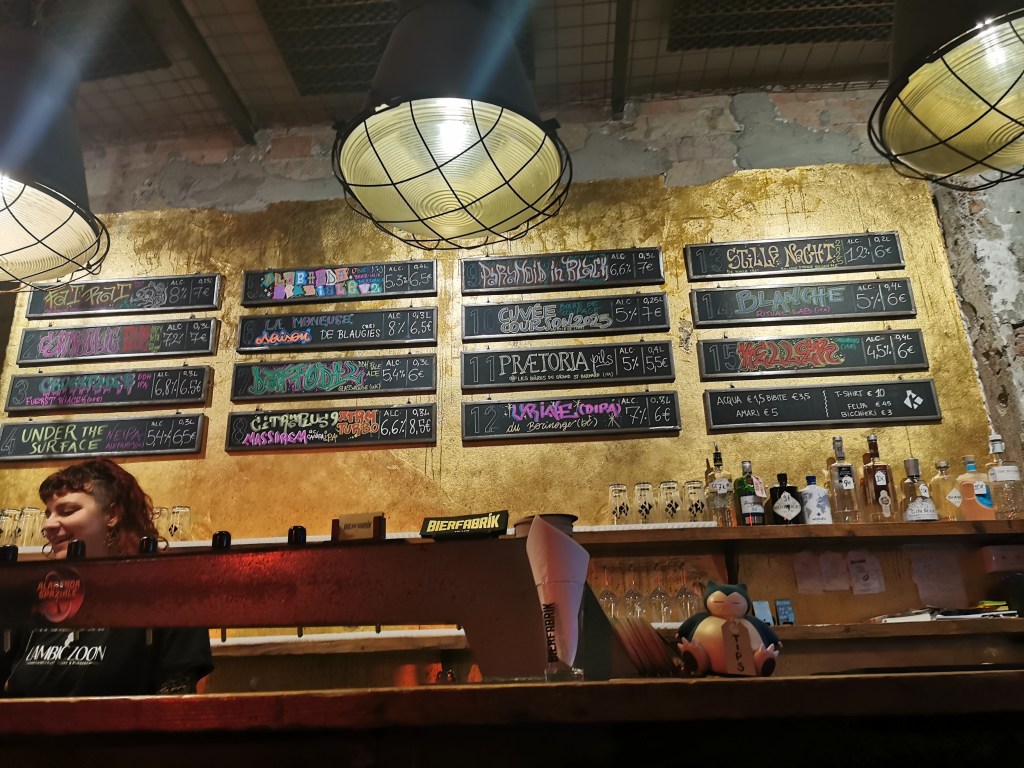
We visited our two favourite bars – Il Mago di Oz for food and beer then Bier Fabrik which has a fine range of craft beers. On this visit we kept to the weaker, lighter beers as we had an early start (see Tuscany, Genoa and Milan for our previous visit). There was a huge thunderstorm while we were in Bier Fabrik, the first rain of our trip but it had passed by the time we left to return to the hotel. The following morning we caught a coach to the airport, flew back to Newcastle and were in Durham by mid-afternoon.
To sum up.
It was a fine trip. We were lucky with the weather and while it wasn’t particularly warm it never rained. We would recommend every town and city in which we stayed. Ljubljana was our favourite, followed by Bolzano. We would have benefitted from an extra day in Trieste to explore the old town further. Klagenfurt is worth a visit if you are in southern Austria. As inveterate beer drinkers we found plenty of decent beer and friendly pubs and beerhalls in which we felt very welcome. The only disappointment was the number of railways and cable cars which were closed for maintenance or modernisation.
Practicalities – Travel, Drinking and Eating, Hotels
Travel (all fares mentioned are at March 2026 prices)
Bergamo Airport – Milano Centrale: The bus service to and from Milan is very frequent, about every 10 minutes, run by several companies. At the airport buses depart directly outside the arrivals area. In Milan the buses depart from Piazza Luigi di Savoia, directly outside the eastern side of the station. The fare was €12 – there are ticket sellers at the bus stops.
Milano: For our hostel and the Carrobbia area, take metro line M2 from Centrale to S. Ambrogio and change to line M4 to Vetra. Pay by card to enter the station, then tap out and in when changing trains and at the end of the journey. The area can also usually be reached by tram (Nos. 2,3,14) from the Duomo, but they are suspended for several months due to modernisation work.
Milano Centrale – Venezia Santa Lucia: Intercity trains such as the Frecciarossa high speed trains should be booked in advance and seats reserved. We booked through the Rail Europe website www.raileurope.com . Their app, the Trenitalia website www.trenitalia.com and their app can also be used. Cheap advance fares are available – we paid €24.50 each for the 267km journey, the standard fare is €52. There are 1-2 trains each hour,
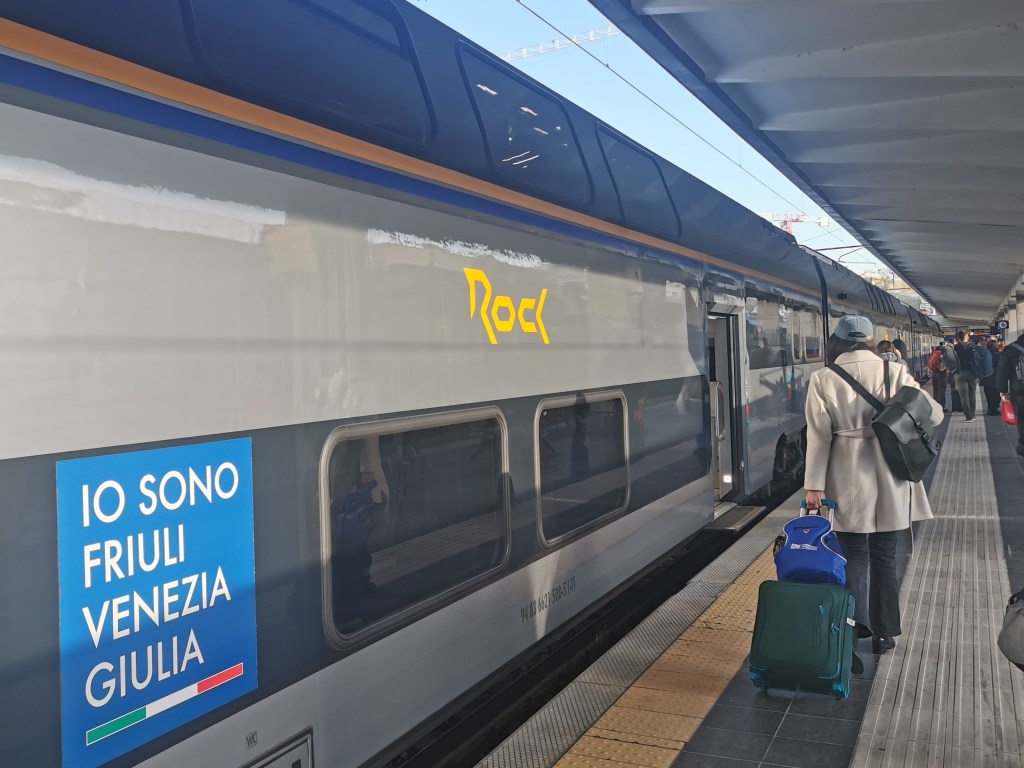
Venice – Trieste: We booked in advance as part of our Rail Europe booking but there is no need to – there is no price advantage. We paid €16.45 each for the 157km journey – the standard fare for a regional train journey of this distance. Trains run hourly and tickets can be bought at the station immediately before departure.
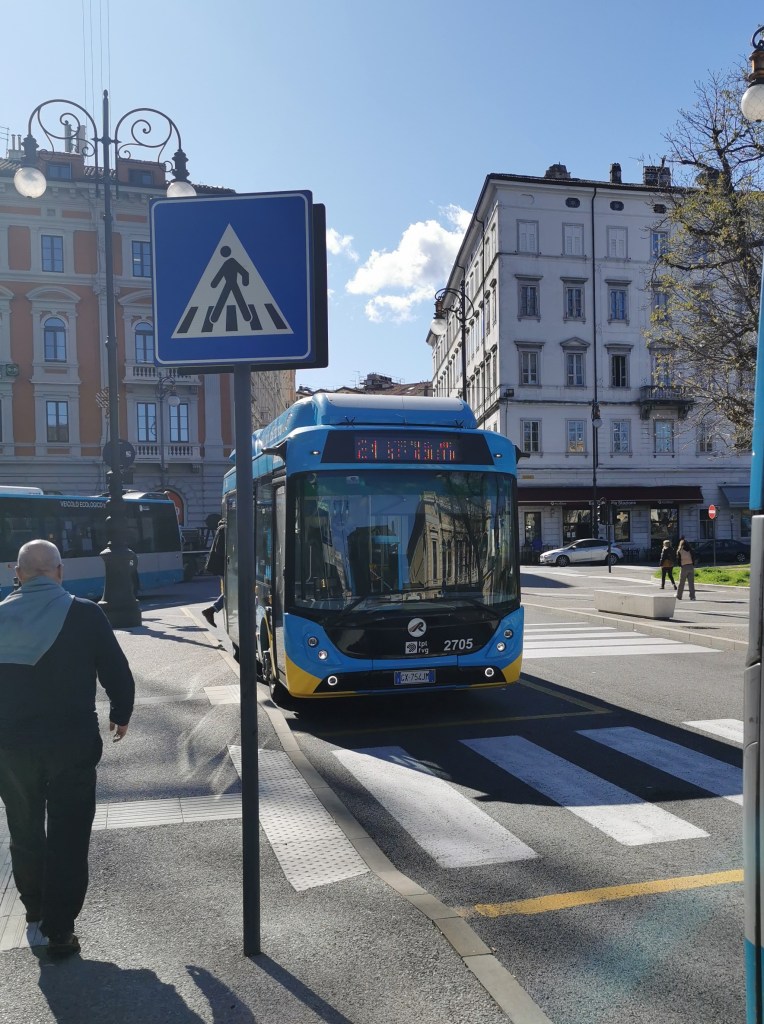
Trieste: you can buy single tickets on board the city buses using your debit card on the machines by the entrance doors €1.35. Tickets are not available from the driver. To reach the San Giusto Castle area we caught bus 24 which runs every 40 minutes from the east side of Piazza della Libertá – it is worth catching a bus due to the steep hill up to the castle.
Trieste – Ljubljana: Because trains were unavailable, we booked online in advance via Flixbus – £14.08 each. There are about ten departures daily. Check locally to see whether trains are running.
Ljubljana – Maribor: For timetables consult Slovenian Railways – Slovenske železnice website www.potniski.sz.si . We found the site impossible to use to book tickets so bought them at Ljubljana station – there is no need to book in advance.
Maribor – Klagenfurt: Check the timetable on the International page of the Slovenian Railways site as services are limited on this route. As mentioned in the text the best option is to buy tickets at Maribor station ticket office just before travel.
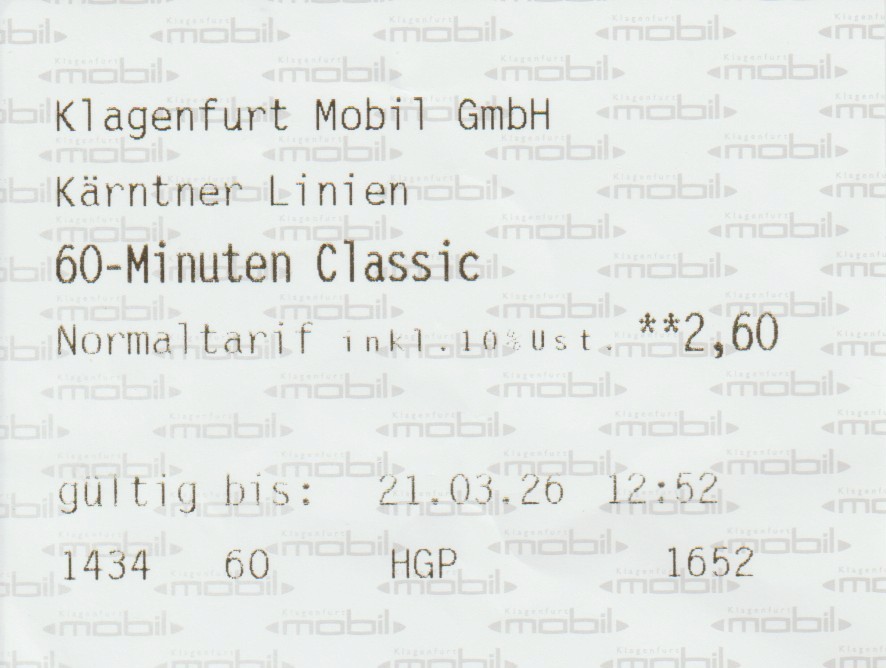
Klagenfurt: The city bus fare is €2.60 per journey and can be bought from the driver. Bus C runs from the Hauptbahnhof and Heiligengiestplatz to Strandbad (on the Wörthersee) 2-3 times hourly.
Klagenfurt – Lienz: Through tickets are available from Klagenfurt to Lienz including the change at Villach from the ticket office, station machines, the ÖBB website www.oebb.at or the ÖBB Tickets app.
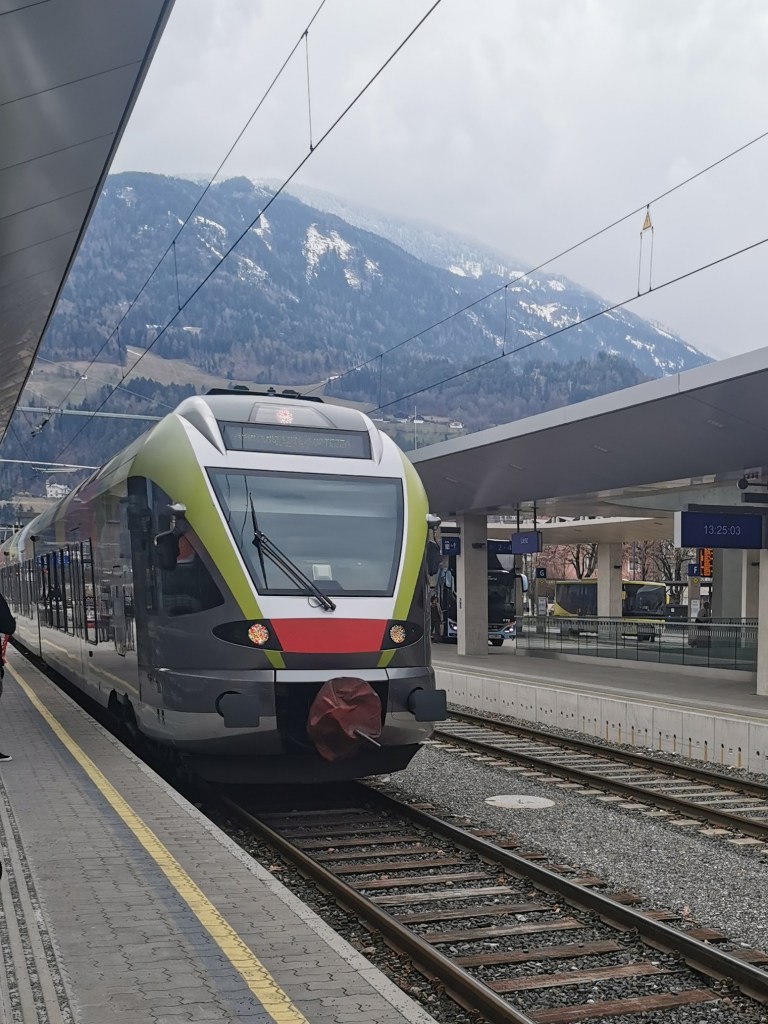
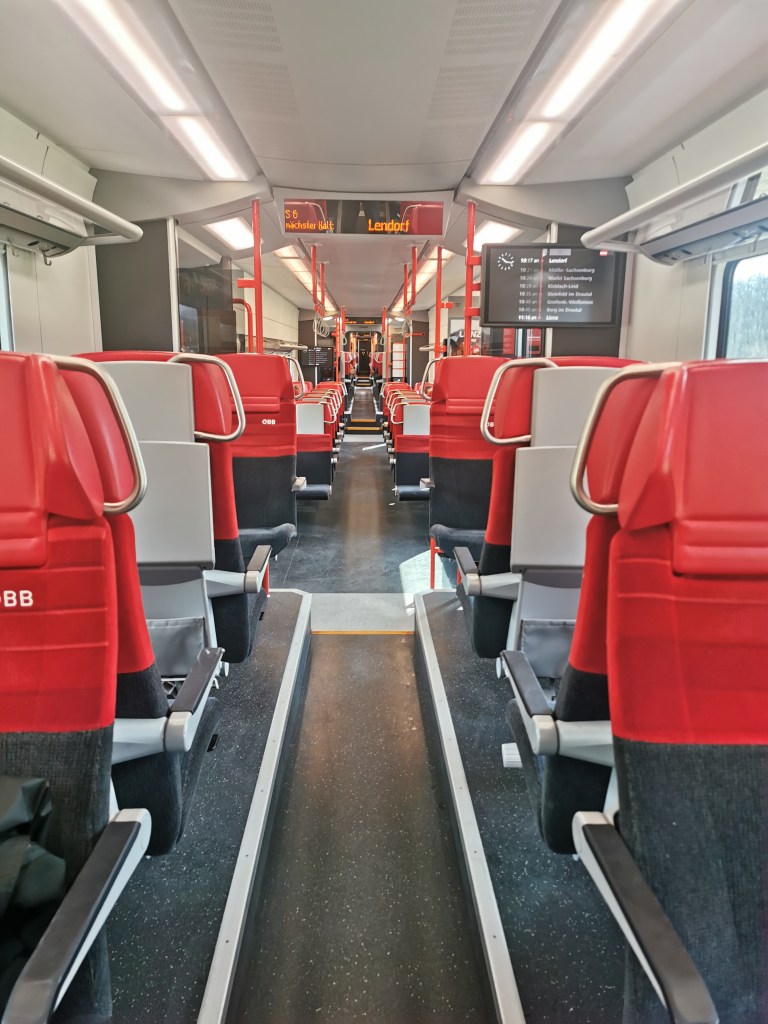
Lienz – Bolzano / Bozen: Through tickets are available on this international route, changing at Fortezza / Franzensfeste from the ticket office or machines (if they work) at Lienz,the OBB website or app. €33.40 each. No need to purchase in advance.
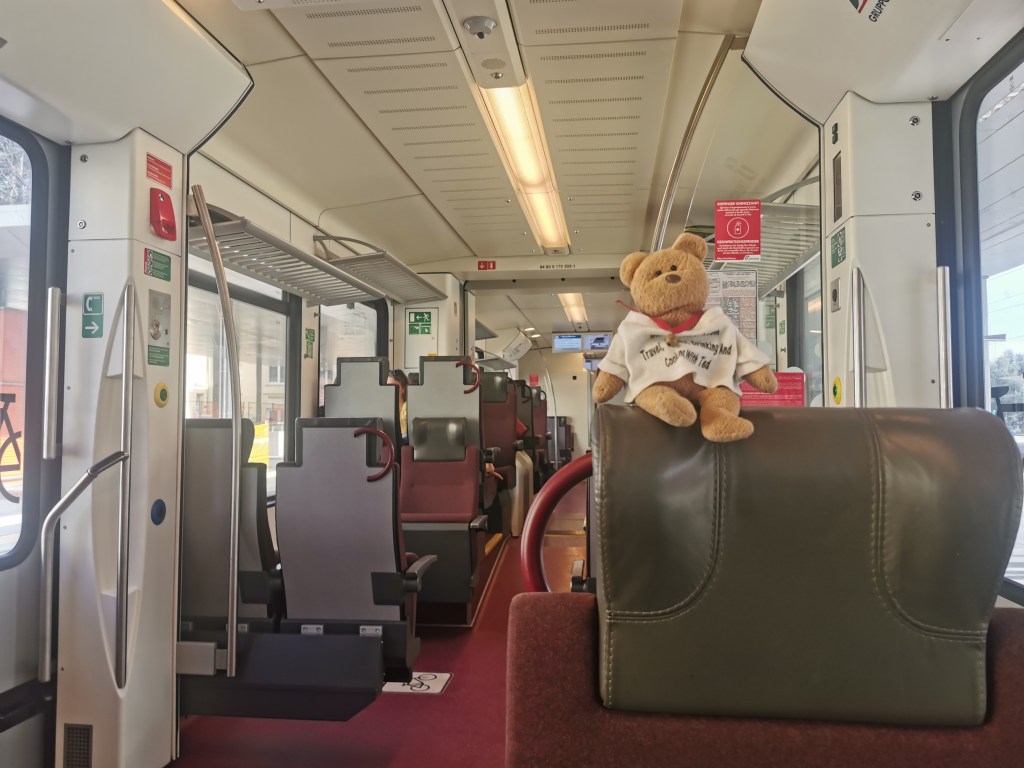
Bolzano / Bozen and Merano / Meran: City buses, the railway to Merano / Meran and the cable cars are all free with the Bolzano / Bozen card. Bus No 1 runs from near the Archaeological museum (via Rosmini stop) to the Colle/ Kohlern cable car (Funivia del Colle) via the railway station 3 times hourly during the day. Bus No 9 also runs between the cable car and the station.
Bolzano / Bozen – Verona Porta Nuova: Regional trains run about hourly. There are longer gaps in the morning. Buy locally on the day – there were some services that didn’t show up when we booked in advance via Rail Europe.
Verona Porta Nuova – Milano Centrale: Book the high speed Intercity Frecciarossa trains in advance for the cheapest deals.
Temporarily closed lines: The latest information at the time of writing (29 May 2026) on the lines which weren’t operating when we visited is as follows: Milan trams 2,3,14 – September/October 2026 are the likely dates given for return to the normal route ; Trieste – Villa Opicina tram – it should have reopened in mid-May 2026, but it is unclear whether this has happened ; Trieste – Ljubljana trains – check locally. Some websites including Seat 61 and Slovenian Railways are giving the impression that it has reopened but this is not the case as of late May 2026 ; Merano / Meran trains – the line beyond Merano/Meran as far as Lasa /Laas has reopened for occasional trains but there is no date for full reopening of the line to Malles / Mals ; Ritten cable car – reopened after a one-month closure for maintenance in March. It is not clear whether this happens every year.
Drinking and Eating
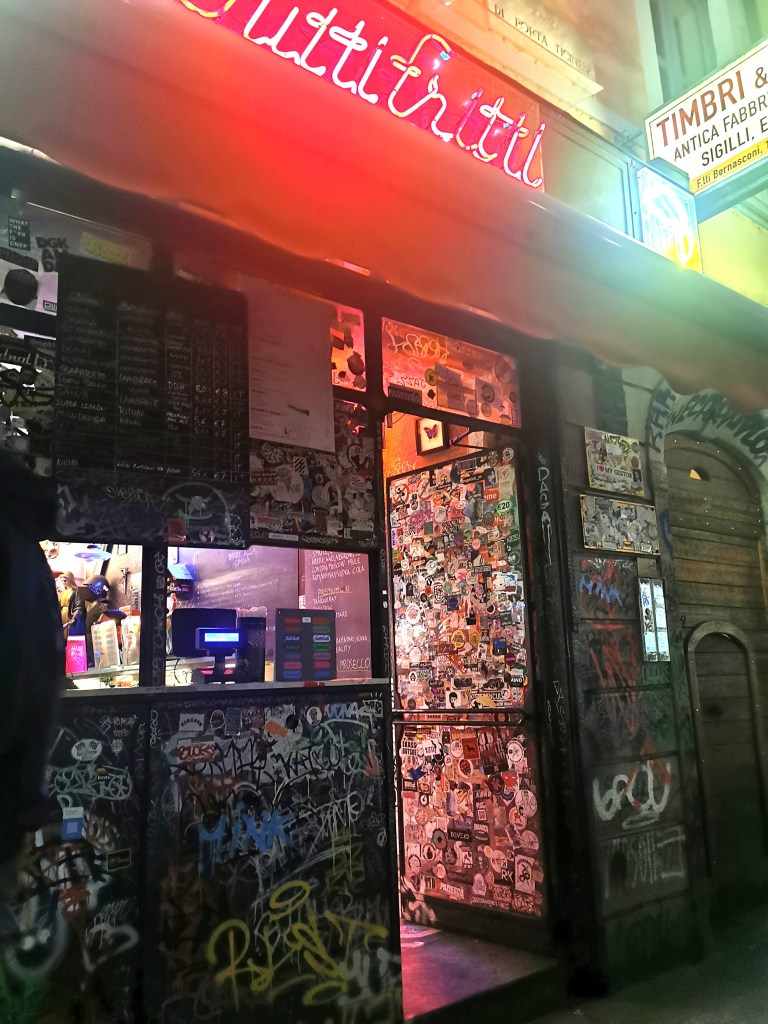
Milan outward: Berberè Pizzaria Colonne, Corso di Porta Ticinese 1; Tutti Fritti (pictured), Corso di Porta Ticinese 18. Good selection of craft beers. Small bar with limited seating and loud music inside but outside tables.
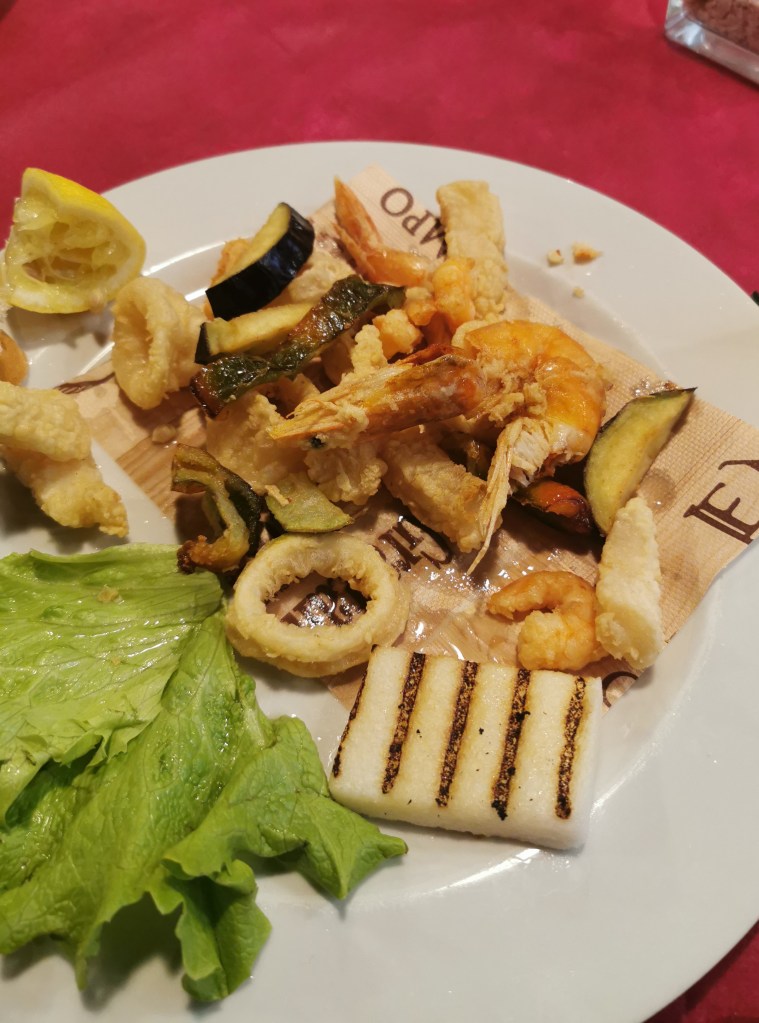
Venice: Irish Pub Santa Lucia, Rio Terà Listi di Spagna; Trattoria Marciana, Calle Longa, varied menu – excellent fish dishes (pictured).
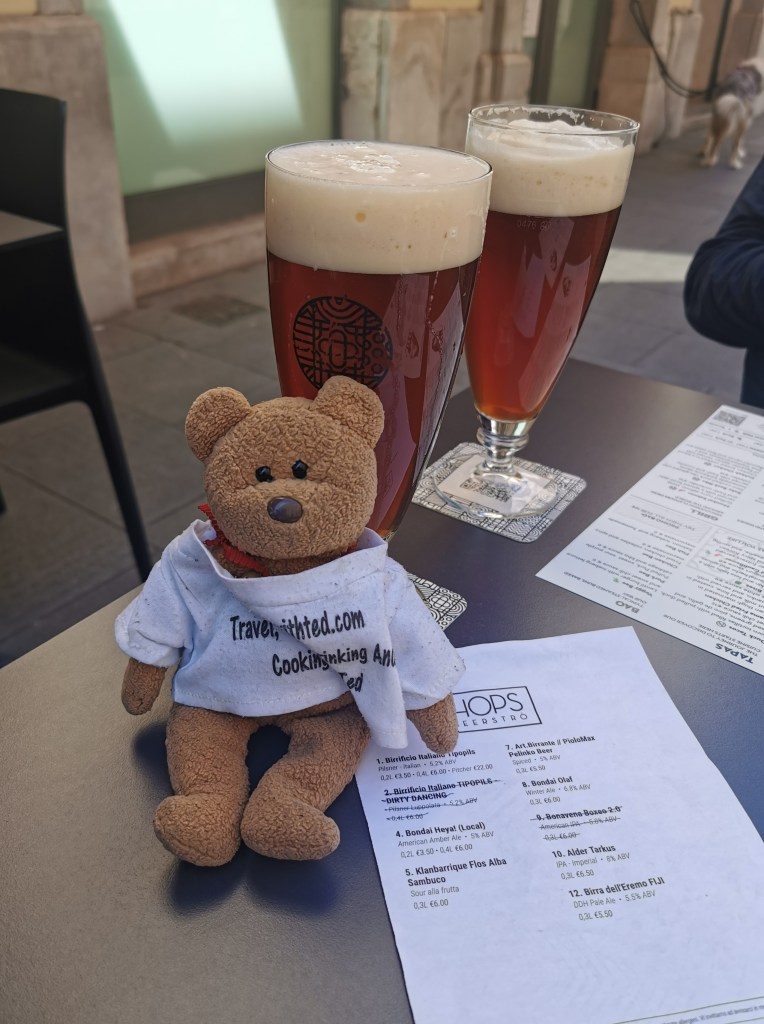
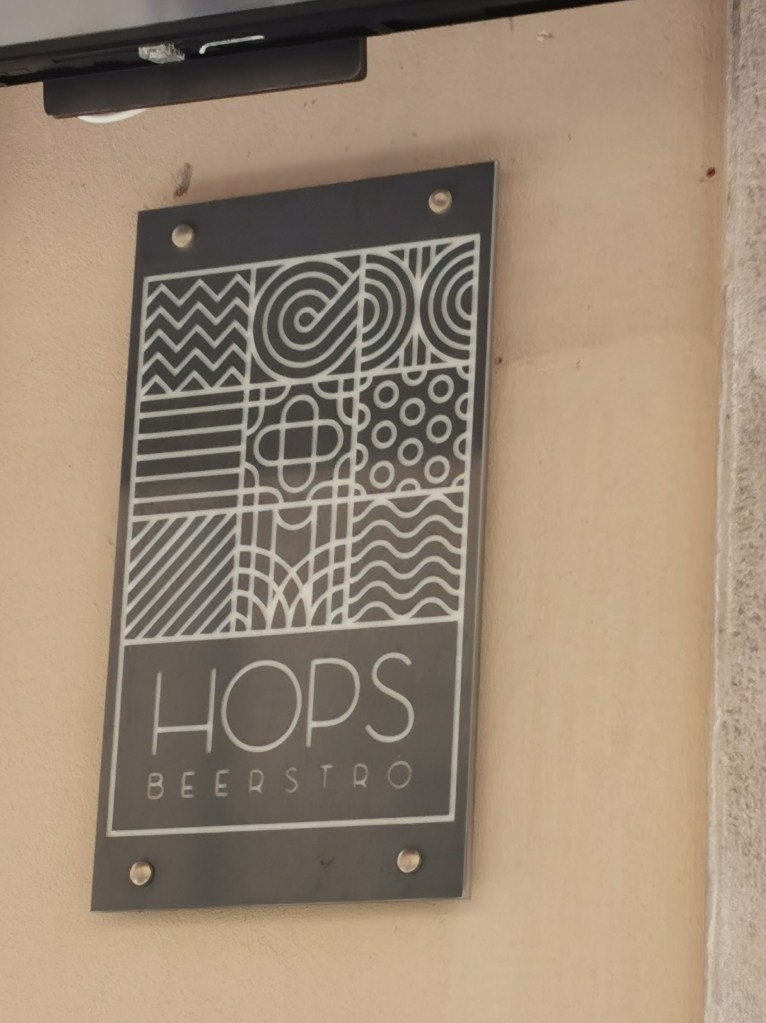
Trieste: Birreria Forst, via Giorgio Galatti 11, range of Forst beers, good Austrian and German food; Birrifico Cavana, via della Pescheria 18, Microbrewery; Buffet Birreria de Rudy, via Valdirivo 32, mainly Bavarian menu (we had the goulash); Hops Beerstrò, via di Cavona 15a, craft beers and Asian tapas. We also visited a bar/restaurant by the side of the canal on via Gioacchino Rossini and a bar on via Trento Ottobre. However, we didn’t take a note of their names and can’t identify them on Google maps. Sorry.
Ljubljana: Arkade, Adamič-Lundrovo nabrežje 3, café/bar with short menu of good local dishes ; Harat’s pub, Petkovskovo nabrežje 31a, noisy Irish sports bar ; Namaste, Breg 8 (north Indian food) and Namaste Express, Trubarjeva cesta 31 (south Indian food). Both excellent, with many vegetarian options ; Pivnika Labjah, Grudnovo nabrežje 15, large number of craft beer taps, dominated by American IPAs ; Promenade, Petkovskovo nabreže, riverside café bar ; Pub Loo-Blah-Nah, Adamič-Lundrovo nabrežje 1, Excellent bar with range of their own beers ; Sir William’s Pub, Tavčarjeva ulica 8a, excellent pub, fine beers including a cask beer, food limited to toasties.
Maribor: Nana Bistro & Kavarna, Glavni trg 16, interesting and varied brunch menu
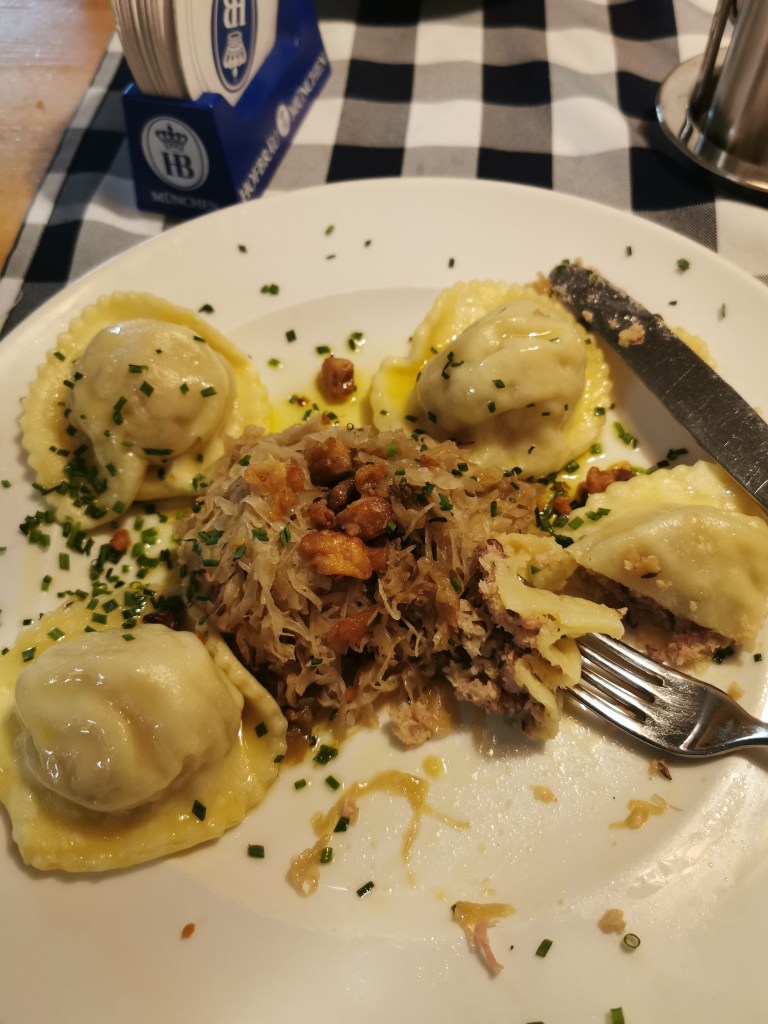
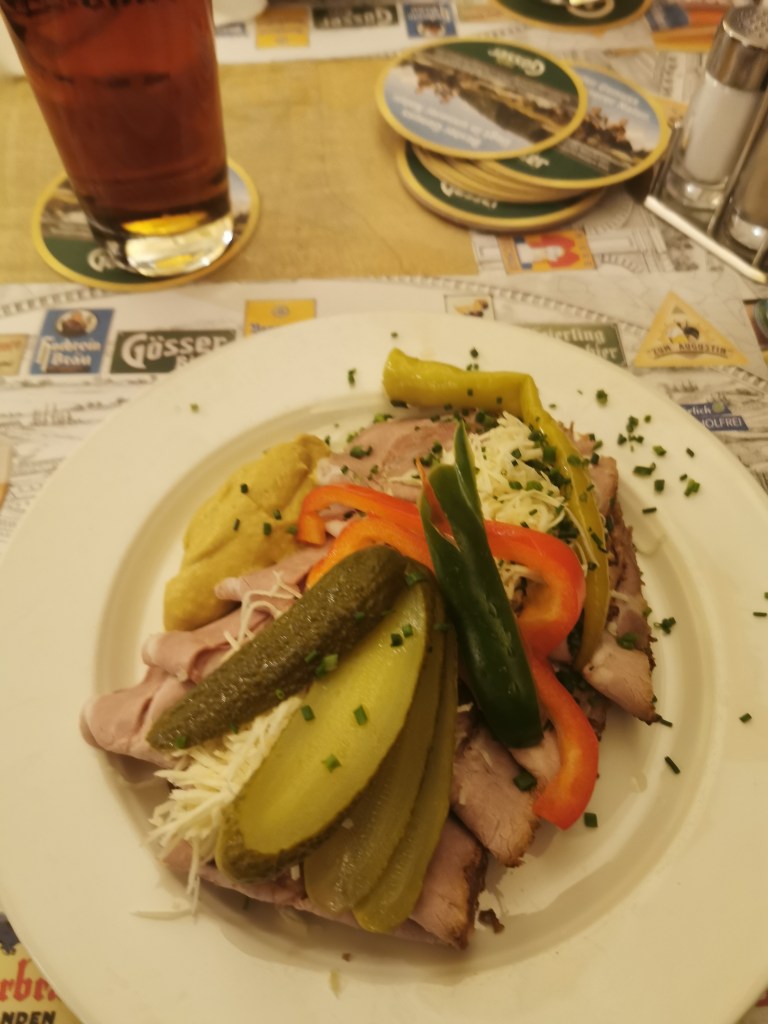
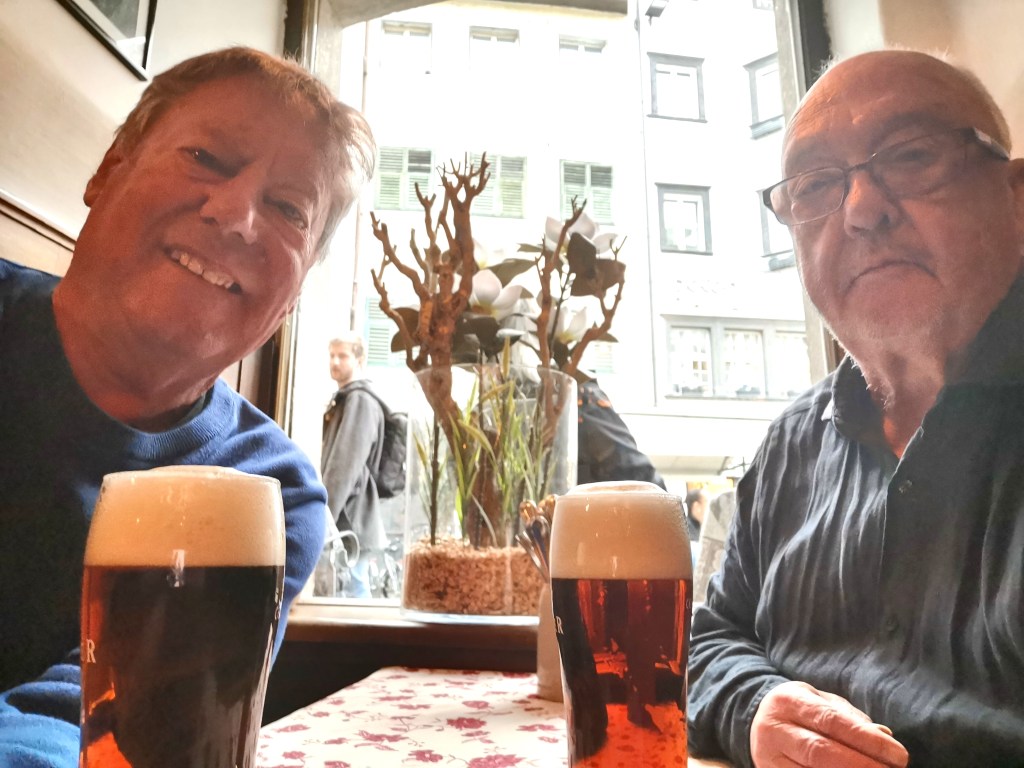
Klagenfurt: Bierhaus Zum Augustin, Pfarrhofgasse 2. Our favourite. Large, busy but friendly beer hall, fine beer and good food (pictured) ; Hofbräu zum Lindwurm, Neuerplatz 10, Hofbräu beers and Austrian/German menu. We only visited these two but there were plenty of other popular places in the Herrengasse / Pfarrplatz area of the old town.
Lienz: Altstadthotel Cafè Eck, Hauptplatz 20.
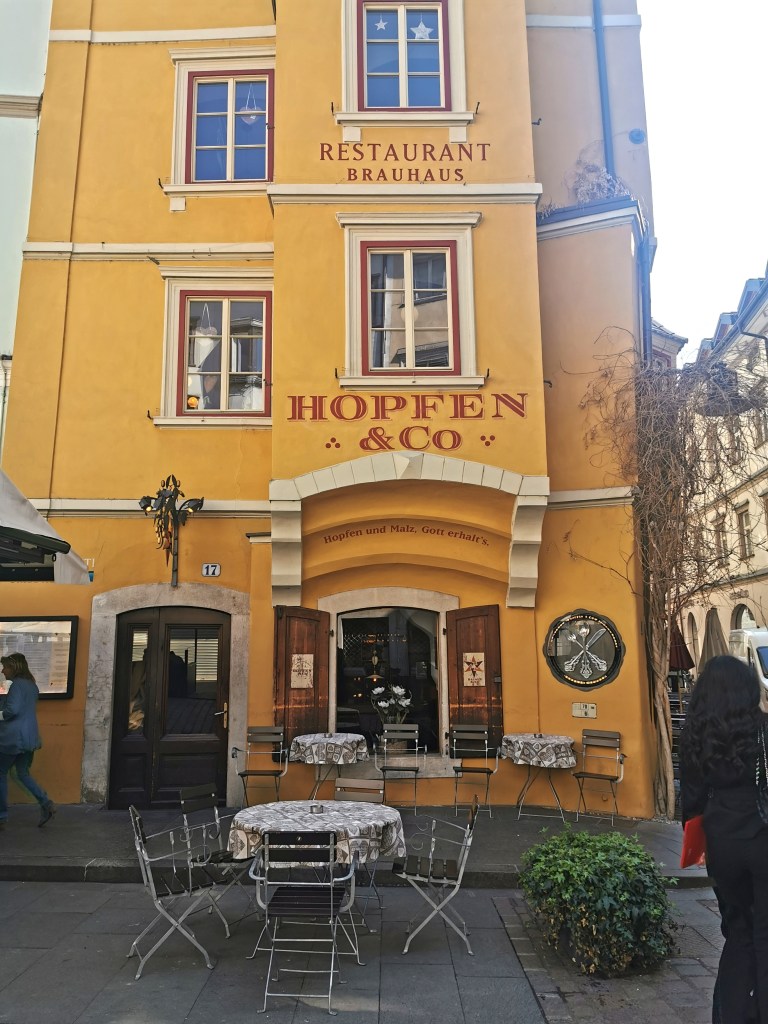
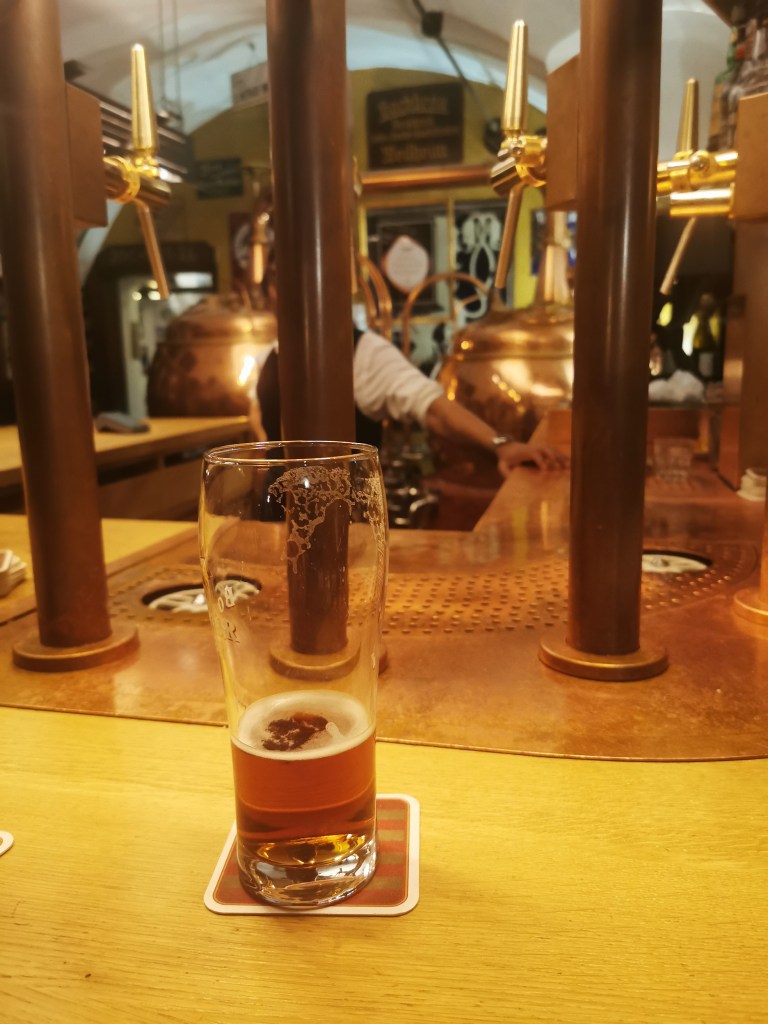
Bolzano / Bozen: Bátzen Hausl, via Andreas Hofer 30, Brewpub, with many beers, Italian and Austrian food ; Hopfen & Co, Piazza delle Erbe / Obstplatz 17, Our favourite. Brewpub with excellent beer and food. We only visited these two but there are plenty of other places around Piazza delle Erbe / Obstplatz and via Argentieri / Silbergasse.
Merano /Meran: Augustiner in Meran, via Portici / Lauben 266.
Milan return: Bar Il Mago di Oz, via Federico Ozanam 15, decent beers and good food ; Bierfabrik Milano, via Federico Ozanam 8, At least 15 craft beers on tap. Tapas available.
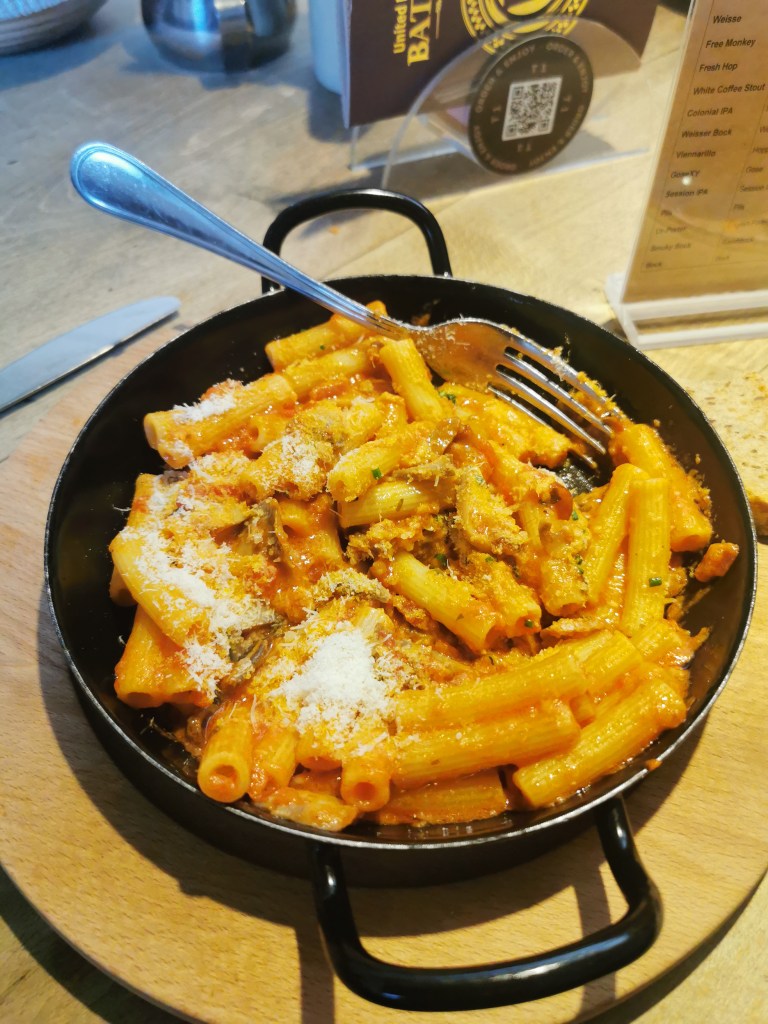
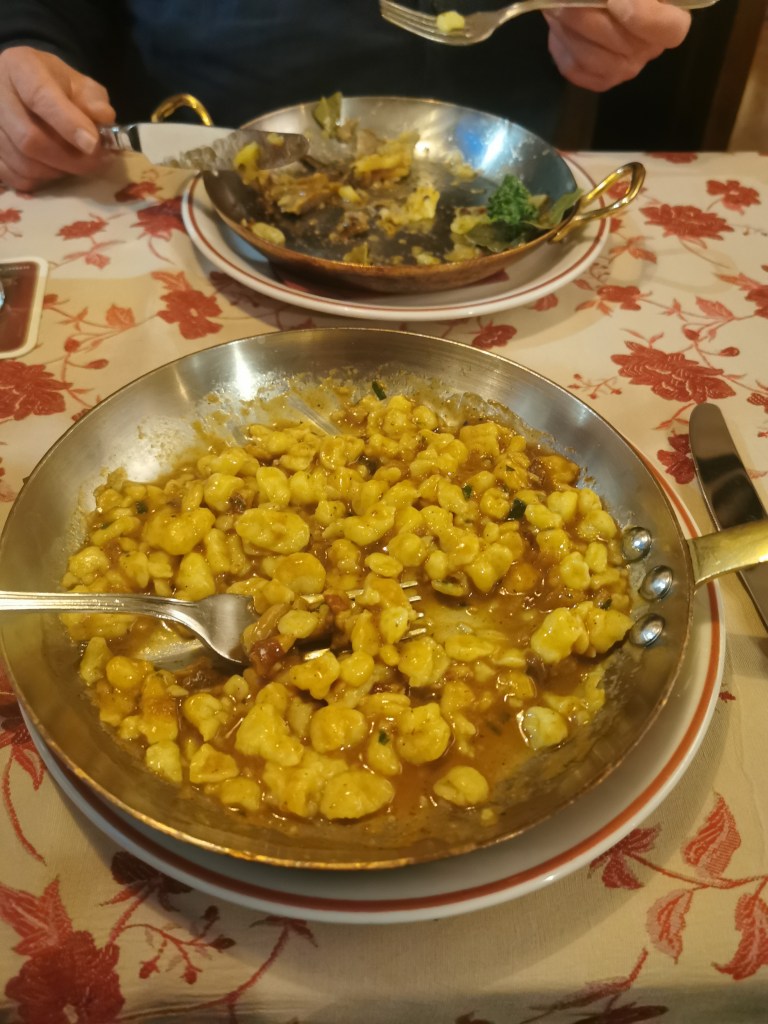
Food at Batzen Hausl, Bolzano / Bozen
Our main sources for finding the best places for beer were Brewver www.brewver.com for Milan, Trieste and Ljubljana, plus guidebook and internet research. While many places are open all day, every day, It is always worth checking opening days or times on websites or Google Maps.
Hotels
Milan (outward) – Ostello Bello Milano Duomo, via Medici 4. Hostel which incudes ensuite twin/double rooms. Kitchens to cook your own food. Reasonable bar. Good vale for Milan.
Trieste – Albergo Alla Posta, Piazza Oberdan 1. Pleasant old hotel. Breakfasts included but no other meals or bar
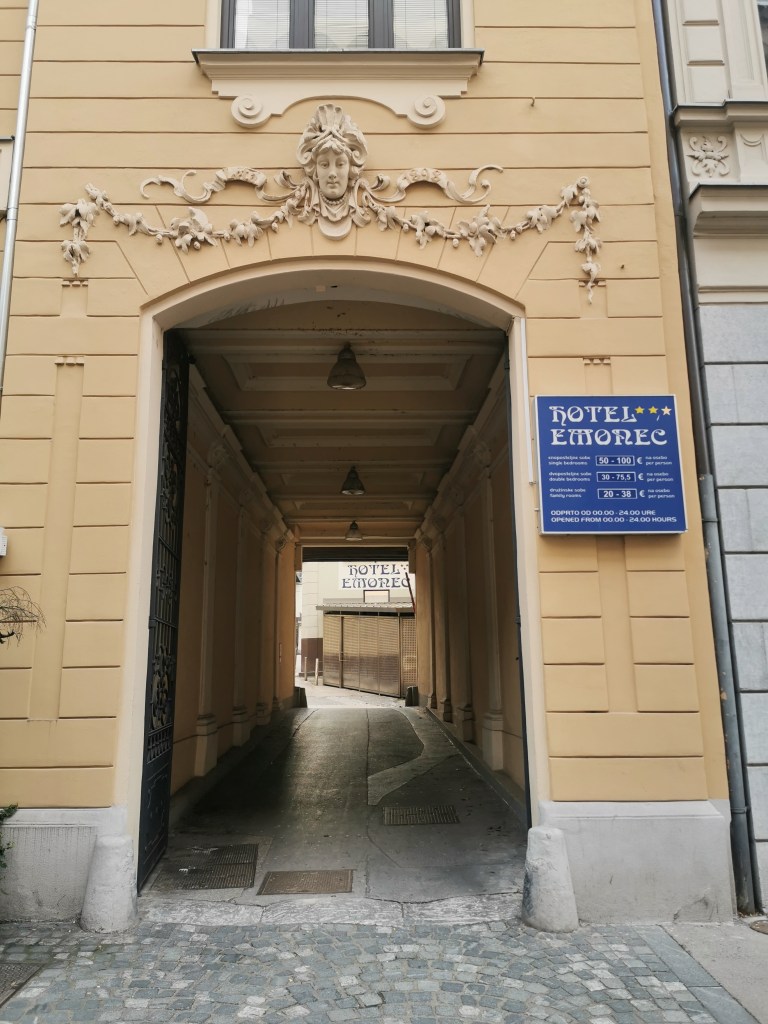
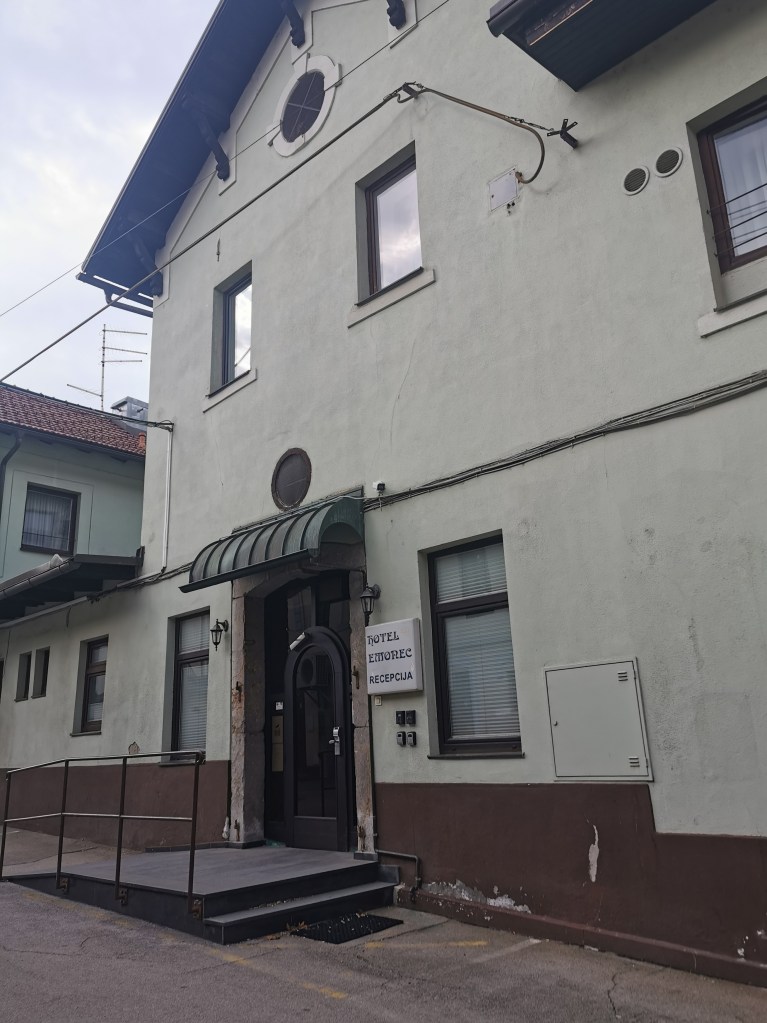
Ljubljana – Hotel Emonec (pictured), Wolfova 12, Fairly basic but rooms fine. No food or bar. Very central but quiet location on a lane.
Klagenfurt – Ibis Styles Klagenfurt, Viktringer Ring 28. Quality chain hotel. Buffet breakfasts optional. Fairly central.
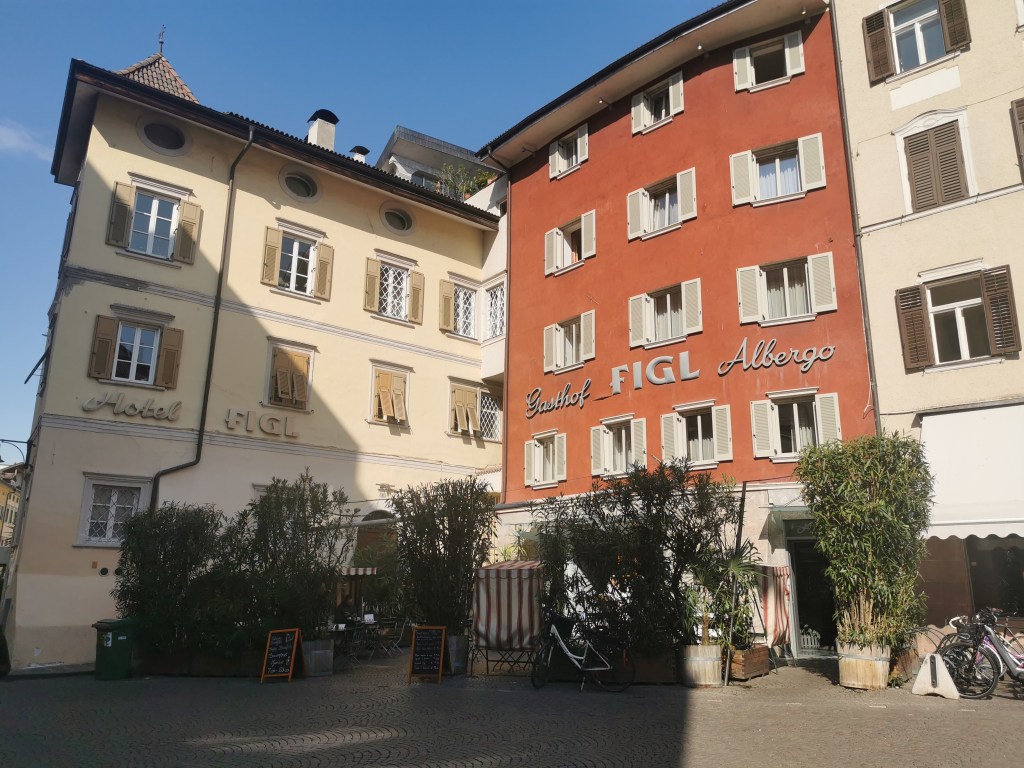
Bolzano / Bozen – Hotel Figl (pictured), Piazza del Grano 9. Pleasant old hotel with comfortable rooms. Very central but quiet location. Choice of buffet or à la carte breakfast. All day restaurant / bar.
Railway Buffery
1 Trieste – Ljubljana – Maribor
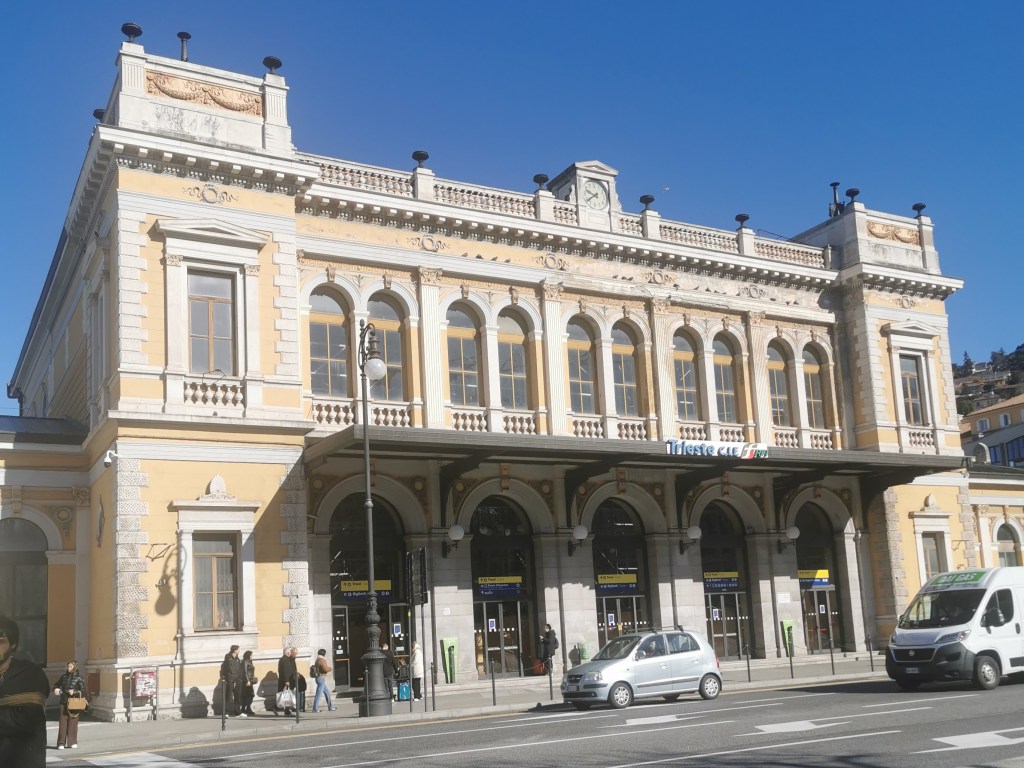
The line from Trieste to Ljubljana and onward to Maribor is part of the Austrian Southern Railway (Südbahn), constructed to link the Austria-Hungarian Empire with the Mediterranean. It runs from Vienna (Wien) through the Semmering Pass to Graz, Spielfeld-Straß and Maribor to Ljubljana, which was reached in 1849 . It then passes through the Ljubljana marsh and the steeply sloping karst plateau, reaching Trieste in 1857, which involved complex construction and engineering. The importance of the line waned after 1918 though it remained a key link between the three countries of Austria, Yugoslavia and Slovenia. Traffic has risen once more following the independence of Slovenia and since all three countries belong to the European Union and the Schengen Area.
2 The Drava Valley Railway (Drautalbahn)
The Drava Valley Railway follows the River Drava from Maribor upstream to its source on the Austro-Italian border where it continues as the Puster Valley Railway (see Railway Buffery 3). Originally its’ whole length was within the Austro-Hungarian Empire but today it links Slovenia with Austria and Austria with Italy.
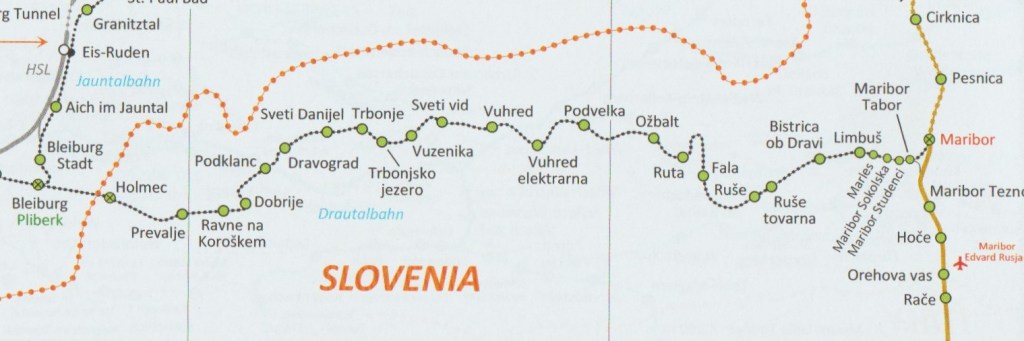
The Slovenian section is today operated as a branch line between Maribor and Bleiburg (see map). The Austrian section includes mainline, suburban and local services. From Klagenfurt to Spittal-Millstättersee it is part of the main lines linking Vienna with Klagenfurt and Villach and both cities with Salzburg. The eastern section has been modernised as part of the main line from Vienne to Klagenfurt via Graz via the Koralm Tunnel which opened in 2025. The Bleiburg – Klagenfurt – Villach – Spittal-Millstättersee stopping trains form part of line S1 of the Carinthia s-Bahn.
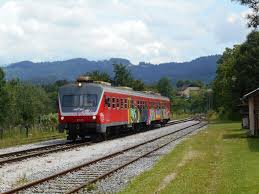
The western section from Spittal is used by hourly local trains from Klagenfurt to Lienz and from Lienz across the Italian border to Fortezza / Franzensfeste via the Puster Valley Railway. A change of electrification system at San Candido / Innichen on the Austian-Italian border prevented through services until modernisation in 2008-10. Prior to then the only through trains were a few corridorzug trains which linked Lienz with Innsbruck, passed through Italian territory without stopping and which ceased in 2013.
3 The Puster Valley railway
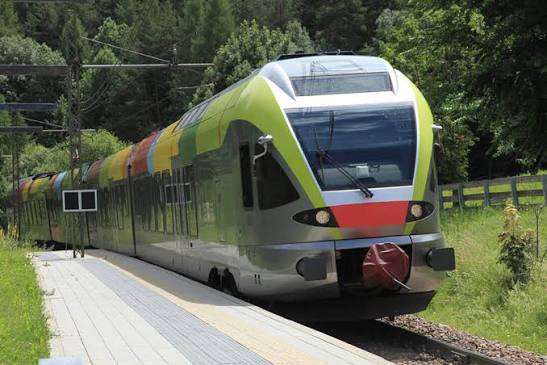
The railway along the Puster valley (Val Pusteria / Pusteral) was constructed (along with the western part of the Drava Valley Railway) by the Austrian Southern Railway Company. The aims were to link Vienna with the South and East Tirol and to connect the East Tyrol with Innsbruck. It was opened in 1871 but declined in importance with the transfer of the Sudtirol to Italy after World War 1. However local traffic and tourism to the area has grown and the line was electrified in the 1980s then further modernised in 2008-2010. Today Stadler Flirt trains, able to operate under both Italian and Austrian electrification systems, operate frequent services including across the border to Lienz. Since then the number of passengers has tripled. The line was closed for a year in 2025 for further modernisation and work has commenced on a new route in the Val di Rigi / Riggertal. This will form a new chord to bypass the need to reverse and / or change trains between the Puster Valley Railway and Bolzano / Bozen.
4 Innsbruck – Verona – The Brenner Railway
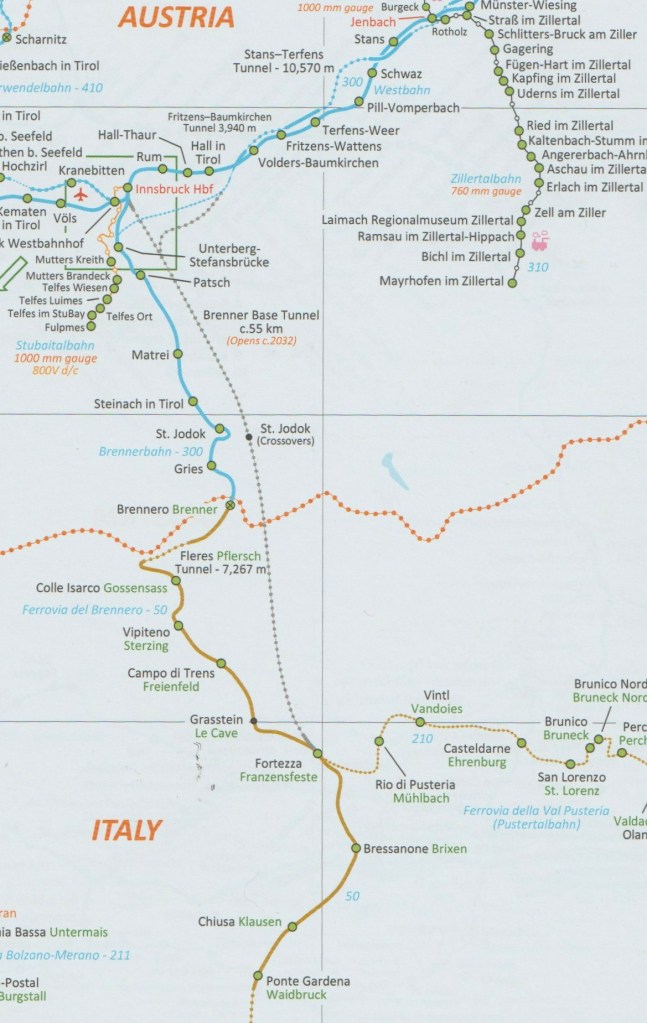
The line from Innsbruck runs via the Brenner Pass and into Italy, through Fortezza / Franzensfeste and Bolzano / Bozen to Verona, following the Wipptal in Austria and the Eisacktal and Adige Valleys in Italy. It was opened from Verona to Bolzano / Bozen in 1859 and onward to Innsbruck in 1867. It is a key link across the Alps and forms part of Line 1 of the Trans-European Transport Networks from Berlin to Palermo. Operation has been constricted by tight corners and steep gradients yet demand, particularly for freight services, continues to grow.
It has been improved in part by the construction of tunnels, such as the Sciliar / Schlern Tunnel in Italy and the increasing use of locomotives with multicurrent ability which avoid the need to change locos at the border. From 2027 this will extend to regional trains which will operate through from Innsbruck to Bolzano / Bozen and on to Malles / Mals. The next stage will be the completion of the 55km long Brenner Base Tunnel between Innsbruck and Fortezza / Franzensfeste which will (hopefully) open in 2032. Plans for a new four track line from Fortezza / Franzensfeste to Verona have been drawn up and some initial construction is underway – however there is no date for final completion. When completed this will greatly reduce the journey time between Innsbruck and Verona.
5 Bolzano / Bozen – Merano / Meran and the Val Venosta / Vinschgau Railway
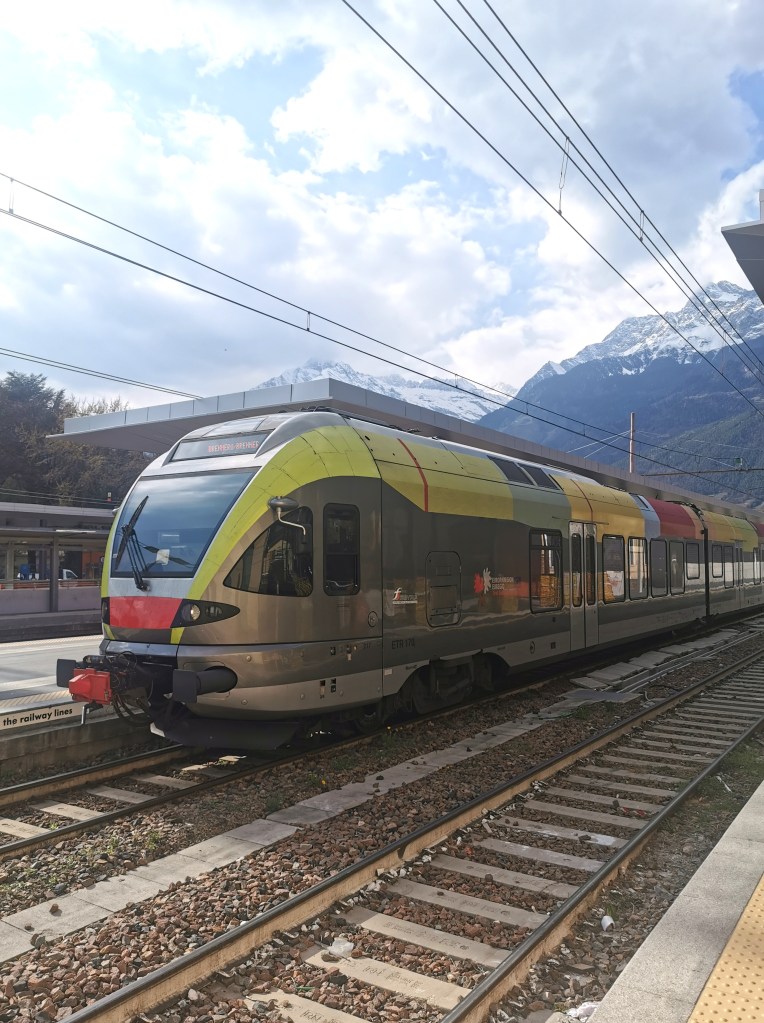
The Bolzano / Bozen – Merano / Meran railway is 31km/ 19 miles long and opened in 1881 to link the regional capital with the major spa town. It now has a half-hourly service despite being single track. It is planned to doubletrack the railway in the near future.
The railway was extended in 1906 for 60km/36 miles further up the valley of the River Adige / Etsch into the mountains to reach Malles / Mals. This line was closed in 1990 then reopened in 2005. At the time of our visit it was closed for electrification – the first stretch of the line beyond Merano/ Meran to Lasa / Laas reopened at the end of March 2026.
Acknowledgements
Thanks to Dave Webster for accompanying on me on this trip.
Photographs
All photographs are by Steve Gillon, except for the following: Ryanair plane at Bergamo is from http://www.checkinblog.it ; the Bergamo Airport coach is from http://www.flibco.com ; the Flixbus coach is from http://www.ilpiccolo.it ; the Bleiburg area map is an extract from a map of the Karnten (Carinthia) S Bahn system on Wikipedia ; the Frecciarossa train is from http://www.raileurope.com ; the Villa Opicina tram is from http://www.intrieste.com ; Ljubljana station is from http://www.mapcarta.com ; the Drava Valley train is from http://www.komoot.com ; the Puster Valley train is from http://www.tyrol4you.com . These are sourced via Google Images . The Trieste – Ljubljana rail map and the map of the whole journey are from the Rail Map Europe, 3rd edition, European Rail Timetable, The map of the Drava Valley railway in Slovenia and the Brenner Base Tunnel are from European Railway Atlas, Regional Series, Book 2, M G Ball, 2022 edn.
Copyright: The text and all photos except for those listed above are Copyright © Steve Gillon, 2026.

