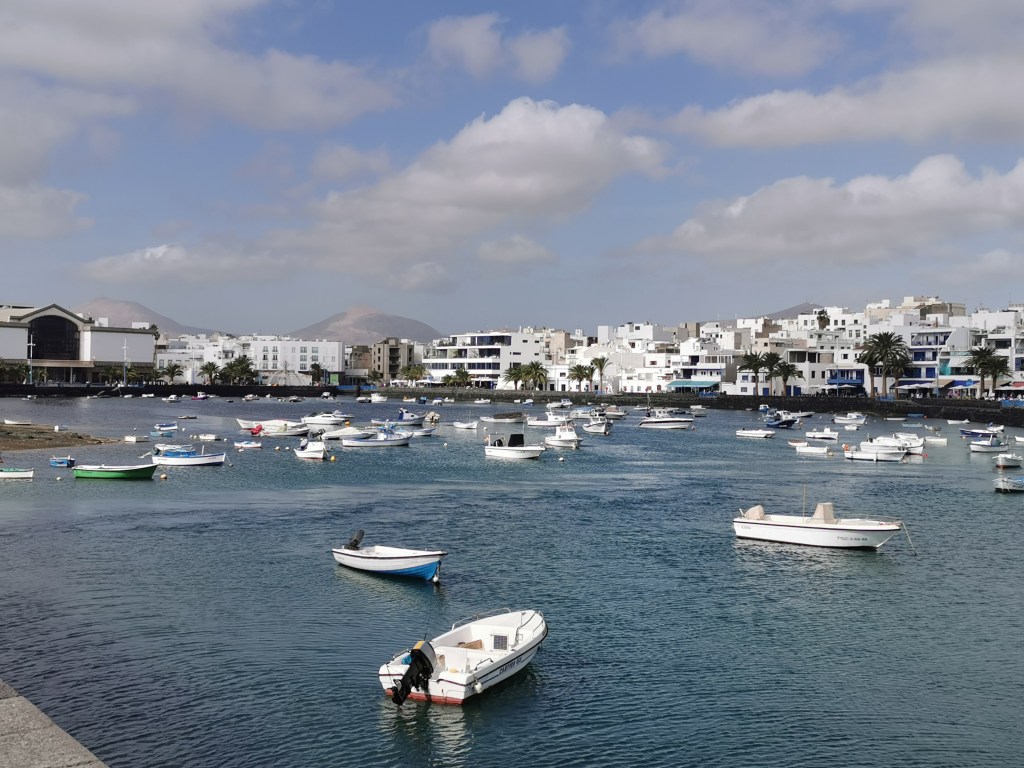
In December 2023 Ted and I and our friend Ken decided to take a break from Benalmádena. We were looking for somewhere at least as warm, so heading north in Spain was ruled out. We came up with the idea of Lanzarote in the Canary Islands – none of us had been there. A little research suggested that there was enough to keep us occupied for a week. Off we went and these are the notes of the visit.
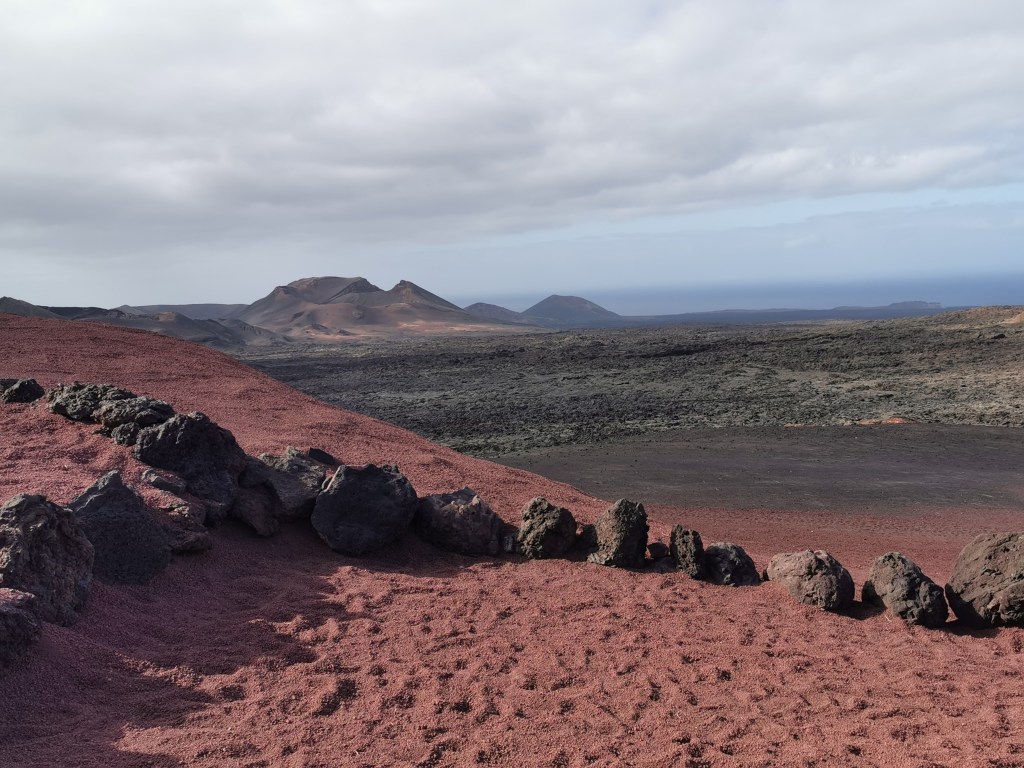
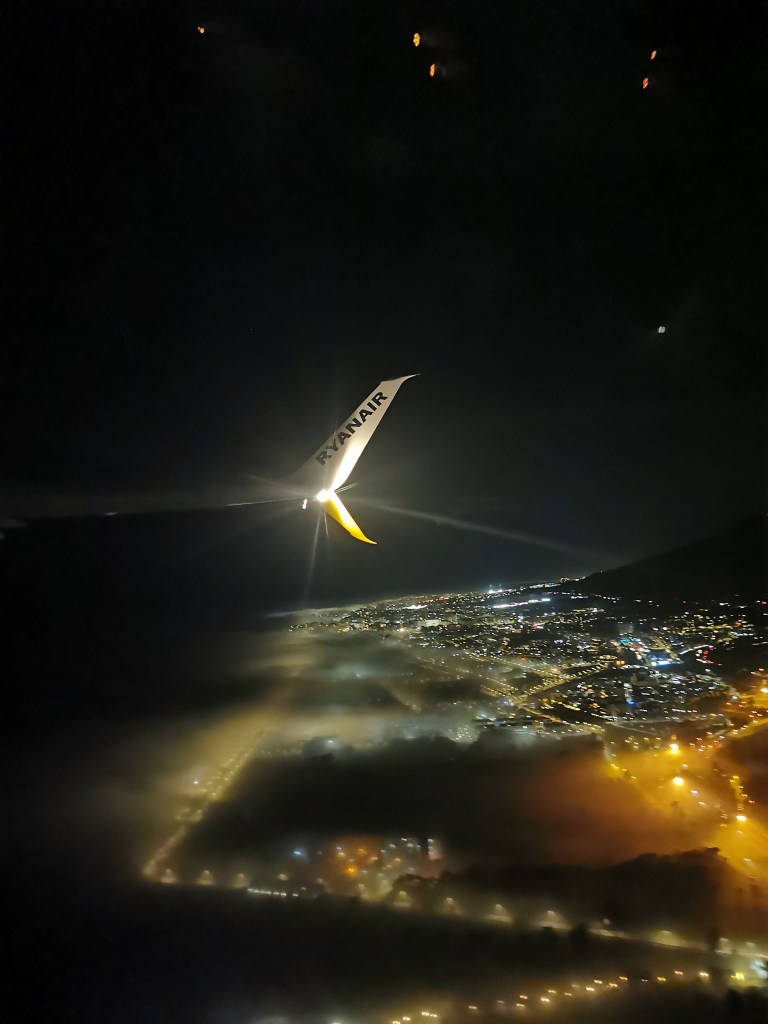
In both directions the Málaga – Lanzarote flights were in the evening and therefore in darkness. The skies were clear and it would have been interesting to look out at Morocco in daylight – instead we had to guess where we were by the pattern of lights on the ground. On the outward flight Málaga airport was packed, the departure gate was changed three times, then I ended up with a seatbelt that was too small for Ted never mind me. By way of contrast, in the return direction we were the last flight out of an empty airport before it closed for the night.
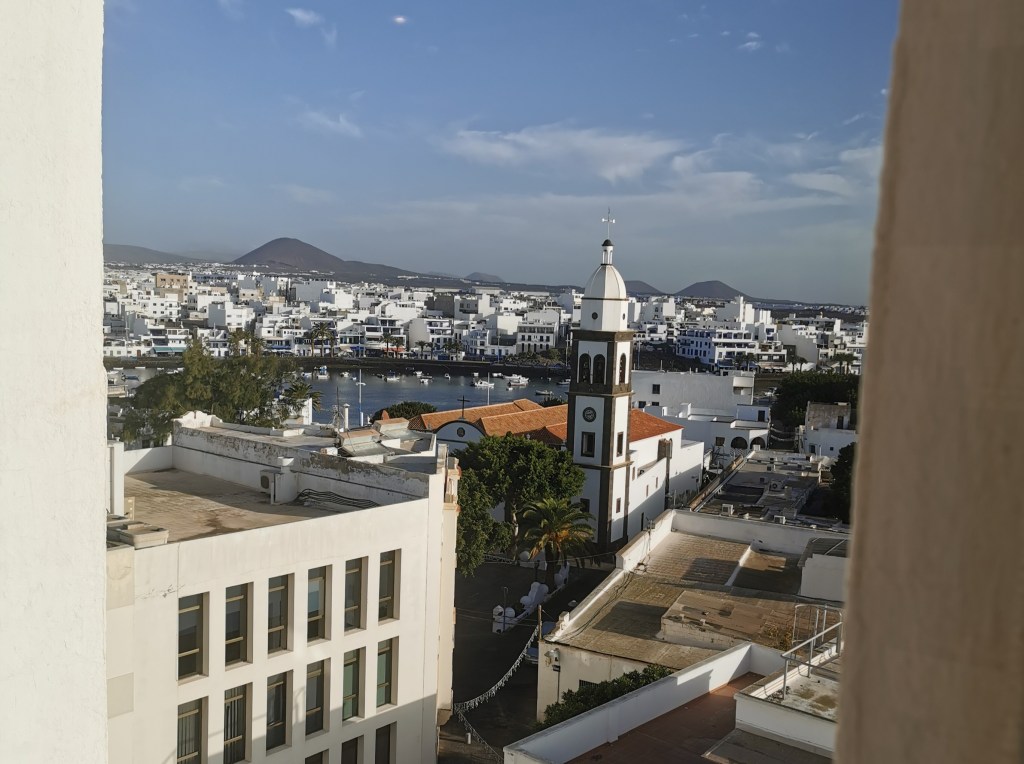
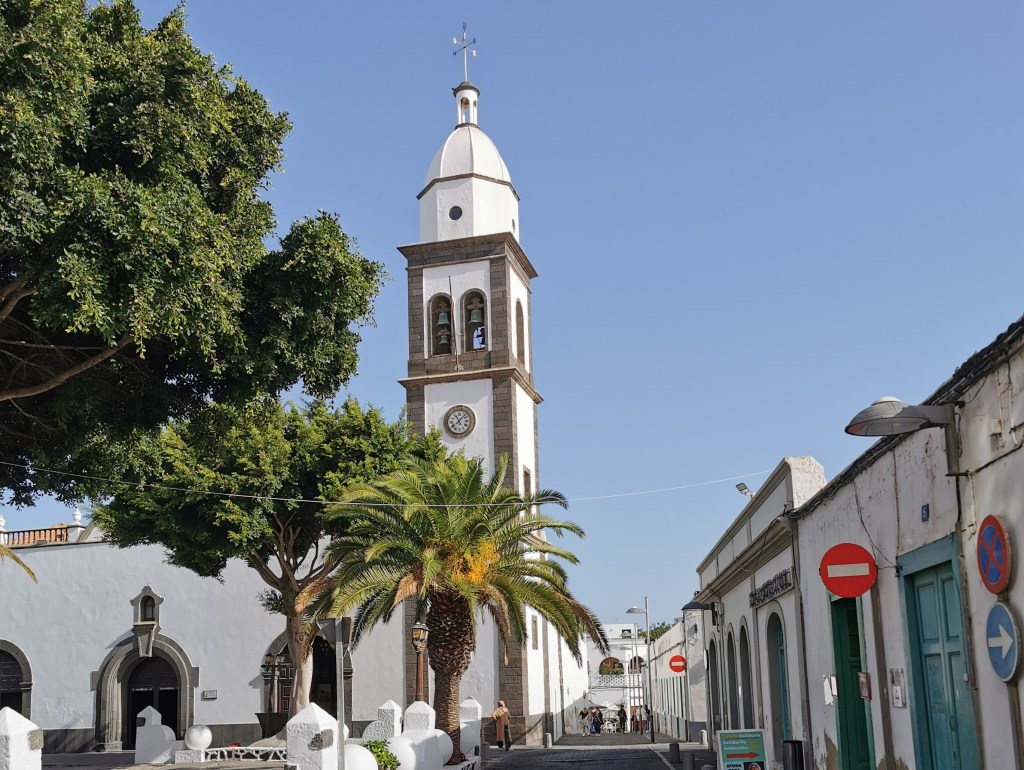
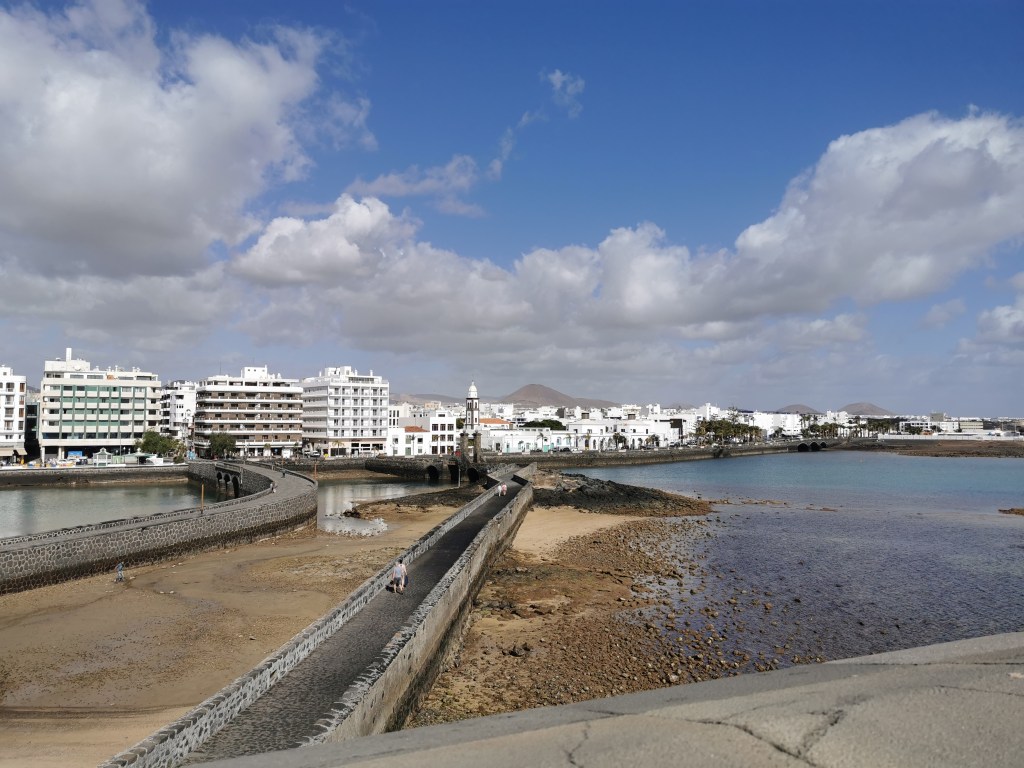
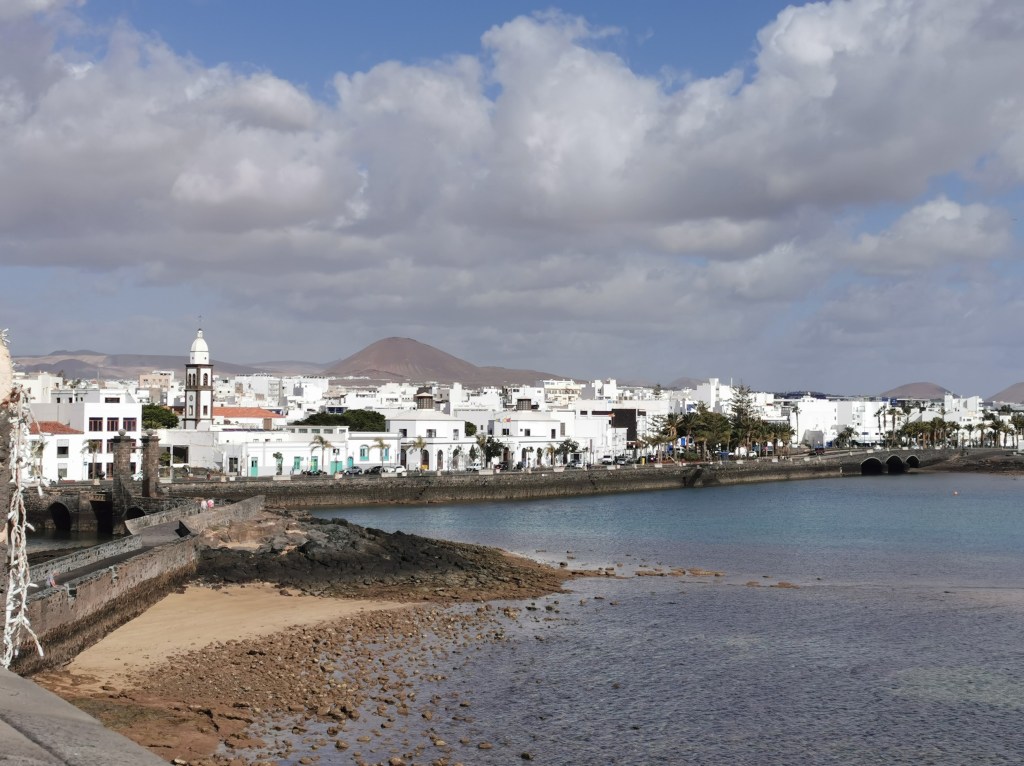
We decided to stay in Arrecife (pictured) rather than one of the coastal resorts, for ease of travel around the island. Arrecife was founded in the fifteenth century and spent much of its life as a fishing village. Today it is the capital of the island with a population of 64000, almost half of the population of Lanzarote. It is a proper working town with all the usual facilities. It felt like a pleasant enough place to live, though the town centre is suffering as shops have moved out to a shopping centre. Parts of the old fishing village by the church were quite dilapidated – possibly awaiting renovation or redevelopment.
We chose the three-star Hotel Miramar (Avda. Coll, 2), the most central hotel in Arrecife, situated by the seafront and round the corner from the main street, Calle Leon y Castillo. The room was comfortable and had a balcony overlooking the sea – the downside was traffic noise from the road below. The continental breakfast room was on the top floor and included a roof terrace with views the town. There was no bar -it looks like there was one in the past – but we benefitted from the central position – the other hotels in town were by the beach, a walk from the centre.
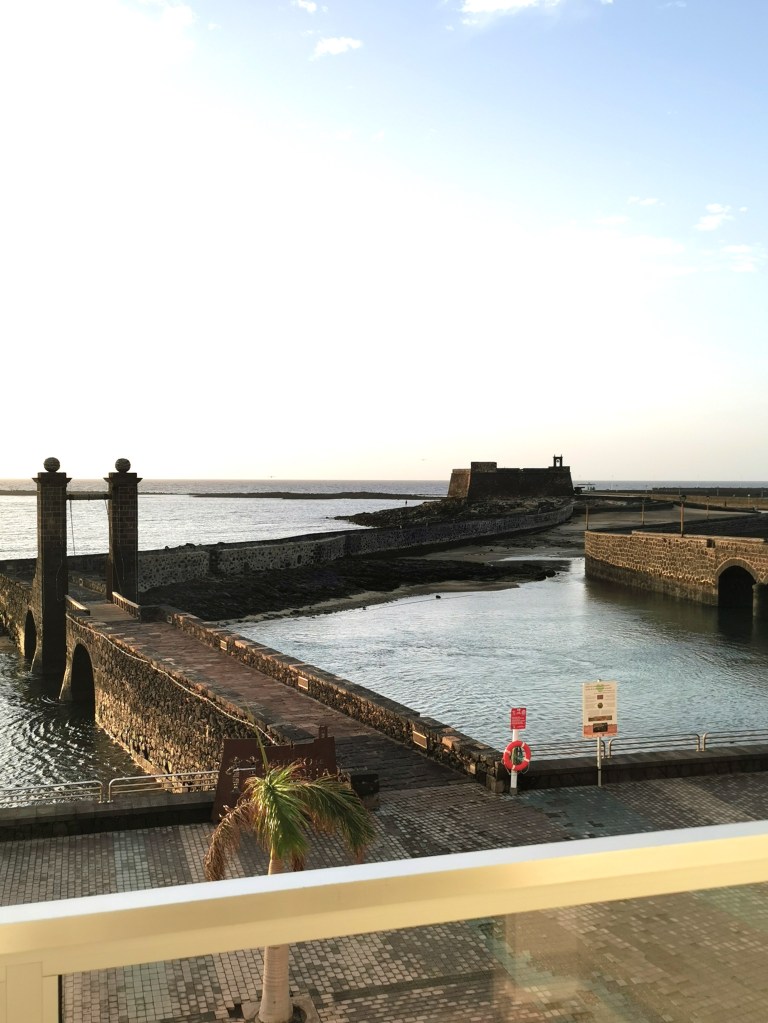
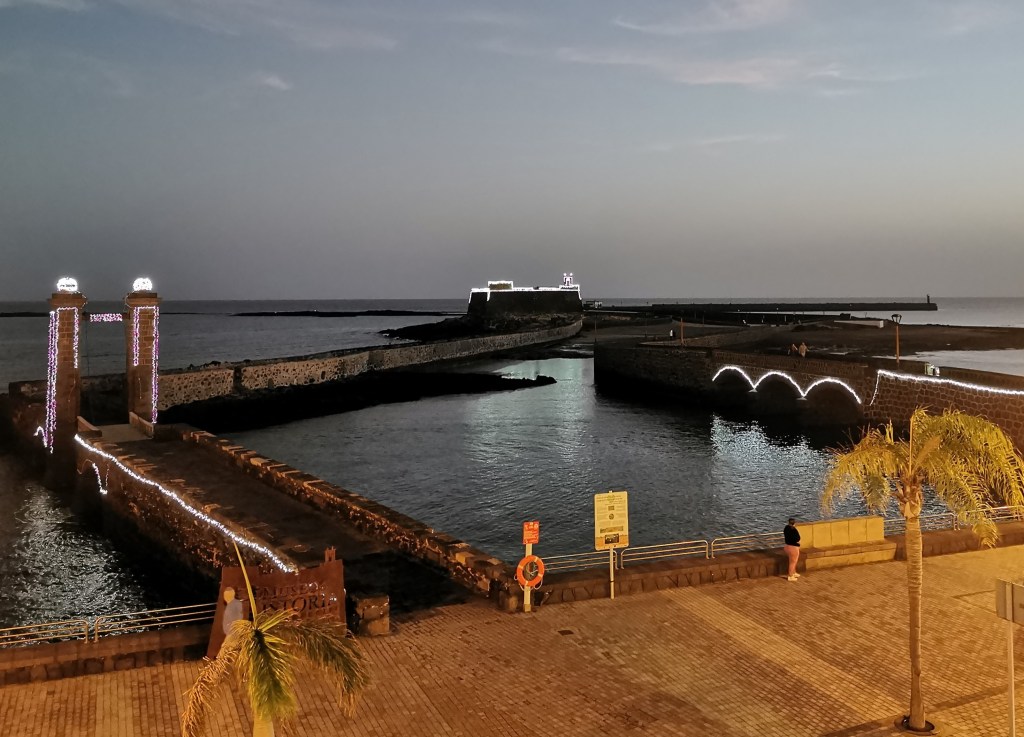
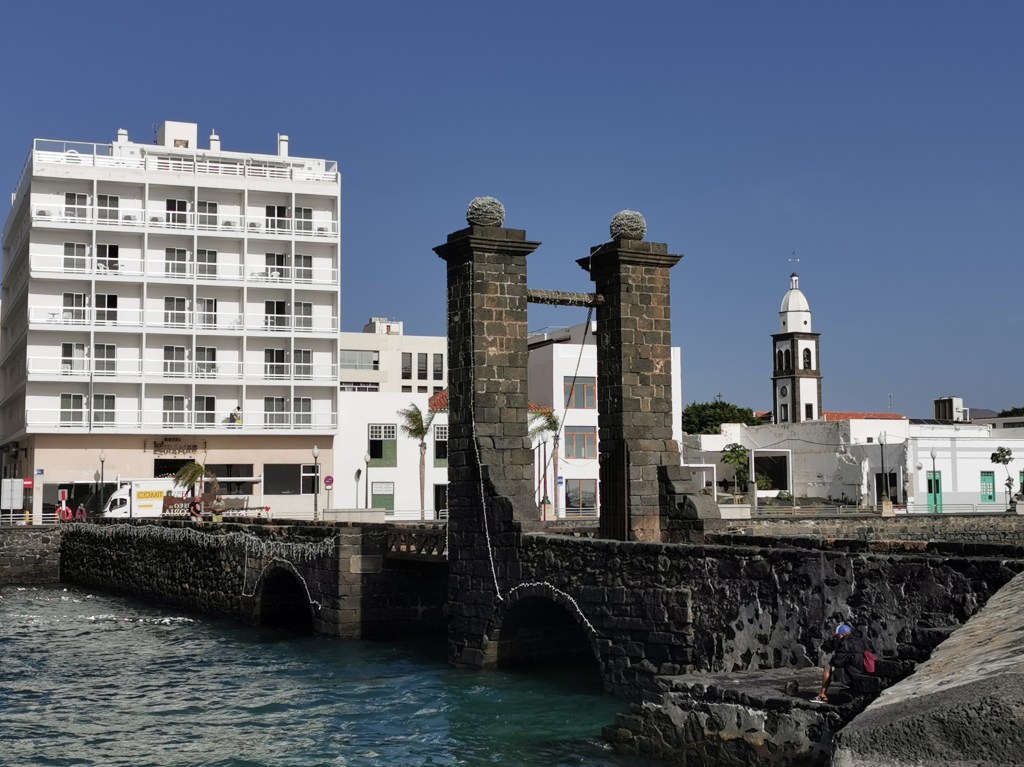
From our balcony we looked out on the sixteenth century Castillo de San Gabriel (pictured), built as part of the fortifications to protect the town and the port. We took a walk out to take a look and discovered that the castle is home to the Museum of the History of Arrecife, which revealed the complex history of the town and the island, as various groups passed through and/or invaded.
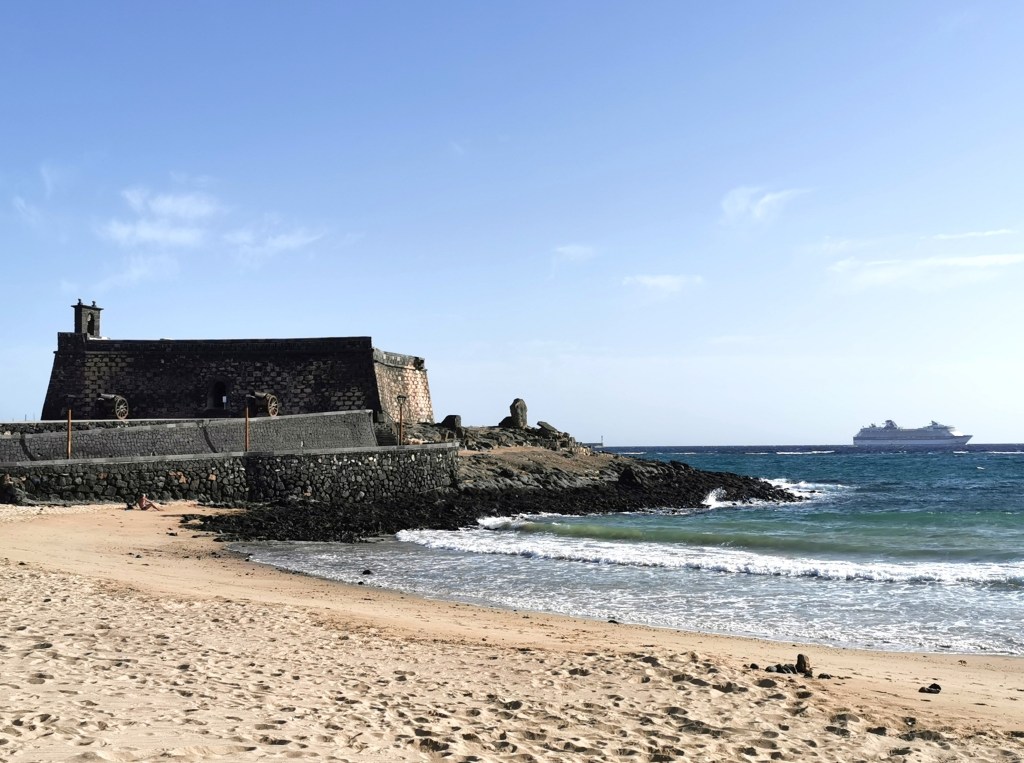
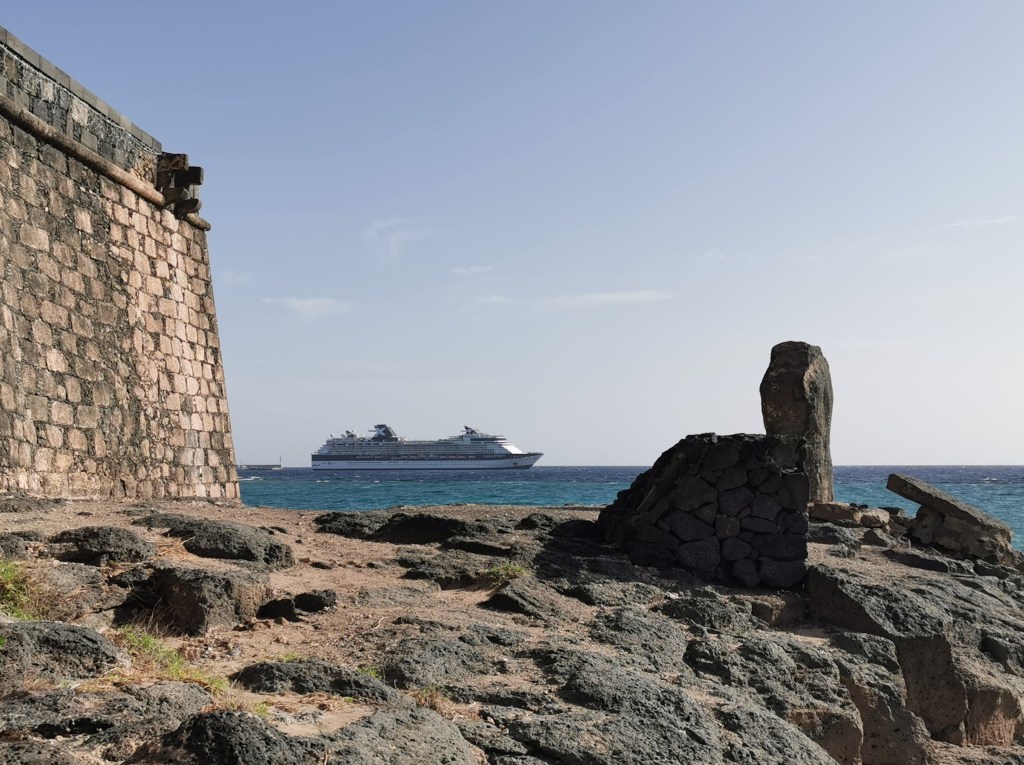
A few more pics of and from the castle
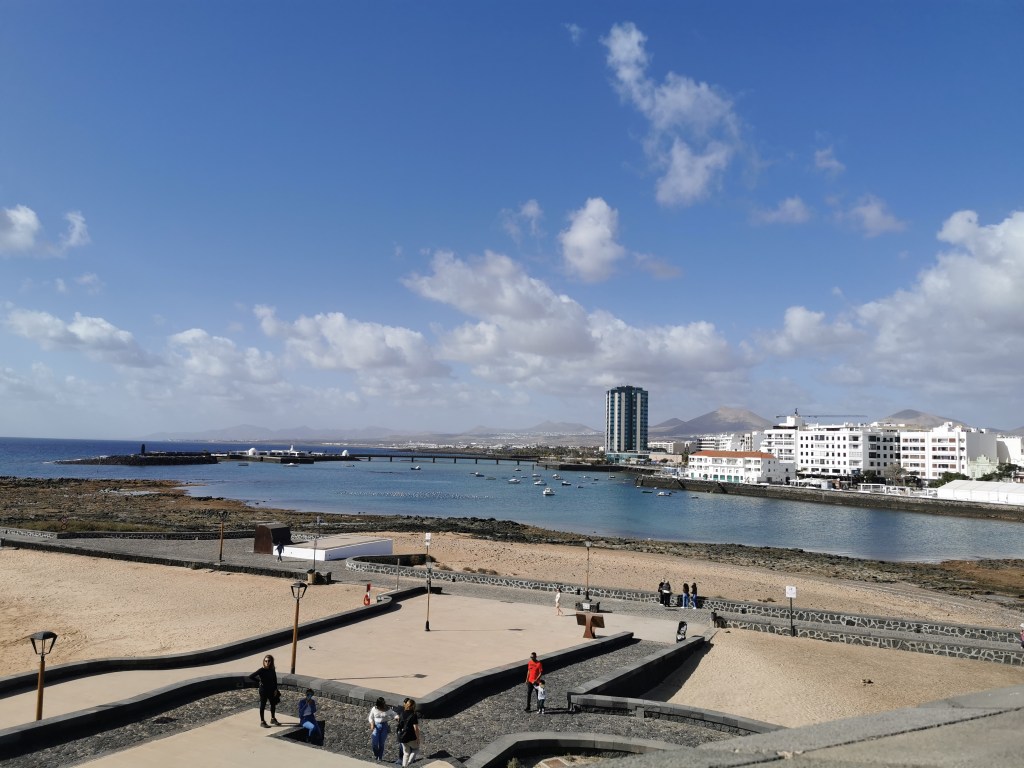
In the centre of town is an inner harbour around a natural lagoon. It is called El Charco de San Ginés and it was only after several days that we discovered that ‘El Charco’ is Spanish for ‘the puddle’. Along one side is a long row of bars and restaurants – the area is traffic free, it is pleasant without being over-prettified for tourists and it makes for a relaxing place to sit, have a drink or meal, and watch what’s going on.
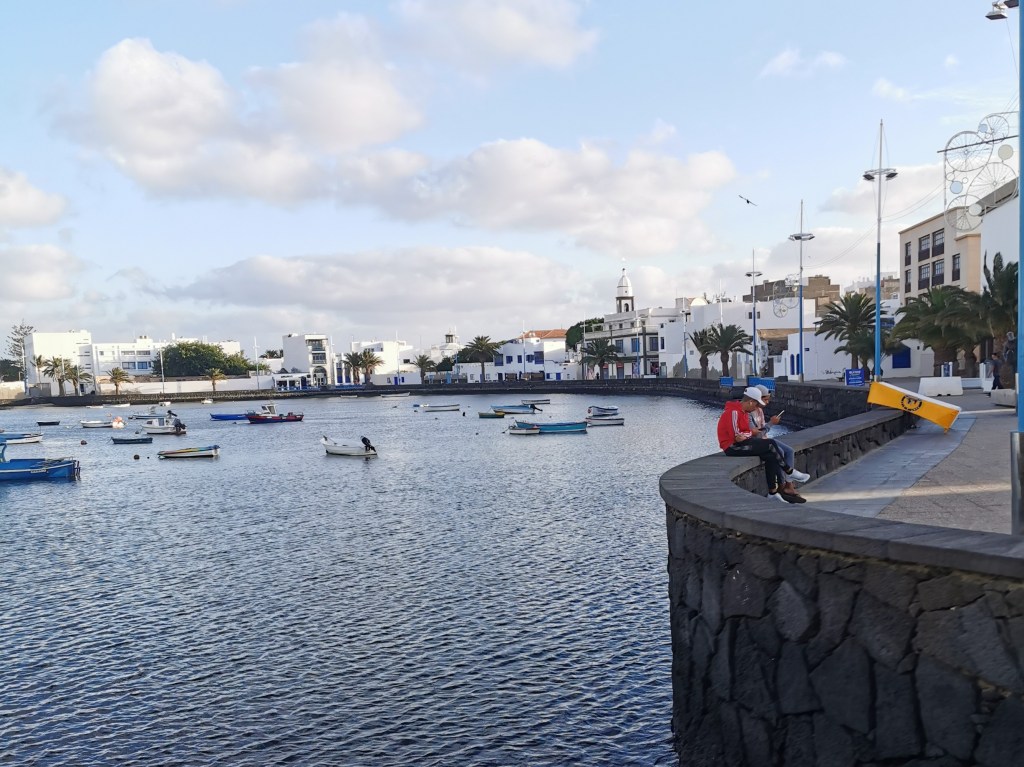
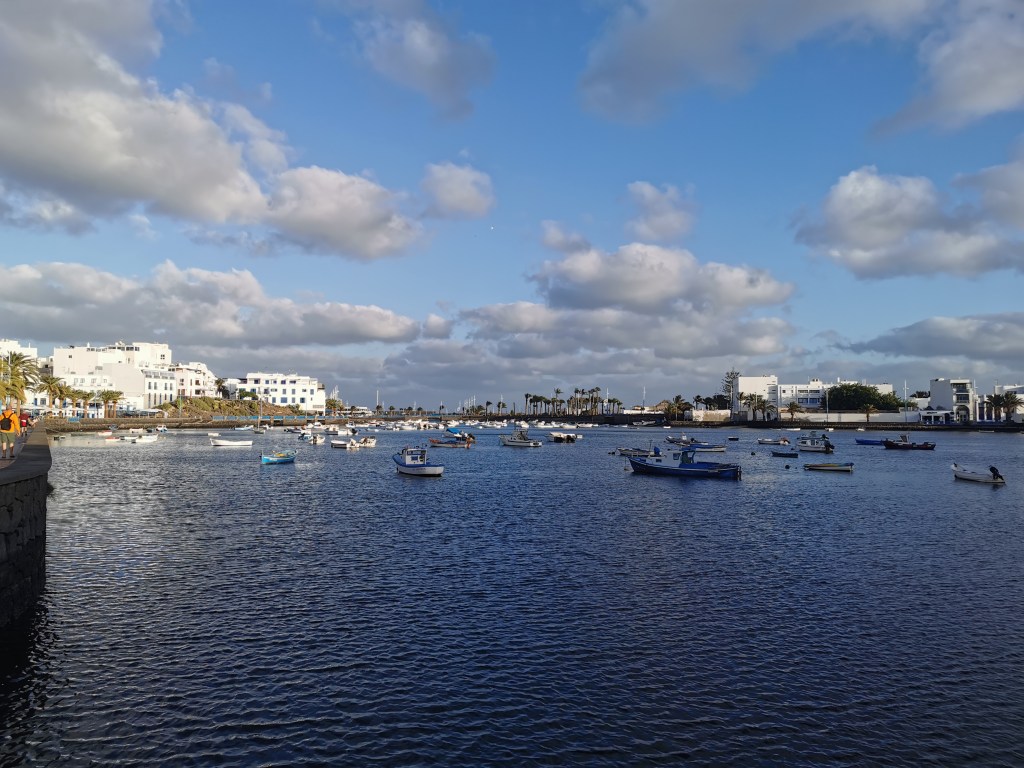
The puddle
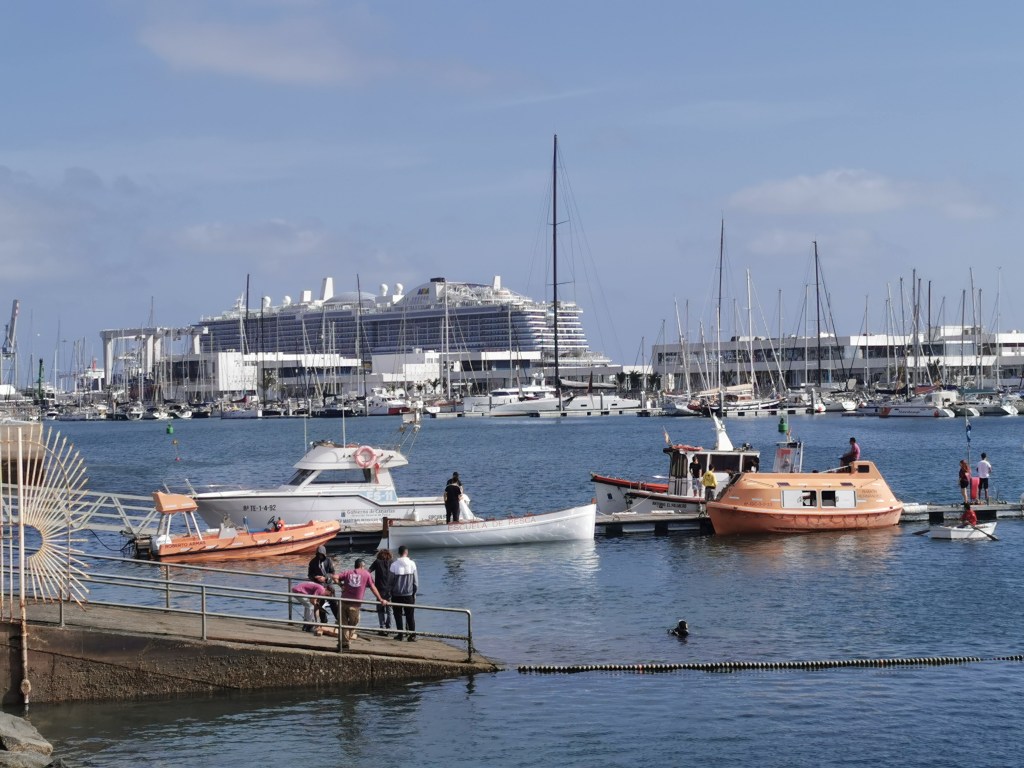
Beyond the puddle is the modern port area. There is a ferry and cargo port – there is very little local agriculture or food production and almost all of the goods for the island arrive by sea – and a cruise terminal. A couple of large cruise liners called while we were there – this generated a stream of people visiting El Charco, though most passengers appeared to head off on bus tours around the island.
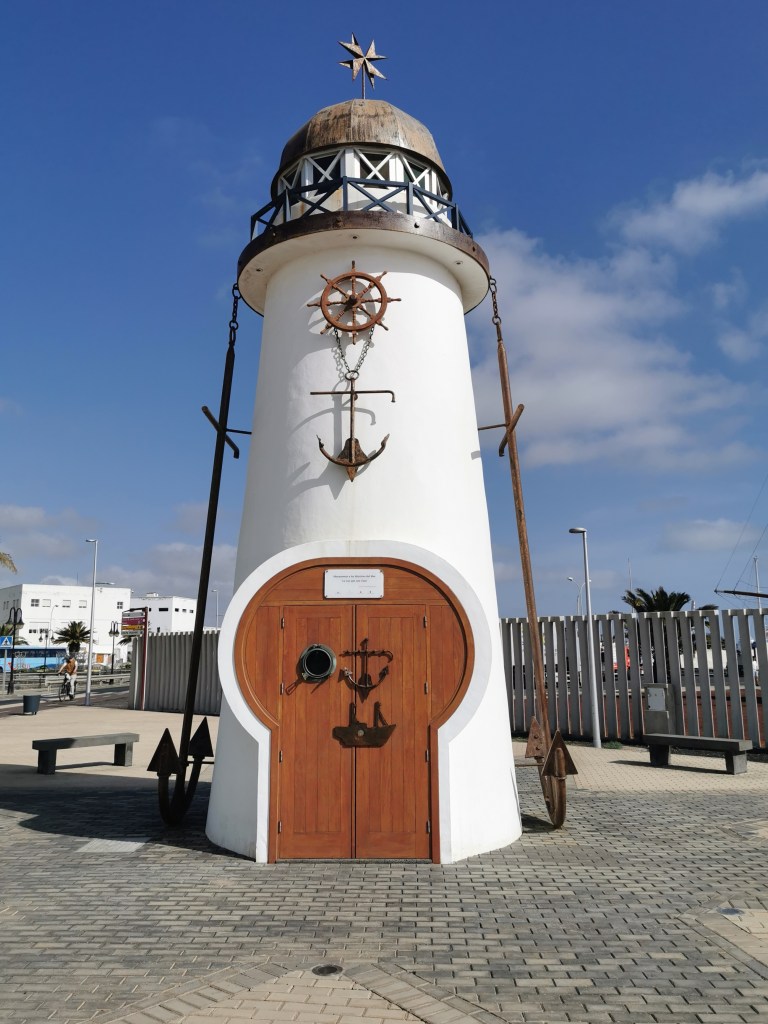
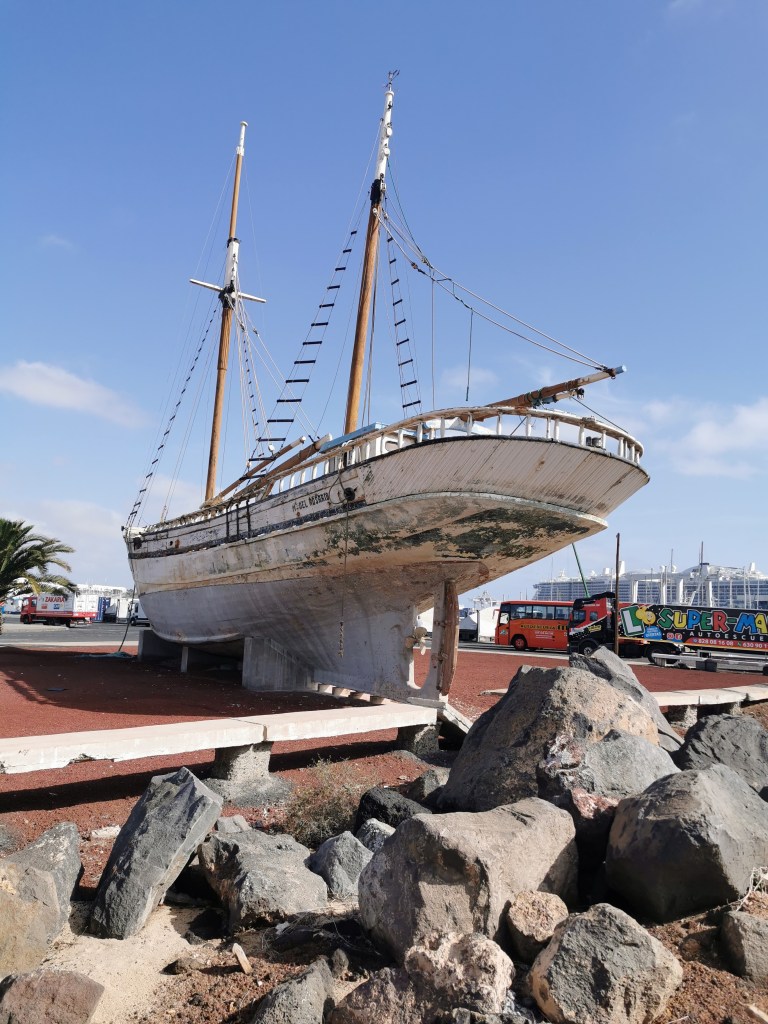
The port area
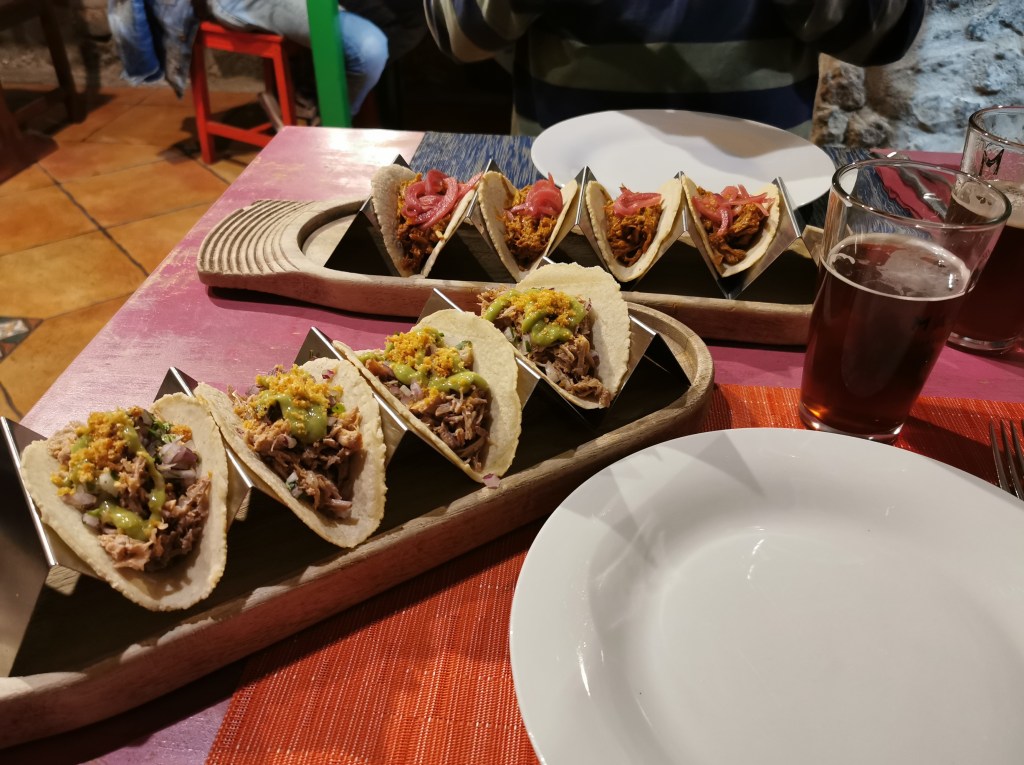
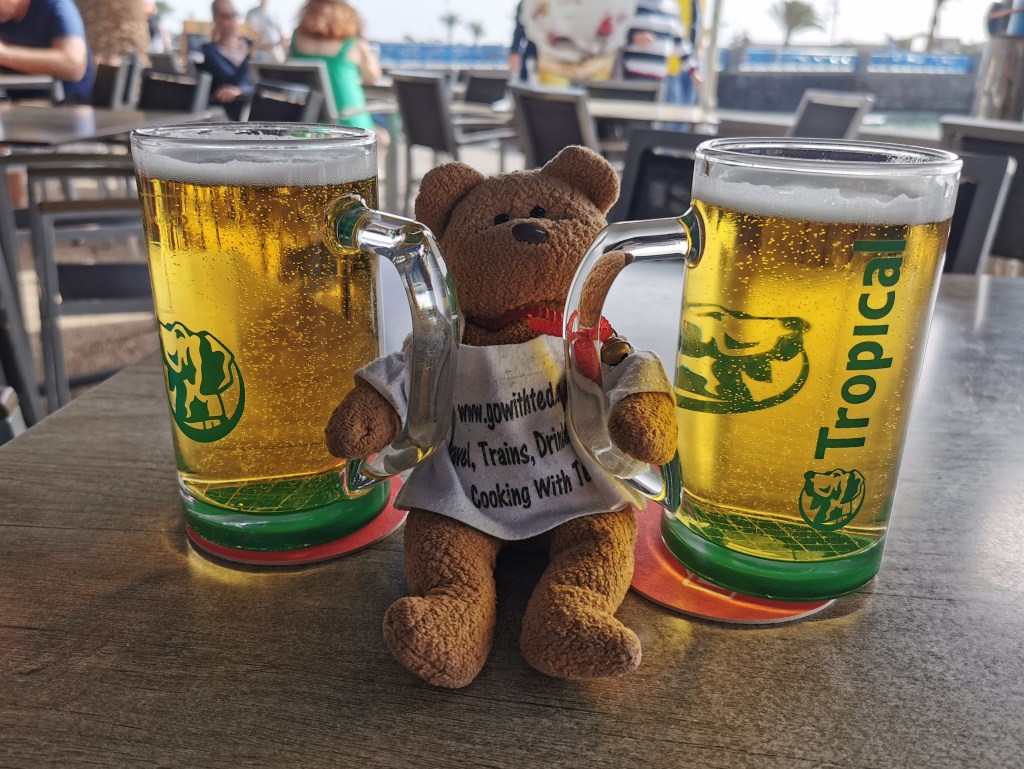
Needless to say, we spent much of our time drinking beer and eating. Along the puddle we liked to drink in La Miñoca, Papá Miguel and El Leito de Proa – the latter served good fish. In town we also had enjoyable meals in La Lupe Cantina Mexican restaurant and Bar Strava. There are the usual back street local tapas bars such as La Plazuela, each with their own hours of opening and rest days. Along the seafront road La Rustica serves pizzas and burgers – while the food was nothing special it was reliably open when we wanted to eat.
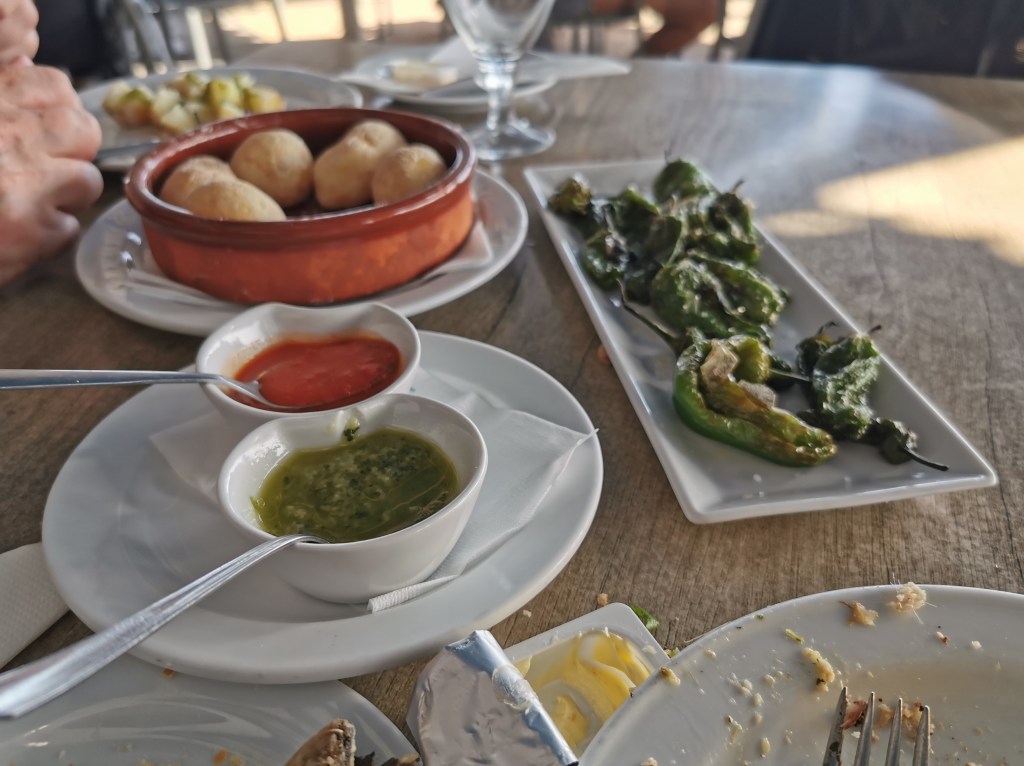
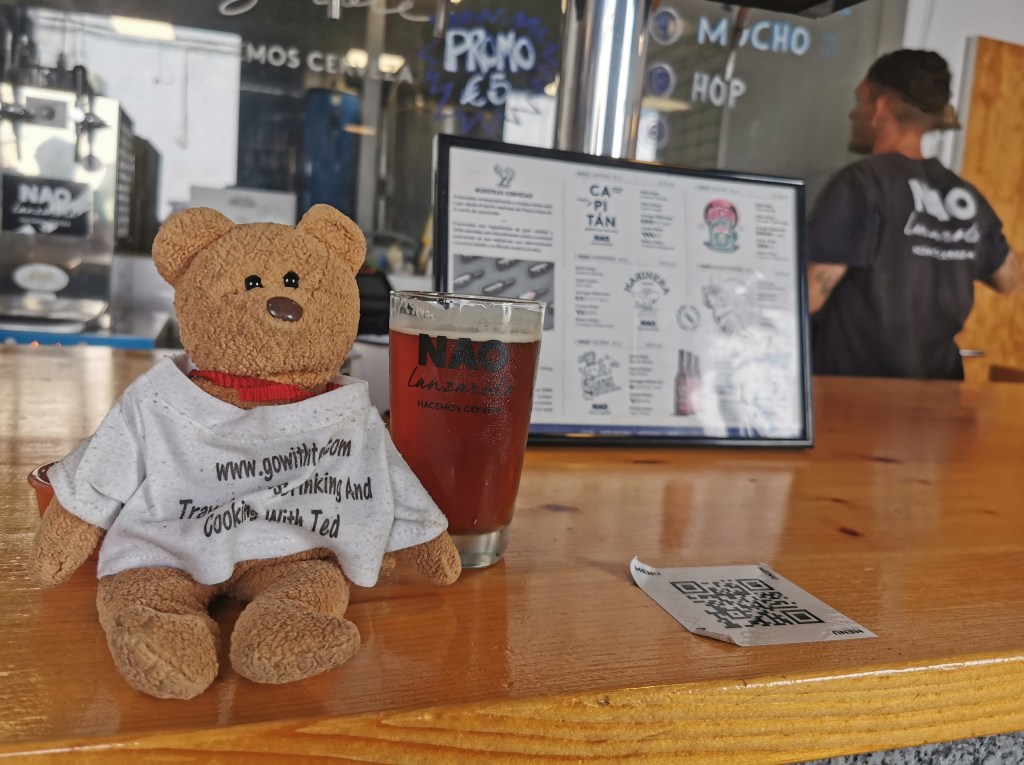
The two beer brands from the Canaries, Tropical and Dorada, are widely available as were beers from Estrella Galicia – each produce a variety of draught and bottled beers . In the port area is the NAO microbrewery, producing a range of craft beers…and of course we visited the taproom.
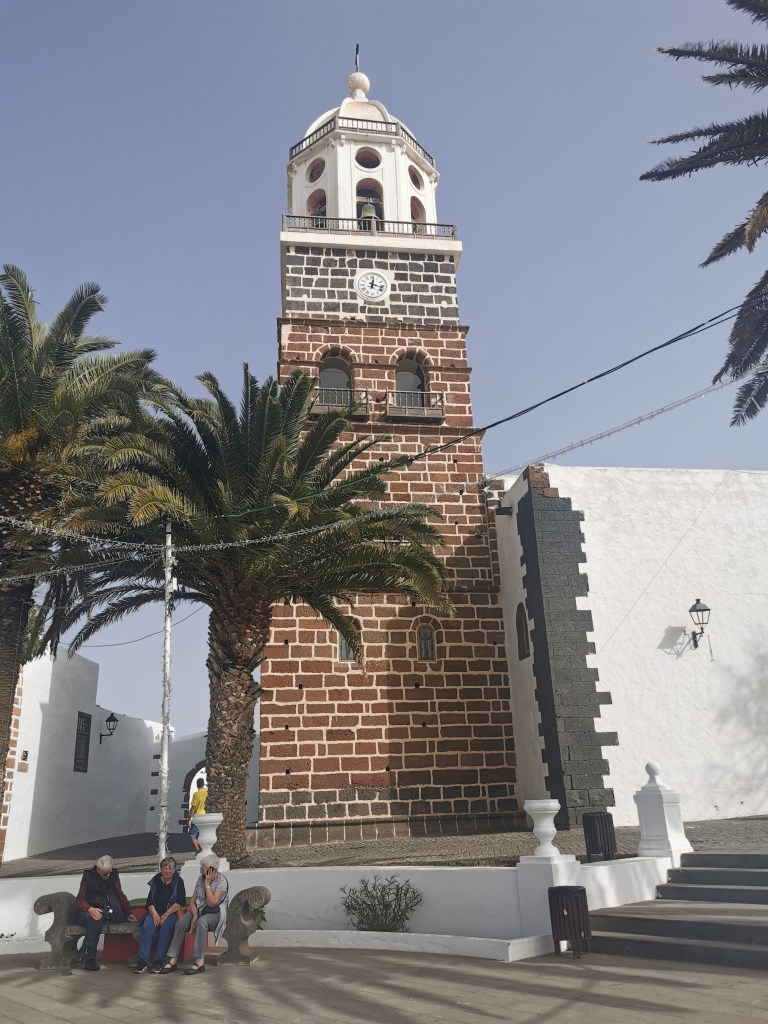
Of course, we visited various parts of the island during the week. Teguise, 12km inland from Arrecife across the bare volcanic plains, is the former capital of the island. It is a pleasant old town of traditional whitewashed houses. It is popular with day trippers – in particular there is a plethora of craft shops – but it retains a village atmosphere. After we wandered around and purchased some souvenirs for the tat shelf at home, we had a break for a couple of beers in El Chiringuito tapas bar and Restuarante Hespérides, in both of which the food looked tasty.
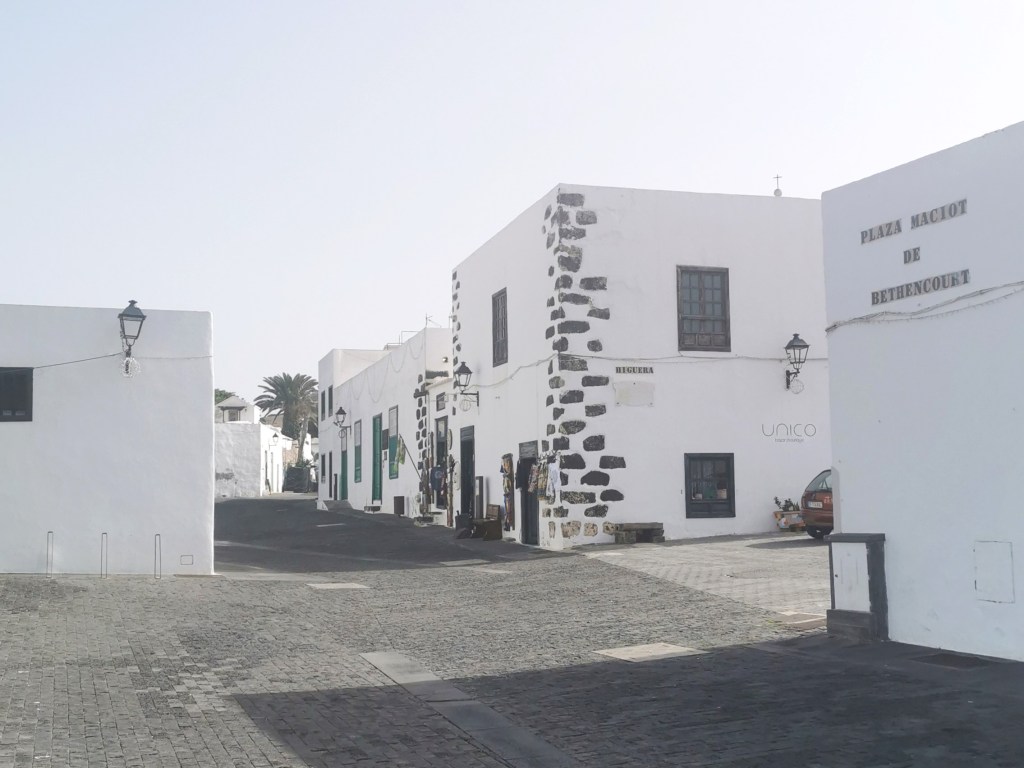
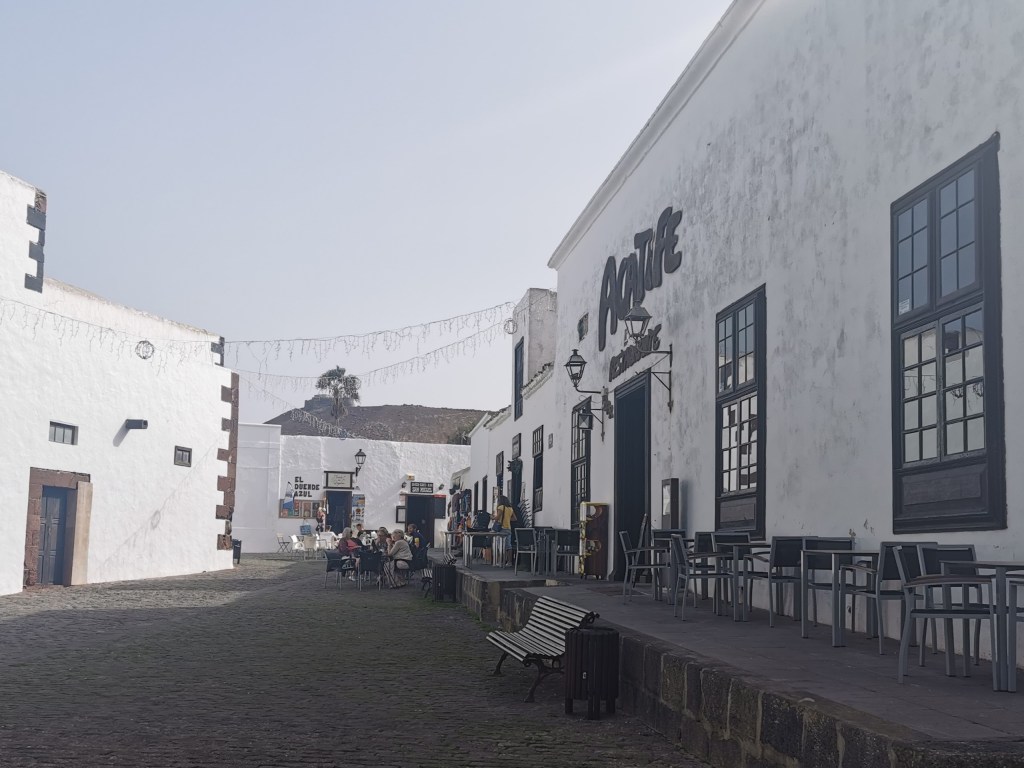
Teguise (above) and Costa Teguise (below)
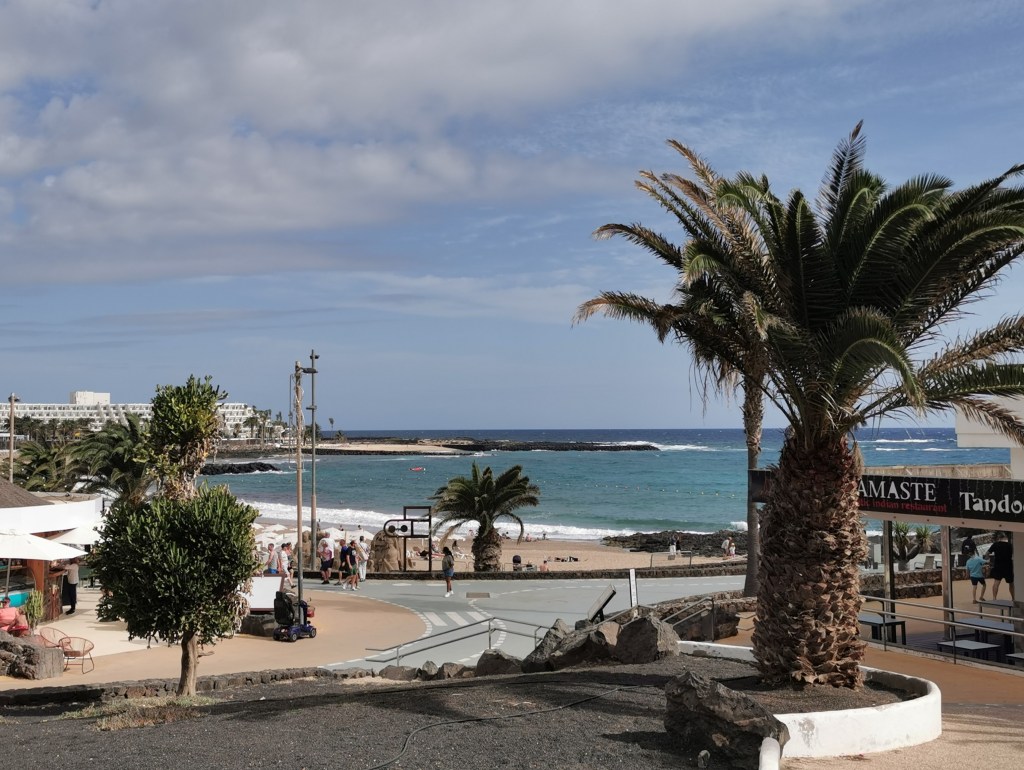
We paid a short visit to the nearest purpose-built resort to Arrecife – Costa Teguise. It has all the usual facilities – bars and restaurants from many nationalities and a decent beach. It is free from massive over-development and remains pleasantly low-rise. On another day we passed through Puerto del Carmen. It is the largest resort on the island with 12km of beaches along the coast. It reminded us of the Costa del Sol resorts – fine if all you want to do is hit the beach and the bars.
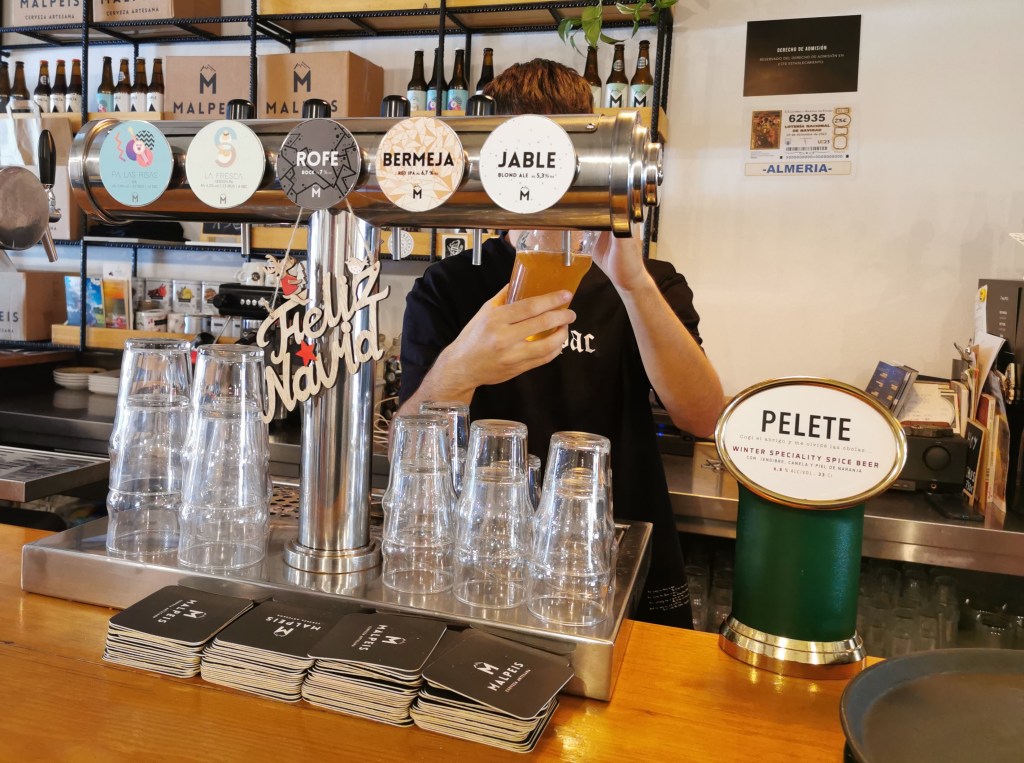

Beer was the reason for our visit to Tinajo, across the island about 40 minutes by bus from Arrecife. Slap bang in the middle of the village is the Cervecera Malpeis brewpub – they brew some smashing craft beers. It provided the opportunity to see more of the island’s typical landscape, which is fascinating. Empty and barren volcanic hills are interspersed with vines growing on the black lava soil behind crescent-shaped stone walls to protect them from the wind. It feels very different.
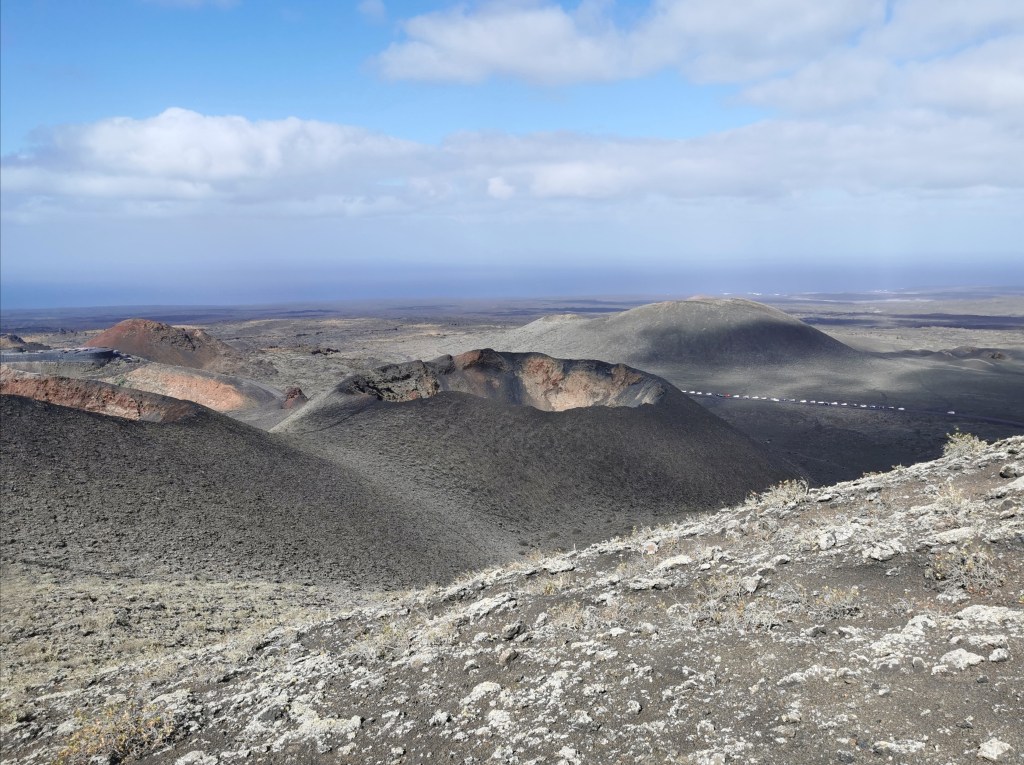
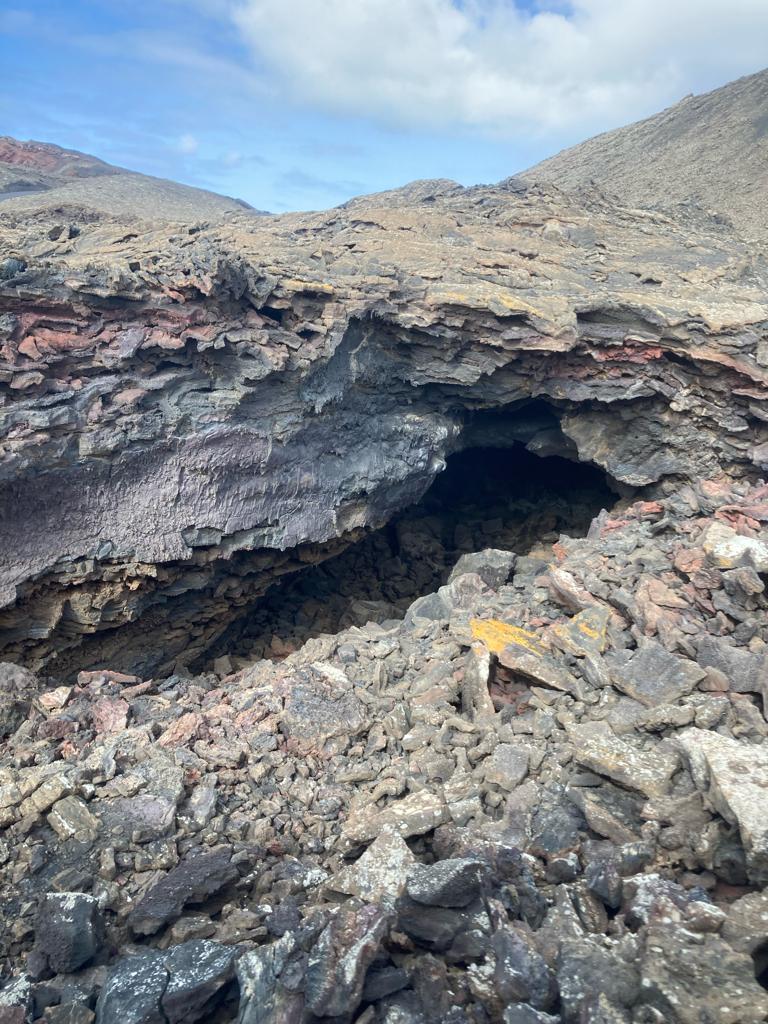
We joined a half day coach tour to the Timanfaya National Park – it isn’t accessible by public transport. Enormous volcanic eruptions in 1730-1736 and again in 1824 devasted over 200 square kilometres of the island, including 50 settlements. At the centre of the park is the Islote de Hilario and Restaurante El Diablo, where we were treated to displays of just how hot the landscape remains, due to magma beneath the surface.
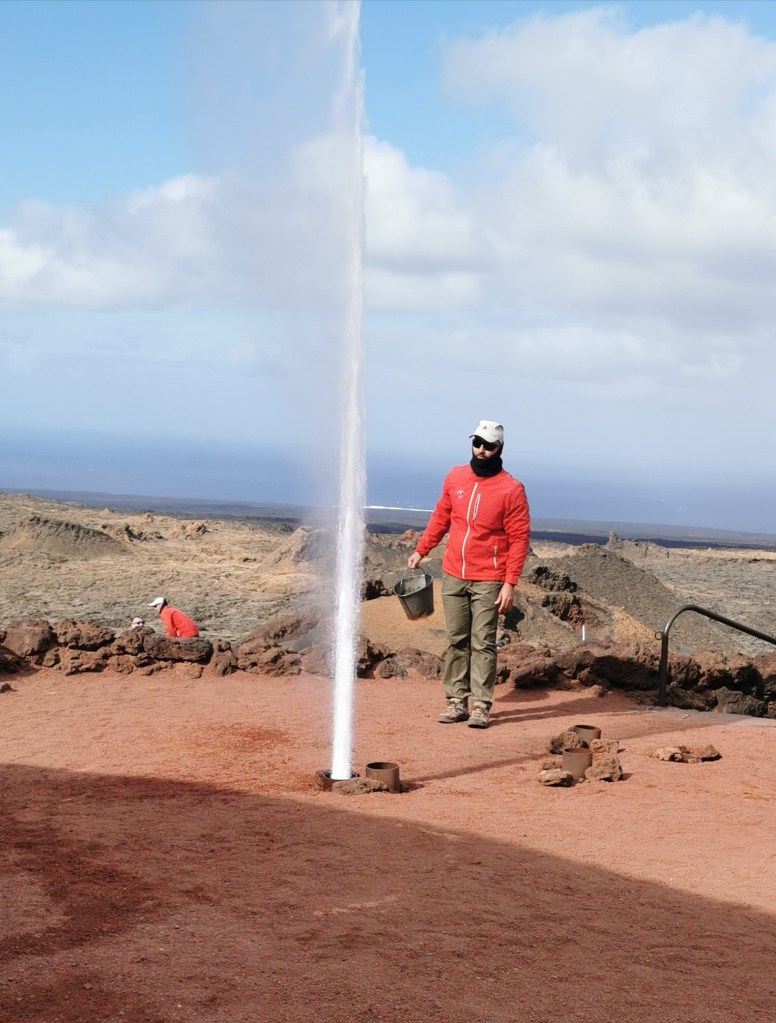
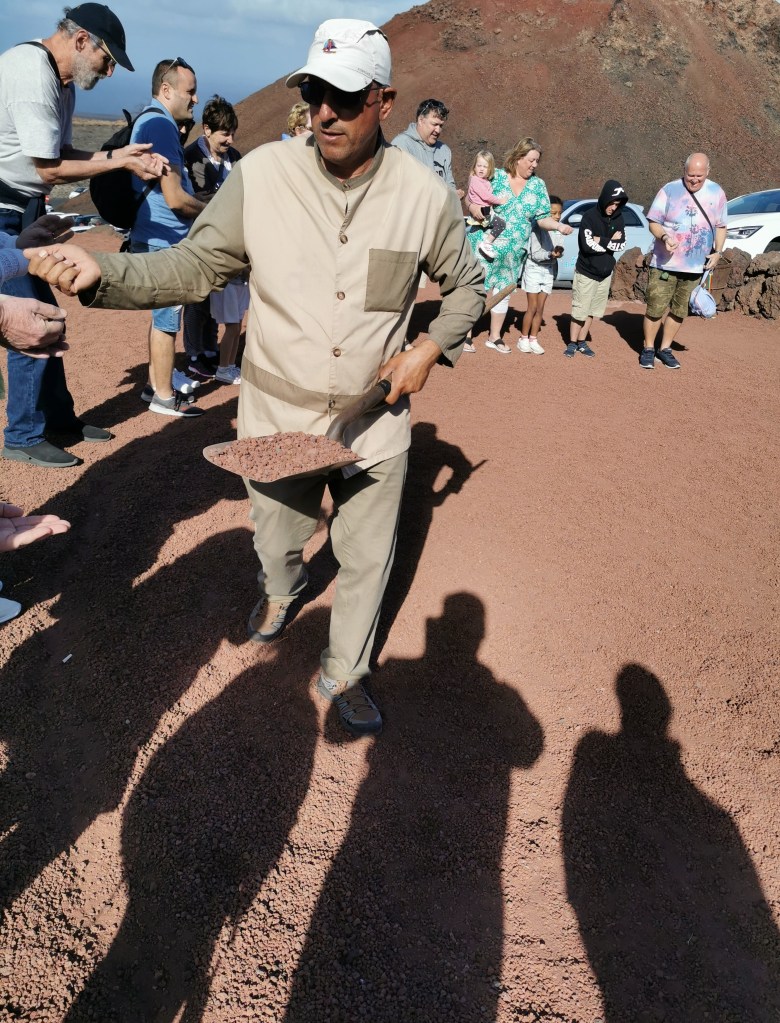
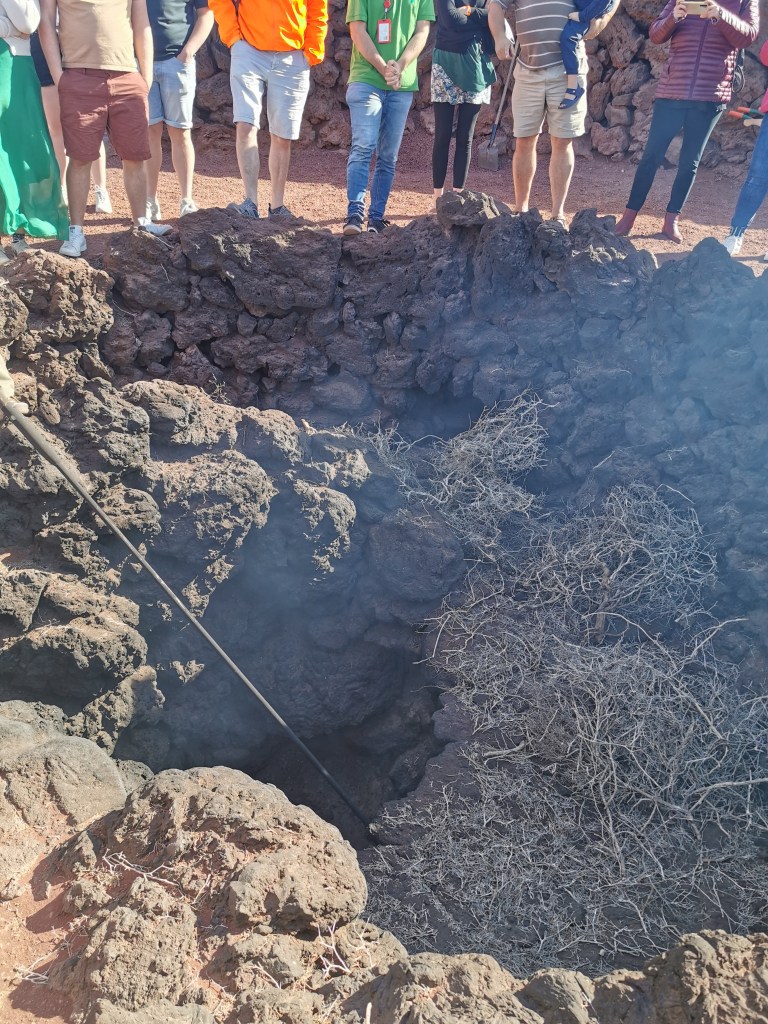
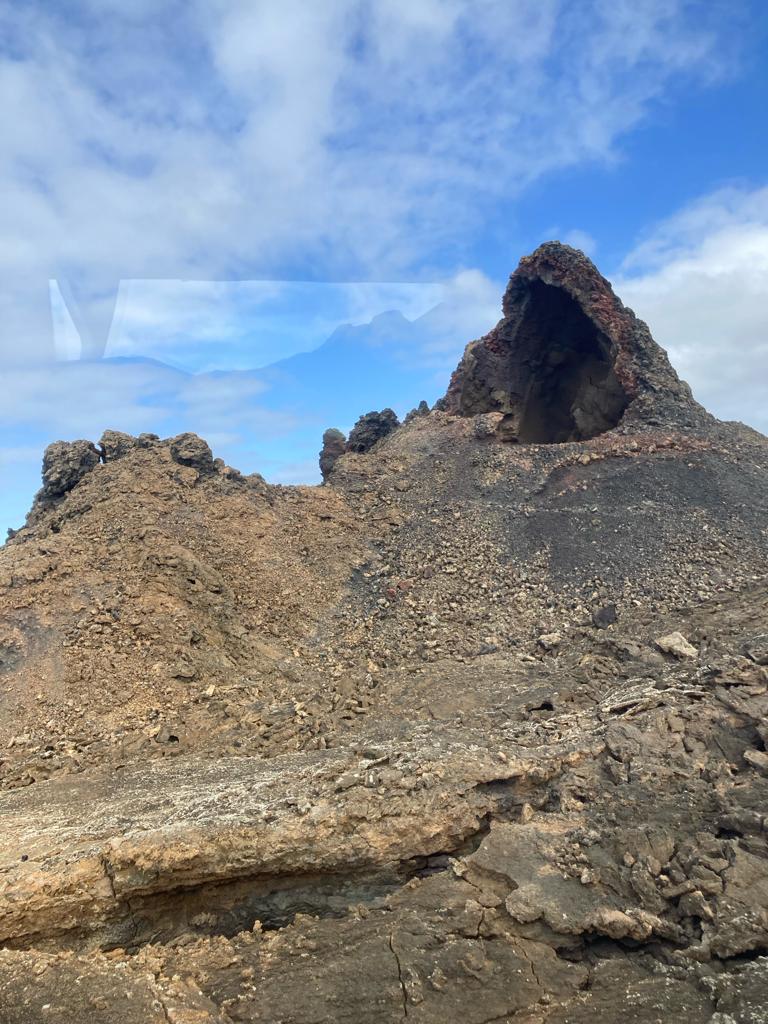
From the restaurant a 14km circular road, the Ruta de las Volcanes, winds through the area (the route is only open to coaches), with views of the volcanic landscape, the Montañas del Fuego (Mountains of Fire) and past fantastic features of solidified lava. You learn more about lava than you ever thought there was to learn – fascinating and not to be missed.
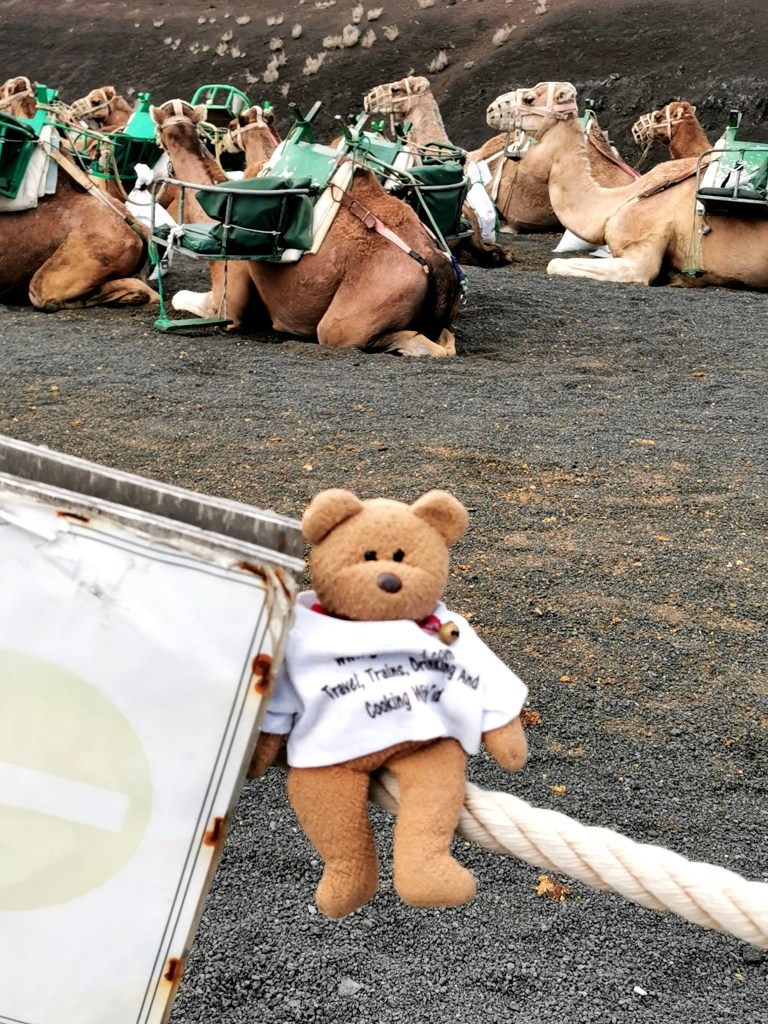
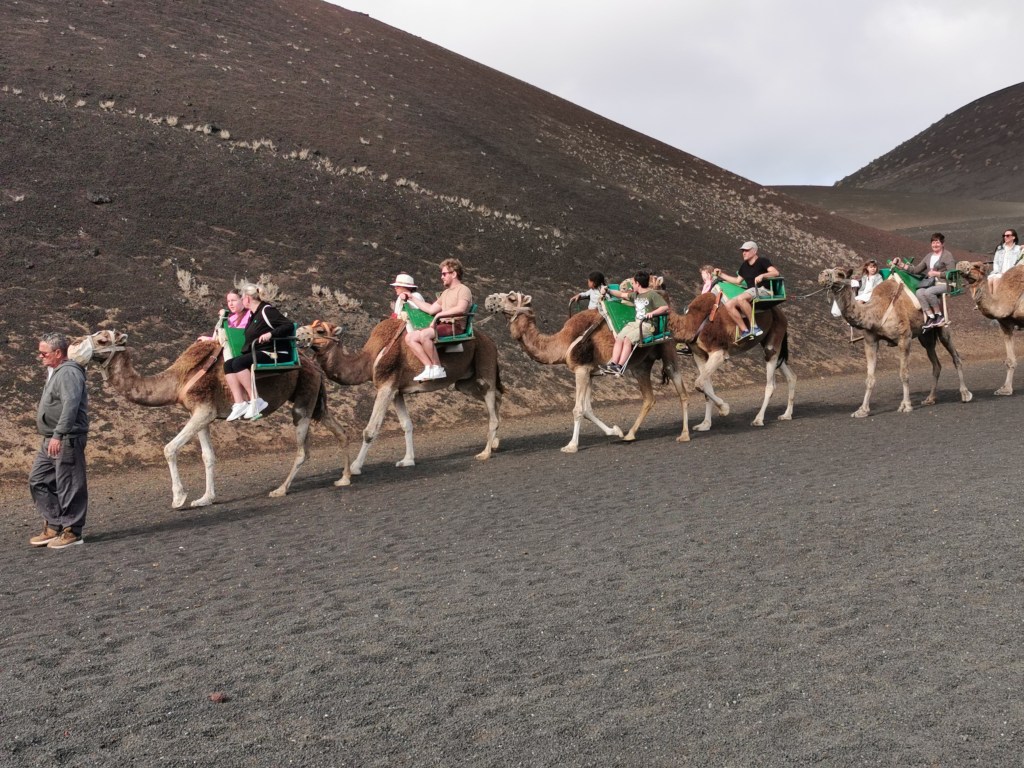
En route to Timanfaya we stopped off another major tourist attraction – the camels. We turned down the option of a ride but visited the museum. Today the camels are for the tourist but historically they were important, fulfilling the role that horses performed elsewhere.
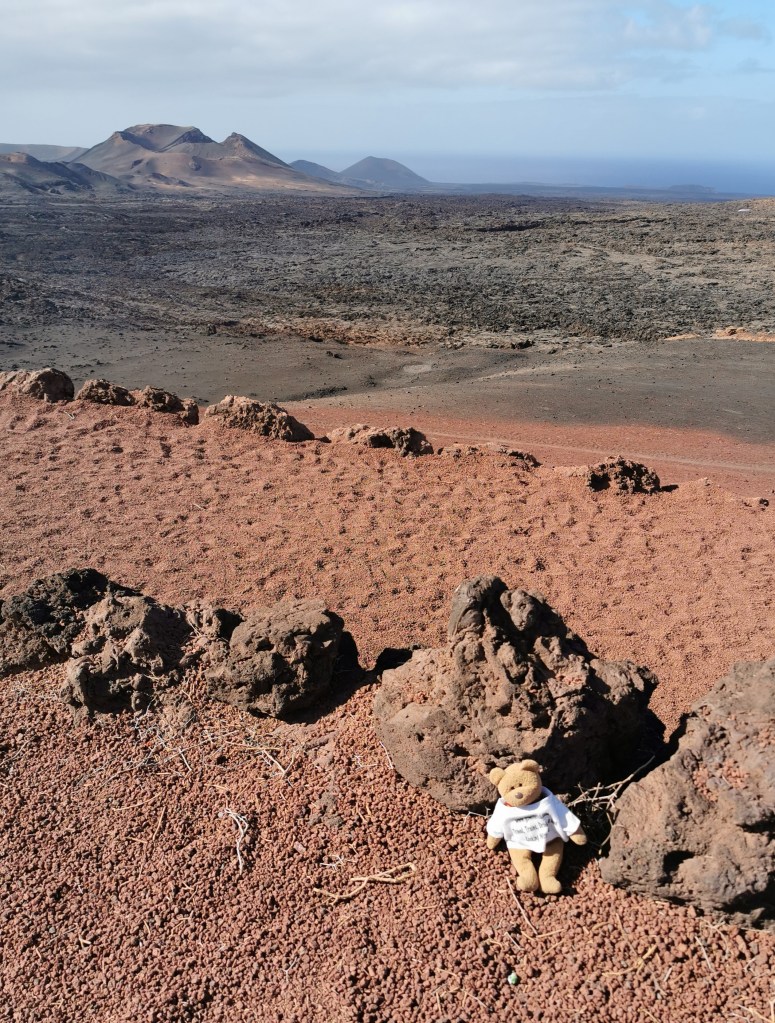
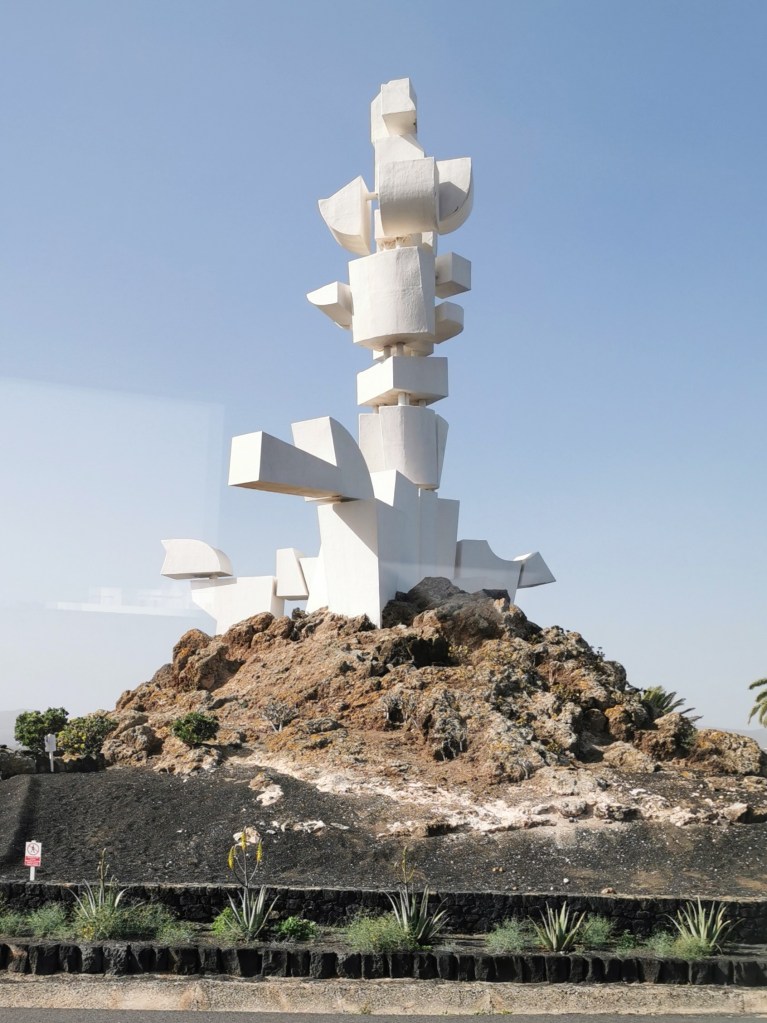
You can’t avoid the name of Cesar Manrique on Lanzarote – a twentieth century local artist, who was committed to protecting the traditional architecture and natural environment. We saw a few of his works in the Casa de la Cultura in Arrecife and the Monumento del Campesino (Monument to the Peasant – pictured) along the road to Tinajo.
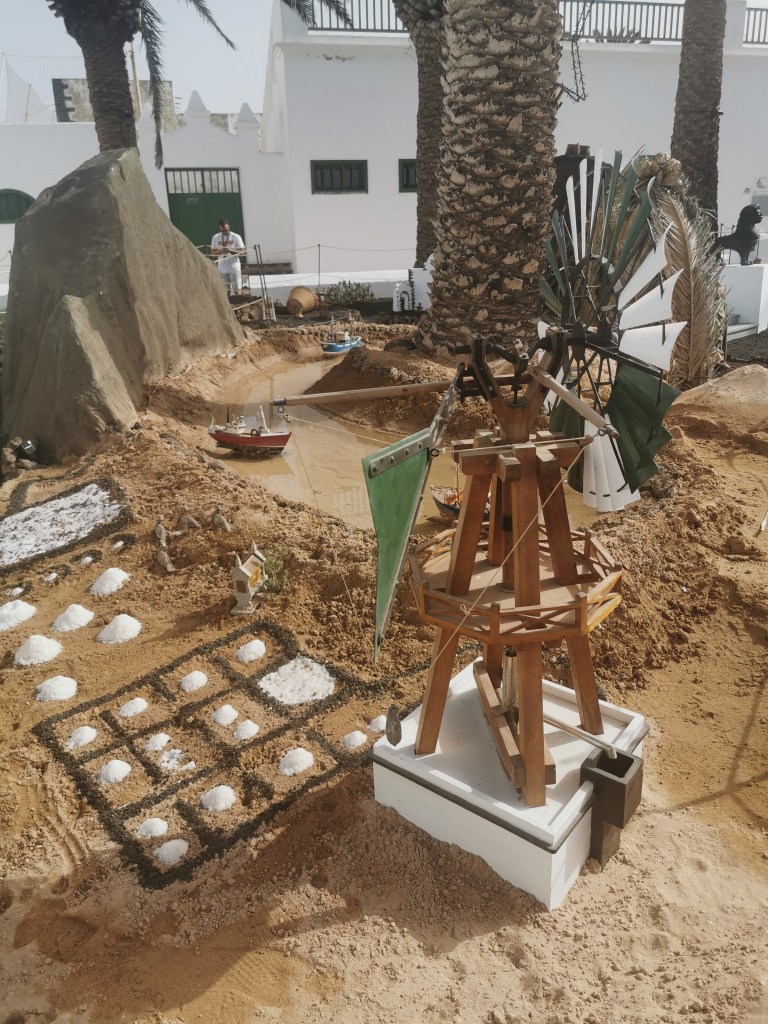
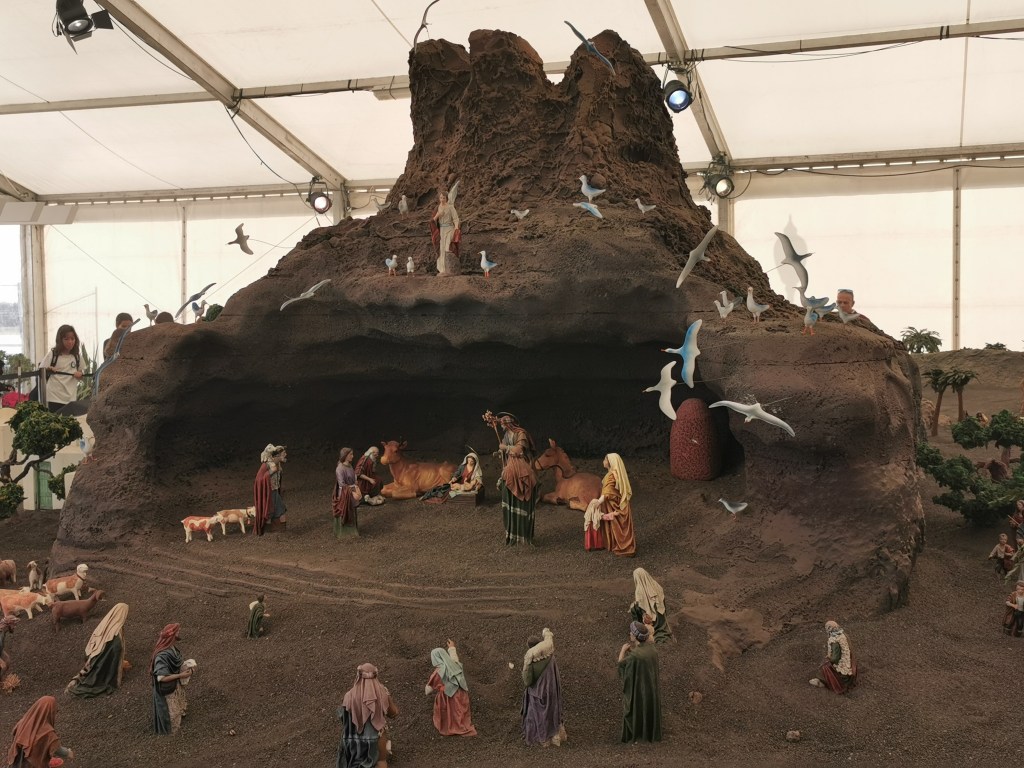
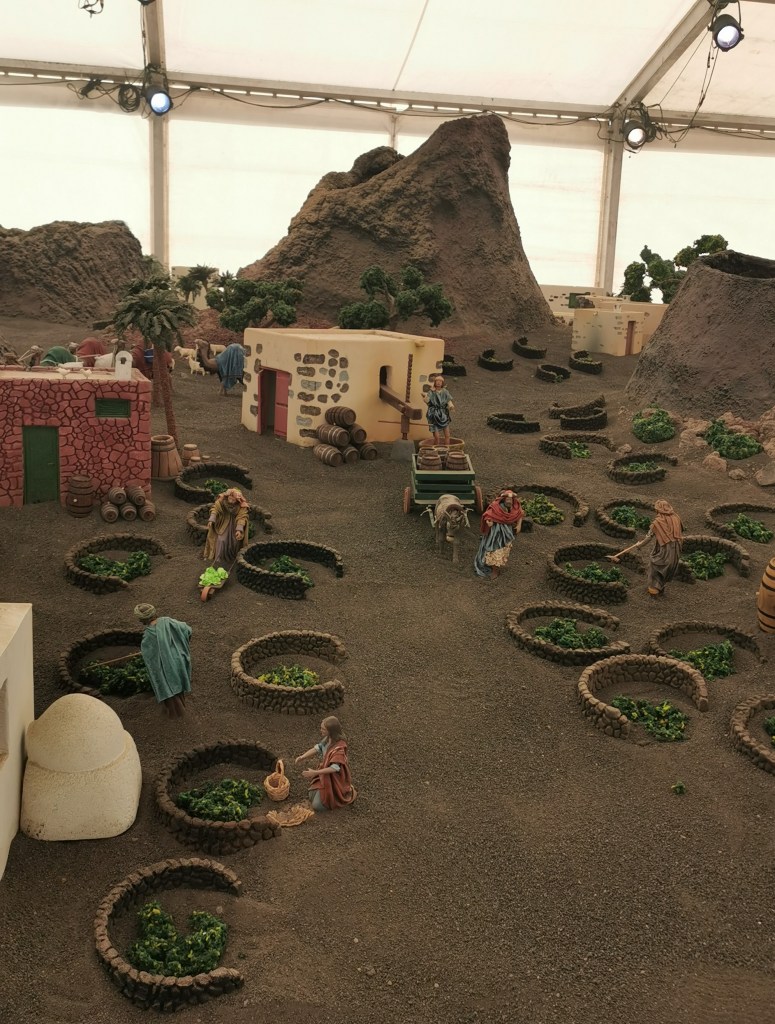
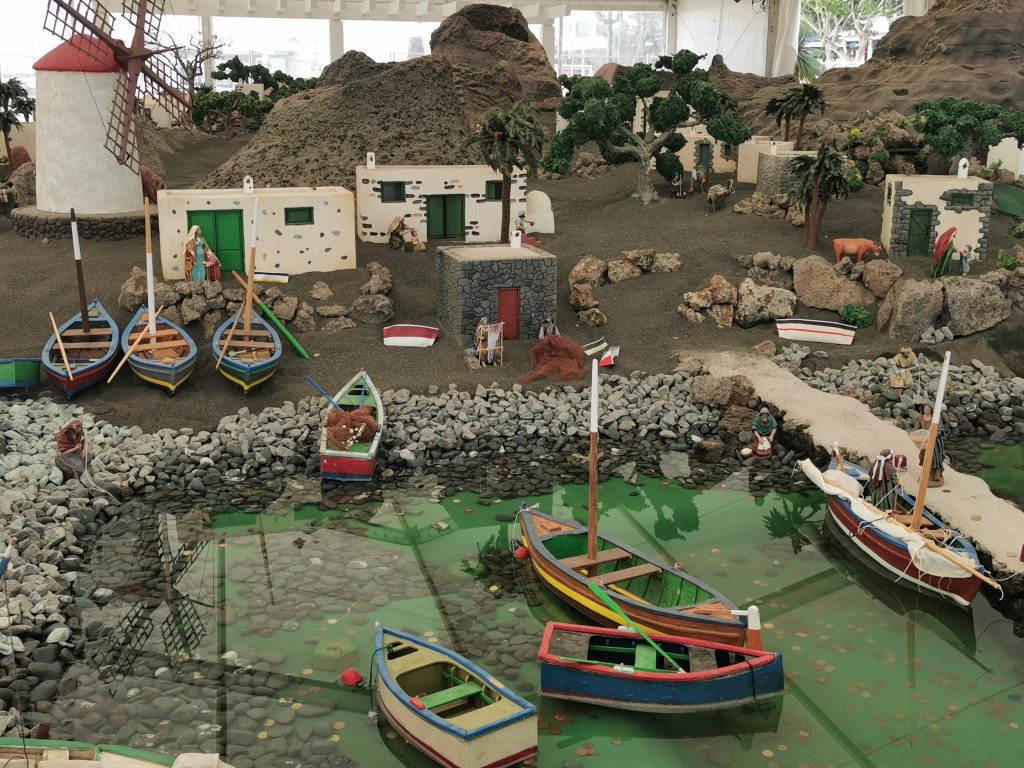
As it was December the local Belen or nativity scene was in a large tent close to our hotel. These are traditional in many Spanish towns, and we saw three examples across the island. They set the nativity scene amongst the local landscape, architecture and activities – each of the Lanzarote examples included volcanoes.
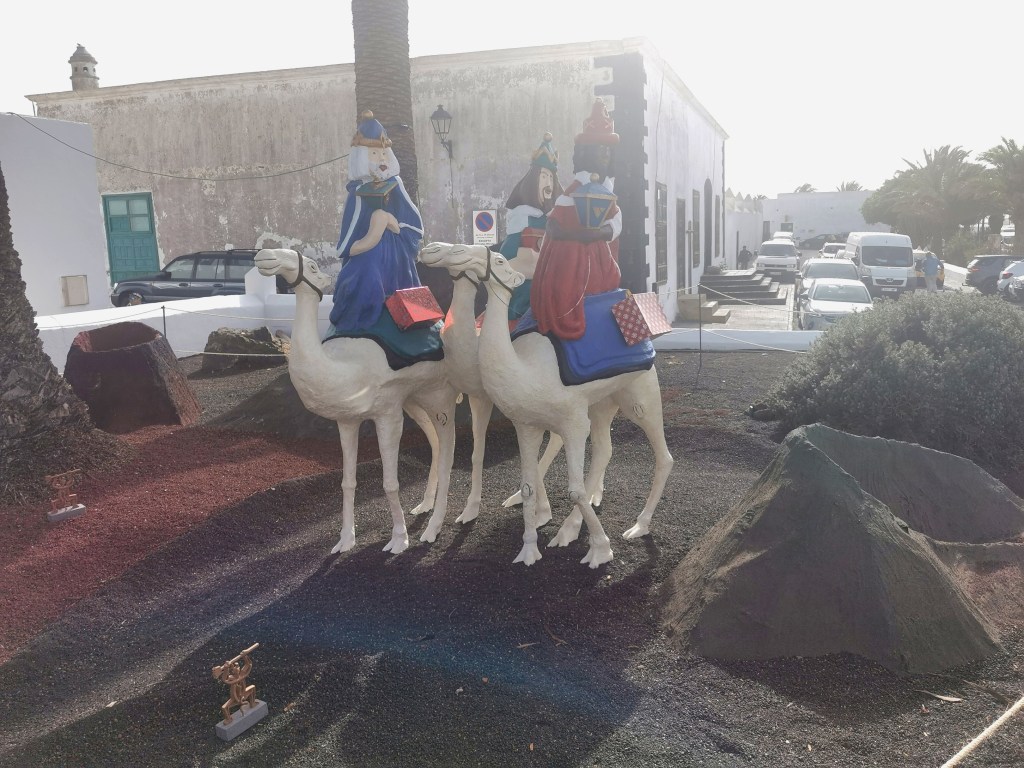
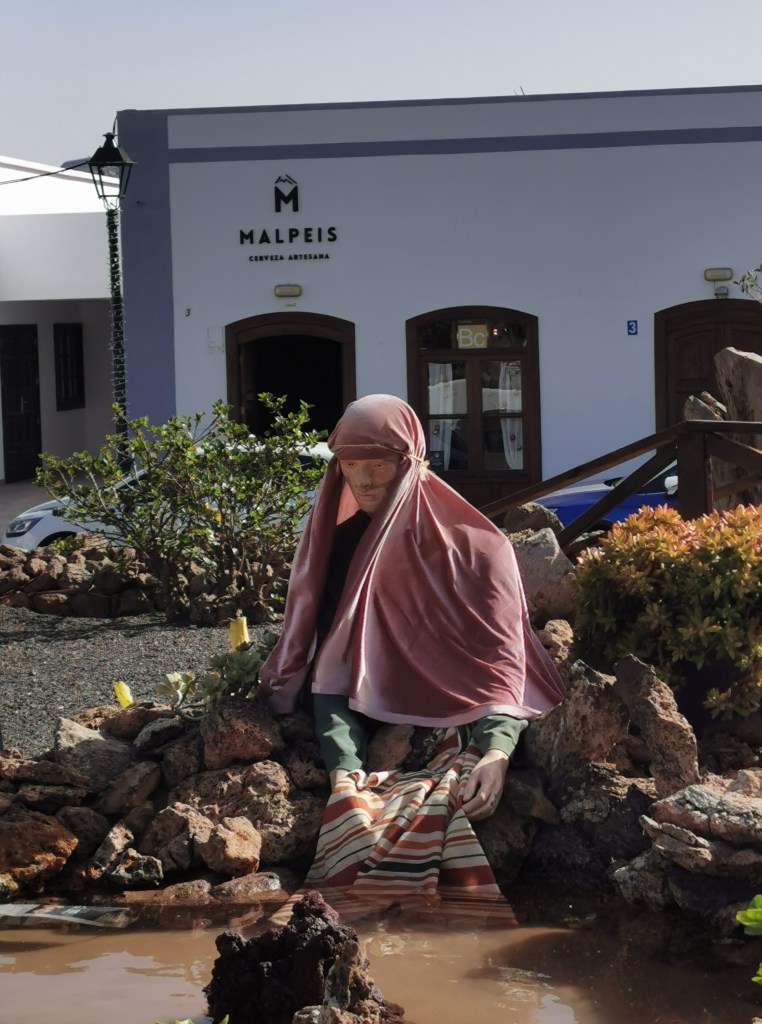
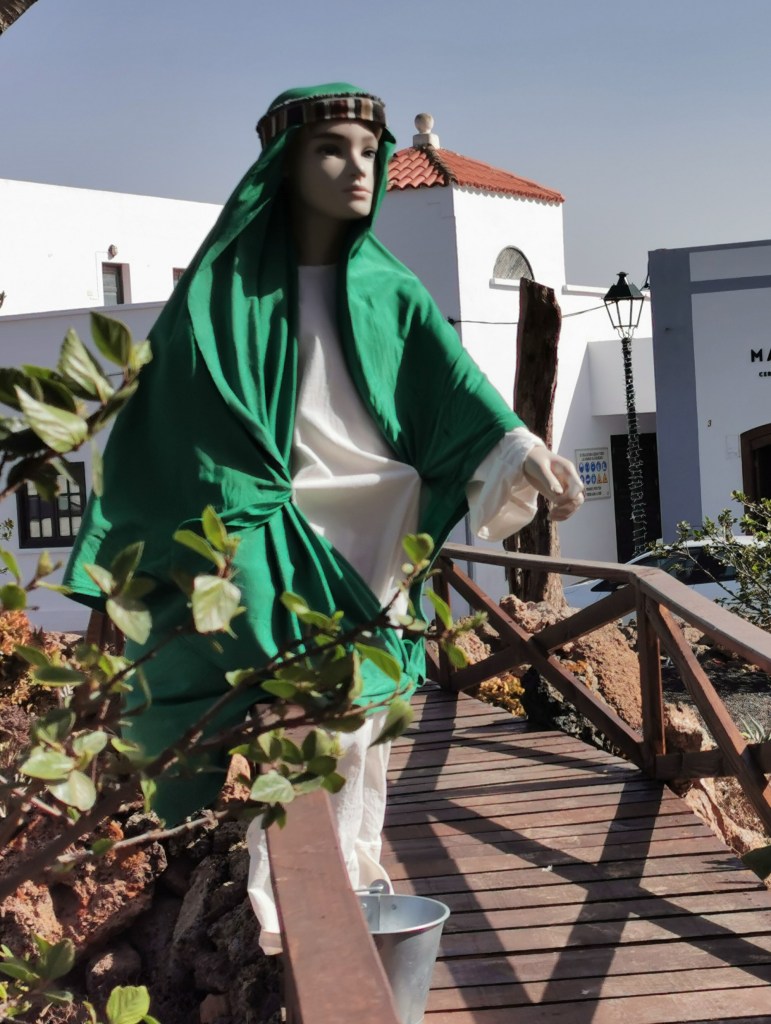
There is more to do on the island than we managed. We didn’t visit sites in the north of the island such as the Cueva de los Verdes and the Cactus Garden – there are tours available to the area. In the far north is the village of Orzola and the island of La Graciosa and in the far south is Playa Blanca, the port for regular ferries to Fuerteventura. Maybe next time.
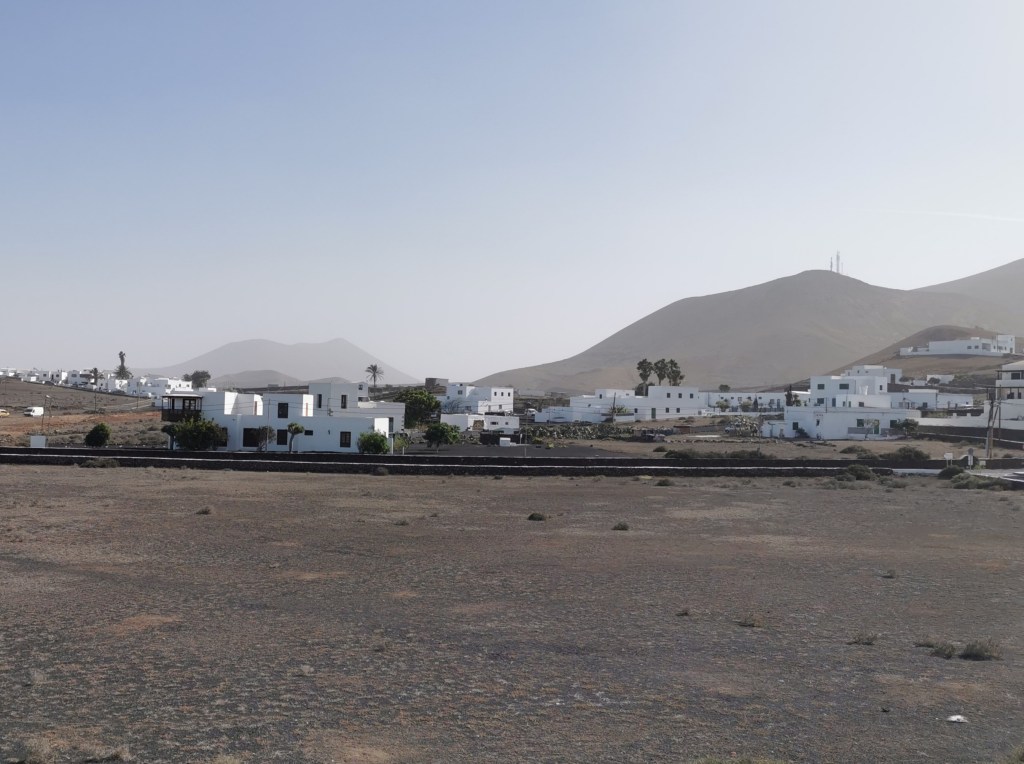
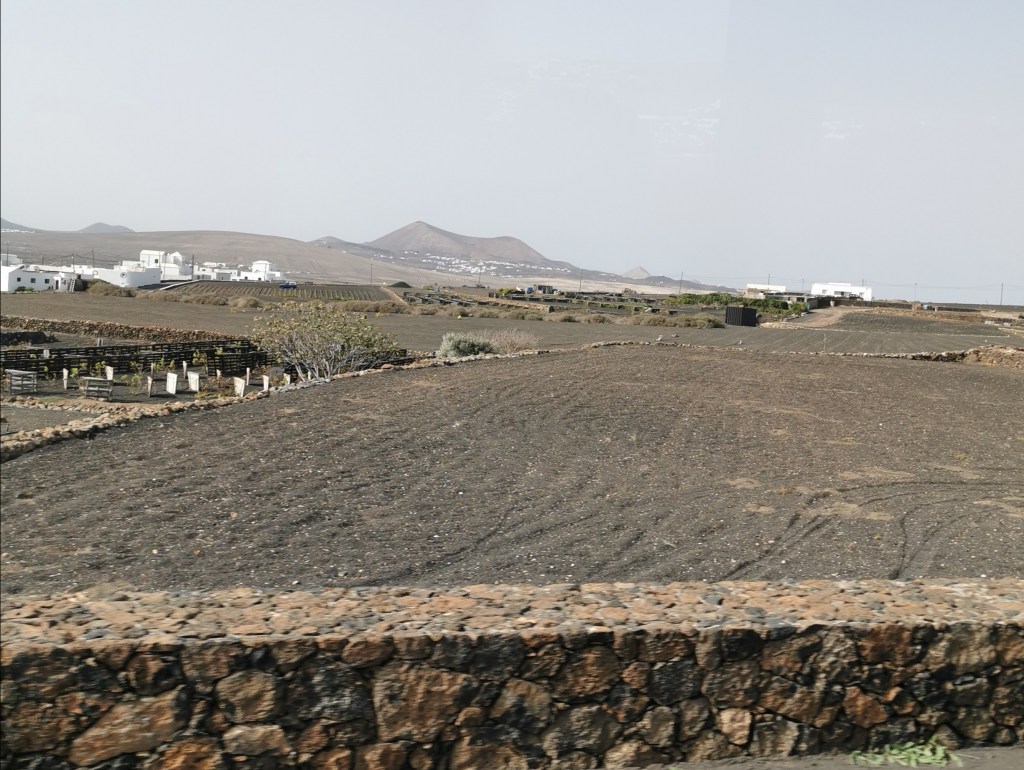
Typical Lanzarote landscape
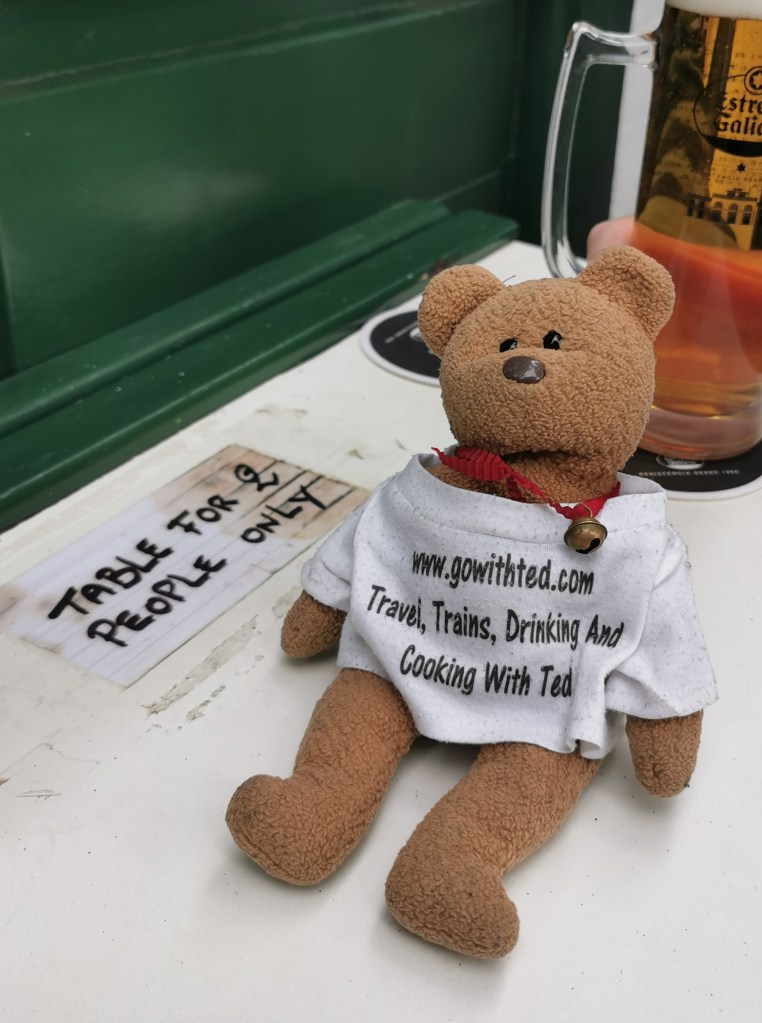
All in all it was a successful break. While we were there the weather was fine. Compared to the Costa del Sol in December it was a few degrees warmer during the day and stayed warm at night. There was a mild calima for a couple of days when the air quality declined as Saharan sand was brought in on the wind, but it wasn’t serious. We’re glad that we chose to stay in Arrecife rather than one of the resorts, for ease of getting around and access to facilities.
Practicalities – getting around
We used the bus network to get around the island. Services are reasonable, but information about them is terrible. The network is unduly complicated – for example from Arrecife to Teguise there are 8 services, which follow the same route, but there is no combined timetabl. All that is available for each route is a list of departures from each terminus, and there is no detailed system map. Services are operated by IntercityBus Lanzarote and you can download the app of that name or consult their website http://www.arrecifebus,com , both of which are poor.
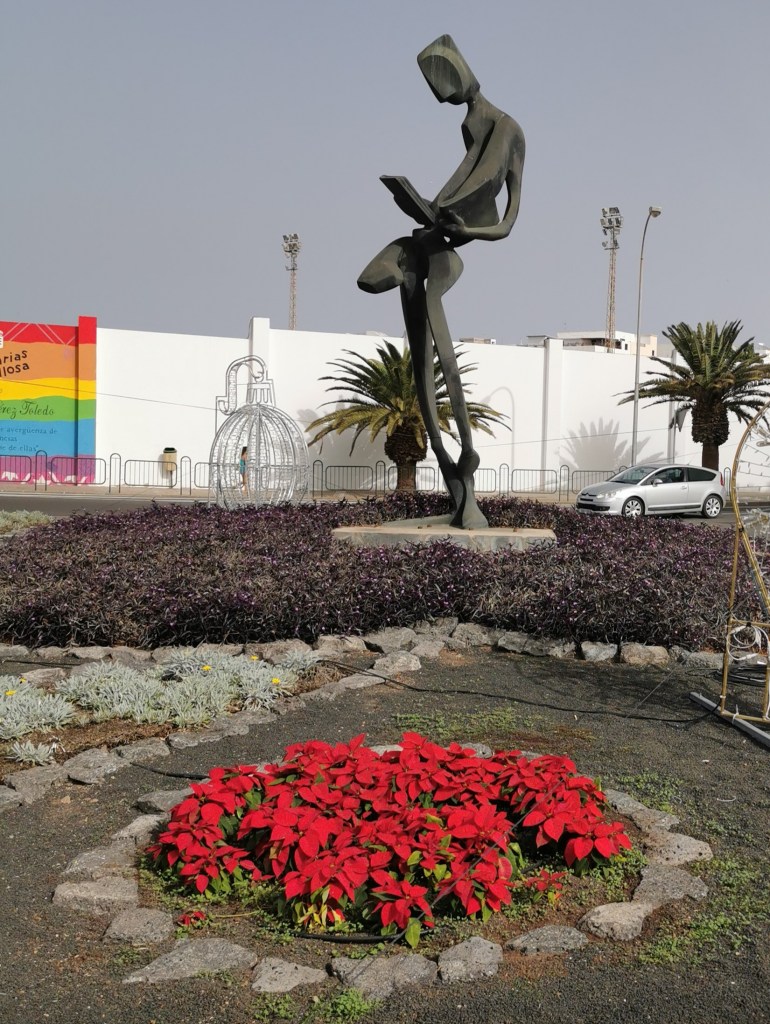
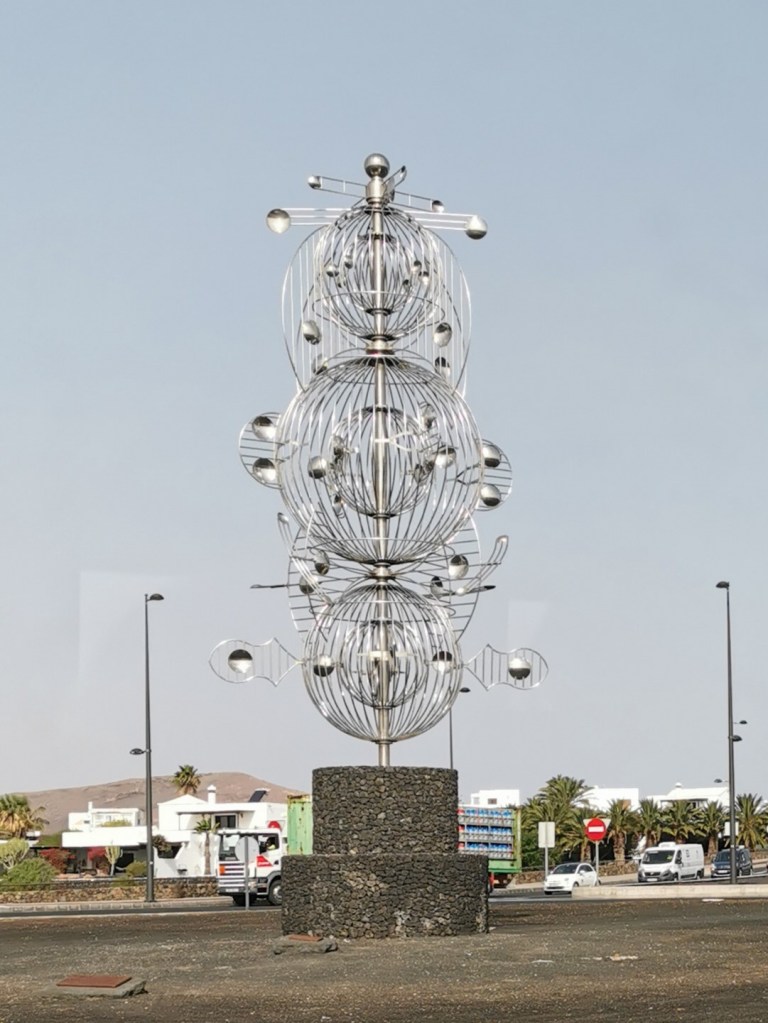
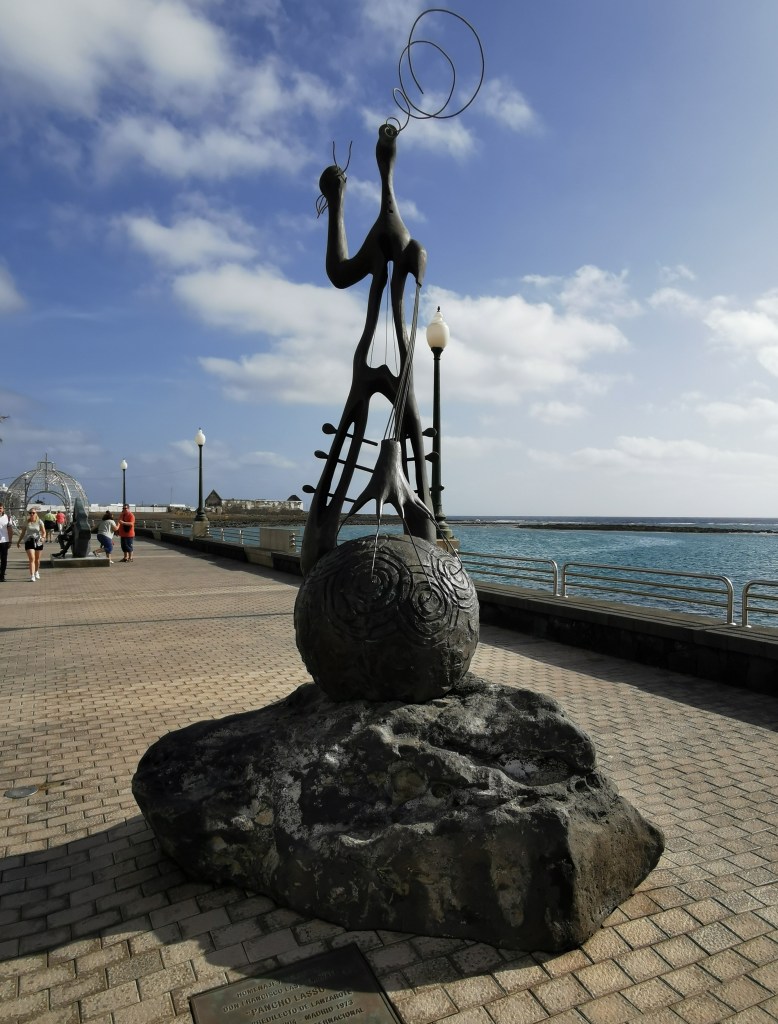
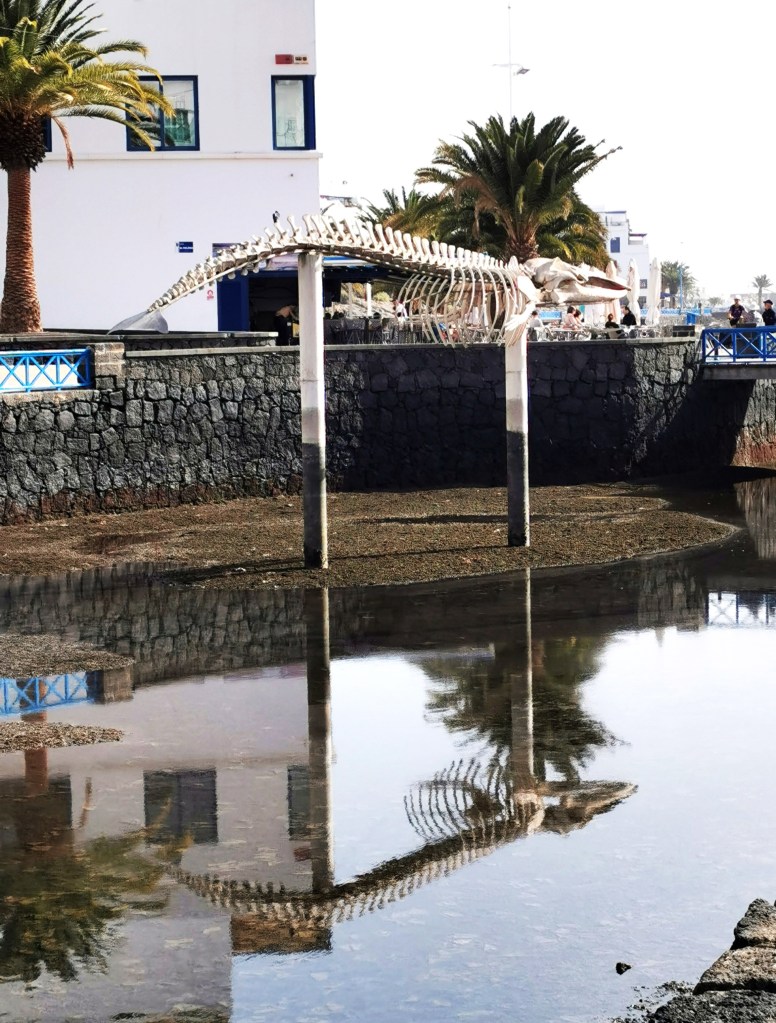
A few examples of public art
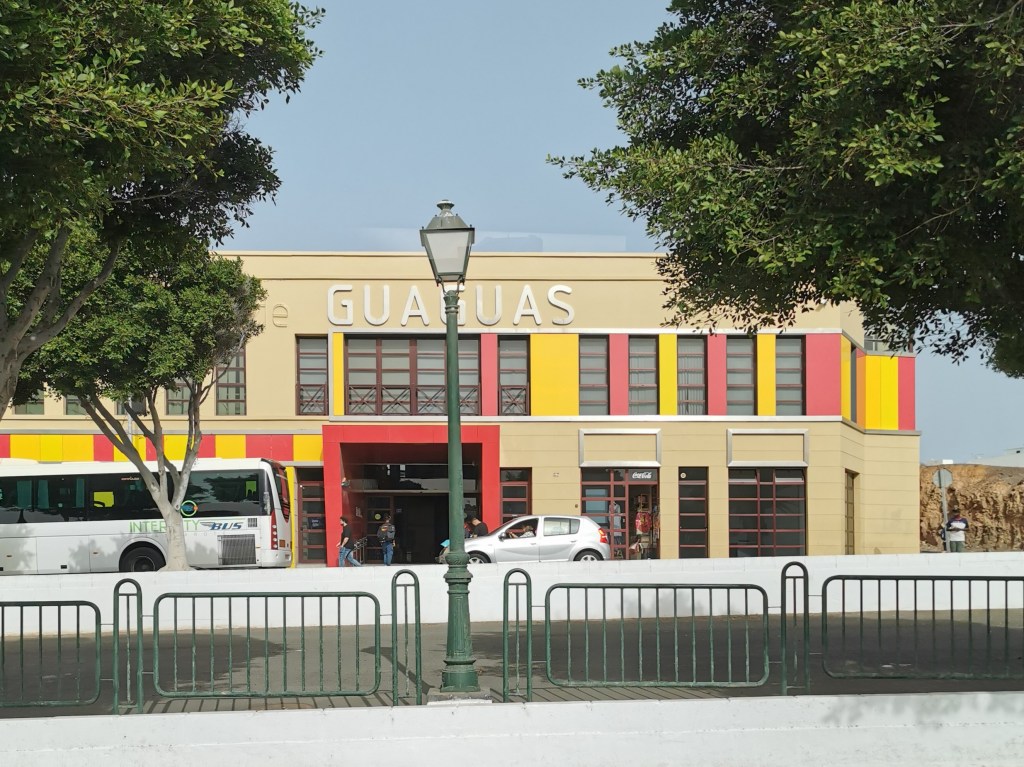
In Arrecife the bus station (Estación de Guaguas ) and bus interchange (Intercambiasdor) are both on the edge of town, inconvenient for the centre and with poor information. The main bus services from the bus station are : To Teguise 20 daily Mon-Fri, 10 on Sat, 15 on Sun, journey time 25 mins; to Tinajo 12 daily Mon-Fri, 8 on Sat and Sun, journey time 35 mins; to Costa Teguise every 20 mins Mon-Fri, 30mins Sat and Sun, journey time 15 mins. There are roughly hourly buses to Puerto del Carmen and Playa Blanca and reasonable links to and from the airport, but other services are less frequent.
There is a bono ticket for tourists which gives 10% off fares. Nowhere is it mentioned that this costs €2, which means you need to spend €20 for it to be worthwhile. This is tricky when most fares are cheap e.g. €1.40 to Teguise.
The tour to Timanfaya was operated by LCT Europe, http://www.lcteurope.com , who operate a variety of coach tours across the island.
Acknowledgements: Thanks to Ken Donald for his company on the trip.
Photographs: All photographs are by Steve Gillon except for those of Steve and Ted and the lava formations at Timanfaya, which were taken by Ken Donald.
Copyright: Text and photos (execpt those listed above) are Copyright (c) Steve Gillon, 2024.
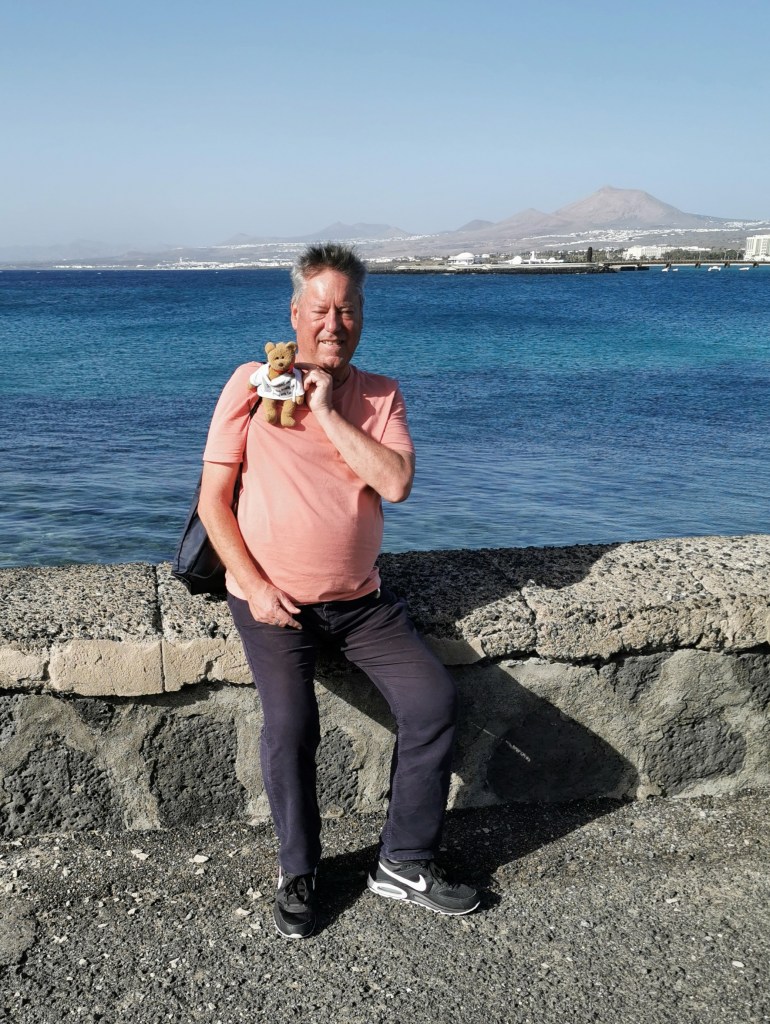
 Go with Ted