
In early April 2024 Ted and I set off on a short trip from our home in Benalmádena to Murcia and Mojácar. We chose those places because we’d never stopped there before. While we had passed through Murcia, it was one of only two Spanish regions in which we hadn’t stayed in overnight (the final one on the list is Navarra – maybe next year). We chose Mojácar, in the Andalucían province of Almería, because, back in 1990 when we first took Spanish lessons, our teacher, who came from Leon, told us that she spent her holidays there and it was a great place.

This part of Spain isn’t particularly easy to reach, travelling by public transport from the Costa del Sol. The rail network necessitates journeys via Madrid (in most cases changing stations there) and takes longer than the direct coach. We had passed through Murcia on a coach before to Alicante (see Alicante and Cuenca ) and, although Málaga to Murcia takes 5¾ hours, we knew it would be comfortable.
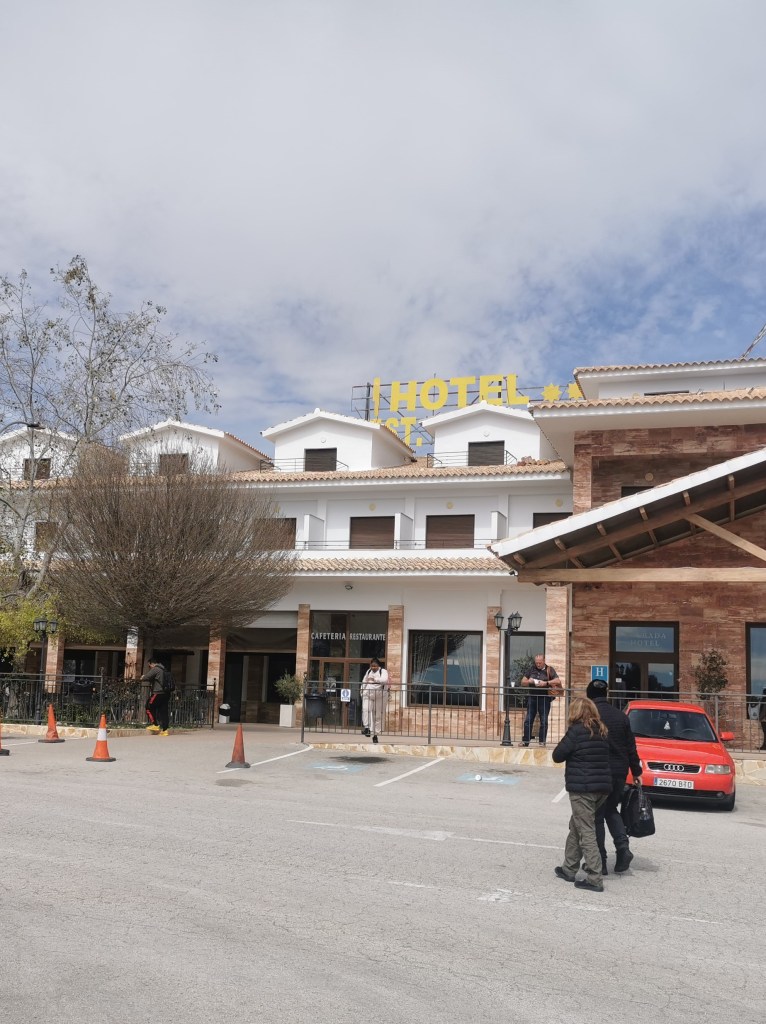
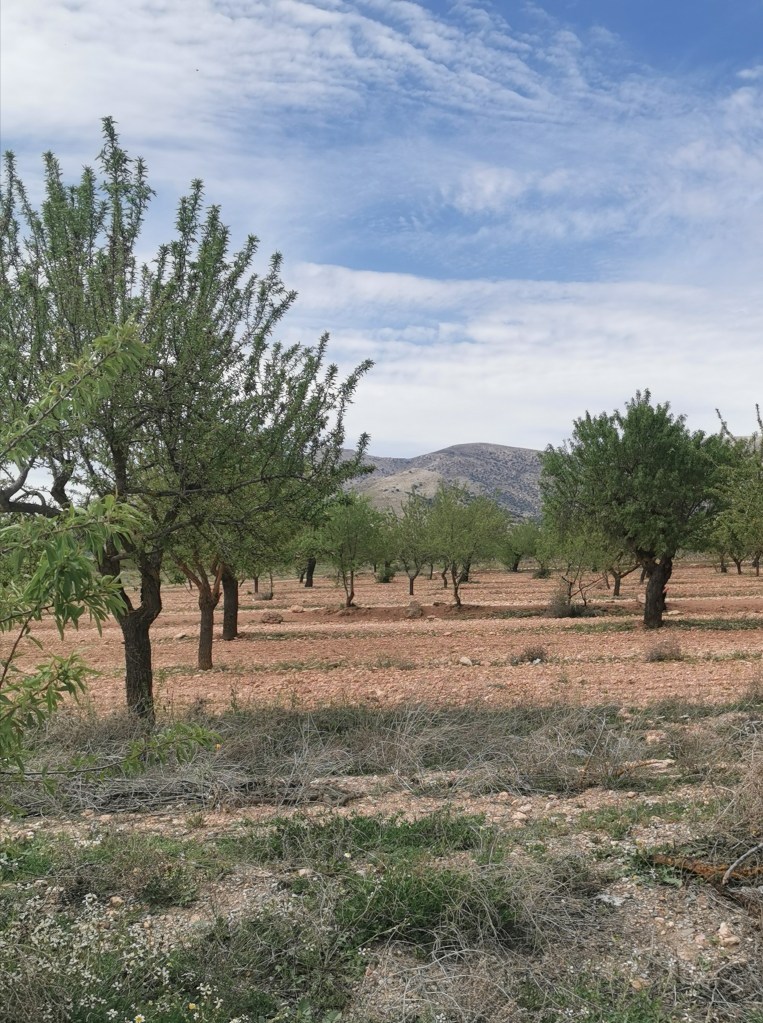
The journey itself was fine. After a short stop at Granada we travelled through an unpopulated landscape, looking at the snow on the distant Sierra Nevada and Sierra de Segura mountains. We passed close to Guadix and we could see some of the cave dwellings which the area is known for. There was time for a beer at a refreshment stop at the roadside Hotel Casa Lorenzo, one of a series of rest areas in the middle of nowhere (pictured above). By Lorca the countryside becomes more built up with a series of small towns and, in between them, detached houses in their own market gardens. Finally, we arrived in Murcia on time.


Murcia gets dressed up, ready for the Fiestas de Primavera
What we hadn’t realised was that we had arrived on the first day of Murcia’s biggest annual event, the Fiestas de Primavera. I hadn’t checked in advance, because the Tuesday after the Easter weekend seemed an unlikely time and the price of the hotel price was normal. The whole city centre was cordoned off with crowds waiting for the main procession. We were eventually directed to a footpath by the River Segura and arrived at our hotel totally shattered, after nearly an hour trying to pass through the crowds.
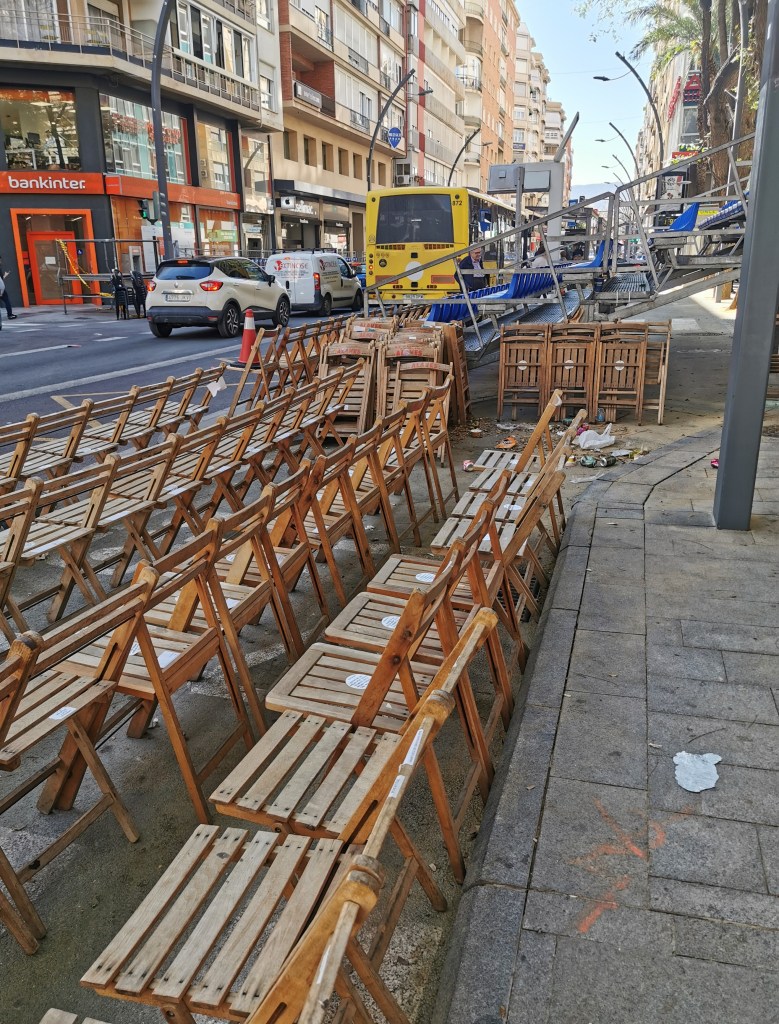

The main street the day after the parade – every seat and space was occupied the previous evening
It looked like a good time was being had by all. On the Tuesday the Banda de la Huerta parade of oxen-drawn carriages takes place to celebrate the areas reputation as the market garden of Spain. Everyone dresses up, the men in traditional agricultural clothing. All week there are events culminating in the ‘Entierro de la Sardina’ (the burial of the sardine) – but we had left by then.

We ventured out for a while – it was impossible to get near the procession and every bar, including many set up outside for the fiesta, was packed, with long queues and only standing room. A major feature was the number of men hitching up their skirts and having a piss, in corners but within sight of the crowds – I have no idea how women coped. We were too tired to enjoy the party so we found a small supermarket and ended up eating bread, cheese and ham in the hotel room with a couple of beers from the minibar.


Murcia old city and the cathedral
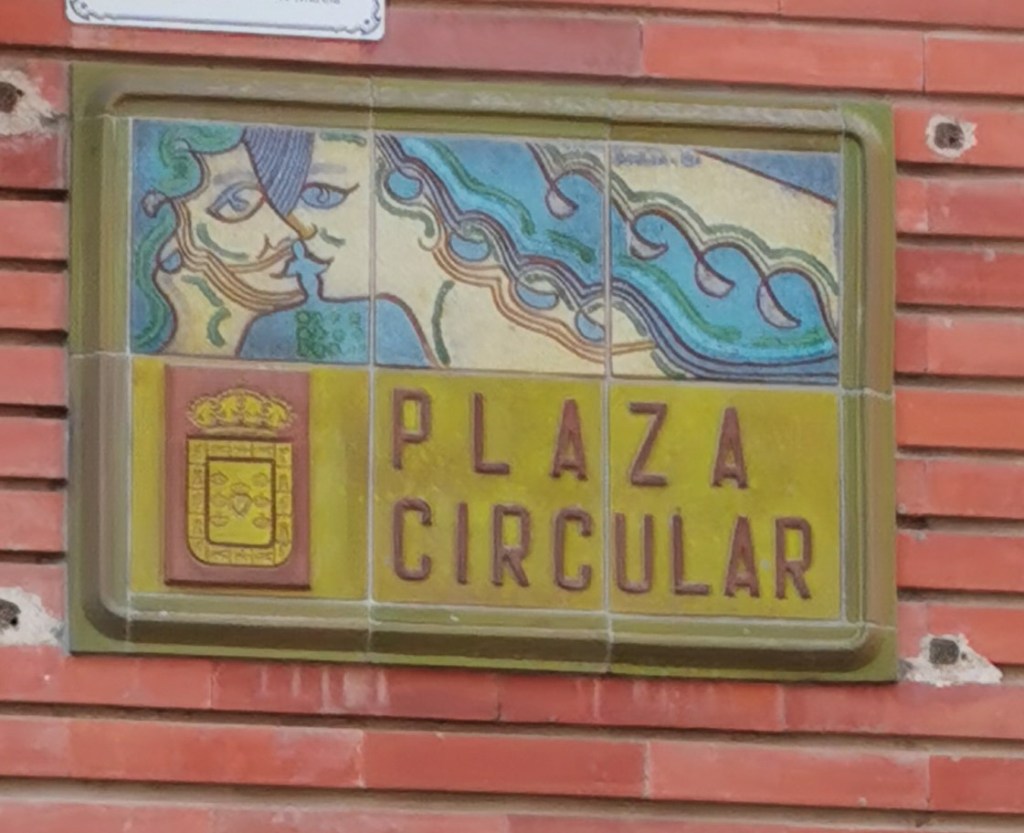
The following day we had plenty of time to wander around the city. The festivities that day were low key and aimed at children, taking place in parks and playgrounds. We walked around the city centre, just to get a feel for the place. Much of the area is pedestrianised and relaxing to walk around. We wandered as far as the interestingly named Plaza Circular (Circular Square) in the modern centre. There we came across the city’s tram route – it links the centre with the university, hospitals and suburban shopping centres so is of little use to tourists.

We sought out the Teatro de Romea (for some reason we had it in our heads that it may be a Roman ruin – doh!). We then walked down the main street with its banks of seating for the parades until we were back in the historic centre and the area around the impressive cathedral. We walked as far as the banks of the River Segura. The river was busy – being used for boating and the banks for pop-up restaurants for the fiesta.


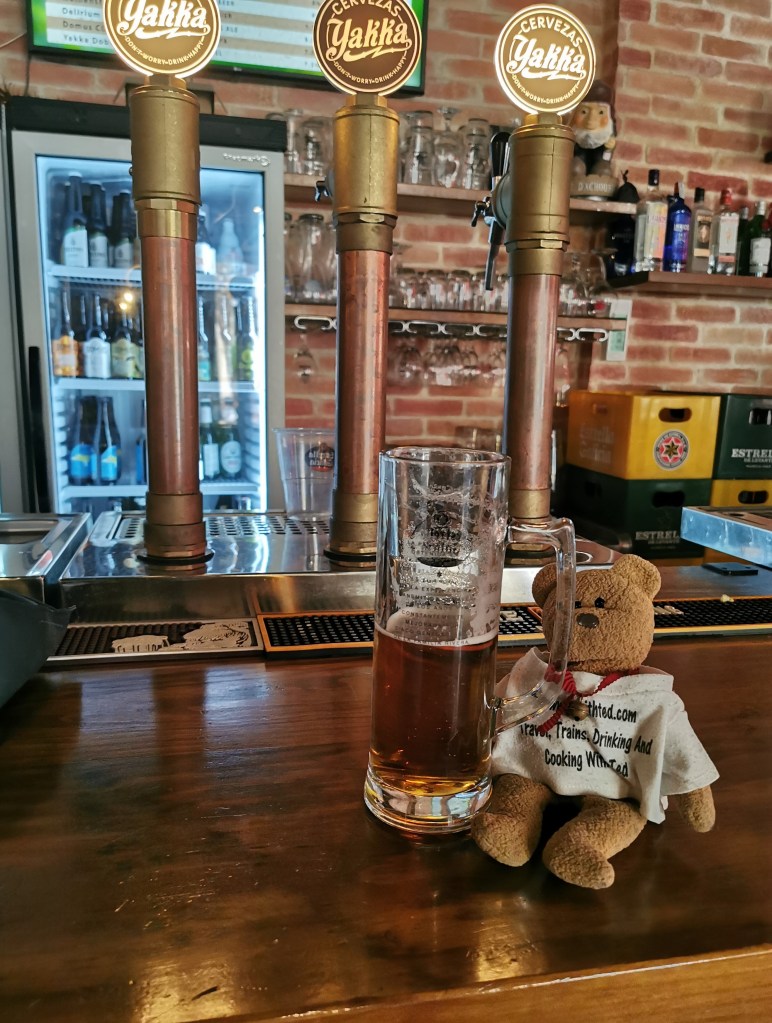
We explored the area around the cathedral until it was time for a beer or two. By the cathedral we stopped by Trapería Uno which had a range of draught beers and the food looked fine, though we concentrated on people watching. Later we had a beer and a tuna mollete on the terrace of the basic but friendly Bar Piscolabis. We were less keen on the Gastromercado de Correos – around the central bar area there looked like an interesting choice a choice of food stalls. However you were meant to wait to be shown a table and order online rather than look at the food and drink options – far too formal for that type of place. In the early evening we spent some time in what seems to be the best beer bar in town – La Isla Beer Club. They had several draught beers from local brewery Yakka (mainly American styles) as well as Estrella Galicia’s 1906 – La Milnueve on draft.
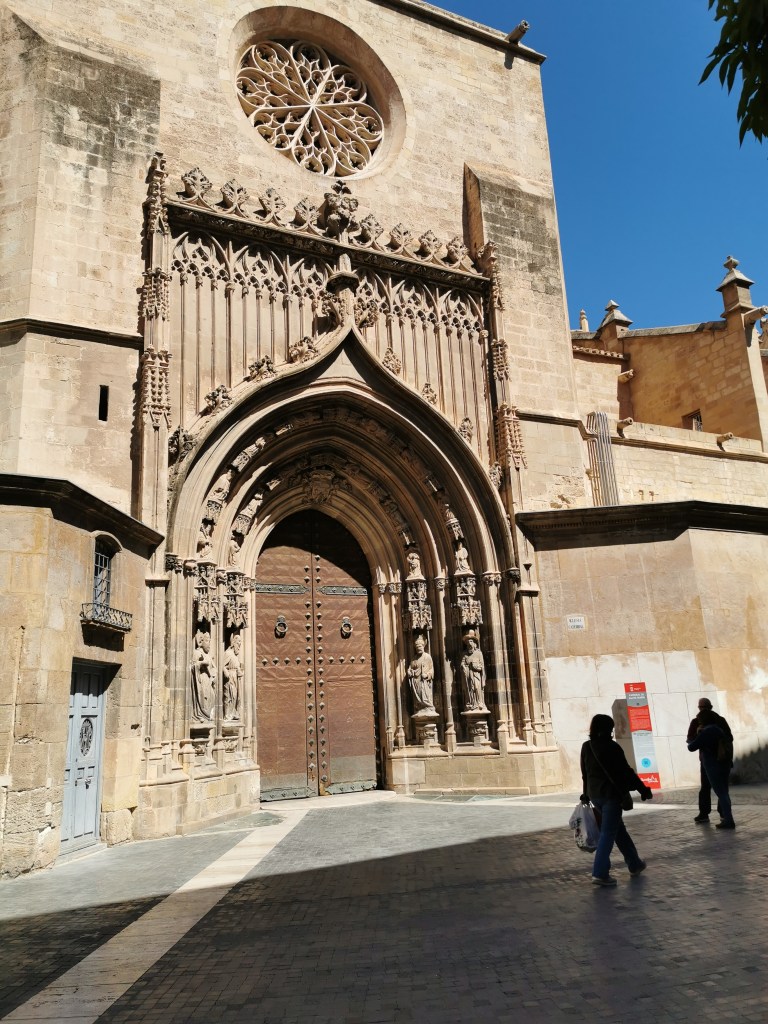

A couple more views of Murcia cathedral
The following morning we made our way back to the bus station – no more than 15 minutes walk when the streets are open. The coach journey to Mojácar takes almost three hours. Although it largely takes the motorway, the bus calls in at a number of towns along the way such as Lorca. Puerto Lumbreras and Huércal Orcal. This makes for a more interesting journey, providing the opportunity to see what goes on in these places – the answer is not much. We caught various glimpses of the new high speed railway line which will link Murcia and Almería (see Railway Buffery).

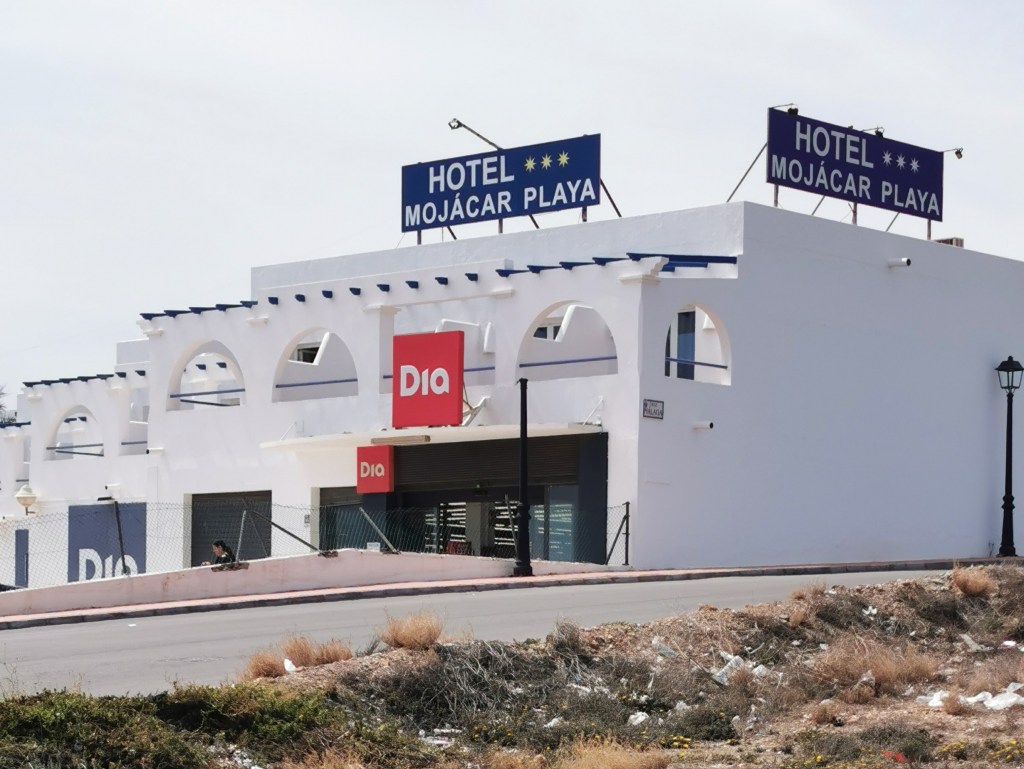
Beyond Huércal Overa the coach left the motorway and headed for the coast, through the towns of Cuevas del Almazora (with cave dwellings), Vera and Garrucha. It then follows the seafront to Mojácar Playa then uphill and into the new bus interchange – in the middle of nowhere between the coastal resort and the hilltop village. While there is a stop for the town buses down to the coastal strip there is none in the other direction uphill to the Pueblo. No local bus was due, So we walked down the hill, stopped for food and beer along the way and found our way to our hotel – the Mojácar Playa – and checked in. Situated above a Dia supermarket all the rooms have balconies overlooking the sea (pictured).


Mojácar is reminiscent of Benalmádena – a modern resort area along the seafront and the original village on a hill a couple of kilometres inland. We were staying by the beach and the area, though fairly quiet at that time of year, seemed popular with Brits and other northern Europeans. It doesn’t feel overdeveloped, though the centre of town is a large and anonymous shopping centre. The busy road along the seafront has no pavement on the beach side, so the area can seem car dominated. However, the beach and the weather were both pleasant.
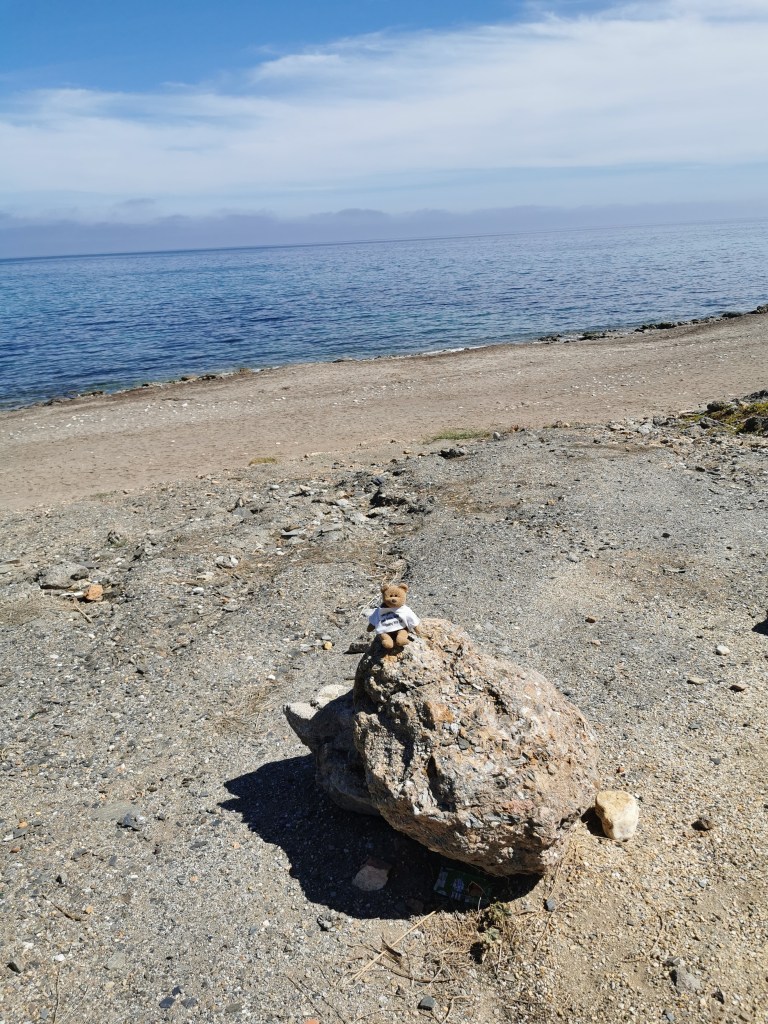

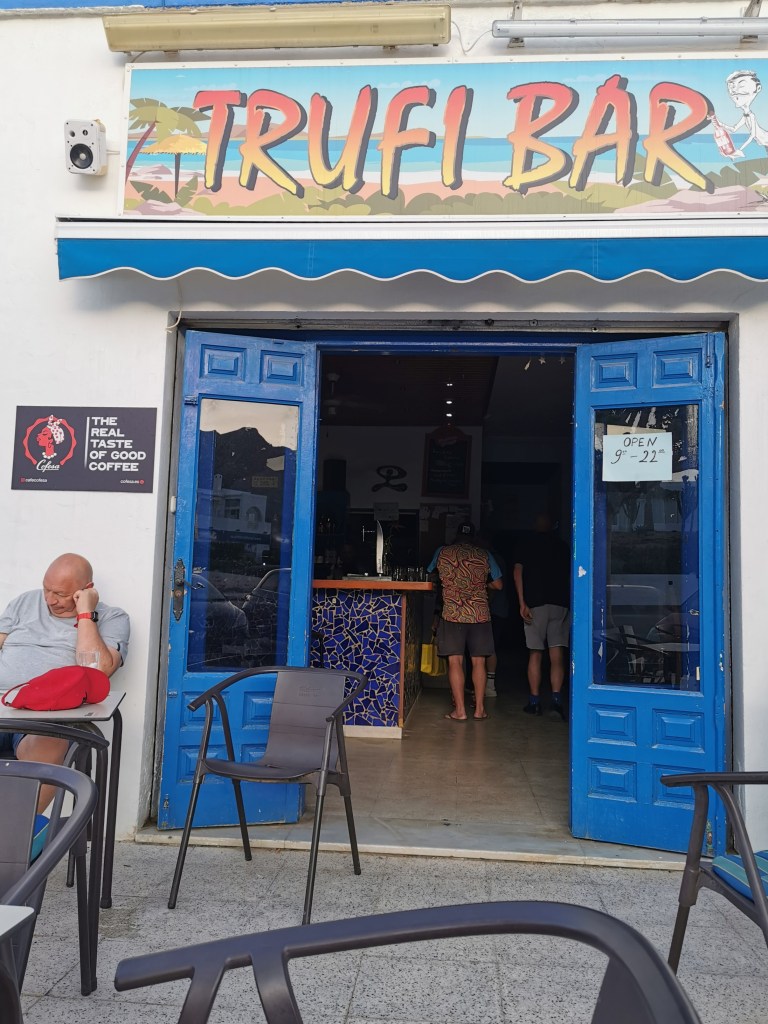
The bar and restaurant options were spread out and many were closed until the summer months. However, just across the road from our hotel was the beach-side Trufi Bar. It was friendly and attracted a mixed crowd of locals and tourists and became our home for two evenings.


Up the hill, Mojácar Pueblo, seen here in the distance, is lovely. It has a long history though ,more recently fell on hard times and suffered depopulation until tourism took off in the 1960s. The local bus took us up to the village and we began our visit by looking at the views down to the coast and over the surrounding countryside (pictured).

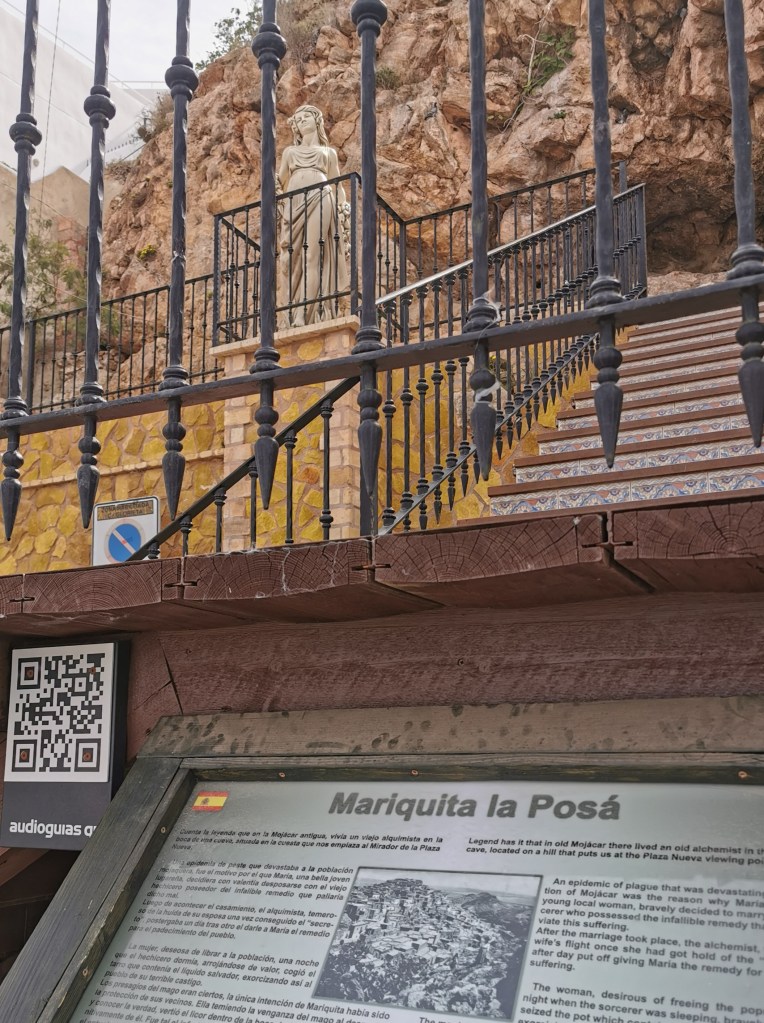
Prominent was the broad course of the Rio de Aguas, though the one thing it didn’t contain was water. This is an arid region of Spain, exacerbated by the current drought. Near the bus stop we spotted a statue of Mariquita la Posá (Mariquita the poser?) – I always thought that mariquita was a rude word but it turns out that she wasa local woman who cured the villagers of the plague when her sorcerer husband refused – there’s more detail online. in the village. We then had a wander round the village streets taking in the ambience.


Of course, we stopped for some food and drink. There are several bars in Plaza Nueva with terraces with views over the countryside – we paused for a while in Cafeteria El Mirador. In the square by the Santa Maria Church is the inventively named Bar Plaza de la Iglesia – the beer and the food were good and the square is ideal for people watching. Mojácar Pueblo is certainly worth a visit if you are in this part of Spain – hopefully it doesn’t get too overcrowded with day trippers in the peak season.

On our return from the pueblo, we called into the shopping centre to pick up a couple of souvenirs for the tat shelf and the fridge. All included a depiction of an indalo – An ancient magical totem which brought protection and good luck, historically often painted on houses to ward of the evel eye. Today the symbol is widespread throughout the region but it seems to have originated in the Mojácar area. Then it was back to the hotel for a rest and another evening in the Trufi Bar where we learned some juicy gossip about the antics of several locals.

The bus route which brought us from Murcia continues to Almería and we returned to the Intercambiador. The journey to Almería took 1½ hours, initially through neighbouring small towns such as Turre, then along the motorway through a remote area well inland from the coast. The weather had changed – it was still warm but dust from the Sahara had blown in, a weather system known as a calima, which obscured the sun and created a haze. We passed several sites of the new railway under construction. As we reached the plain near Almería the area of plasticultura set in, where subtropical crops are grown under plastic for export throughout Europe, creating an unpleasant industrialised landscape, which continued for at least 50 kilometres.

It’s very difficult to take a photo of a plain covered in plastic – this is the best I could do.
In the middle of the plastic plain is the city of Almería, where we had a 75 minute lunch break before our connection to Malaga. There were no food or drink outlets in bus station, and the neighbouring railway station was closed for redevelopment. However, after a short walk we found a good tapas bar – Torres Bermejas – which fed and watered us. Then it was back to more plastic fields until the landscape becomes more pleasant by Almunecar. From there the motorway continues to Málaga where we caught the train to Arroyo de la Miel and home
Practicalities
Getting around:
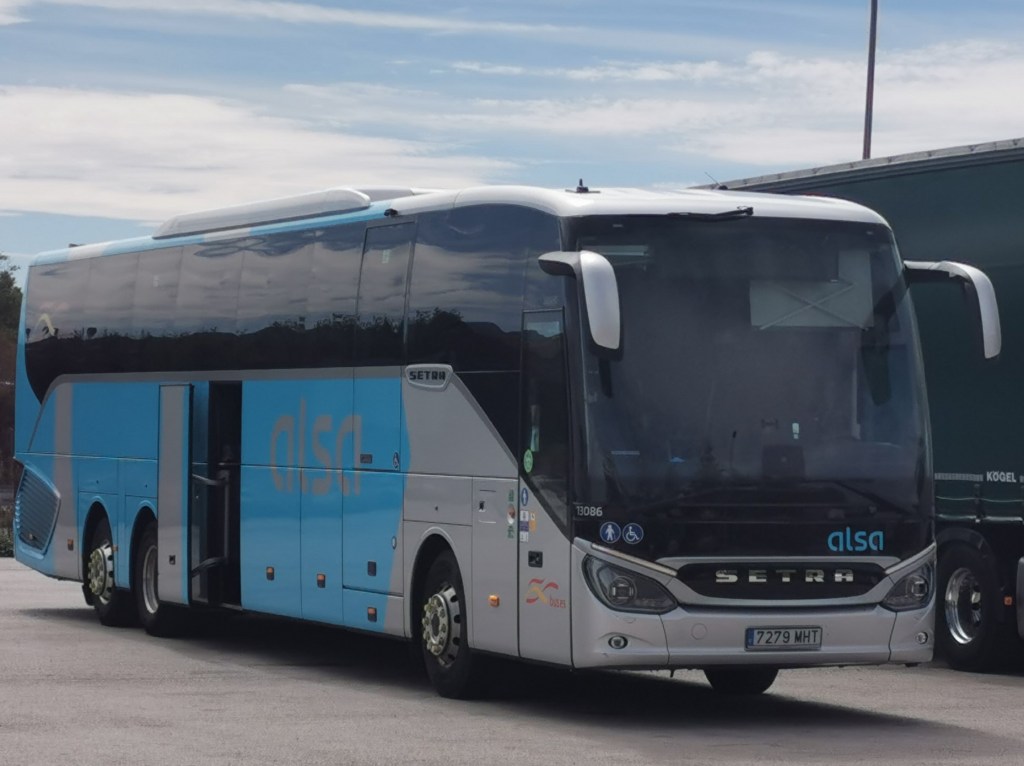
(i) Coach journeys. All of the coach journeys on this trip were operated by Alsa. The coaches are modern and include toilets. It is preferable, though not essential, to book in advance. There is an Alsa app or use the website www.alsa.com. To research the times and fares for a particular route on the site, click on ‘Your journey’ and then ‘bus schedules’. Cheaper fares are available on many journeys for the over 60s.


The journeys we used (which run daily at the time of writing – May 2024), were our assessment of the best combination of suitable times, speed and fares were:
Málaga dep 1200, Murcia arr 1745; Murcia dep 1000, Mojácar arr 1250; Mojájar dep 1250, Almería arr 1415; Almería dep 1530, Málaga arr 1830
There are trains to Murcia. However, from Málaga this involves travelling via Madrid, usually including a change of station in Madrid.
(ii) local journeys

Murcia – everything in Murcia is within walking distance and you are unlikely to need to use public transport
Mojácar – there are three town bus routes, each of them running hourly – from the South end of Mojácar Playa to Mojácar Pueblo, from the North end of Mojácar Playa to Mojácar Pueblo and along the coast between the North and South ends of Mojácar Playa. All travel via the Centro Commercial at the junction of the coast road and the road up to the Pueblo. The single fare is €1.20. For times, Google ‘Mojacar bus timetable’ and click on the page from the local council site www.ayuntamiento.mojacar.es
Hotels
The hotels we used were;
Hotel Murcia Rincón de Pepe, affiliated with Melia, C/ Apóstoles 34, 30001 Murcia
Hotel Mojácar Playa, C/ Málaga 1, 04638 Mojácar.
Both were fine and booked through www.booking.com .

Bars mentioned in the text are:
Murcia: Trapería Uno, C/Trapería 2; Bar Piscolabis, Pl. Cetina bajo 1; Gastromercado de Correos, C/ Cánovas del Castillo 15; La Isla Beer Club, Pl Sta Eulalia 8-10.
Mojácar:

Trufi Bar, Diseminado el Cantal 11, Mojácar Playa; El Mirador, C/Aire 1, Mojácar Pueblo; Café-Bar Plaza de la Iglesia, C/ del Alcalde Jacinto 4, Mojácar Pueblo.
Almería: Bar Torres Bermejas, Av. De la Estación 25 Bajo
Railway buffery

There have been previous plans for a railway line from Murcia to Almería over the past century but none have come to fruition until now. The current plan was initiated in 2010 and after a pause, is planned for completion in 2026. This is likely to slip as contracts for the final section – a tunnel and new railway station beneath the town of Lorca – were only awarded early in 2024. It will be a combination of a high speed standard gauge line for passengers and Spanish gauge for freight. When completed it is expected that the journey time between Murcia and Almería will be 1 hour 5 minutes (current time by coach over 4 hours) and from Almería to Madrid will be 3 hours 30 minutes (current time via Linares-Baeza 6 hours 10 minutes).


A couple of shopfronts spotted during our walk round Murcia
Photographs: All photographs are by Steve Gillon
Copyright: Copyright © Steve Gillon, 2024
 Go with Ted