Prague – Wroclaw – Gdansk – Gdynia
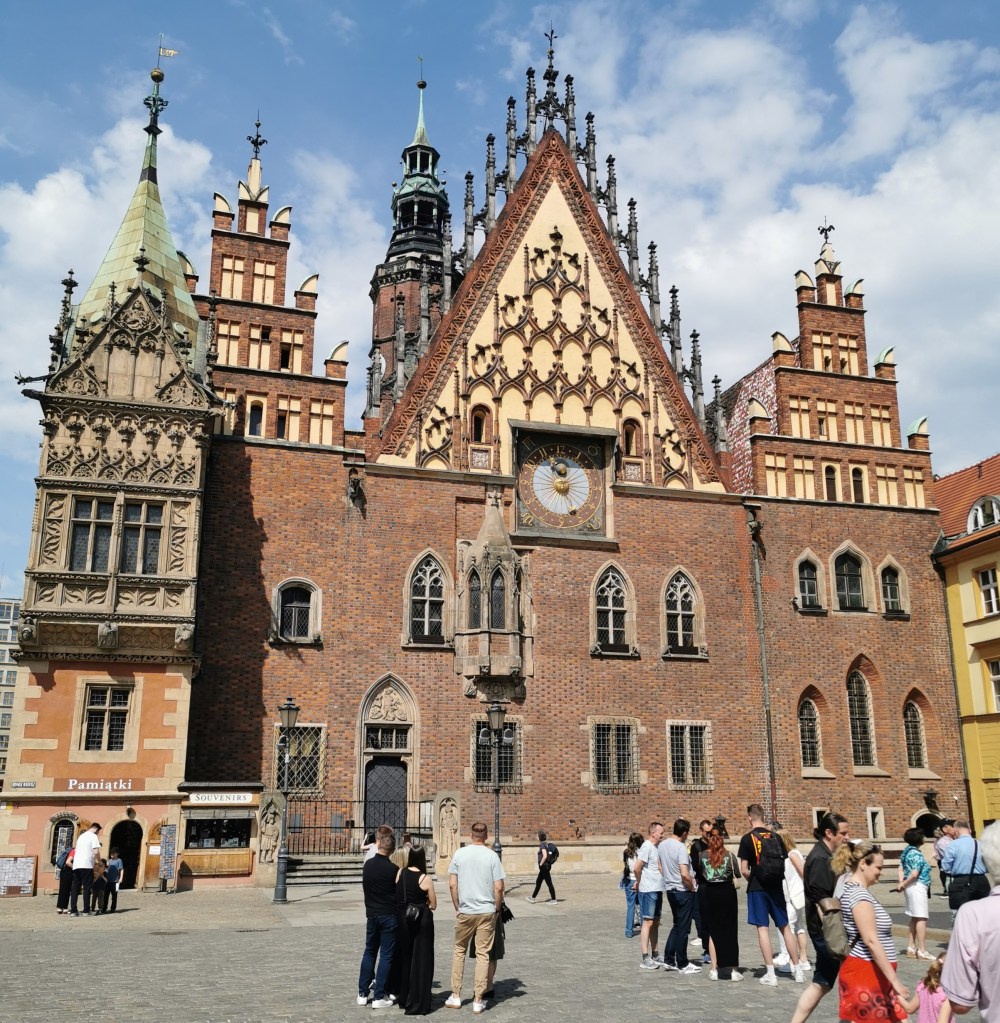
The Baltic Express train service was introduced in December 2024. Four trains daily in each direction link Czechia and Poland. The route is from Prague, capital of Czechia, to Gdynia on the Baltic coast of Poland, via Wroclaw, Poznan and Gdansk. We have visited Prague several times but, apart from that and a few hours in Poznan en route to Berlin, the line runs through territory that was new to us, so we decided to give it a go. First we found cheap flights in the middle of the day from Newcastle to Prague and Gdansk to Newcastle thenTed and I built a ten-day trip round them, staying in Prague, Wroclaw and Gdansk. We set off at the end of April 2025.

Prague
Getting to Prague was straightforward, despite the usual airport hassles. The flight left on time and arrived slightly early. We found or way to the Airport Express bus stop (not where it was meant to be due to roadworks), which took us directly to Prague’s main railway station (Praha Hlavni Nádrazi). We found our way to our hotel via a back street full of dodgy looking clubs and dope shops. We checked in, eventually obtained a keycard that worked, freshened up and headed out for a couple of beers. We discovered a new craft beer place, Kulovy Blesk, which had opened since we were last in the area. The beers included a dark lager and a black IPA. A good start to the trip.

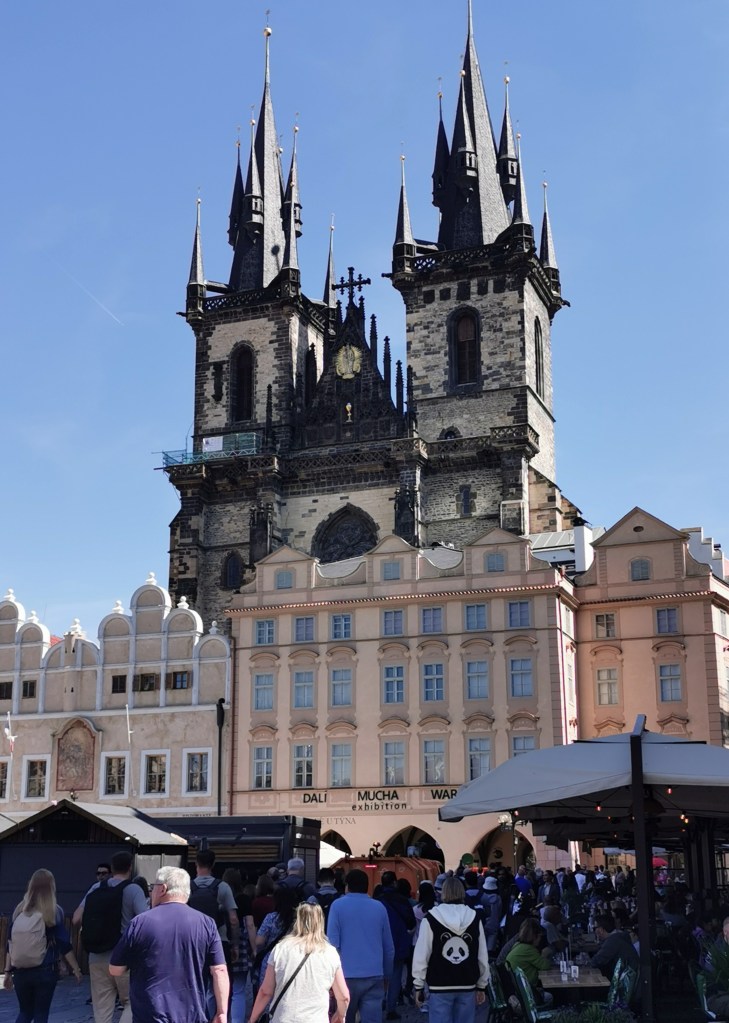
Our first full day in Prague was spent reacquainting ourselves with the city. We began by catching a metro out of the city centre then a tram back into town, just for the sake of it. Back in town we alighted by Wenceslas Square. We walked from there to the Old Town Square with its Astronomical Clock. The Old Town was packed with tourists – it looks like there is never a quiet season in Prague. We then fought our way through the crowds on the Charles Bridge across the River Vltava.


On the opposite bank is the quieter area of Malá Strana where we spent the afternoon having a late lunch and a few beers. We passed some time in U Hrocha (The Hippo), one of our favourite pubs, which Colin and I discovered on our first visit to Prague in 2003. It’s in a quiet back street, has a good mix of locals and tourists and sells Pilsner Urquell tank beer and good snacks cheaply. The shared tables mean that you inevitably get into conversation with others. We returned to the hotel by tram, followed by a quiet evening locally.

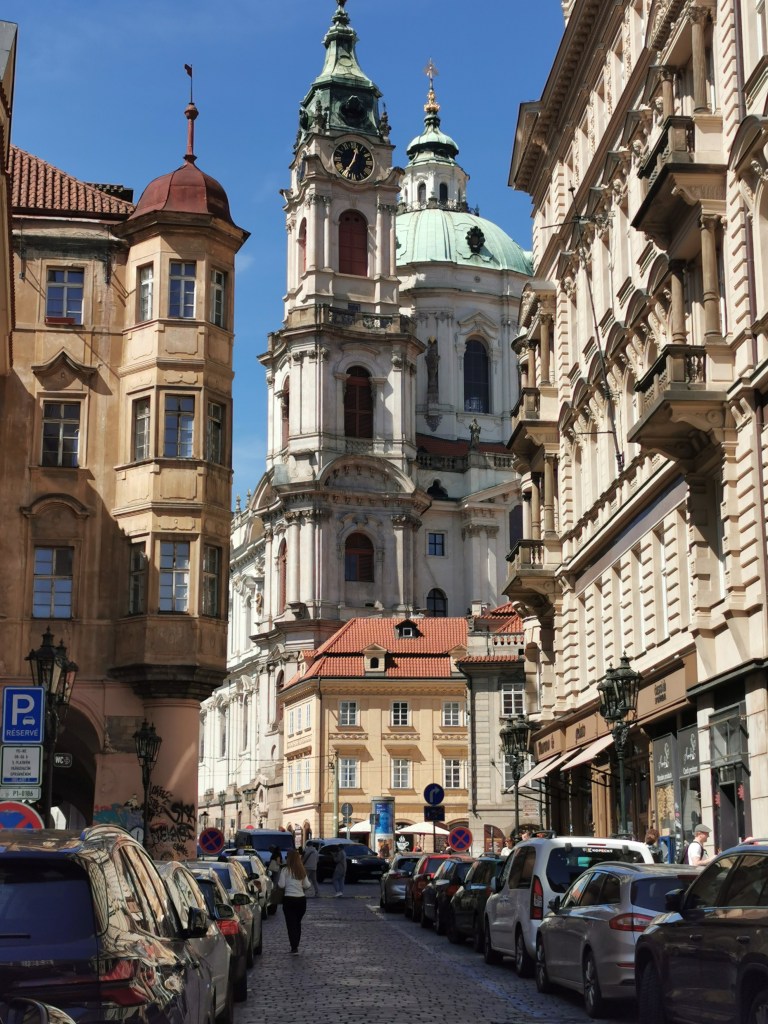
There is more information about Prague in A journey in Central Europe , which was written following our 2019 visit. We have updated the information in that blog followong our 2025 visit.
Kutná Hora

We decided that on the following day we would visit somewhere out of the city and settled on a half-day trip to Kutná Hora, which is about one hour by train from Prague. The journey is unremarkable and the main town en route, Kolin, appeared to be highly industrial (though I understand the town centre is attractive). Kutná Hora station is quite a way out of the town but there is a frequent bus service. The bus route went round the houses, which helps to see what a town is really like, and arrived in the town centre after about 20 minutes.
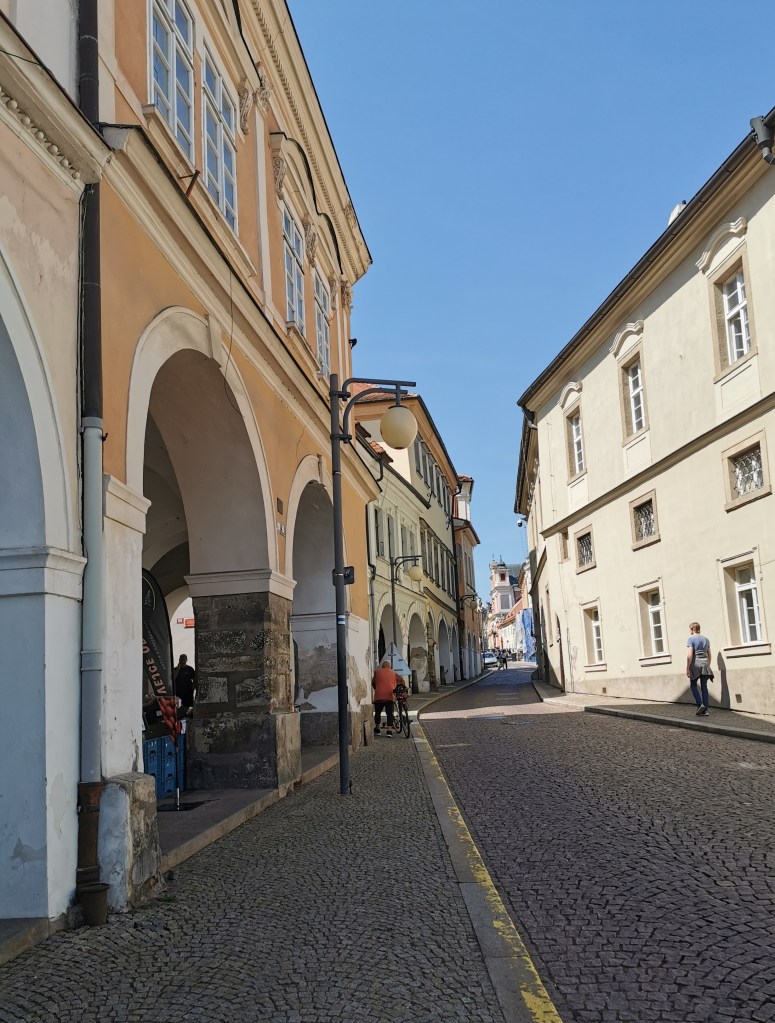
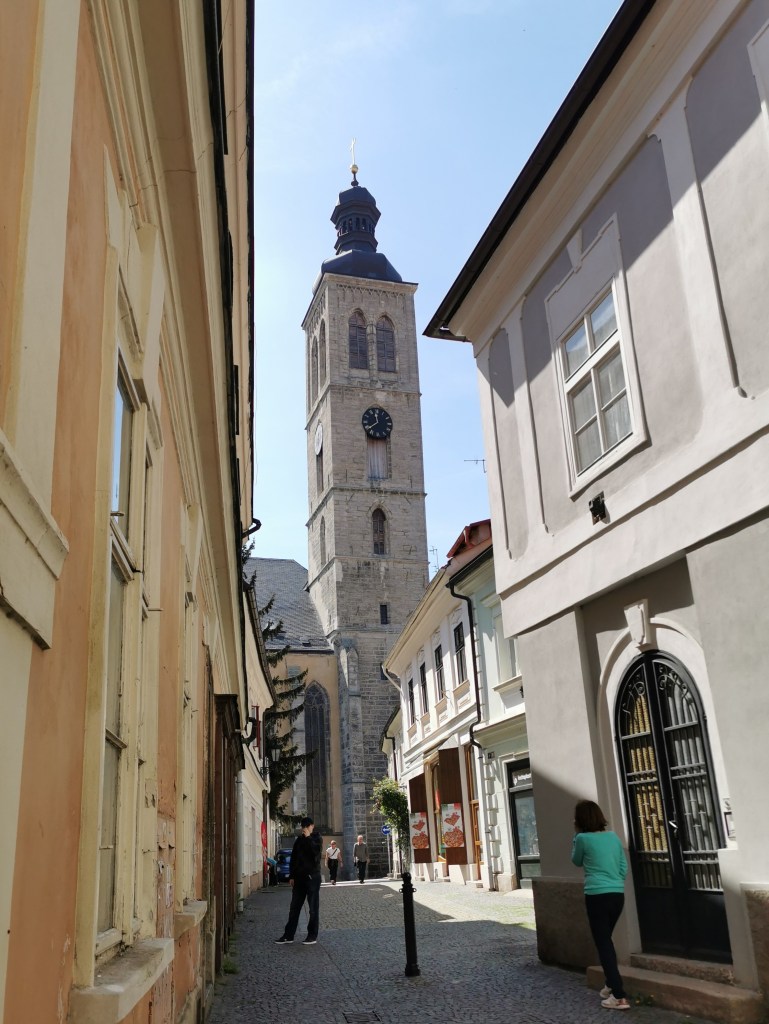
Kutná Hora is 52km east of Prague and has a population of 22000. In medieval times it was an important centre for silver mining and there remain many attractive streets and buildings from its richest years. Today the town centre is a UNESCO World Heritage Site (and the main industry is a cigarette factory).
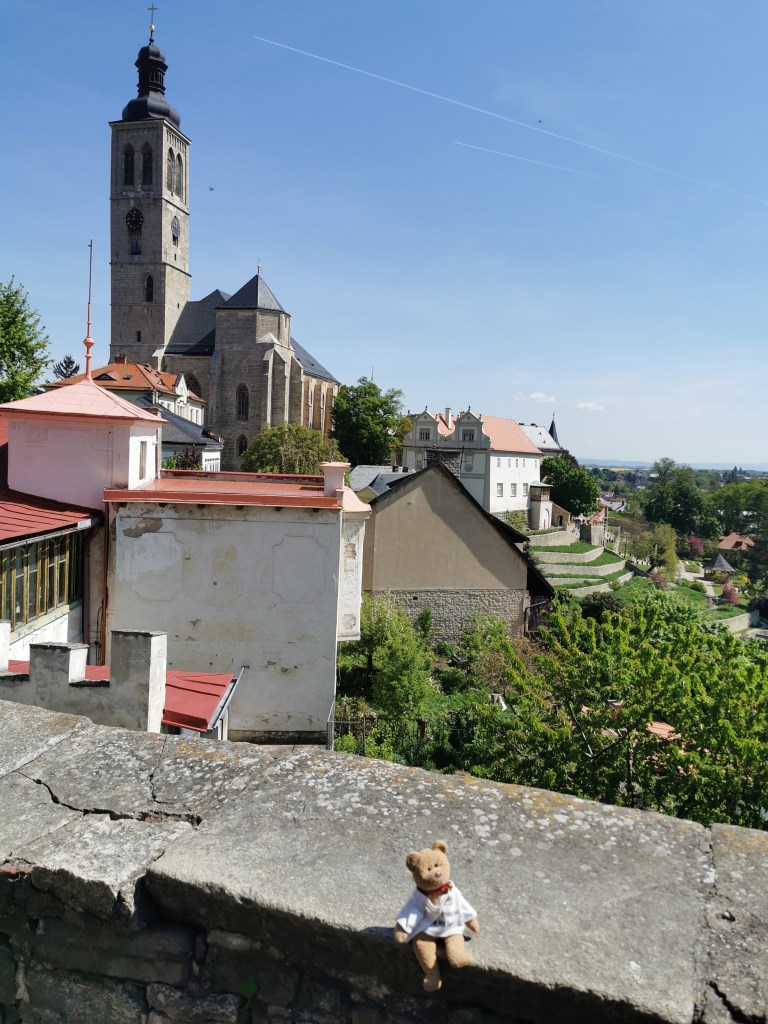

We began our wander around town from the market square by St Jacobs church and walked towards the cathedral of St Barbara. En route we passed Hrádek, the Museum of Silver (which includes trips into old mines) and the former Jesuit College which is now the Central Bohemian Gallery (GASK) art gallery. From the street there are great views back to the town and over the valley of the Vrchlice stream. As usual, during the walk we bought a fridge magnet to add to our collection.

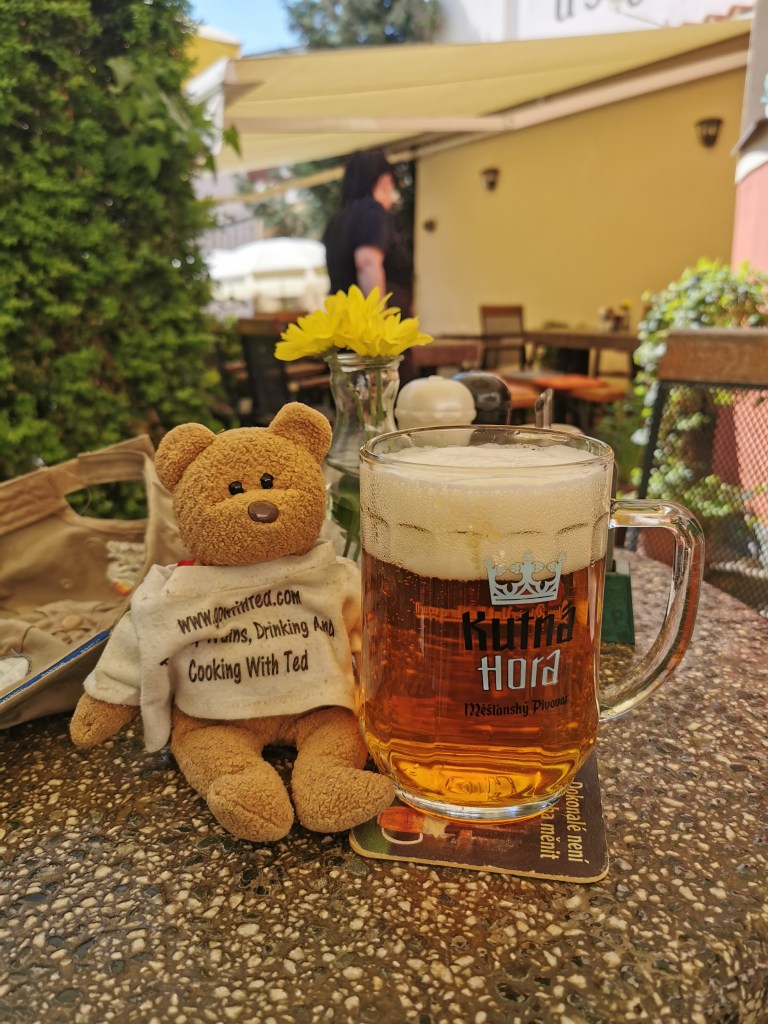
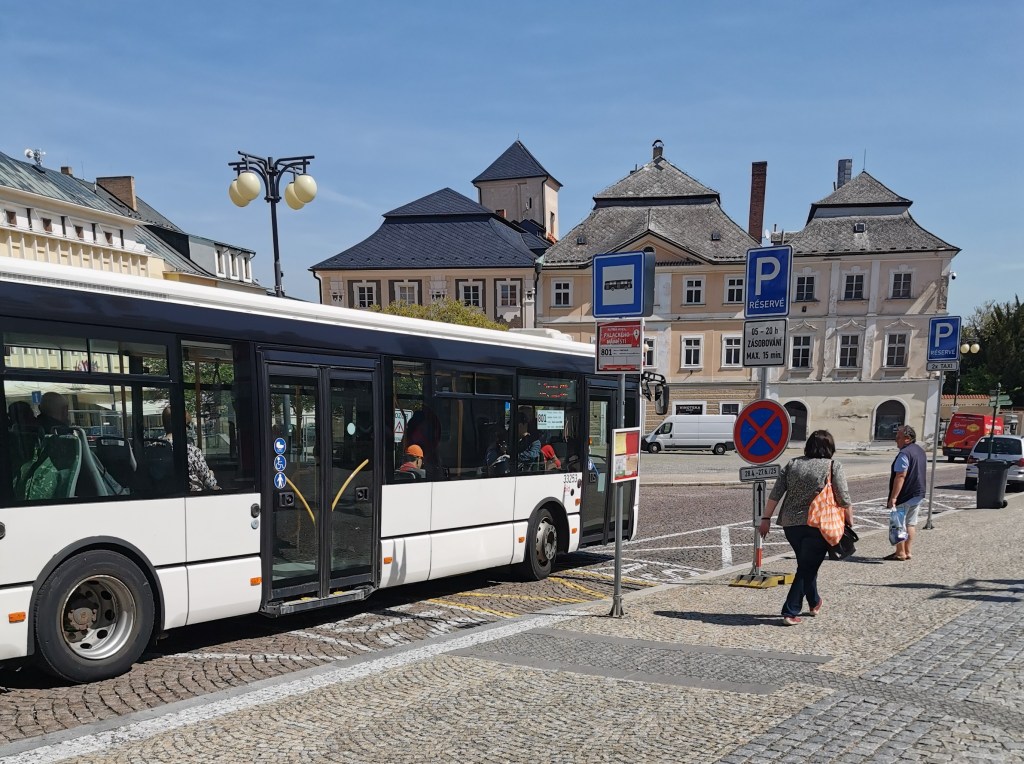
We finished our visit with a beer from local brewery Mĕštansky in the garden of Café Harmonia. Kutná Hora was relaxing, with only a few tourists around and is certainly worth a visit. We would happily return to explore further. Back on the bus to the railway station, we realised that the bus had been imported as all the signage was in French. Then it was back to Prague.
We spent the rest of the afternoon and evening revisiting a few of our favourite places, eating local sausage and beer cheese and drinking some fine beers. The city was quiet in the evening – the following day was the May 1 holiday, so I had assumed that everyone would be out on the hoy. In Koluva Blest I asked some locals – the pub has a tiny bar area and it is impossible not to get chatting to them. I was told that on the evening of April 30 it was tradition that everyone would be outside lighting fires to burn witches. By the end of the evening, using the cash we had brought for small purchases, we had all of 1 Koruna (about 3 pence) left. Not munch to add to our coin collection.
Prague to Wroclaw

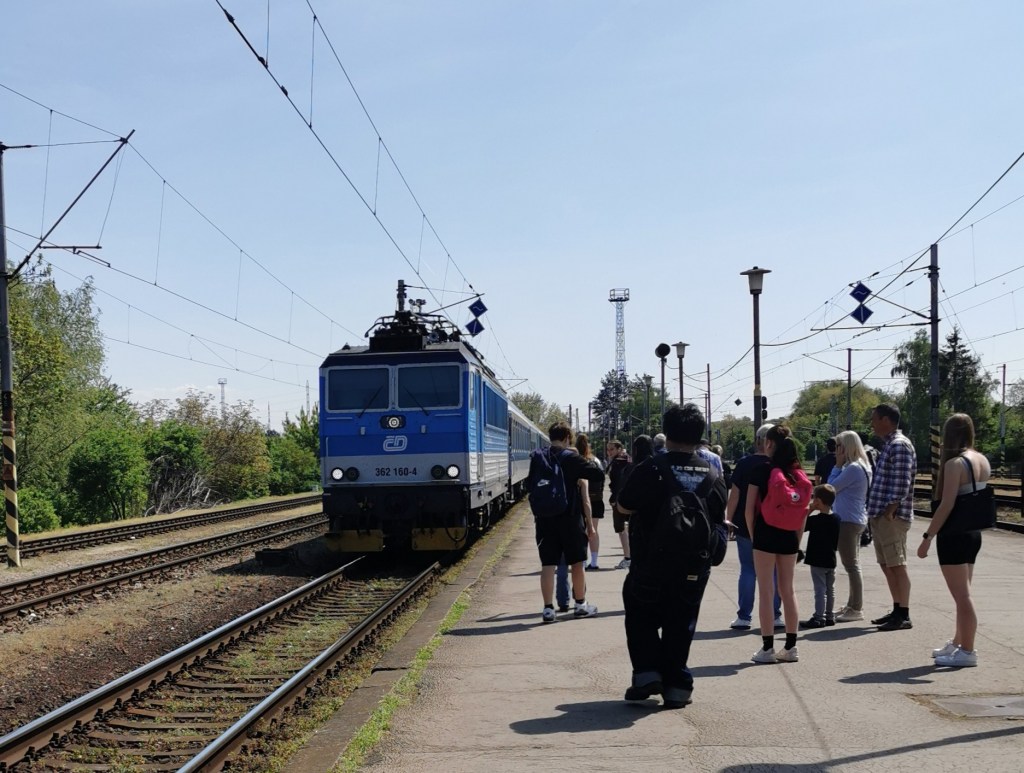
The next day was the first leg of our Baltic Express journey – to Wroclaw. The journey is not particularly fast – it takes 4 hours to cover 327 km – but that is bonus when travelling on a new route. For some reason the train had been delayed leaving the depot and it arrived at the platform 10 minutes after we were due to leave. However, everyone boarded quickly, we set off and we arrived in Wroclaw only a few minutes late. We were in an open carriage, and the train was busy, particularly once we were joined by a group of lads off for a holiday weekend in Wroclaw – fortunately they didn’t get too loud.


We retraced yesterday’s route to Kolin then continued via Pardubice, after which the scenery improved as we travelled along the valley of the Ticha Orlice river. At Ústí nad Orlicí we left the main line to and from Ostrava, Brno and Wien and we were in new territory. The line continues through pleasant countryside and small towns such as Letohrad and Jablonné to the border station of Lichkov after which we were in Poland.

I had been to Poland twice before, in 1980 and 2004, but these visits were based in Warsaw. On this trip we passed through hilly and wooded countryside. The train called at fortified and walled towns such as Międzylesie, Bystrzyca Kłozka and Kłodzko – which look like they would be worth a visit for those with more time on their hands. The final part of the journey is across the plains via Zabkowice and Strzecin to Wrocław Głowny (main) station.

The station is some way from the city centre so we caught a tram, but we managed to catch the wrong one. The ‘real-time’ indicator said the next tram was a No. 8 but in fact it was a No. 9. We realised fairly quickly, got off, walked to our hotel, settled in and headed out to explore.
Wroclaw
We had three full days in Wroclaw, one of which we had earmarked for a trip to Katowice, so two full days and four evenings to explore. Wroclaw was, to a certain extent, a surprise – we hadn’t realised quite what an attractive place it was. Our arrival coincided with the May Day holiday – a Thursday this year. The 3rd May is Constitution Day in Poland so Friday 2nd became a holiday also. The four-day weekend meant that the city was very busy with tourists – most of them from elsewhere in Poland. It also meant that public transport was erratic and infrequent, exacerbated by a main tram line through the city centre being closed for modernisation.
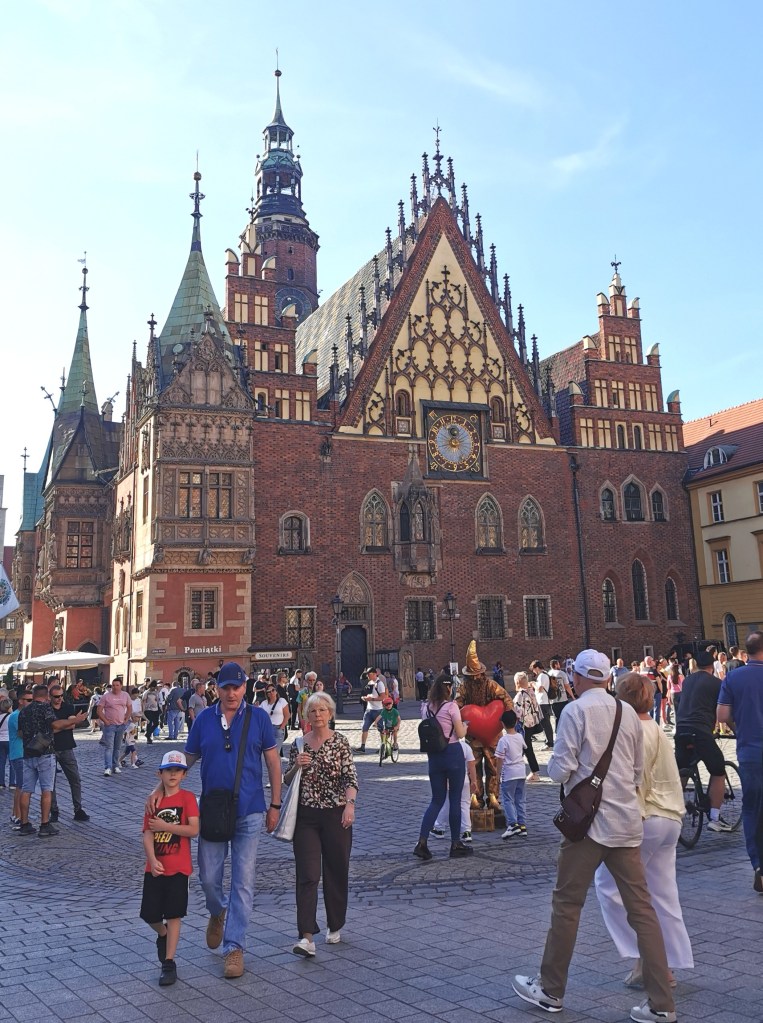

Wroclaw Town Hall and the Rynek


Wroclaw sits on the River Oder and is the third largest city in Poland with a population of 675,000. It developed at a crossroads of major trade routes. As elsewhere in this part of Europe it has a long, complex history, as part of Poland, Austria-Hungary, the Kingdom of Bohemia, Prussia, Germany and Poland once more.

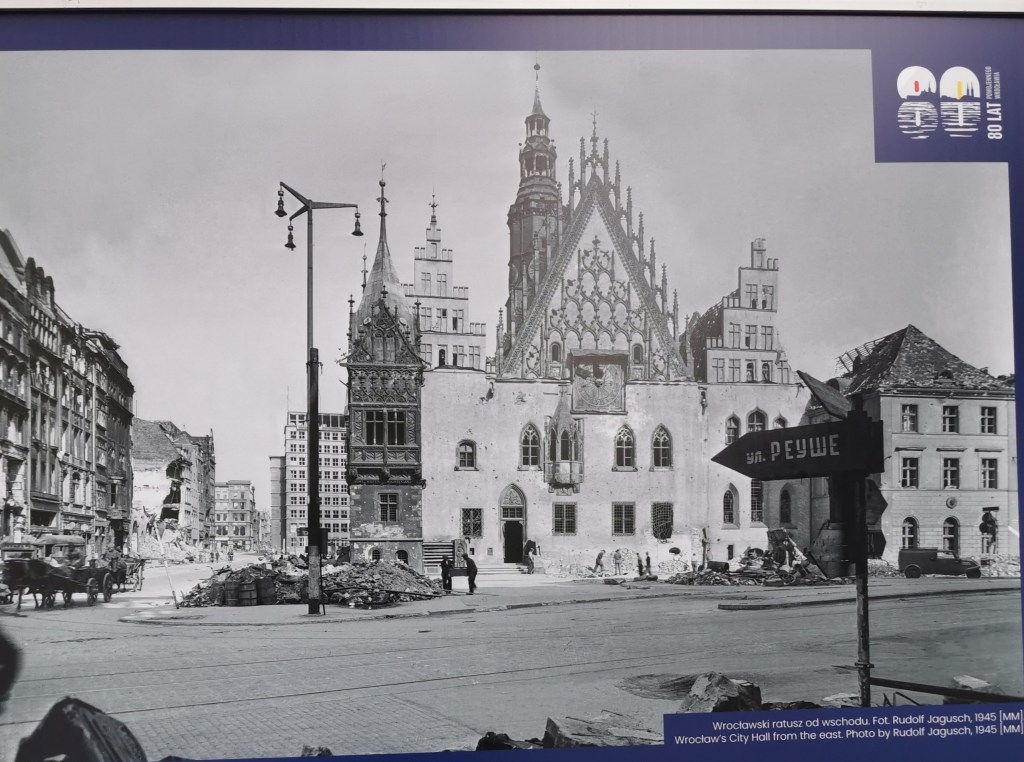
As the German city of Breslau it survived destruction for most of World War 2 but was largely destroyed in the final days of the war by the advance of Russian troops from the east, the resistance of the German garrison and aerial bombardment from the west. The city centre has been reconstructed – largely in its traditional form. When we were there, there was a photographic exhibition in a main street, marking 80 years since the end of the war, which illustrated the extent of the destruction and reconstruction.
Another attraction for us was that Wroclaw is also known for its beer – one of the largest beer festivals in Europe is held there each June. In addition to gaining an appreciation of the city we made sure we sampled a few beers (no surprise there).
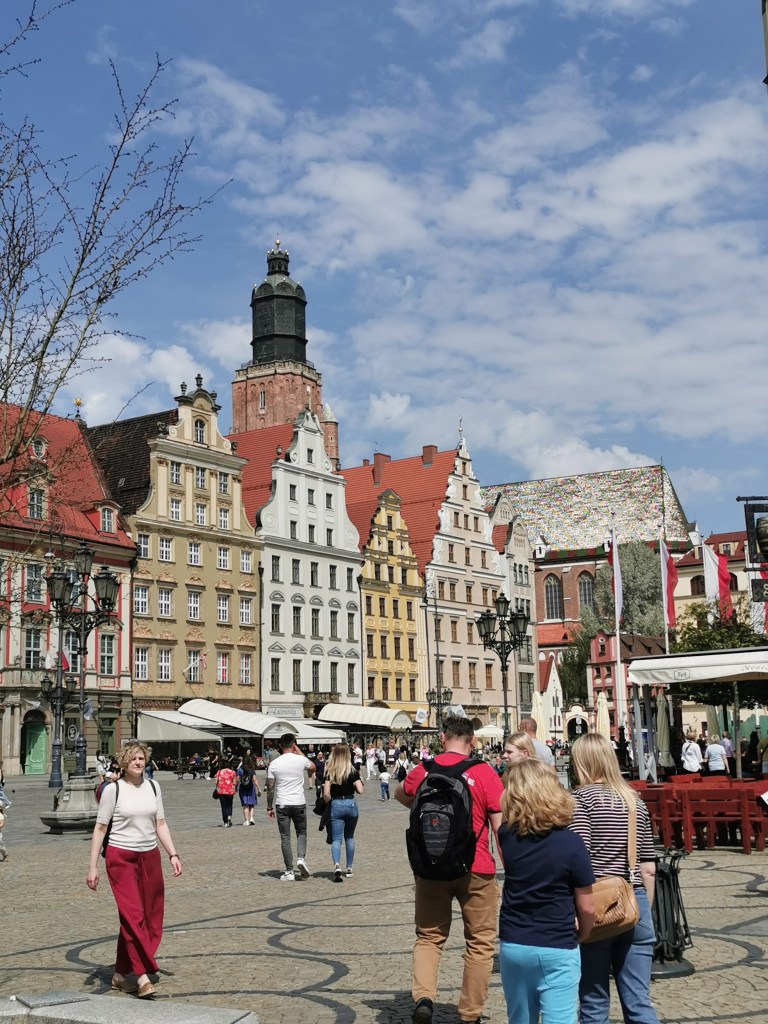

The focus of the old city is the huge Rynek (market square),just a few metres from our hotel. It is dominated by the town hall and is surrounded by magnificent reconstructed buildings. The streets and squares around are worth a visit too – the most impressive have been reconstructed, though there are a couple of rundown areas off the main streets and some uninspiring 20th century development.
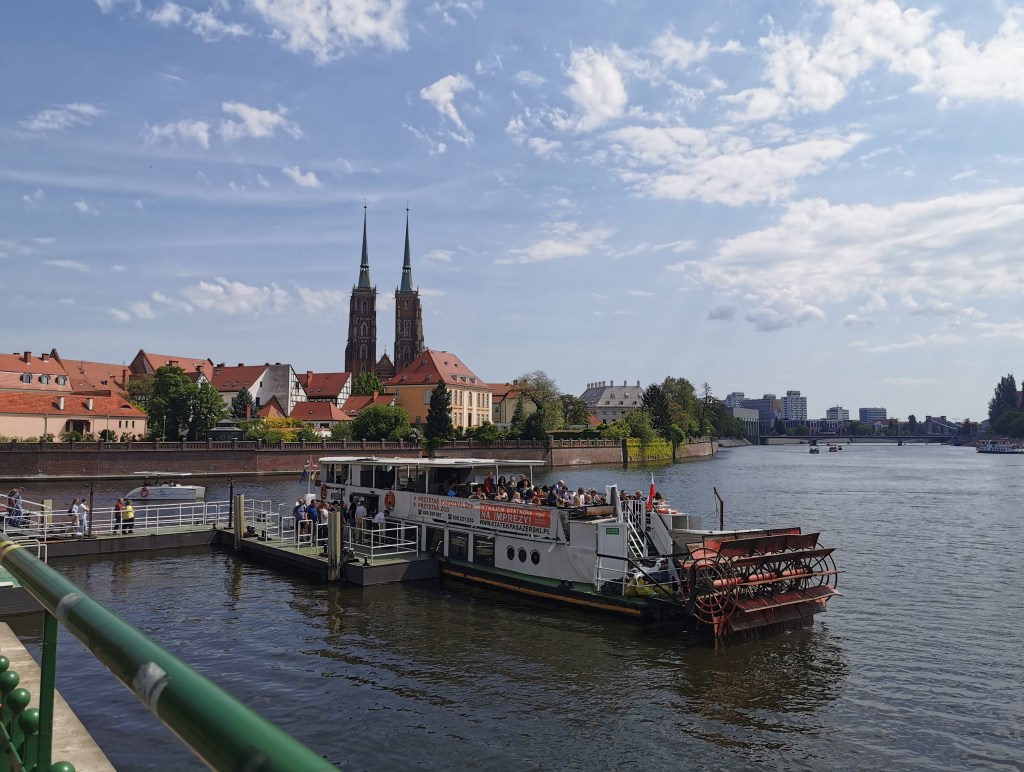
There is no shortage of places to eat and drink – including a basement brewpub beneath the town hall. The old city is surrounded by the river Odra (Oder) and the Olawa canal (the map suggests this runs along the line of old city walls). Historically, low-lying Wroclaw has been prone to flooding, most recently in 1997, which was followed by extensive works to prevent a repeat.

A stroll took us to the north side of the old city. By the river Oder is the old market hall which is still in use. Across the river is the island of Wyspa Piasek and a second bridge took us to the Ostrów Tumski area. This was the original site of Wroclaw until it moved across the river in the thirteenth century and grew around what is now the Rynek. Ostrów Tumski remains the location of the cathedral and several other churches. After our visit we managed to catch a tram for the return journey – there were a few around.
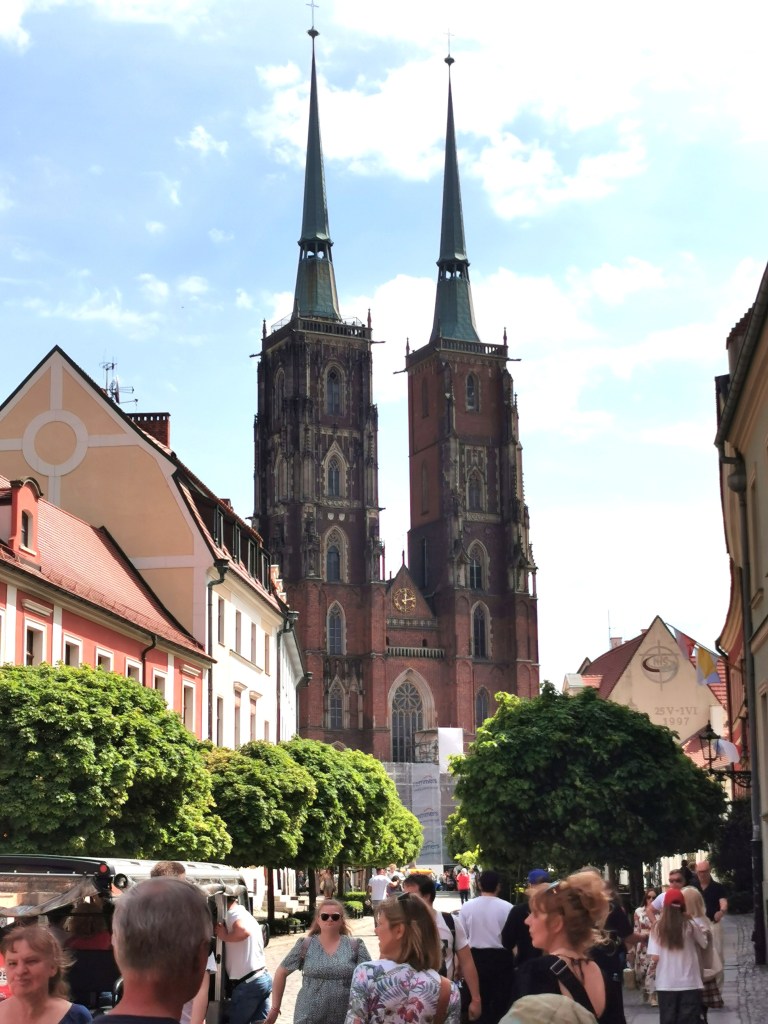

On the map we spotted a cable car across the river to the east and caught a tram along there. It turned out that it is closed on holidays and weekends – its’ main purpose seems to be for students to get from one part of the university campus to another, though it could easily become an attraction for tourists and nerds like myself.


Several dwarves
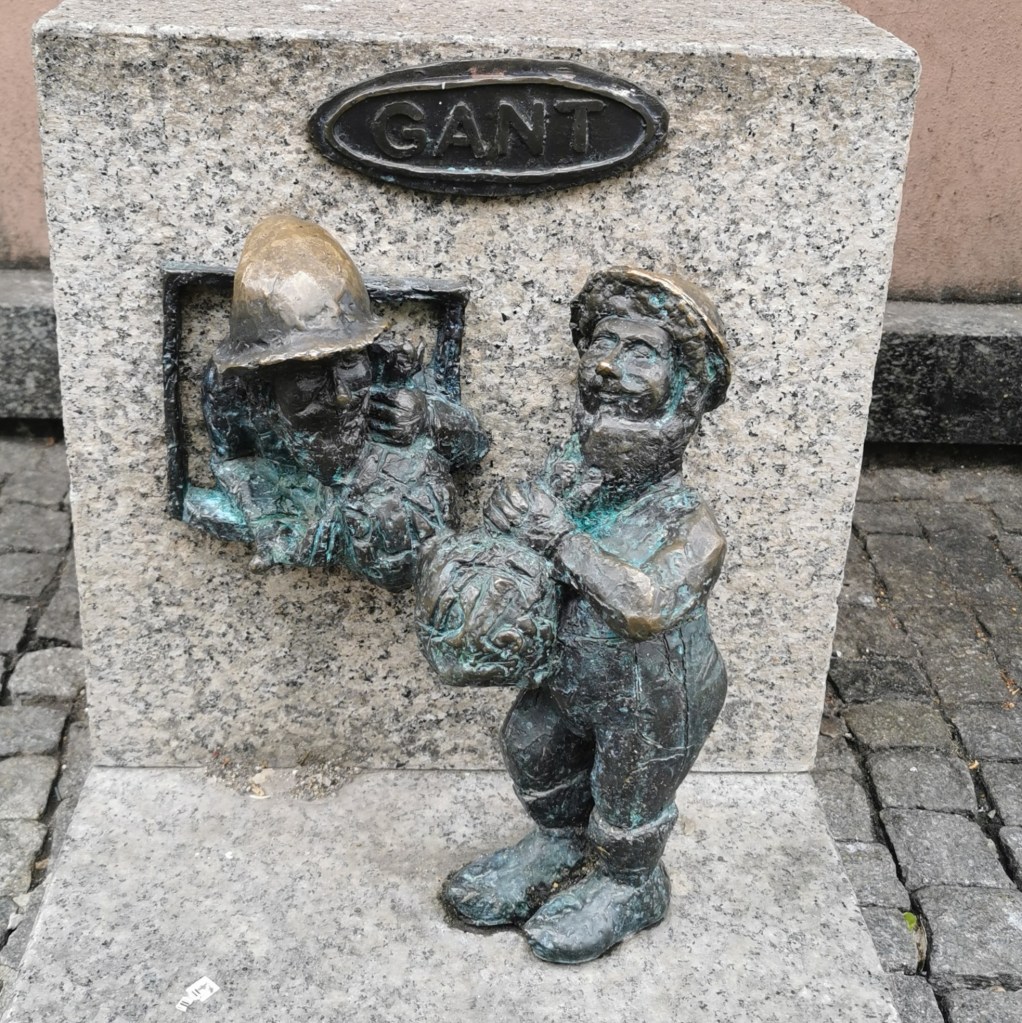

An odd feature of the city are the dwarves. The Orange Alternative was an underground organisation which organised imaginative protests against the Polish communist regime in the 1980s, including graffiti dwarves where police had painted over anti-regime slogans. The dwarf figurines commemorate their activities From the first in 2005 there are now almost 800 but they have lost their political significance and become a tourist attraction. The small figures are easy to miss – but Ted spotted them, and once you start looking there are plenty around.
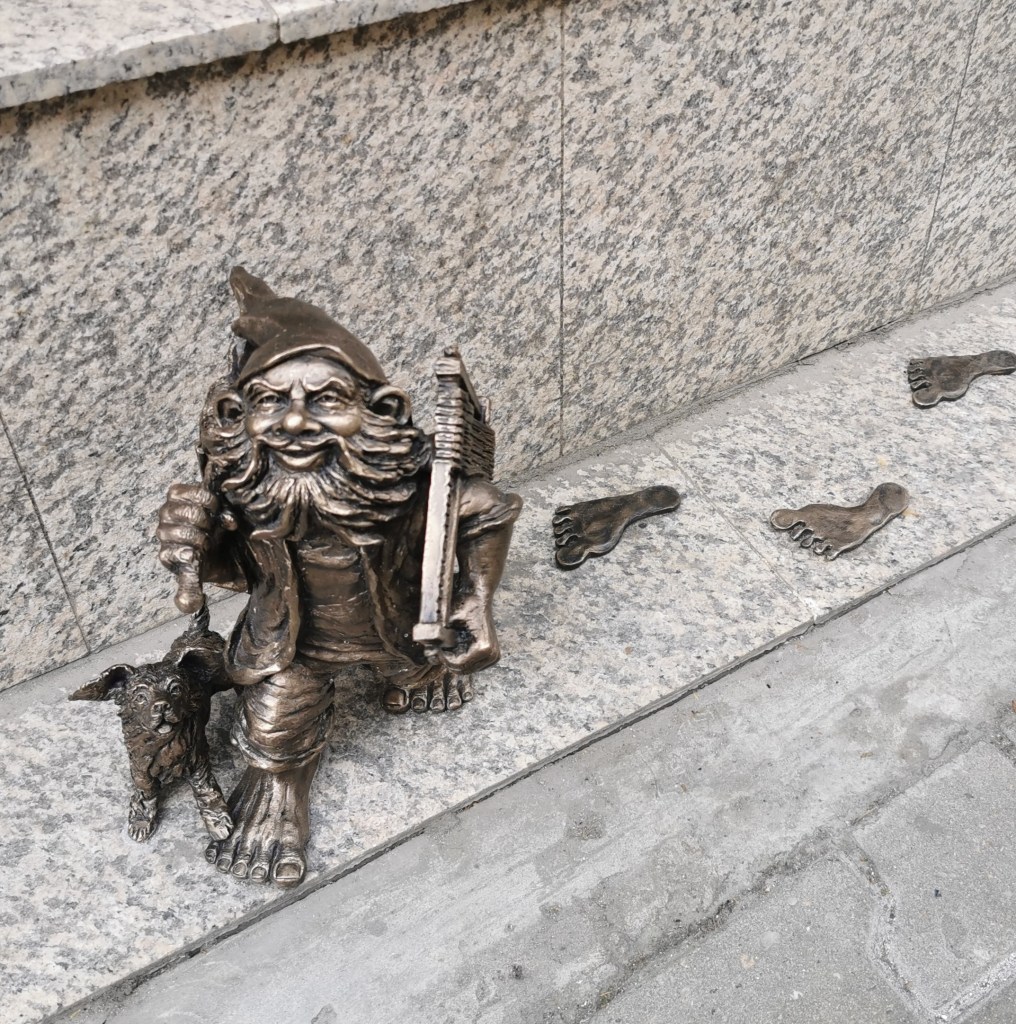
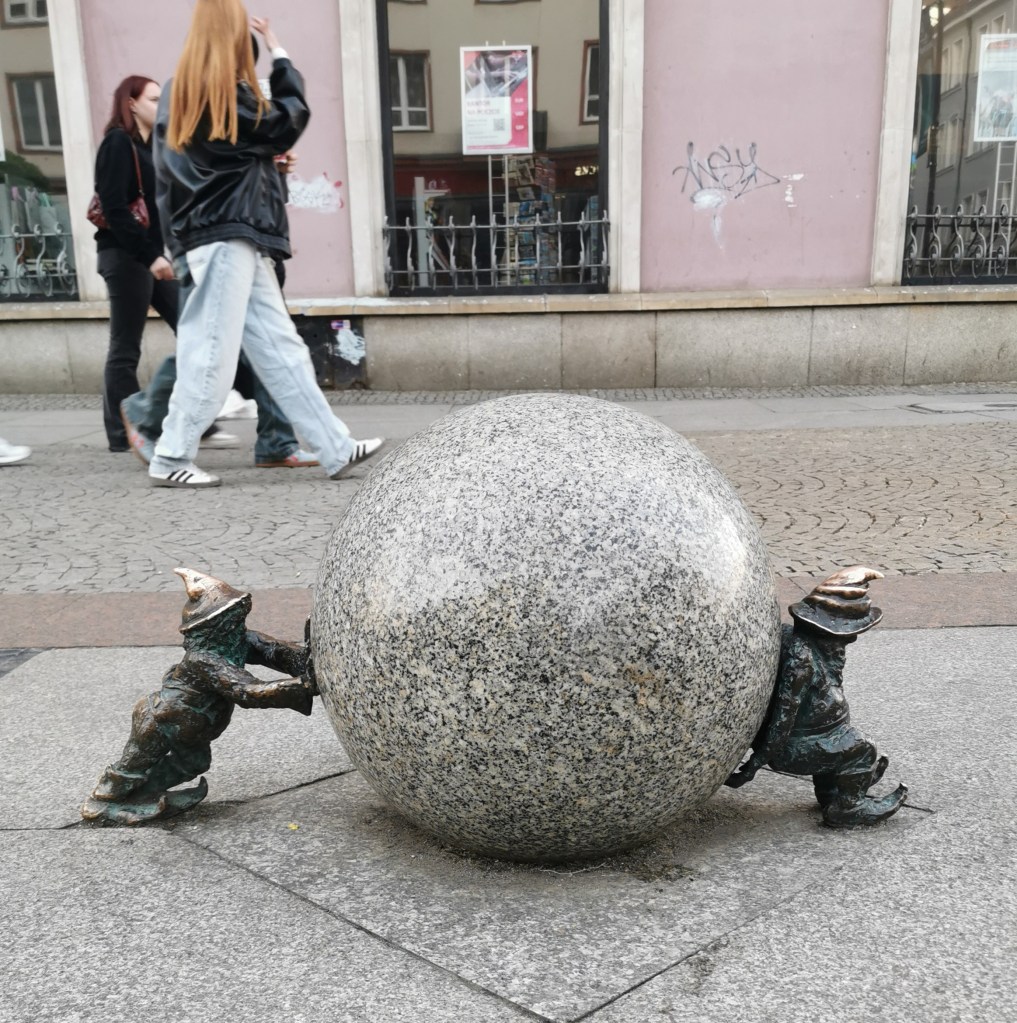
and several more


Of course we tried out places which were recommended for their selection of decent beers. The large brewpub and restaurant in the basement of the town hall is Piwnica Świdnicka, which dates from 1273. It is inevitably touristy and on the expensive side. However, their flights of half a dozen beers were a favourite of Ted’s, the beers are interesting and we found it friendly. Our two other favourites are slightly off the beaten track. West of the Rynek is a fine bar called Szynkarnia – Amongst its beers was a locally brewed bitter on handpump, which was not at all bad, the staff and customers were helpful and friendly, and the food looked good. On the south side of the city centre is Marynka, up an alley and through closed (but not locked) doors. Quiet at the times when we visited but a fine selection of beers. All three have outside terraces for people watching. There is more information in the Practicalities section below.

Katowice
We broke our stay in Wroclaw with a trip to Katowice. We knew it had been an area of heavy industry but how regions have coped with de-industrialisation is interesting in itself. It is a two- hour journey by Intercity train and, as fares are ridiculously cheap in Poland, we travelled first class. The railway follows the south side of the Oder valley – the land is flat, extensive farmland, with large areas of allotments on the edge of towns and villages – until the river is crossed at Opole. By Gliwice the countryside became more industrial with much evidence of former works and mines. Much of the housing comprised coal-blackened tenements – some empty and derelict, others in need of renovation. Extensive works to modernise the railway are taking place on the approaches to Katowice.

Today Katowice has a population of 300,000. Formerly a number of small villages the discovery of coal reserves led to the development of mines, steelworks and foundries. Following their closure the economy has evolved into the provision of services, education and healthcare.

Our walk around the city centre showed the contrast with Wroclaw. While it is not ugly and regeneration has taken place there is not much stand-out historic architecture – the most prominent building on the Rynek is a MacDonalds.

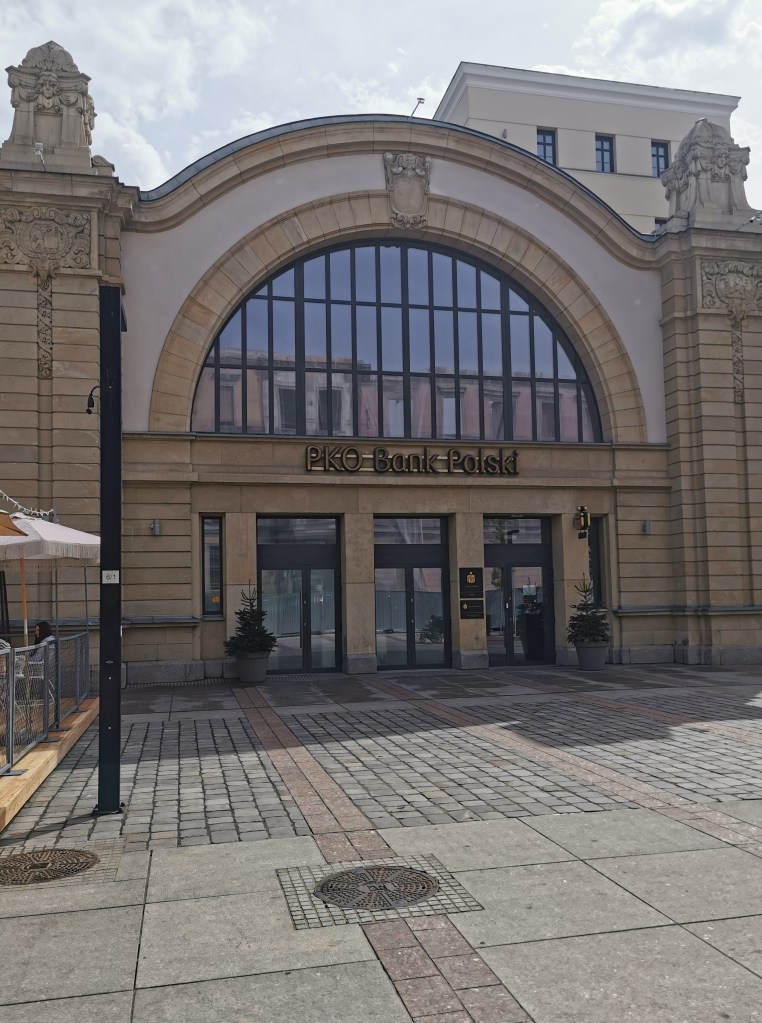
We found our way to the pedestrianised street ul. Mariacka, which is lined with bars, restaurants and clubs. At lunchtime it was quiet but posters advertising happy hours and student discounts suggest that it is the place to go at night. We settled into Lorneta z Meduzą (L&M) at no 5 where the (good) beer was the cheapest we found in Poland and the white sausage was tasty. The walls were decorated with old maps of Katowice – it was easy to see the dominance of heavy industry.
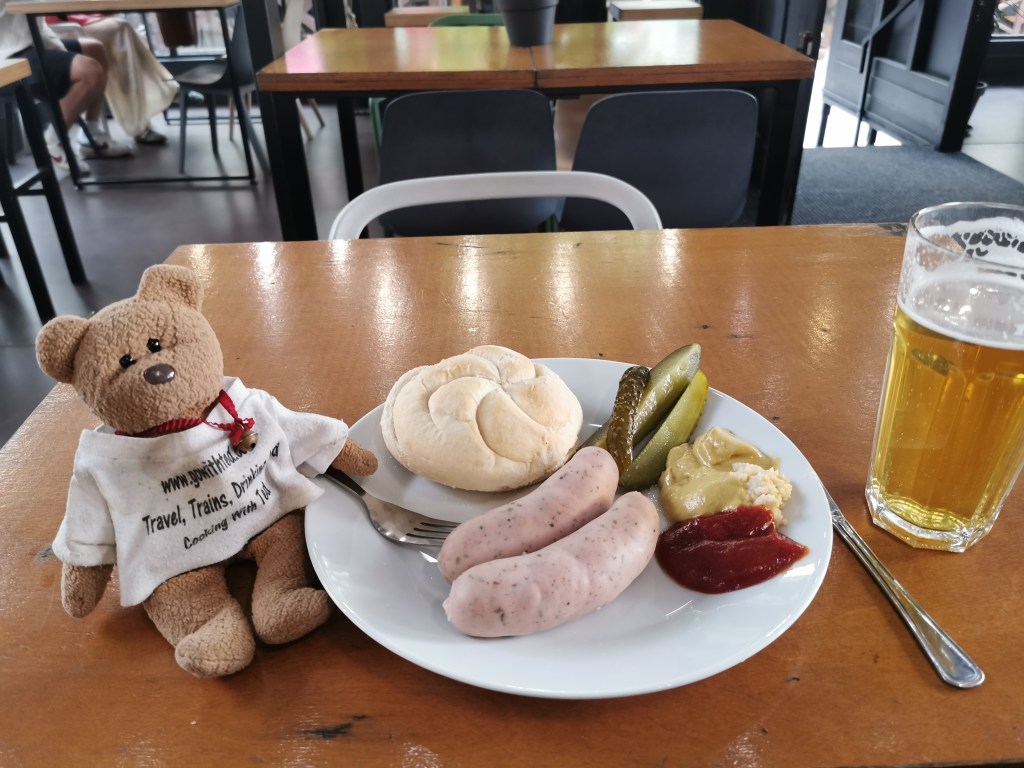
The hot sunny weather of ourtrip so far broke with a heavy downpour of rain while we were in L&M, which limited our further exploration. By the following day, sunshine had returned and lasted for the rest of our trip, though the temperature had dropped considerably. In Katowice we made our way through the puddles back towards the station and we found ourselves in the Centrum Pub – the most unreconstructed bar of our trip with characters knocking back (good) beer and vodka. We were told that a Banksy had appeared nearby (I checked and he has visited Katowice) and that the city has become well known for Street Art. Unfortunately time and the weather precluded further investigation and we caught our return train to Wroclaw.
Wroclaw to Gdansk

The next stage of our Baltic Express journey was from Wroclaw to Gdansk. The journey takes 4¼ hours to cover the 478km via Poznan and Bygdoszcz, at speeds of up to 170km/hr across the plains. Cheap fares meant we travelled first class once more. A bar/restaurant car is added to the train at Wroclaw, which we visited for a beer. I can remember Colin and I agreeing in 2004, on a train from Poznan to Berlin, that it was clear to see how easy it would be for tanks to roll across the plains – Germans eastwards and Russians westwards. Occasional low hills and woods make the countryside more interesting, but we noticed a virtually complete absence of animals in the fields. We did this journey in one go, but a little research would reveal which of the towns en route, in addition to Poznan, would be worth a break in the journey.
Gdansk
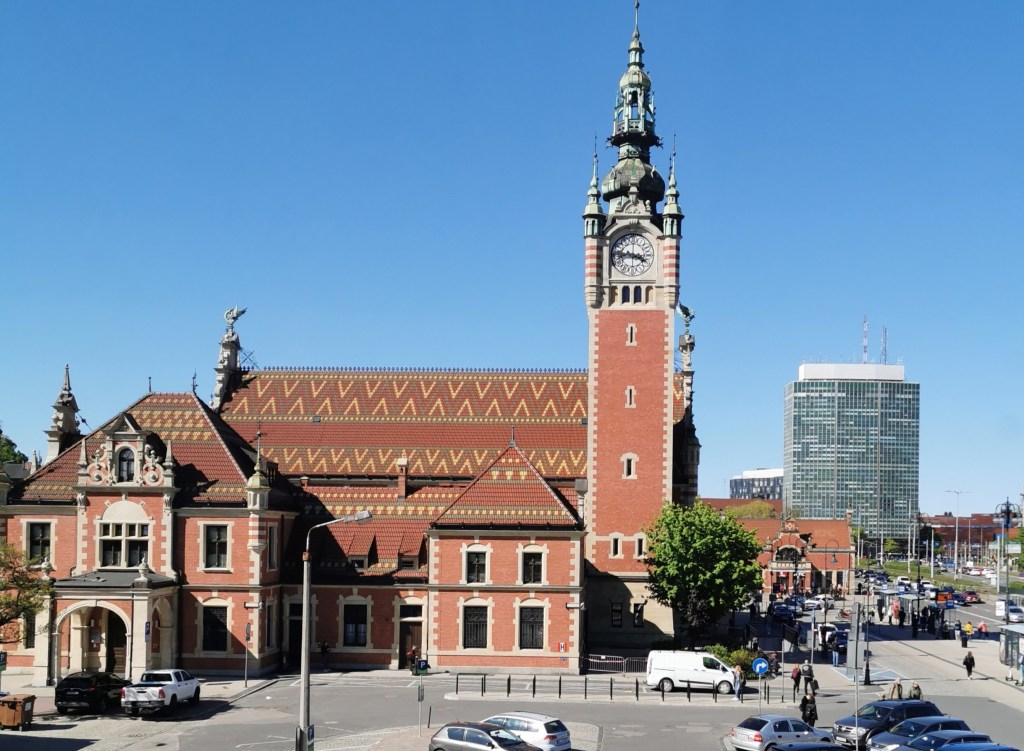
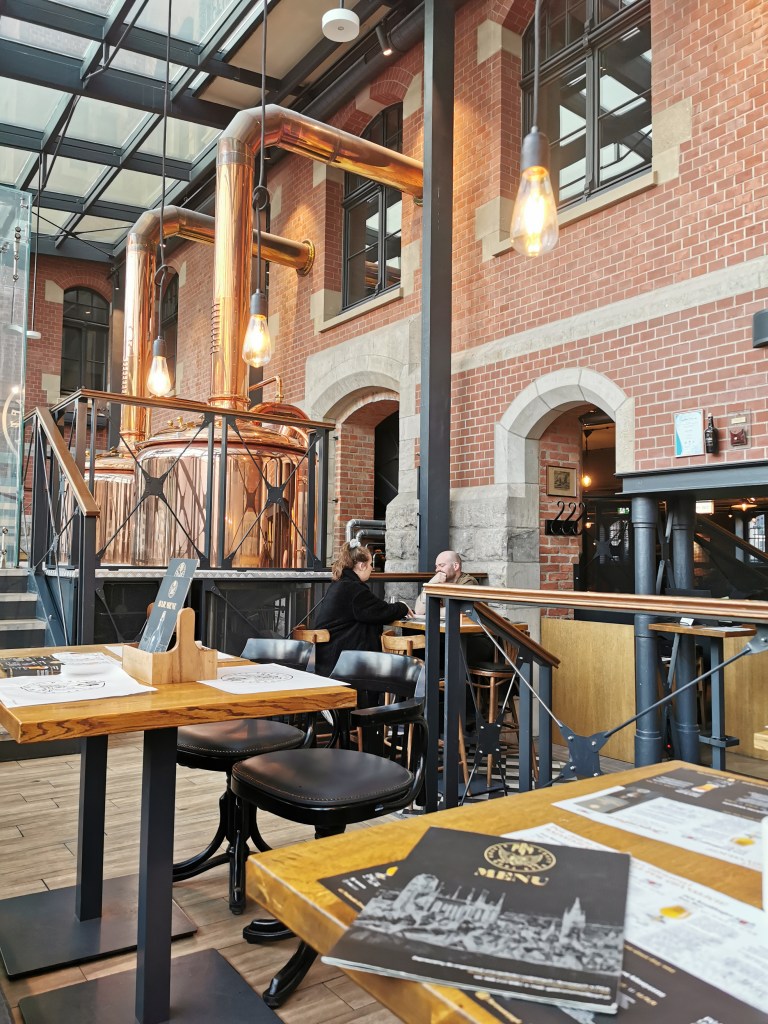
Our hotel in Gdansk was the Hotel Central Craft Beer (I wonder why we chose that) – it is adjacent to the station in an historic building with large bedrooms rooms and a brewpub in the basement. On our arrival, after a short rest, we took a walk to get our bearings locally then decided on a quiet evening enjoying the hotel facilities. There was a choice of half a dozen beers and good steamed pierogi dumplings – and the breakfasts were good too.

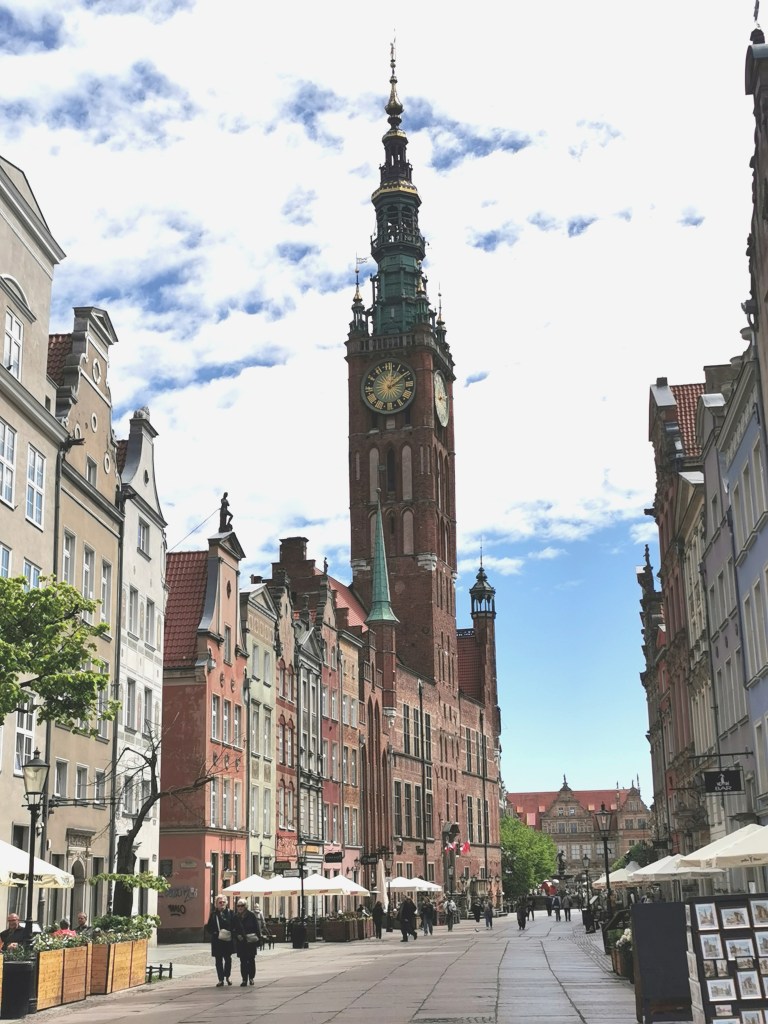
Gdansk developed in the Middle Ages as a trading port, shipbuilding centre and prosperous member of the Hanseatic League. Today it has a population of 477,000, and is part of the TriCity conurbation, together with Sopot and Gdynia. As the Free City of Danzig it was attacked by the Germans in September 1939 at the outset of World War 2 and was badly bombed later in the war. The central area, Main Town, has been rebuilt in traditional style.

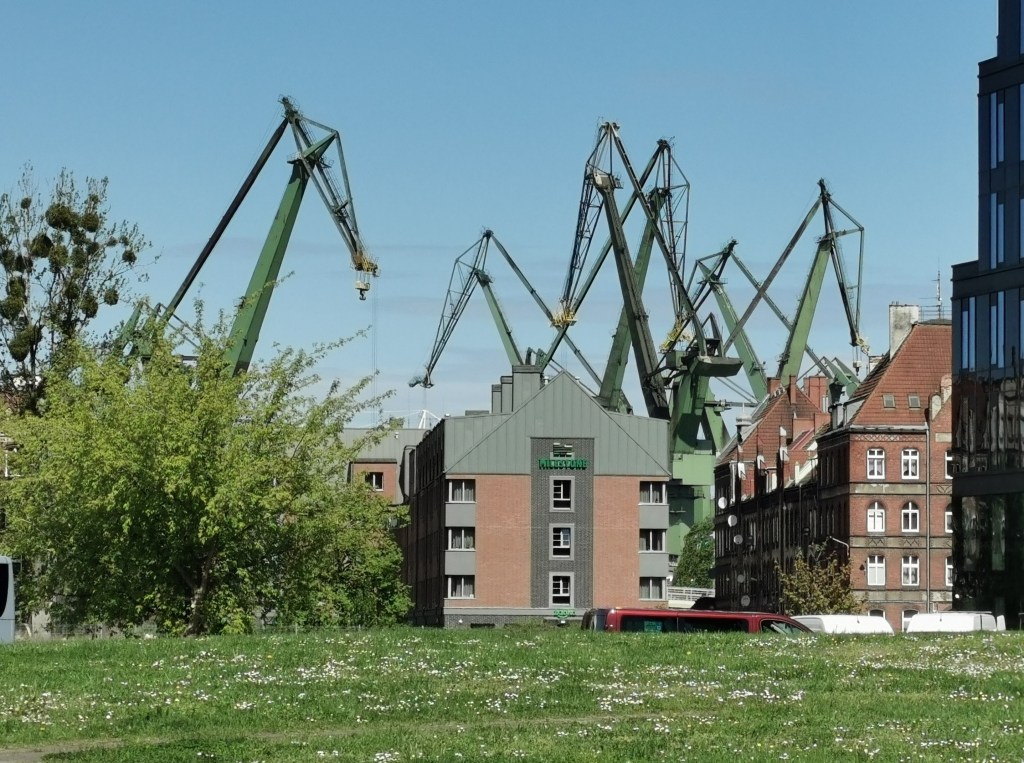
The Gdansk shipyard
We began our wander round Gdansk to the north of the city centre at the Gdansk Shipyard, (formerly the Lenin Shipyard), still in operation though reduced in size. The workers there played a key role in the struggles to create a modern Poland. It was the focus of anti-regime demonstrations in December 1970, when several dozen workers were killed by the authorities. In August 1980 it was the birthplace of the Solidarity trade union movement, which helped bring about the collapse of the Communist government in 1989.
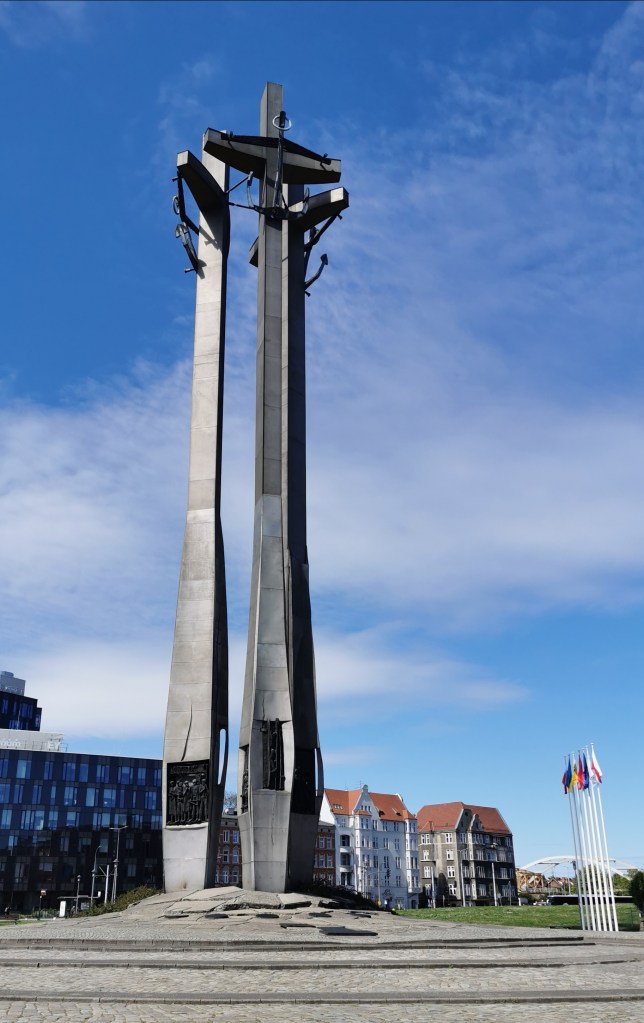

The Monument to the Fallen Shipyard Workers
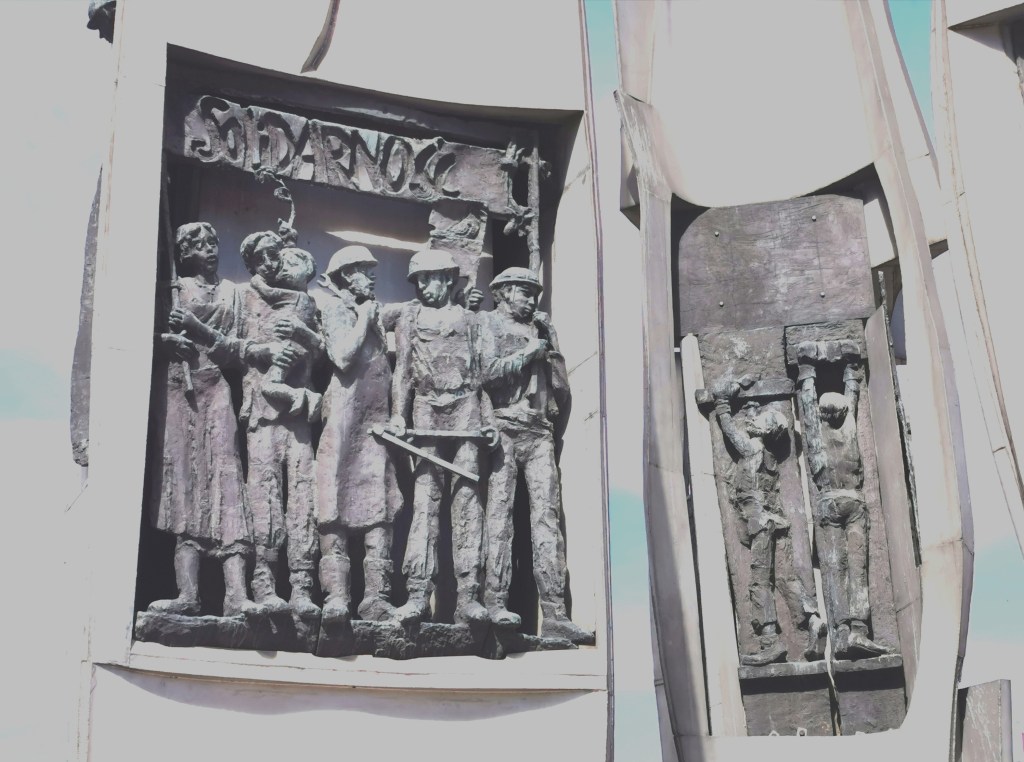
At the entrance is the Monument to the Fallen Shipyard Workers of 1970 and close by is the European Solidarity Centre museum. It is a fascinating area. However, there were very few people around, apart from one student group. Once I saw how many tourists were strolling around the city centre, I became concerned that the memory of this important part of the city’s history is fading.


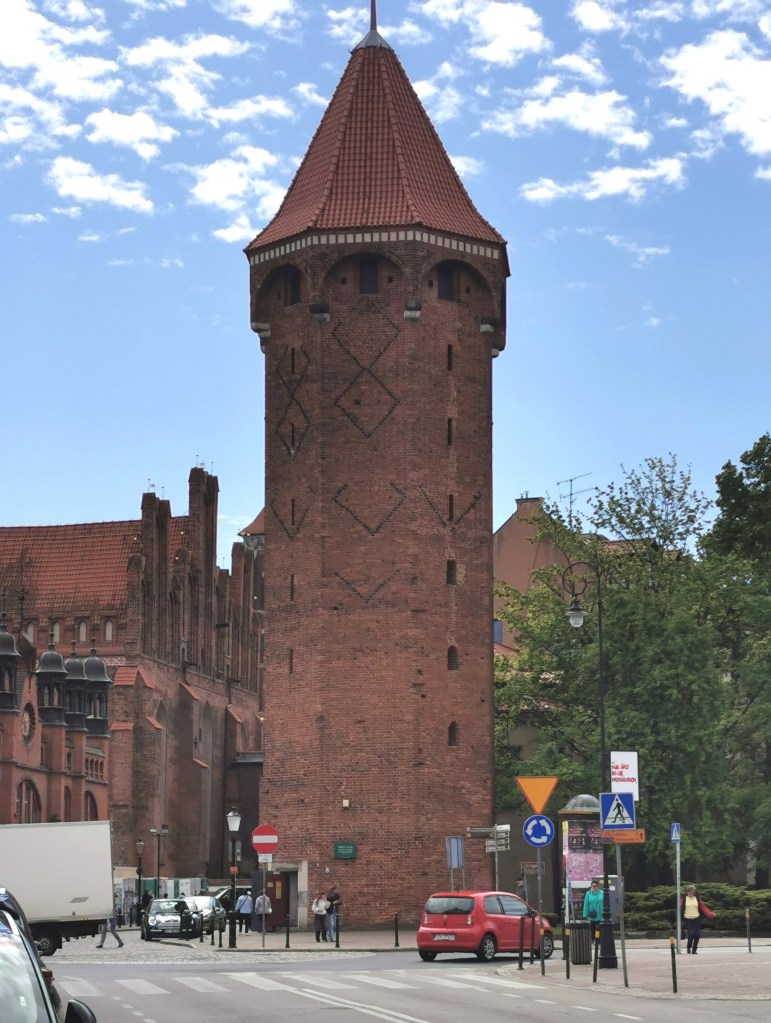
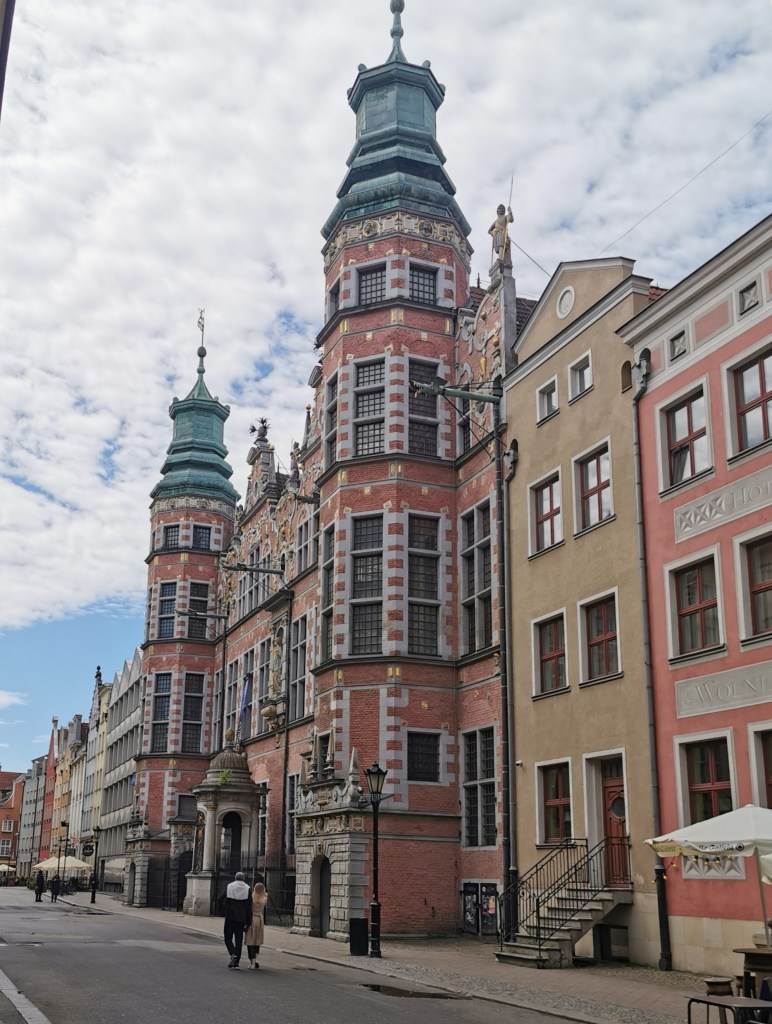
From there we walked to and through the Old Town past notable buildings such as St Catherines Church and the Great Mill. We continued across the Raduna Canal and through Main Town (Glówne Miasto), the heart of the city and the area which attracts most tourists. We passed the Covered Market, the Jacek Bastion and the Great Arsenal to reach the most attractive street (and the main tourist drag) at the south end of Main Town – Ulica Długa (Long Street) and its continuation Długi Targ (Long Market) – which lead to the River Motlawa.

With elegant gates at each end – the Golden Gate to the West and the Green Gate by the river – they are lined with restored buildings housing restaurants and souvenir shops. We followed everyone else along the street to the river where we followed the quayside to the Medieval Port Crane then settled in a quayside restaurant for a couple of beers and a people-watching session.

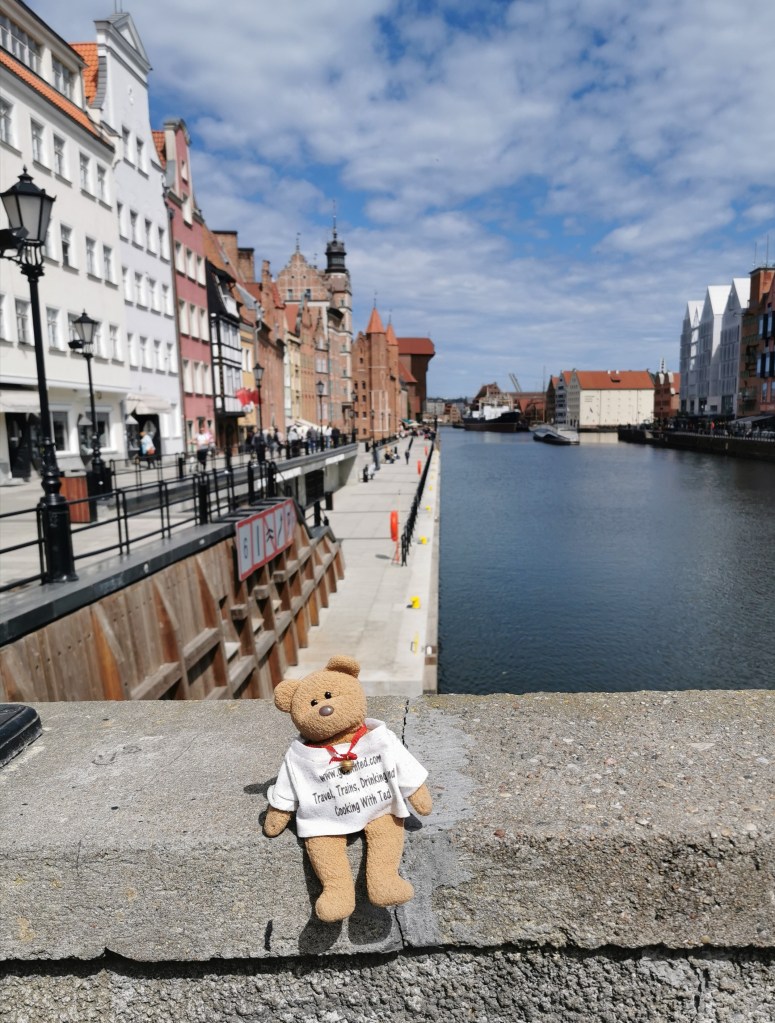

During the remainder of our stay in Gdansk, we passed two evenings exploring Main Town and it was in the back streets that we found the bars selling craft beers. Not far from our hotel we visited and enjoyed The Loft, a small ground floor bar with a friendly crowd. We particularly liked Pulapka, which we found on our final evening, behind a heavy closed door. There was a sign stating it was at it was open so in we went and found an excellent range of beers. Several places we visited appeared to be constructed for cold winter night. There are more details in the practicalities section.


Welcoming doorways – The Loft and Pulapka
Gdynia
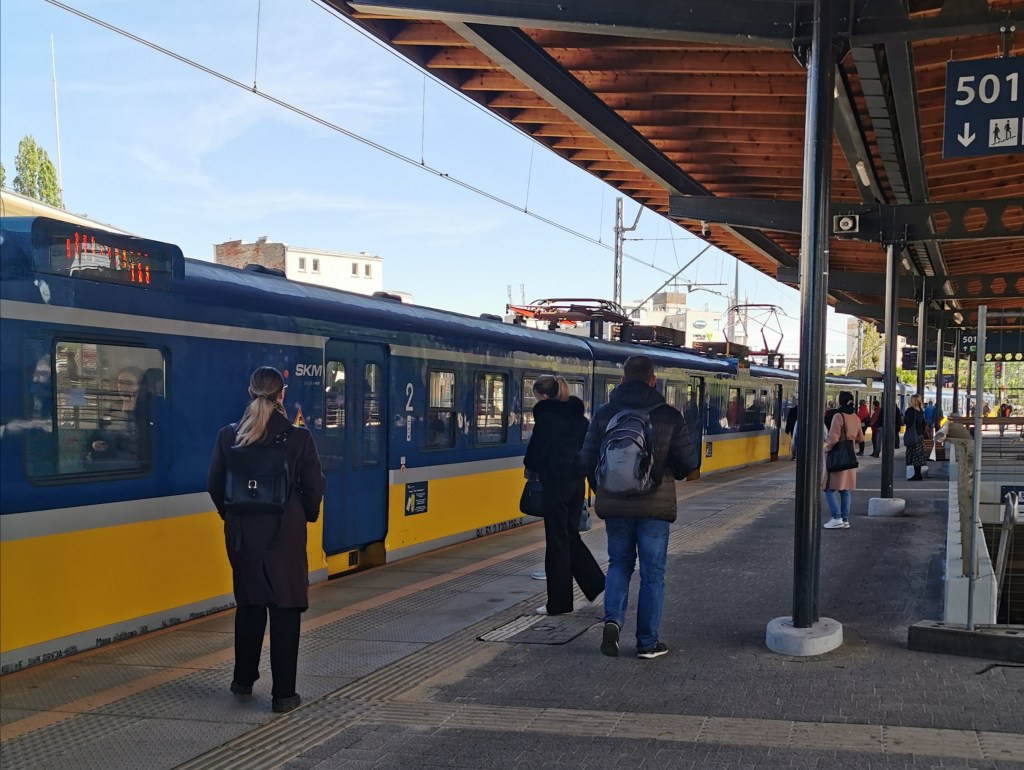
The Baltic Express terminates at Gdynia, 21 km north of Gdansk, so to complete our journey we had to go there. Rather than wait for a Baltic Express we caught a local train, once we managed to find the platform – the signage at Gdansk Glowny is poor.
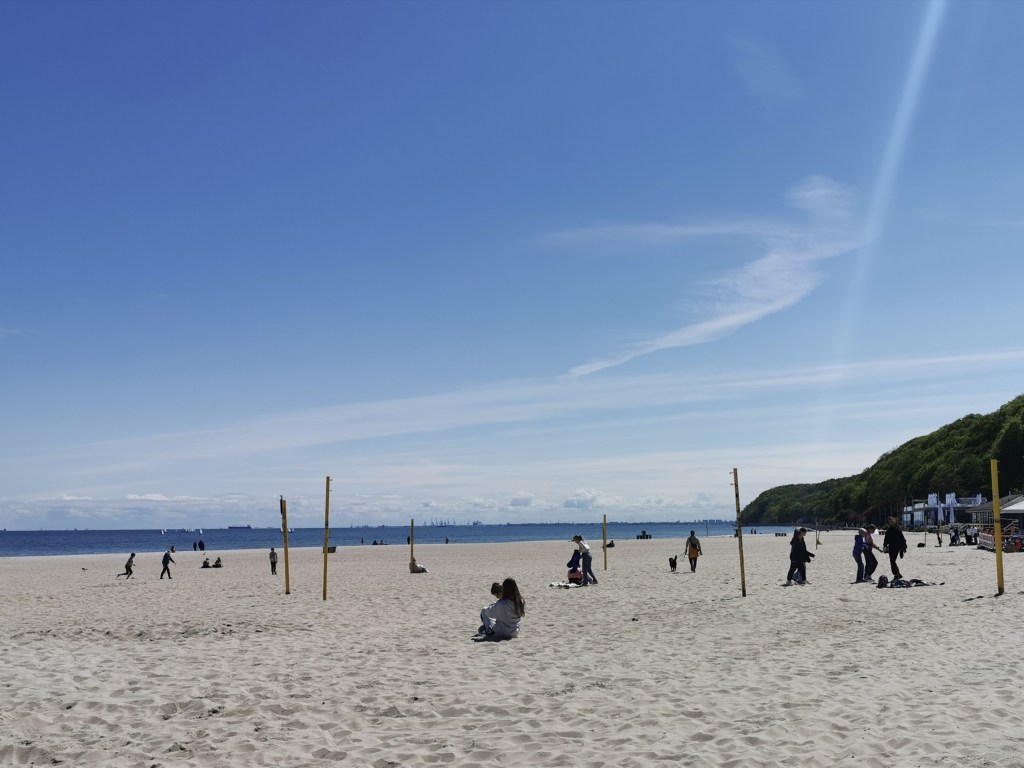
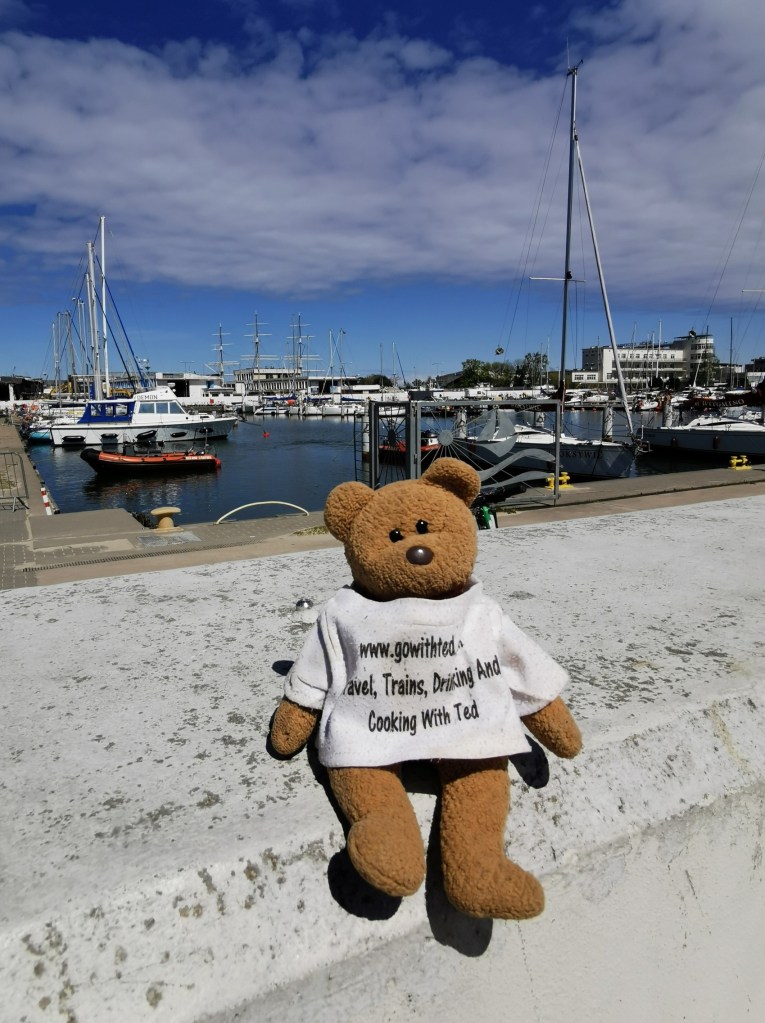
Gdynia dates mainly from the 1920s when the port was developed and it also became a seaside resort. Today the population is 257,000 and it is a pleasant enough place without spectacular sites – much more low-key than the tourist centre of Gdansk. We spent a couple of hours wandering around the town centre and the area by the port (which is being modernised and redeveloped), had a look at the Baltic Sea and took a few footsteps on the beach. Back in the centre we had time for a beer before our afternoon train, but no bars were open that early in the day- surely there are some somewhere. However, we found a coffee shop that sold alcohol as a sideline then returned to Gdansk for our final evening.

The following day we headed home from Gdansk Lech Walesa Airport . It was a new journey to us so we had reserved a window seat. We spent the time guessing whether we were above Poland, Germany, Denmark or the Netherlands, before heavy crowd rolled in and we knew we must be approaching the UK. Another enjoyable trip over.


Practicalities
Getting there and back
Prague Airport

The Airport Express bus runs regularly non-stop between the Airport and Prague Main Railway Station. Tickets cost 100 Koruna and can be bought from clearly marked booths in the arrivals hall (by card or cash) or directly from the driver. It normally leaves from directly outside the arrivals hall. The journey time is about 40 minutes,

Gdansk Airport
Bus 210 departs from outside Gdansk Glowny railway station every half hour. The destination is Osawa PKP via Port Lotnicky (airport). The fare is 4.80 zl from machine by the bus stop. It is a local bus with many stops en route and takes about 40 minutes. There is a train service to the airport but the schedule is difficult to find and most journeys involve a change of train at Gdansk Wrzeszcz.
flights to Wroclaw
Note that Wroclaw also has an airport, with direct flights to and from the UK.
Getting around –
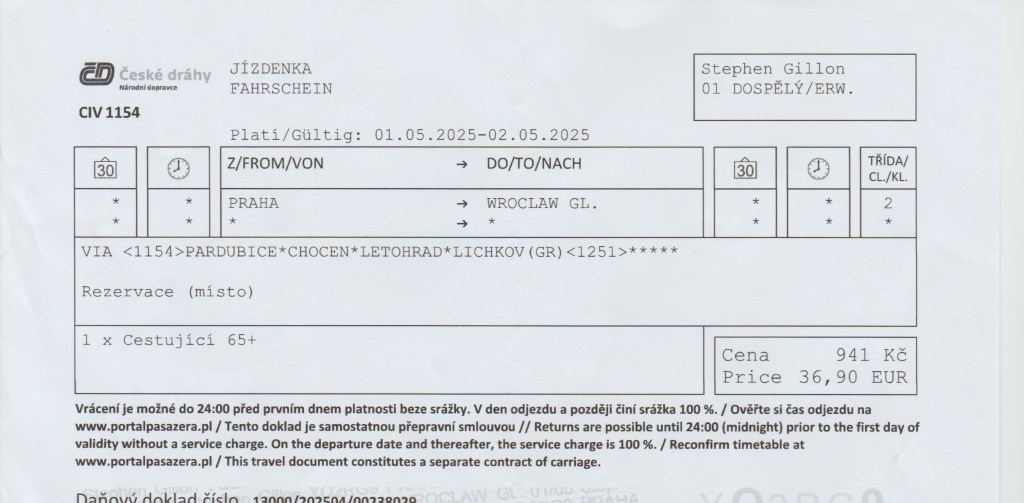
Baltic Express – From Prague to Wroclaw we used the Czech Railways (České dráhy) website www.cd.cz . From Wroclaw to Gdansk (and for the trip to Katowice) we used Polish State Railways (PKP) site for intercity tickets www.intercity.pl . Cheap advance fares are available and first class can cost little more than second class. Seat reservations are included in the price. As an example (fares vary – they may be cheaper or more expensive than this) our Prague-Wroclaw ticket cost 941Kr (c.£32.40) second class and our Wroclaw-Gdansk ticket cost 103zl (c.£20.60) first class.
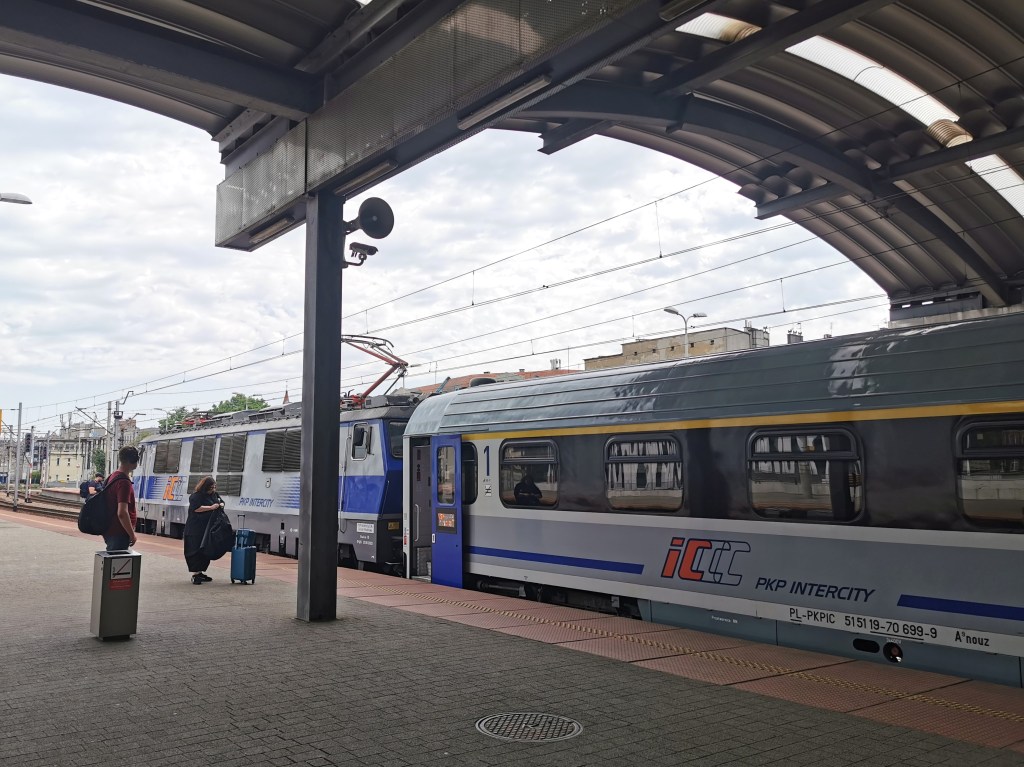
Main stations use a system of platforms, tracks and sectors. Each platform has two tracks (in many countries they would be numbered as two separate platforms) each of which may be divided into sectors. It is simple once you get the hang of it. In the stations we used I could not see posters or electronic information indicating the composition of trains or showing where each coach would stop.

Prague. Prague has a very efficient tram and metro system with high frequency services, good information and up-to-date system maps. For wrinklies such as myself travel is free for over 65s – carry your passport or other ID as proof of age if inspectors board.

Kutná Hora. Direct trains run every two hours from Prague Hlavni Nádrazi and take about 50 minutes. Our return ticket cost 319Kr and can be purchased online at Czech Railways site www.cd.cz or from the well-staffed ticket office at Hlavni Nádrazi (I didn’t see any machines around the station). From Kutná Hora station to the town centre (Kamenny dům stop) bus 801 runs every 15 minutes and takes about 20 minutes. The bus returns from the stop Palackého náměsti. It costs 20Kr each way. I didn’t see a ticket machine or passengers using contactless cards.
Wroclaw. We found public transport tricky, due to reduced services on a holiday weekend and diversions. There were gaps of at least 30 minutes in tram No 8 between the old town and the station, though when we left on the Monday morning there were definitely more trams and buses about. The real-time information at stops was often wrong and there were no system maps at stops. We had printed a map of tram routes which stated it was from 2025, but it was wrong – perhaps there had been major recent changes. As in Prague travel is free for over 65s with proof of age in case of inspection.

Gdansk and Gdynia. We didn’t use public transport within the cities as everything we wished to see was within walking distance. The SKM suburban train service between the two cities via Sopot runs frequently and tickets can be bought By card from machines by the entrance to the platforms. Fare 9.60 zl. single.
Hotels

The Hotels we used were:
Prague: Ibis Praha Wenceslas Square, Katerinska 36. The rooms were comfortable for a single traveller but would be small for a couple. Breakfasts were fine. There is a Novotel next door which may be more comfortable for people travelling together.
Wroclaw. Korona Gold, 2 Olawska, Stare Miasto. Fine. There can be queues for breakfast when the hotel is busy
Gdansk. Craft Beer Central Hotel, Podwale Grodzkie 4. Impressive large rooms and good breakfasts
Money


Our sole remaining koruna and a few zlotys and grosz
The currency in Czechia is the Koruna (CZK or kr.) and in Poland is the Zloty (PLN or zl.) As elsewhere in Europe payment by card is now commonplace, but it is useful to have a little cash. We took £50 of Czech Koruna and £100 in Polish zloty and that was sufficient. We needed cash a couple of times to use public toilets and a couple of bars were cash only. We also used cash for small purchases (this will depend on your banks charges).
Food
There is not much detail about food in many of these blogs. This is because when travelling alone (with a teddy bear that doesn’t eat much) I can’t be bothered sitting in posh restaurants eating the best food. Instead I have hearty breakfasts followed by eating snacks in pubs or from supermarkets.
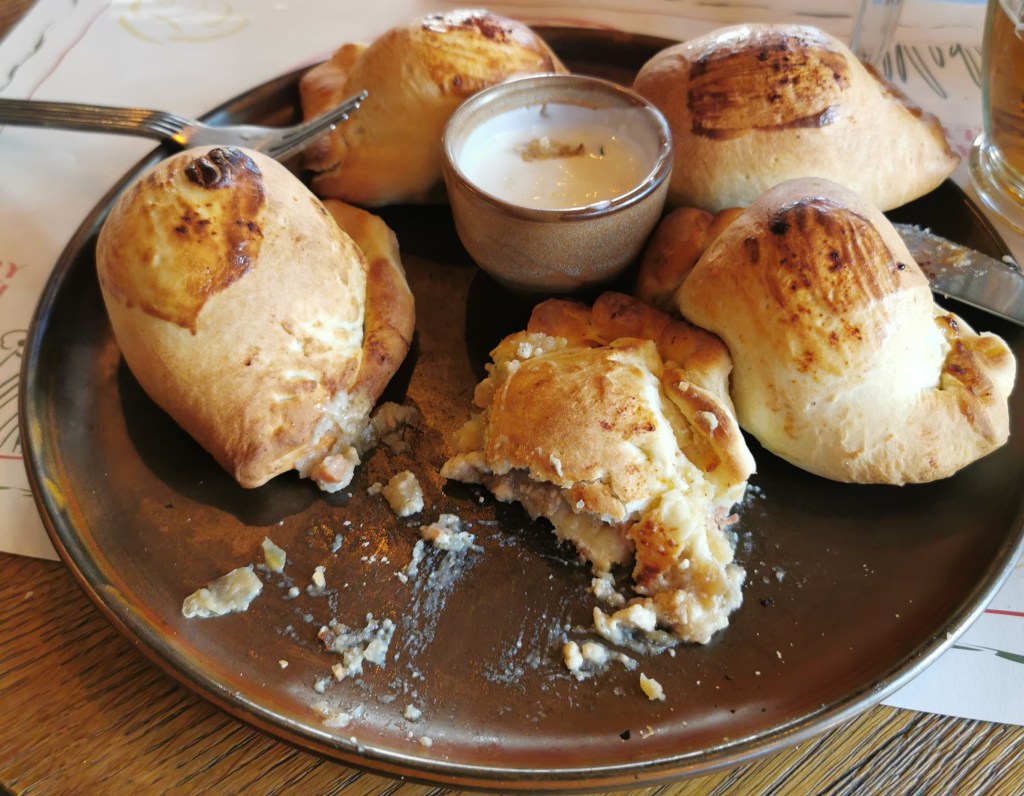
In Poland we were told to look out for pierogi dumplings, The pierogi in the hotel in Gdansk were traditionally steamed and were tasty (incidentally their schnitzel was also good). We tried the baked version in Stary Mlyn Pierogarnia on the Rynek in Wroclaw and were less impressed – like eating a series of five small Forfar bridies. We discovered that In Wroclaw there were several small places selling a range of good pretzels, but this had not reached Gdansk. Throughout Poland there are small Zabka convenience stores which were good for snacks. Virtually all the pubs and bars listed below serve food.


Drink
For Ted and I drink means beer. We sought out craft beer places – we updated our knowledge of Prague and our research discovered a thriving craft beer scene in Poland. We used Brewver to identify the places we would most like, using their maps and reviews to guide us – www.brewver.com. As is the case elsewhere beer-wise there are many American IPAs around which are not to our taste, but plenty of amber and darker beers as well. We noticed that in most craft beer places you order at the bar and pay as you go. We’ve mentioned our favourite places in the main text but we’ve added more details and a list of the other places we visited below. There is nowhere on this list that we would not visit again.
Prague

Our favourites pubs and bars mentioned /described in the text:
Kulovy Blesk, Ječná 34 (tram and metro IP Pavlova);
U Hrocha, Thunovská 10, Malastrana (tram stop Malostranské námĕsti) – I think it remains cash only;
Other pubs and bars visited:
Beer and Friends, Ve Smečkách 16. A good selection of craft beers. They had one called Mycoolass which I tried to pronounce with a Czech accent until I realised what it spelled. (Tram and metro IP Pavlova);
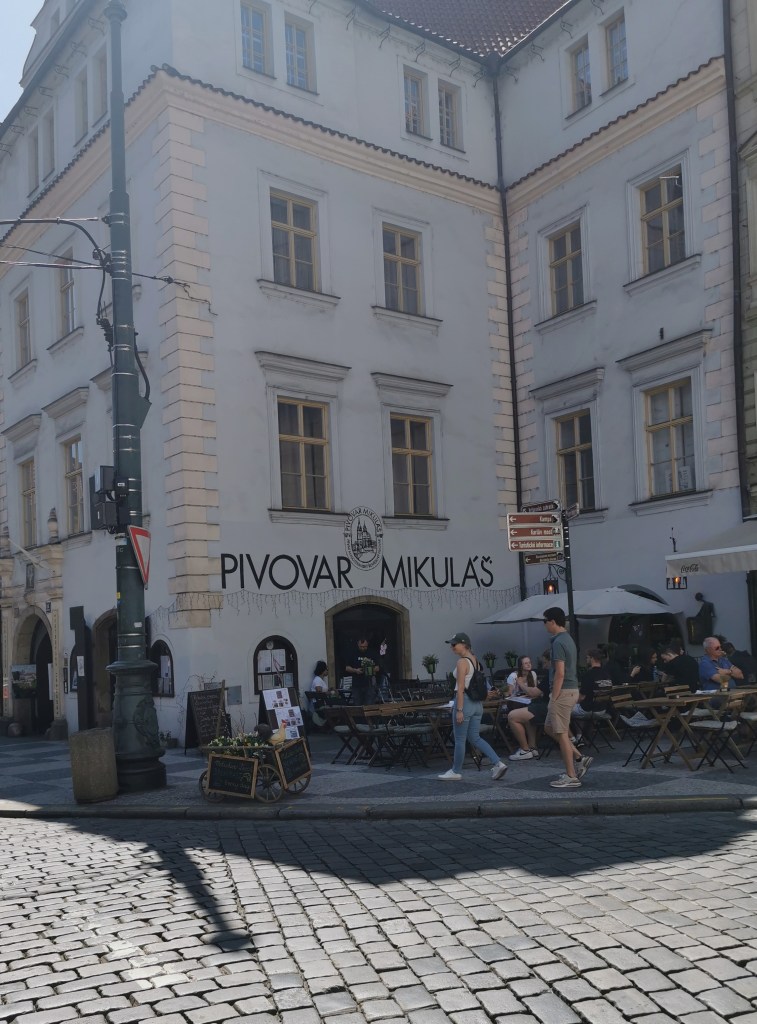
Pivovar Mikuláš, Karmelitská 25, Brewpub in Malastrana – pictured. Good beer, good food, a little touristy but ideal for people watching (tram stop Malostranské námĕsti);
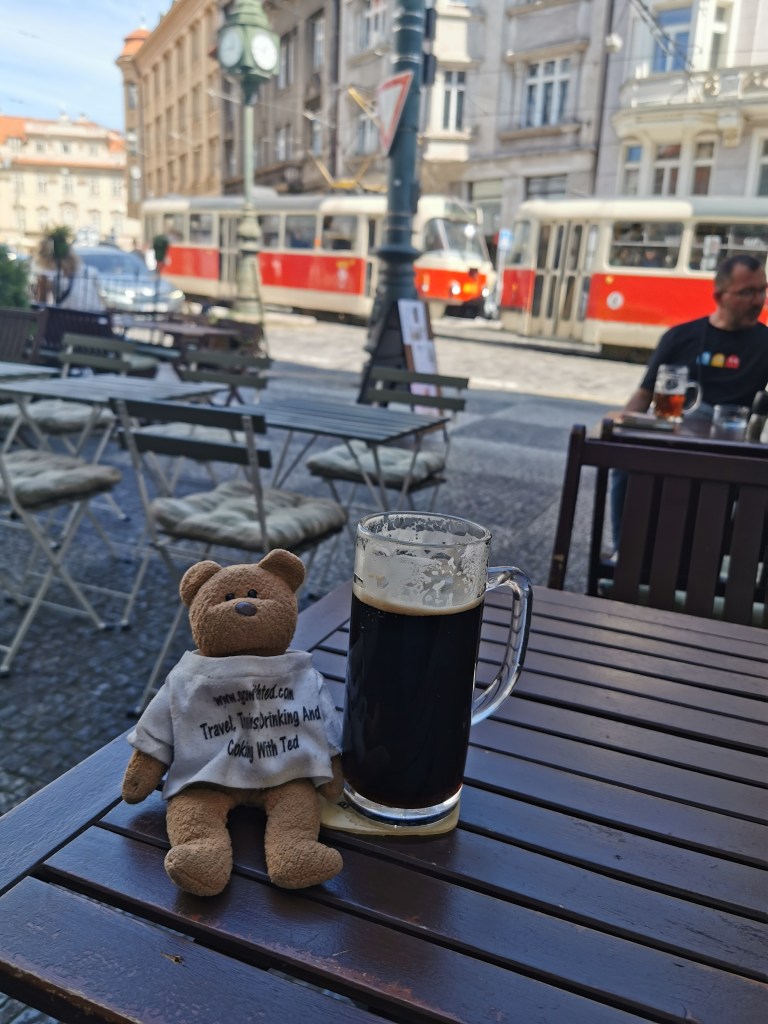
Pivovarsky Dům Benedict, Ječná / Lipová 1. Brewpub, food orientated. Both food and beer good (tram stop Štĕpánská);
See A journey in Central Europe for other places from our last visit to Prague.
Kutná Hora
Café Harmonia, Husova 104/9. Local beers and a pleasant garden.
Wroclaw

Our favourite Pubs and bars mentioned /described in the text:
Marynka, Kazimierza Wielkiego 39, nearest tram stop Zamkowac;
Piwnica Świdnicka, Rynek Ratusz 1A (in the basement of the town hall);
Szynkarnia, Swietego Antoniego 15. Nearest tram stop is Rynek. Includes a handpump.
Other pubs and bars visited:
Ale Browar, Pawla Włodkowica 27, very quiet when we were in so difficult to judge. By the canal, near Synkarnia.
Kontynuacja, Ofiar Oświęcimskich 17, large selection of craft beers in a street close to the south side of the Rynek;
PINTA Wroclaw, Podwale 83, One of a chain of Polish brewpubs. Large, modern building 24 taps only one of which was a darker beer. There was a beer called Dundee but it was an Australian pale ale, A short walk east of the city centre;
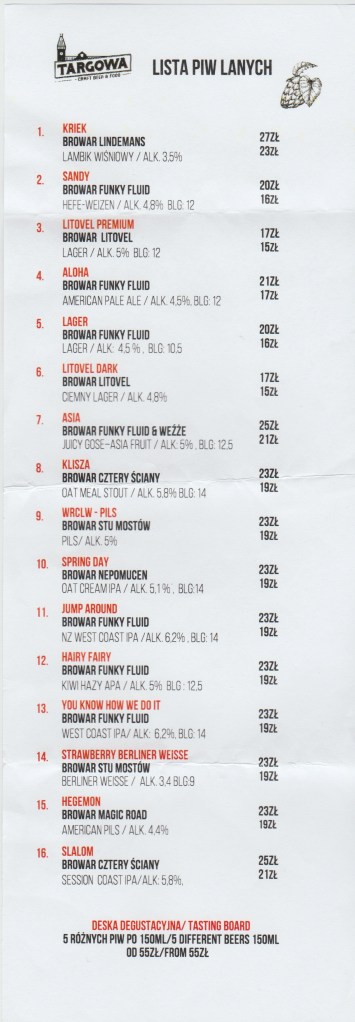
Targowa, ul. Piaskowa 17, terrace and basement bar in the old market (Hala Targowa) by the river. The Litowel Dark and their oatmeal stout were excellent. Hala Targowa tram stop directly outside. Beer list pictured.
Katowice
Lorneta z Meduza, Ul Mariacka 5. Cheap, good beer and food;
Centrum Pub, Stawowa 5. Good, basic, pub.
Gdansk (all places mentioned are in Main Town)

Our favourite pubs and bars mentioned /described in the text:
Browar PG4, Podwale Grodzkie 4 in the basement of the Hotel Central Craft Beer;
Loft, ul. Mylńska 15;
Pulapka, Straganiarska 20/23.

Other pubs and bars visited:
Café Lamus, Lawendowa 8, small friendly bar;
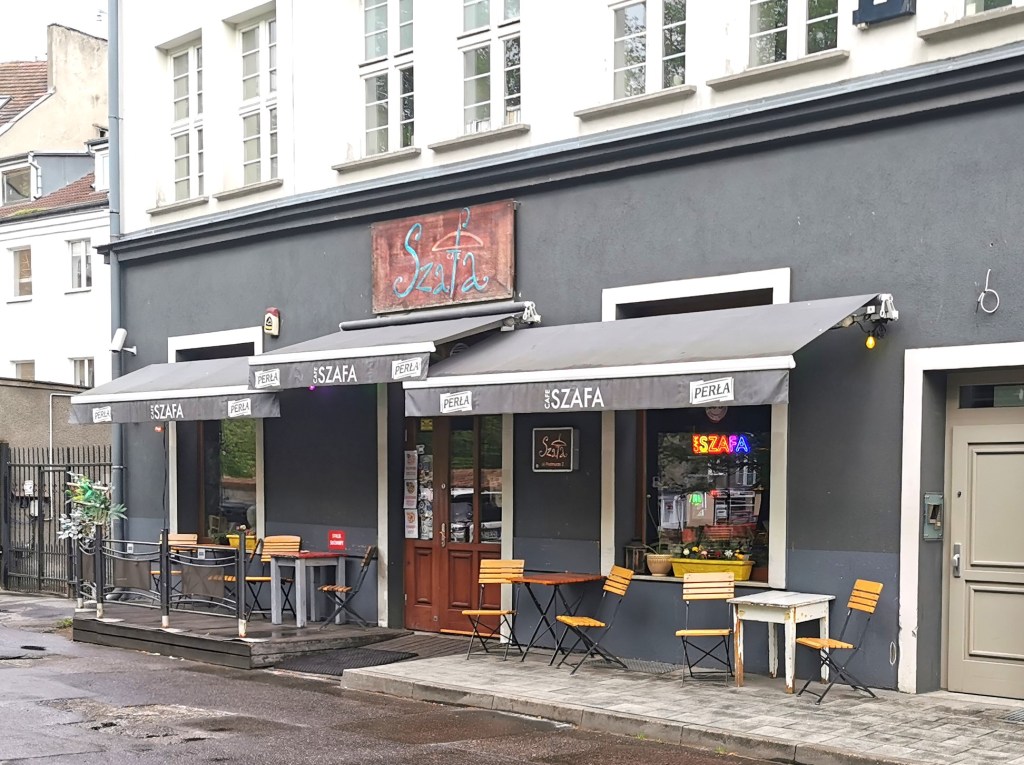
Café Szafa, Podmurze 2, small, interesting bar on several levels with good beer. Cash Only;
Gdański Bowe, ul Dlugie Pobrzeze 11, bar and restaurant by the river;
La Beerynt, Szeroka 97, basement bar, including a dark mild on handpump;
Polski Kino, also at Szeroka 97, cinema themed bar with several beers.
All the above beers are mentioned on www.brewver.com except for those in Katowice.

Copyright
The text and photos are Copyright © Steve Gillon, 2025. Prices are correct at May 2025.

 Go with Ted