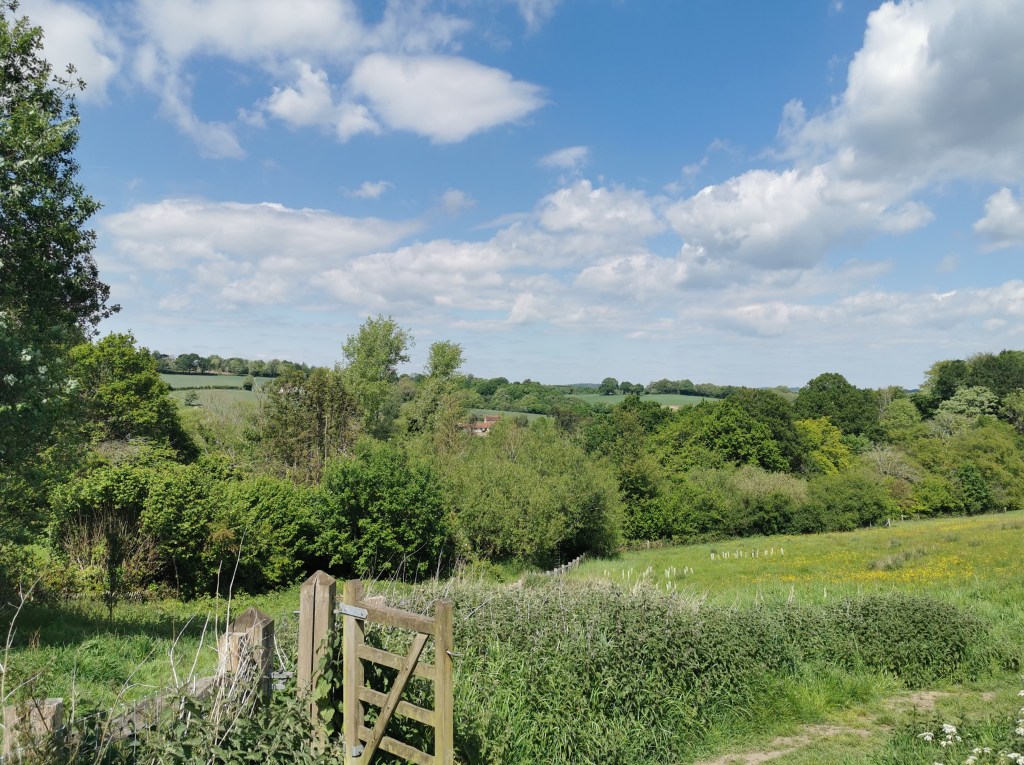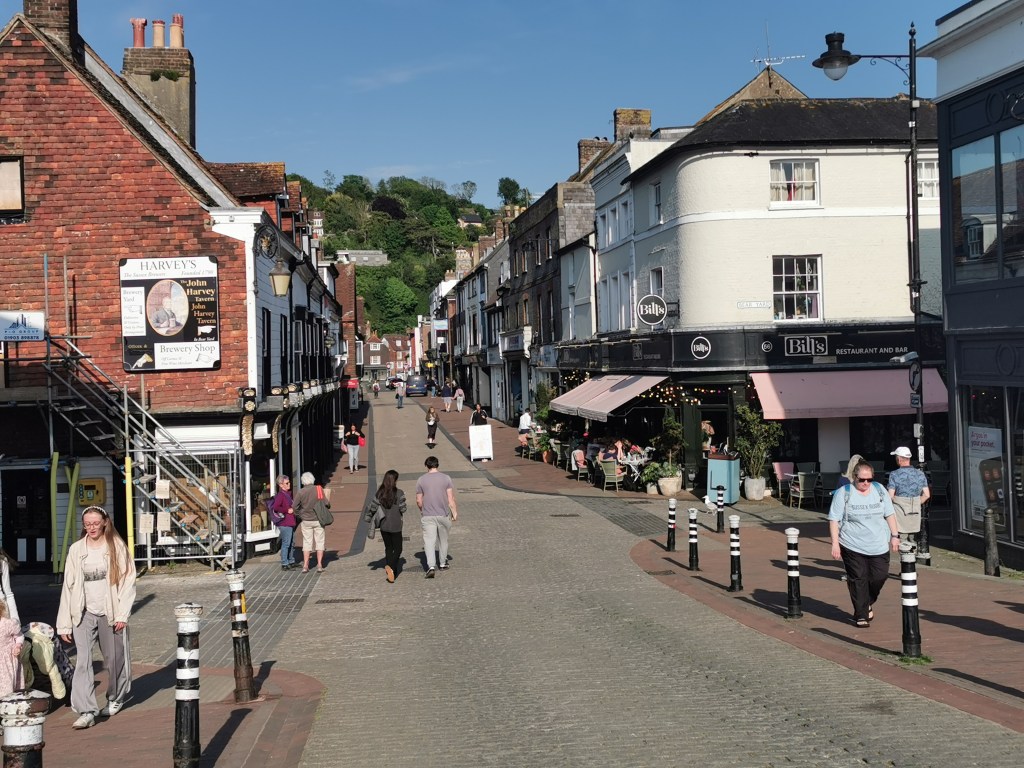
We were looking to take a a UK trip in April/May 2026 and came up with the idea of a visit to the Sussex coast. It is an area which I had not visited for over 40 years and then only briefly. We chose three towns that we had not stayed in before – Chichester, Lewes and Hastings. Of course we then researched the best cask ale pubs in each area, then added a little trackbashing of railway lines we had never travelled on. Finally, we were able to add in a day trip to Portsmouth with our friend Nick, who knows the city well. So Ted and I set off for a nine-day visit to the area.
Chichester

Day One took us from Durham to Chichester. LNER came up with a cheap advance fare, changing at Stevenage and East Croydon, travelling via Thameslink and avoiding the hassle of the tube across London. It took us an hour longer than planned – our first train was delayed due to a person being hit by a train near Retford. It’s a clear sign that I am no longer a frequent visitor to London that I was surprised by the sheer number of trains passing or calling as I stood at Stevenage and East Croydon. As we crossed Blackfriars Bridge the number of skyscrapers we could see seemed to have multiplied since my last visits. Our final train divided at Horsham with four coaches going on to Chichester and Portsmouth and the other four to Bognor Regis – we even managed to sit in the correct portion of the train (the signage at East Croydon wasn’t good).
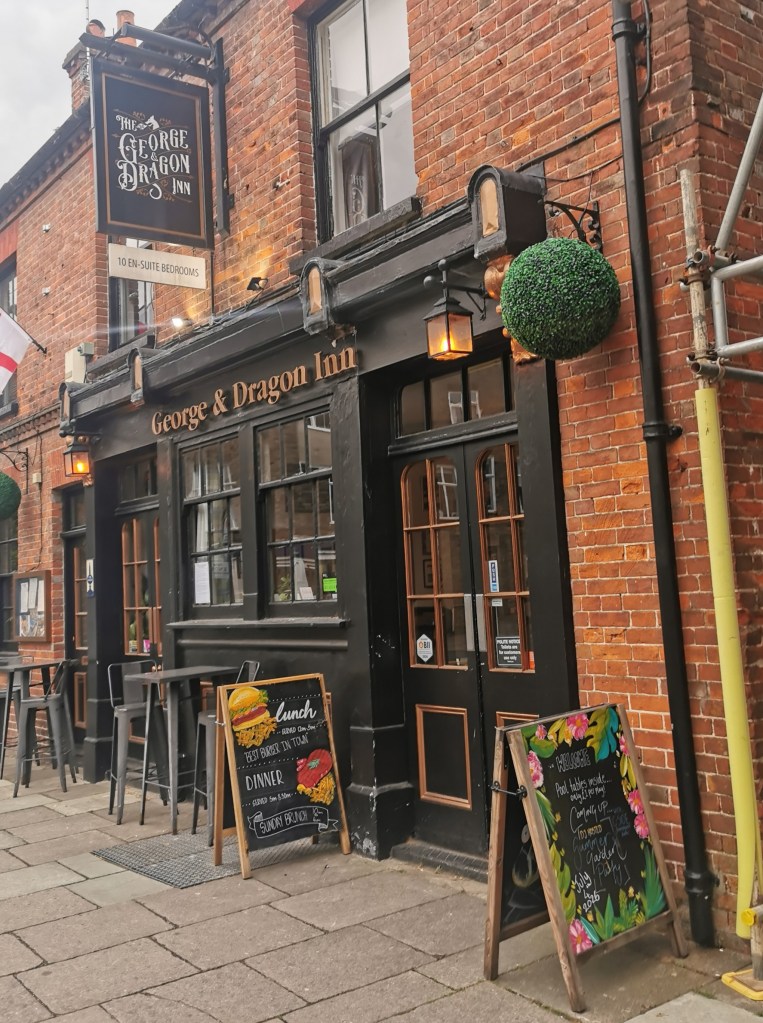
We arrived in Chichester and walked through town to our accommodation in the George and Dragon pub. It was a comfortable and quiet room in a row of what may have been stables out the back of the pub. The food and beer were both good. We had the time and energy for a couple of pints in nearby pubs – The Hole in the Wall and the Bell Inn, both with fine pints of beer – before an early night.
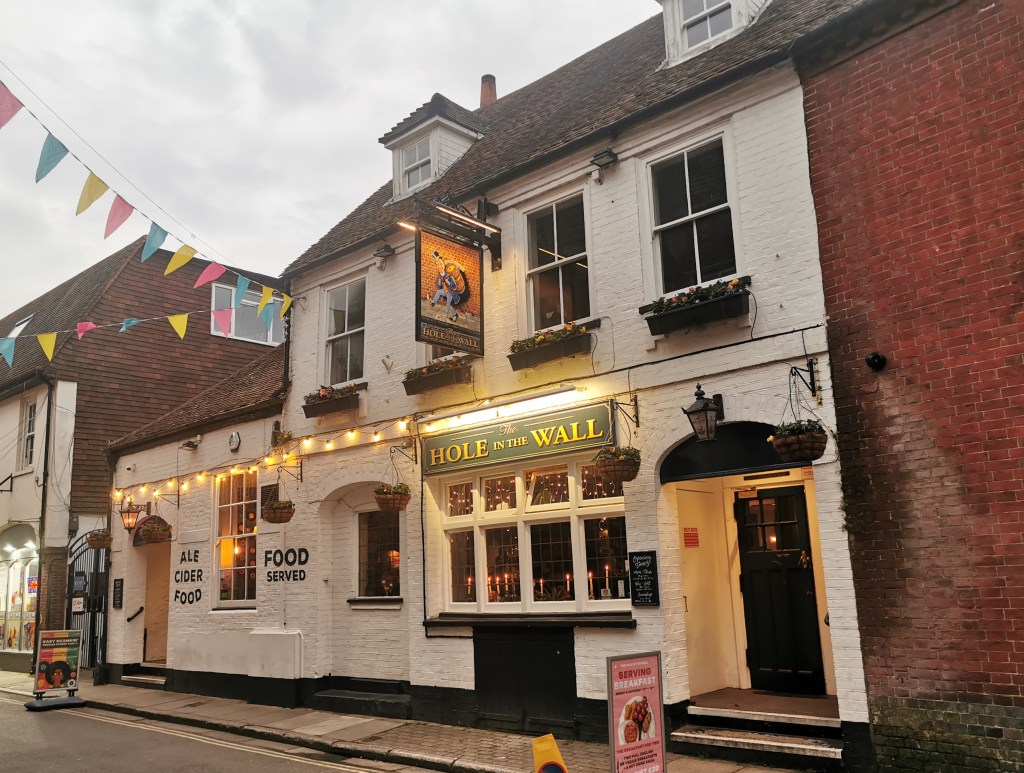
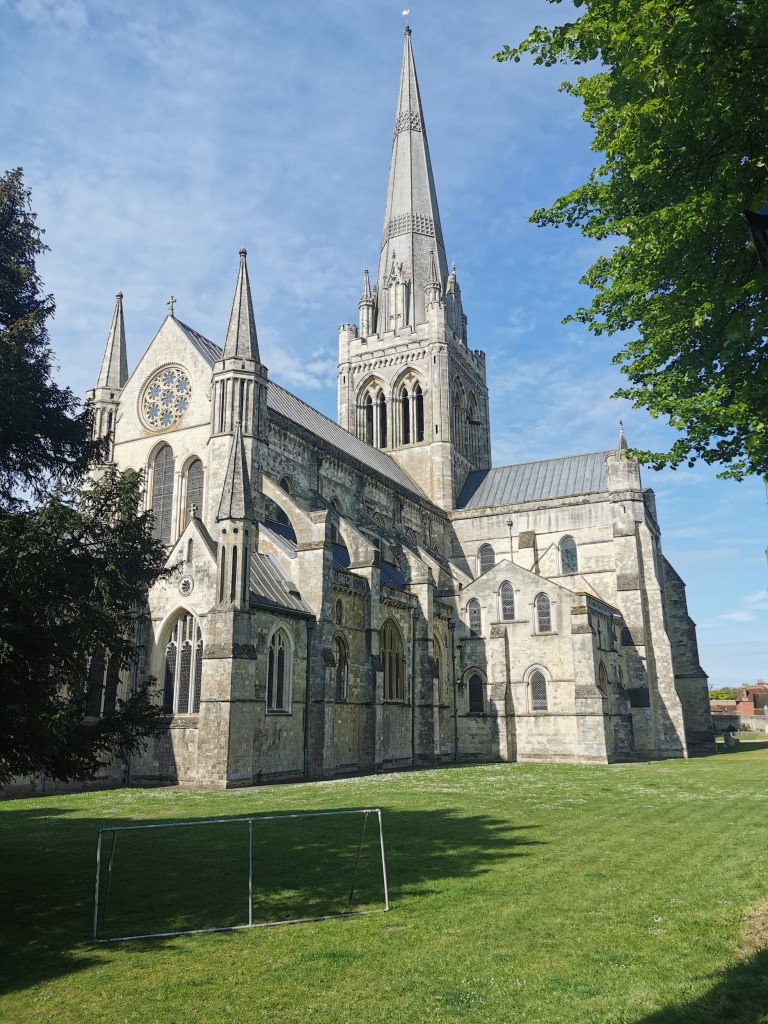
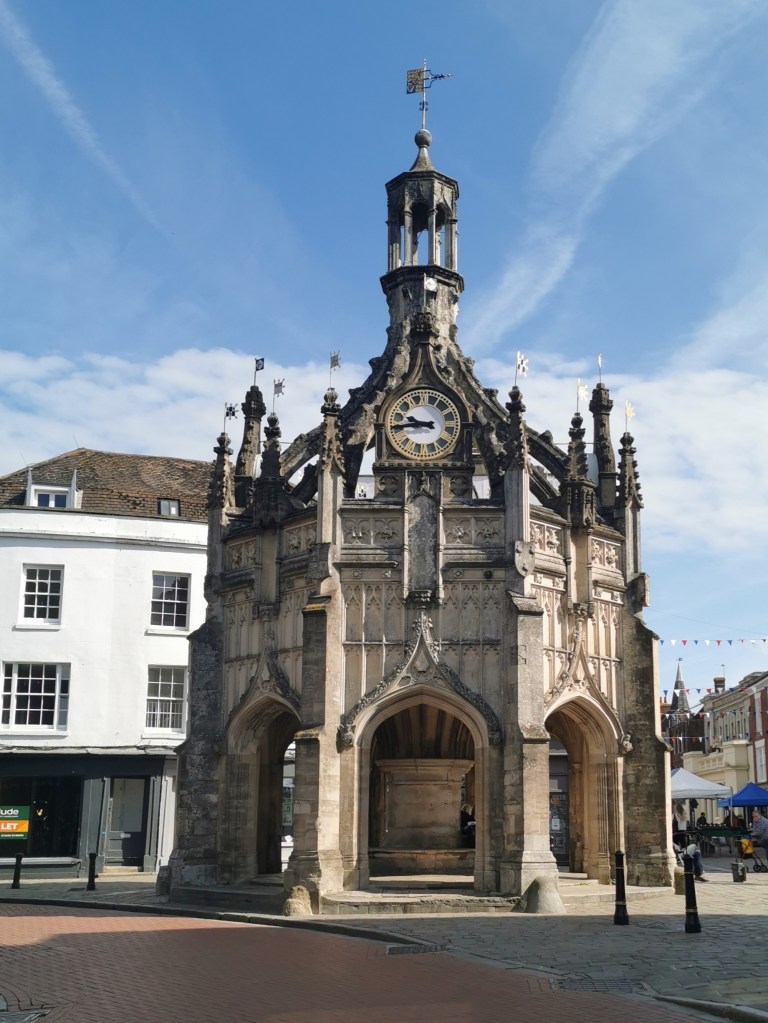
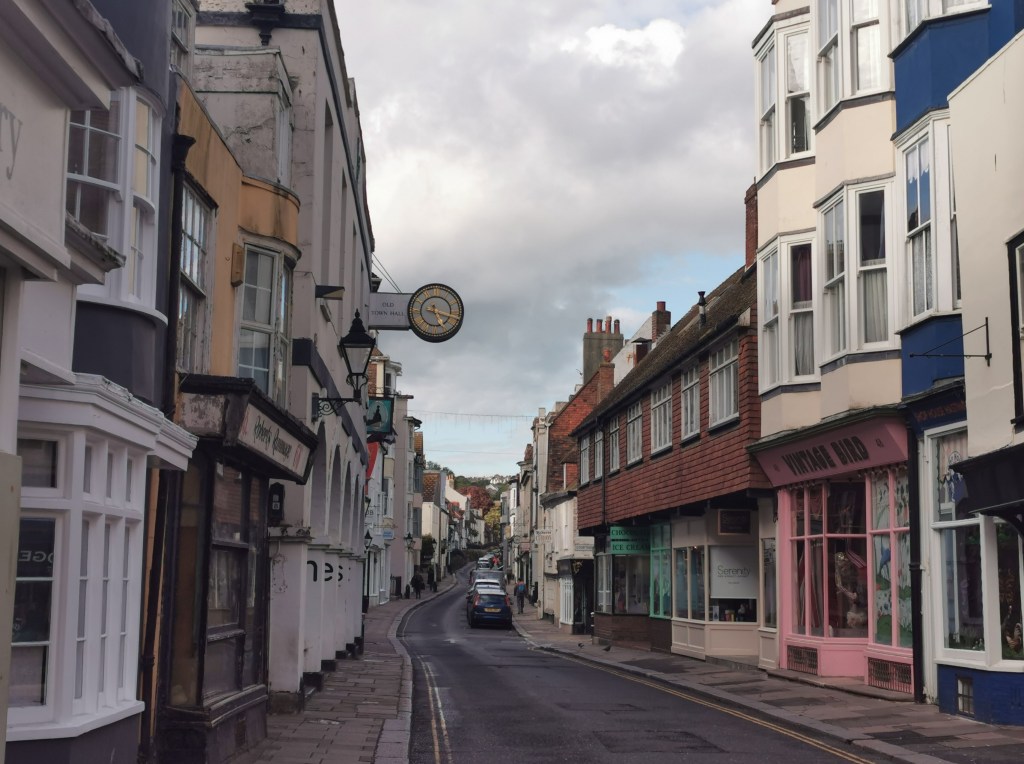
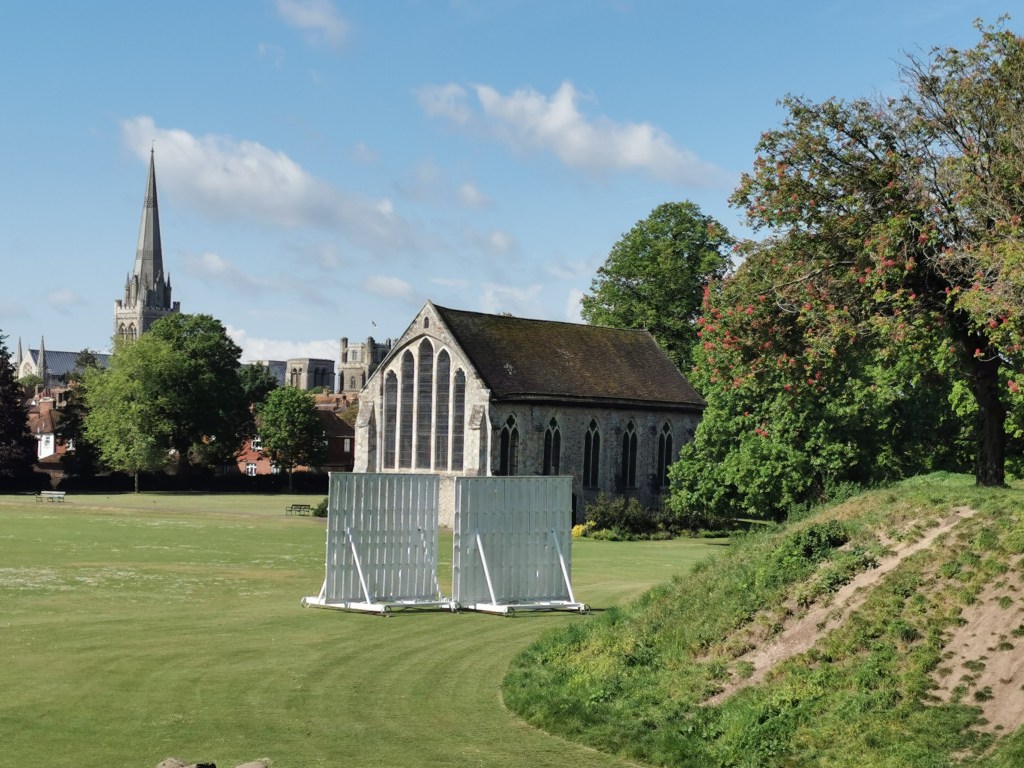
The following morning there was time to wander around Chichester to get a feel for the place before wandering off to Portsmouth. Chichester is a cathedral city and the county town of West Sussex with a population of 30,000 today. It was an important Roman settlement and its Roman origins are still clear, with streets radiating in a cruciform pattern from the Market Cross and stretches of walls built on Roman foundations. The cathedral is also impressive. Today the mainstay of the economy is the public sector and tourism and the town feels very prosperous, with hardly an empty shop in sight.
The Portsmouth Trip
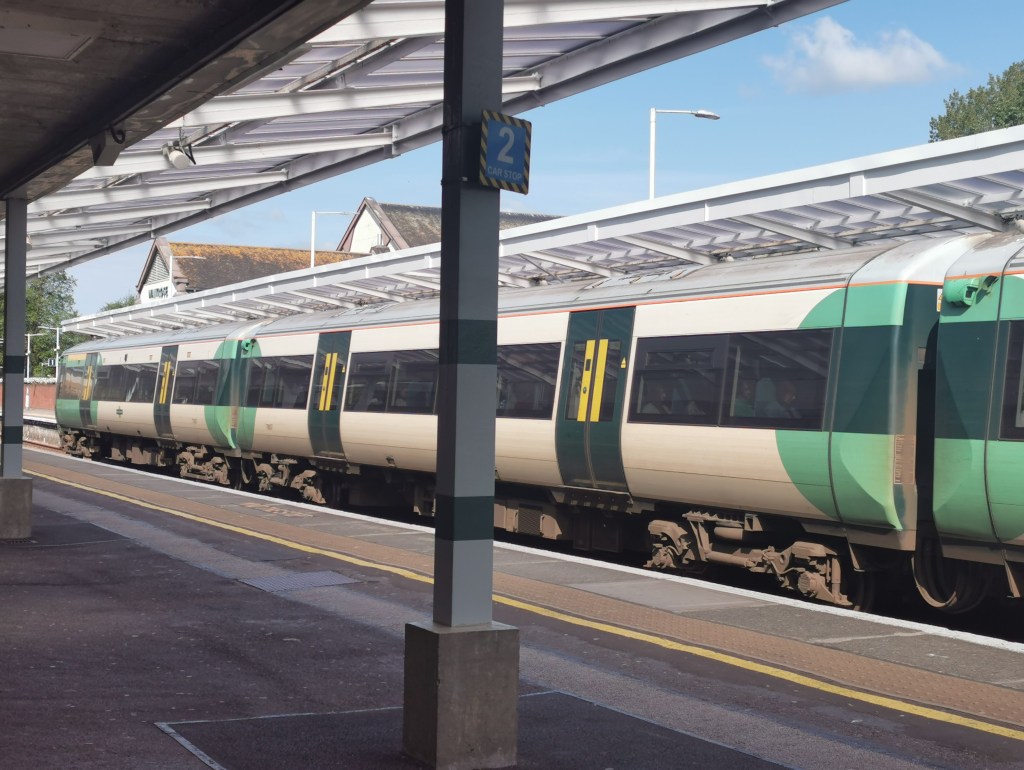
We set off by train to Portsmouth, meeting Nick when we changed trains at Havant and soon reached Portsmouth Harbour station. I only have brief memories of the city from a rail trip along the coast and from coming off a ferry (or was it a hovercraft?) from the Isle of Wight. I remember not being impressed by the city, probably because the area I saw had been heavily bombed in World War II and lost what character it had. Nick took us off for a tour of the back streets, to get a proper impression of the place.
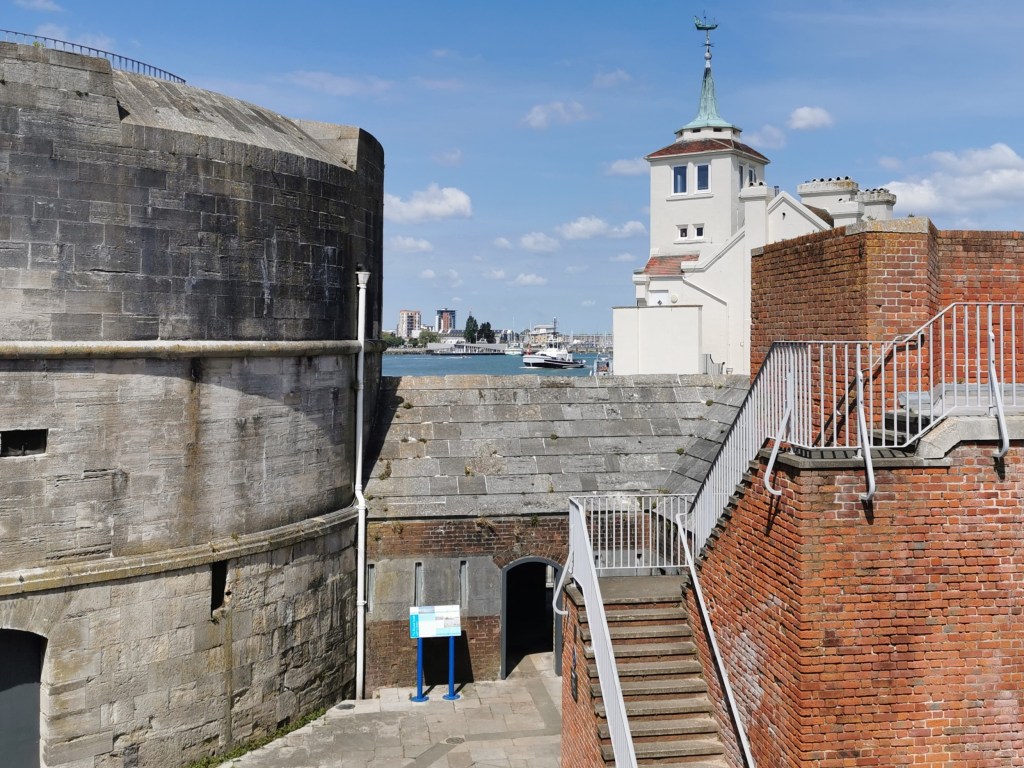
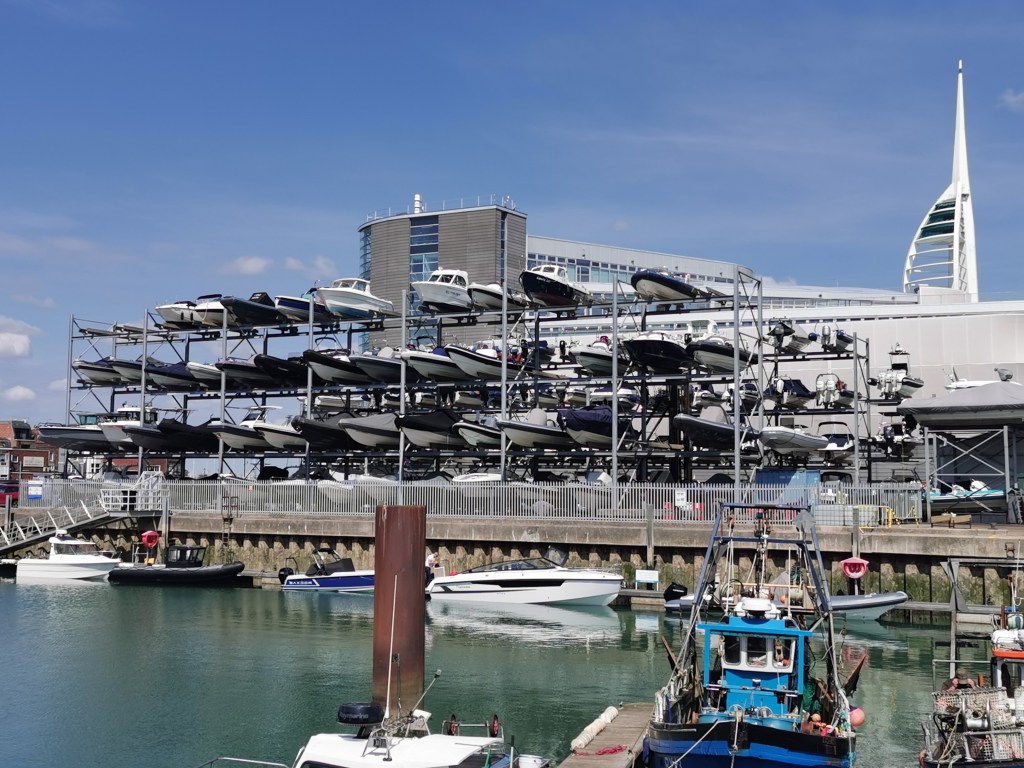
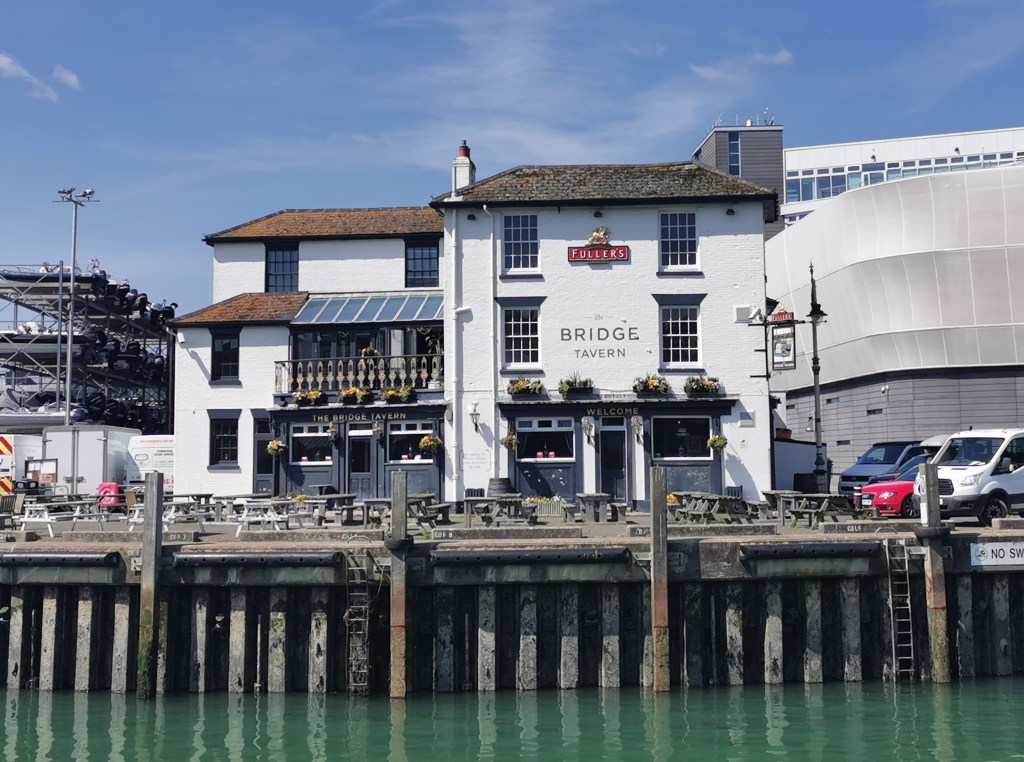
We began by walking round the harbour, via the Round Tower (pictured), to the Point and the Still and West pub. It overlooks the main channel and you can watch the ferries come and go. From there we passed a multi-storey boat park (pictured) to visit the Bridge Tavern beside an inner part of the harbour.
From there we wandered around the streets of Old Portsmouth and Southsea, calling in at the Pembroke, the Barley Mow, the Phoenix and the Lawrence Arms.
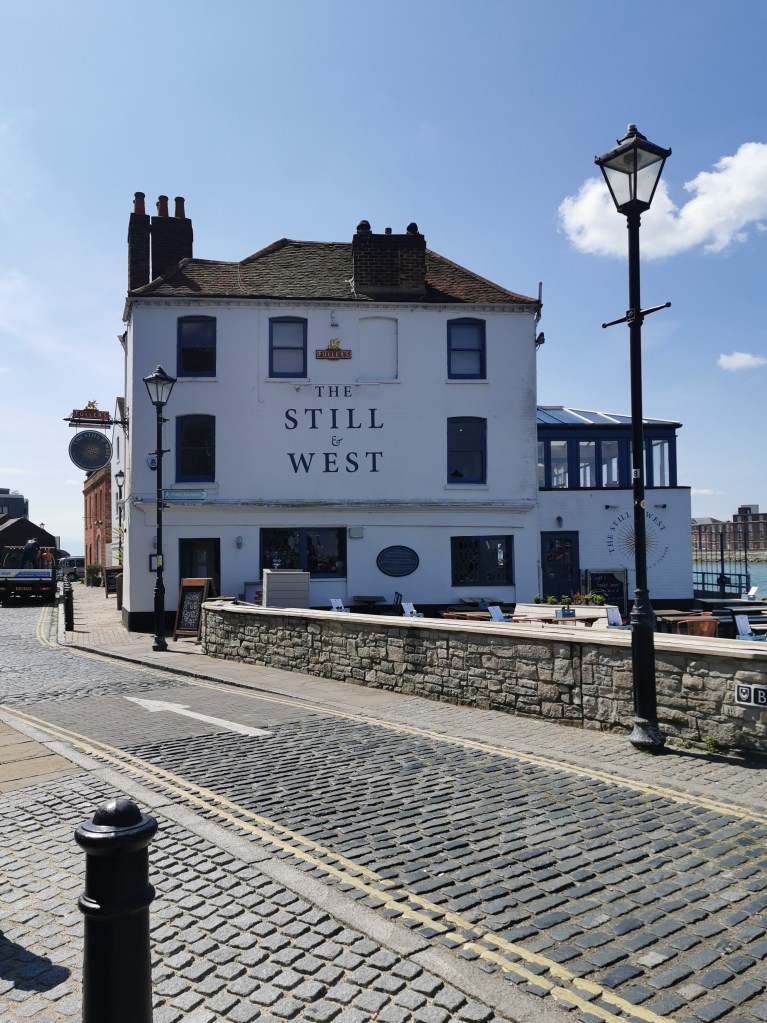
The Still and West, Portsmouth
We ended our exploration at Fratton Station and caught a train back to Chichester, said goodbye to Nick then spent a quiet evening. All of the pubs were worth visiting and sold decent beer, mostly from Fullers, Gales and Harvey’s.

Littlehampton, Arundel and Bognor Regis
On day three we took another day trip out from Chichester to several of the neighbouring towns. In the morning a problem had led to many trains being cancelled throughout the area, so we began our journey by catching a bus from Chichester to Littlehampton. It circled Chichester town centre before leaving town, then passed through Bersted to reach Bognor Regis. A road sign at the entrance to town revealed that it only gained the Regis suffix after a Royal visit in 1939, presumably for a paddle in the sea. After Bognor the bus continued around the houses of Felpham then, 75 minutes after leaving Chichester, we arrived in Littlehampton – the train takes 19 minutes.
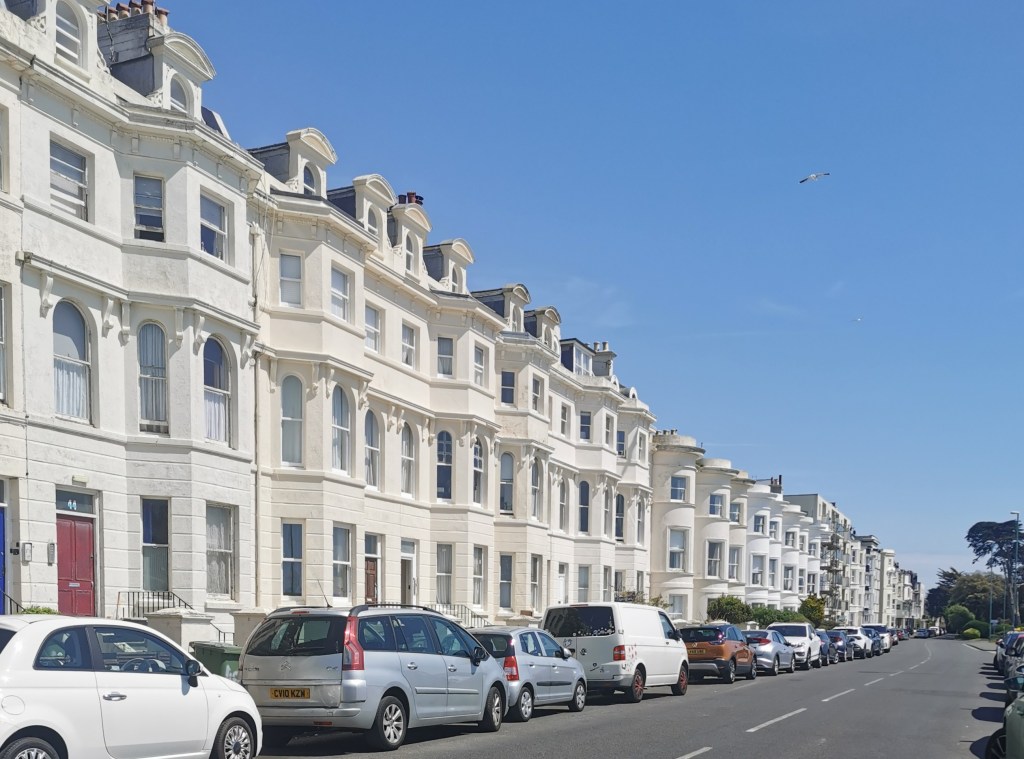
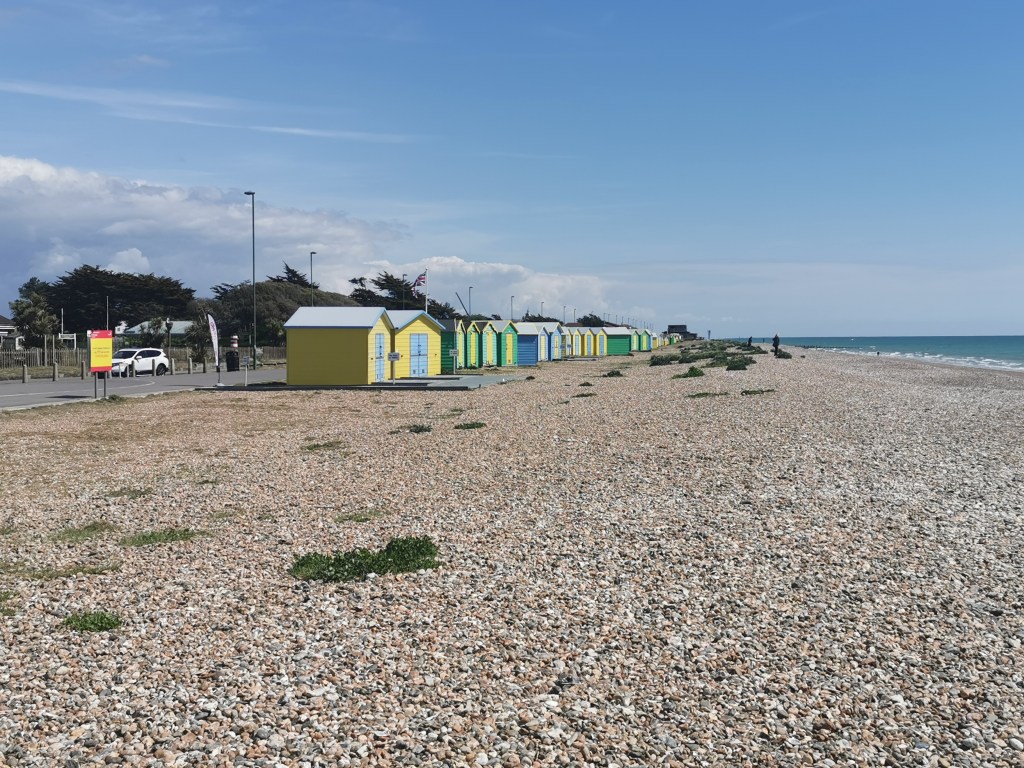
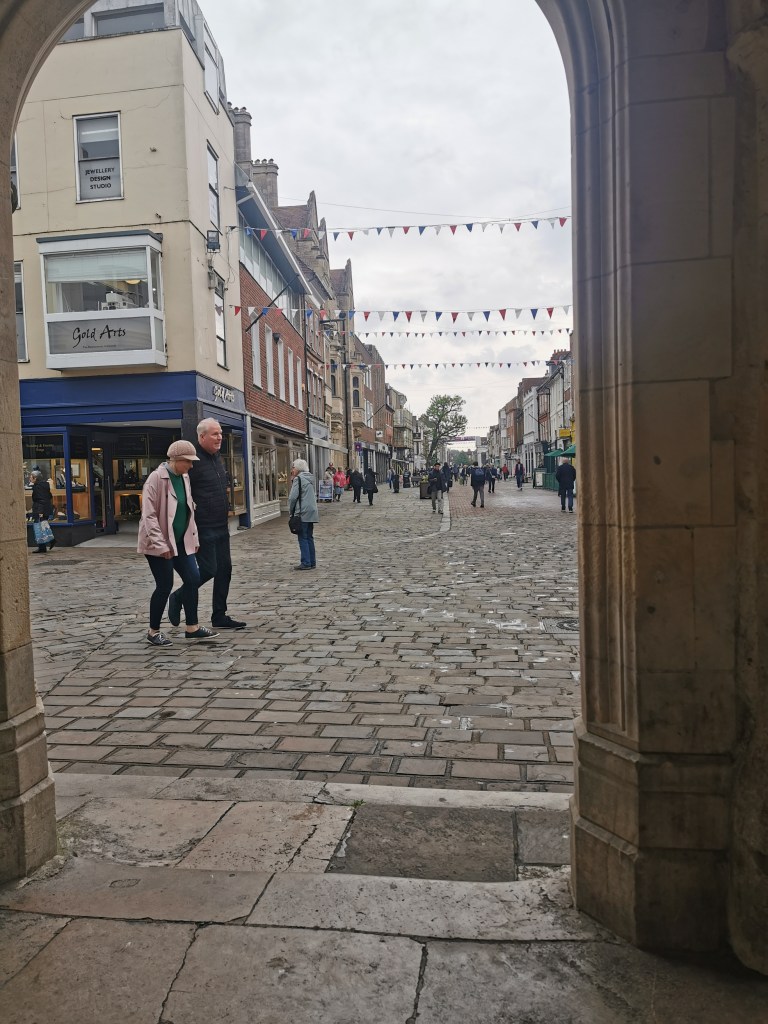
We had time for a brief explore – the town centre was uninspiring so we walked down to the East Beach and along the seafront. We noted that there are only five daily buses to the seafront, which seems very limited given the age of most of the locals and visitors. We dropped into the New Inn for a pint – very nice too – before making our way back to Anchor Springs – the name of the bus stop which passes for a bus station.
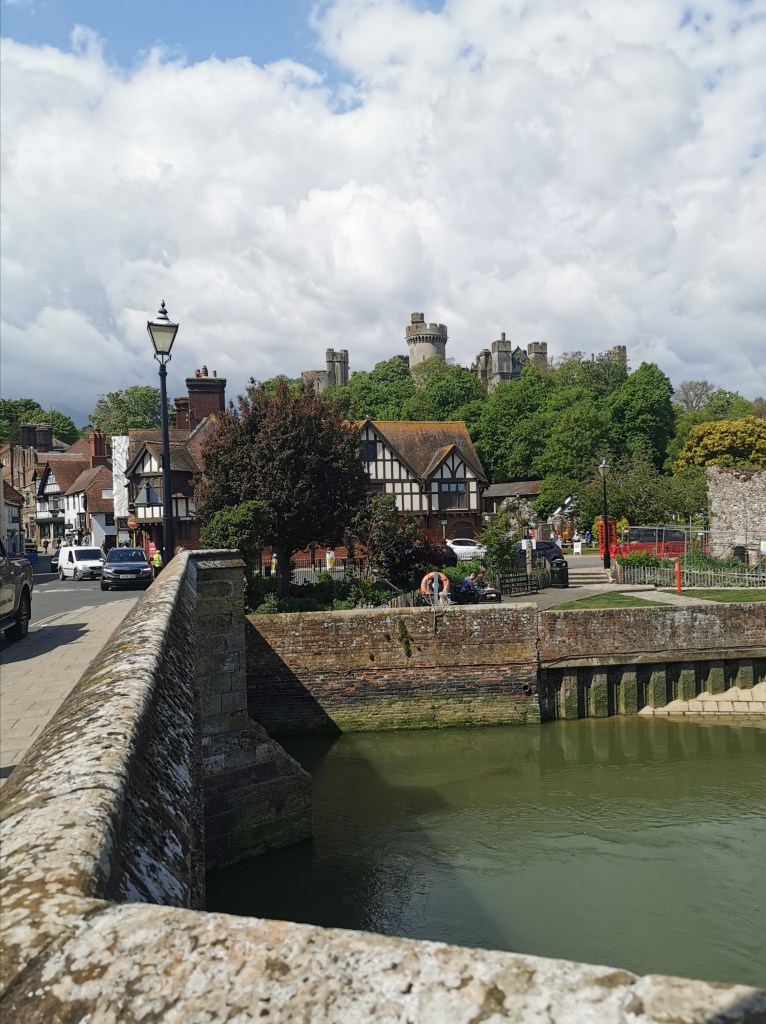
The number 9 bus, which for some reason was running 27 minutes late., took us to our next destination, Arundel, a picturesque town by the river Arun. It is dominated by the castle, which dates from the 11th century, though it has been restored several times since then.
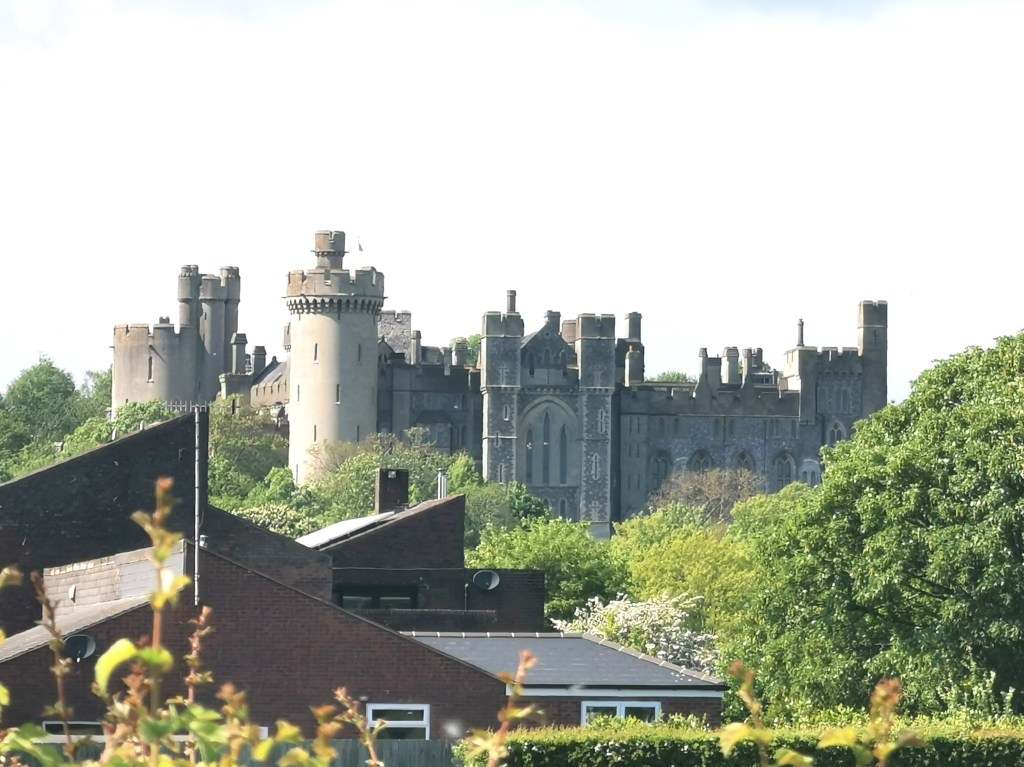
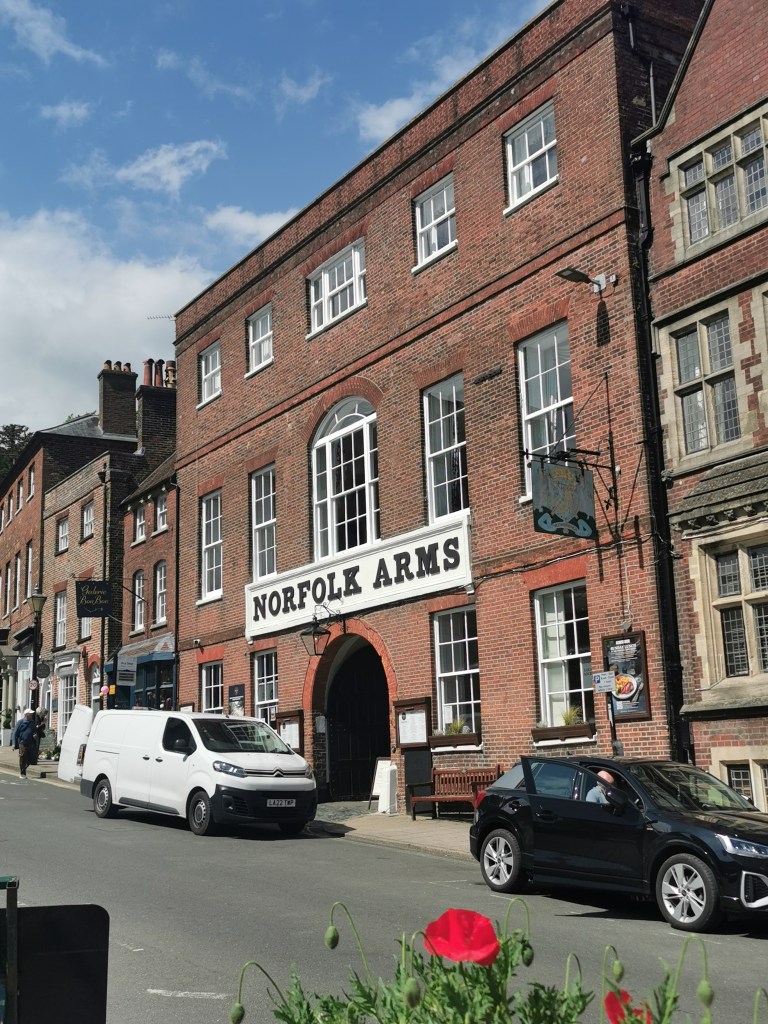
It is the seat of the Earls of Arundel and, for some reason, the Dukes of Norfolk. After buying a fridge magnet of the castle we called into the Norfolk Tap for a pint. The trains were running again so we walked to the station on the edge of town and caught a train to Bognor Regis.
The Bognor line is a short branch from Barnham opened in 1864, which led to the development of the town as a seaside resort. It was our first bit of new line of the trip. We had limited time but visited the Dog and Duck, before catching a bus back to Chichester for our final evening, taking in the recommended pubs we hadn’t visited yet – the Eastgate, the Little Monster Tap (full because a quiz was about to start) and the Park.
Onward to Lewes
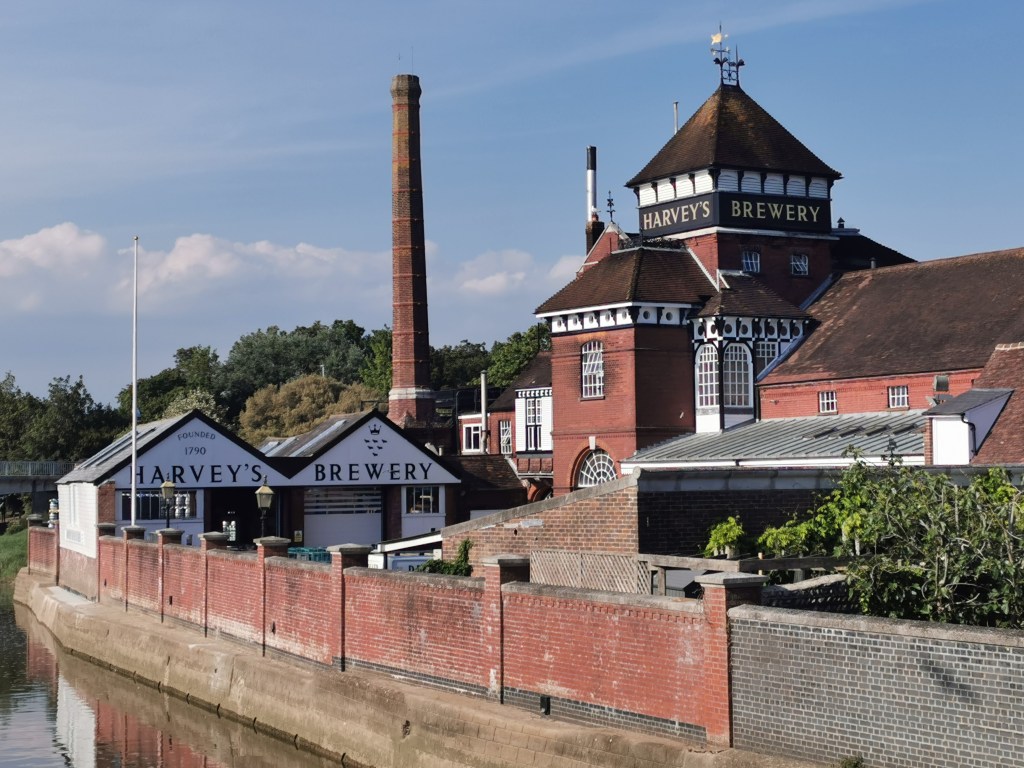
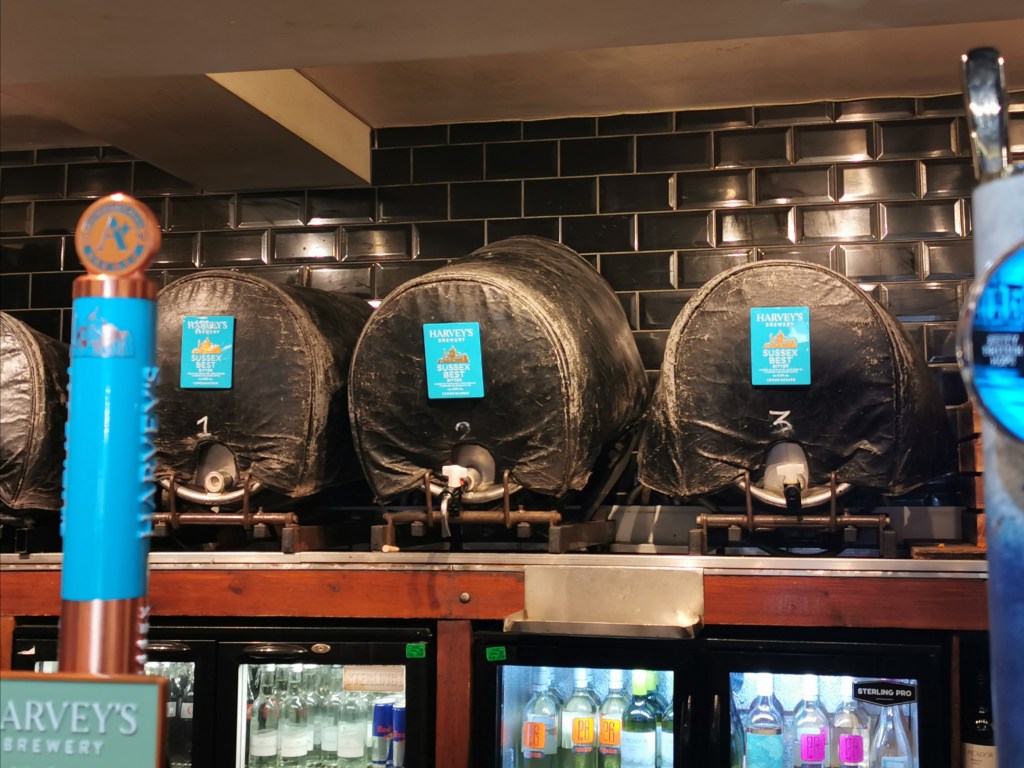
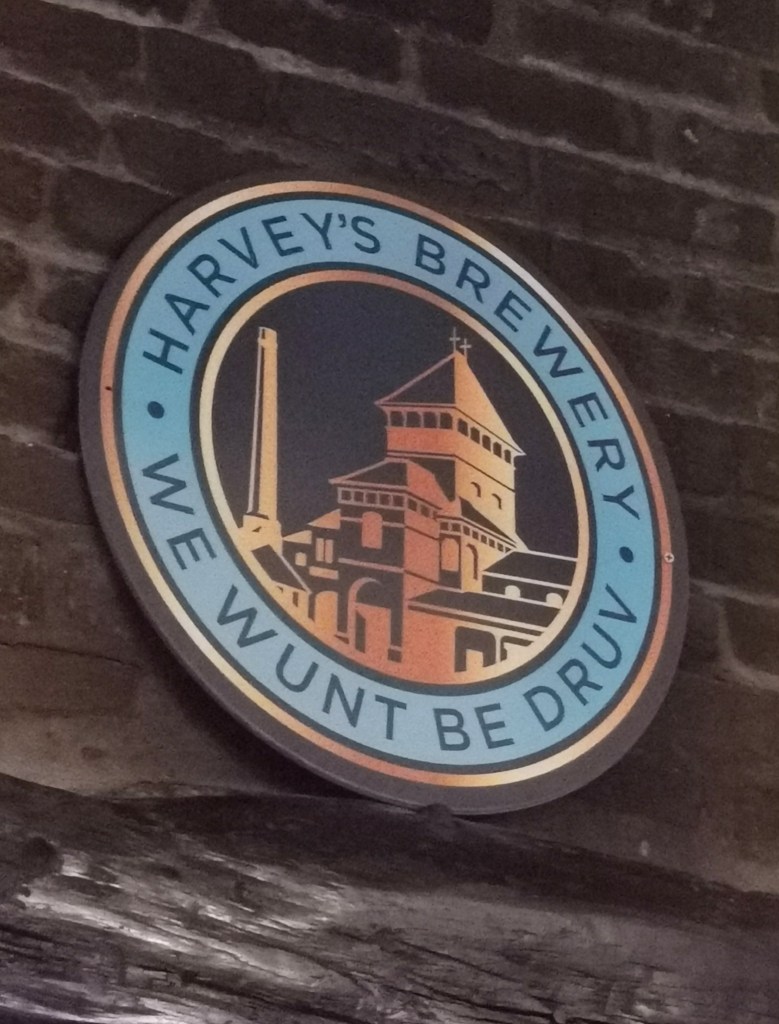
It was time to move on to Lewes. I vaguely remember enjoying a visit one day around 1980, I’ve been told by friends that it’s a fine place and it the site of Harvey’s Brewery – their Sussex Best Bitter is a favourite pint of mine when I can find it. The first stage of the journey was a stopping train to Brighton with 16 intermediate stops (there are faster alternatives). The train travelled via Littlehampton – up and down the short branch line from Ford which opened in 1863 and was our second stretch of new track. The coast is largely built up the whole way to Brighton, and we passed through endless housing estates with no sign of the sea until we reached Shoreham.
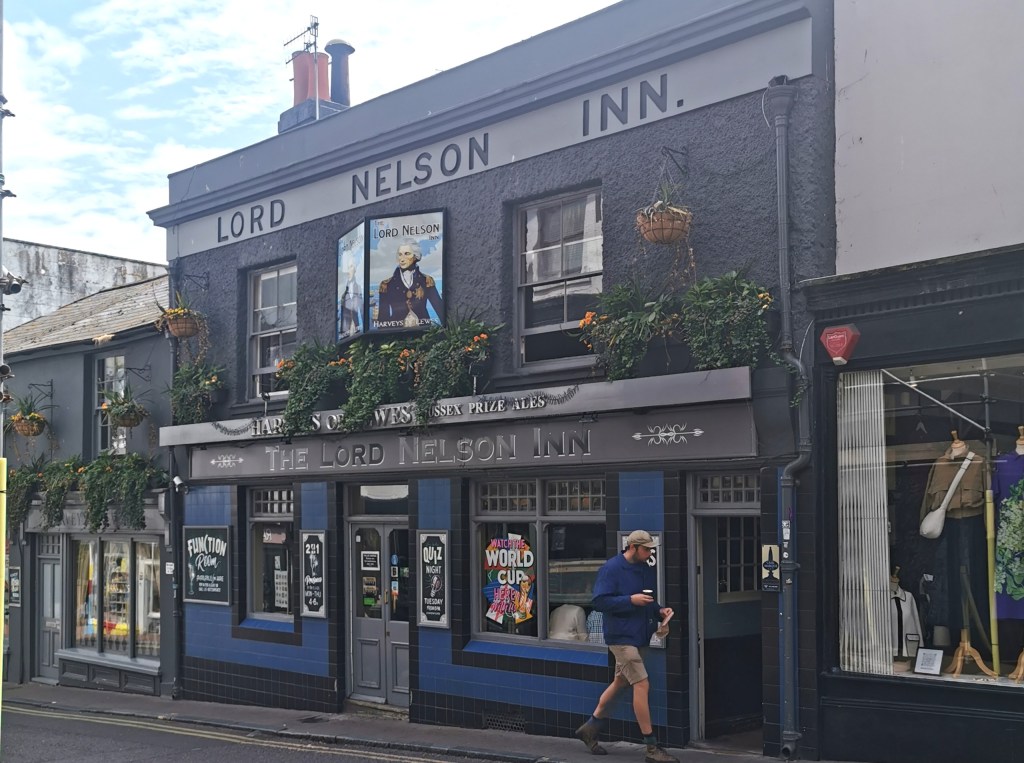
We had originally planned a full day out in Brighton from Lewes but decided that we would leave it this time as it is worth a separate visit on its own. I had visited several times in the 80s and our brief lunchtime stop this time confirmed my view that we should visit again sometime. Not far from the station, I had been recommended to try the Lord Nelson Inn – a fine old pub with an excellent pint of Harvey’s. The area round about also had an excellent vibe about it.
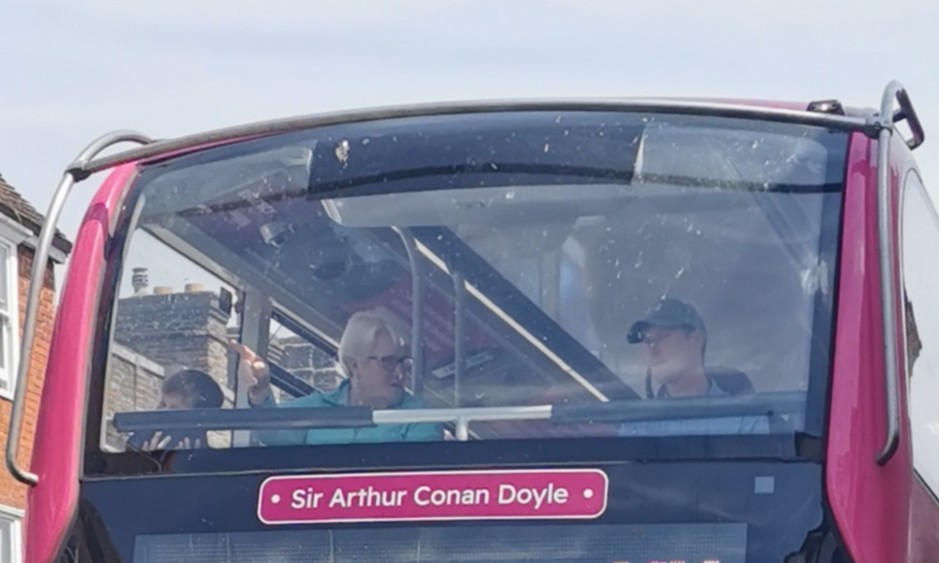
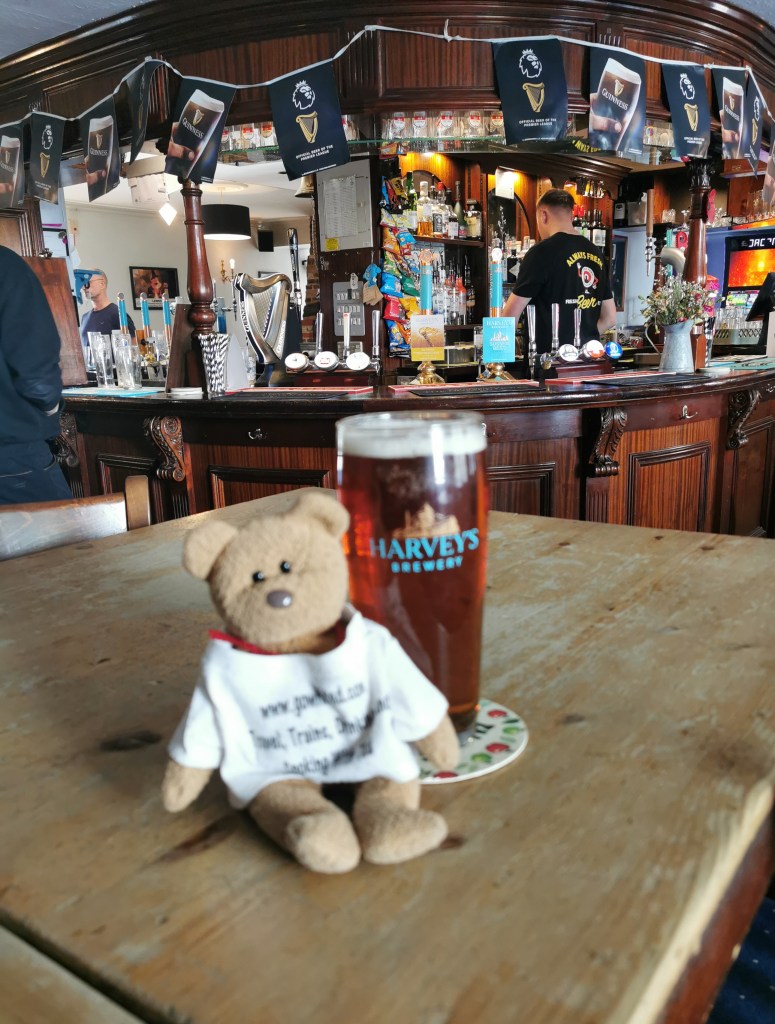
The next part of the journey was a bus ride to Lewes. While we were waiting it was noticeable waiting just how good the local bus service is. The operator is Brighton and Hove, services are frequent and many buses are named after former staff and famous people with local links. After a 45 minute journey we alighted at the main Lewes stop, outside a Waitrose supermarket opposite a derelict bus station. Not the most impressive arrival. We found our way to the nearby Premier Inn, then set out to explore.
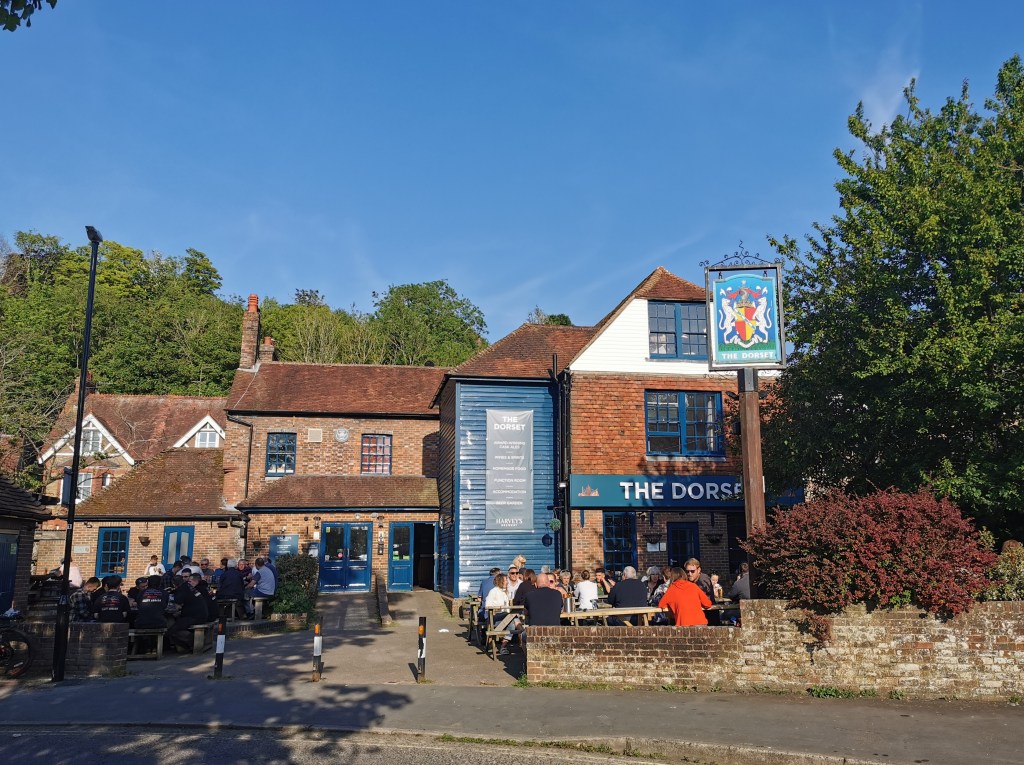
Our first evening took us round the area close to the hotel, known as Cliffe. It is at the foot of a hill by the River Ouse (the town centre is at the top of the hill) and is the site of Harvey’s Brewery. The pubs we visited – the Dorset and the John Harvey Tavern taproom – were Harvey’s pubs serving quality beer. We rounded off the day with a curry, which turned out to be unspectacular.
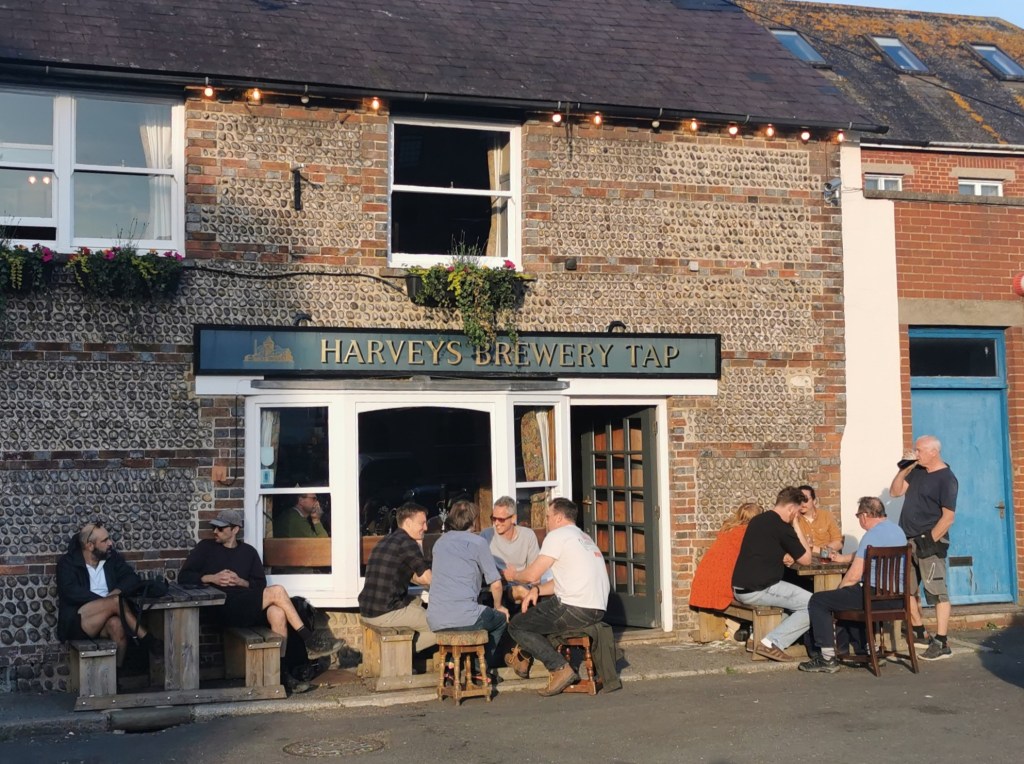
Lewes is the county town of East Sussex with a population of 17,000. It has been important since Anglo-Saxon times and occupies a strategic position where the River Ouse cuts through the South Downs, protected by the castle overlooking the town. Today its economy relies on service industries, local government and tourism and it is well known for extravagant Bonfire Night celebrations (and for Harvey’s beer.)
Seaford and Newhaven
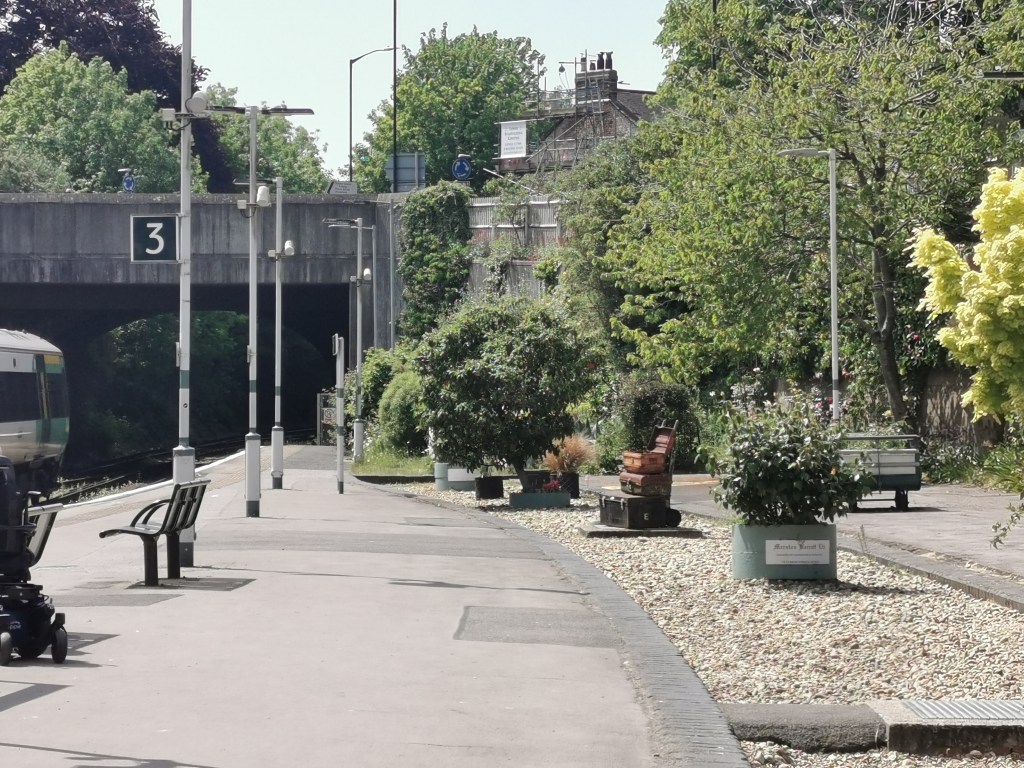
Our third new section of railway line took us from Lewes to Seaford, calling in at Newhaven on the return. This was also an opportunity to visit the two Good Beer Guide listed pubs in Seaford and the one in Newhaven. The train service is half hourly from Brighton with connections from London at Lewes. The railway reached Newhaven in 1847 and Seaford in 1864, once more turning an isolated village into a seaside resort town.
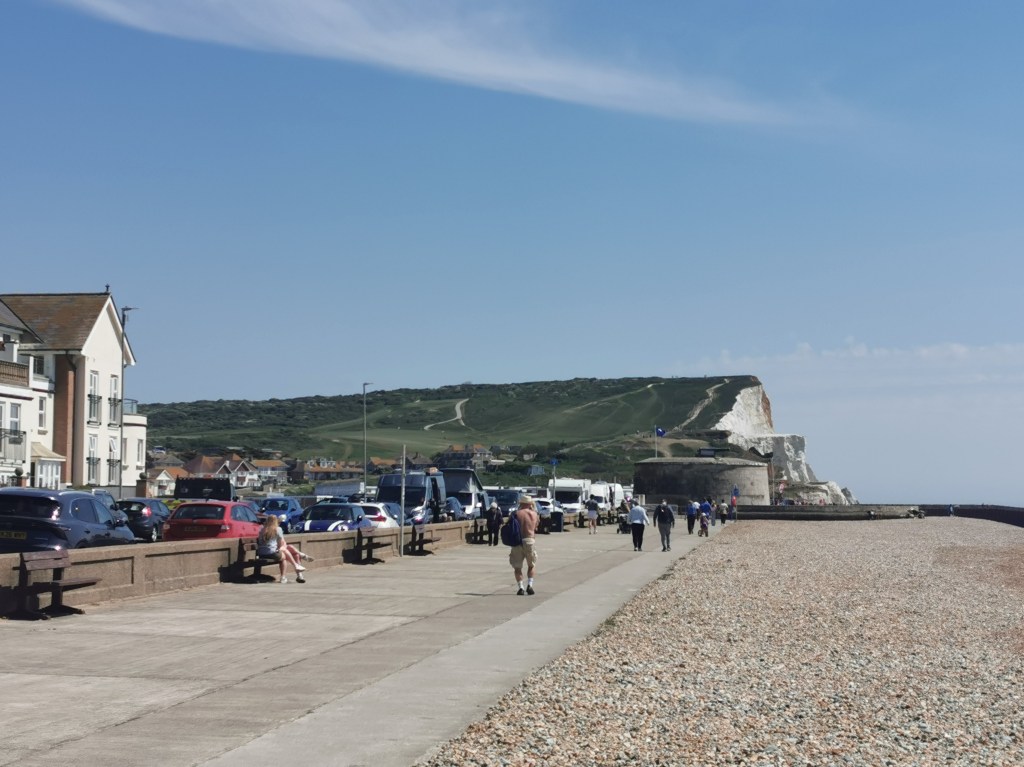
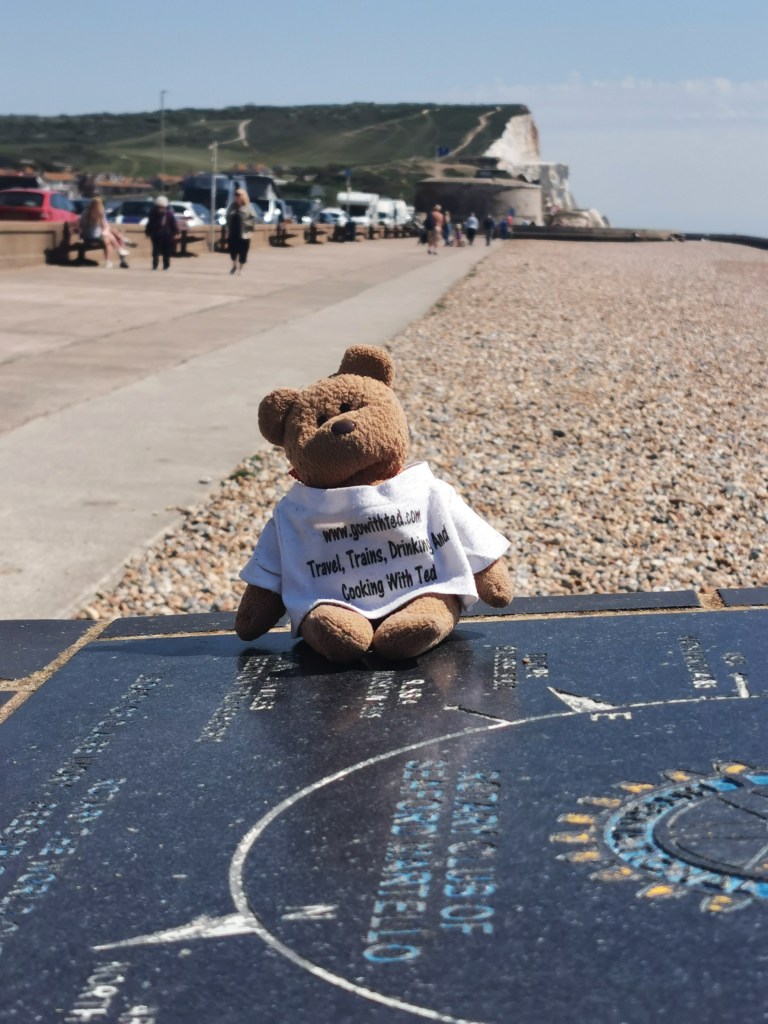
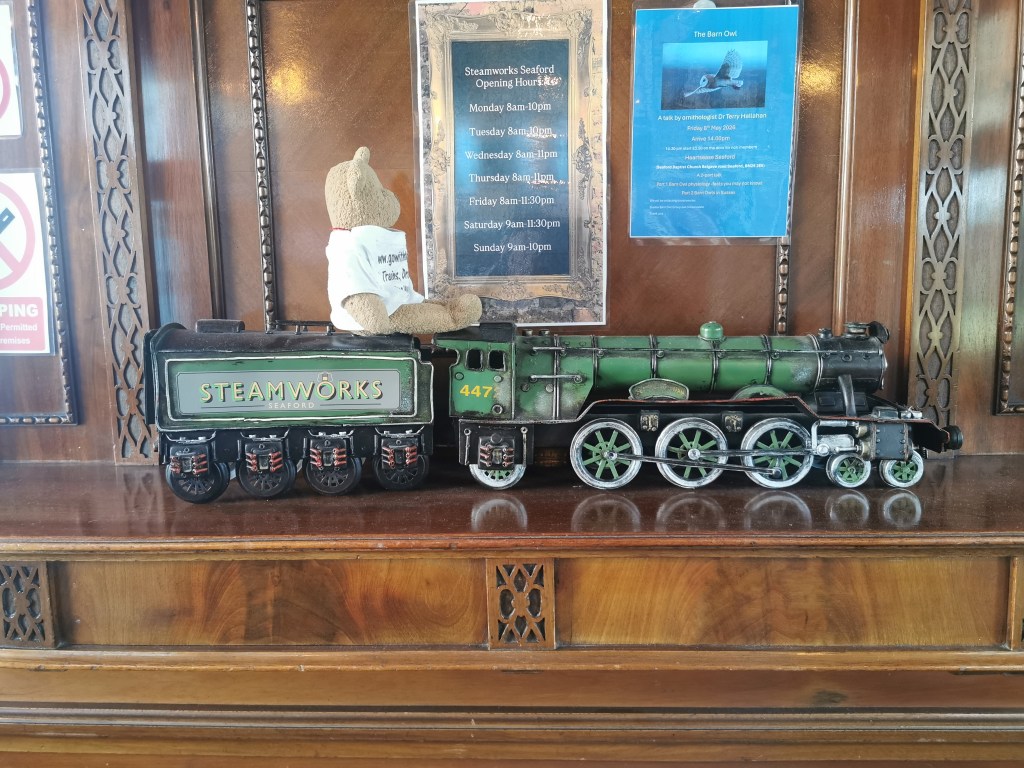
In Seaford the Old Boot Inn was a big, mainly dining, pub with good beer but lacking in pub atmosphere. Steamworks, a micropub in part of the station buildings was much better. Interestingly, they sold pints of draught beer in plastic glasses, which customers could take away to drink on the train. It was Saturday and, as the trains were busy with Brighton Albion supporters heading for a match, this facility was being made much use of.
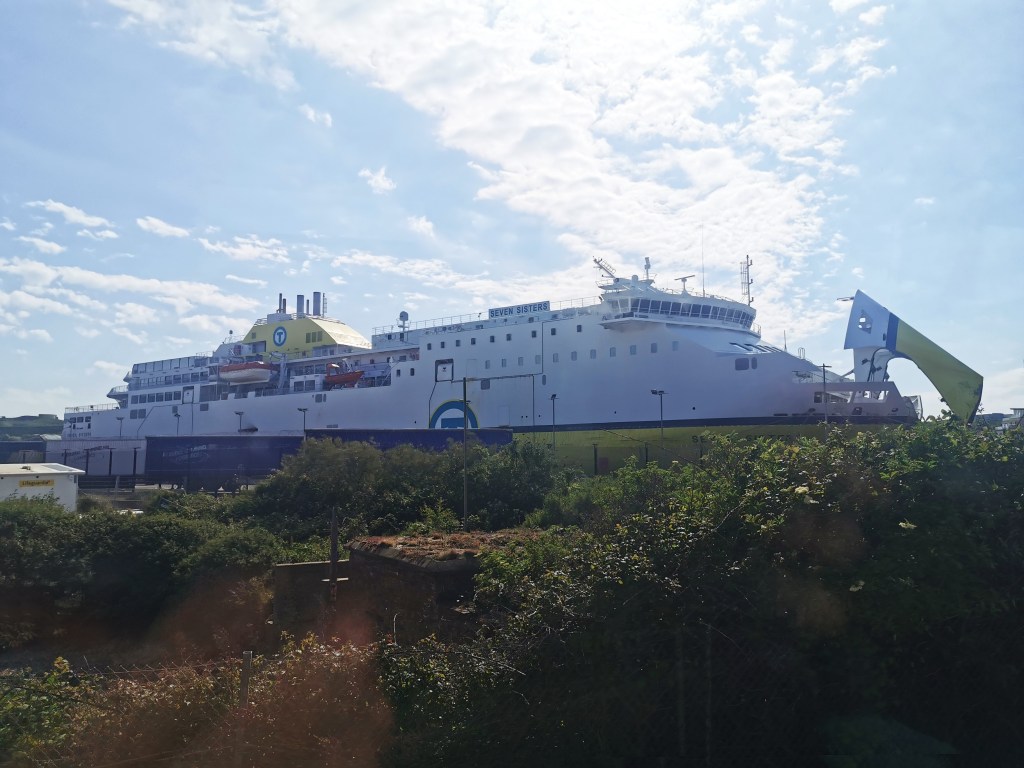
Newhaven has two stations – Newhaven Harbour and Newhaven Town. Strangely, the station for the ferry to Dieppe is Newhaven Town and, though there was the occasional bilingual sign, I’m sure many people have stayed on to the wrong station. The town is across the bridge over the River Ouse. We made our way there for a pint in the Bridge Inn.
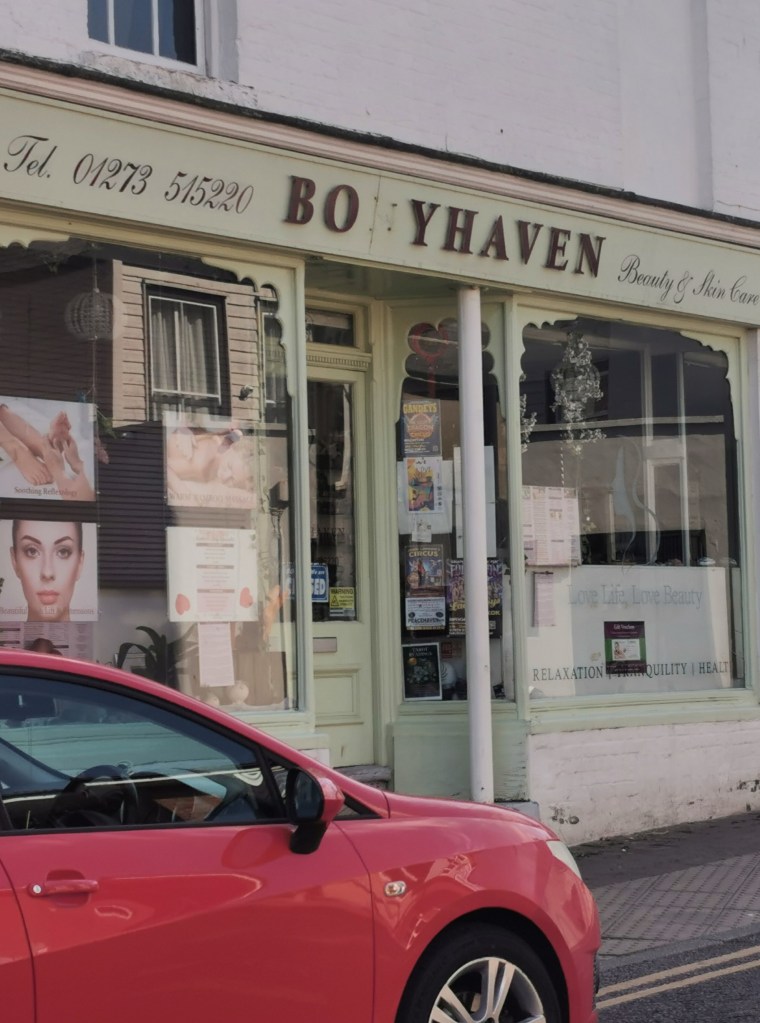
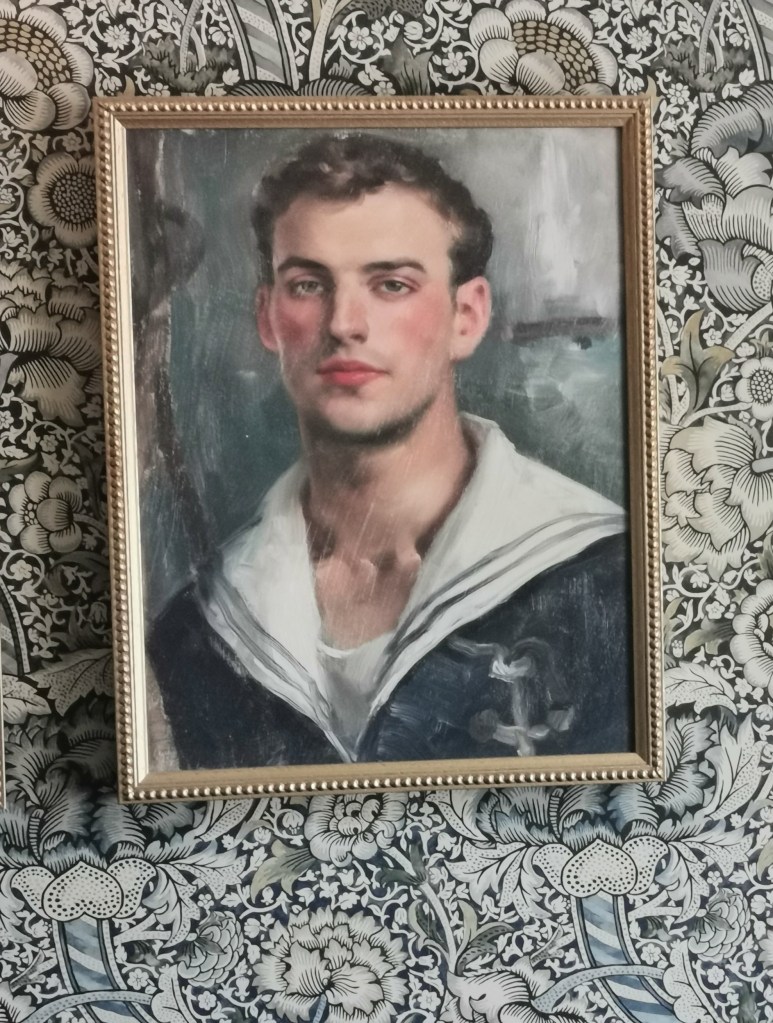
We never realised Newhaven was a gay resort. Id like to say this was a typical punter in the Bridge Inn, but he wasn’t
Back to Lewes
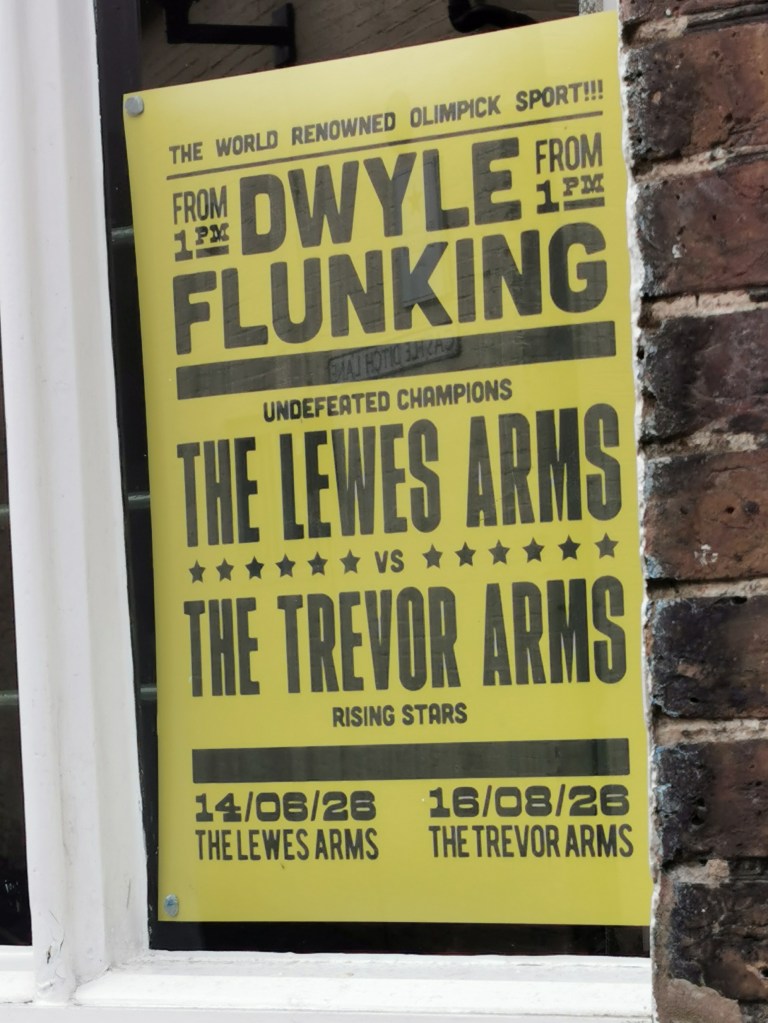
On our return to Lewes we headed for the town centre for a visit to the Lewes Arms which came highly recommended – it was worth it – plus a visit to the Dorset and the Gardener’s Arms, before calling it a night.
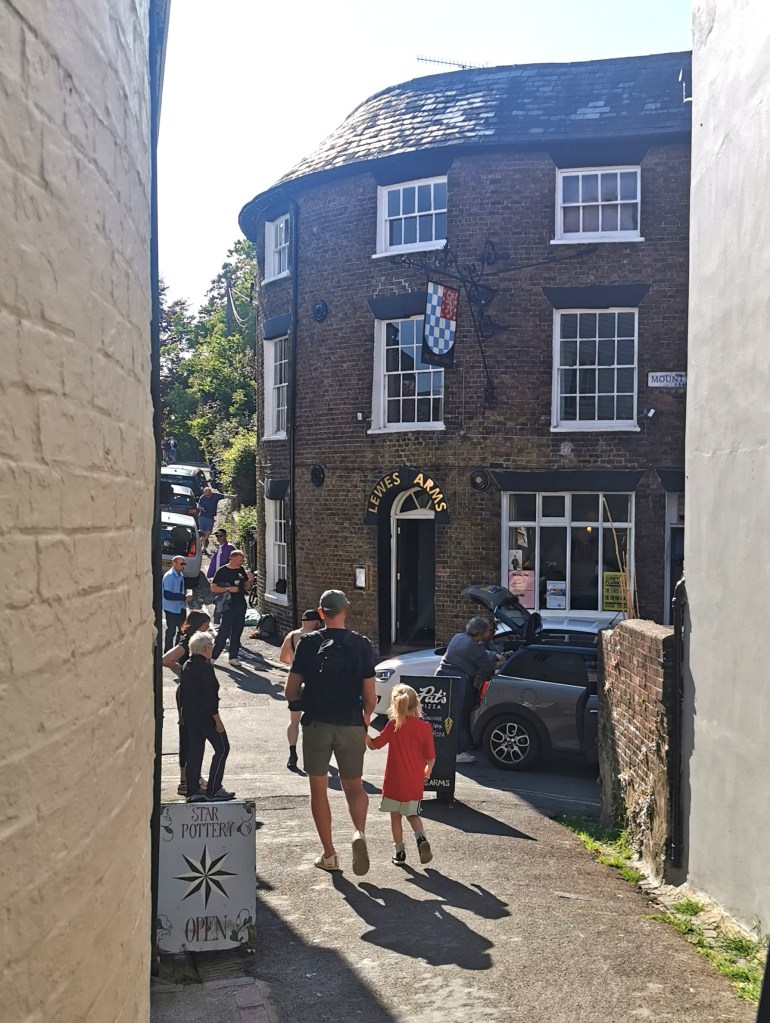
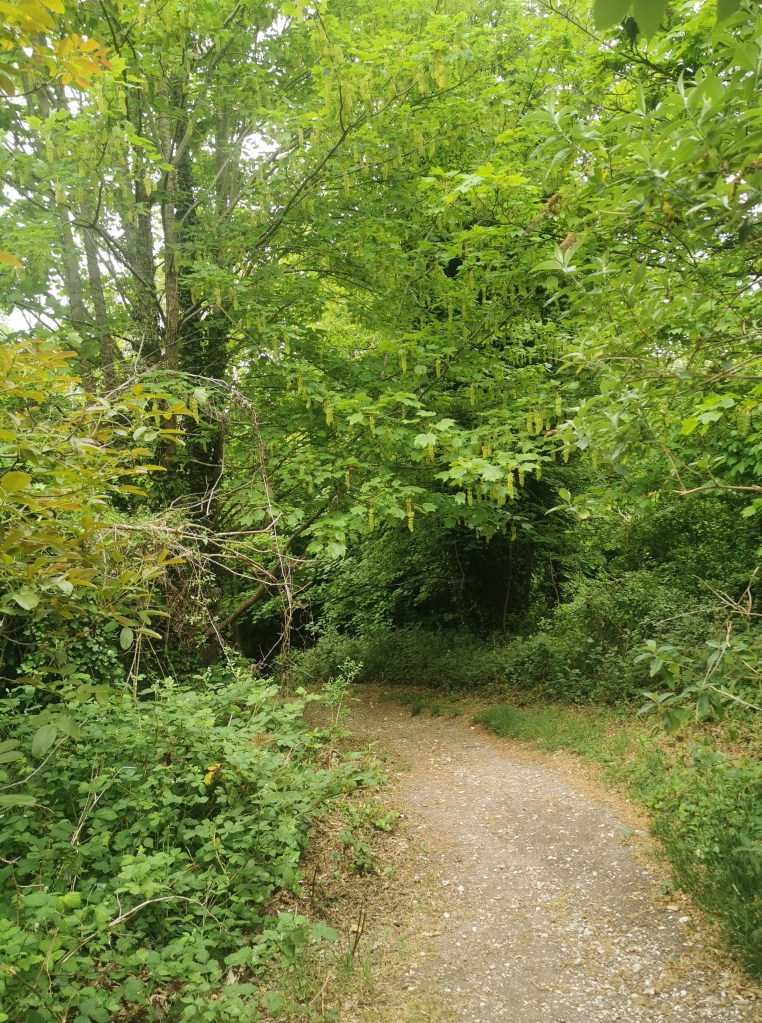
Sunday was spent in Lewes, wandering out to explore after a full breakfast in the hotel. Above the town to the east is an obelisk which looked as if it would have good views over the area. We decided to see if we could reach it. We didn’t make it (still not fully recovered from knee operations). The path was very steep, uneven and buried amongst trees so we eventually turned back, though we must have climbed most of the way.
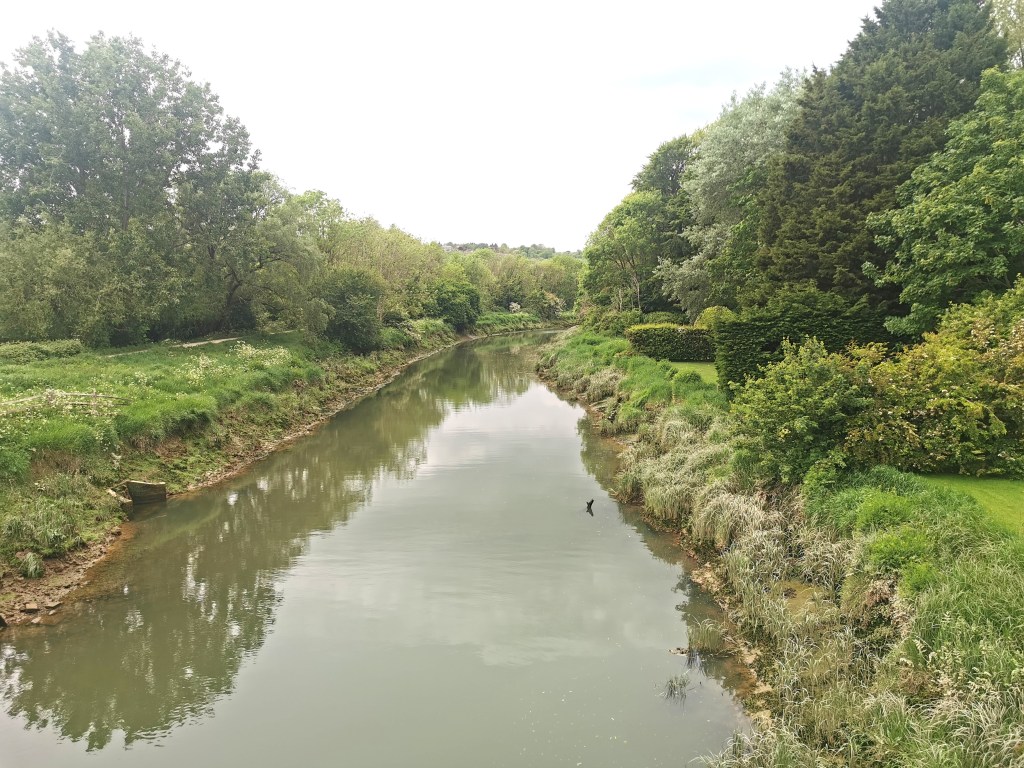
We decided on an easier option – to walk along the riverside path to the north of the town, eventually reaching a bridge, across which there was a route we could follow to climb up to Lewes Castle (there’s no way of avoiding hills if you want to see Lewes). From there we returned to the Lewes Arms for couple of pints before returning to the hotel for a siesta.
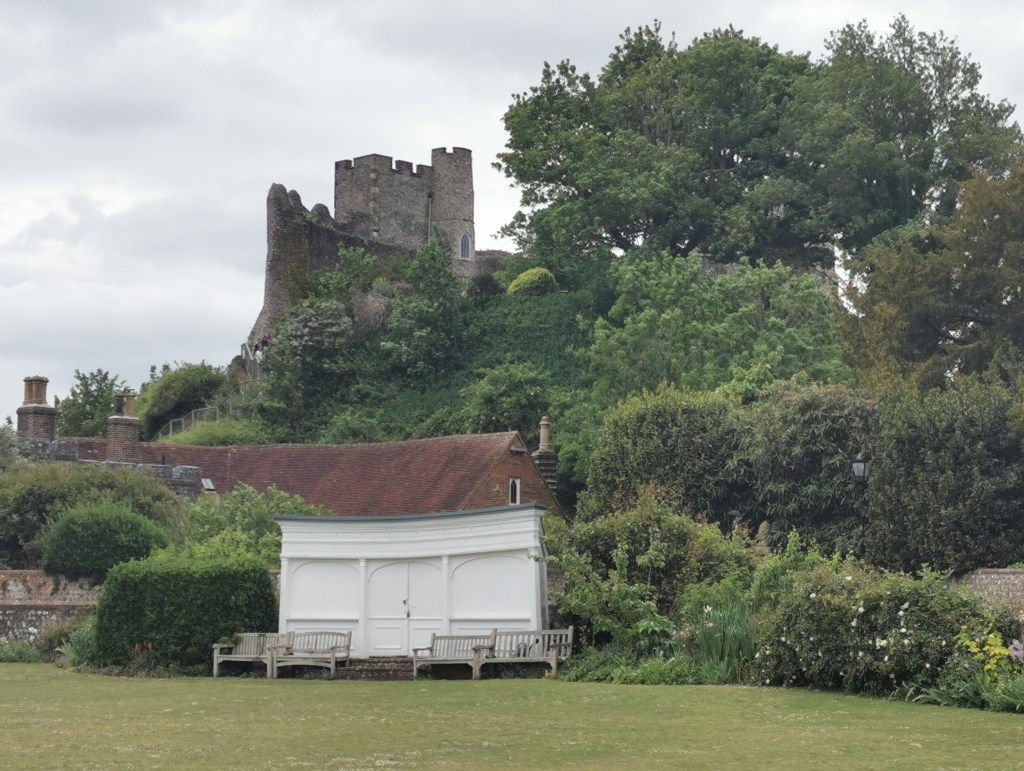
In the evening we returned to the John Harvey Tavern then decided on a final visit to the Lewes Arms – it is such a good pub. This time there was a bus sitting at the bottom of the High Street hill -and we caught it for the short trip to the top, were we called into the tiniest Morrison’s we’ve ever seen to pick up a couple of snacks for tomorrow’s journey, before returning for our third visit to the pub. Incidentally, we didn’t get the chance to try them but the pizzas served in the Lewes Arms looked tasty.
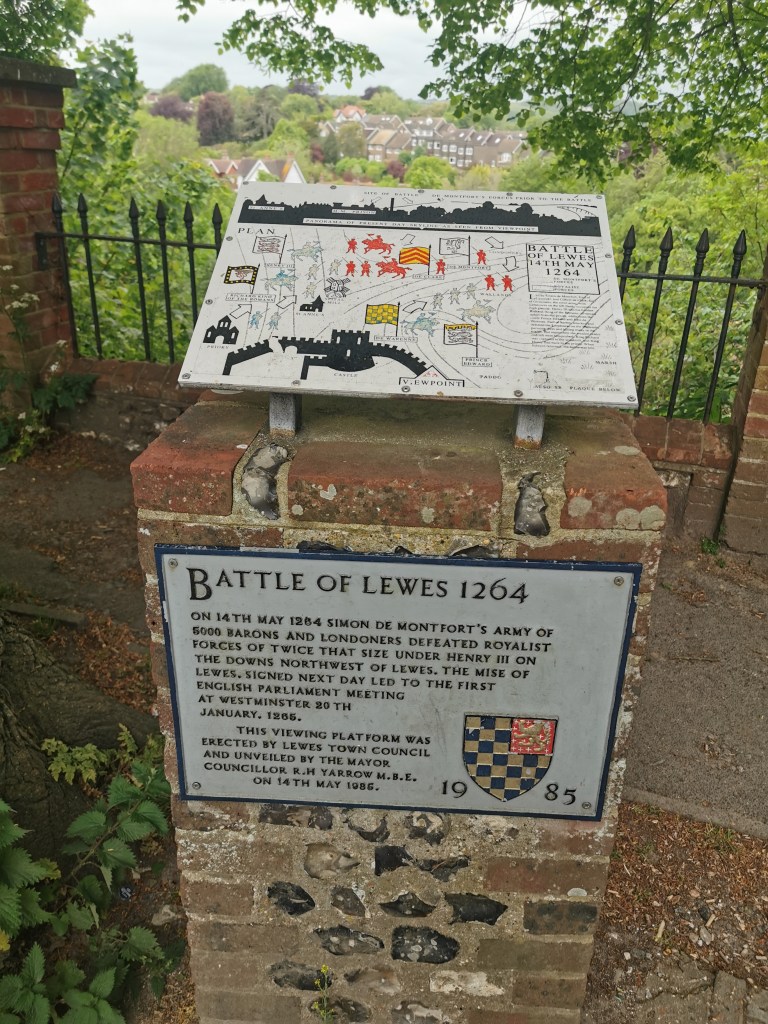
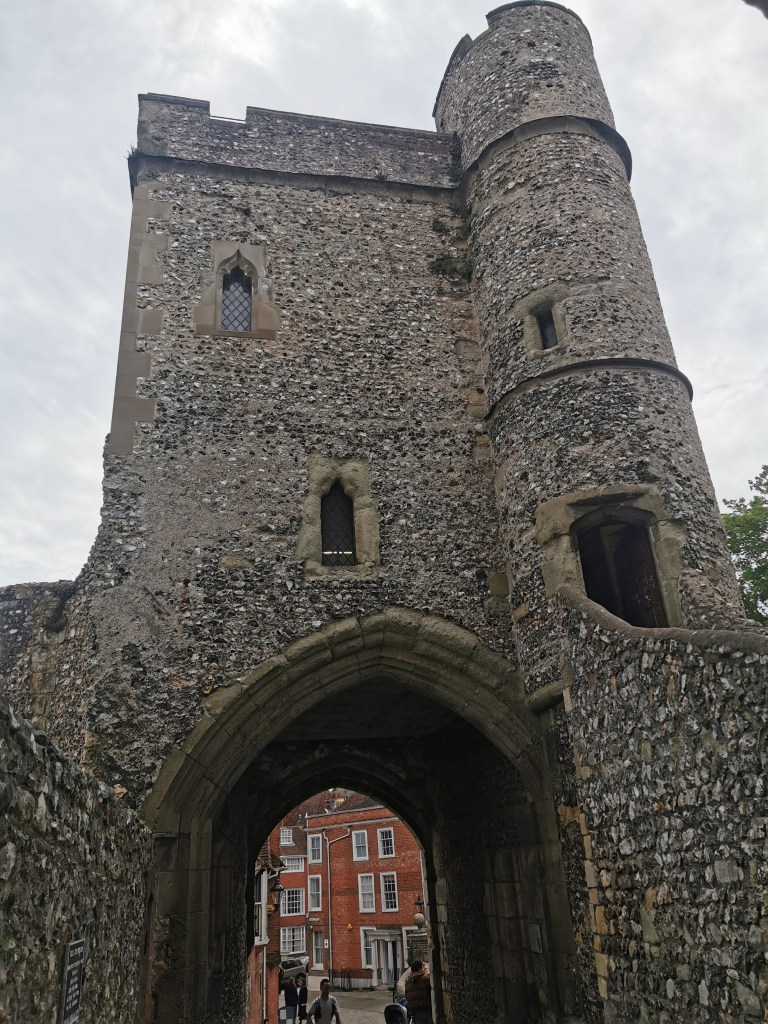
Onward to Hastings
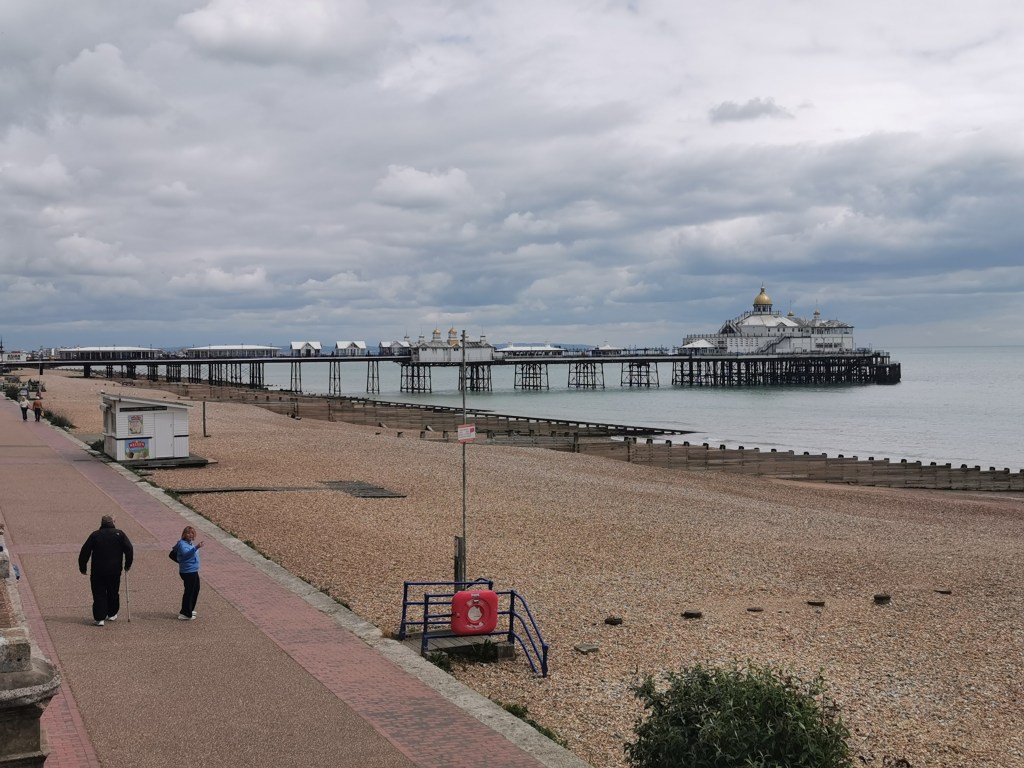
Monday morning and it was time to head for Hastings. We caught a bus to Eastbourne which travelled inland through a series of villages to Hailsham and finally Eastbourne, where we spent a couple of hours over lunchtime. We walked down to the seafront and discovered that an open top bus runs a circular route from the pier, through the town and out to Beachy Head, Birling Gap and the Seven Sisters.
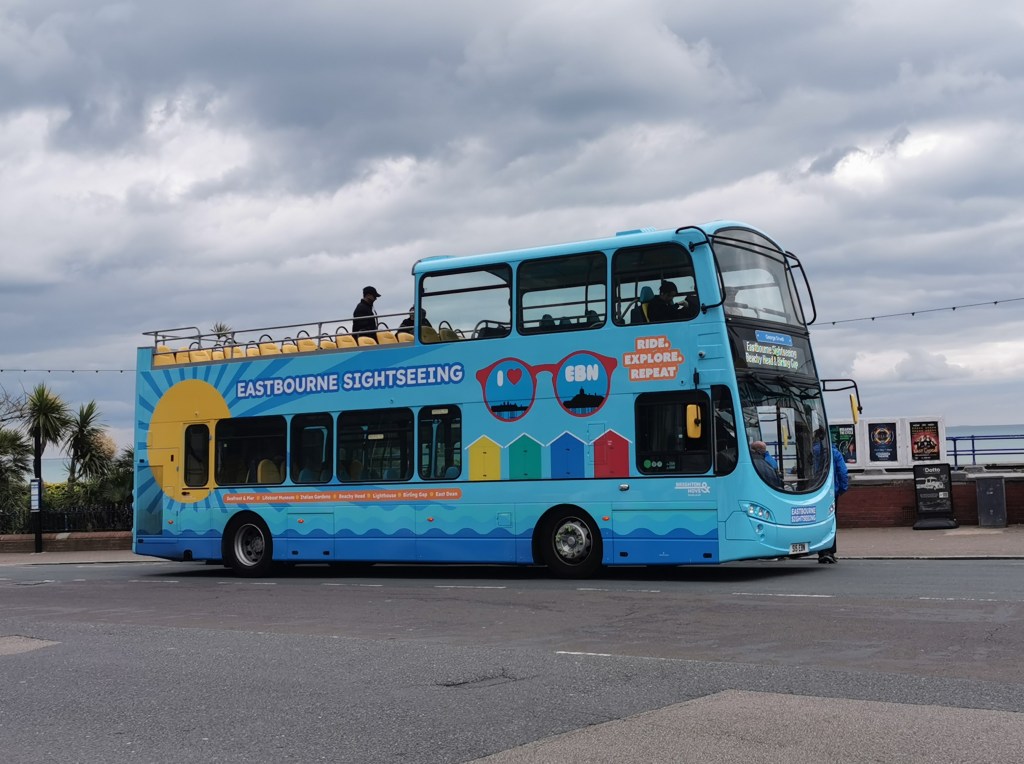
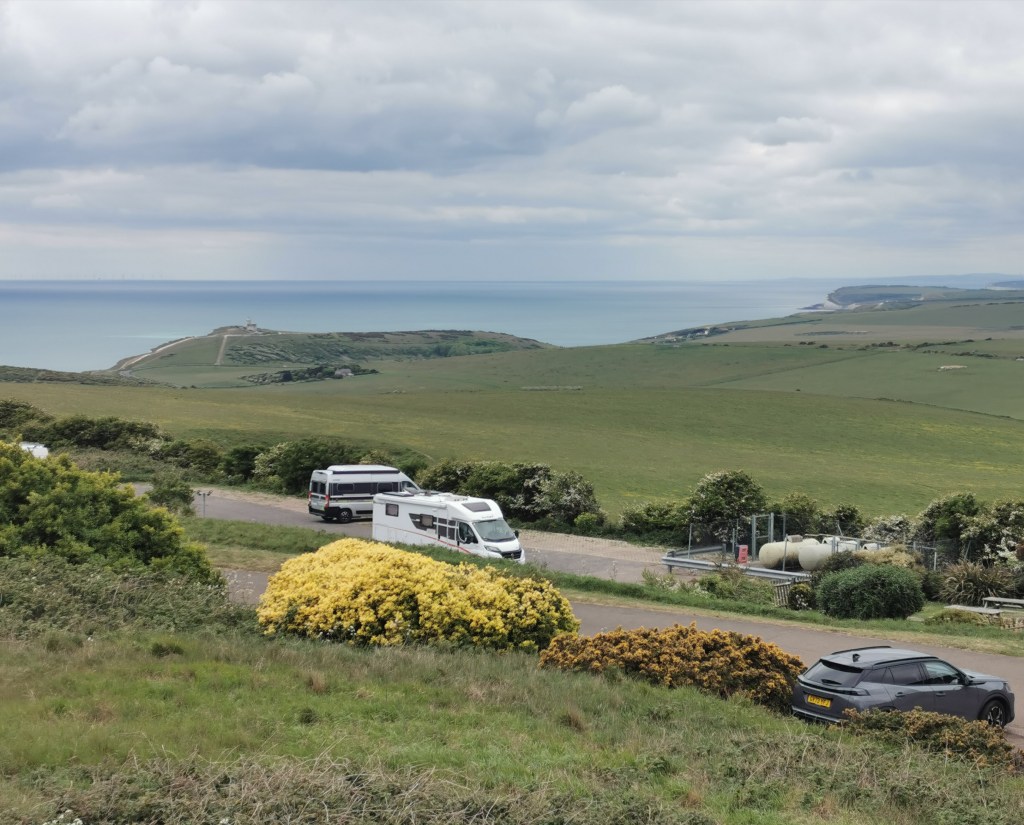
We boarded and spent an hour having a very windy but enjoyable ride. The best views of Beachy Head are from the paths along the top of the cliffs, but we decided to be lazy. This meant that back in Eastbourne we had time for a pint in Wetherspoons’ London and County – there seemed to be a dearth of ordinary pubs in the town centre apart from the two enormous Spoons.
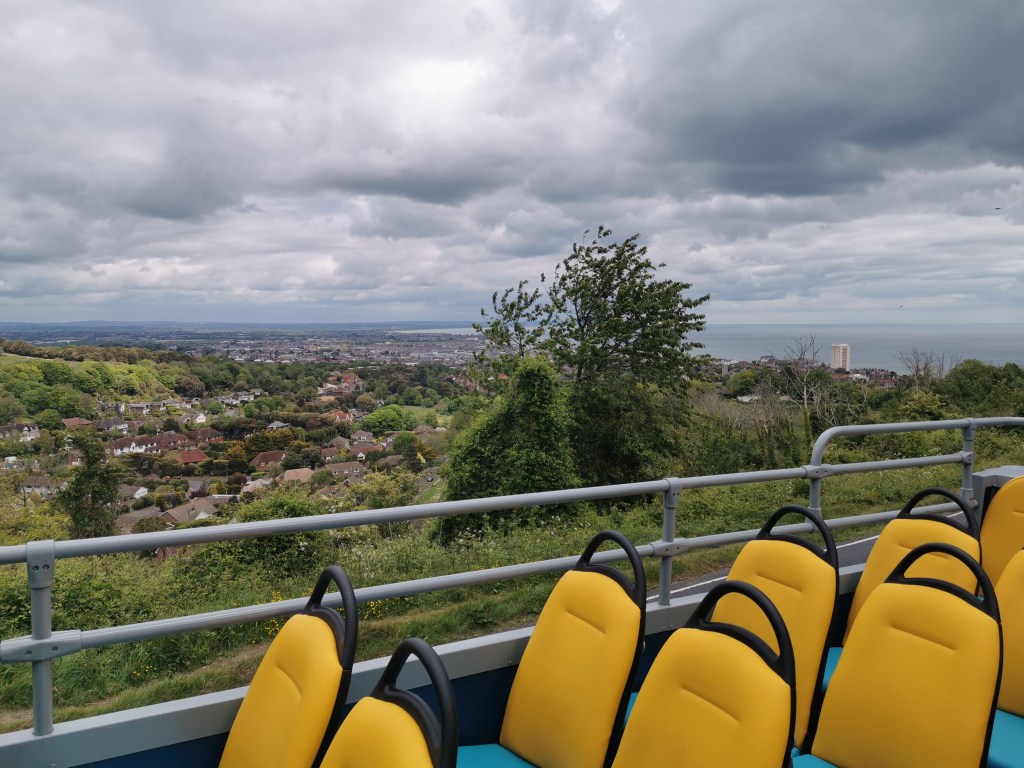
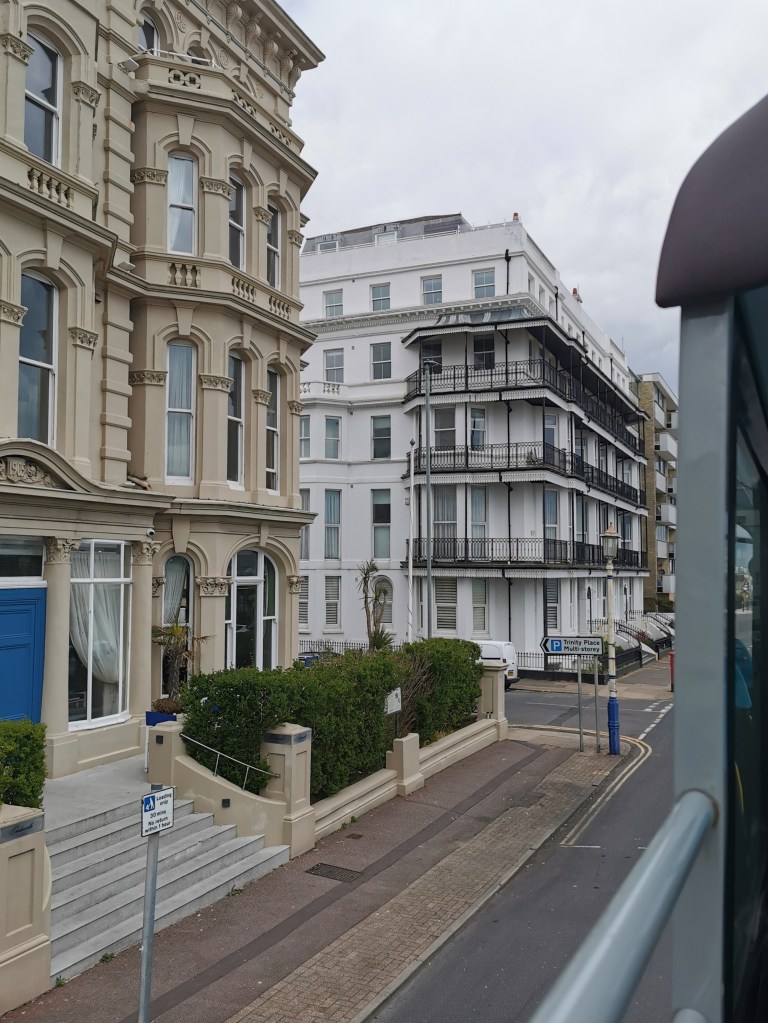
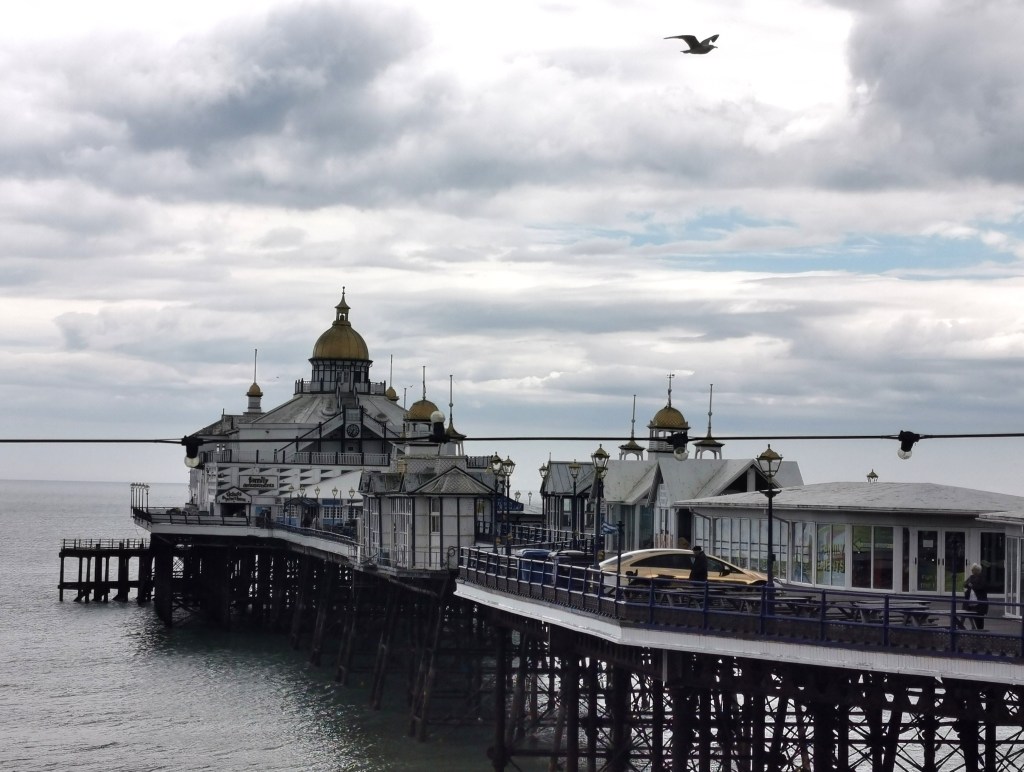
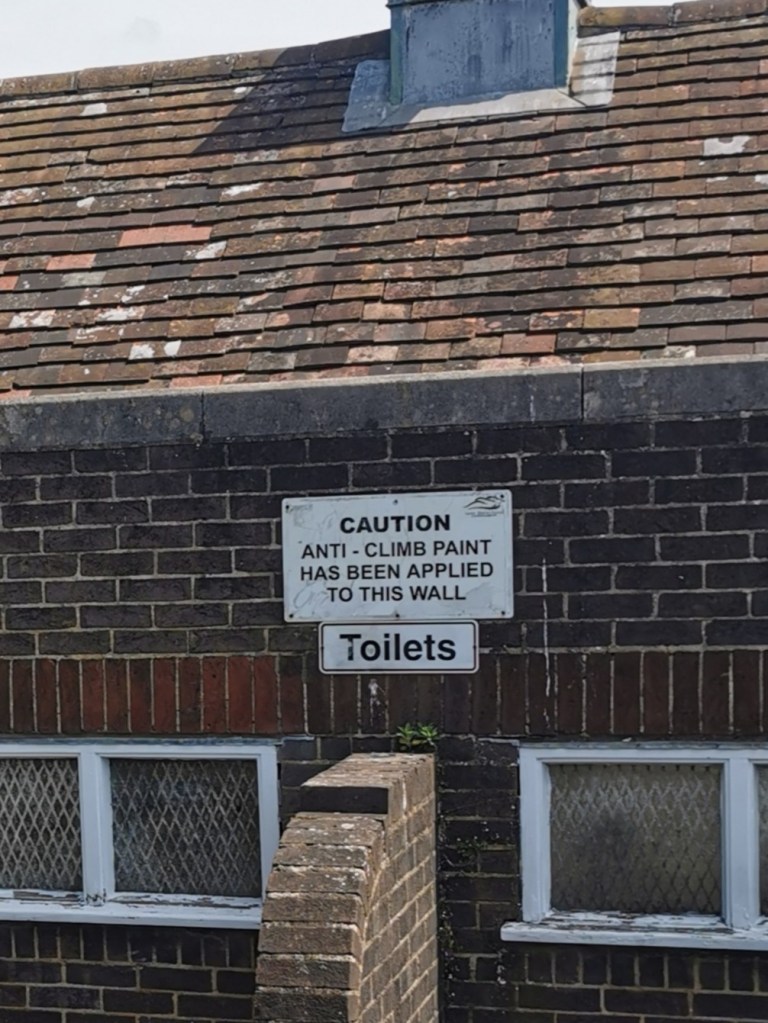
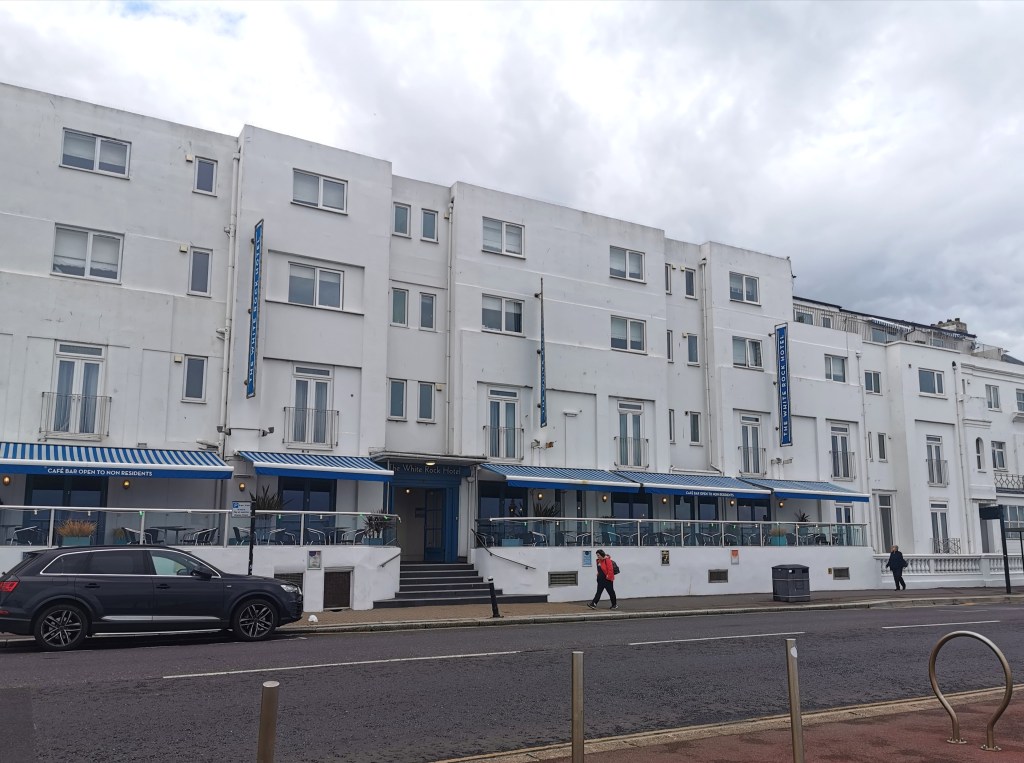
From Eastbourne we caught an eight-coach train – all toilets were out of order and those by the beach in Eastbourne had cost £1! Thank goodness we only had the one pint. Most stations en route had short platforms of various lengths – there were instructions to sit in the front three, four or five coaches depending on the station. Along the way we passed pebble beaches with beach huts and park home developments before the built-up area of Bexhill, St. Leonard’s and Hastings, where we found our way to the White Rock Hotel on the seafront.
Hastings
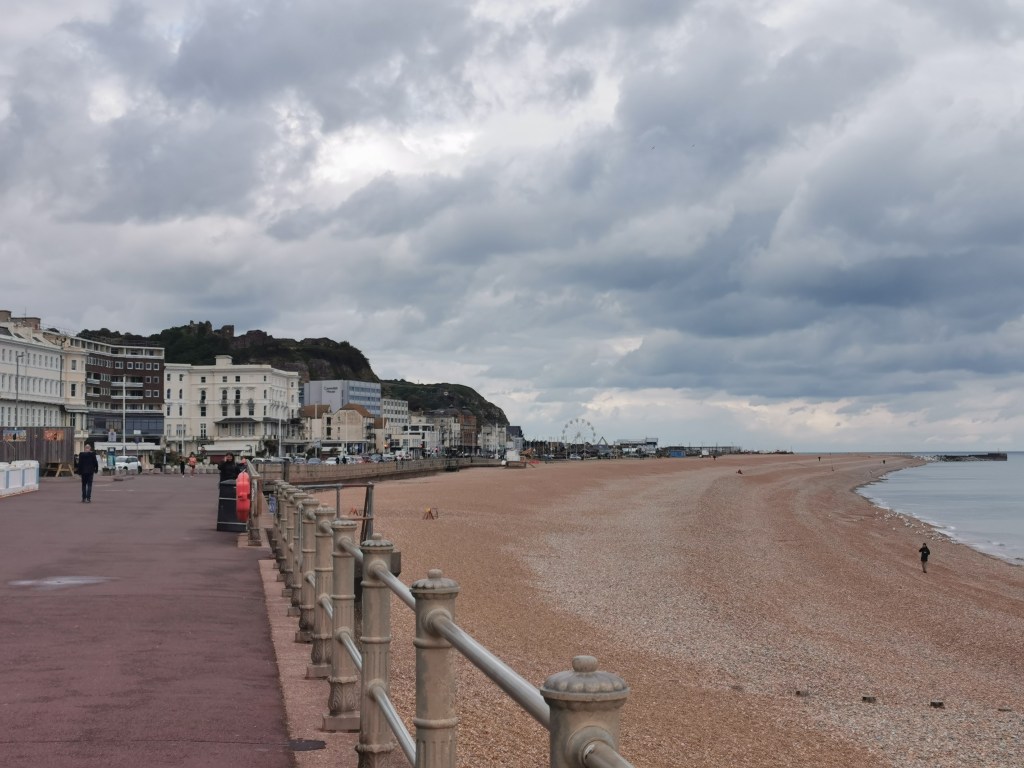
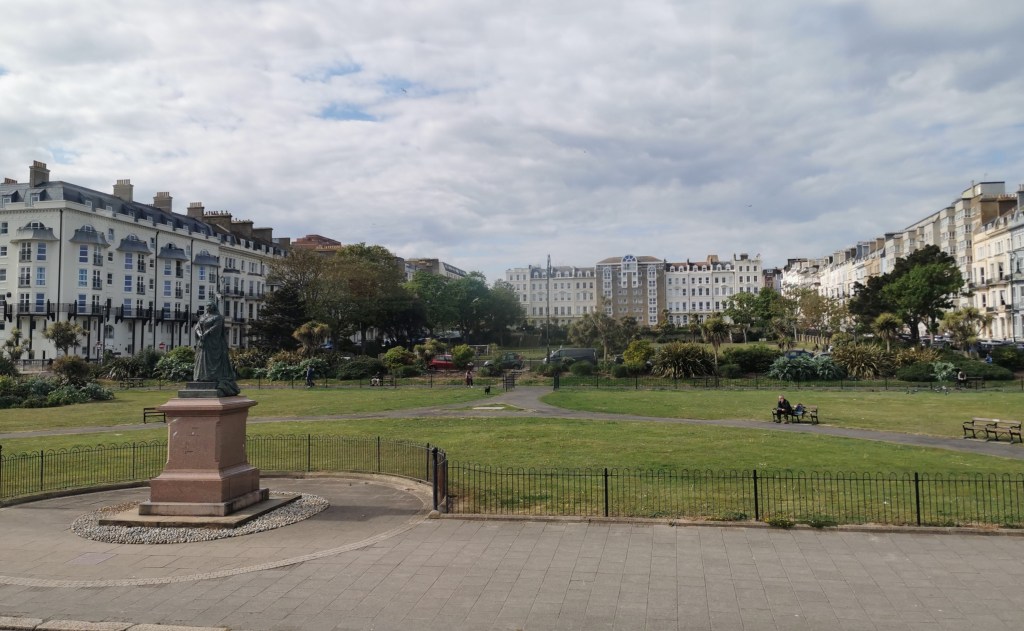
Hastings is a substantial coastal town with a population of 91,000, built over a series of hills and valleys. As the closest town to the Norman invasion landing site, it gave its name to the 1066 battle, several miles inland. It was a medieval port and links with the sea have continued. The old town is located between the West and East Hills with the modern centre and seaside resort to the west. Parts of the town appear very rundown, like many seaside resorts, but the seafront remains handsome. The Old Town has a different, alternative vibe and the fishermen’s beach is fascinating.
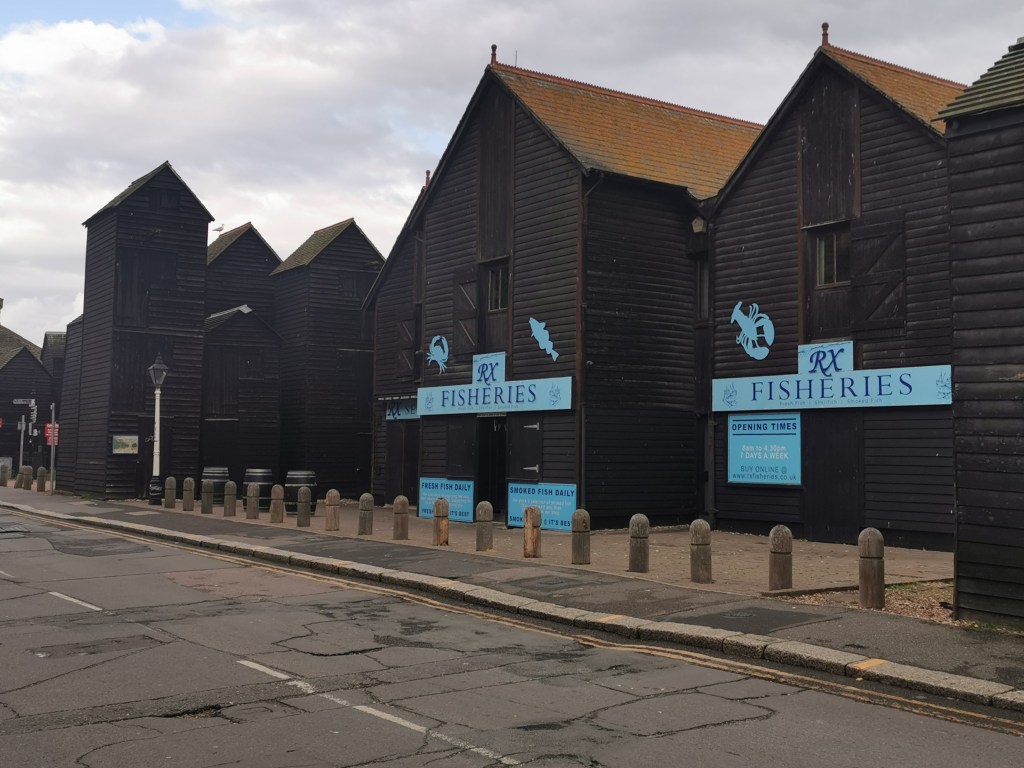
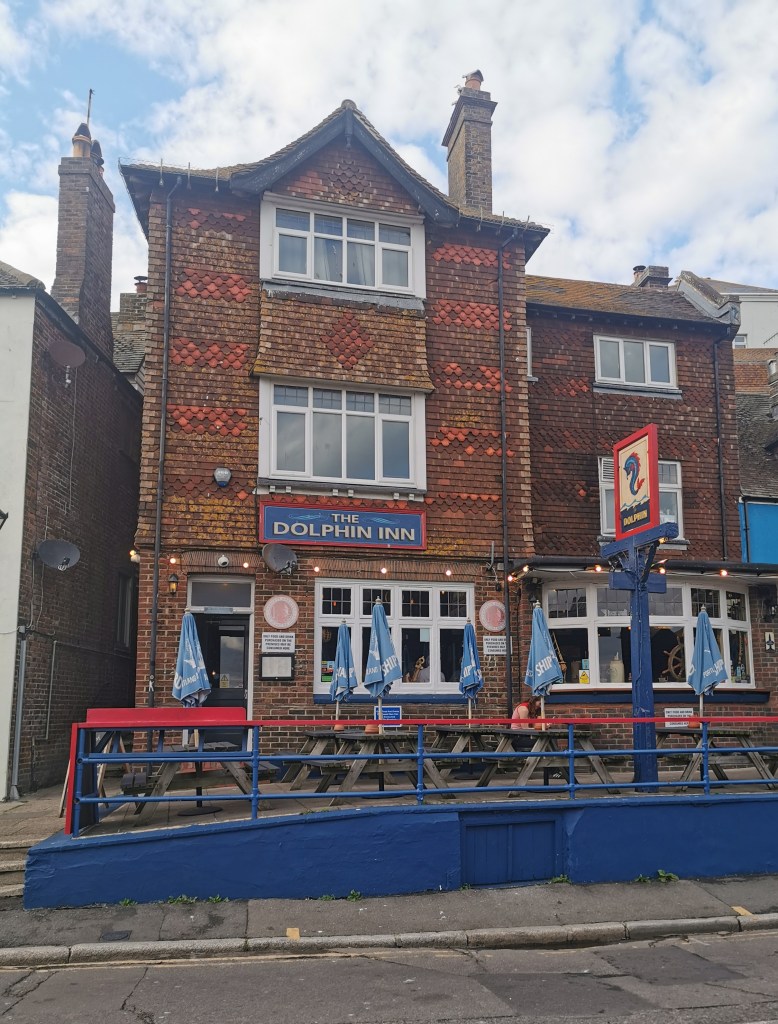
The hotel is independently owned and attracts locals as well as tourists for both the food – on our first evening we had a very pleasant curry with lots of coconut – and the bar, which is listed in the Good Beer Guide. After our meal we walked along the seafront past the town centre to the old town and the fishermen’s beach. It was a Monday evening and everywhere was quiet. We managed a pint of Harvey’s in the Dolphin Inn (pictured) and a pint of Long Man Bitter in the Jenny Lind – both were good pubs.
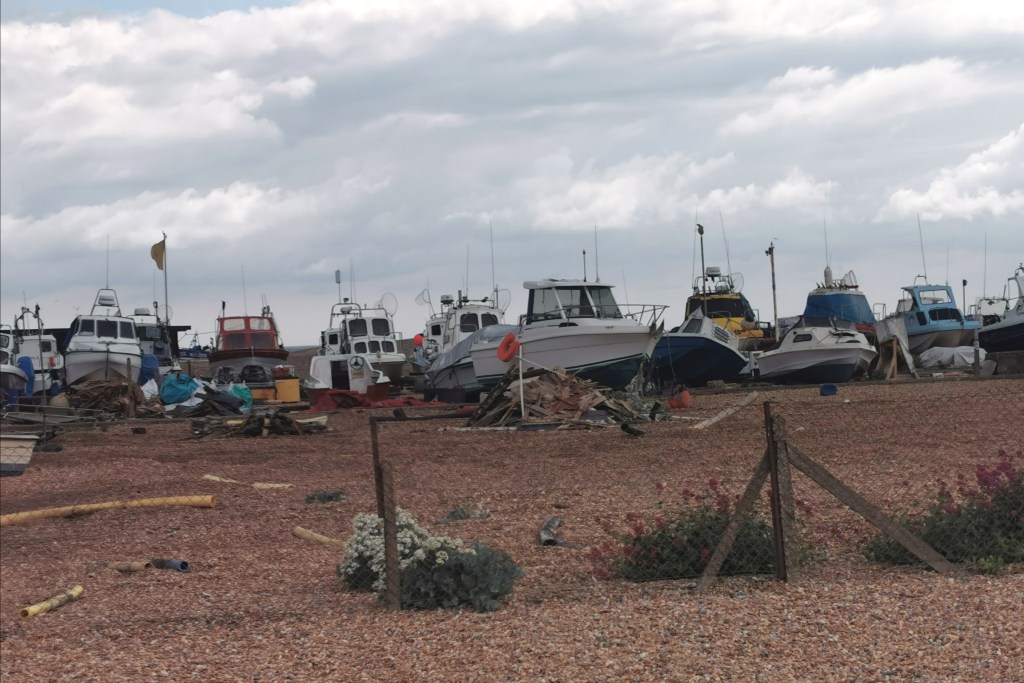
The following morning we returned to the fishermen’s quarter, Stade Beach, the home of the UK’s largest beach-based fishing fleet for over 400 years. We had a wander round the beached boats, looked at the sheds, known as net shops, where fishermen stowed their gear, then paid a visit to the Fishermen’s Museum. We had hoped to travel on the nearby cliff railways but both were closed for maintenance and the miniature railway along the front was also closed. This may have been due to the weather – it was a very windy day and there were few people around.
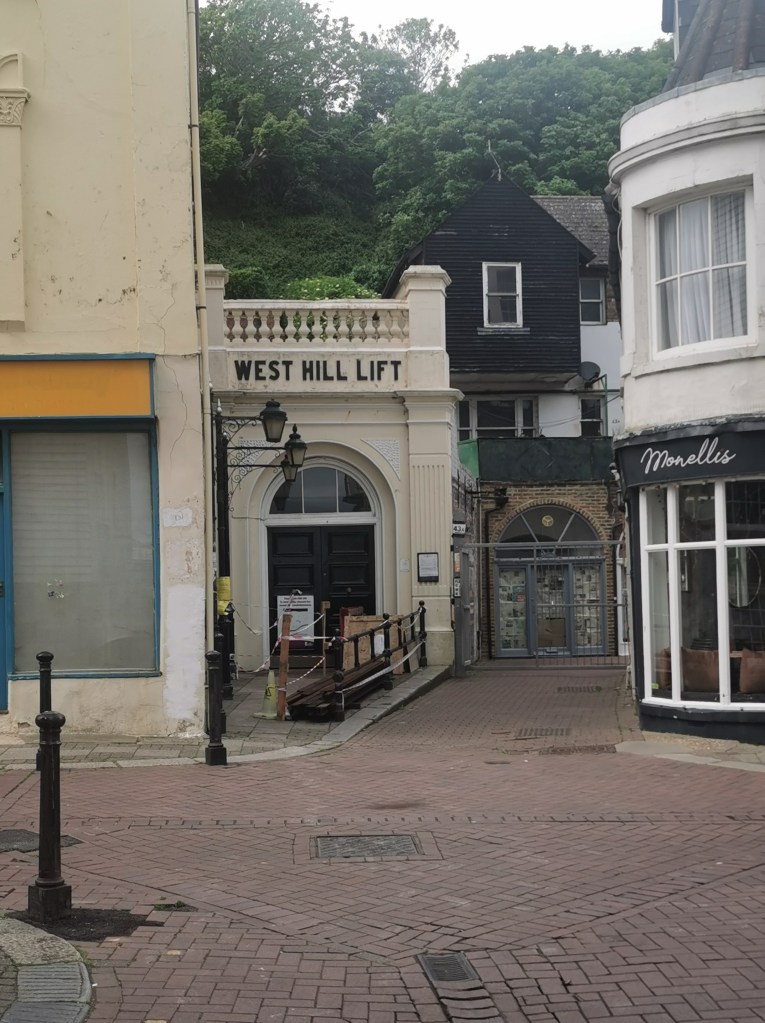
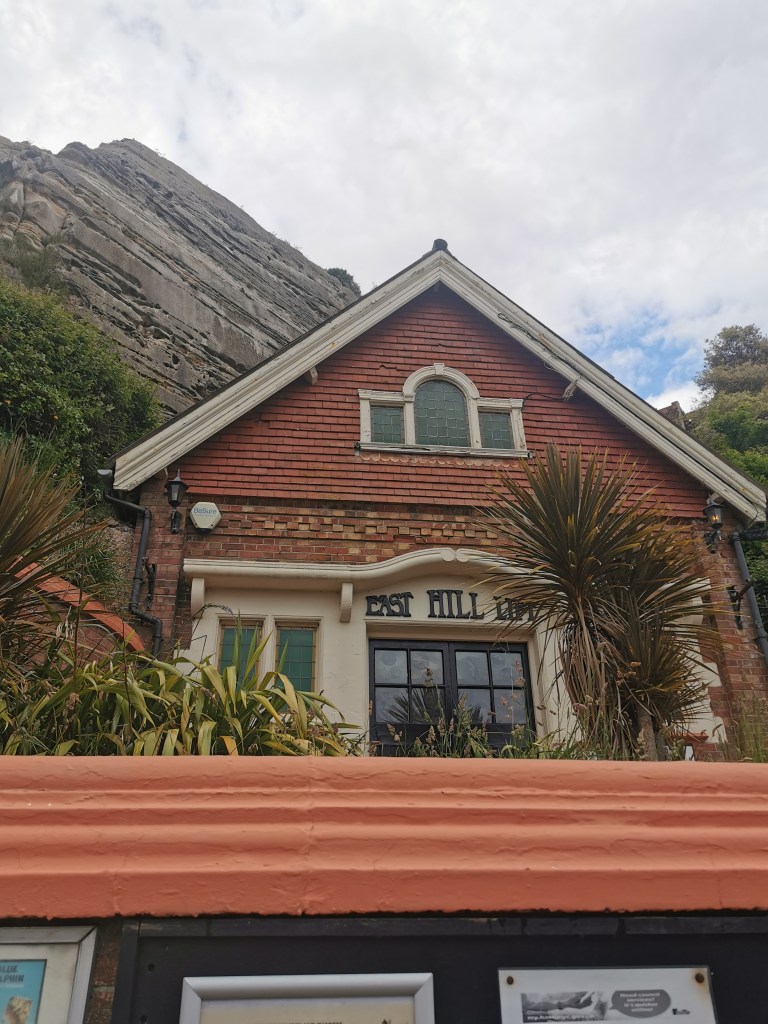
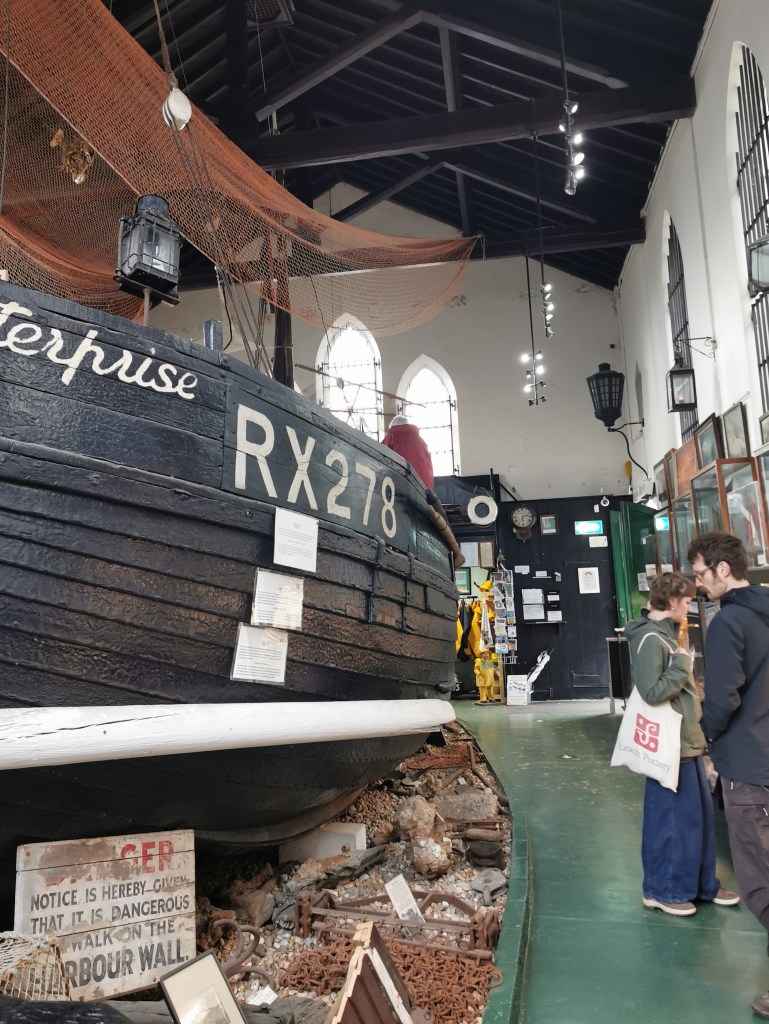
We then took our out-of-town excursion (see below) but returned in the evening to visit the Jolly Fisherman micropub, which had been closed on Mondays. We had noticed the sheer number of pubs which featured live bands ranging from folk to jazz and rock – almost everywhere seemed to have a band on several nights a week.
Battle and Bexhill
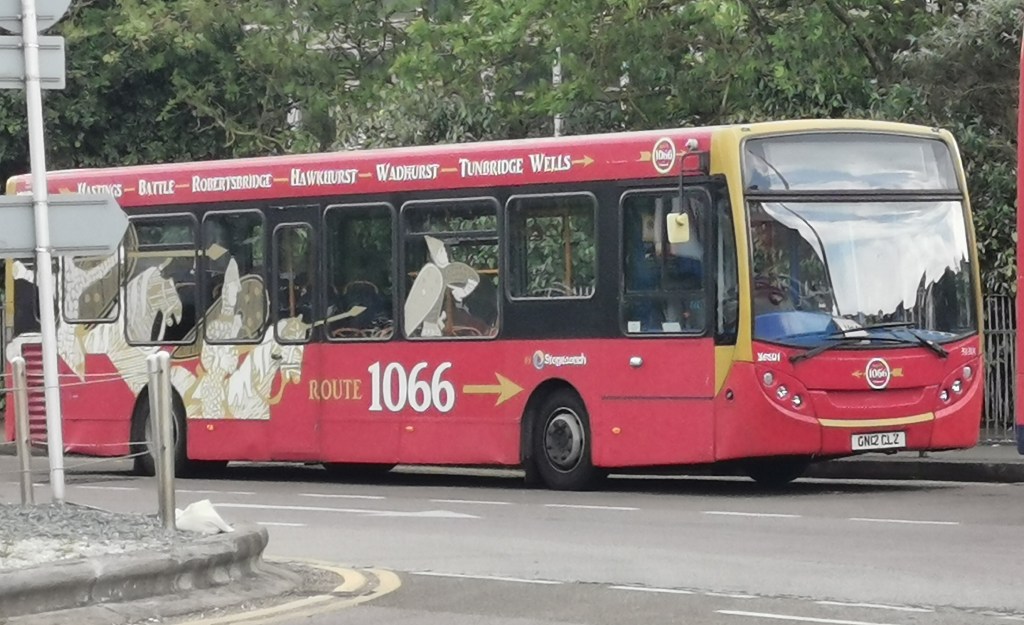
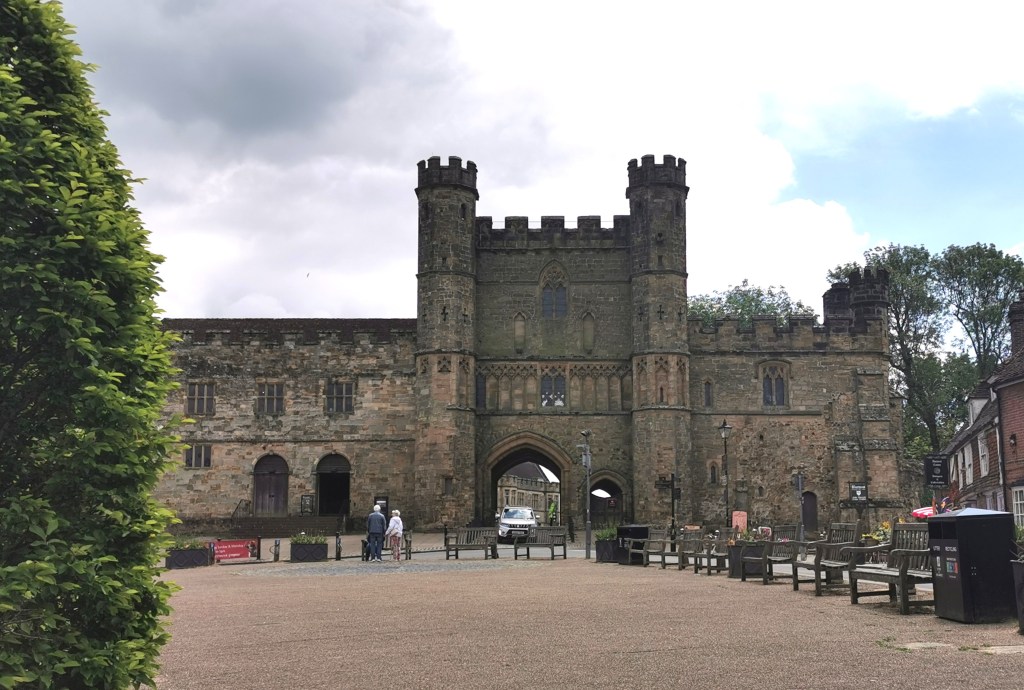
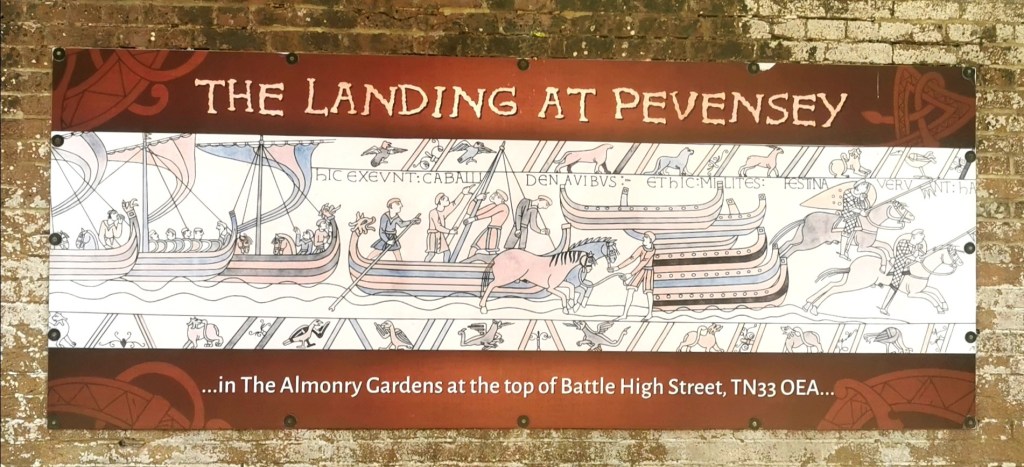
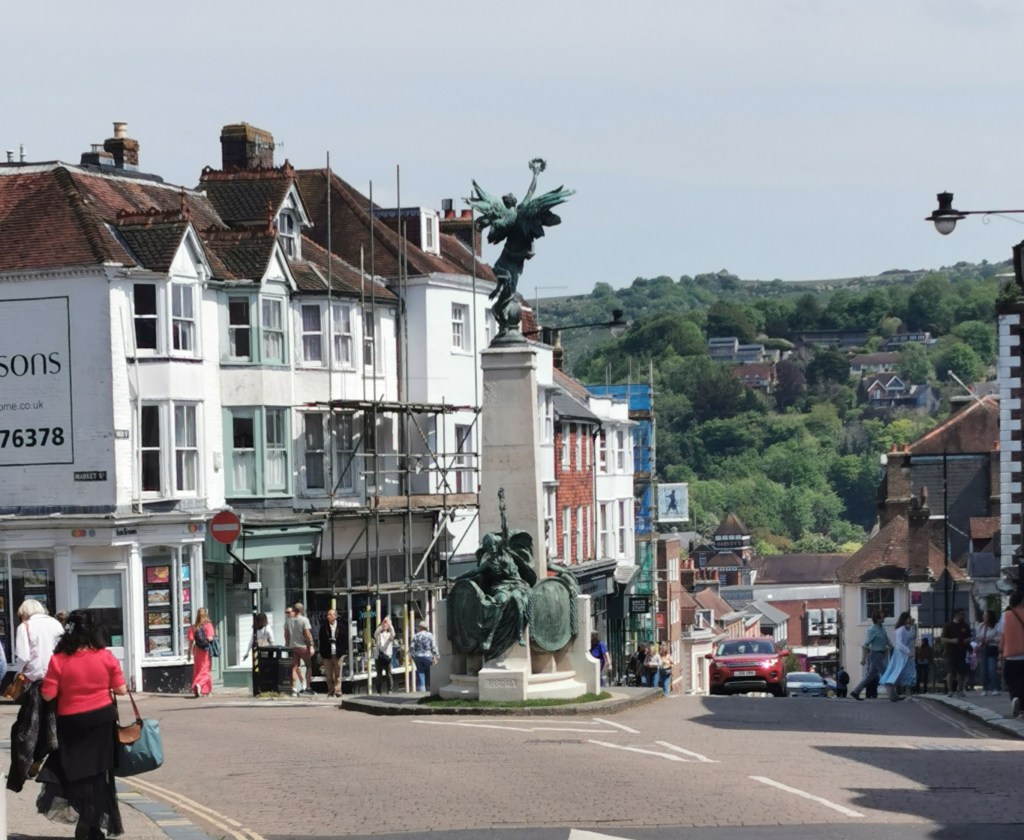
In the afternoon we caught a bus to the nearby small town of Battle, By some strange coincidence the bus route was numbered 1066. We had a quick look at Battle Abbey and the site of the Battle of Hastings.
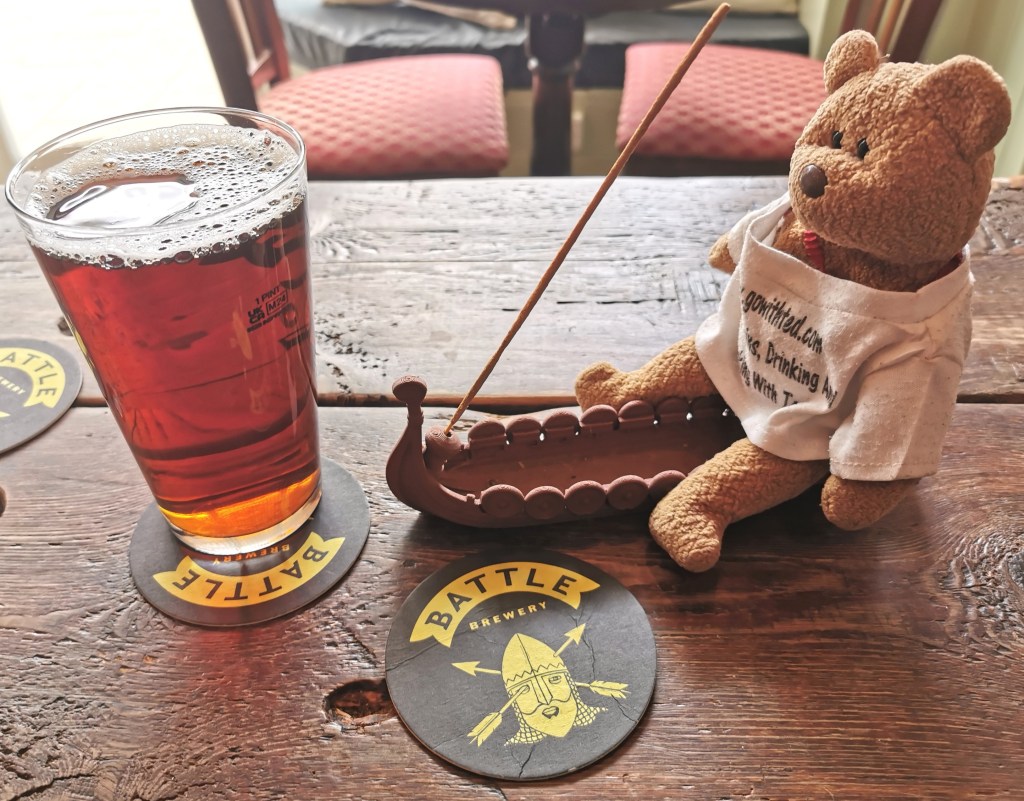
We then walked along the busy Battle High Street (which needs some traffic calming measures) to the Battle Brewery Taproom micropub. Their beers are interesting with a pleasant, distinctive smoky taste. We walked to Battle station and caught a train back to Hastings. This included our final bit of new railway line – the few metres from West St. Leonards station to Bopeep Junction. I have no recollection of why I was ever there – must have been work, and no idea how Bopeep Junction got its name.
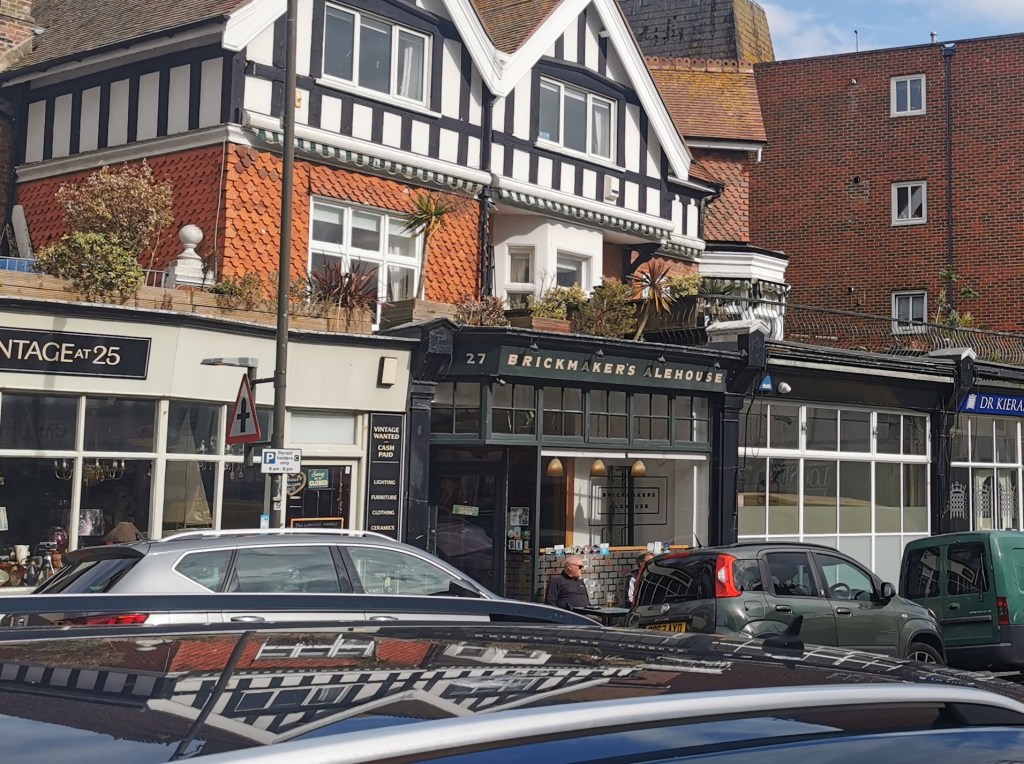
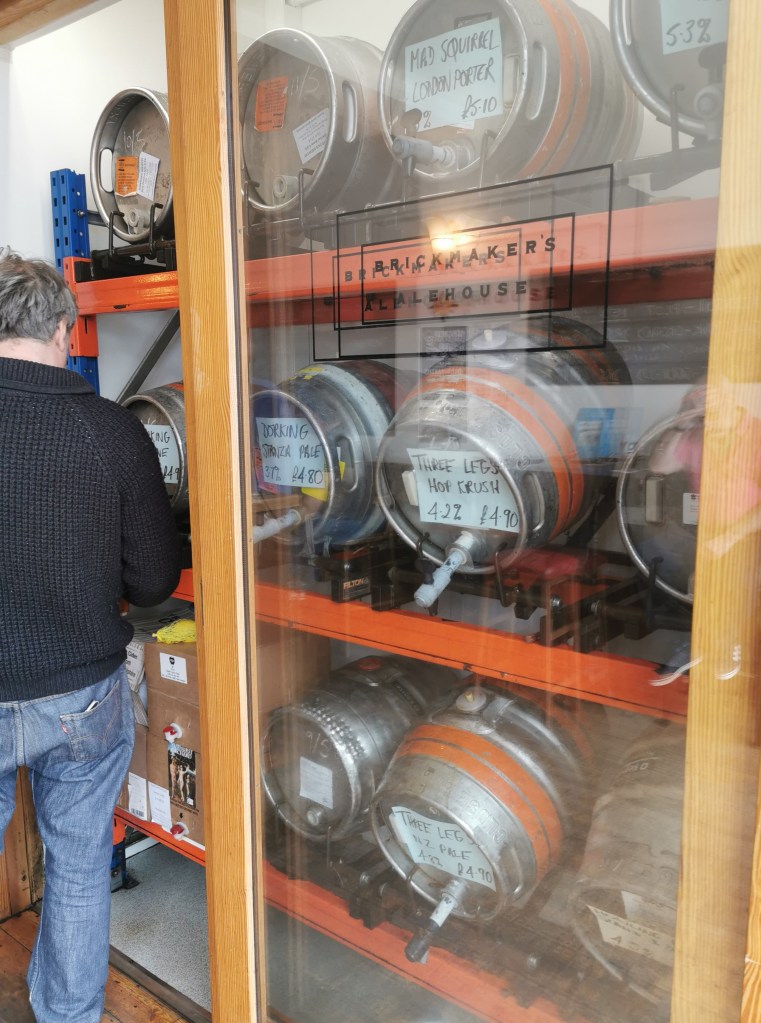
Outside the station we caught a bus to Bexhill, which allowed us to have a proper look at St. Leonards as we pootled through. We called in at the Brickmaker’s Alehouse, a fine micropub (pictured), then caught a train back to Hastings for our final evening in the Jolly Fisherman and the hotel bar. We noticed that the bus services in the Hastings area were much less frequent than in Brighton / Lewes – whether that’s down to the level of Council support or the operator (Stagecoach) we couldn’t tell.
And home
On Wednesday we returned by train from Hastings to Durham, changing at Ashford International and St Pancras / Kings Cross, using another cheap ticket from LNER. The line to Ashford, known as Marshlink, is a single track, unelectrified line. The train pootles through largely empty countryside, across Romney Marsh, calling at platforms in the middle of nowhere and the town of Rye, and takes 45 minutes to travel 42km For our visit to this area see JOURNEYS ENGLAND Kent .
A slight delay meant that we had three minutes to change trains and platforms at Ashford but we made it. From there, fast trains use the High Speed 1 line and reach St Pancras, 90km distant, in 38 minutes. The journey north was uneventful, though the LNER rain only had 5 coaches which meant it was full. And that was that – journey over
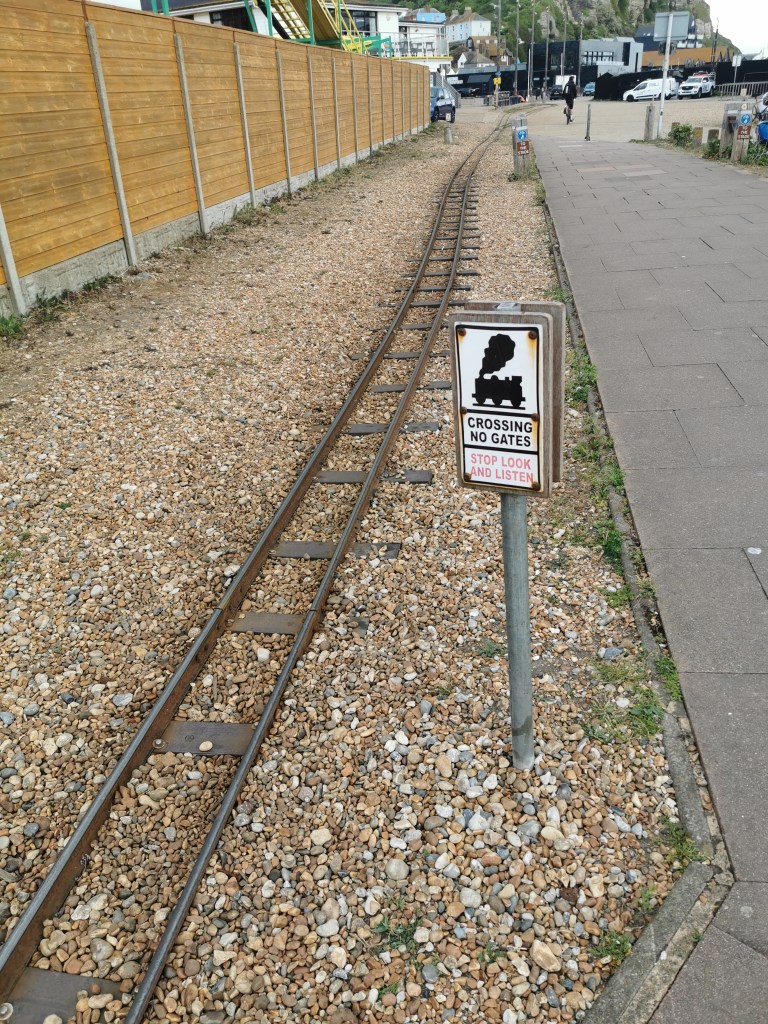
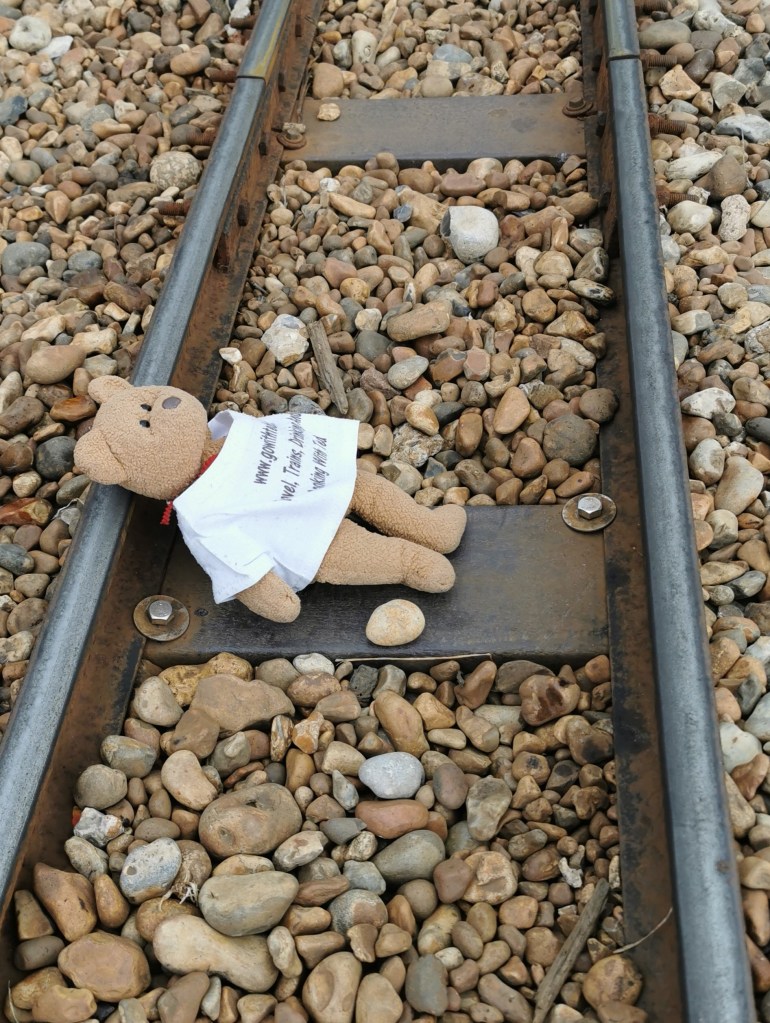
Ted dices with death on the Hastings Miniature Railway
We enjoyed the trip. As you can see, we focussed on visiting the best cask ale pubs and a little bit of trackbashing and, as always, it was interesting visiting towns and passing through countryside we didn’t know. We would happily return to any of our three bases. Chichester may be a little smug and bourgeois for our taste, but worth a visit to see the sites and pubs. Lewes is also a prosperous town but it had a very lively and friendly vibe. Hastings may be suffering economically, but it very much had its own character.
There are of course other reasons to visit the area. The towns have their own sites, museums and events – we had hoped to visit the Pallant House Gallery of modern British art in Chichester for instance. The area is quite highly urbanised but there are walks along the clifftops. by the sea. For those who are younger and fitter visits to the towns could be combined with walking stretches of the South Downs Way along the escarpment and ridges of the Downs.
Practicalities
Hotels
Chichester, George and Dragon Inn, 51 North St, PO19 1NQ, via Booking.com
Lewes, Premier Inn Lewes Town Centre, The Old Courtroom, Court Road, BN7 2PG, via premierinn.com
Hastings, The White Rock Hotel, Seafront, 1-10 White Rock, TN34 1JU, via Booking.com
Pubs
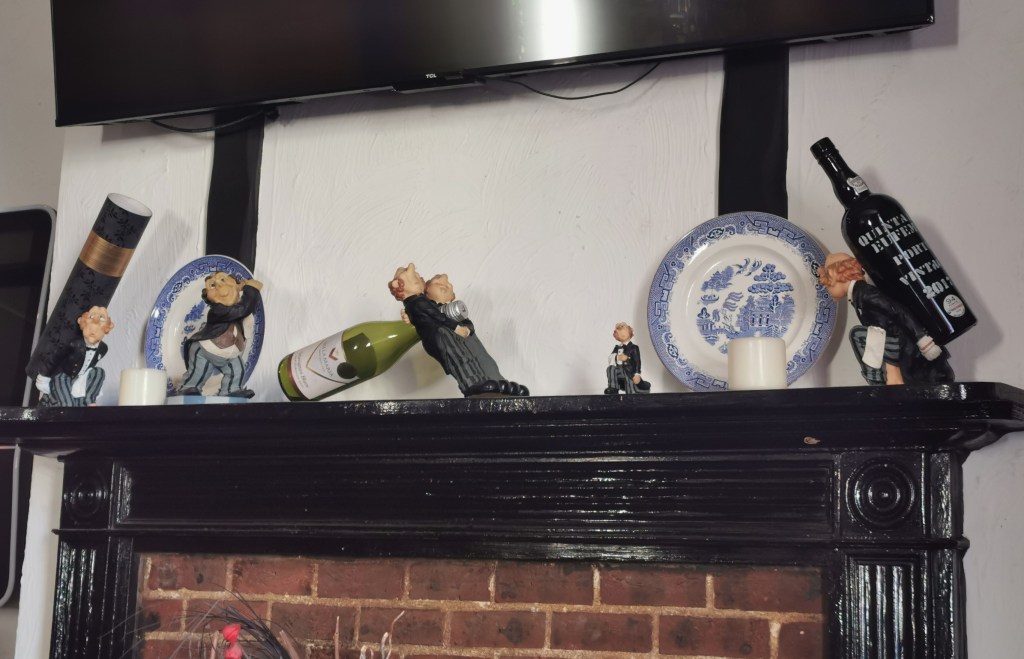
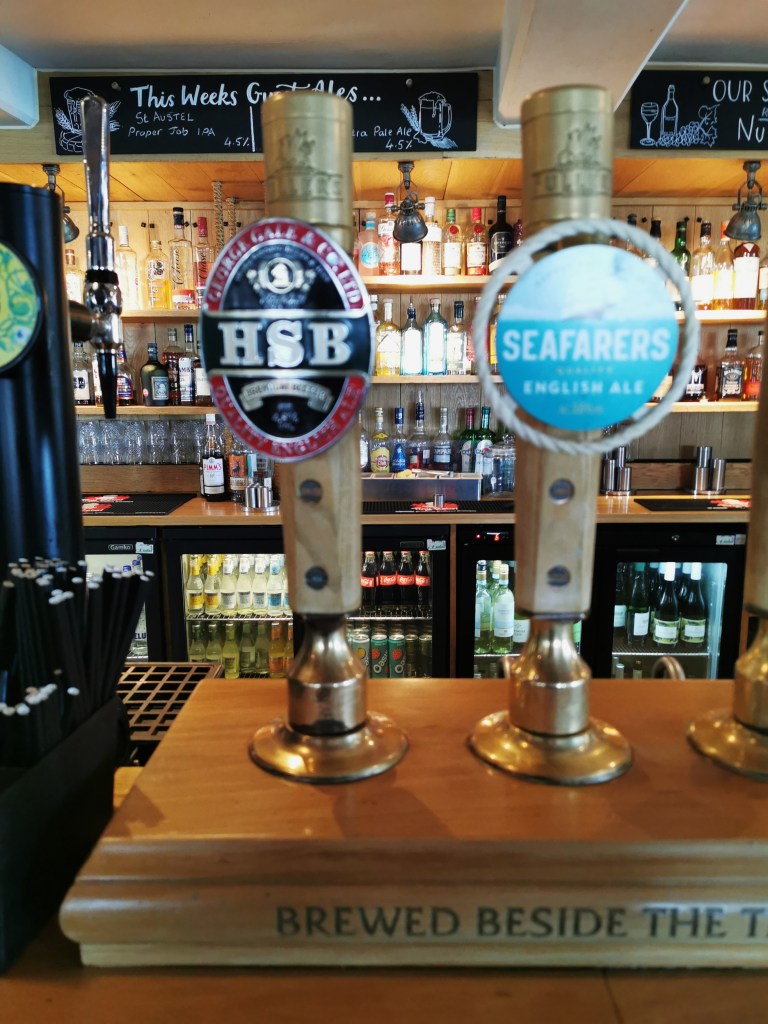
Here are the pubs we visited. All of them sold cask beer and GBG means they are in the CAMRA Good Beer Guide 2026.
Arundel, Norfolk Tap at Norfolk Hotel, 22 High St, BN18 9AB, GBG. Battle, Battle Brewery Taproom, 52/52A High St. TN33 0EN. Bexhill, Brickmaker’s Alehouse, 27 Sea Rd. TN40 1EE. GBG. Bognor Regis, Dock and Duck at The Claremont, Scott St. PO21 1UH, GBG. Brighton, Lord Nelson Inn, 36 Trafalgar St, BN1 4ED, GBG.
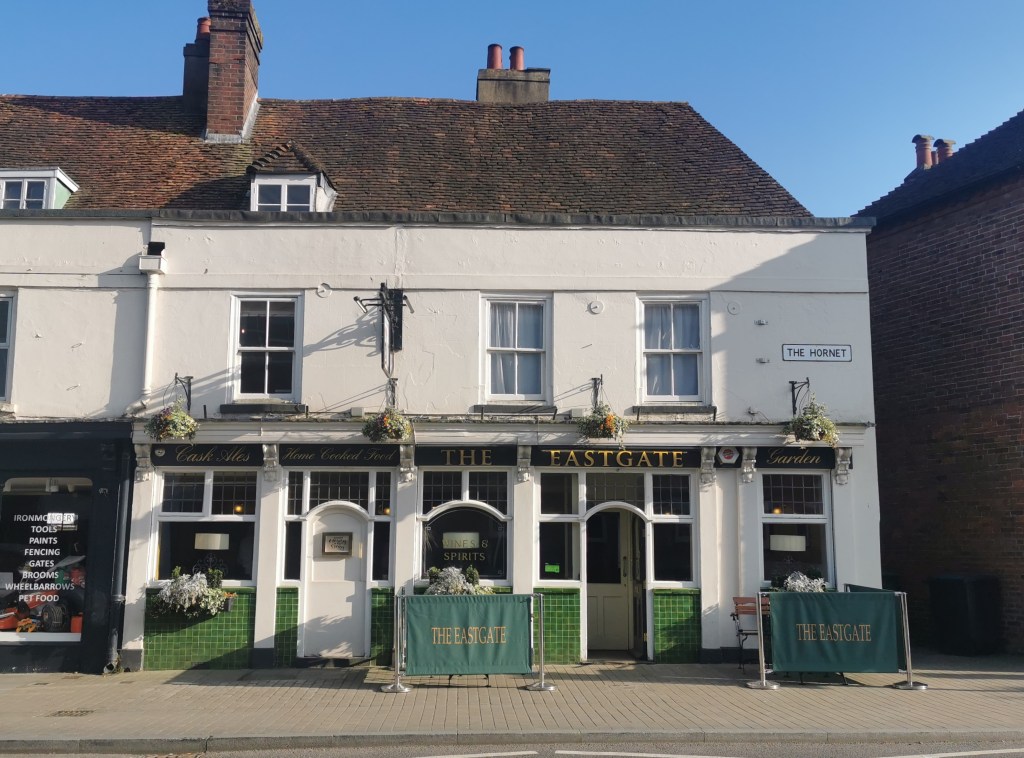
Chichester, Bell Inn, 3 Broyle Rd. PO19 6AT, GBG; Eastgate, 4 The Hornet, PO19 7JG, GBG; George and Dragon, 51 North St. PO19 1NQ; Hole in the Wall, 1A St Martins St. PO19 1NP, GBG; Little Monster Tap, 23 The Hornet, PO19 7JL; Park Tavern, Priory Rd. PO19 1NS, GBG. Eastbourne, London and County, 46 Terminus Rd. BN21 3LK, GBG. Hastings, Dolphin, 11-12 Rock-A-Nore Rd. TN34 3DW, GBG; Jenny Lind, 69 High St. TN34 3EW, GBG; Jolly Fisherman, 3 East Beach St. TN34 3AR, GBG; White Rock Hotel, 1-10 White Rock, TN34 1JU, GBG.
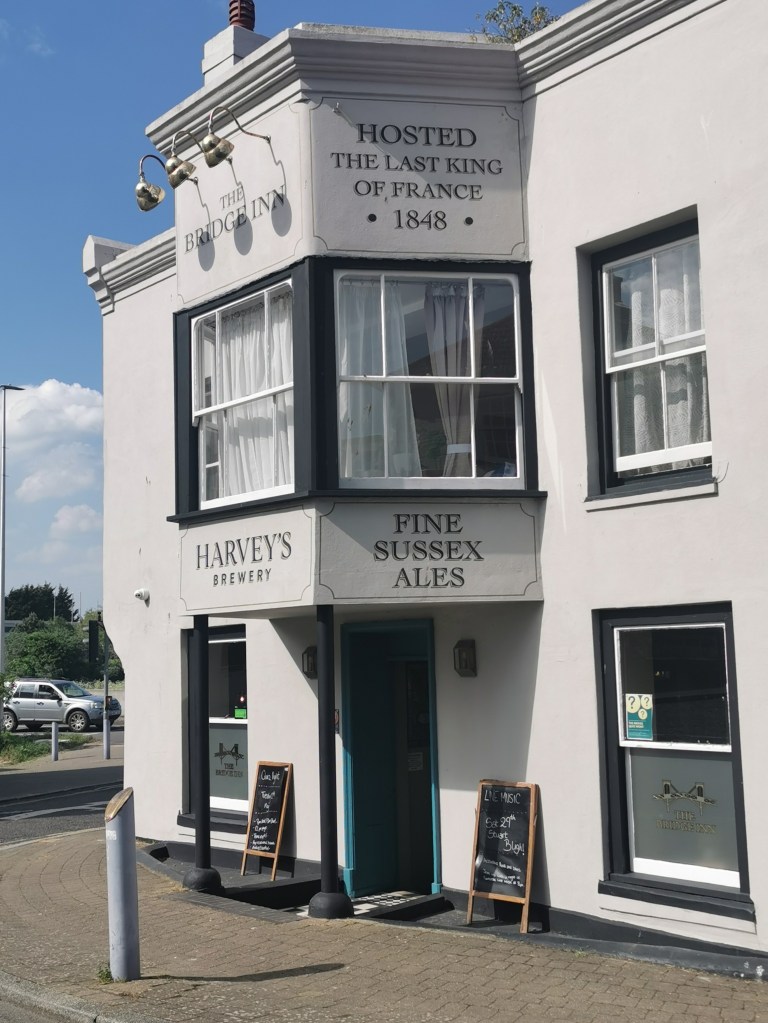
Lewes, Dorset, 22 Malling St, BN7 2RD, GBG; Gardener’s Arms, 46 Cliffe High St. BN7 2AN, GBG; John Harvey Tavern Taproom, 1 Bear Yard, Cliffe High St. BN7 2AN, GBG; Lewes Arms, 1 Mount Place, BN7 1YH, GBG. Littlehampton, New Inn, 5 Norfolk Rd. BN17 5PL, GBG. Newhaven, Bridge Inn, Bridge St. BN9 9PH, GBG. Portsmouth, Barley Mow, GBG; Bridge Tavern, GBG; Lawrence Arms, GBG; Pembroke, GBG; Phoenix, GBG; Still and West, GBG. Seaford, Old Boot Inn,16 South St, BN25 1PE, GBG; Steamworks, Seaford Station, Station Approach, BN25 2AR, GBG
Quite a few of them will be added to the next edition of Our Favourite UK Pubs. For the current list see Our Favourite UK Pubs .
Acknowledgements. Thanks to Nick Atkinson for leading our visit to the pubs of Portsmouth.
Photographs. All photographs are by Steve Gillon
Copyright © Text and photographs are copyright Steve Gillon, 2026.