High speed and intercity journeys have their place and are much preferable to flying over a country if time permits. However, much more interesting are journeys away from the main line, some of them unchanged in many years. This is our collection of unusual railway journeys in Europe – local lines, city transport, tourist and heritage railways.
Austria
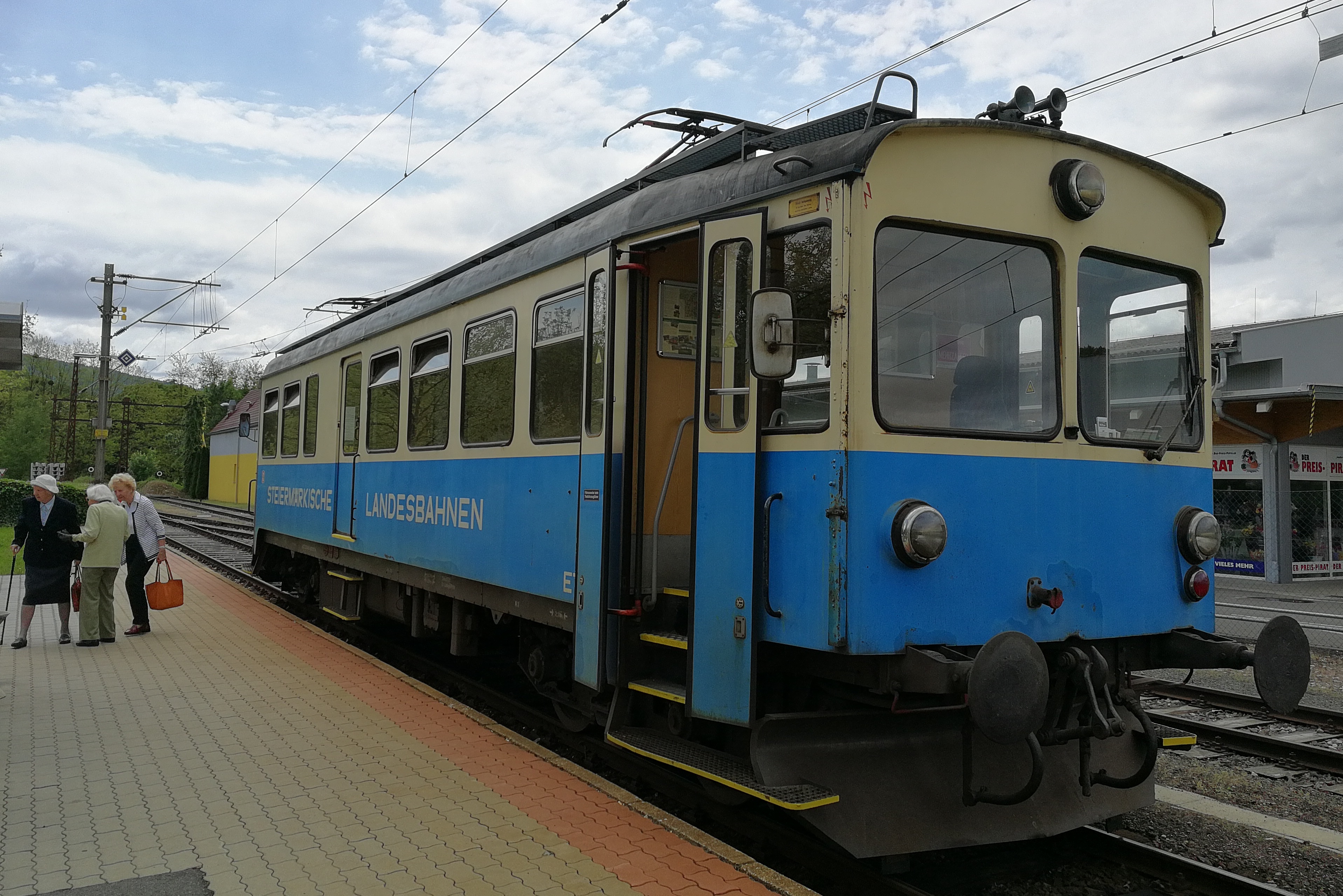
Steiermärkischen Landesbahnen operate several isolated lines in Steiermark (Styria), Austria. When we visited in 2017, this railcar and its partner, built in 1931, shuttled between Feldbach and Bad Gleichenberg four times a day. All the other passengers on this journey (on the left of the photo) were in their eighties, but still mobile enough to clamber on and off. Since 2021 this line has operated as a tourist railway, running only at weekends and holidays.
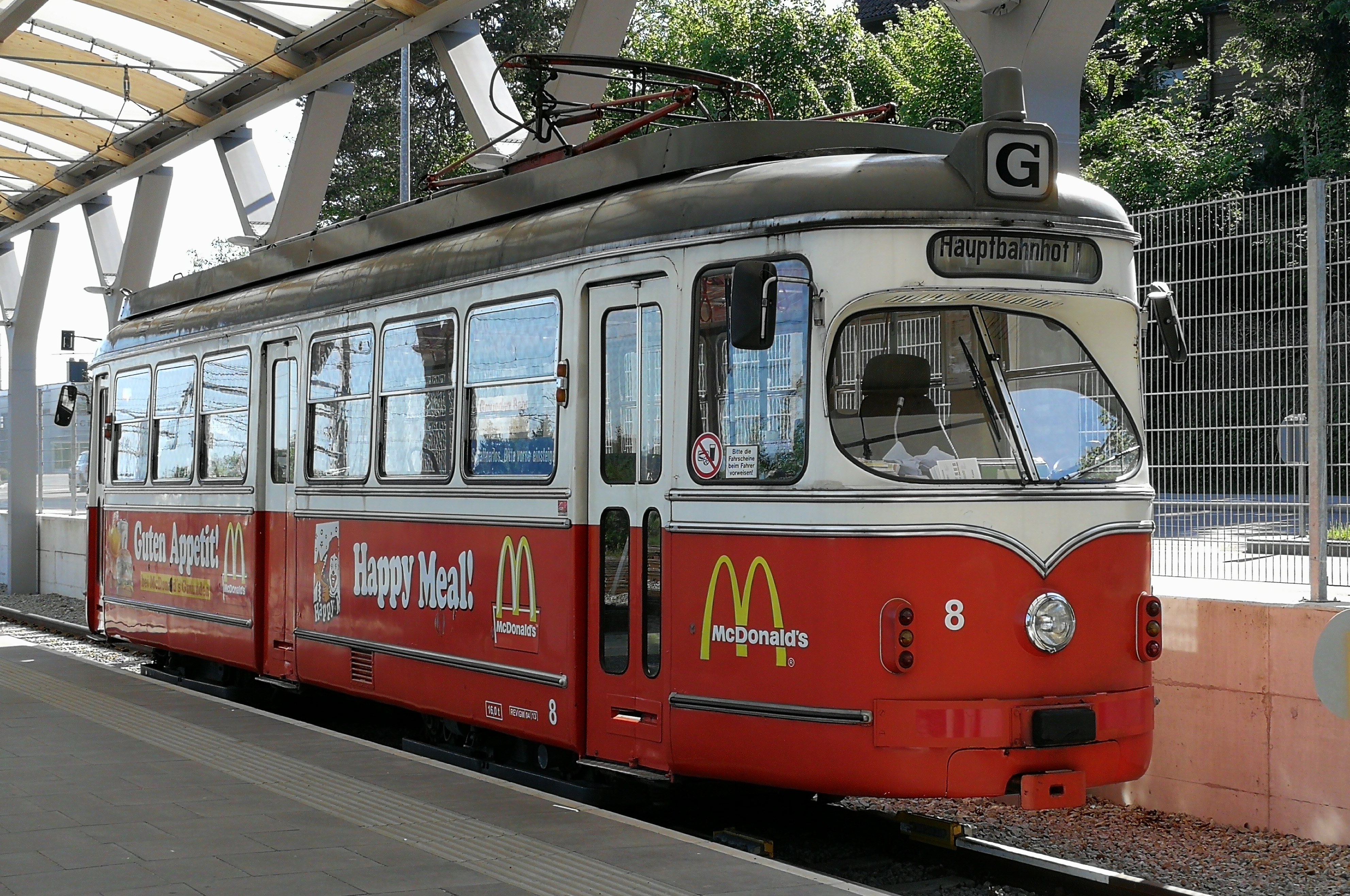
The Gmunden tramway shuttled between the town of Gmunden and its railway station, though I didn’t see any Macdonalds en route. When we visited in 2017 this 1961 tram provided rush hour extras. Since 2018 the line has been extended and linked to the line to Vorchdorf, and all services are operated by modern trams.
For our journey which included these railways see JOURNEYS AUSTRIA Linz and Graz 2017 . For another Austrian trip to local and mountain railways in Tirol and Salzburg see Bergamo, Innsbruck and Salzburg .
Belgium
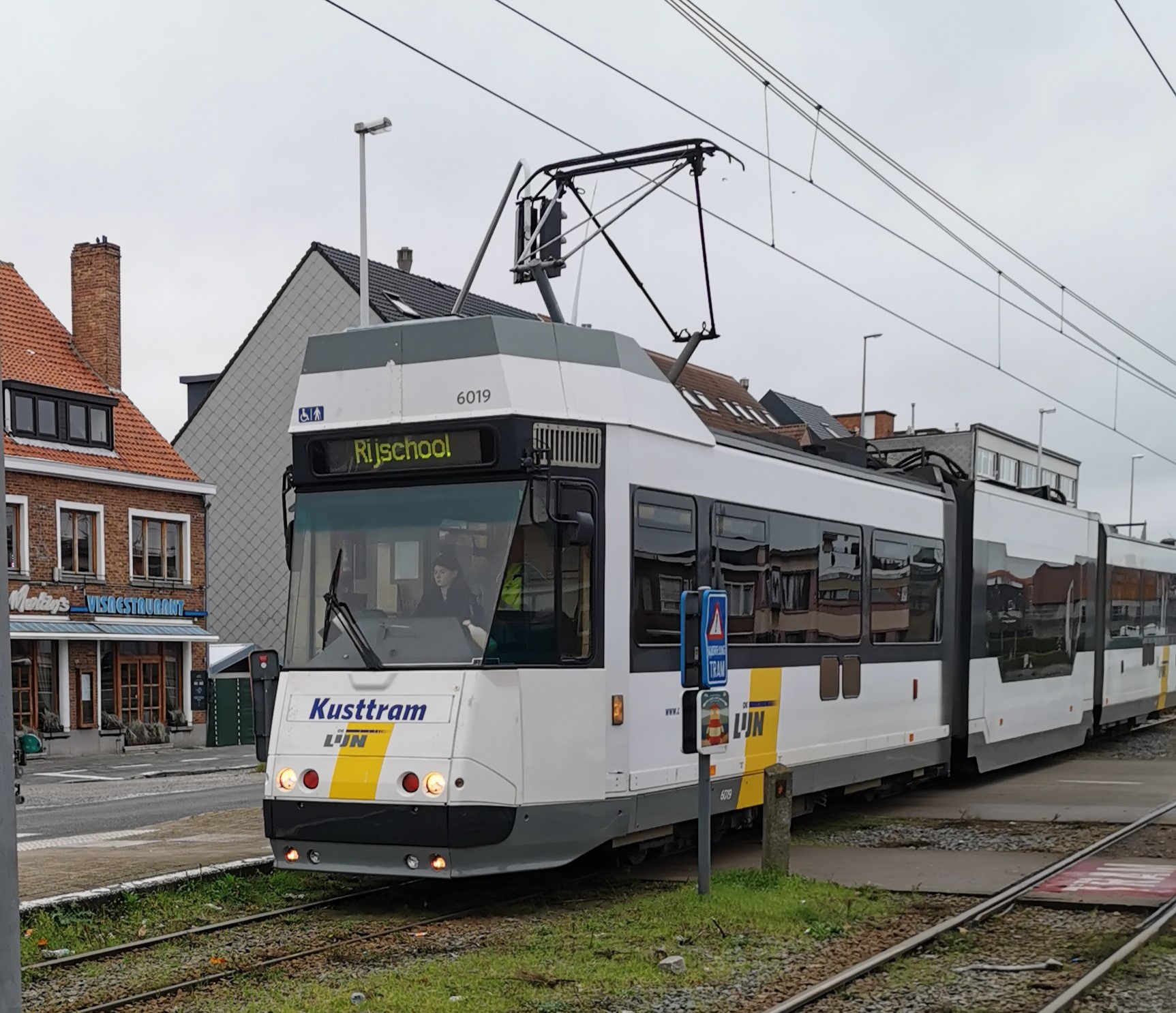
This is the Kusttram which runs the length of the Belgian coastline, from the Dutch border to the French border. The complete journey takes about 2.5 hours through a series of small towns, holiday resorts, the city of Oostende and the port of Zeebrugge. For more about the journey see Leiden, Brugge and Lille .
France
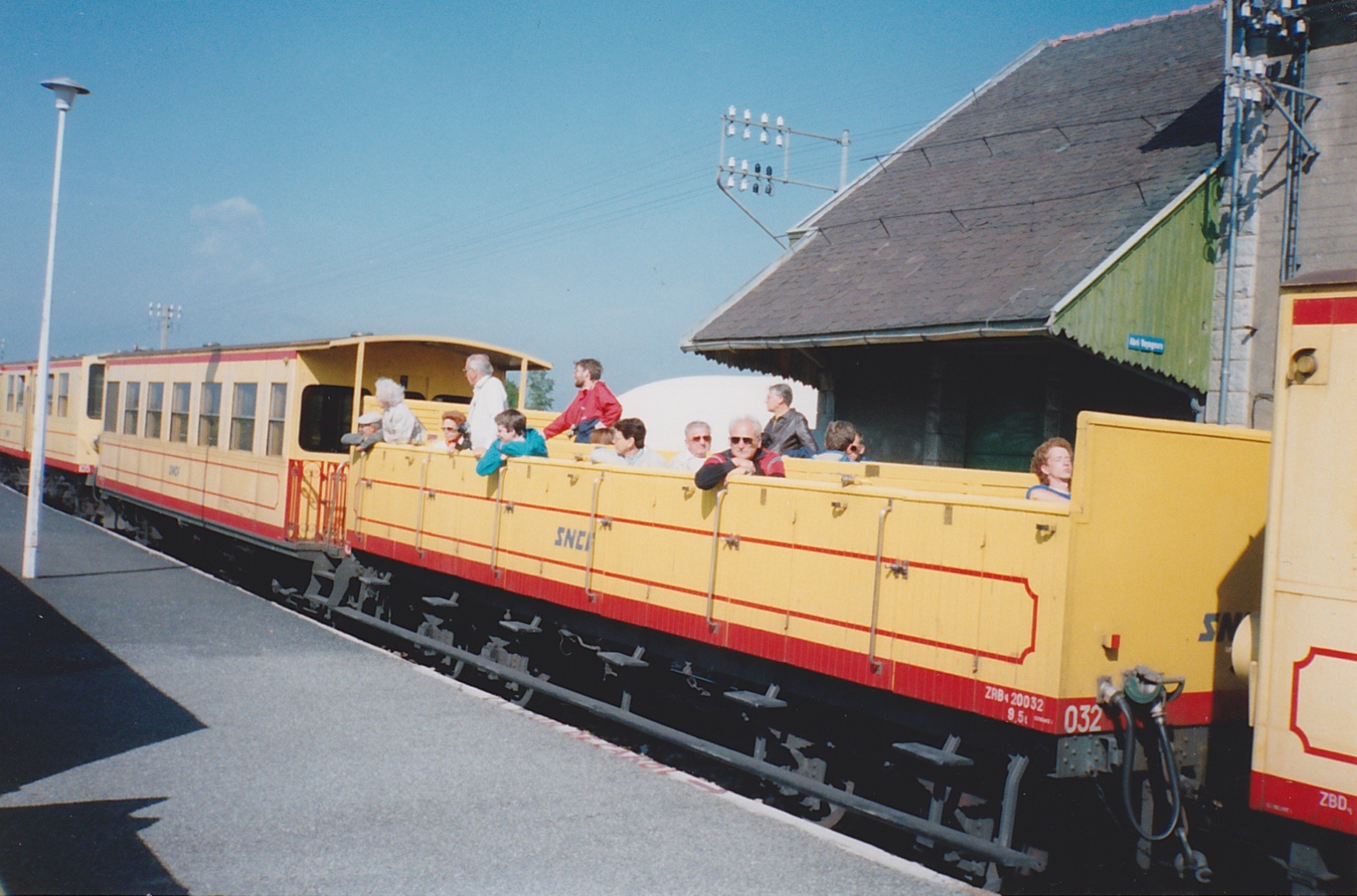
Le Petit Train Jaune runs from La Tour de Carol to Villefranche in the French Pyrenees. Tremendous journey – at least it should have been – when we did it in 1990 I had one of the worst hangovers of my life, and three hours in an open carriage with no toilet is no joke.
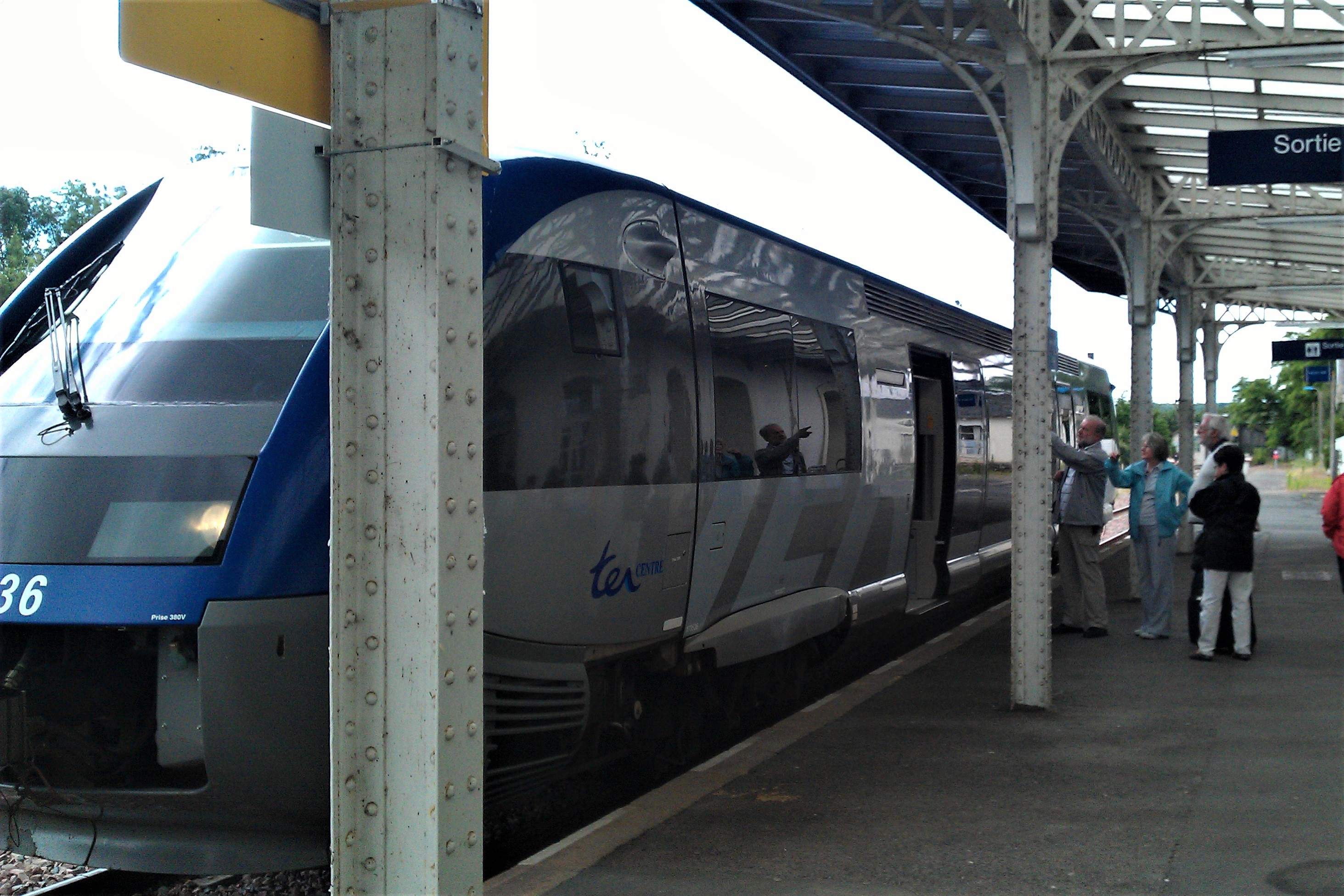
Away from the main line rural train services can be very limited, except where there is support from regional authorities. Many local lines are operated by railcars such as this one, about to depart Chinon for Tours.
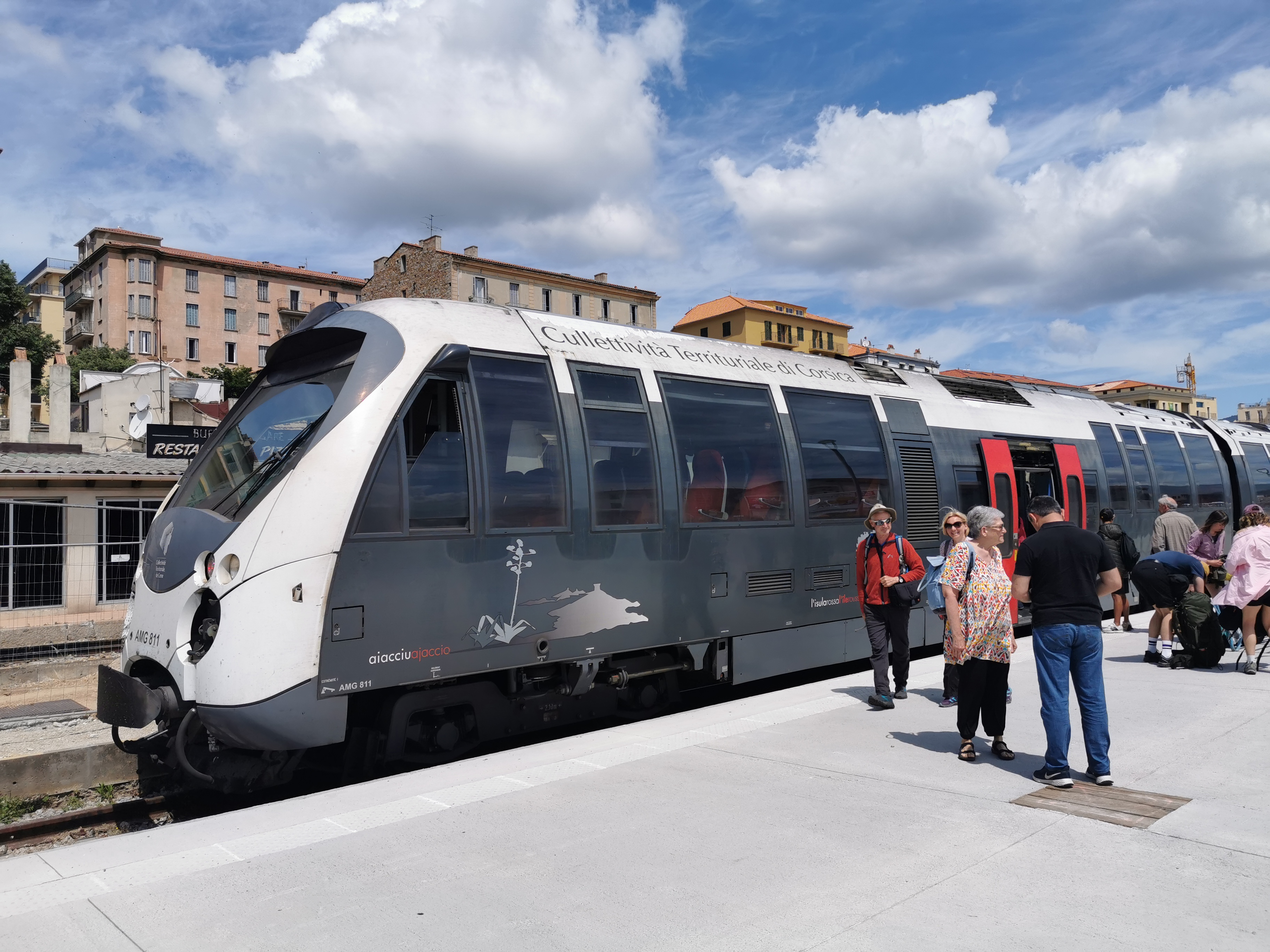
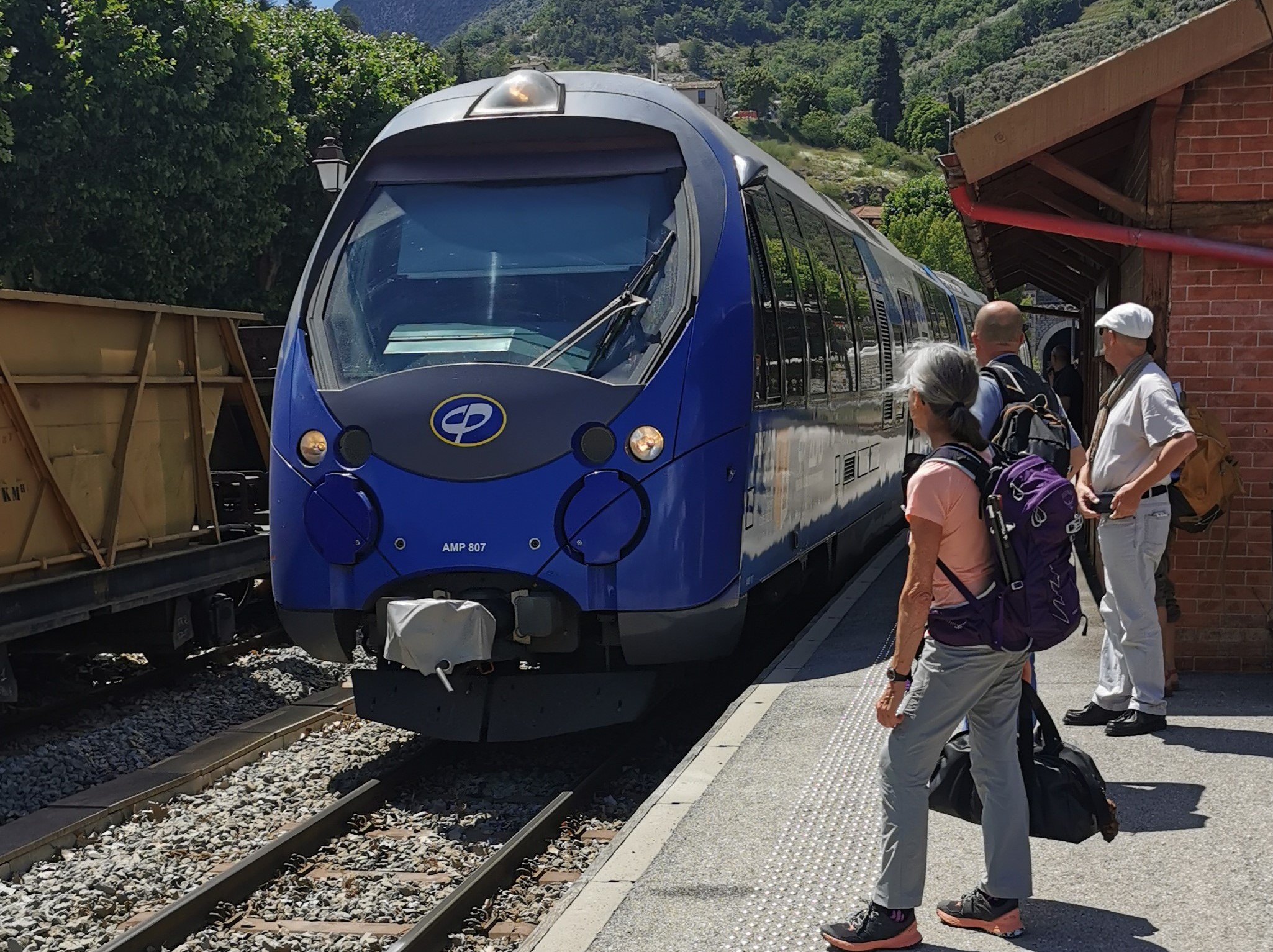
On the island of Corscia the Chemins de Fer de la Corse (above) operates a metre gauge network between the main island towns, crossing the island by a highly scenic route through the mountains. Back on the mainland the Chemins de Fer de Provence (below) is a metre gauge line from Nice which heads inland into the Provencal Alps. We visited both in 2024 – see Corsica, Genoa and Nice .
Germany
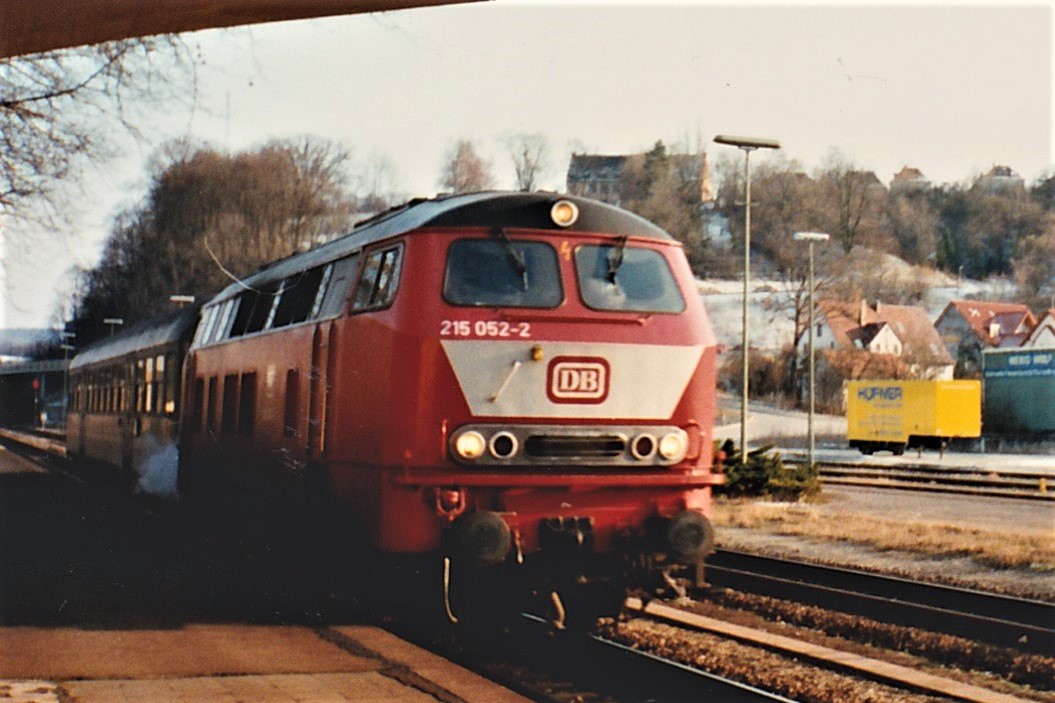
Before the widespread adoption of diesel multiple units it was not uncommon to see local services like this – a main line locomotive pulls a single coach on a 1994 stopping train from Schwabisch Hall to Heilbronn.
Germany has a wealth of unusual railways and here are a few.

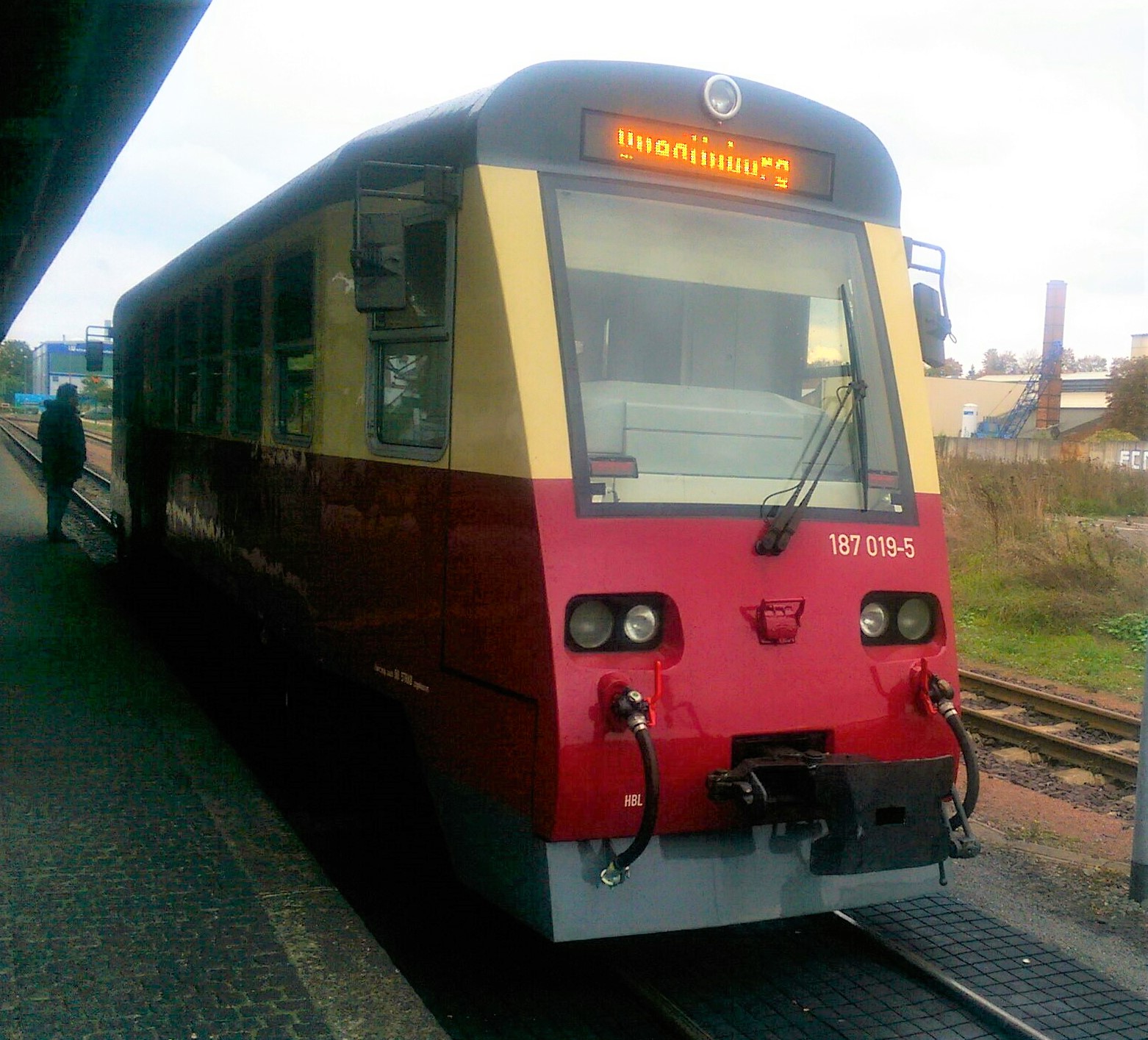
The Oberweissbacher Bergbahn is a funicular in Thuringen. It links two level railway lines, one in the valley, the other on the plateau above. The platform wagon was built so that carriages and goods wagons could be transferred between the two standard lines via the funicular.
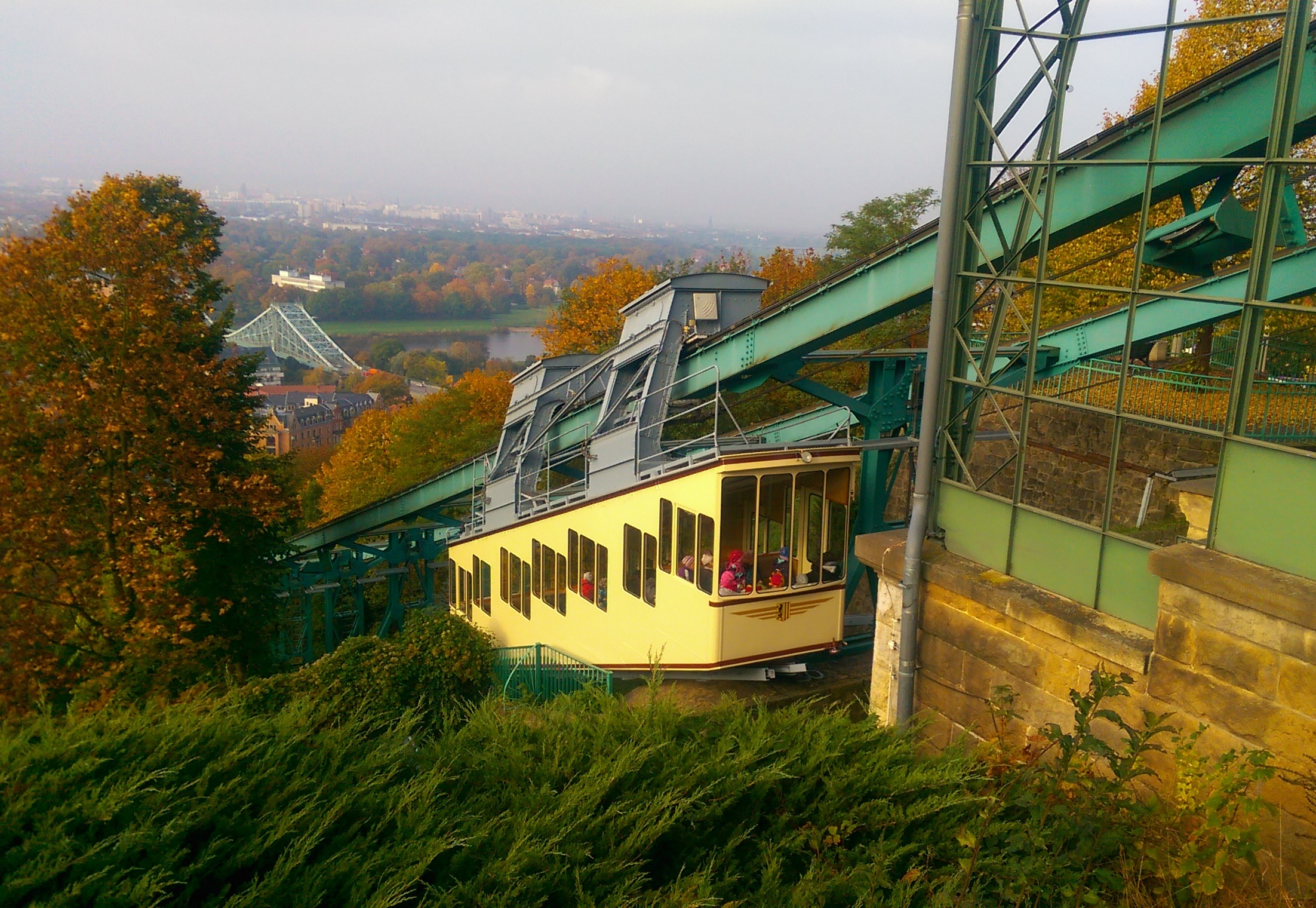
The posh suburbs on the hills above Loschwitz in Dresden are linked with the city by this monorail-funicular. This was designed by Eugen Langen, who went on to construct the Wuppertal monorail.
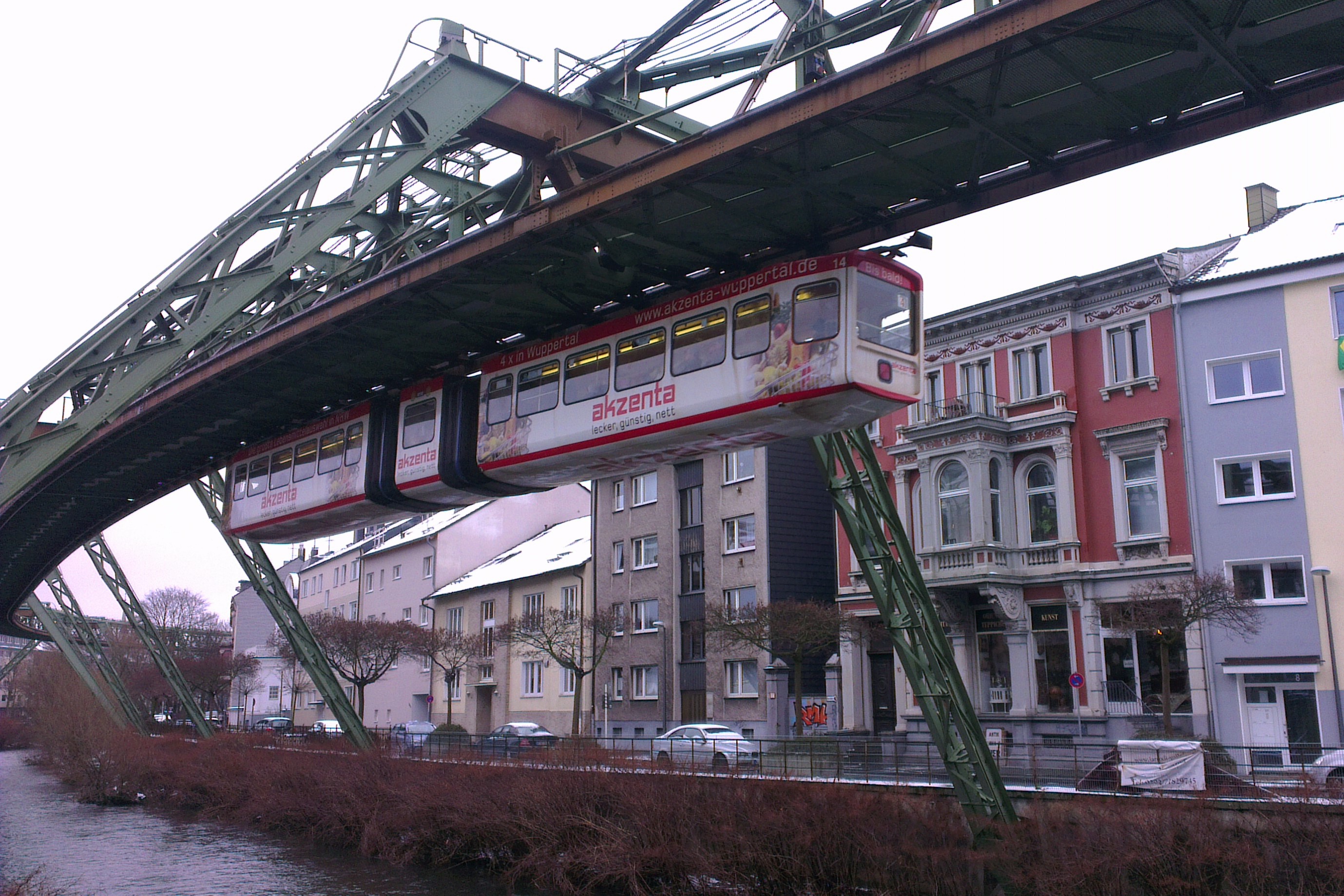
And here it is – the Wuppertal Schwebebahn. This is the main form of public transport in Wuppertal – a monorail running above the River Wupper linking the districts along the narrow valley. Opened in 1900 it is still going strong – as well as being practical, it is good fun to visit, particularly as the train sways into stations.
For more about our 2016 visit to the Oberweissbacher Bergbahn, the Harz network and the railways around Dresden see JOURNEYS GERMANY The Harz Mountains and Saxony 2016 . Our visit to the Wuppertal monorail is here: JOURNEYS GERMANY Dusseldorf 2014 . Other German railways are included in our visit to Freiburg, Strasbourg and Luxembourg and we crossed from Austria to reach the summit of Germany’s highest mountain by train in Bergamo, Innsbruck and Salzburg
Greece
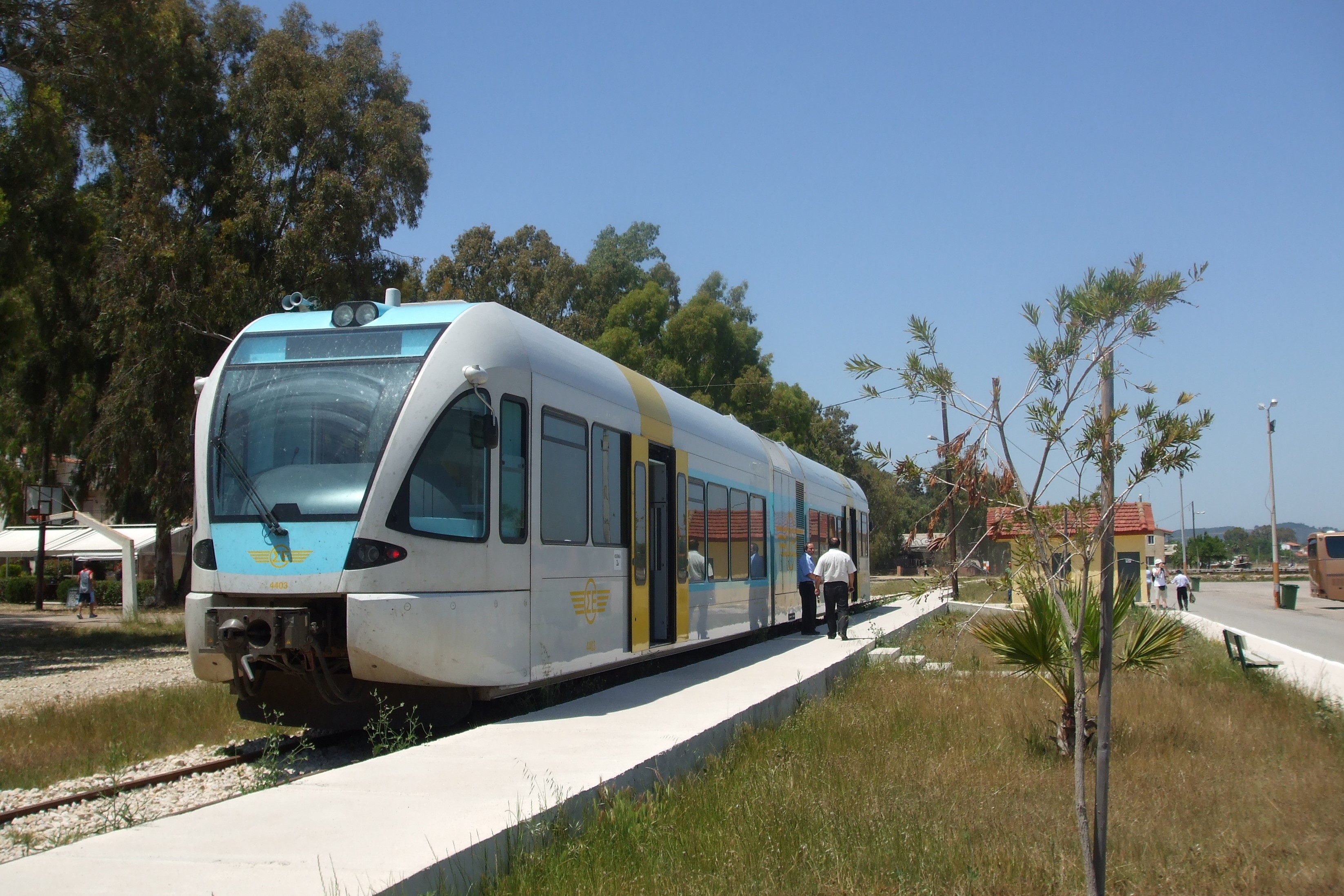
Karakolo – Olimbia. Most of the Peloponnisos network in Greece has been closed (‘austerity’) but this short line seems to have survived. Ideal for taking passengers from cruise ships to Olympus. When we were here in 2008 the cruise people insisted the line didn’t exist and we should take their coach, at 15 times the price – we ignored them.
Hungary
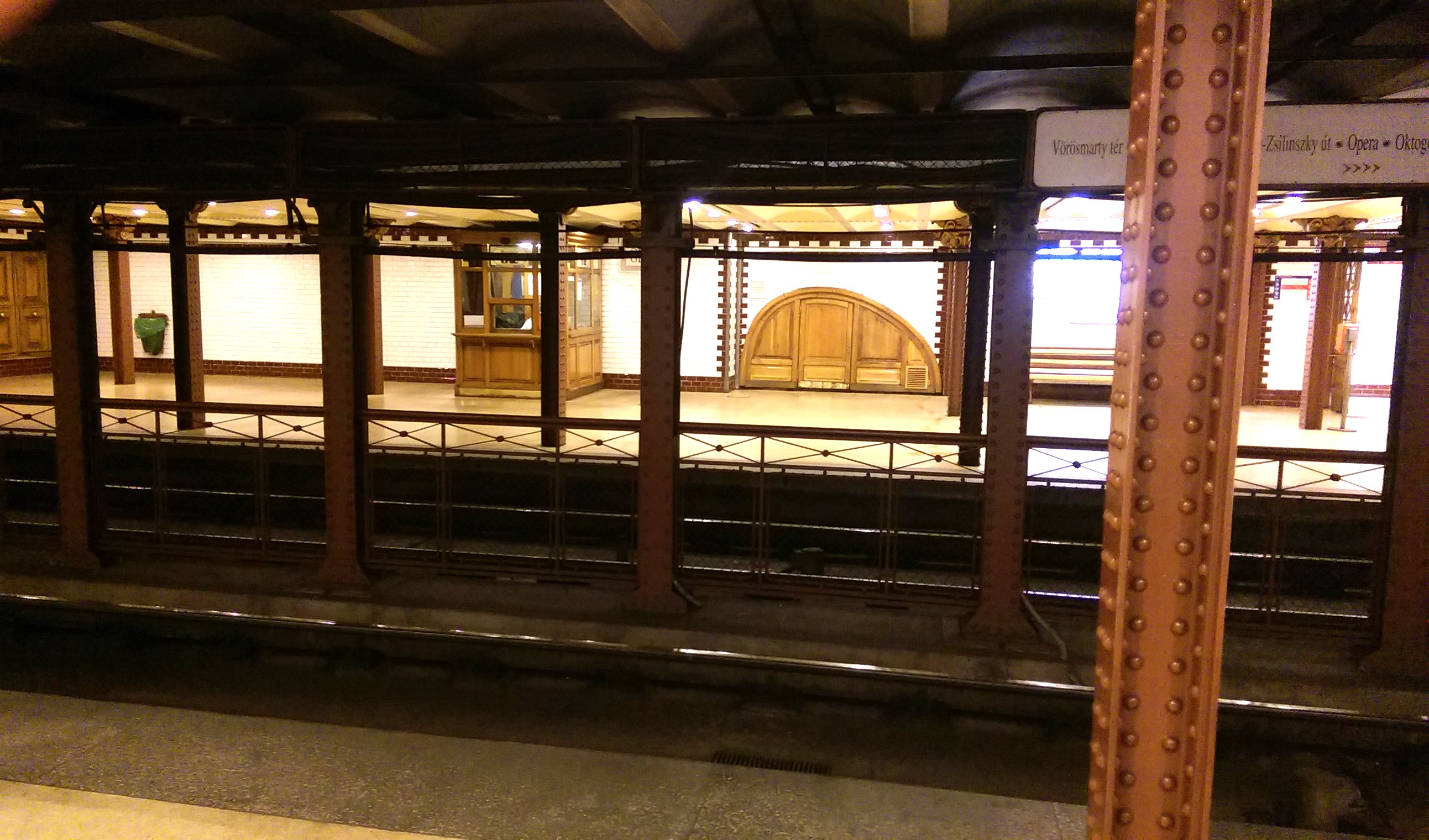
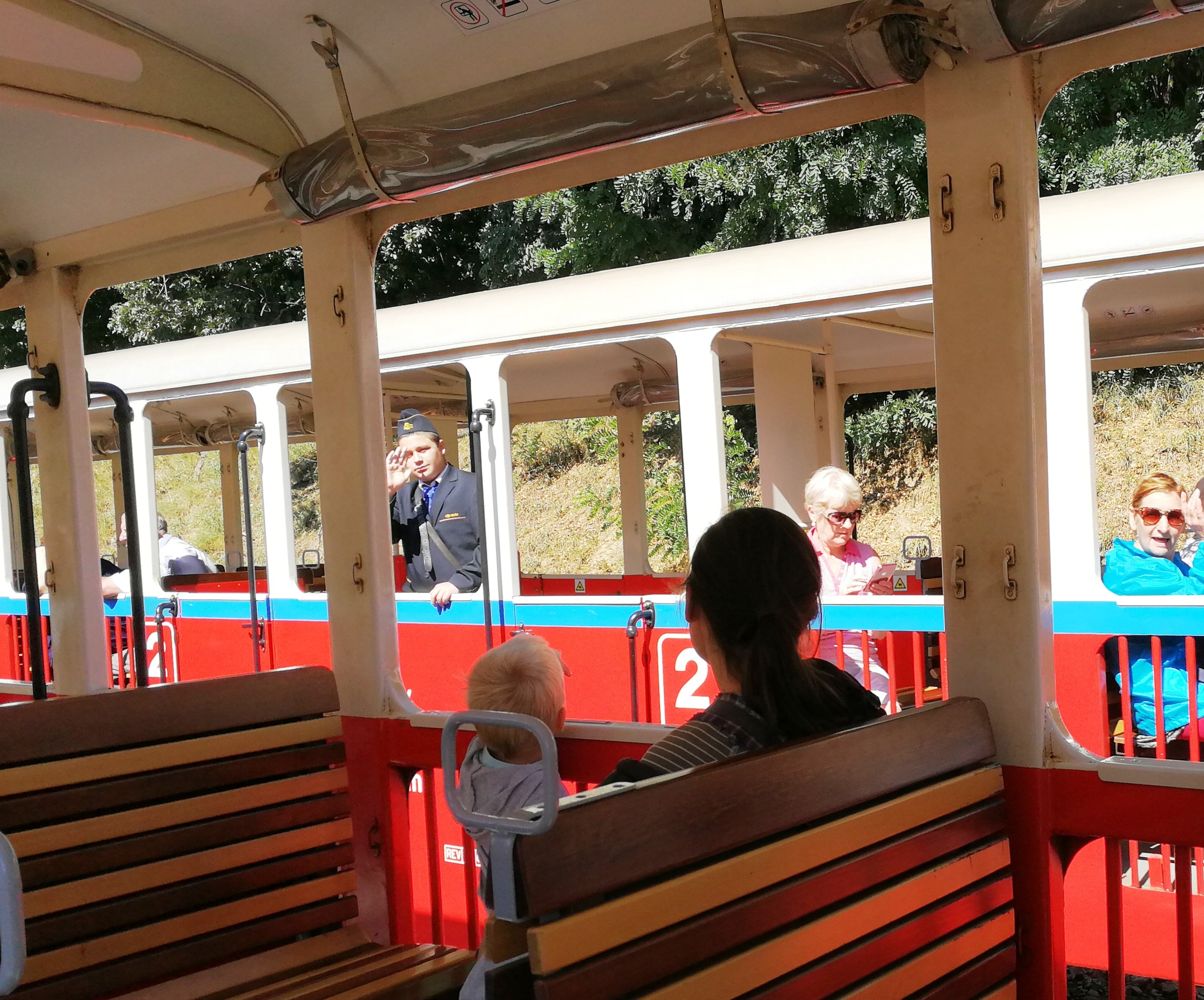
Two trains pass one another on the Children’s Railway in the Buda Hills. Opened in 1948 to encourage Communist Young Pioneers in careers on the railway. Today it is a tourist railway through pleasant countryside, owned by Hungarian State Railways and operated by children (apart from the train drivers). For more about our visits to Hungary see A journey in Central Europe .
The Isle of Man

The Isle of Man is well known for its heritage railways and tramways, but there a couple of less well known railways run by volunteers. The Great Laxey Mine Railway runs for a few hundred yards in Laxey and is a reconstruction of the network that served the mines. This loco is Ant – the other one is Dec.
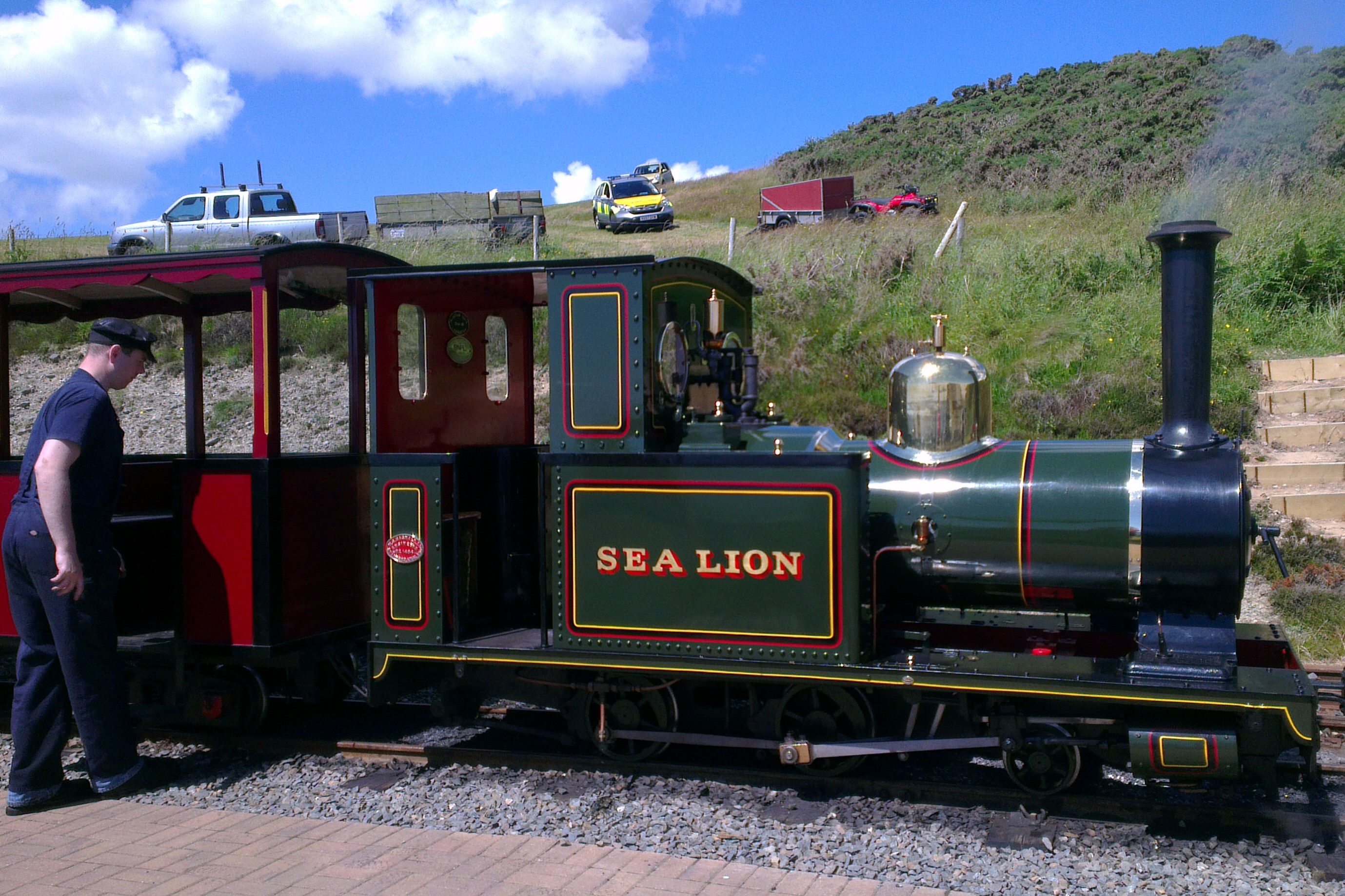
The Groudle Glen Railway was originally built to serve a zoo by the sea and has been reconstructed running along 0.75 scenic miles from Lhen Coan to Sea Lion Rocks.
For more about the railways and tramways of the Isle of Man see Isle of Man .
Italy

The Ferrovia Genova – Casella is a metre gauge railway which links the city with a series of villages in the hills behind the coast. This railcar is at the Casella terminus, which, as you can see, we visited on a busy Saturday afternoon. For more details see Corsica, Genoa and Nice . Genoa is a hilly city and has a newtork of funiculars and lifts. For our journeys on them see Tuscany, Genoa and Milan .
Norway
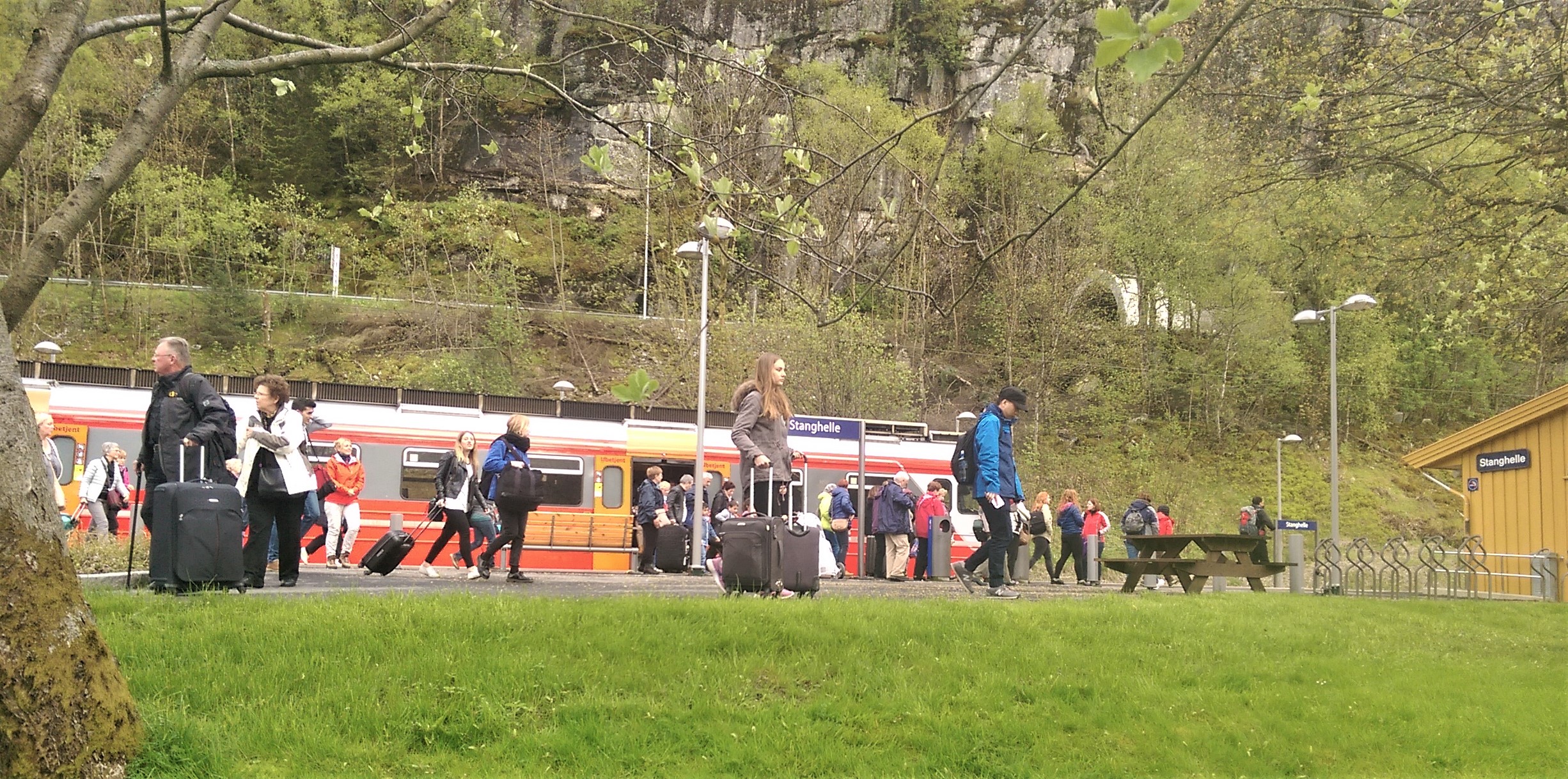
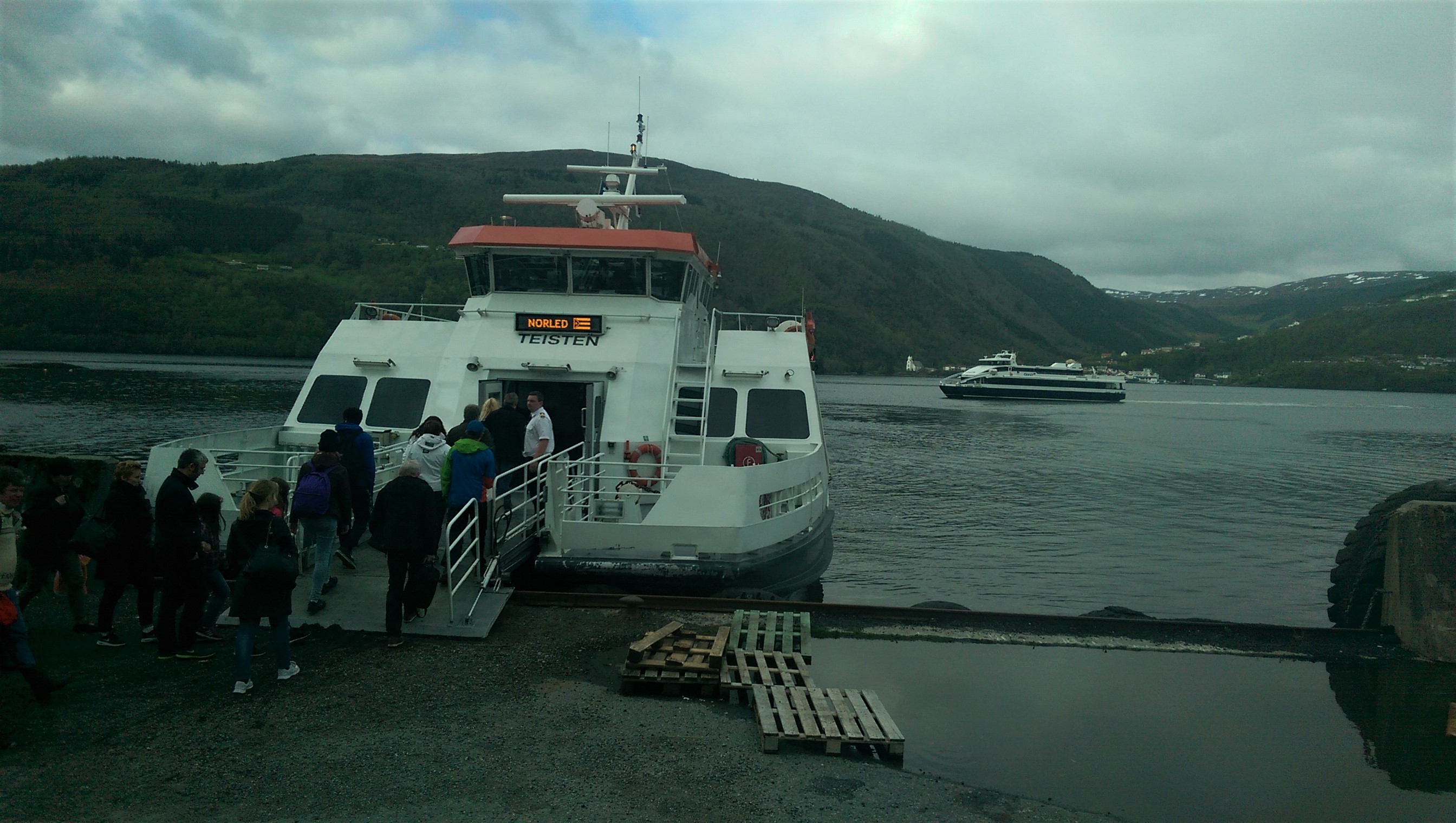
This was a main line journey from Oslo to Bergen, but is included here because the line was closed by a landslide, as well as the parallel road. So, not a replacement bus service, but a replacement ferry service along the fjord between stations either side of the blockage.
Portugal

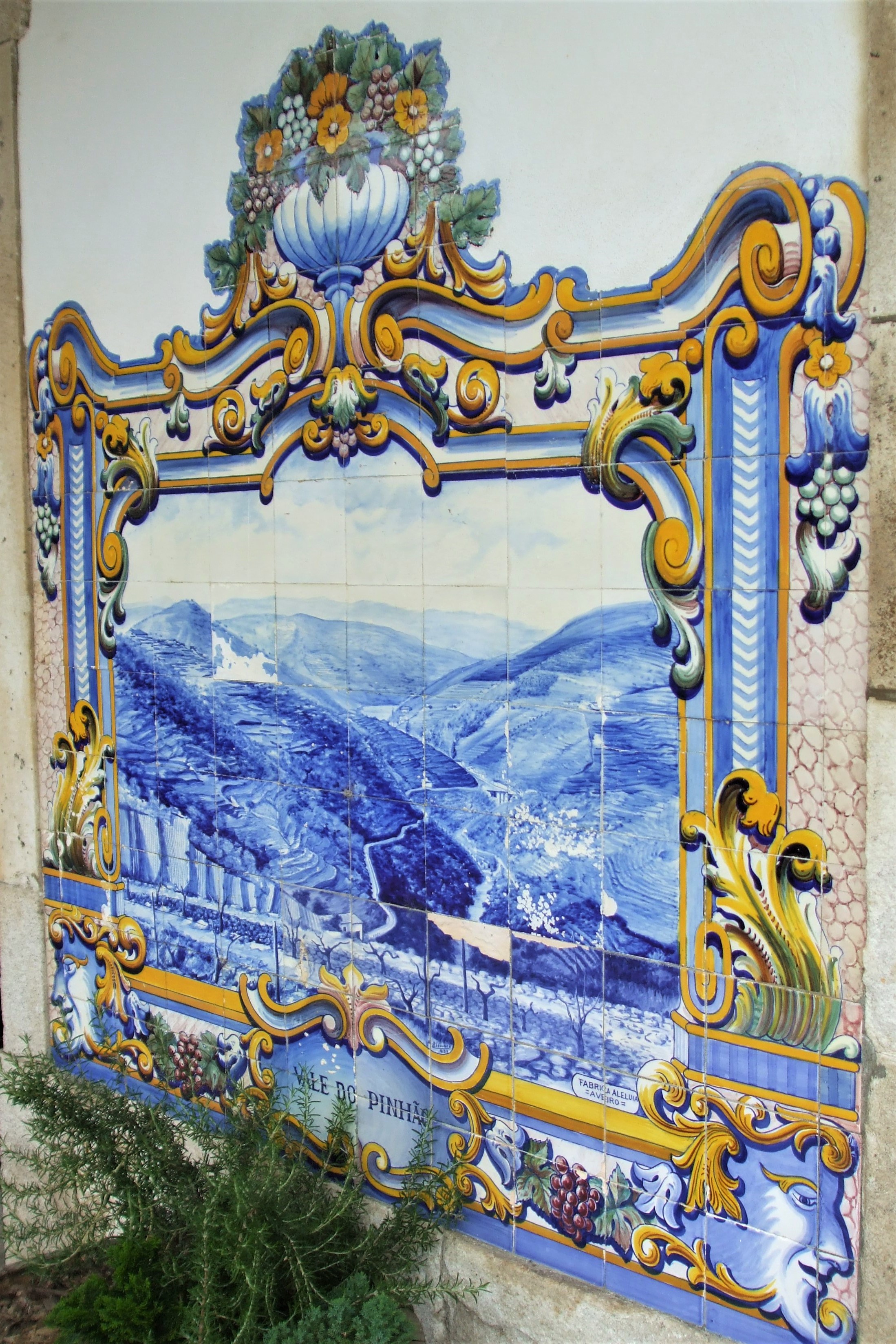 This Portuguese train is at Pinhão station on the scenic Douro Valley line from Porto to Pocinho. A feature of Portuguese stations is elaborate ceramic tile work, even at smaller stations such as Pinhão.
Lisbon is a great city for transport nerds. In our opinion the best tram journey in Europe is the No. 28 which hurtles (relative term) through the streets of the older districts of the city. These pictures are from our visits in 1992 and 2010.


Staying in Lisbon, this is the Elevador da Bica. Through a doorway is this little funicular which runs up and down a grotty street between rows of washing hanging from the windows, to and from the Bairro Alto. Finally, this one isn’t rail- based transport but the Elevador Santa Justa is featured here as one of the Great Lift Journeys of the world.


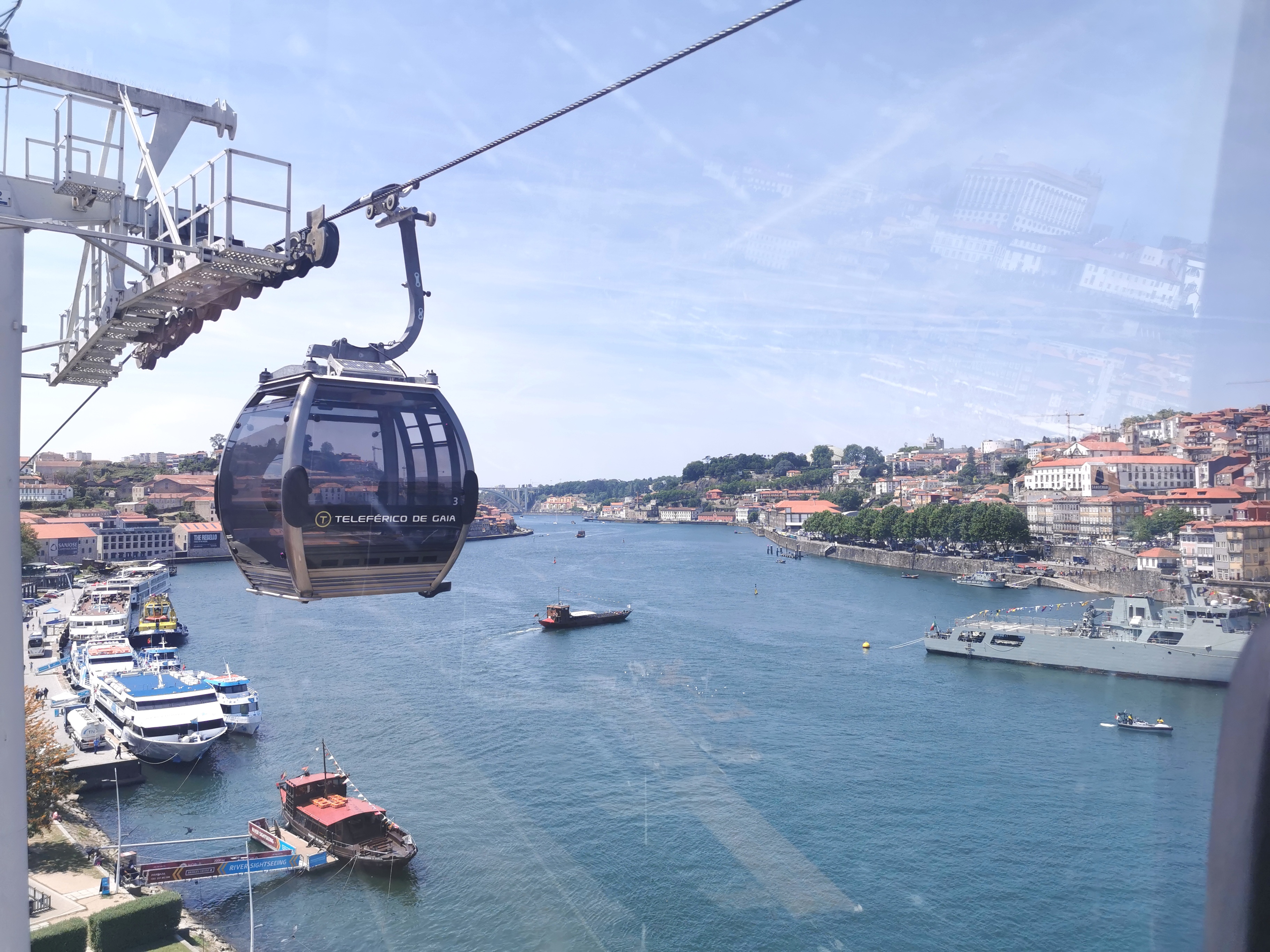
Finally, a modern example. This is the urban cable car in Vila Nova de Gaia, across the river from Porto, recently opened (as a tourist attraction) to take people from the riverside port warehouses and restaurants up to the level of the metro station.
Slovakia
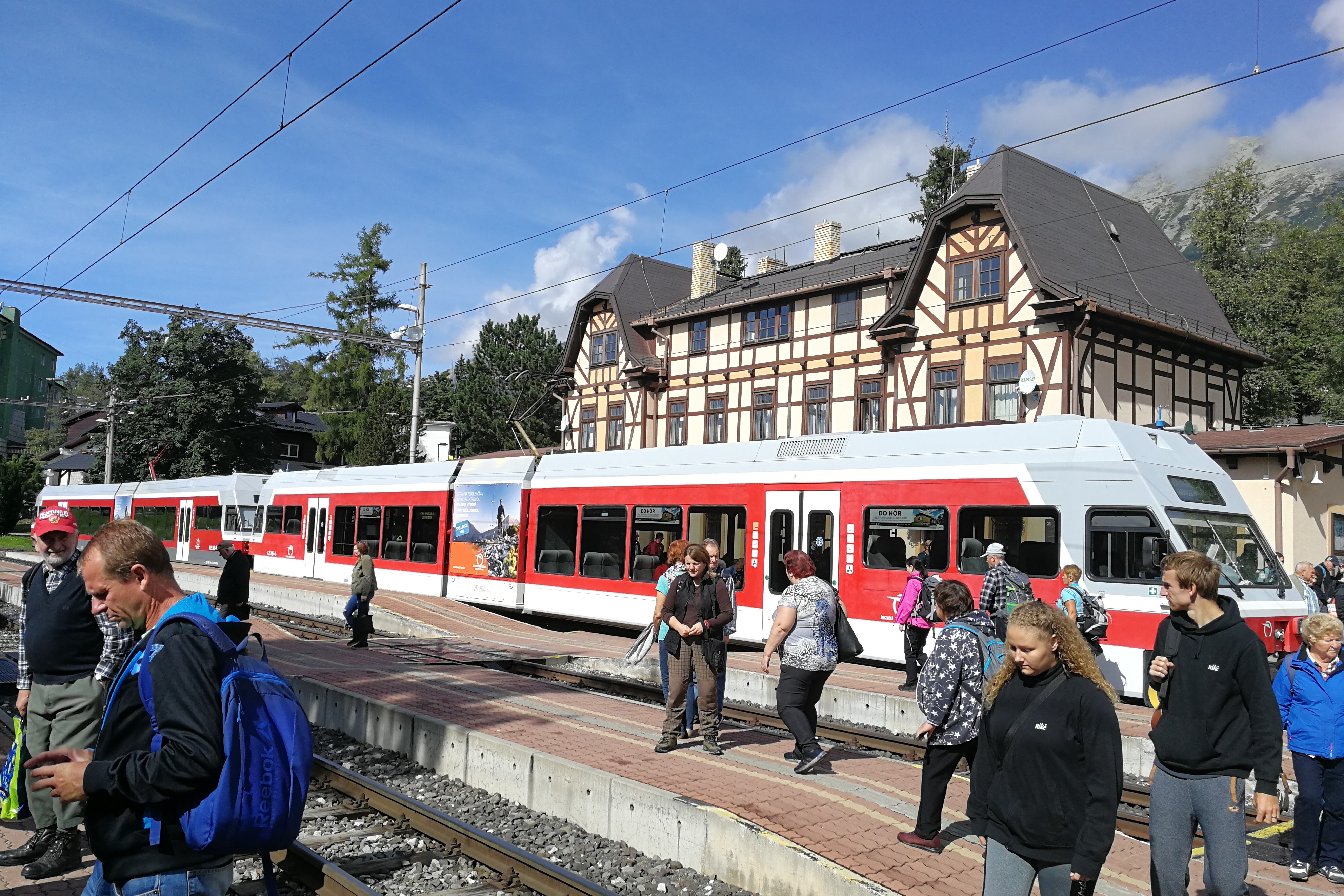
The Tatras Electric Railway is a network of narrow gauge railways in the High Tatras, a popular tourist area for walking and skiing. It was the development of the railways which helped the area to develop. This is Starý Smokovec where two of the lines meet. For more on our visit to the Tatras and other journeys by train through Slovakia see A journey in Central Europe .
Slovenia
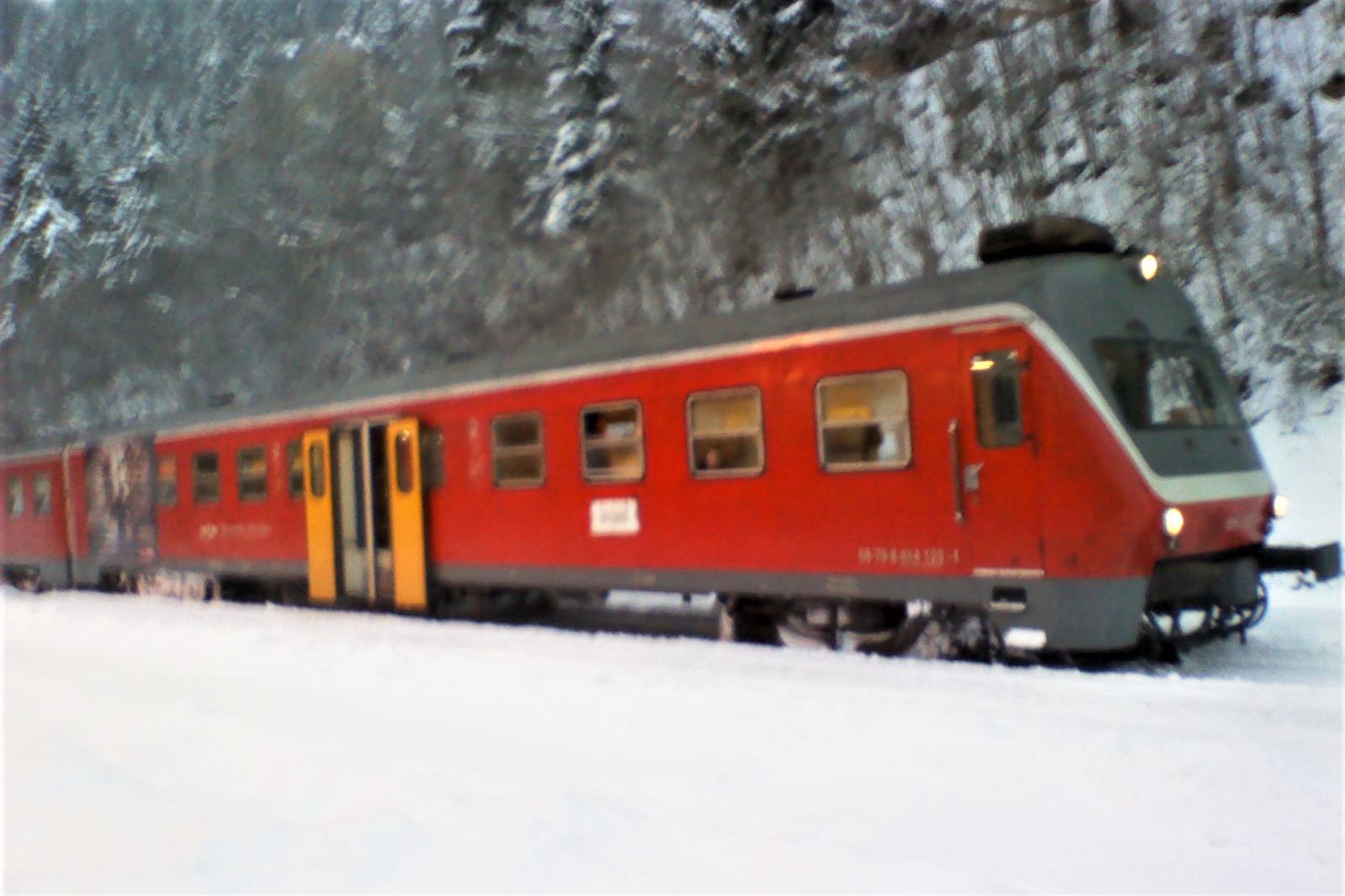
A train from Nova Gorica through the mountains to Jesenice, at Bled Jezero station. Our 2010 tour group of 35 passengers had just disembarked, with all our luggage, into deep, uncleared snow on the platform.
Spain
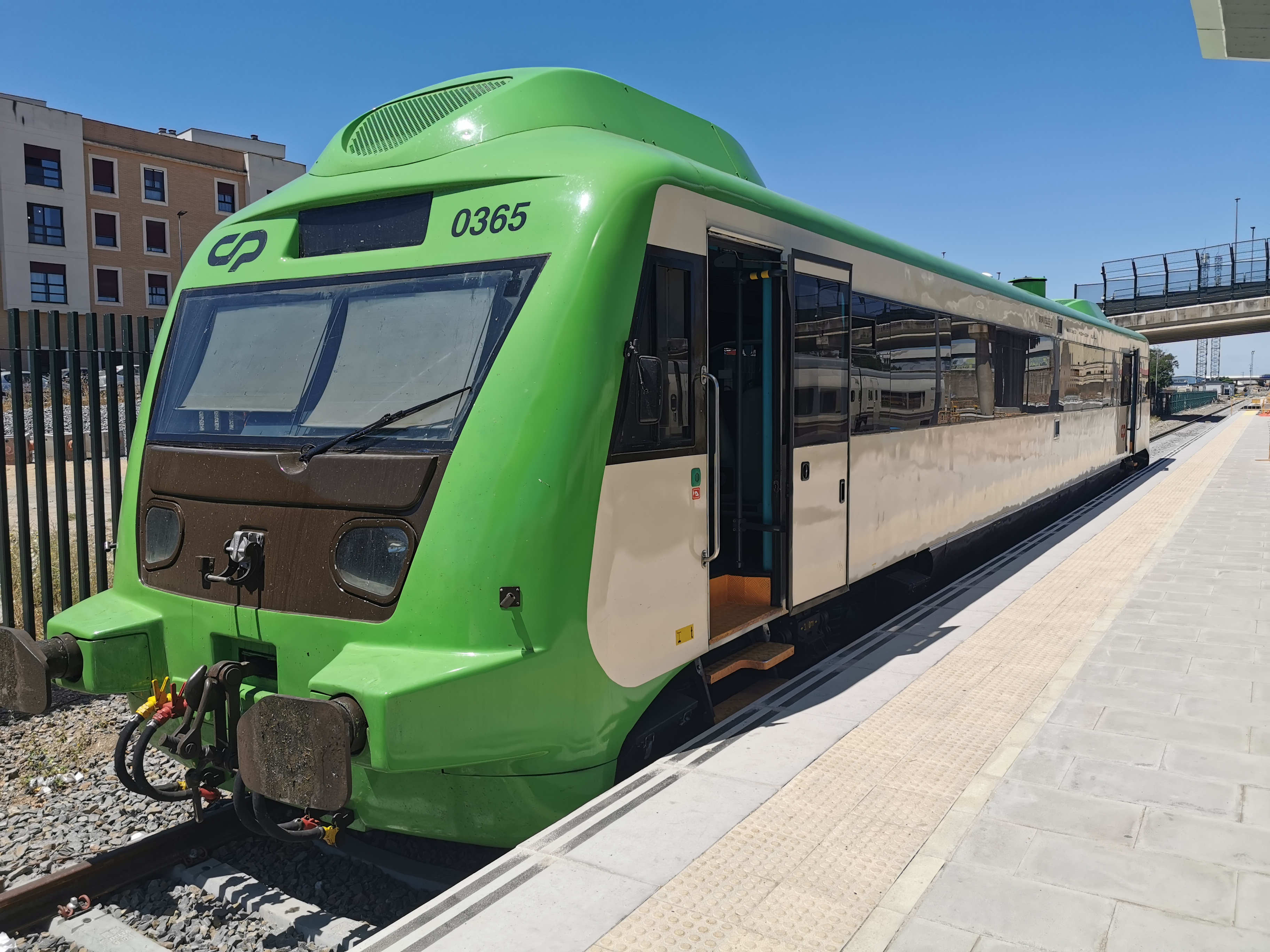
This is, in fact, an international train journey. To travel from Madrid to Lisbon by train involves a couple of changes and this is the cross-border service from Badajoz (Spain), where this photo was taken in 2023, to Entroncamento (Portugal). This railcar pootles back and forward twice daily, as the key link in this major international route. For details of our journey on the train see The Portugal Trip .
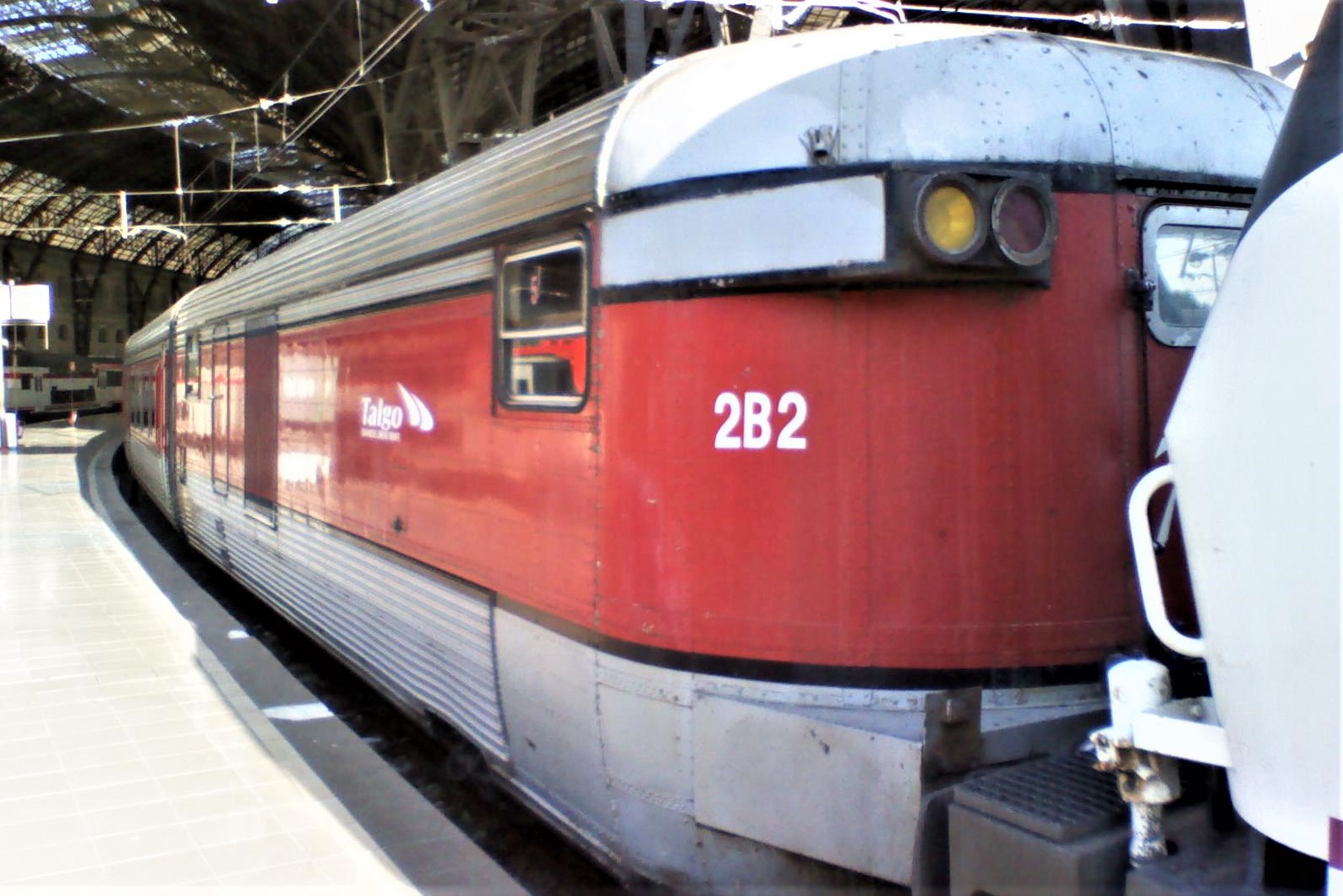
Another international service – this is the Catalan Talgo in which ran until 2010 from Barcelona across the border, where it changed gauge, to Montpellier in France. It was discontinued when the high speed line opened. The train took four and a half hours, the high speed journey now takes three hours. The livery of the LNER Azuma trains reminds us of this train.
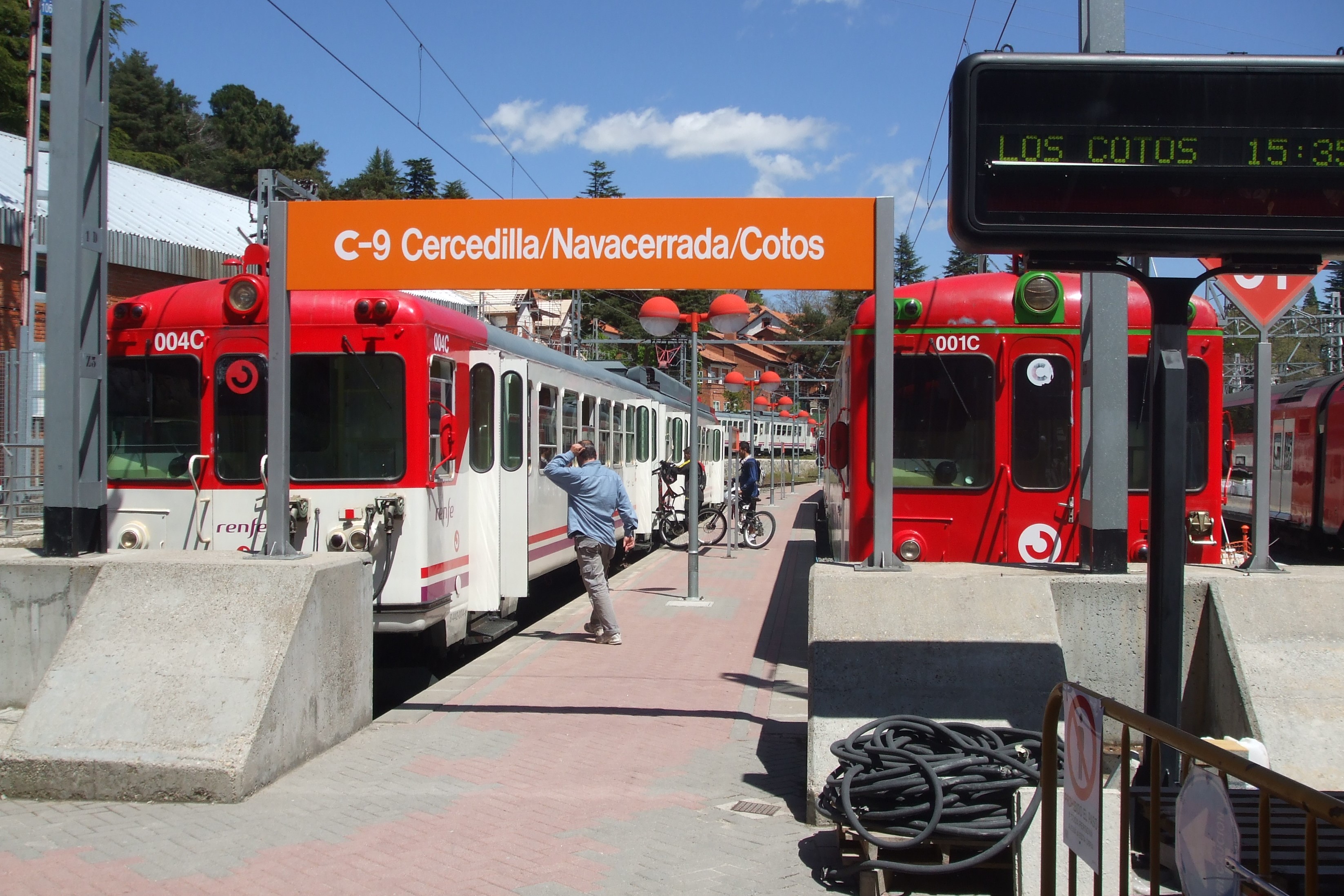
Line C-9 of the Madrid suburban railway network is a narrow gauge line from Cercedilla, which climbs the Sierra de Guadaramma on the steepest gradients in Spain to the second highest station in the country – Los Cotos – where there are a couple of restaurants, walking in summer and skiing in winter. The line closed in May 2024 for around a year for modernisation, including the introduction of new trains.
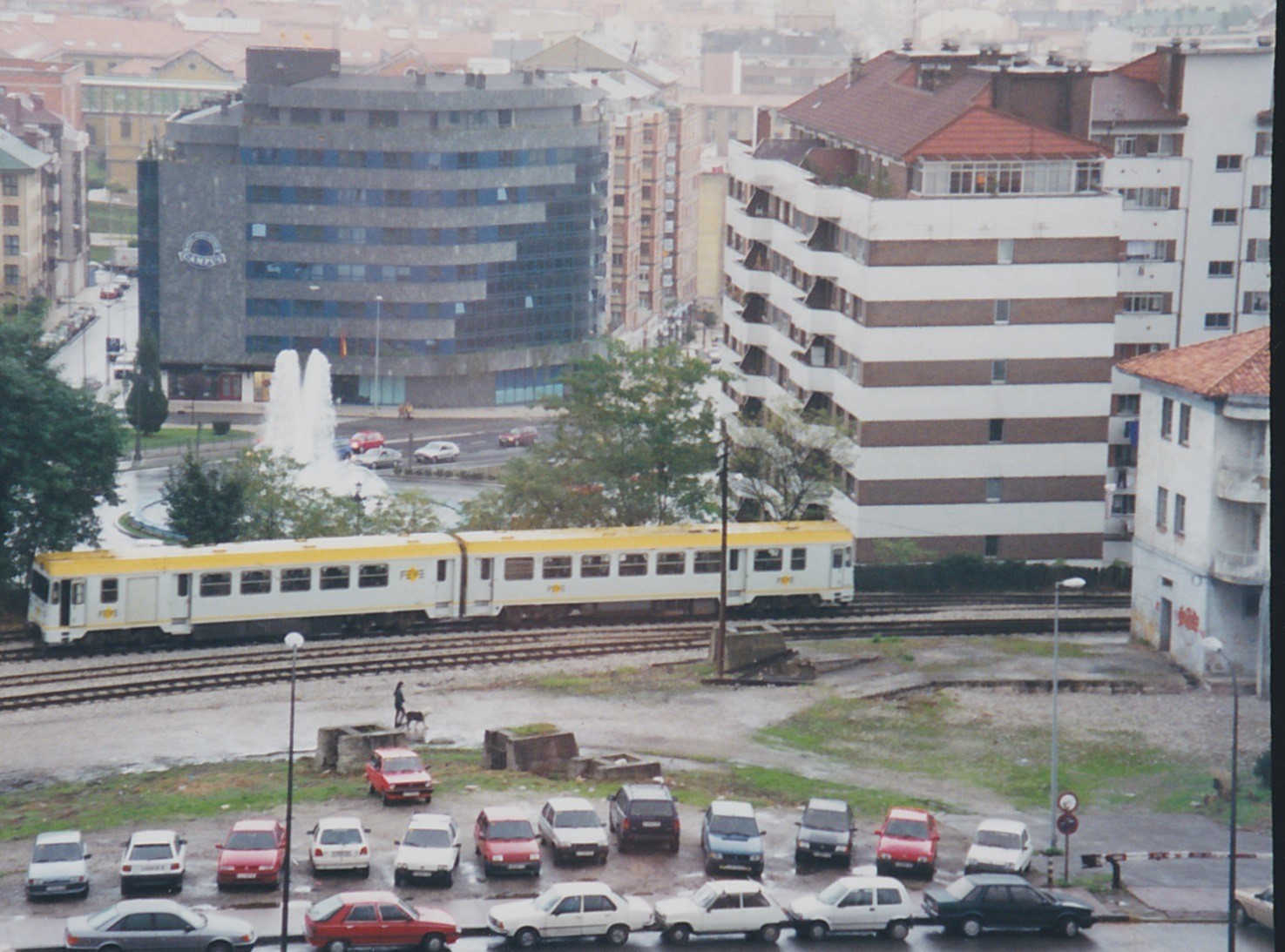
This photo, taken in 1998, is of the FEVE line in Oviedo. This section of line has now been diverted into a modern station, and new trains have taken over the route. However, the trains still take five hours from Santander to Oviedo and over seven hours from Oviedo to Ferrol. Whether the prostitutes still service their clients on the gap site in front, in full view of our hotel window, I don’t know.
For a journey along the Galician section of this line see JOURNEYS SPAIN Galicia
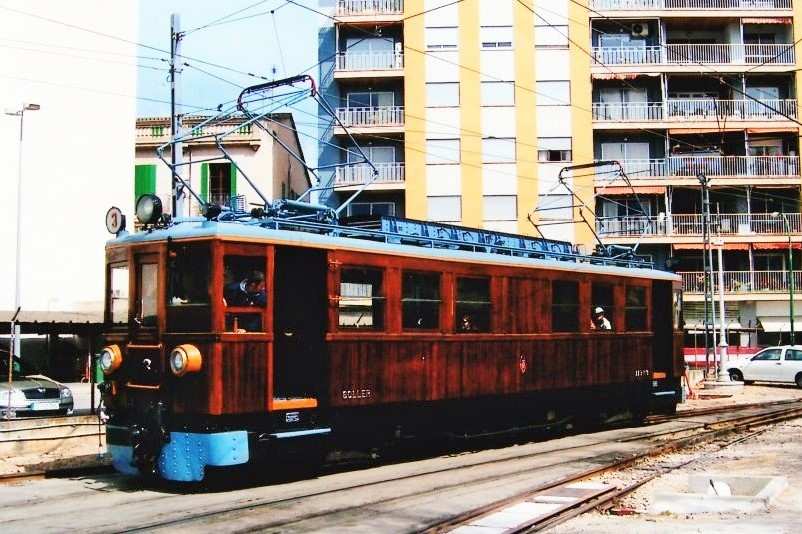
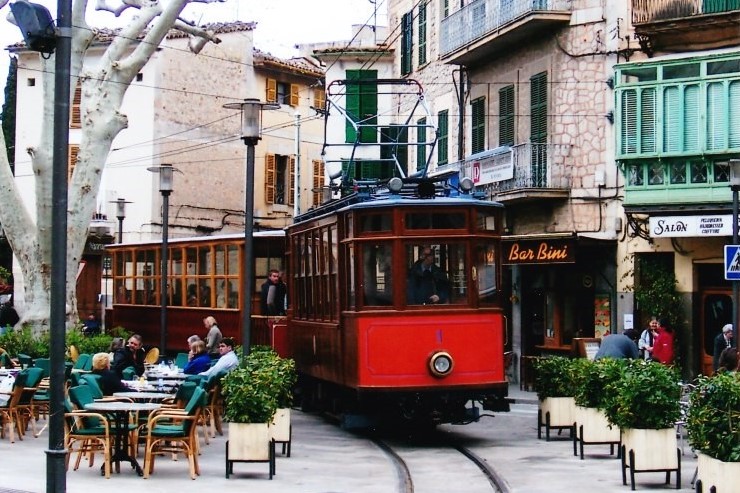
Two pictures from the island of Mallorca. The tren de Sóller runs from the capital Palma, through the mountains to the town of Sóller several times daily using historic rolling stock. It is mainly used by tourists – the bus is more frequent, faster and cheaper, but not nearly so interesting. From Sóller a tram runs down to the coast at Port de Sóller.
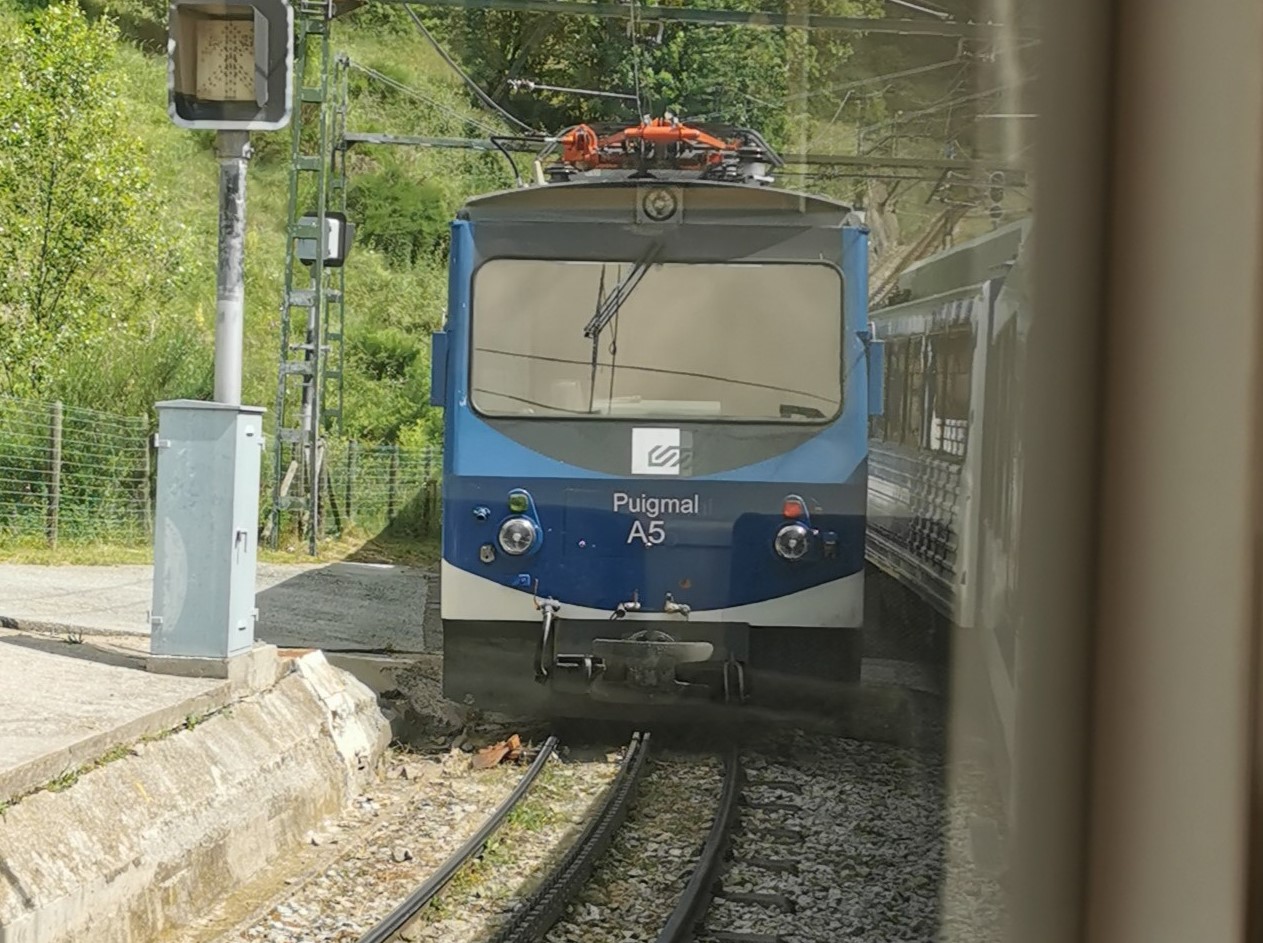
La Cremallera de Núria is a narrow gauge rack railway in the Pyrenees, close to the French border, from Ribes de Freser to the mountain recreation area of Vall de Núria, about three hours by local train from Barcelona.
Switzerland
Swiss railways are known for their punctuality and for the comprehensive netowork across the country – from main lines to local services and mountain railways. Here are a few examples away from the main line to whet your appetite.
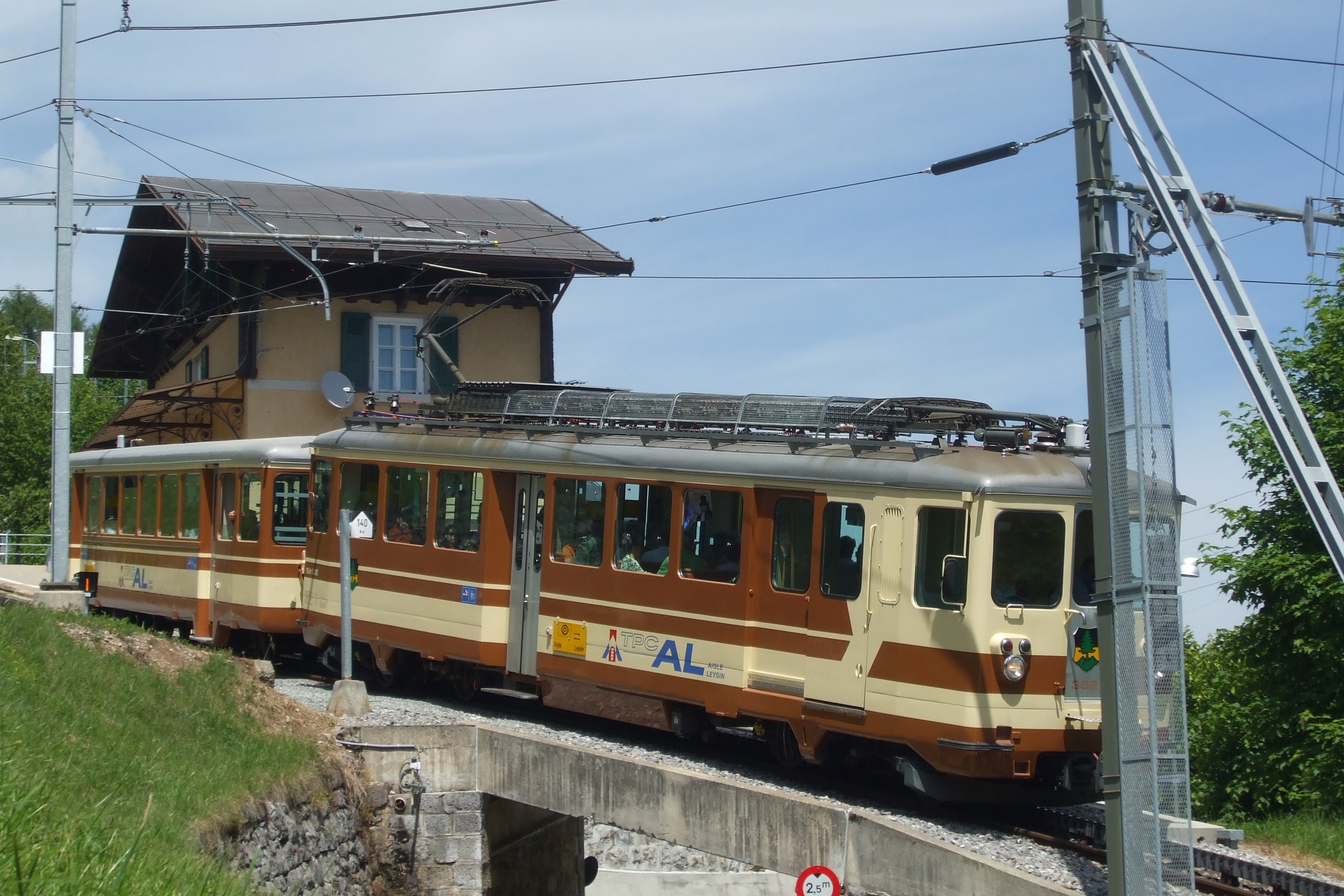
From Aigle, in Canton Vaud, three narrow gauge lines radiate to the surrounding area – this is one of them, to Leysin – terminating in a hotel half way up a mountain, built as a sanatorium for people to benefit from the pure air.
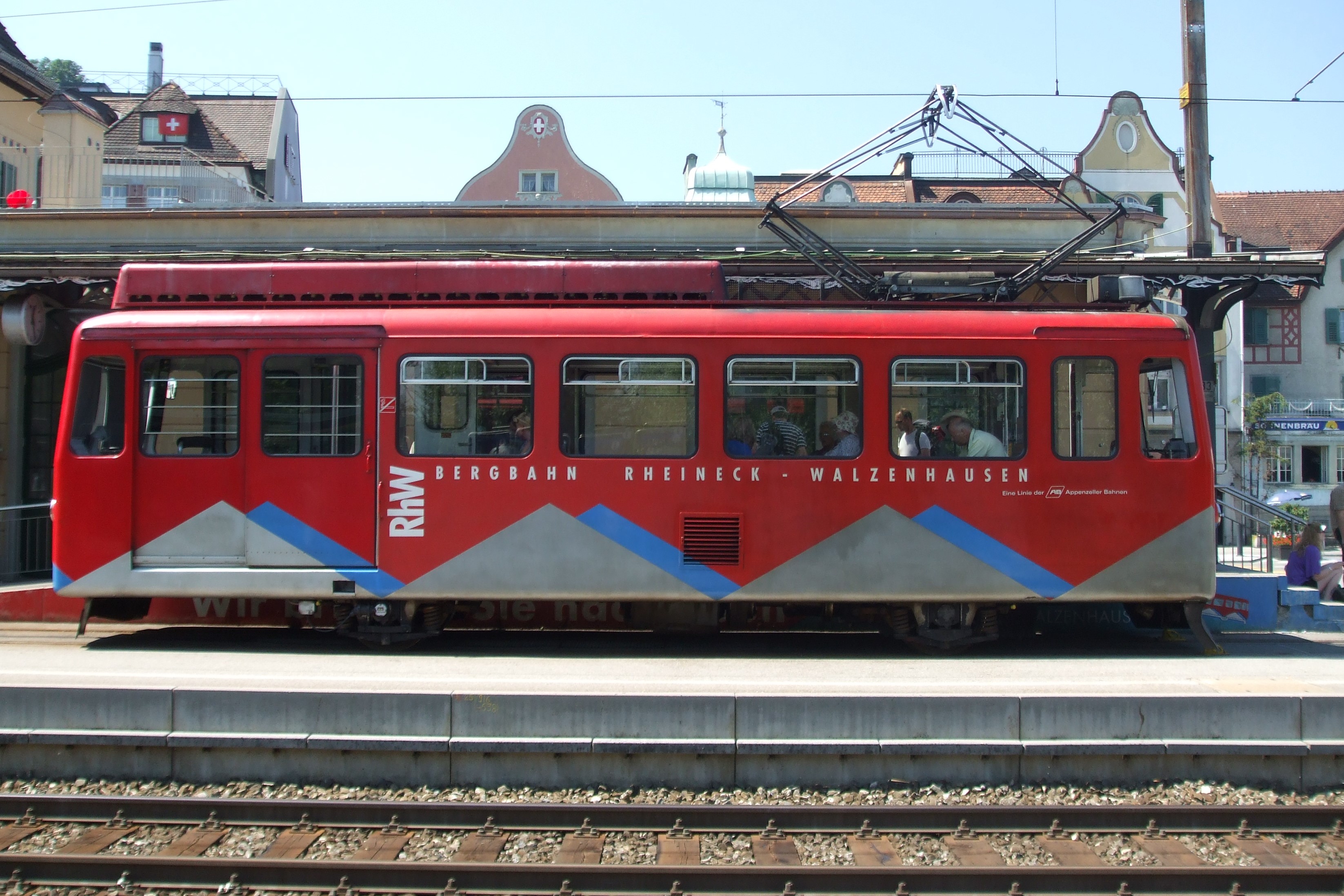
This is the Rheineck – Walzenhausen Bahn in Northeast Switzerland. This is the sole item of rolling stock, which pootles uphill from a little platform on top of the main line platform at Rheineck up the hill on a 6 minute journey. Then it comes back again. And there is plenty of room to stand beside the driver for the journey…in fact if there are any more than 20 passengers some people have to stand there. The railcar, built in 1958, is due to be replaced by a driverless vehicle by 2026.
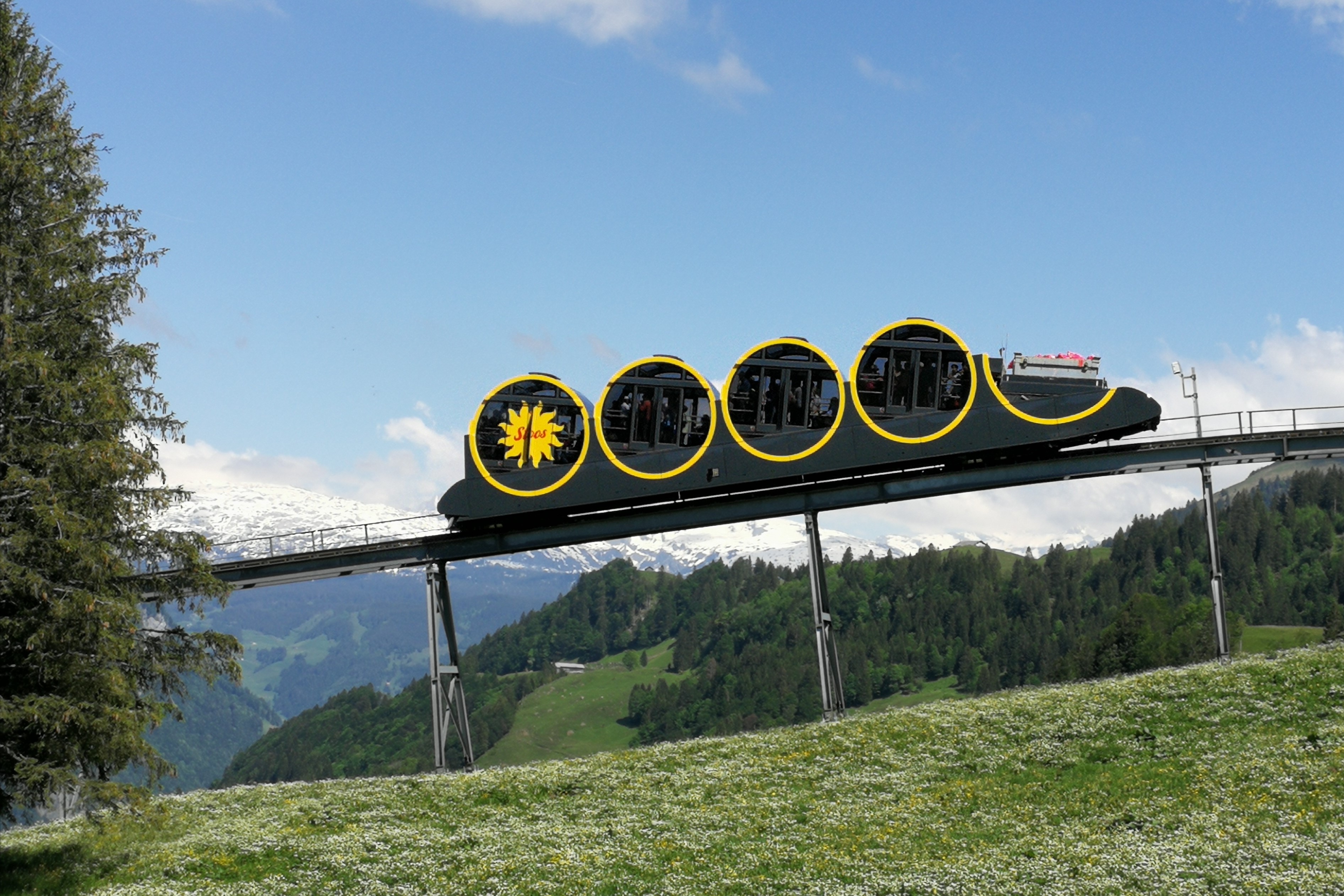
This is the Stoosbahn, opened in 2017, the steepest funicular in the world (this isn’t the steepest section), leading to the small alpine village of Stoos, and now its main claim to fame.

The Meiringen – Innertkirchen Bahn was built as part of the construction of a hydro-electric scheme, but was retained for public transport. The railcar that provides the hourly service waits for another throng of passengers at Meiringen.
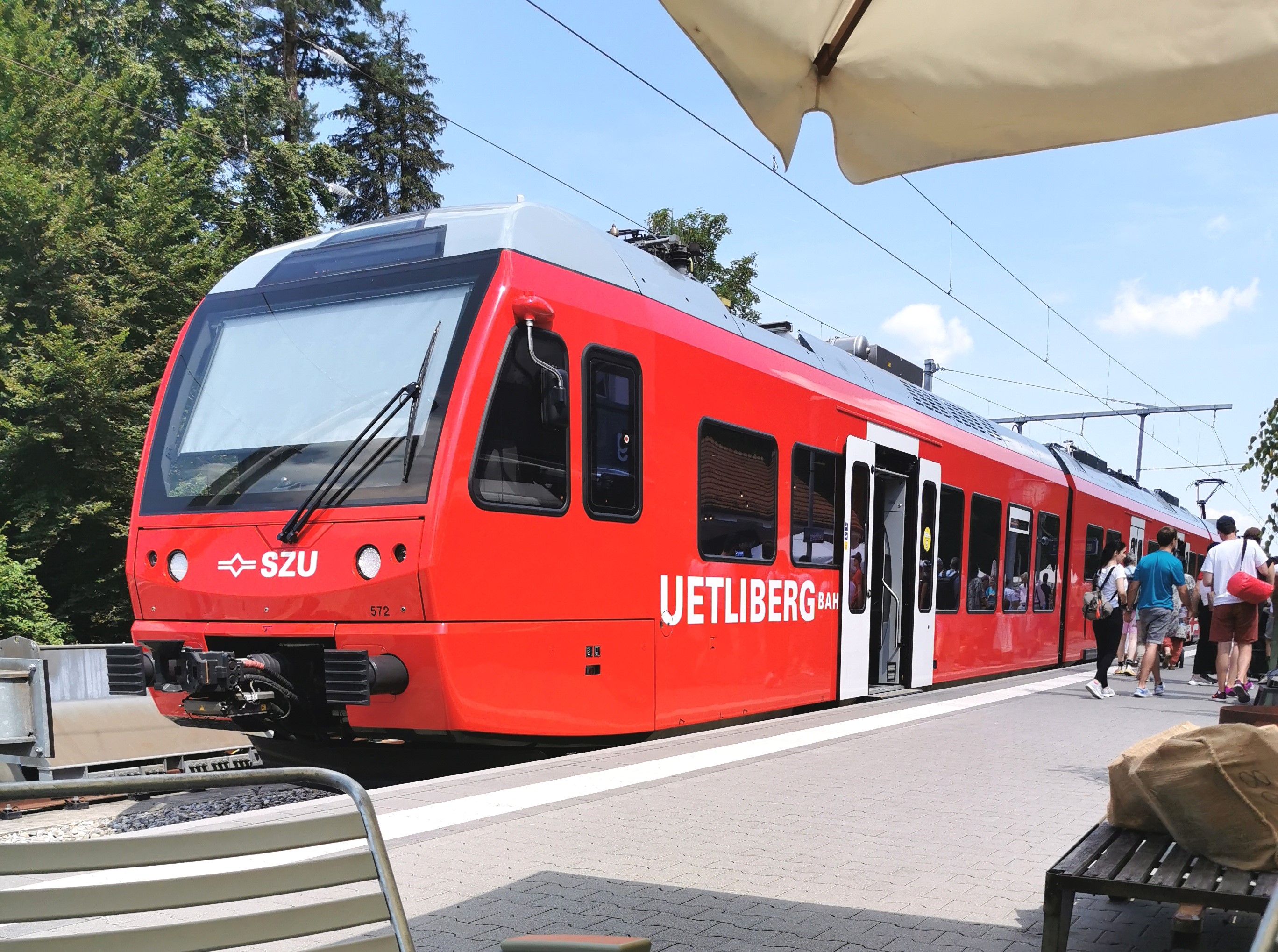
The Sihltal Uetliberg Bahn (SZU) is a suburban railway in Zurich, which climbs beyond the suburbs to the summit of the local mountailn, the Uetliberg, where this picture was taken in 2023.
For our guide to Switzerland and its railways, based on many visits to the country see Switzerland by Rail . In 2019 we visited central Switzerland, taking in revolving and double-deck cable cars, mountain railways and the Stoosbahn. For the details of the trip see Around Lake Lucerne . We returned in 2023, revisiting some places and travelling on a few railways we had not previously visited – see The Swiss Trip 2023 .
United Kingdom
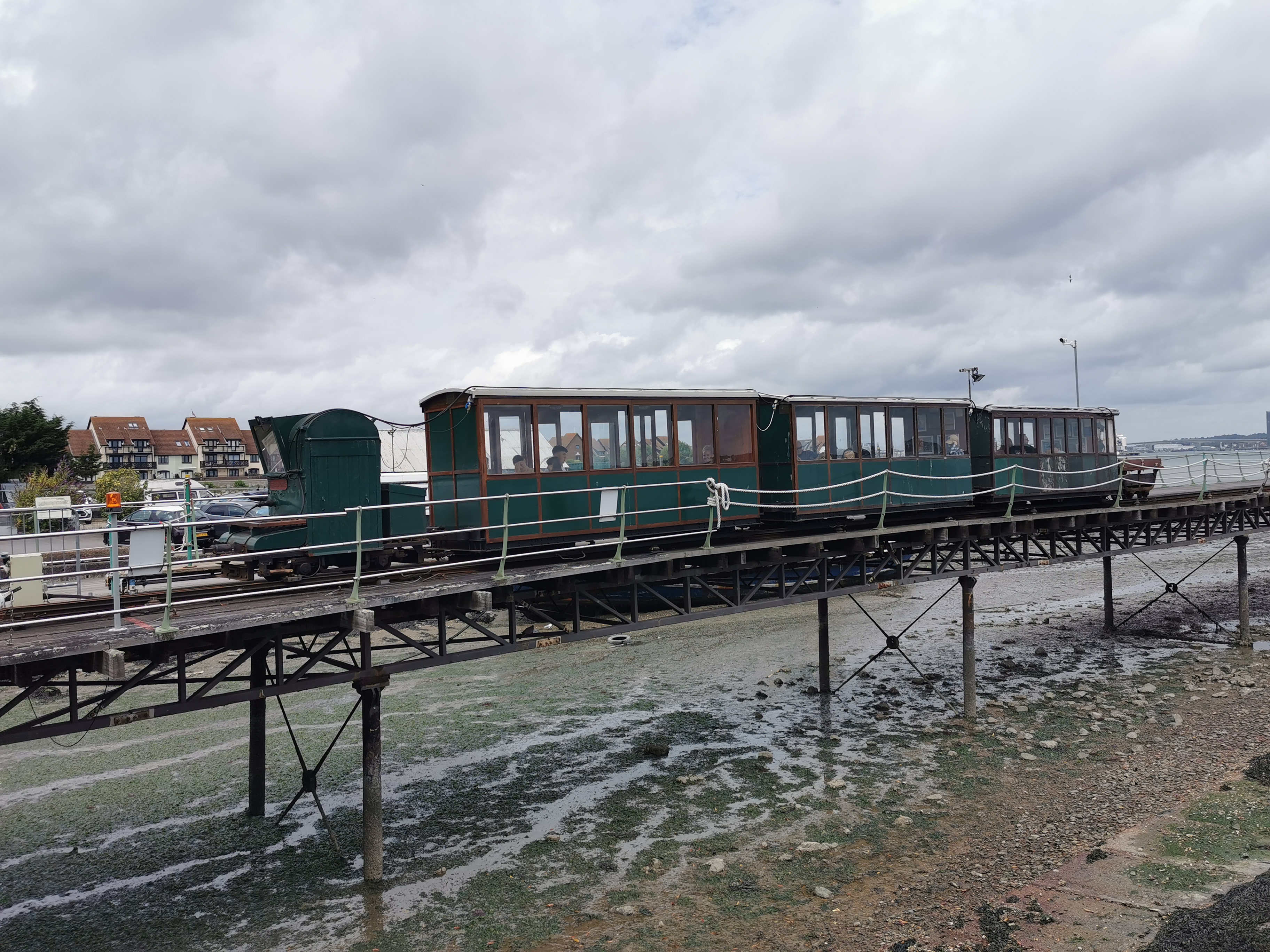
This is the Fowey Pier Railway, Hampshire, a century old railway which runs the length of the pier to connect with the ferry to and from Southampton, still forming a key part of the area’s public transport network. See Trains, boats and pubs on the South Coast for our 2023 visit.
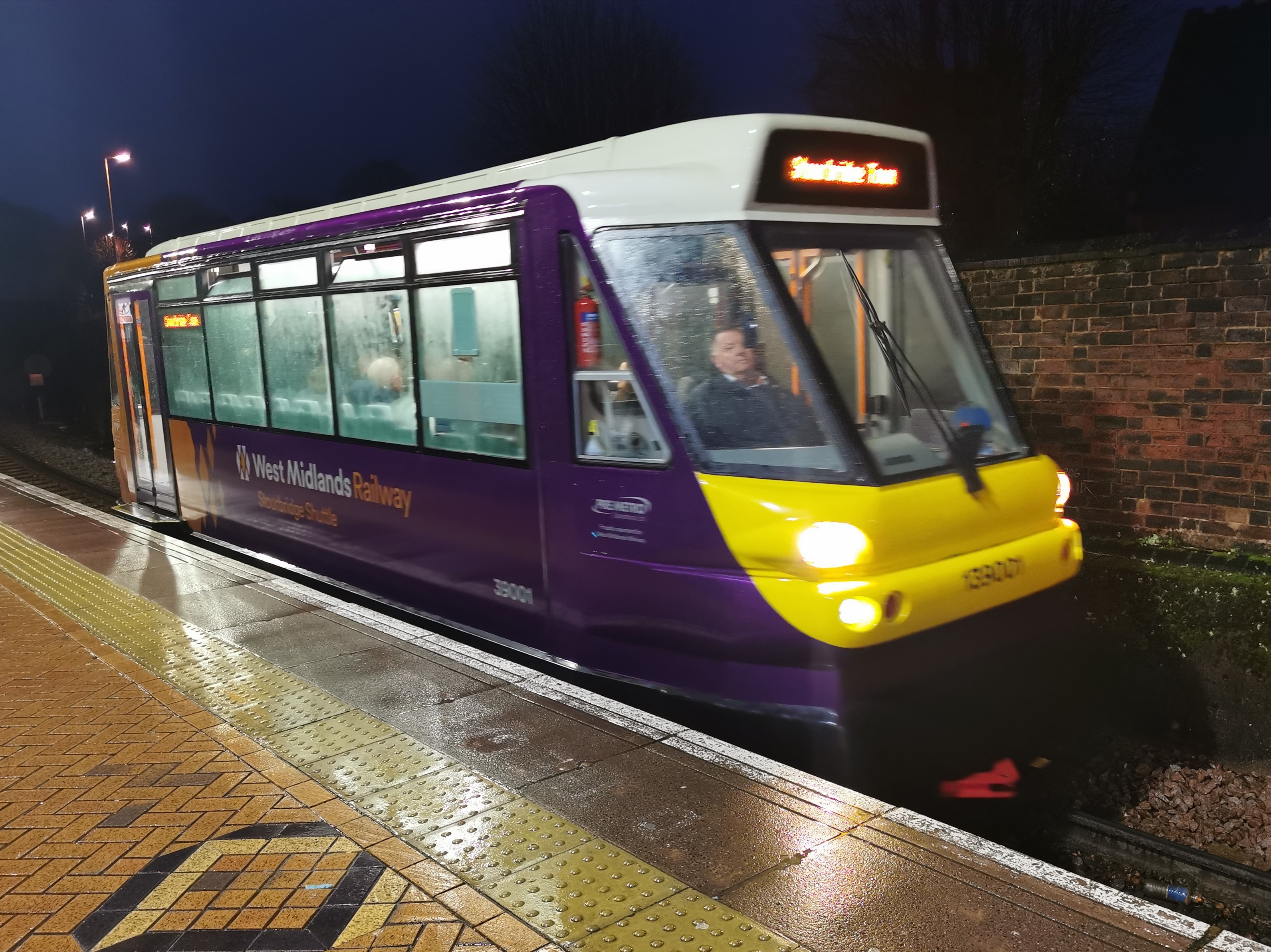
The Stourbridge Junction to Stourbridge Town railway is a 1.3km branch line in the West Midlands. Every ten minutes one of these unique Parry People Movers makes the return journey.
For further information about these railways follow the links in the text. There are plenty of other train journeys on the site – most of the journeys described in the travel pages feature rail travel.
Copyright: The text and photographs are copyright © Steve Gillon, 2020, 2024
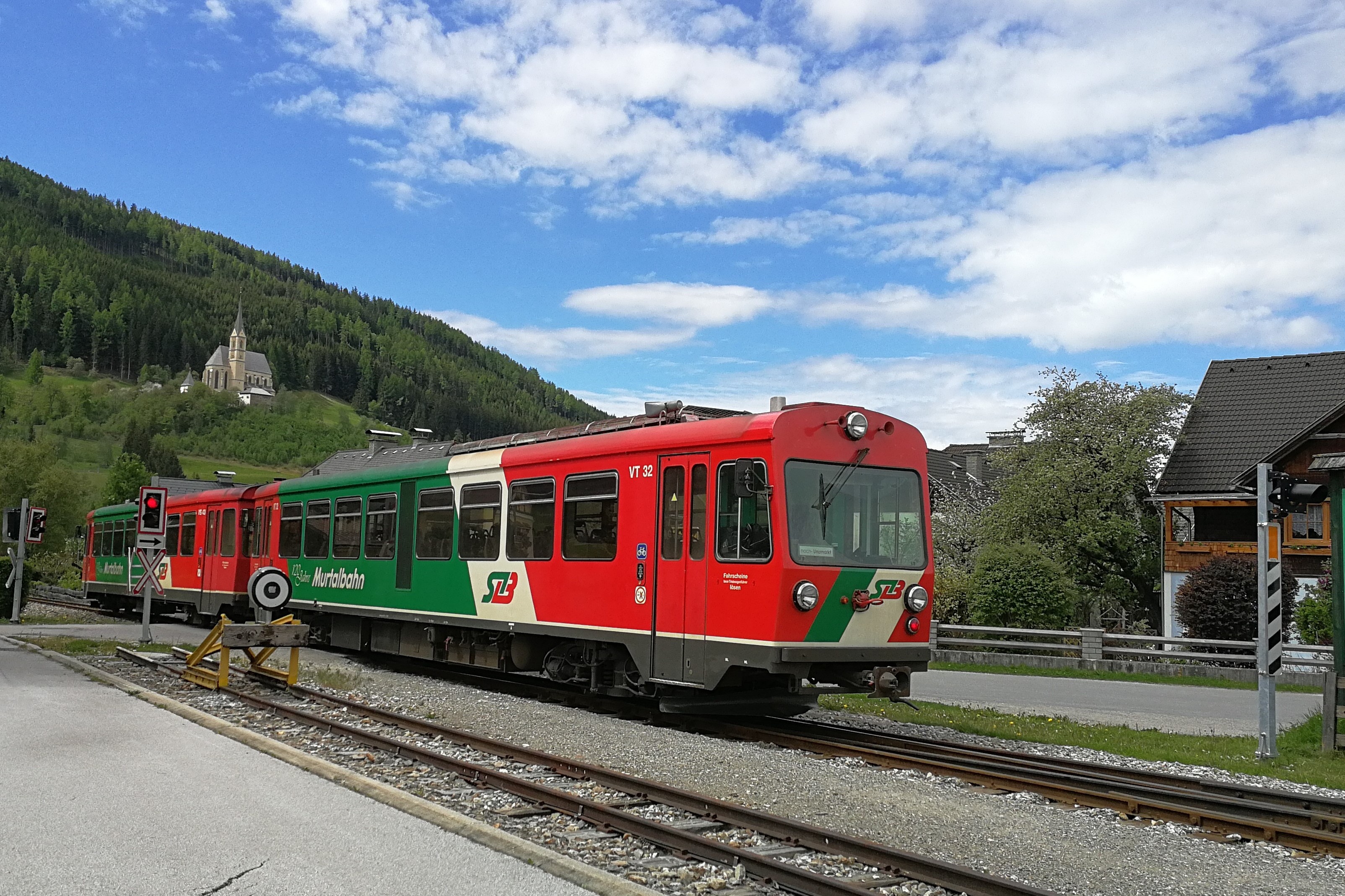
In Austria, a Murtalbahn train departs Tamsweg for Unzmarkt
 Go with Ted