Ted and I paid a two-night visit to Derbyshire in July 2026, based in the town of Matlock. The principal reason was to visit to the National Tramway Museum in Crich. We had been meaning to visit for many years but somehow never found the time – for a museum about public transport, public transport to the museum is limited so it is difficult to drop in on passing. We decided also to take a look at the Heights of Abraham, mainly because they are reached by cable car, another of ted’s nerdish interests. The obvious place to stay was the town of Matlock, to take the opportunity to explore its pubs. As usual the account of our trip is followed by practical advice for anyone who wishes to follow in our foootsteps
Getting there
We travelled down from Durham to Derby by Cross Country train. Though it was only a four coach train we managed to get comfortable seats in the unreserved coach – as usual quieter than the reserved coaches. This is a journey I used to make regularly, going to and from the West Midlands. The main difference I noticed was how much greener the countryside is, due to the increased tree coverage – existing trees growing over the past twenty years, tree planting on former industrial and derelict sites, amplified by the time of year.
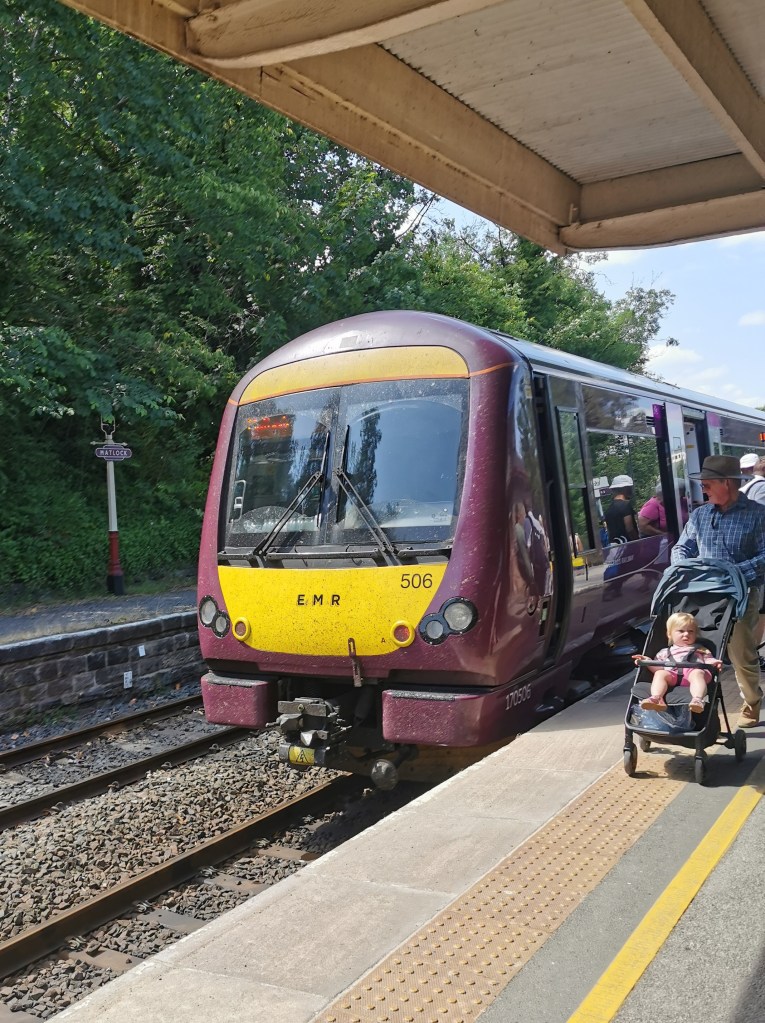
At Derby we changed to the Derwent Valley line to Matlock – I had only been on it once before, in 1997. The train was a refurbished class 170 diesel, which pootled up the valley. The line was opened to Matlock in 1849 and extended through the Peak District in the 1860s, becoming a main line between London and Manchester. It was closed beyond Matlock in 1968, though a heritage steam railway, Peak Rail, runs today from Matlock to Rowley South, four miles up the valley. The line has been single-tracked but an hourly service still operates.
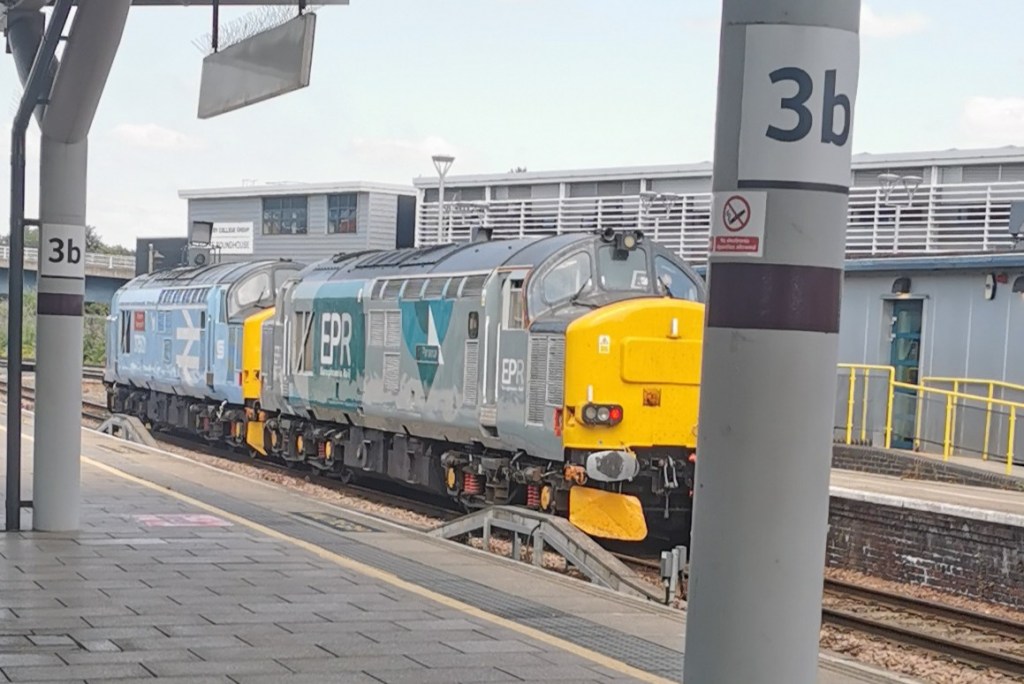
It is an attractive journey – the valley is green and the hills are impressive. At Ambergate we passed the Hurt Arms (I didn’t manage a photo), apt as I had a sore arm at the time. The stations are well-maintained, a sure sign of an active Community Rail Partnership and station adoption groups.
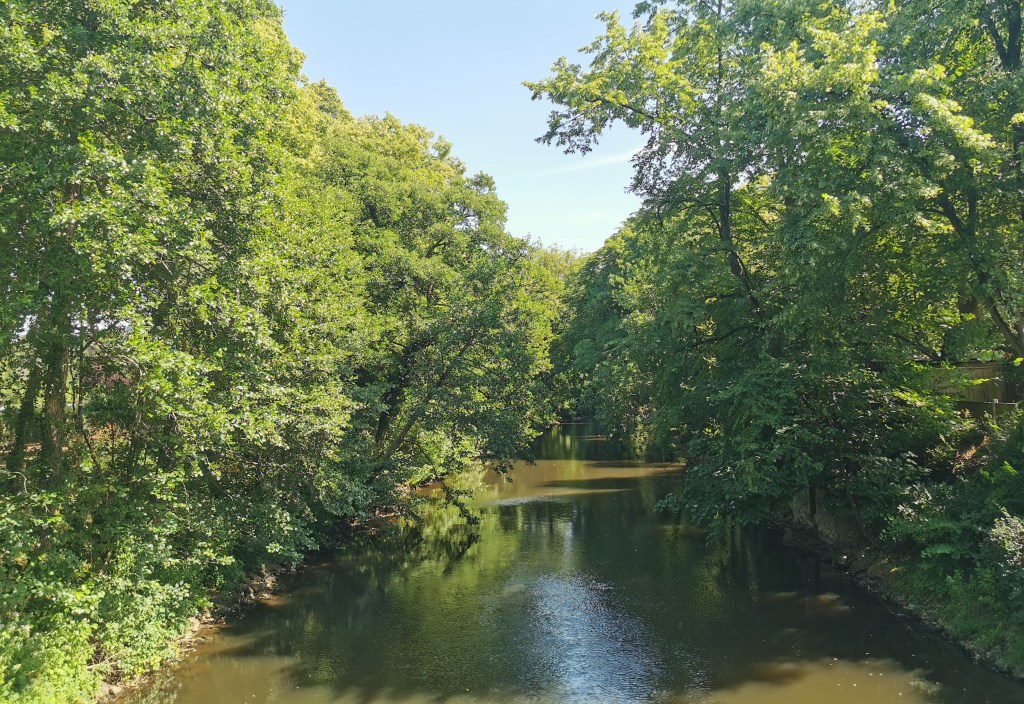
Matlock
Matlock has a population of 10,000 and is the county town of Derbyshire and the seat of Derbyshire Dales District Council. Originally the site of several hamlets, it expanded in the nineteenth century as a spa town and was also the location of several cloth mills.
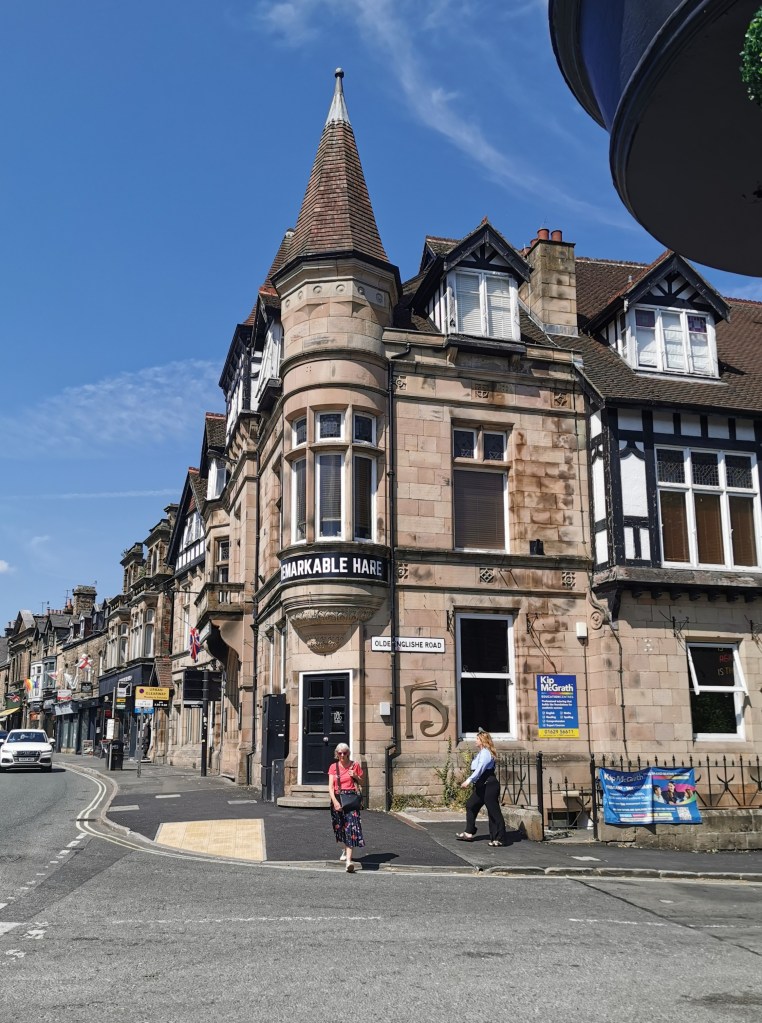
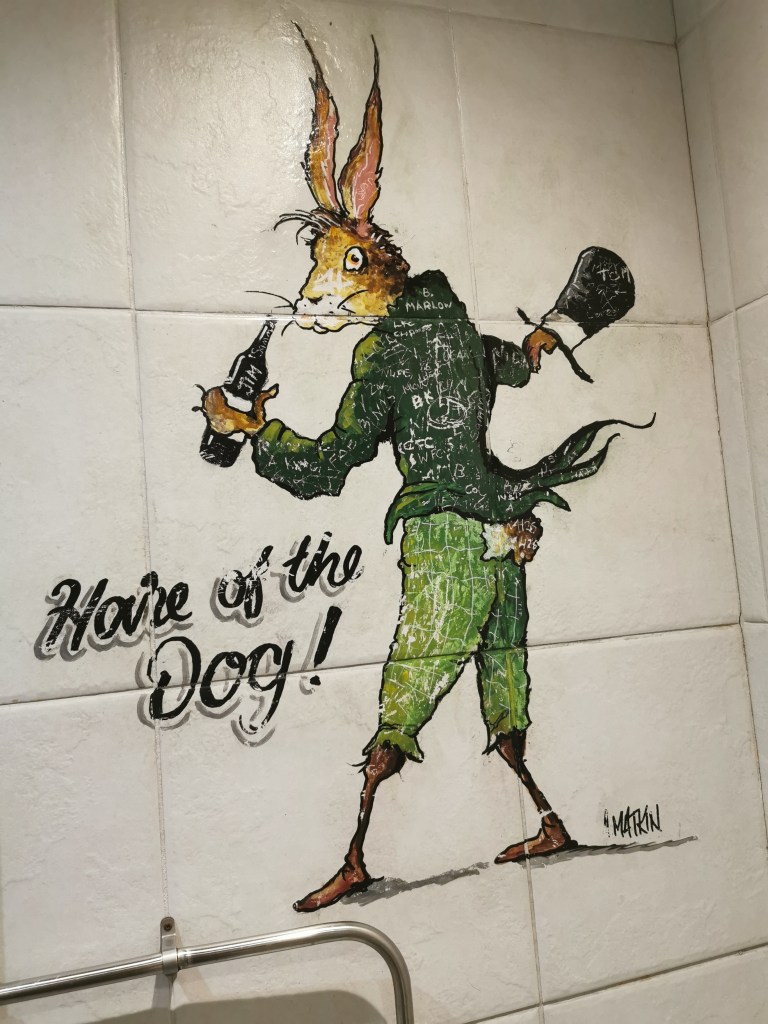
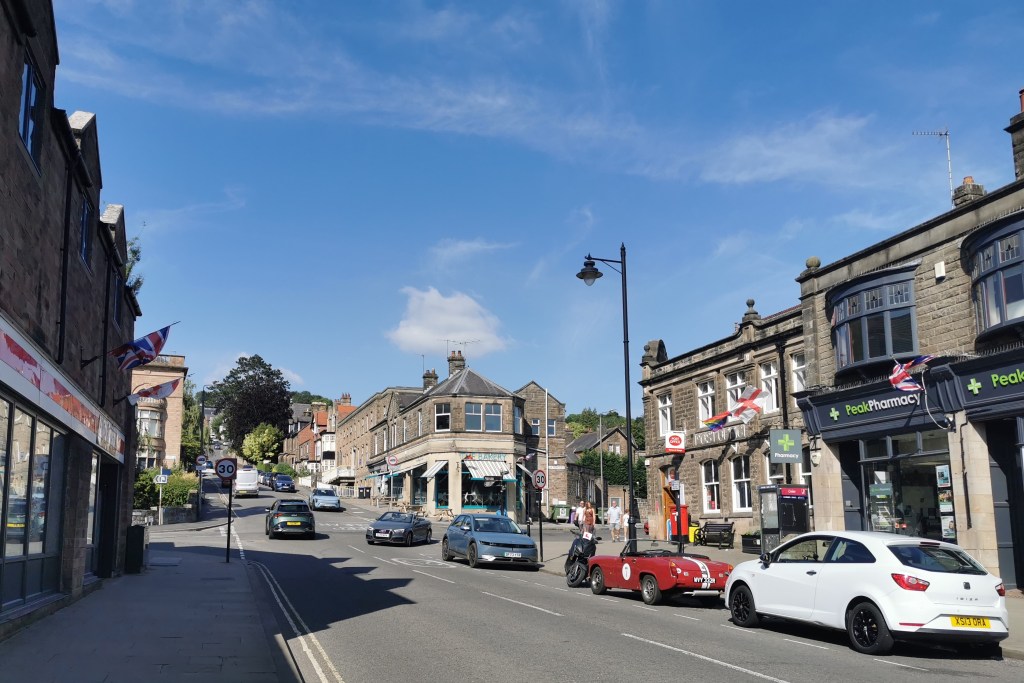
After our mid-afternoon arrival we walked along the nearby Dale Road. It is a busy road, part of the A6, just across the river from the centre of town (as is the station). There are several antique shops (we resisted the temptation) and also several pubs, café-bars and restaurants. We didn’t resist the temptation – we called in for a pint at the Remarkable Hare (pictured), a large pub in a former hotel.
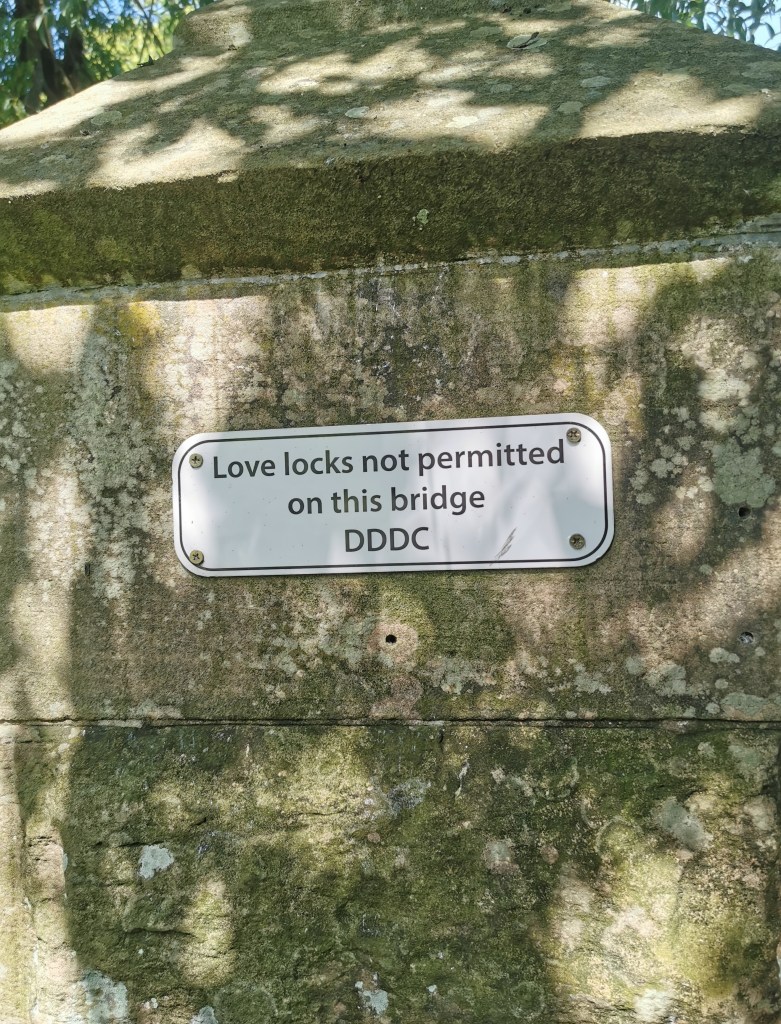
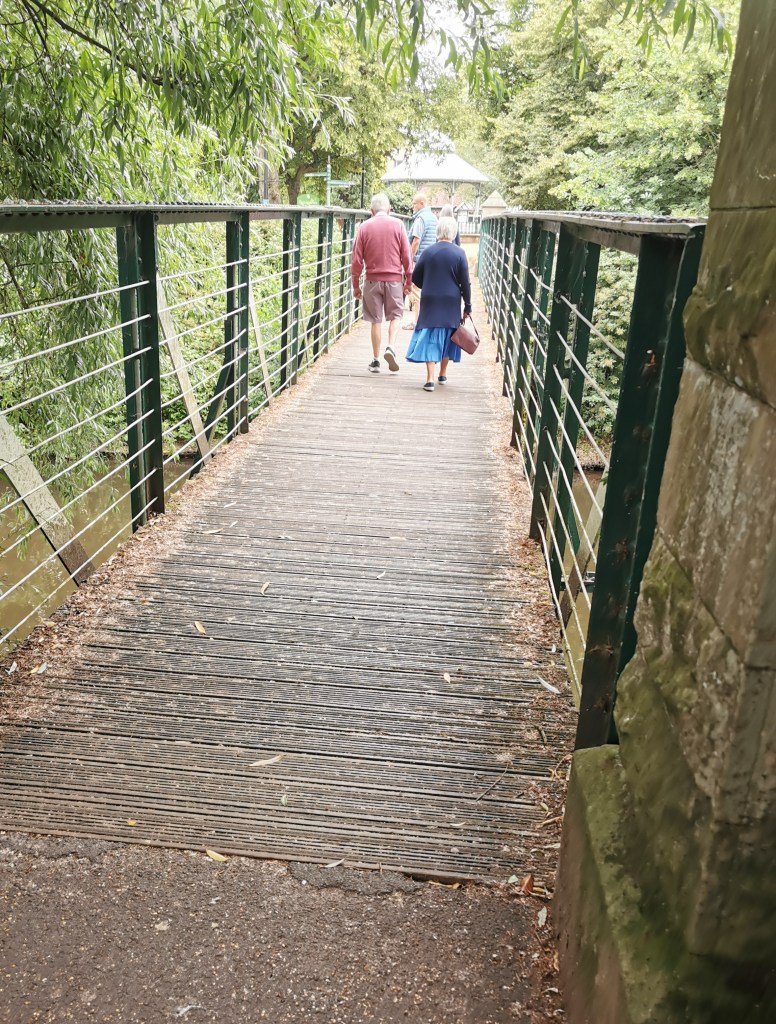
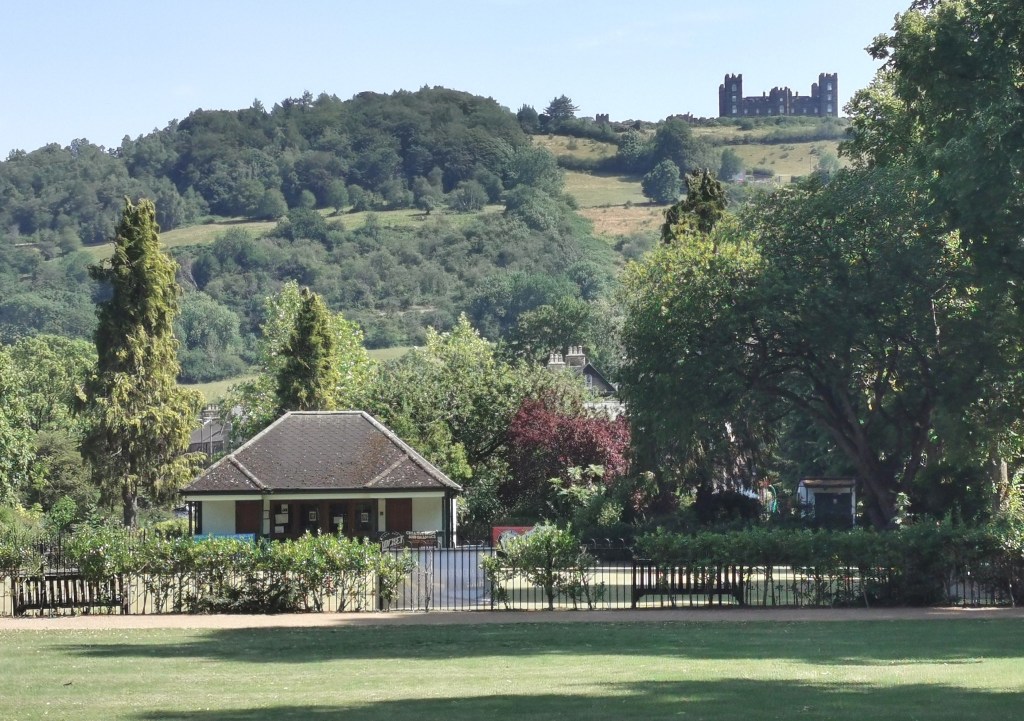
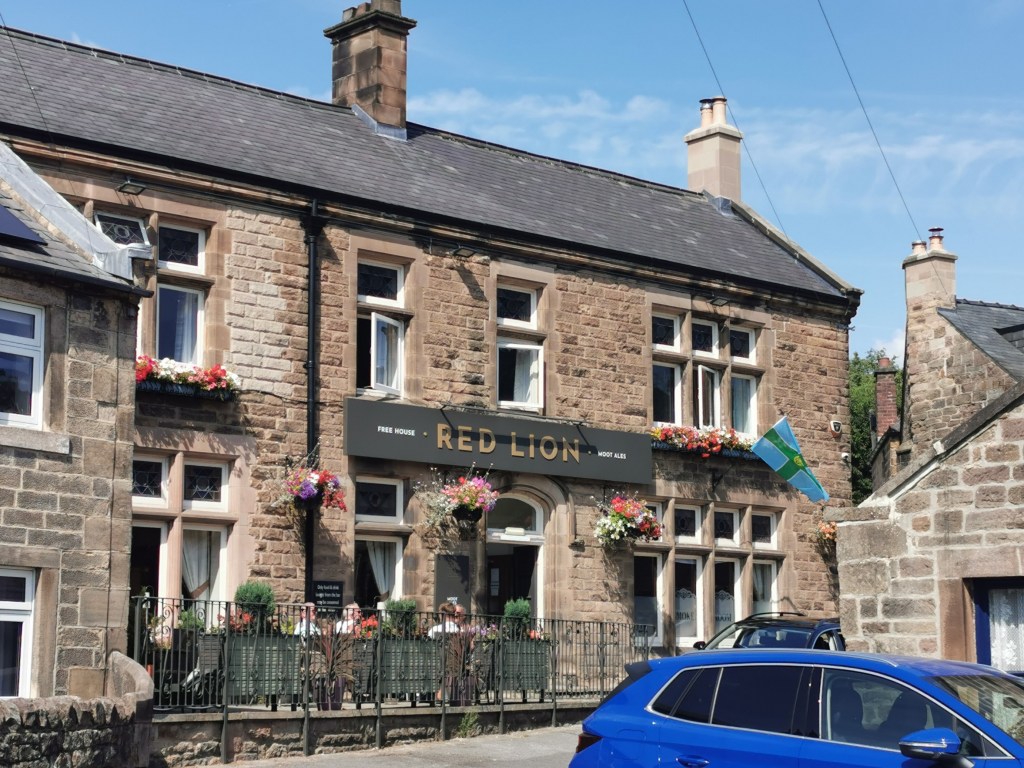
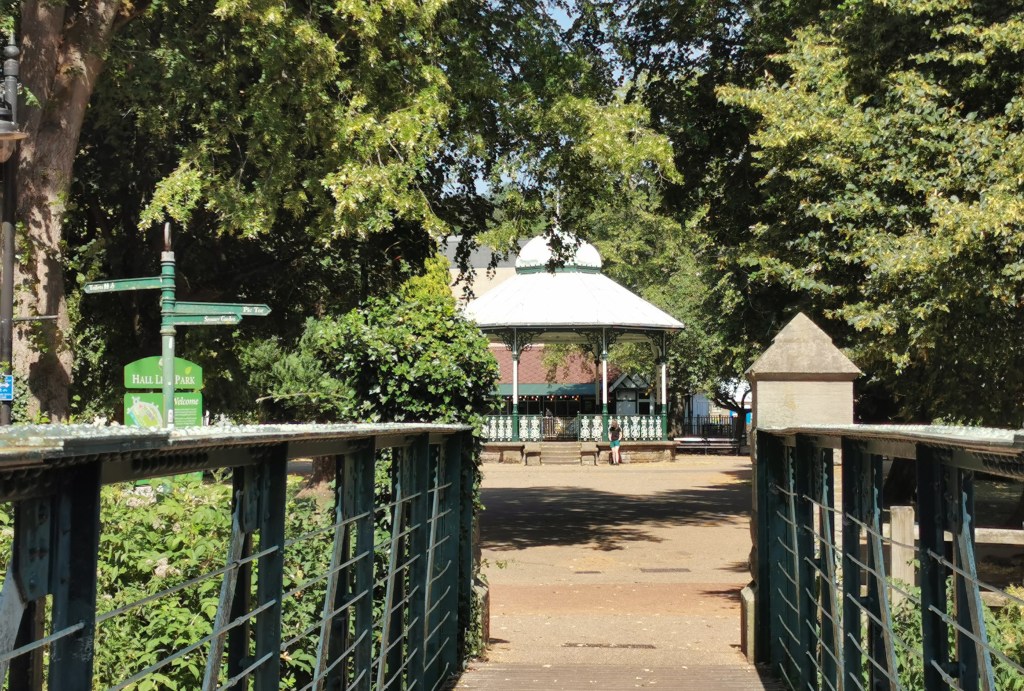
From there we crossed the River Derwent by a pedestrian bridge (on which love locks are forbidden) and through Hall Leys Park to reach Matlock Green and our accommodation, the Red Lion. It’s a large pub with comfortable rooms above. It is the home of Moot Ales, whose brewery is adjacent to the pub. The beers are good, as is the food, which is popular but doesn’t dominate the pub. It was a good choice.
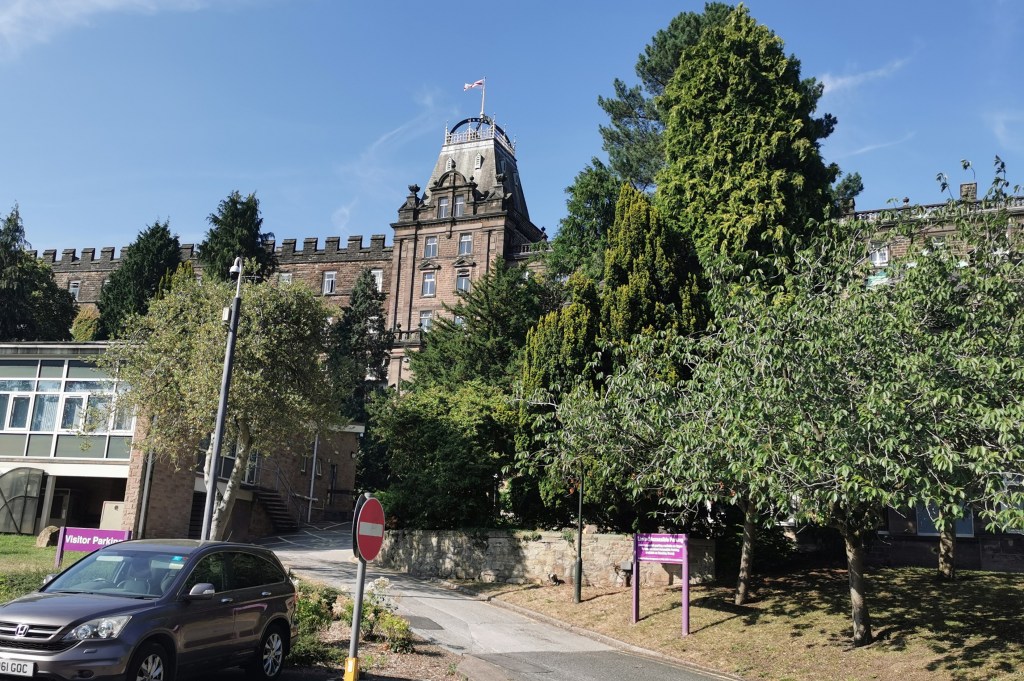
In the early evening we decided to try a couple of Good Beer Guide listed micropubs which looked inviting. We walked along to the town centre, where there is little pub-wise – maybe because the temperance movement was strong in spa towns. From the centre we climbed Bank Road, a long steep hill, which leads to the County Buildings in a large former hydropathic hotel and the pubs. There is the very occasional bus but the service is poor, given how much of the town is up there. It turns out that a cable tramway climbed the hill between 1893 and 1927.
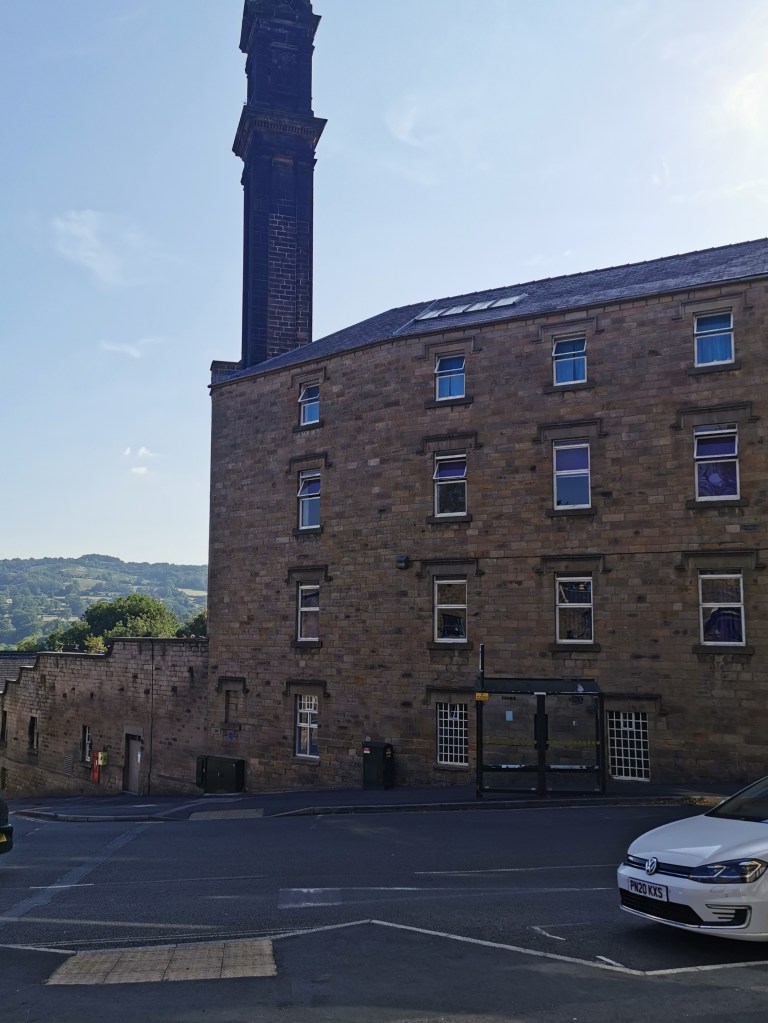
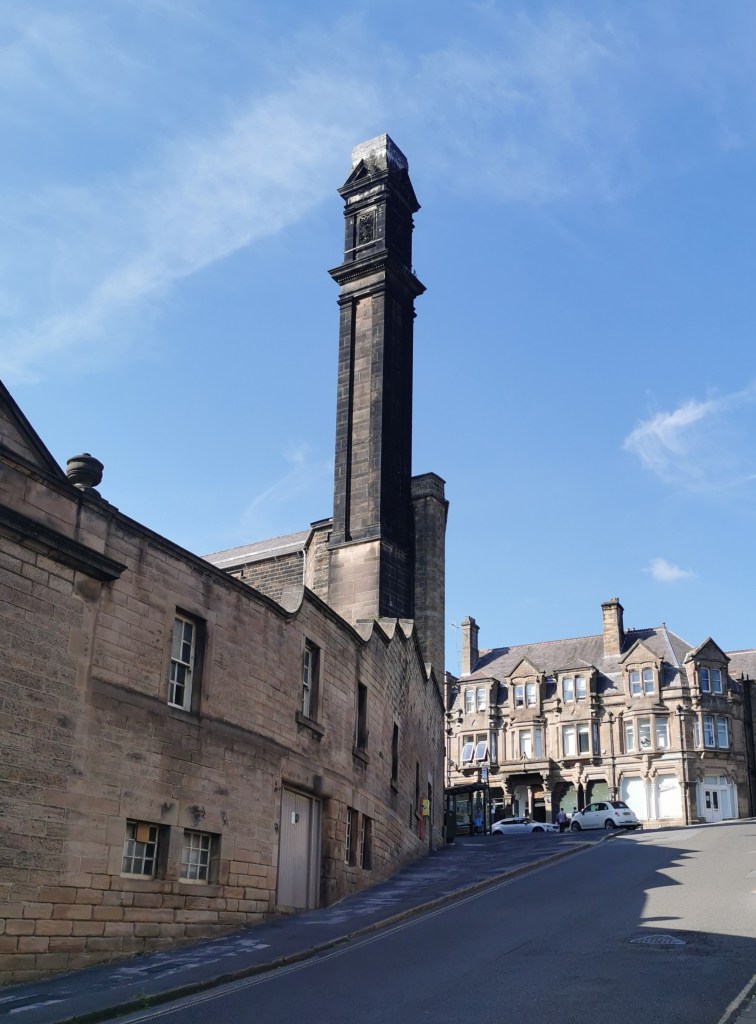
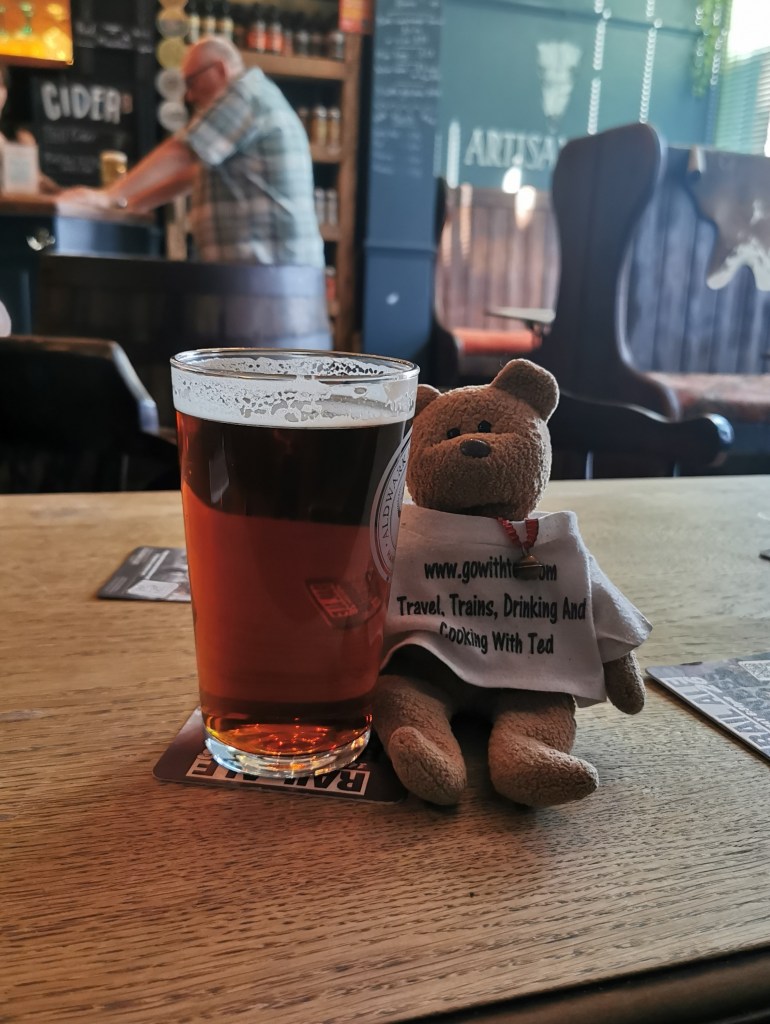
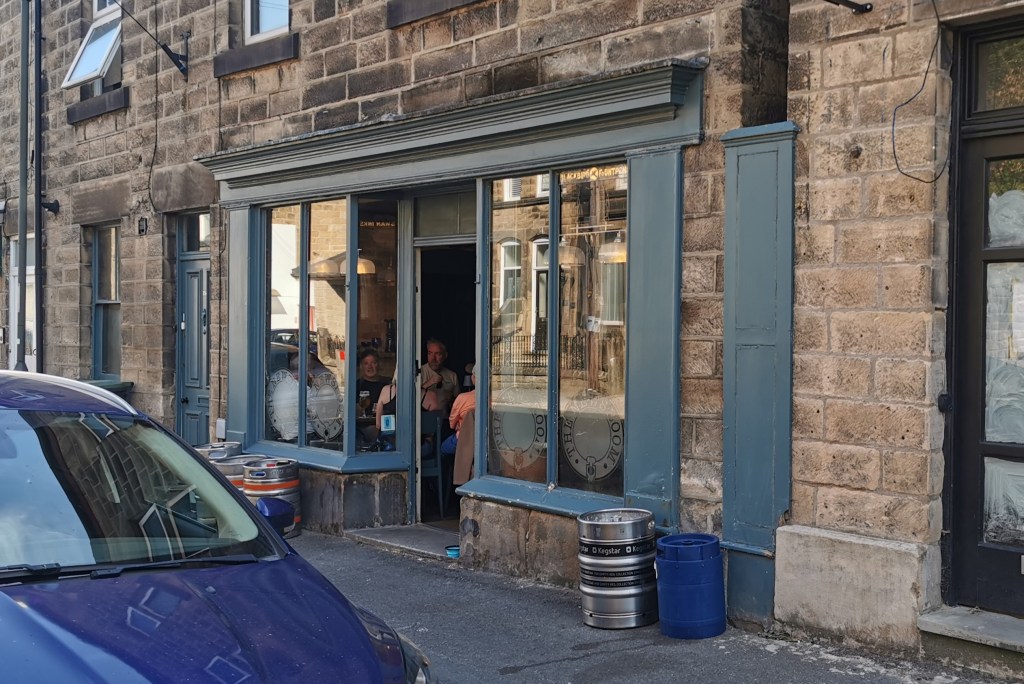
The Newsroom was an excellent and friendly micropub in a former newsagents, busy with early-doors regulars selling a range of good beers – we had the Marble Manchester Bitter. We then tried the Farmacy nearby – the tap for Aldwark Artisan Ales – for a pint of their Roan Bitter. It felt like a good place but quiet and lacking in atmosphere at the time we were in. Our main memory is of the toilet cubicle (no room for urinals) which had the loudest jobby masher I’ve ever heard. From there we rolled back down the hill and along to the Red Lion. We found beer to be relatively cheap in Matlock.
The National Tramway Museum
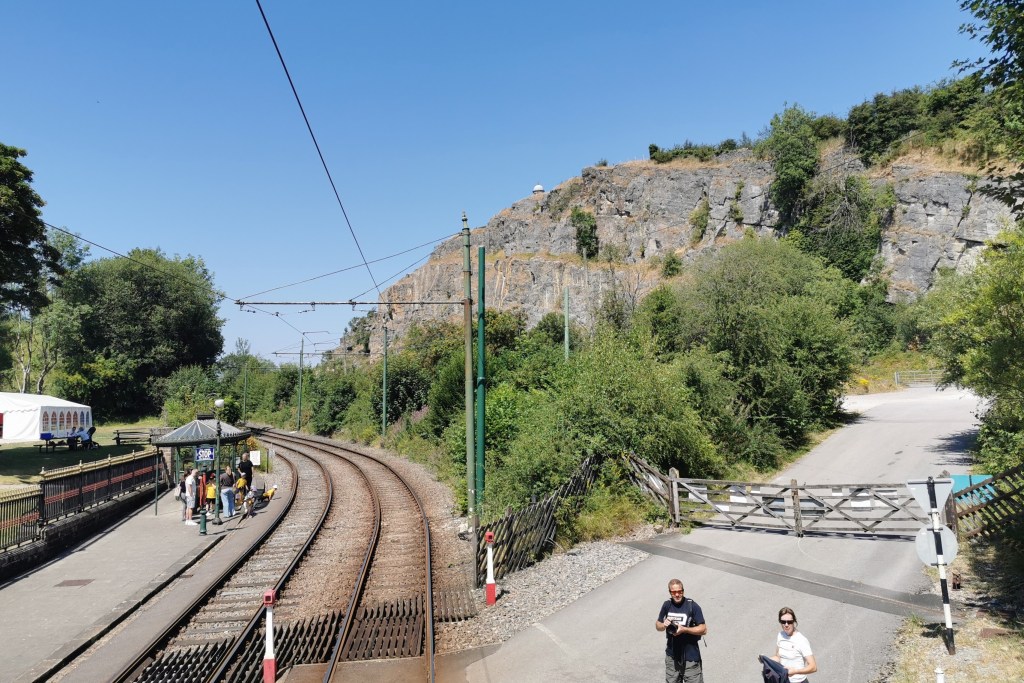
The following day was set aside for our visit to the National Tramway Museum at Crich. The Museum is located in a former quarry which was purchased by the Tramway Museum Society in 1959. The first tram arrived in 1960 and the site opened as a museum shortly afterwards. It has since been developed greatly and now hosts over 80 trams, a mile long tramway along the former quarry wagonway, restored old buildings and street furniture, woodland walks and a sculpture trail.
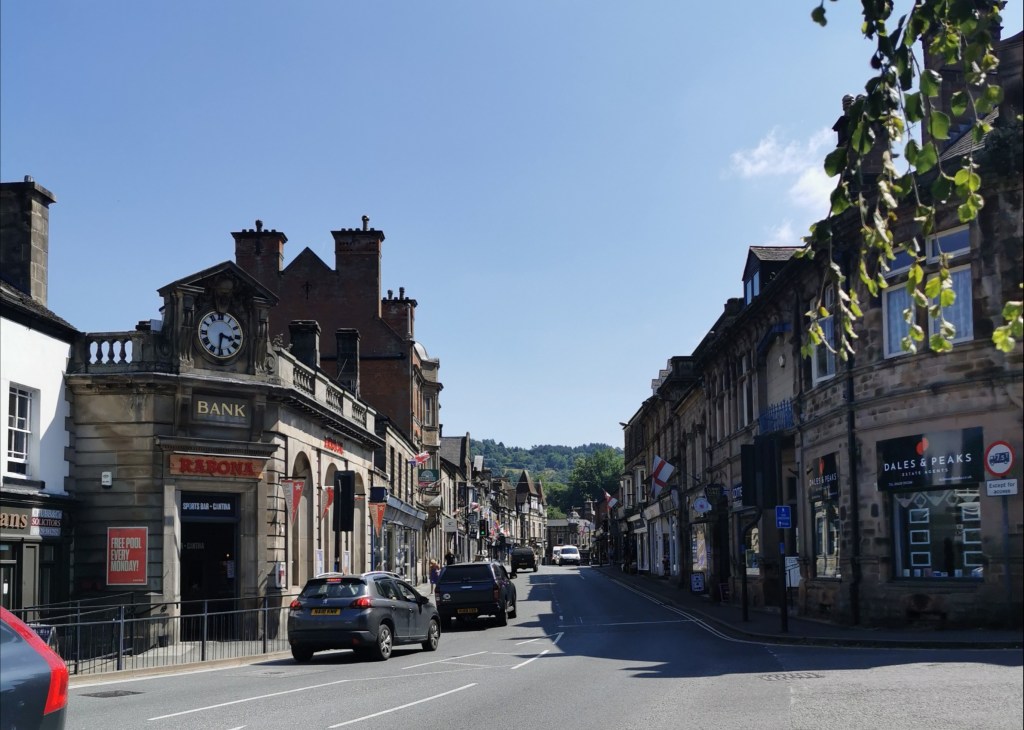
The first task was getting there. We made our way to Matlock Bus Station in good time. The weather forecast was for a heatwave but, in the morning it was 10 degrees cooler than expected due to mist and cloud. We had only brought T-shirts so I had to nip into Boyes and buy a polo shirt as a second layer. The mist cleared about noon after which I certainly didn’t need the second layer.
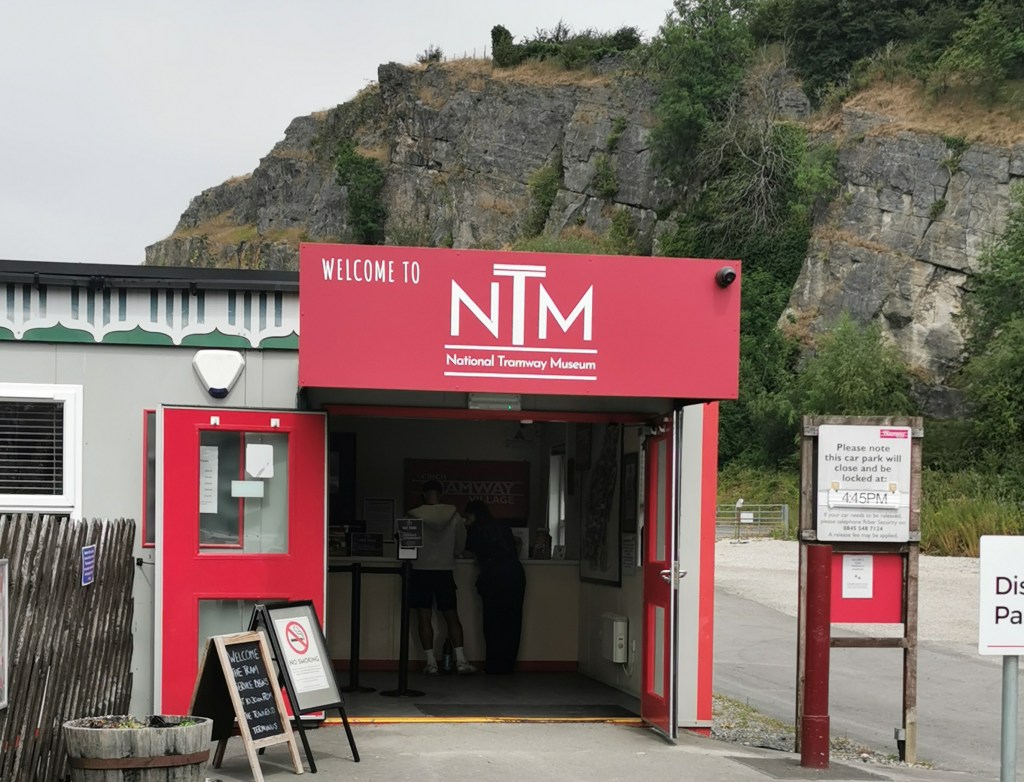
Our bus and driver were parked across the tarmac from the stand and sat there until 15 minutes after the departure time. We were beginning to think it had broken down when it pulled into the stand, without any explanation for the delay. It was a 35 minute journey through pleasant countryside, including a long detour through the settlements of Holloway and Lea. The museum bus stop is just by the perimeter fence but the entrance involves a walk up a lane and through the car park. Inside, we walked back to Town End tram terminus, just on the other side of the perimeter fence from the bus stop.
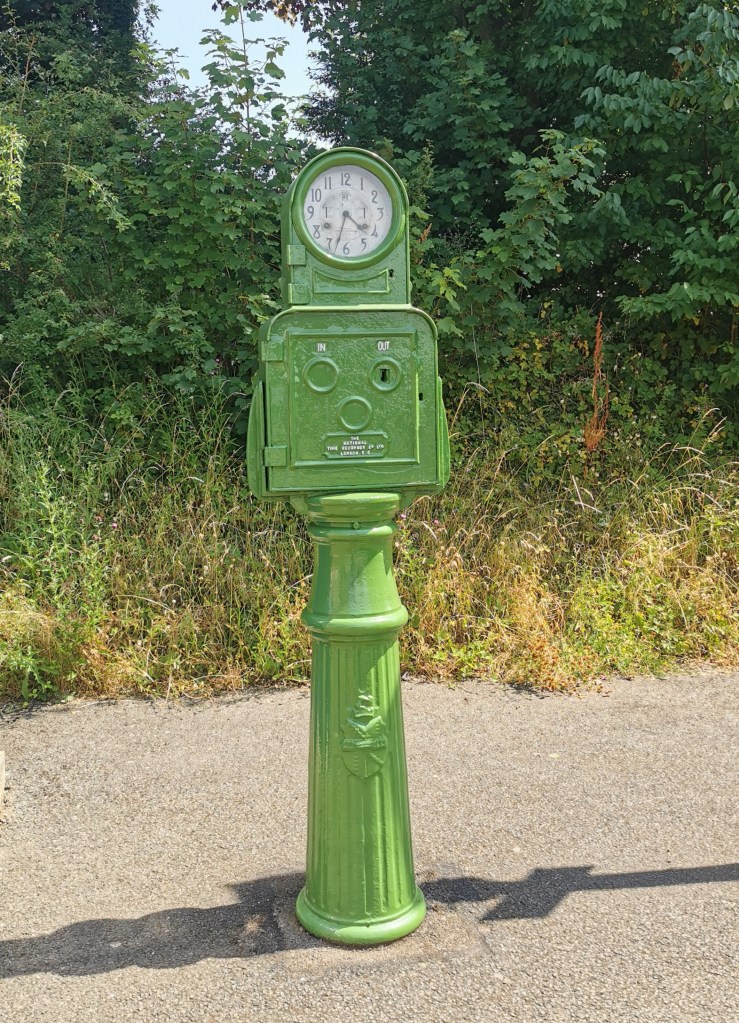
We began our visit by riding the trams – there are three trams running each day providing a service about every ten minutes. The tramway runs from Town End, past the entrance and a stop at Wakebridge to the current terminus at Glory Mine. We made sure that we rode on them all. It was just before the school summer holidays so the museum and the trams weren’t too busy. Many of the visitors that day (including myself) will have had childhood memories of trams in their home cities. We made our way to Town End and our first tram ride, past a police box and a bundy clock (used to track and prove that the tram drivers were running to time). I remember them from Glasgow, where one of the local gangs was the Bundy and the locals called South Pollok ‘The Bundy’ (there was one at the bus stop).
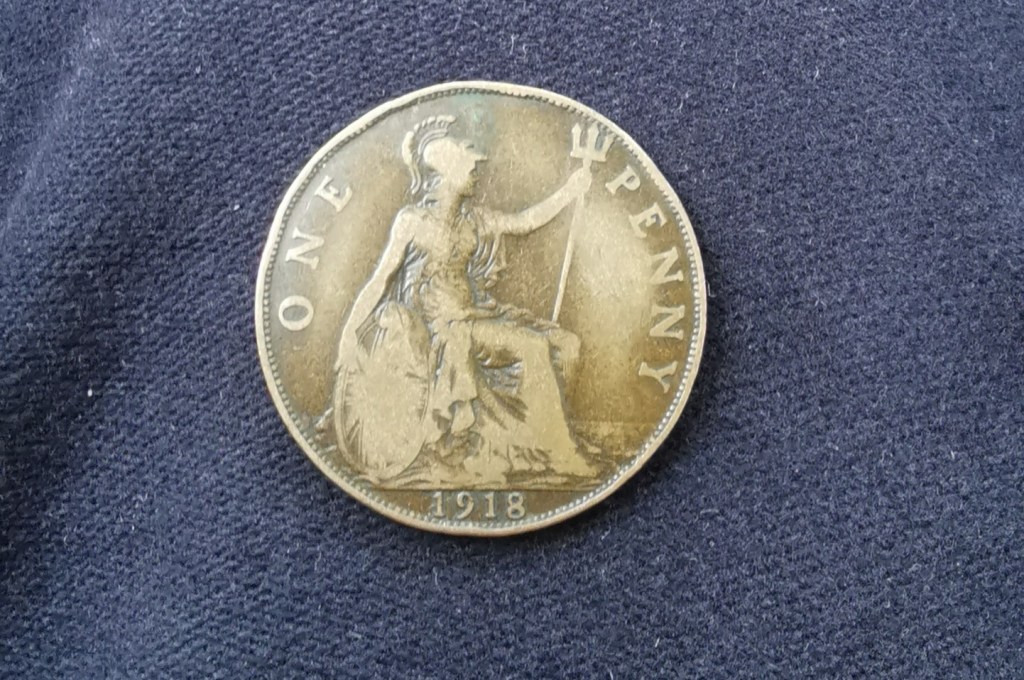
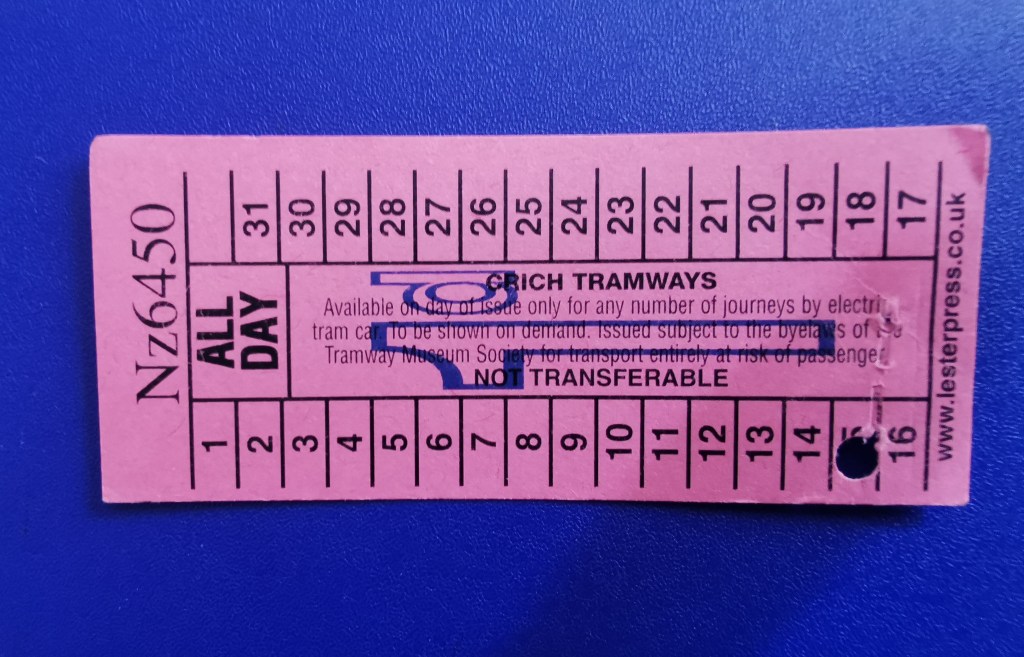
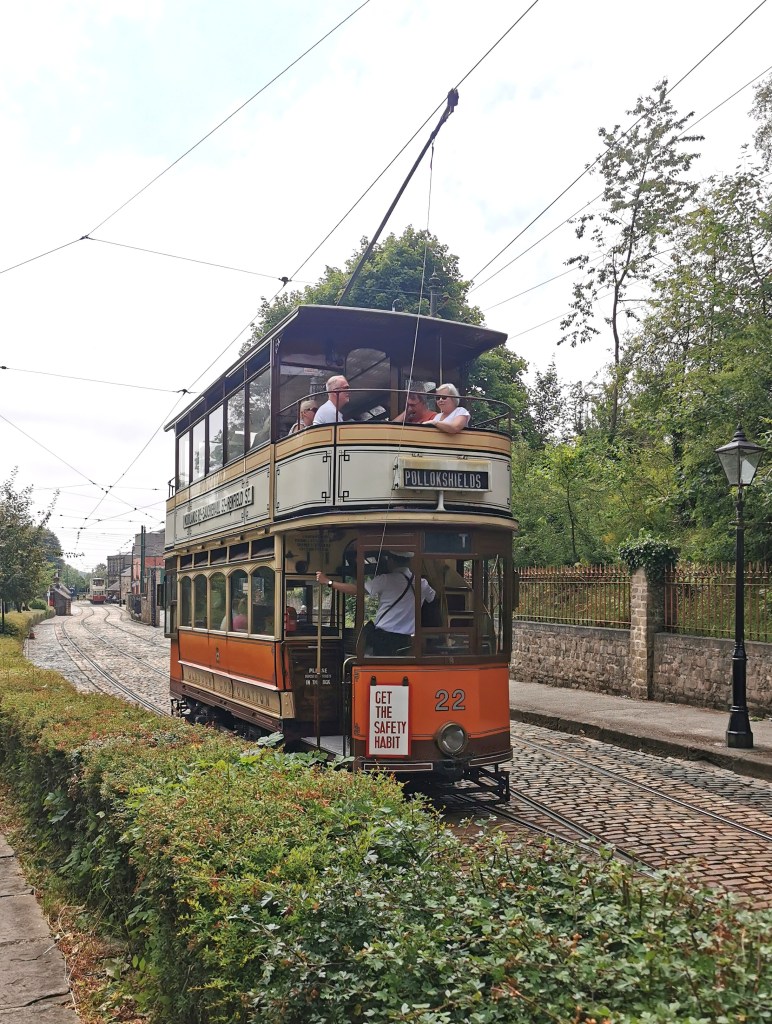
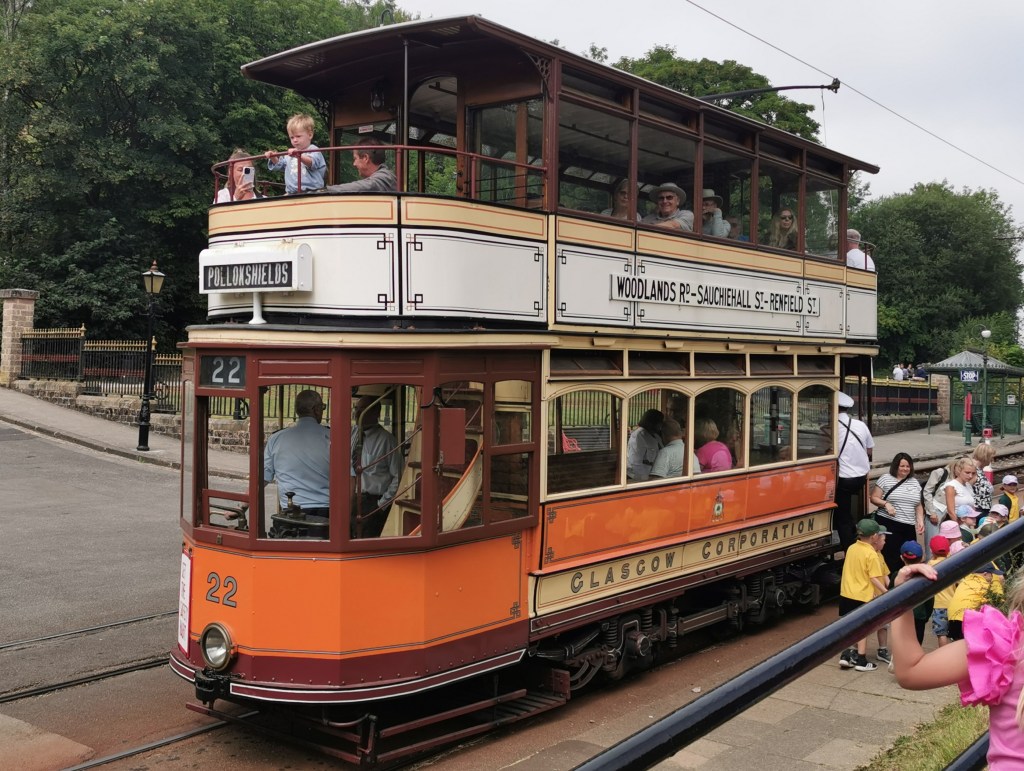
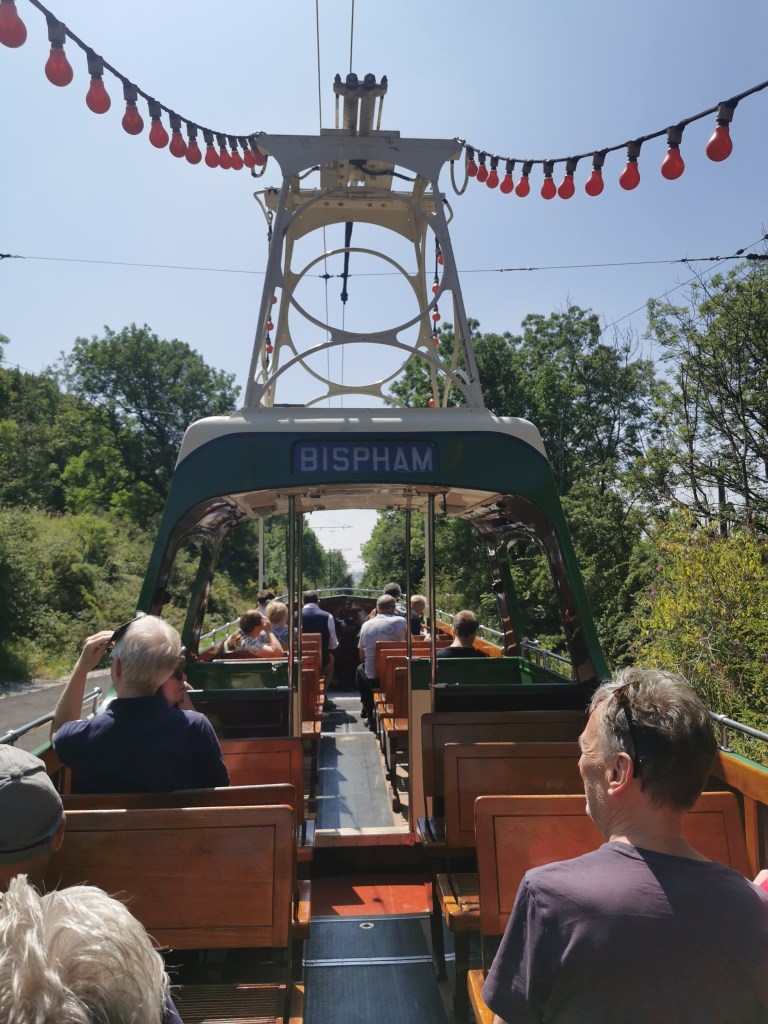
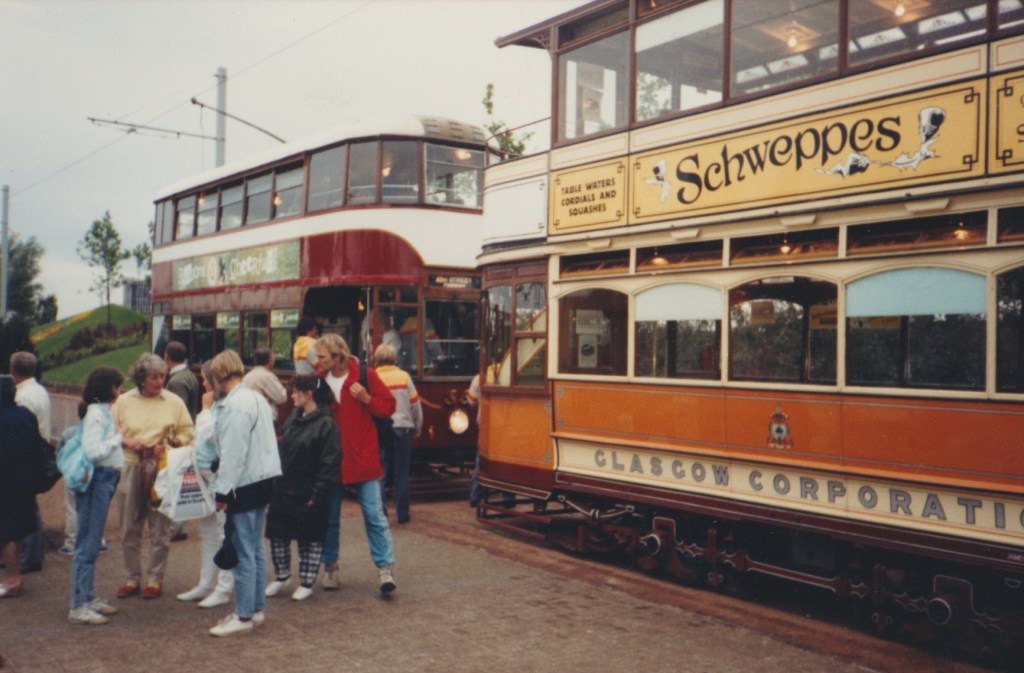
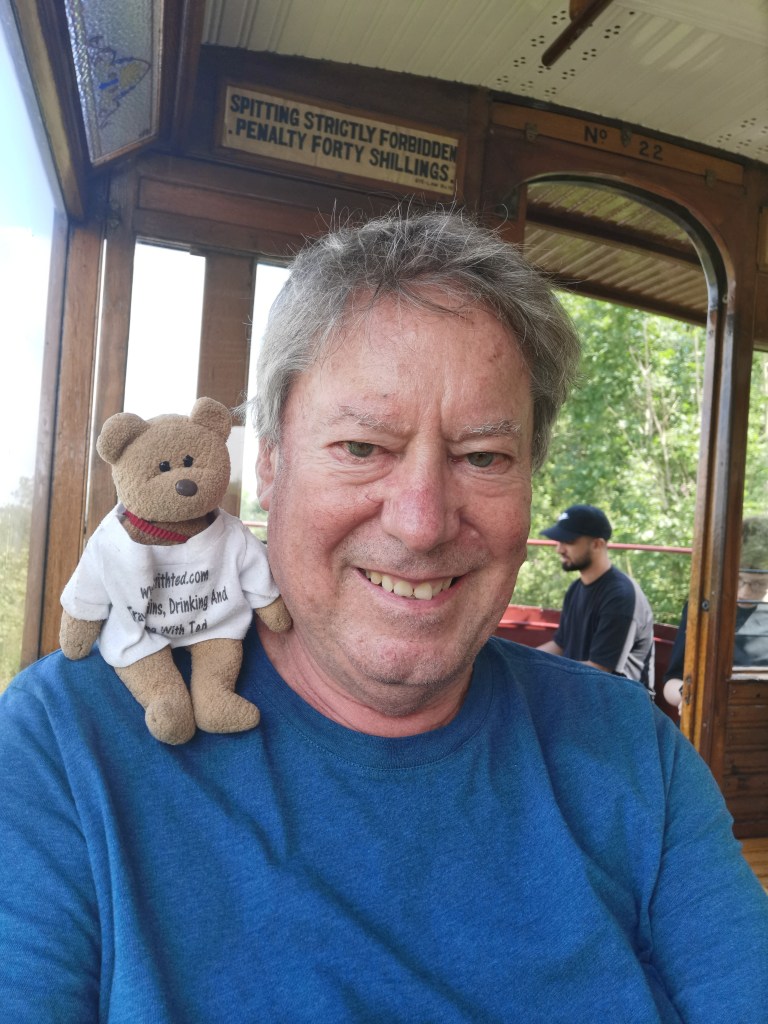
The first tram was a Glasgow Corporation Standard tram (No.22), built in 1922 and operational until 1960. It turns out I’ve been on it before – it was before Ted’s time – at the Glasgow Garden Festival in 1988 and the Gateshead Garden Festival in 1990. I can remember trams like them in the final years of operation (until1962), though by then most trams were newer designs. At the entrance we were given an old penny to buy my tram ticket (bears go free) from the conductor on our first tram. We climbed upstairs, paid our fare and rode it to the end of the line at Glory Mine. The passengers helped the conductor to swing the seat-backs round so they faced the opposite direction for the ride back to Town End.
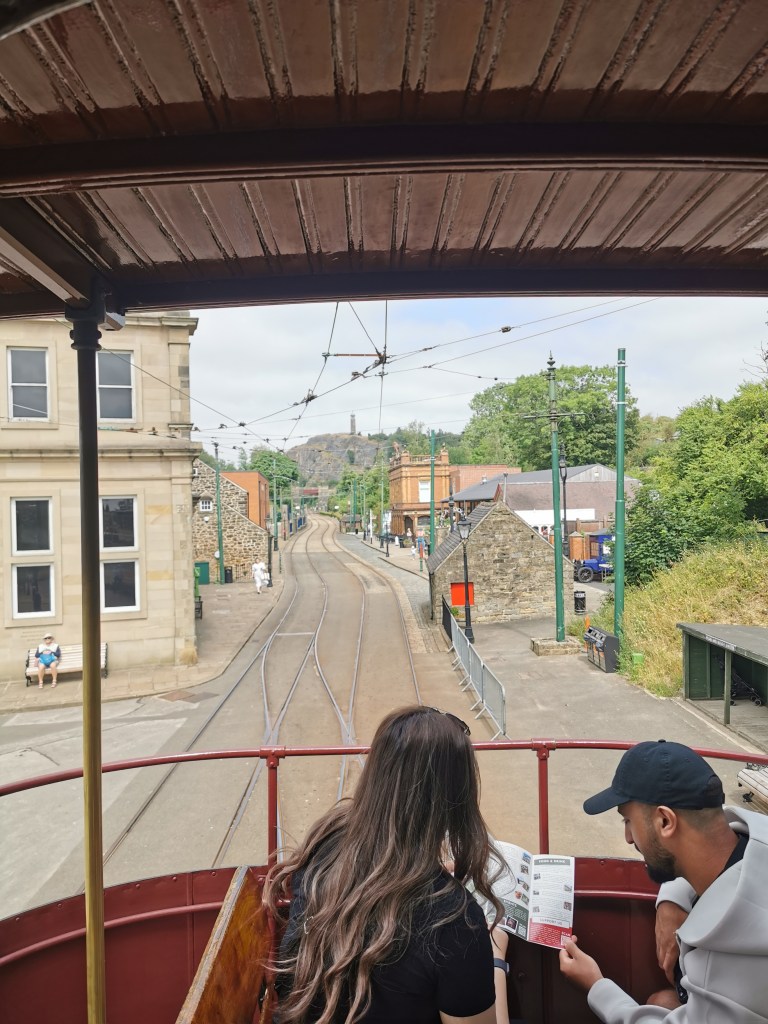
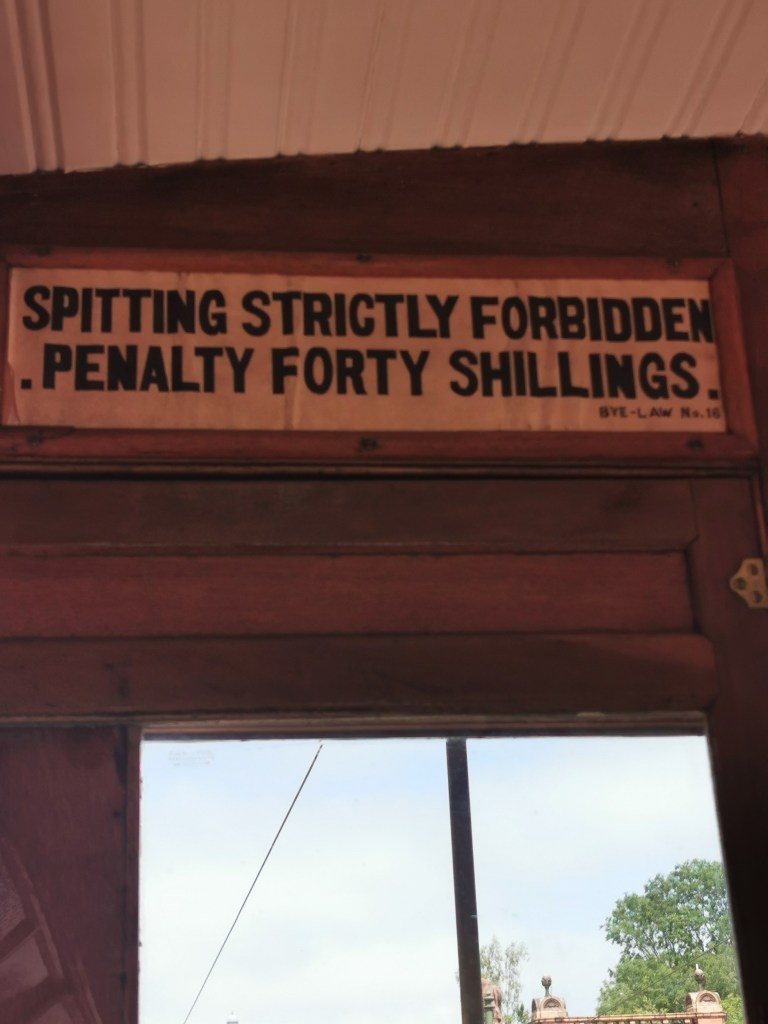
On board No. 22
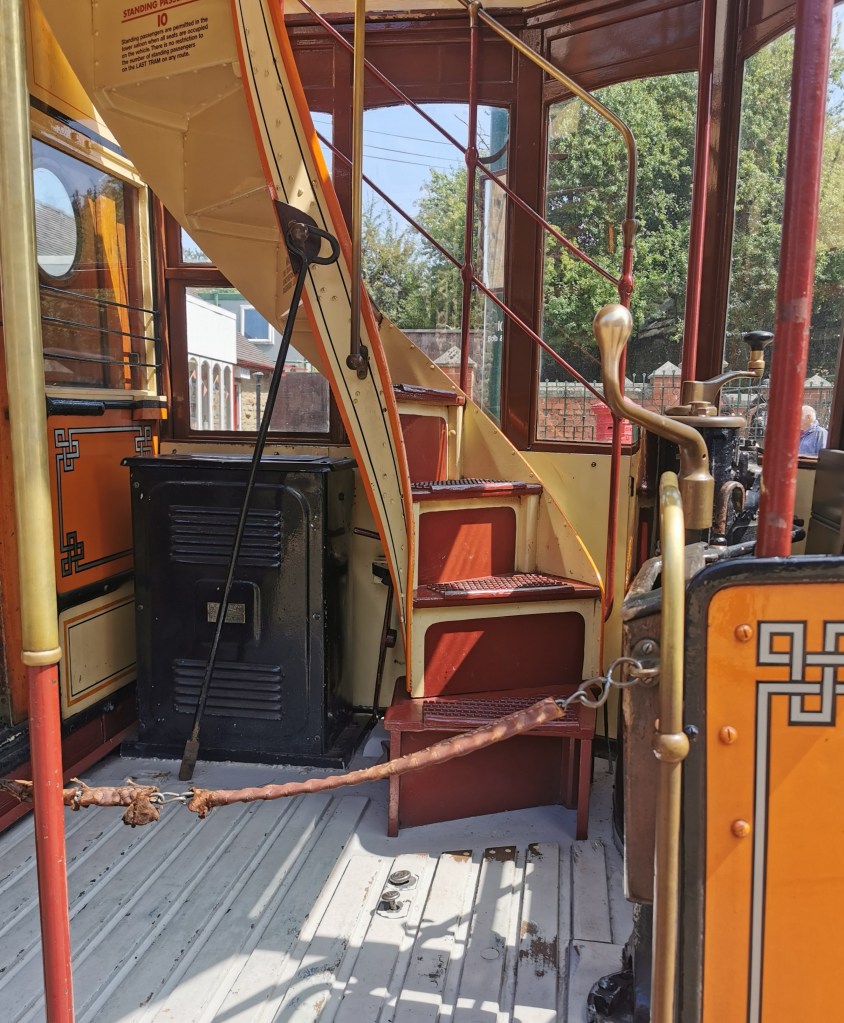
Climbing up and down the steep stairs (when the tram wasn’t moving!) brought back memories of riding on trams (trolleybuses and buses also) where you had to get up out of your seat while the tram was travelling, so the conductor could press the bell to tell the driver to stop, then clambering downstairs while it was still moving. Somehow, we managed not to plummet out of the open rear entrance. Today it looks so unsafe and I’m amazed that there weren’t more accidents.
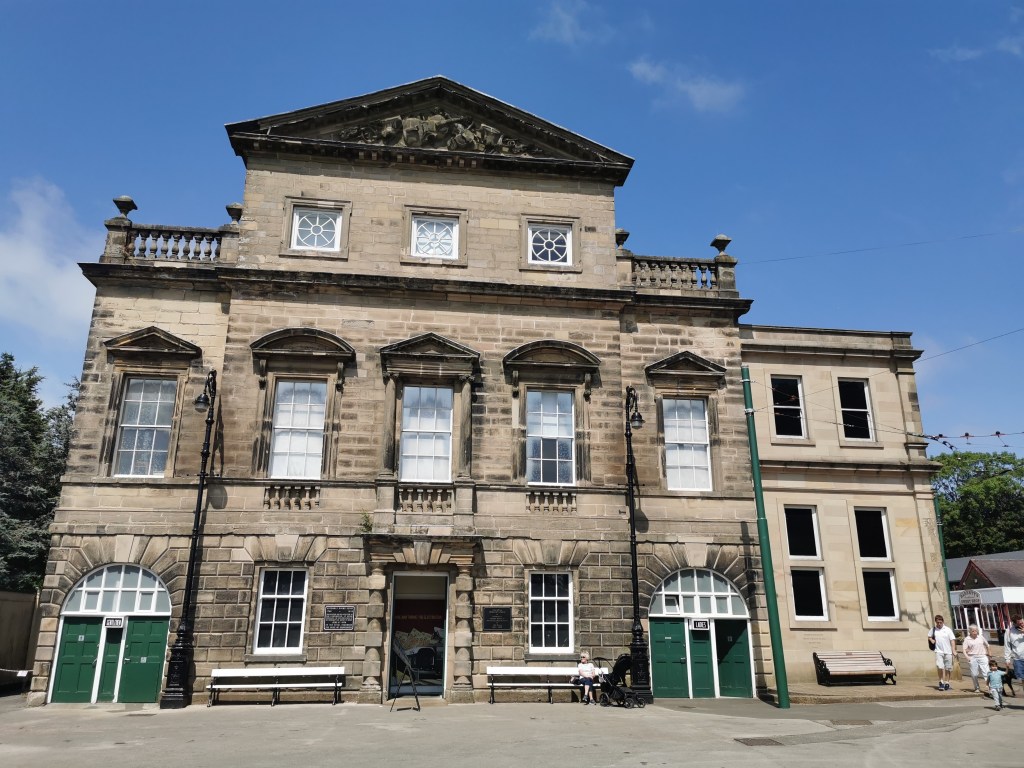
We had a break inside the Derby Assembly Rooms, rebuilt at the museum, which hosts the museum offices and exhibitions of tramway material – this time there was an exhibition about new tramway systems and a display of photographs and maps of the old systems. We took some photos of places that we knew.
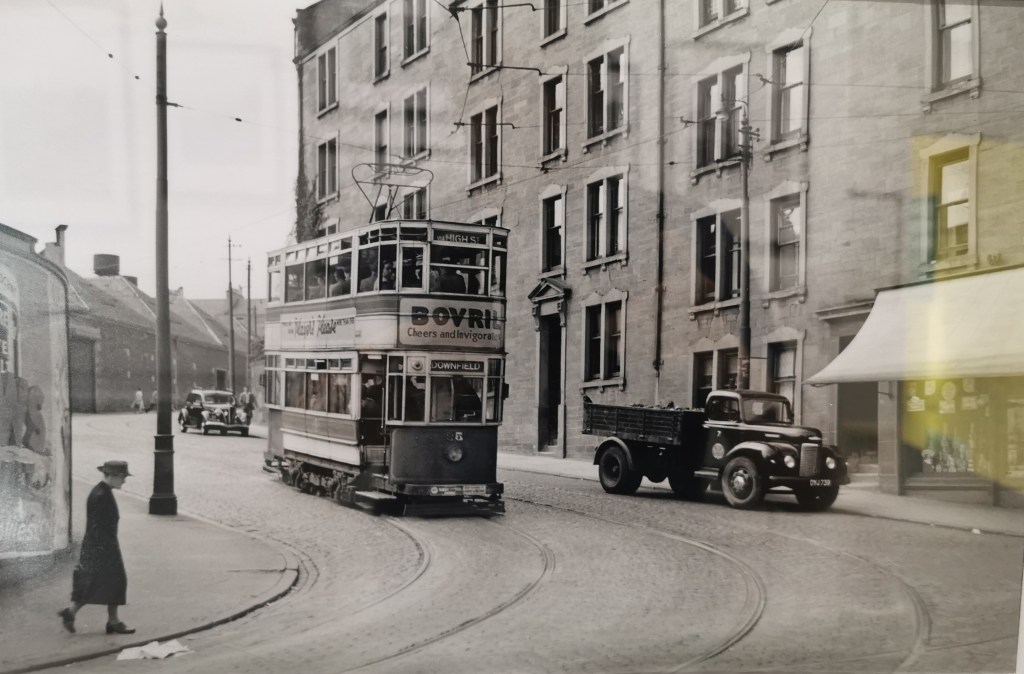
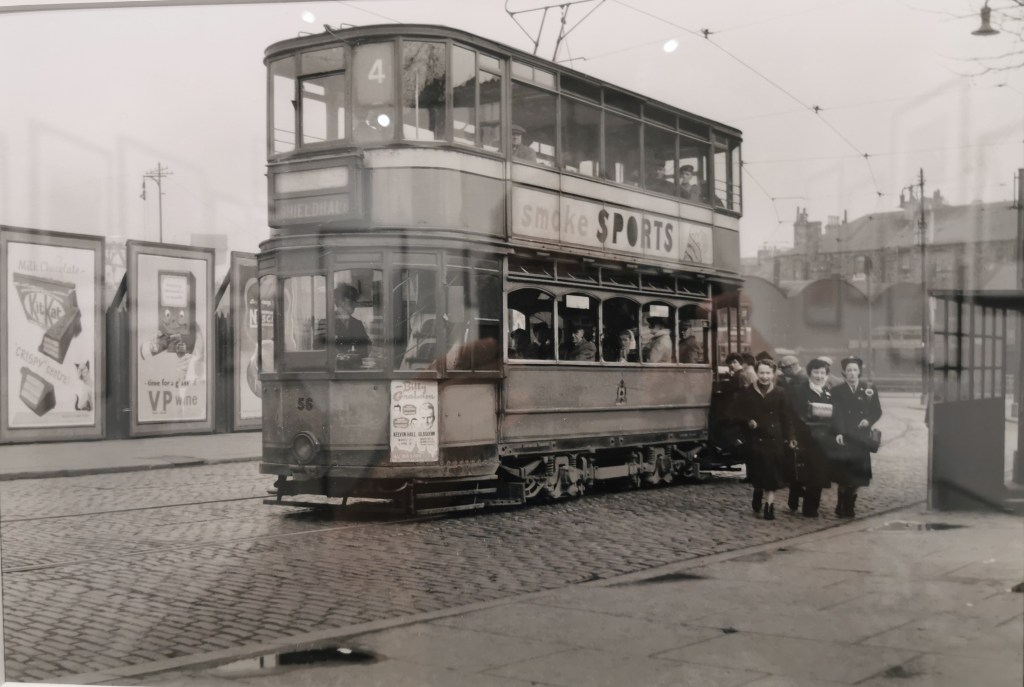
Trams in Dundee (left) and Glasgow (right)
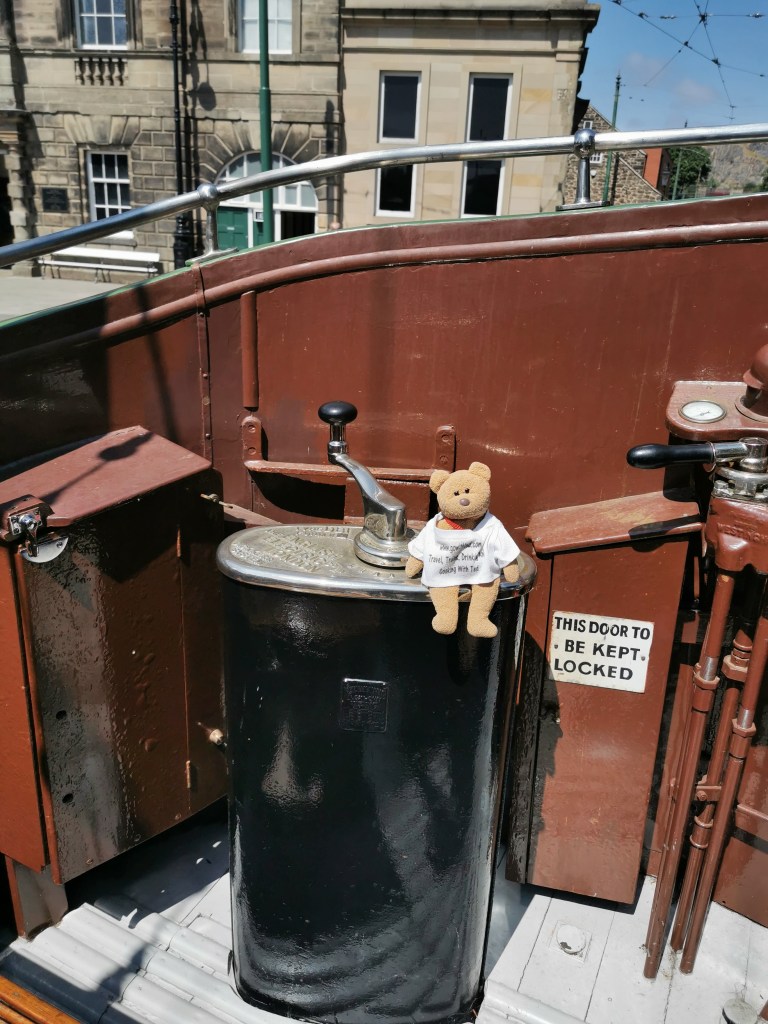
Ted learns to drive No. 236
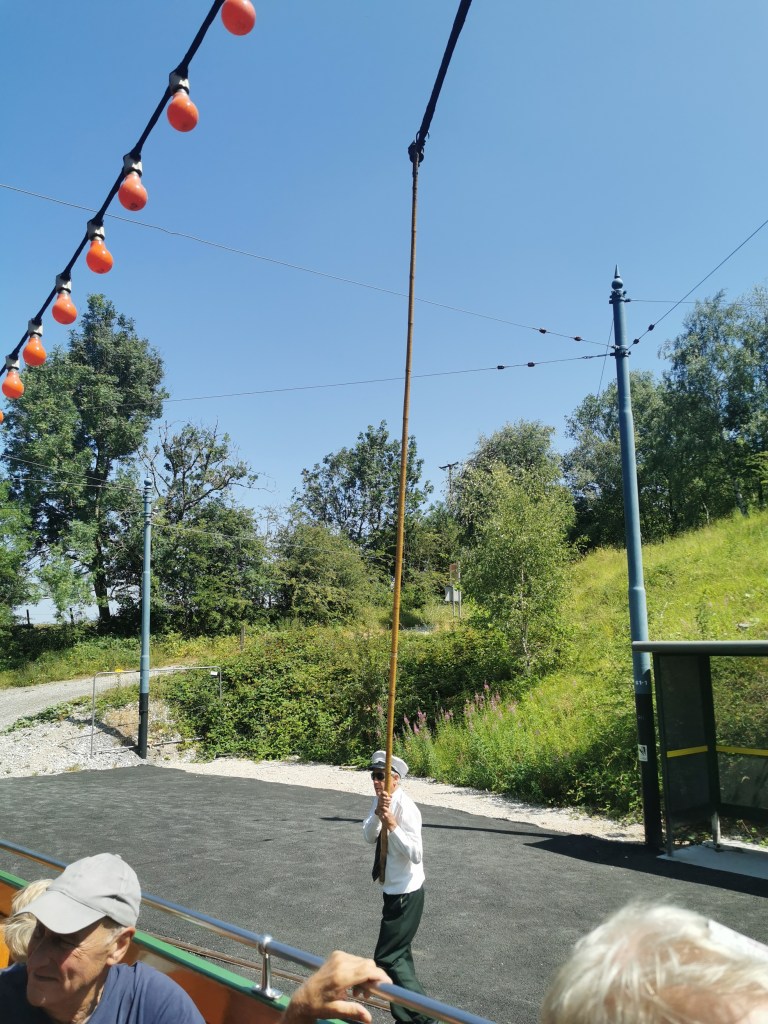
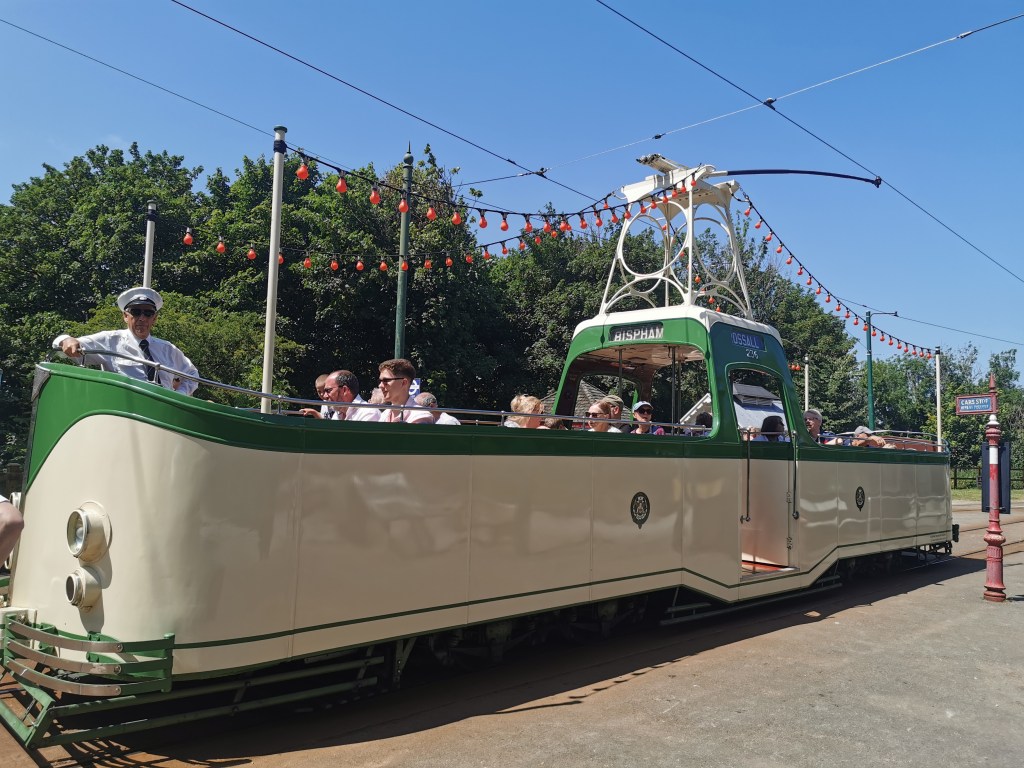
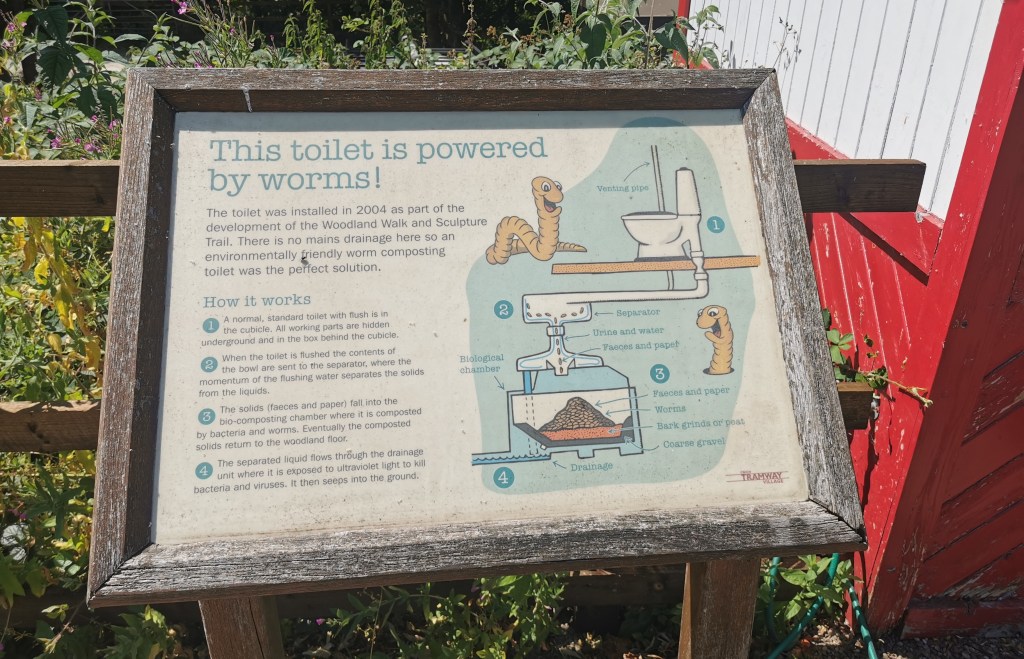
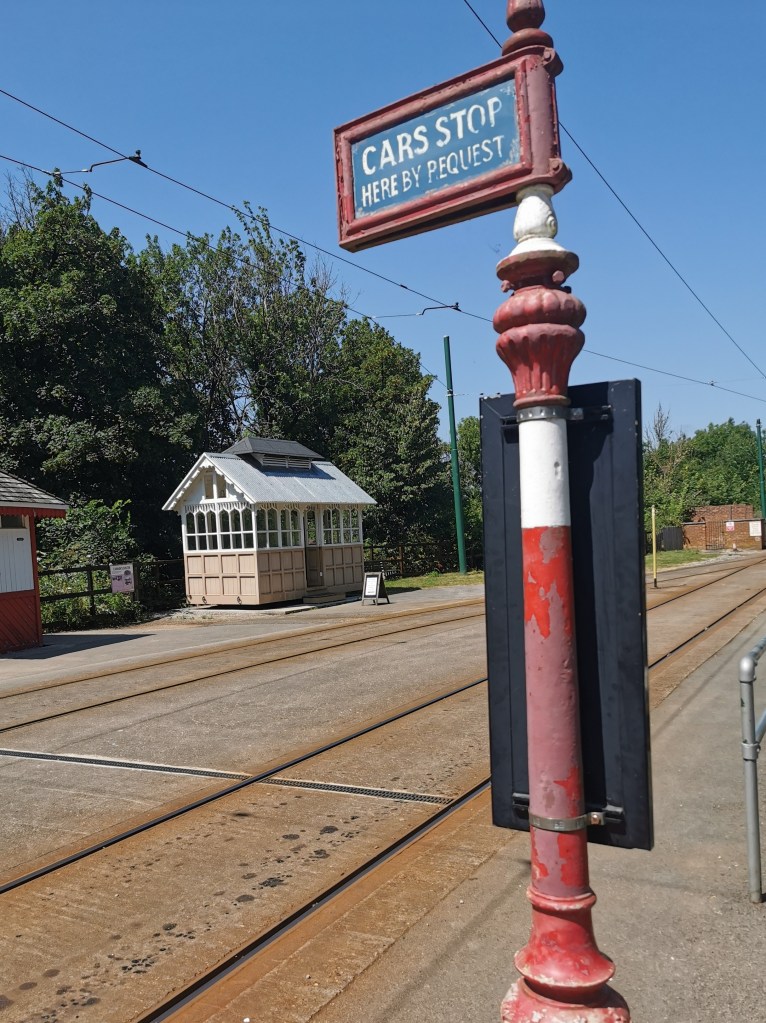
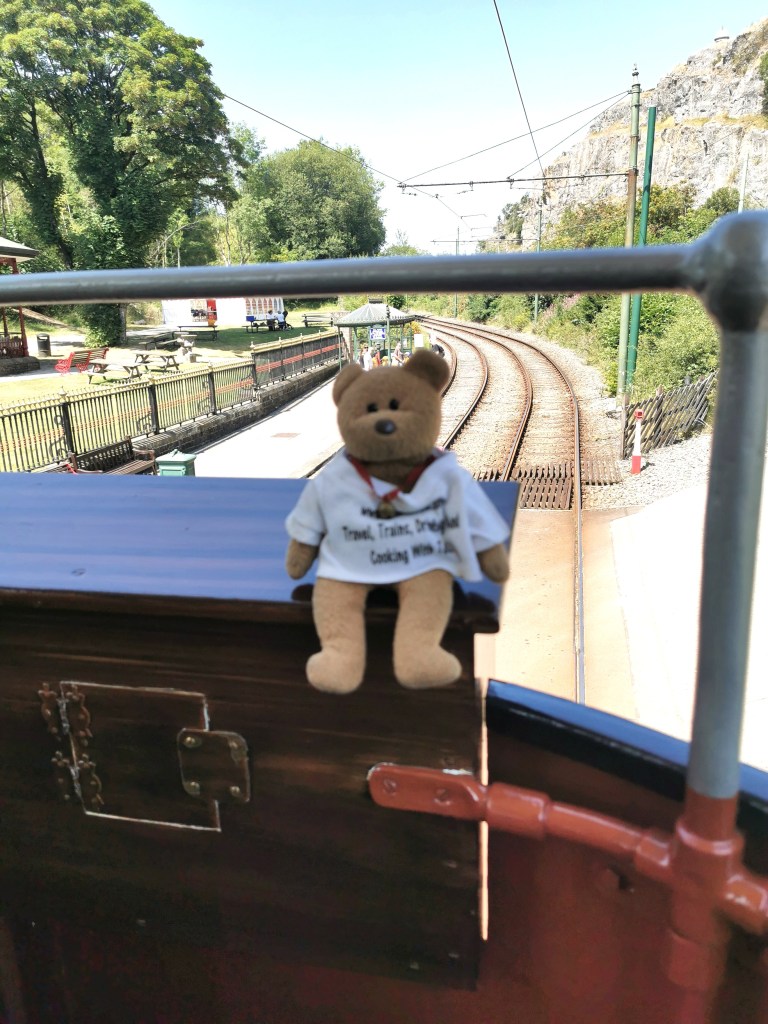
The second tram was a Blackpool tram, No. 236, a single deck open boat car, built in 1934, which took tourists along the seafront until 2004. We watched the driver turn the trolley pole round to face the right way and headed off. On the return we stopped off at Wakebridge, where there is a lead mining display, a cabmen’s shelter and a toilet cleaned by worms.
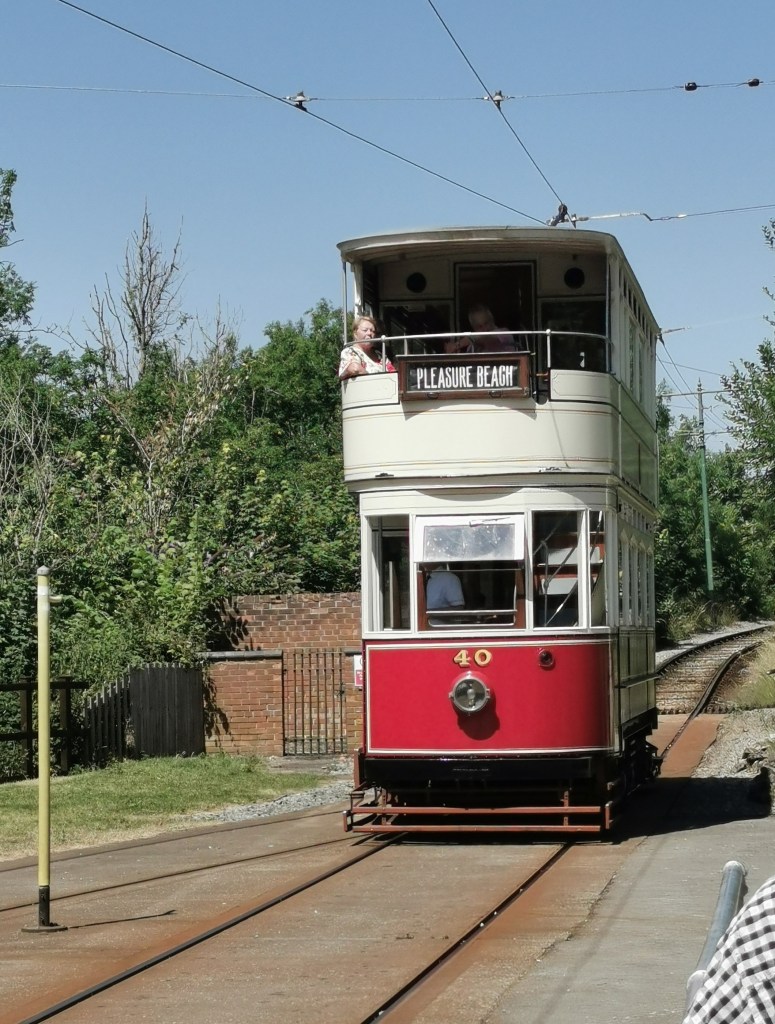
We waited there until the third tram came along. This was another Blackpool tram, No. 40, this time a double decker, fairly similar in design to the Glasgow tram, which was built in 1926 and operated until 1963.
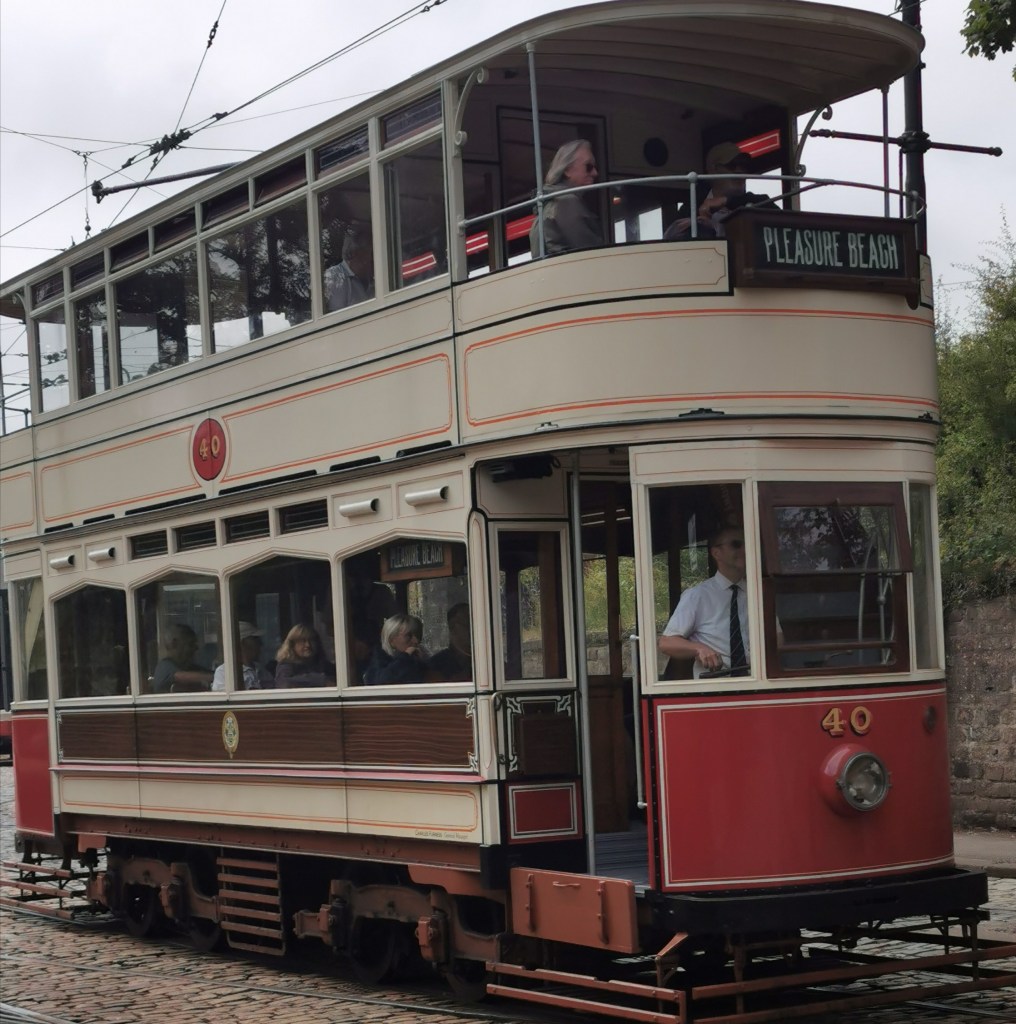
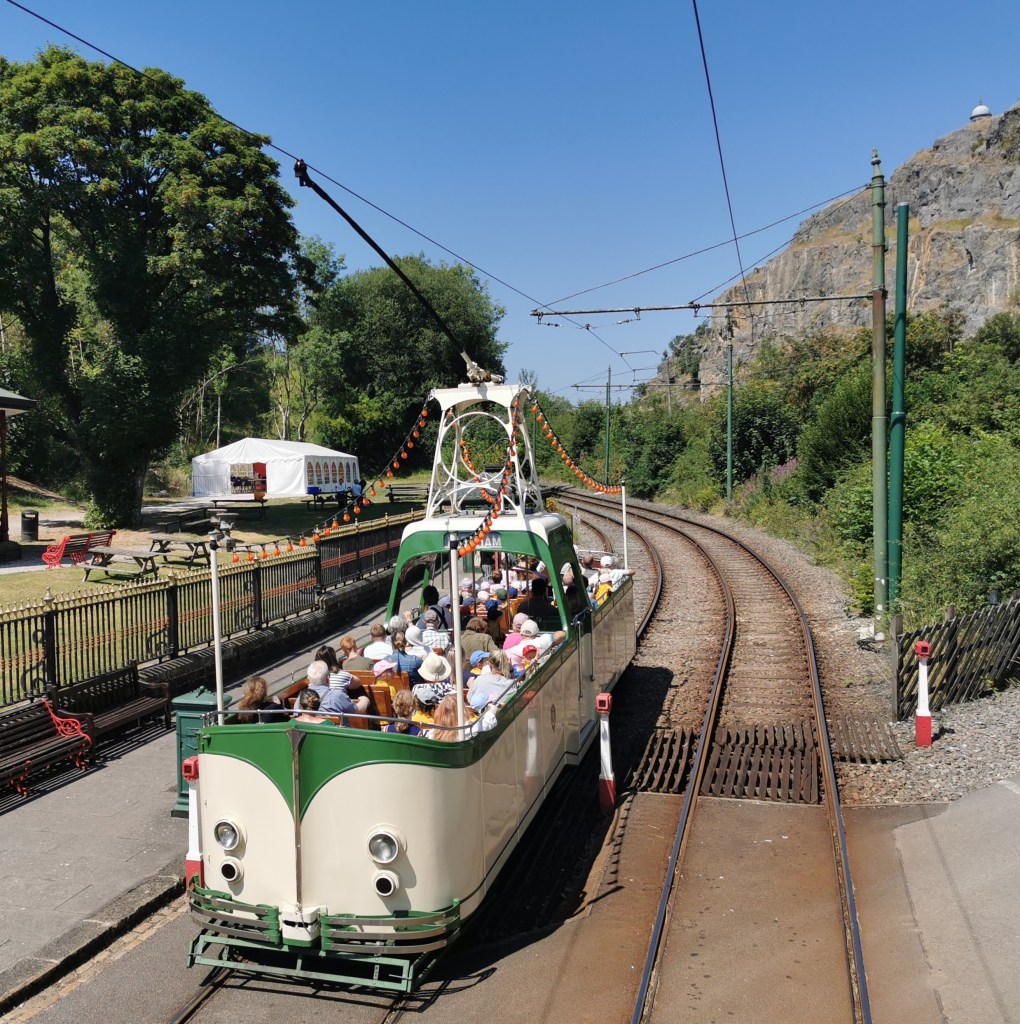
The Blackpool trams
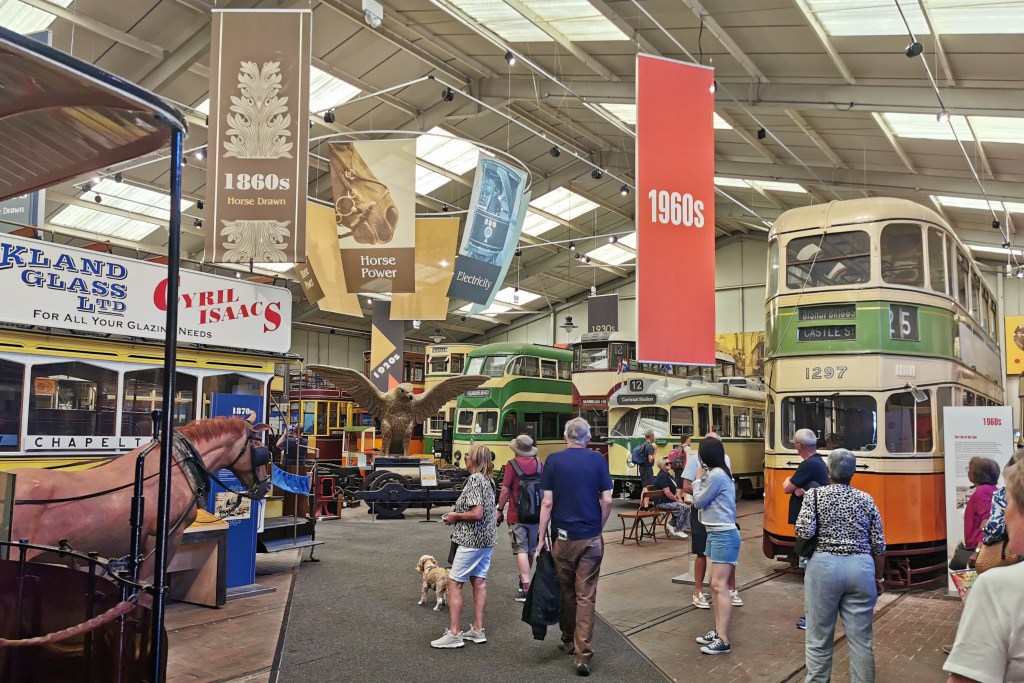
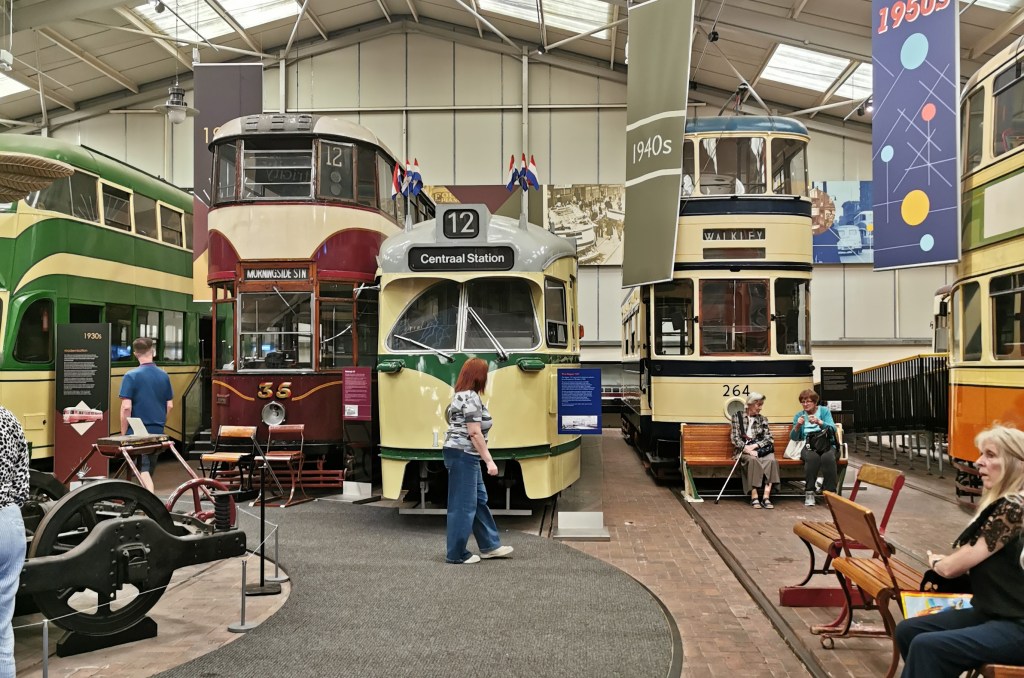
Then it was time for the static exhibits. First, we had a look round the depot where the trams, presumably those which are able to move under their own power, are stored. An interesting collection, not only from the UK. We then moved on to the Exhibition Hall which is a display of static trams, again from various UK cities and other countries. They are arranged in a circle and illustrate the development of trams from the 1860s to the 1960s. There are full details of the history of every tram in the collection on the museum’s website, www.tramway.co.uk .
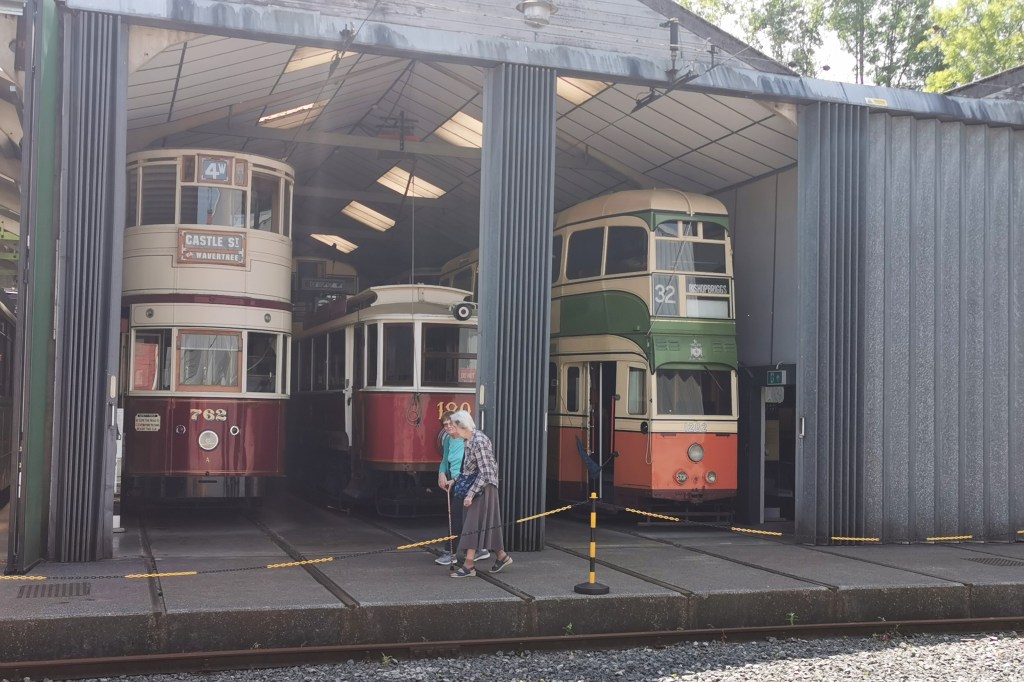
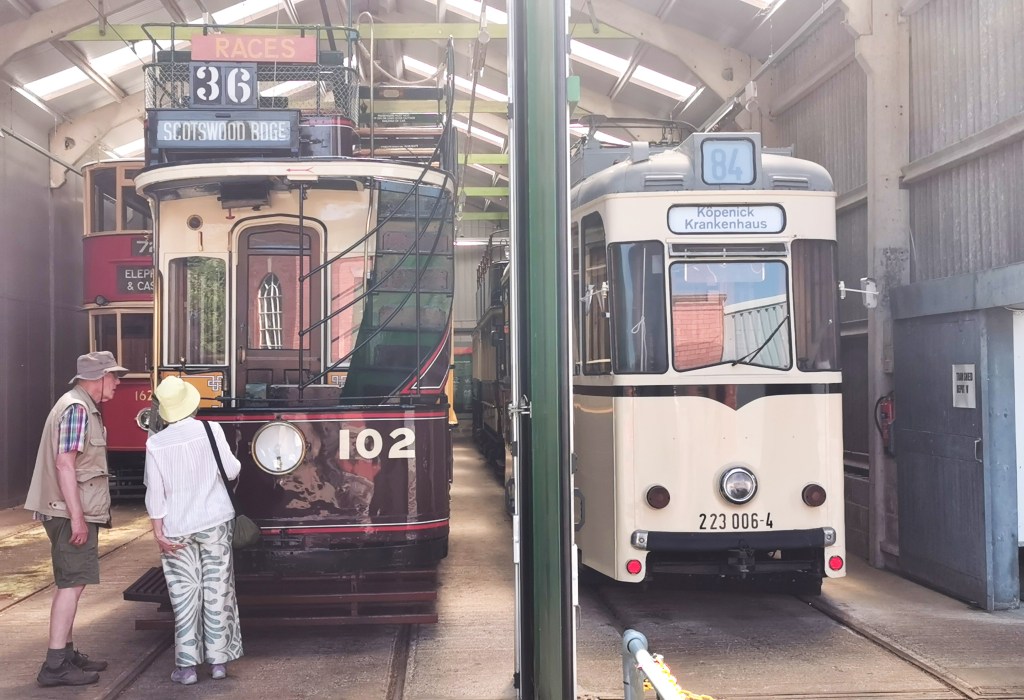
The tram depot and, nearby, the Red Lion
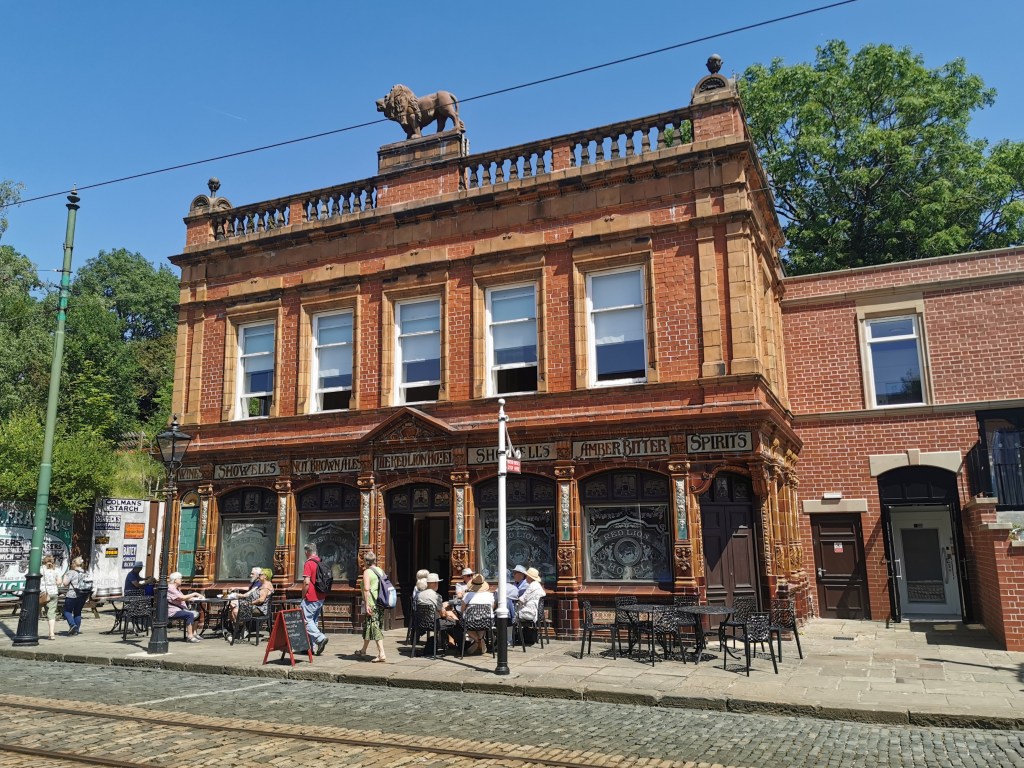
Also on site is the Red Lion, an historic pub, with a detailed tiled frontage. It was rebuilt at the museum after it was threatened with demolition for a road scheme at its original site in Stoke-on-Trent. We finished our visit to the museum there. They had only one real ale on – a hazy pale ale served straight from the cask. While not something that would usually be to our taste, it was fine.
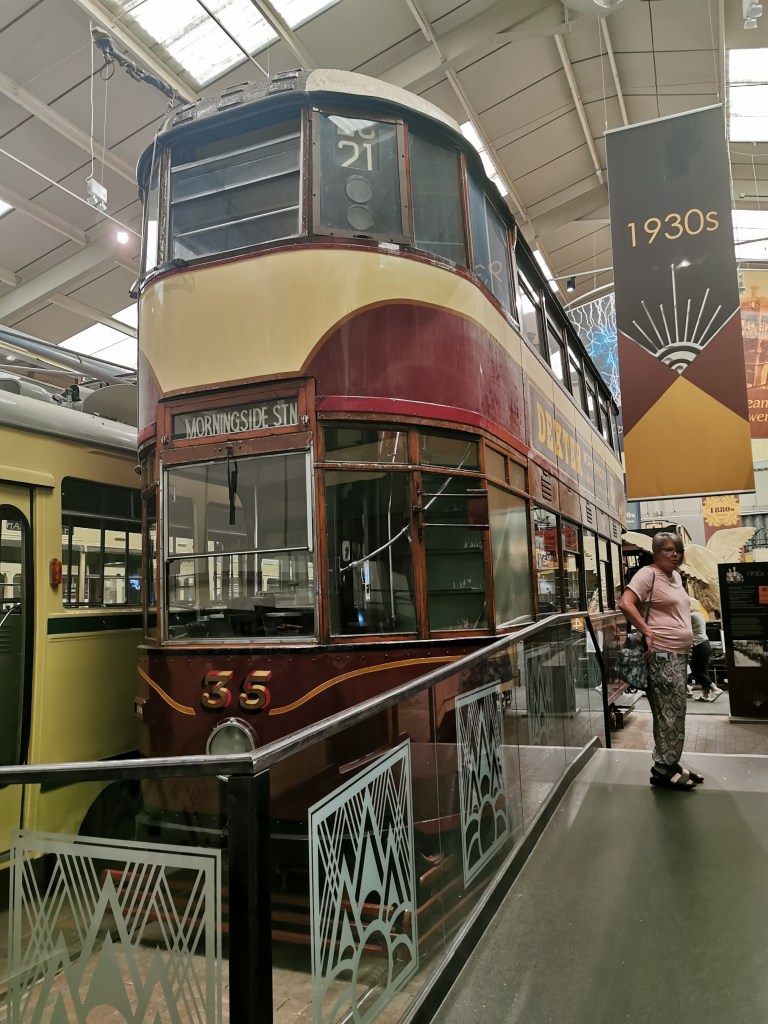
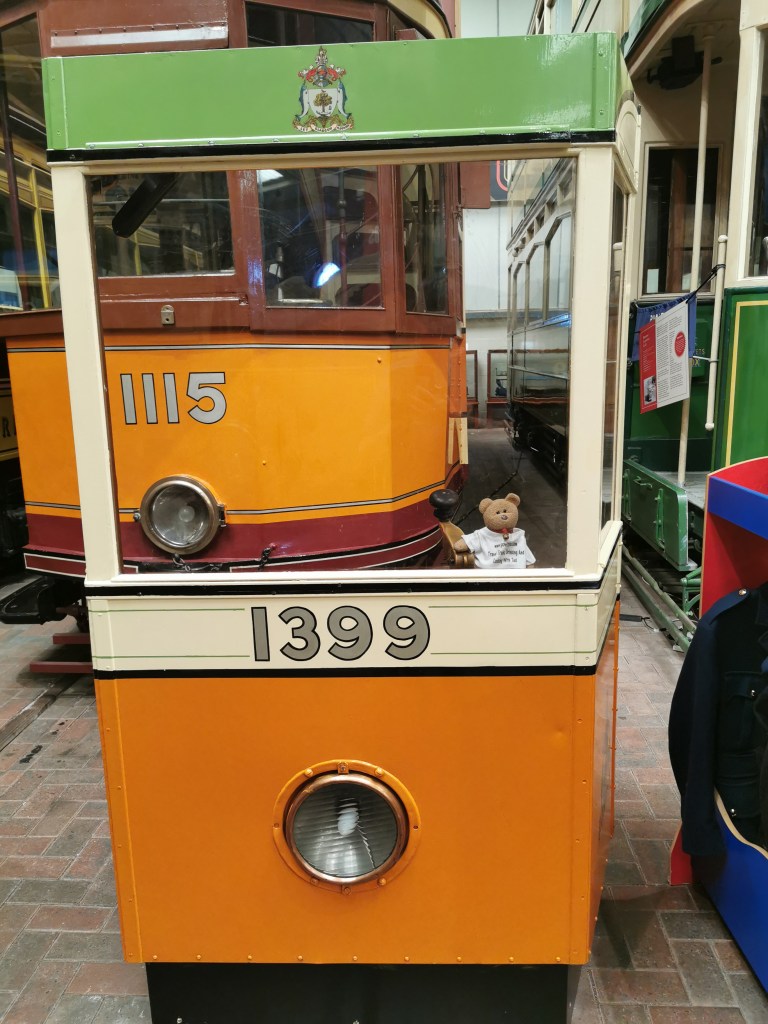
In the Exhibition Hall – an Edinburgh tram and Ted has another go at driving
It had taken us more than three hours to look round, we thoroughly enjoyed ourselves and can recommend it to anyone with any interest in trams. We may well return at some point. By then we had missed the bus we had planned to catch and, when I checked, the next bus only ran during school holidays. Rather than wait for ages we walked down a steep lane to Whatstandwell station and caught a train back to Matlock. The museum lists Whatstandwell as an option to arrive at the museum, particularly from Derby, but it is a very steep mile-long climb up a lane and not recommended for anyone but the fittest.
Back in Matlock we called in at bod Matlock – a modern café bar in a conversion from a furniture shop– while the beer was fine the place was not our type of boozer. We called in again at the Remarkable Hare then spent the remainder of the evening back in the Red Lion, where we managed to avoid watching the World Cup match.
Heights of Abraham
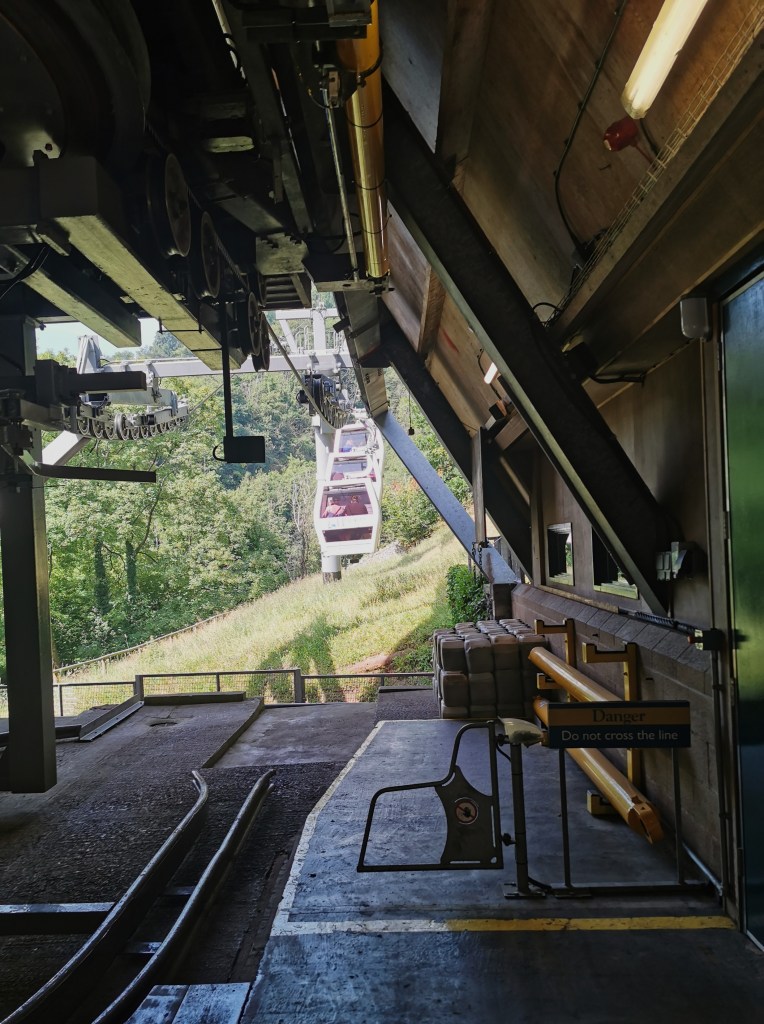
After breakfast on Thursday we checked out of the Red Lion and began the journey home. However, we had decided that we had enough time to stop off at the Heights of Abraham. We had seen the cable car to the Heights on the map and on the way past and couldn’t resist a journey on it. We caught the train one stop to Matlock Bath and walked round the corner to the lower station.
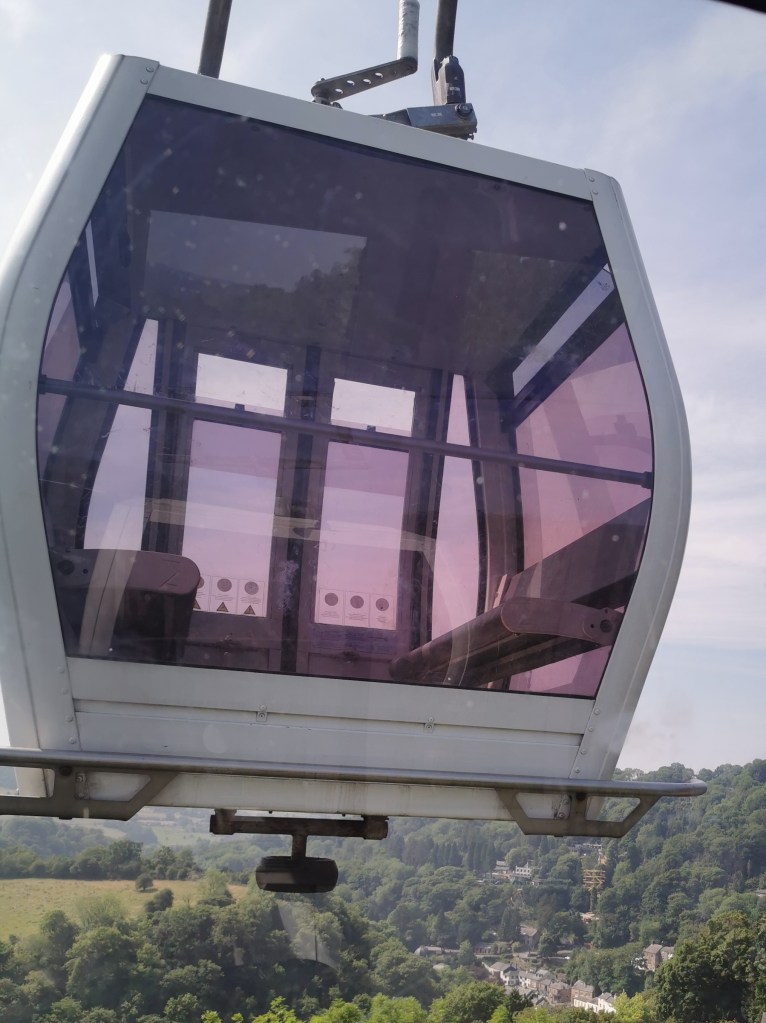
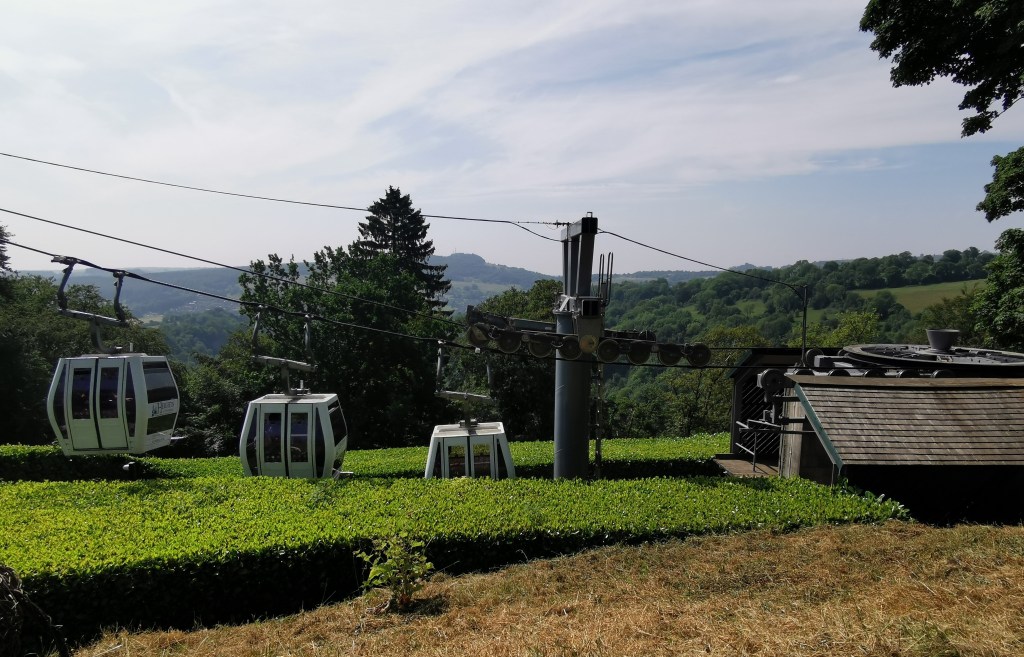
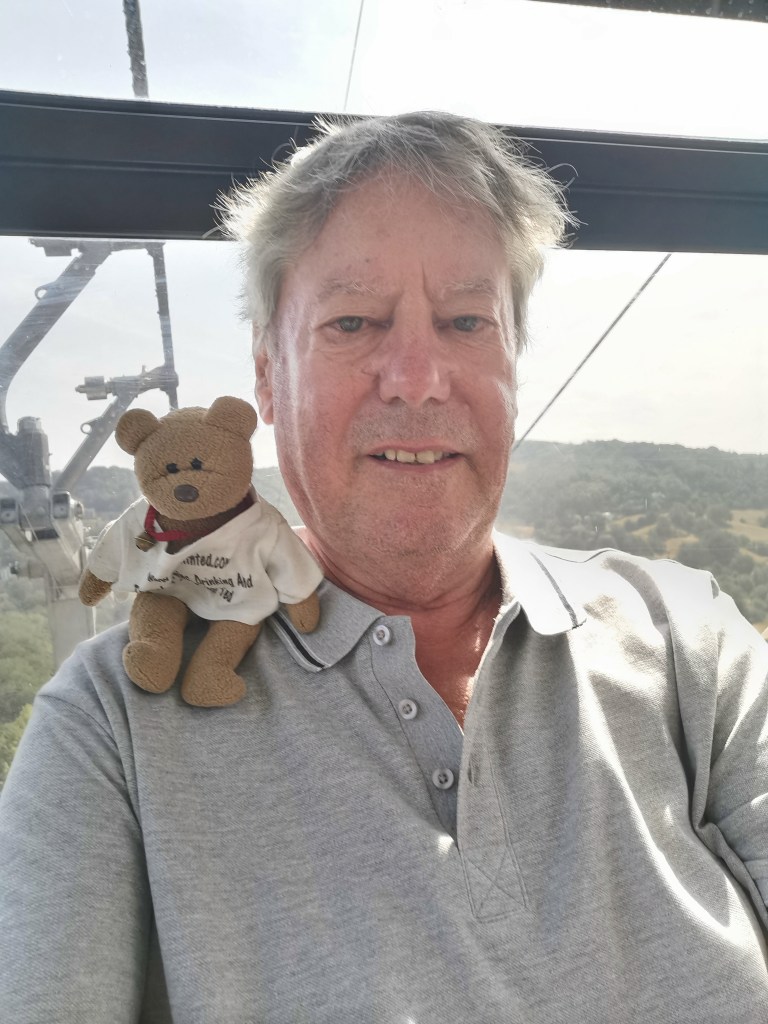
The Heights of Abraham is a hilltop park on Masson Hill, developed as a tourist attraction since Victorian Times. It includes walks, children’s activities and cavern and mine tours. The cable car was built to improve access in 1984 and climbs 169 metres. The cars are arranged as groups of three small gondolas seating up to six people. The route crosses the Derwent Valley above Matlock Bath and climbs to the hilltop. We only had time for a quick look round though there was much more to see. We managed to avoid a Wombles exhibition – a long way from Wimbledon. We bought some tat at the souvenir shop to add to the odds and ends we had bought at the Tramway Museum, then descended and caught the train to Derby.
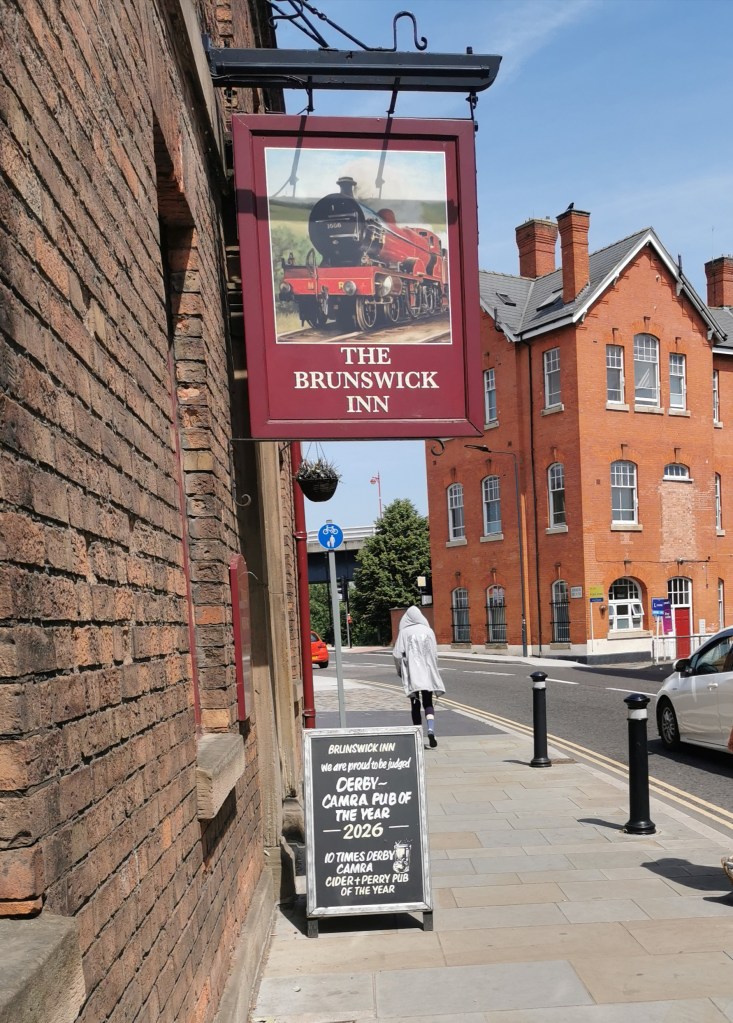
An essential part of changing trains at Derby is to take a short walk along the road to the Brunswick Inn, which CAMRA describes as the oldest purpose-built railway inn in the UK and part of the Derby Railway Village. It is a fine pub, currently Derby CAMRA Pub of the Year 2026. The Brunswick Brewery is adjacent to the pub. Their bitter, an excellent pint – goes by the name of ‘The Usual’ , a fine name for a beer. After that it was back to the station and onward home to Durham. A short trip but a good one.
Practicalities
Hotel:
Red Lion, 65 Matlock Green, DE4 3BT
Pubs:
Please check opening hours as some only open in the evenings and/or are closed on certain days.
Matlock: Bod Matlock, 22 Dale Rd. DE4 3LT ; Farmacy, 76 Smedley St, DE4 3JJ ; Newsroom, 75-77 Smedley St. East DE4 3FQ ; Red Lion, 65 Matlock Green DE4 3BT ; Remarkable Hare, 77 Dale Rd, DE4 3LT.
Tramway Museum: Red Lion, The National Tramway Museum, Crich, DE4 5DP
Derby: Brunswick Inn, 1 Railway Terr. DE1 2RU
Tramway Museum:
The National Tramway Museum, Crich, DE4 5DP, http://www.tramway.co.uk
The site includes details of bus times to reach the museum. Hurleys nos. 140 and 141 run to and from Matlock and there are less frequent journeys from Belper, Ripley and Alfreton. Note that there are no services on Sundays or Bank Holidays.
Heights of Abraham
The Heights of Abraham, Dale Rd, Matlock Bath, DE4 3NT, http://www.heightsofabraham.com
Links to other relevant pages on http://www.gowithted.com
Our previous visit to Derbyshire, based in Buxton. Buxton and the Peak District .
The trams of Glasgow are mentioned in the Transport in Glasgow page. Transport in Glasgow 1950s-1970s .
For our favourite pubs in Derbyshire and across the UK see Our Favourite UK Pubs .
Copyright: the text and photos are Copyright © Steve Gillon, 2026.