An introduction to the Costa del Sol and Andalucía

This brief guide was initially written for visitors to our home in Benalmádena, on the Costa del Sol, to encourage them to explore the rest of the coast. It has since been expanded to cover inland Andalucía and is based on travels throughout the region over many years by Ted, Steve and Colin.

Andalucía is the most populous and second largest of the autonomous communities of Spain. For simplicity, autonomous communities are referred to as regions throughout this website. The population was 8.6 million in 2024, 18% of the Spanish total, and the region covers 17% of Spain. It is divided into eight provinces (listed clockwise from Málaga) – Málaga, Cádiz and Huelva on the Atlantic coast, Sevilla, Córdoba, Granada and Jaén inland and Almería on the Mediterranean coast. Each province takes the name of its capital city. Sevilla is the regional capital and seat of the Andalucían Government – the Junta de Andalucía.
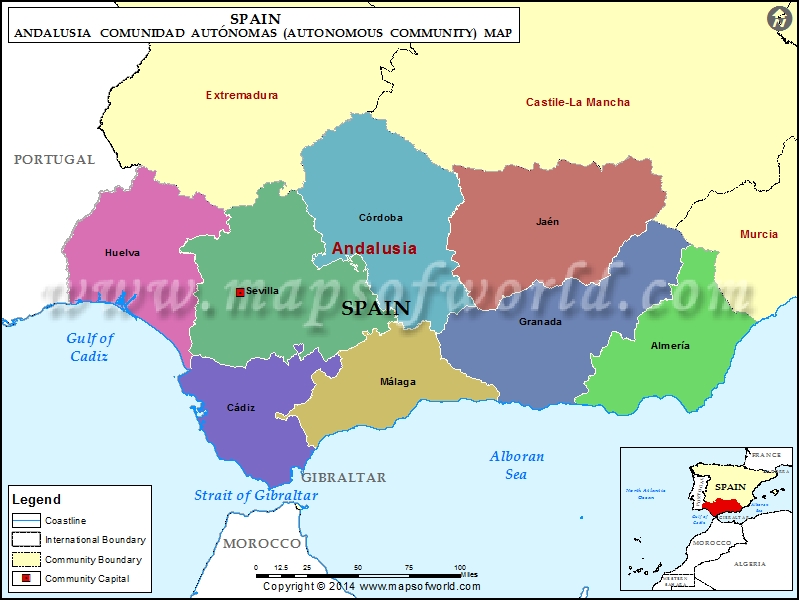
Much of the area is accessible on a day trip from Málaga, but to begin to get the real flavour of the area it is best to build a trip around a short break. In particular, the historic cities of Granada, Sevilla and Córdoba are worth much more than a visit of a few hours. Note that there are some areas that we have yet to explore and what follows is based on our experience of Andalucía to date.
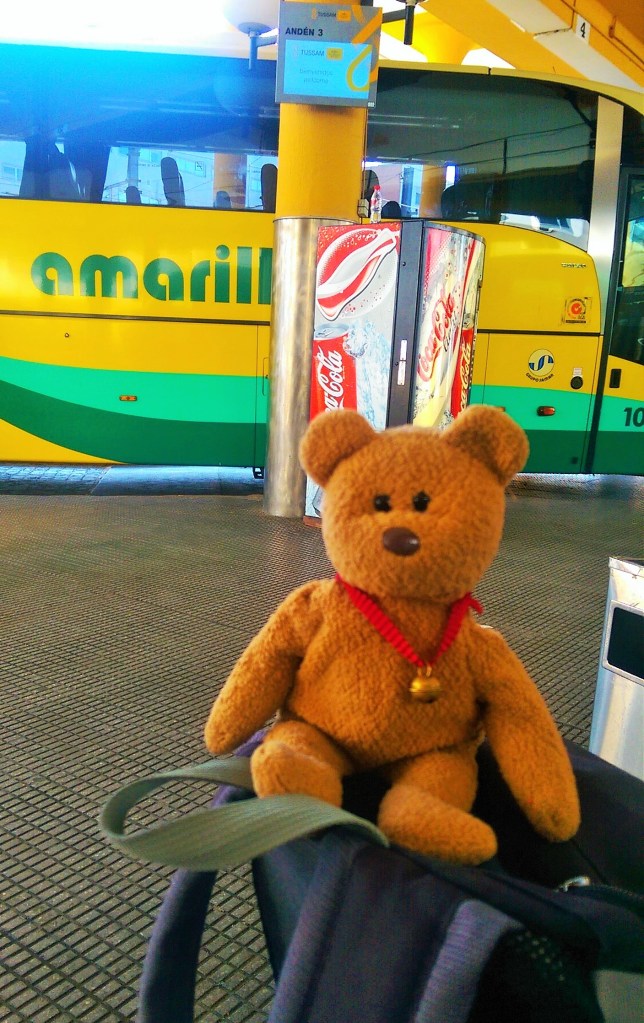
The guide begins with the province of Málaga and the Costa del Sol, then visits the other seven provinces in turn. At the end of the guide there are links to the main sites for transport information to assist in reaching the places described by public transport.
MÁLAGA and the COSTA DEL SOL
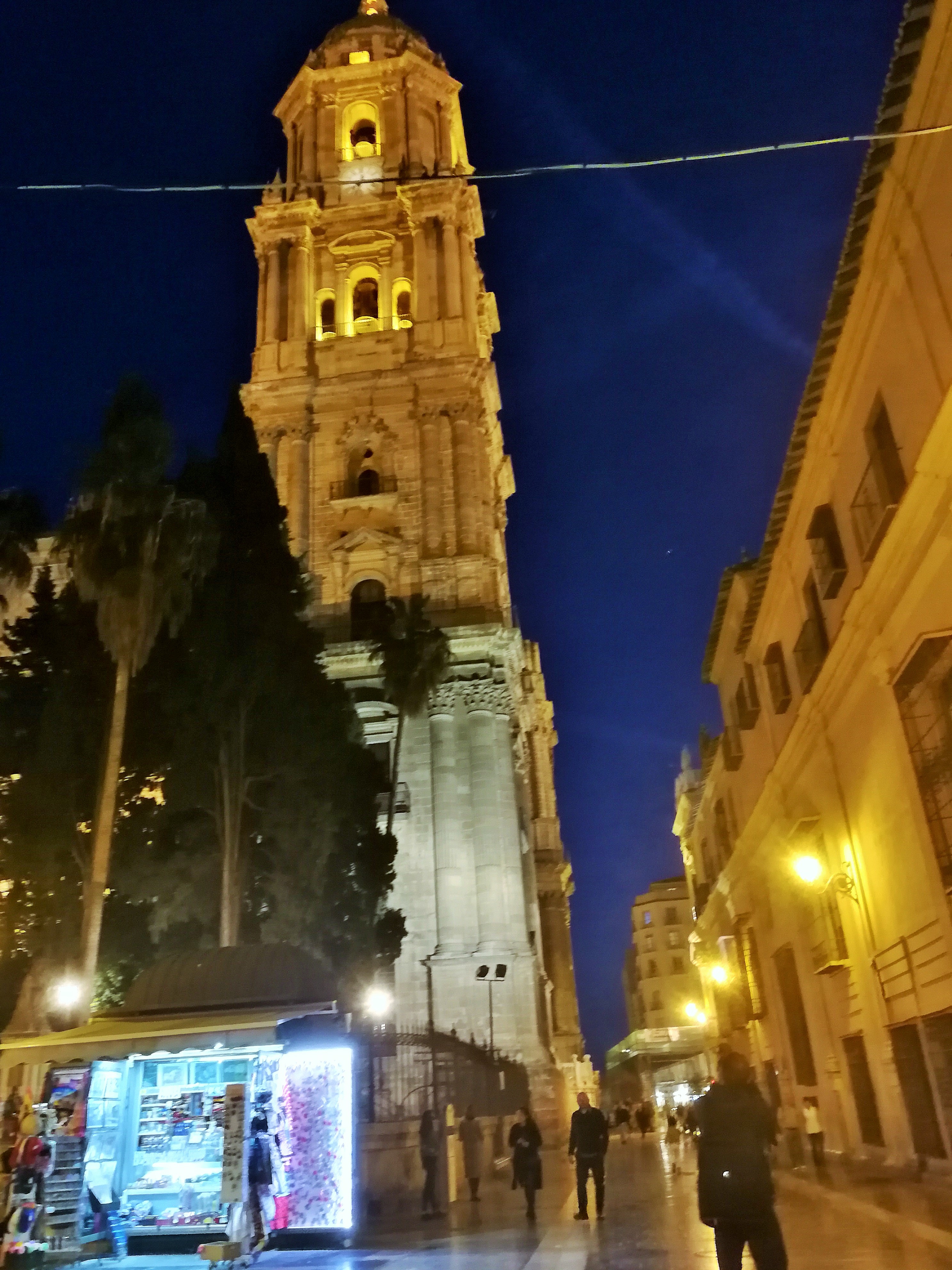
The Costa del Sol is the coast of the province of Málaga and stretches for more than 150 kilometres, both to the west and east of Málaga city.
Málaga city sits at the centre of the Costa del Sol. Just outside the city is Málaga airport, the gateway to the region. Over the last 40 years Málaga has developed into a modern and vibrant destination which repays getting to know, with many historic buildings, museums and a fine selection of tapas bars. See the Guide to Malaga for a more detailed introduction to the city.
THE WESTERN COSTA DEL SOL
This is the area best known to British tourists since the development of package holidays and the growth of the main resorts. This has been followed by large numbers of northern Europeans who have bought second homes in the area or settled there permanently, to benefit from the climate and the lifestyle (and the prices).

Heading west from Málaga, the first resort is Torremolinos, the original high-rise resort on the Costa. Torremolinos went through an extremely tacky period, though it has been improved. There is no shortage of things to do. This includes attractions such as Crocodile Park and the Aqualand water park. and a wide variety of restaurants, bars and nightlife. There is a large selection of gay bars and discos – the town encourages and welcomes LGTB tourism. The long beaches are very busy in high season but are kept in good condition. It is possible to walk along the promenade from Torremolinos to the marina at Benalmádena, passing through Carihuela, where there are plenty of good seafood chiringuitas and restaurants.
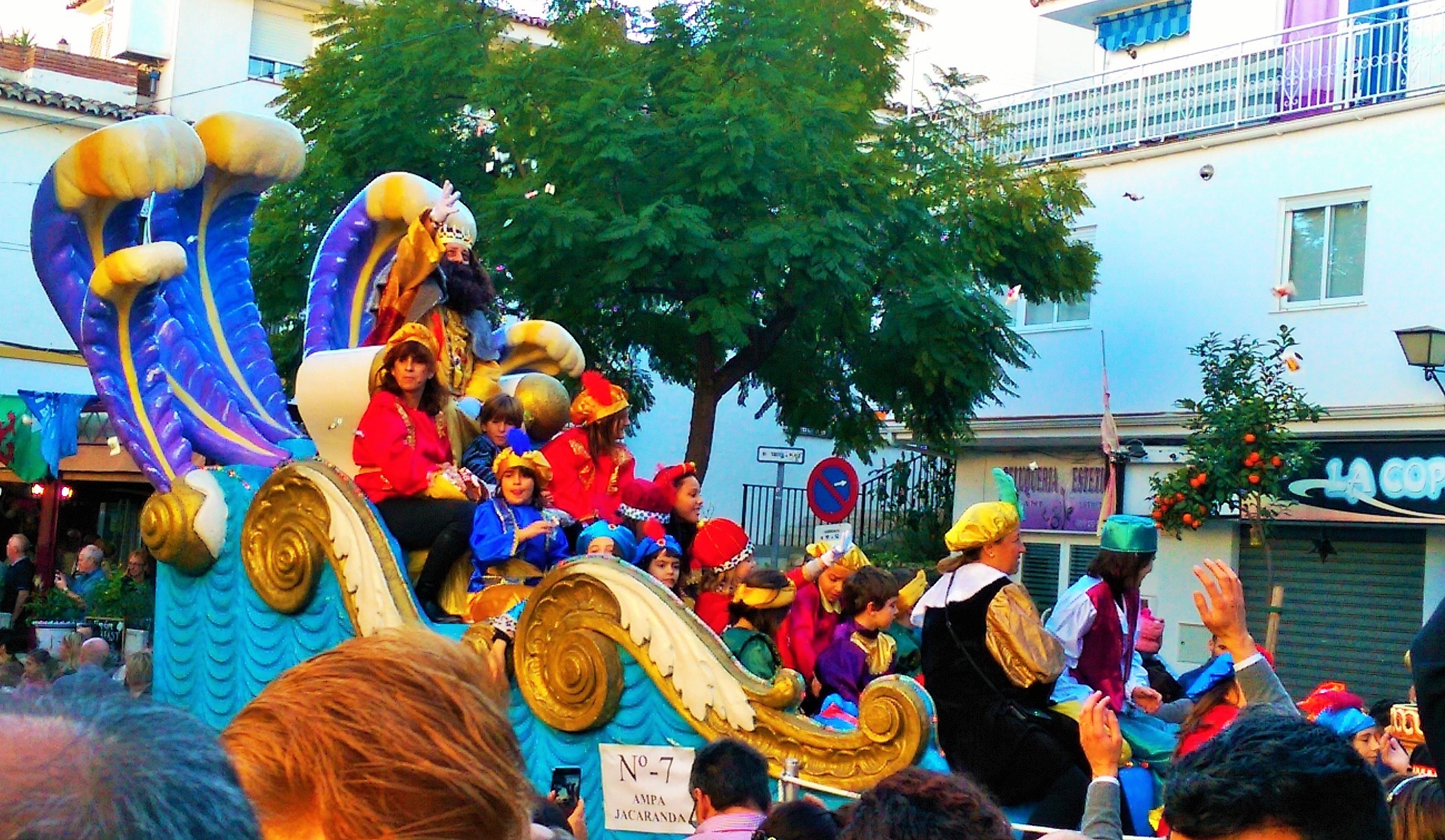
The municipality of Benalmádena, Ted and Steve’s home in Spain, includes the beach resort of Benalmádena Costa, the town of Arroyo de la Miel and, further inland, the original village of Benalmádena Pueblo. See the separate guide Introduction to Benalmadena for a more detailed description.
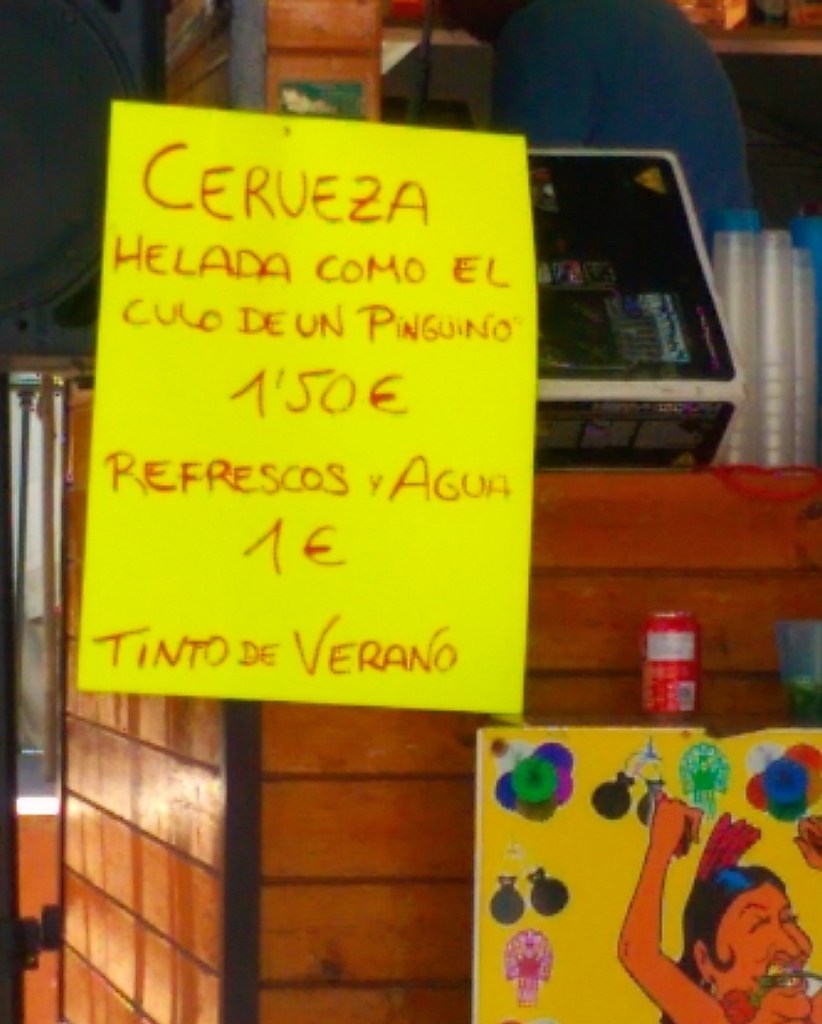
All along the coast are chiringuitos, beach bars where the fish is fresh and the beer is as frozen as a penguin’s arse.
Fuengirola is another large Costa resort, built around two older fishing villages – Los Boliches and Fuengirola itself. Among the skyscraper hotels and apartment blocks, the old centres of both villages are home to a wide range of bars and restaurants, excellent fish restaurants in particular. There is a large open-air market on Tuesday mornings and the Bioparc zoo is popular with visitors. At the west end of the long beach are the remains of the restored Sohail Castle.
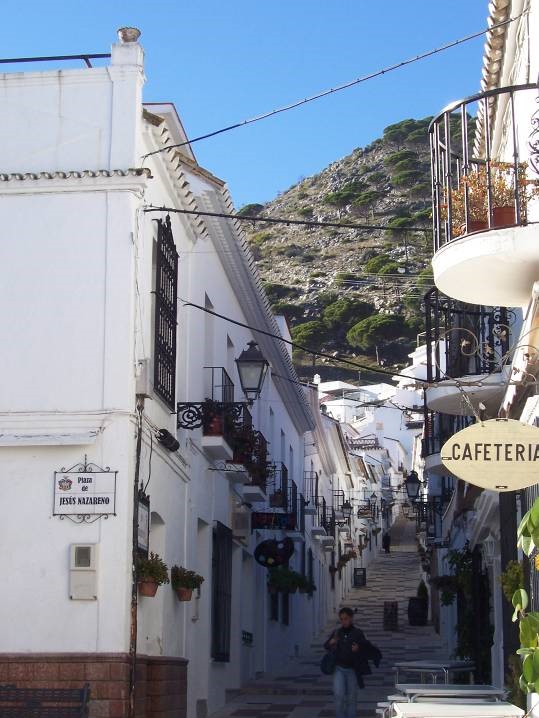
Mijas is,or rather was, a traditional Andalucían pueblo blanco (white village) on the hillside inland from Fuengirola, 400m above sea level. From the walls of the remains of the fortress there are excellent views over the coast. Initially ‘discovered’ by foreign artists and writers, the village is picturesque and worth a visit. It is now very touristy and a favourite destination for coach parties from all over the coast, who fill the souvenir shops and ride the donkey taxis. Later in the day is the best time to experience Mijas village life.
Further west the route along the Western Costa Del Sol passes through endless suburban urbanizaciónes of apartment blocks and villas, interspersed with golf courses, to reach the towns of Marbella, San Pedro and Estepona. Marbella and its marina, Puerto Banus, are rich, flashy and expensive, though the old centre of Marbella round the Plaza de los Naranjos and neighbouring squares is pretty.

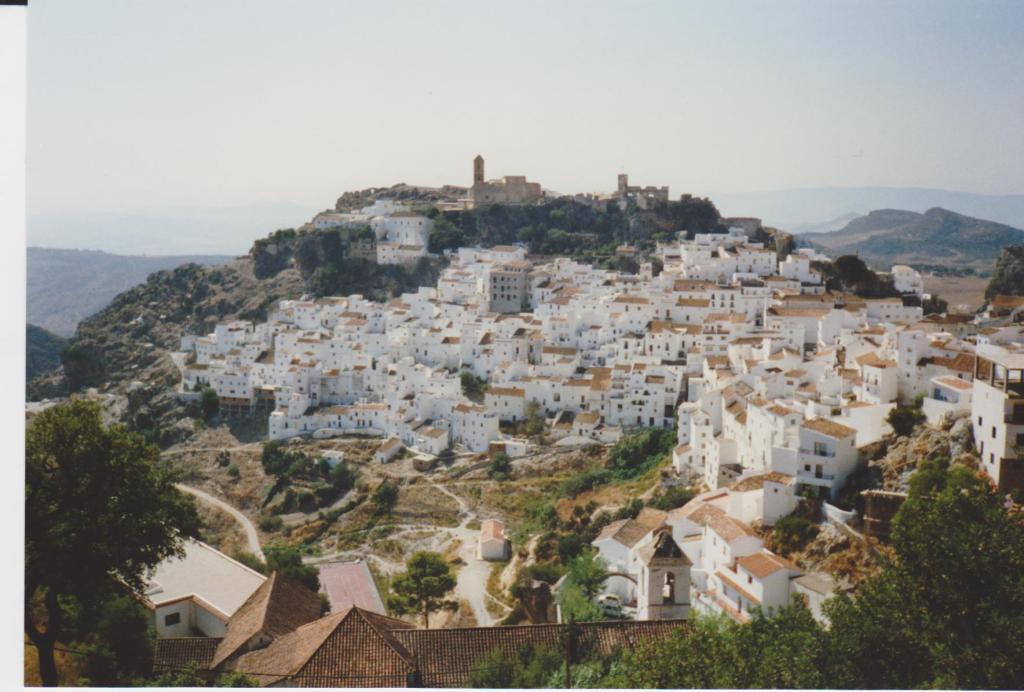
Inland from Marbella the scenic mountain road passes pleasant villages such as Ojén and Monda to reach the small market town of Coín. The small town of San Pedro de Alcántara is the junction for the road to Ronda which, once it has cleared the villa developments, winds its way through the mountains. Estepona is the last of the main resorts and has fewer high-rise blocks and a pleasant old town. Inland from Estepona, Casares, spilling down a hillside from its castle, is a largely unspoilt white village. The final stretch of the coast towards Gibraltar is in Cadiz province – see below.
EASTERN COSTA DEL SOL


To the east of Málaga are a string of resorts along the coast, with the older original villages on defensive sites a couple of kilometres inland. From the resort of Torre del Mar it is a short journey to Vélez Málaga, the main market town for the agricultural area of La Axarquía, sitting beneath a Moorish castle. From here a scenic road leads over the mountains to Granada. Also inland from Torre del Mar is the attractive white village of Competa, reached by another mountain road. Further along the coast is the main resort of the area, Nerja.

The picturesque old town is situated above a series of coves with attractive beaches, overlooked by the Bálcon de Europa promenade and viewpoint. Nearby are the Cuevas de Nerja, inhabited in prehistoric times and rediscovered in 1959 – a tour of the caves is worthwhile and impressive. A few kilometres inland the whitewashed village of Frigiliana is reckoned to be one of the most attractive in Spain. Steep hills and narrow lanes mean that it is easy to get away from the crowds of visitors and enjoy the village. East of Nerja the coast road continues into the province of Granada.
INLAND MÁLAGA
Away from the coast, inland Málaga is fascinating and well worth exploring. While villa developments full of ex-pats have spread inland much of the area is mountainous, preventing over-development. Many of the old villages have benefitted from an influx of people in search of the ‘real Spain’, slowing down and sometimes reversing the problem of rural depopulation, others remain off the beaten track.
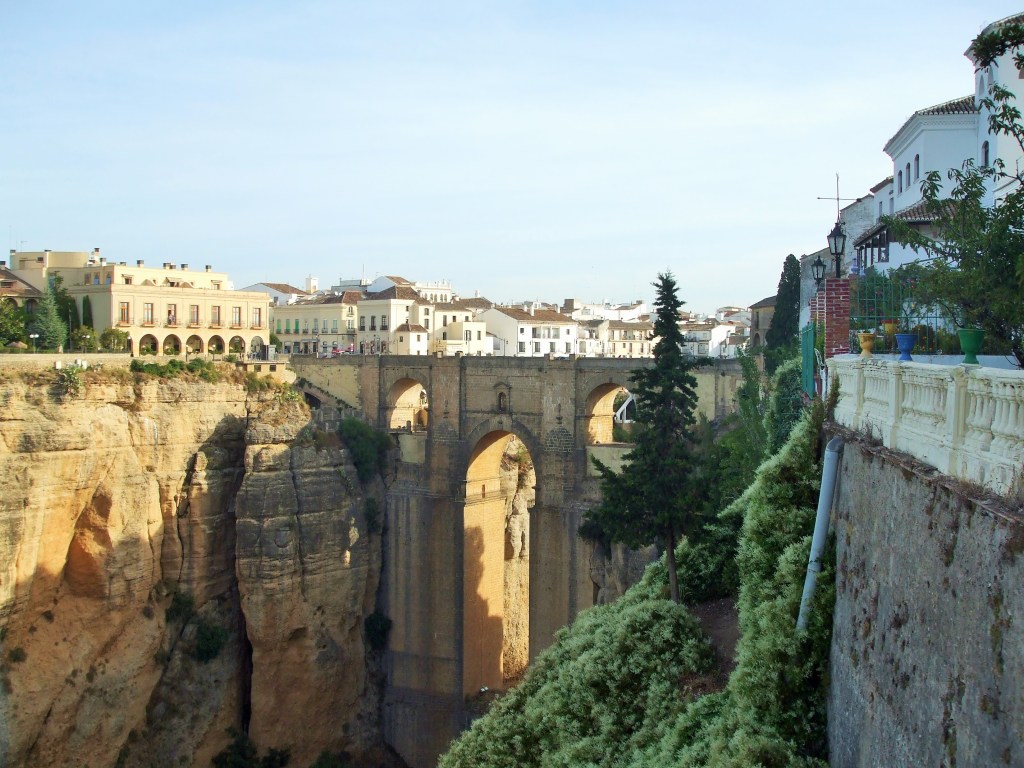
To the west of the province the main town is Ronda, 45 kilometres from the coast. It is a beautiful town, spectacularly situated in a bowl, surrounded by mountains with a steep gorge separating the two halves of the town. See the Guide to Ronda for more details of the town. The train journey from Antequera to Ronda (with connections from Malaga) passes through superb scenery, and the line continues through remote areas of the province to reach the coast at Algeciras.

Inland from Málaga city suburban development has spread up the valley of the Río Guadalhorce, expanding towns such as Cártama, Alhaurín, Coín and Pizarra, though a few orange, lemon and olive groves remain between them. It does not take long to reach the mountains, guarded by the old white town of Álora, spread over three hills beneath a ruined castle.
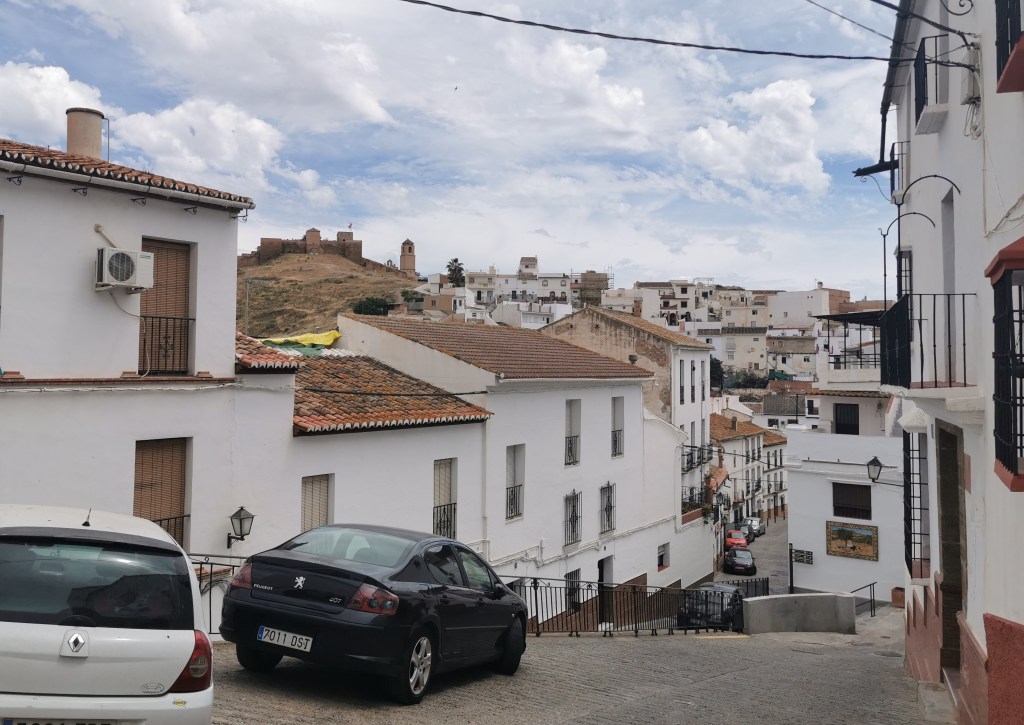
Beyond Álora is the El Chorro gorge and the Guadalhorce Lakes, created in the 1920s by dams to generate electricity and provide water for the Costa del Sol. The Caminito del Rey, a walkway through the gorge, lay in a ruinous state for many years and has now been refurbished. The 8km walk has become a major tourist attraction. The area where the three lakes meet is particularly attractive, with several restaurants, picnic areas and spots where swimming is possible. At the south end of the lakes is the white village of Ardales. The railway line from Malaga to Bobadilla provides some good views of the area.

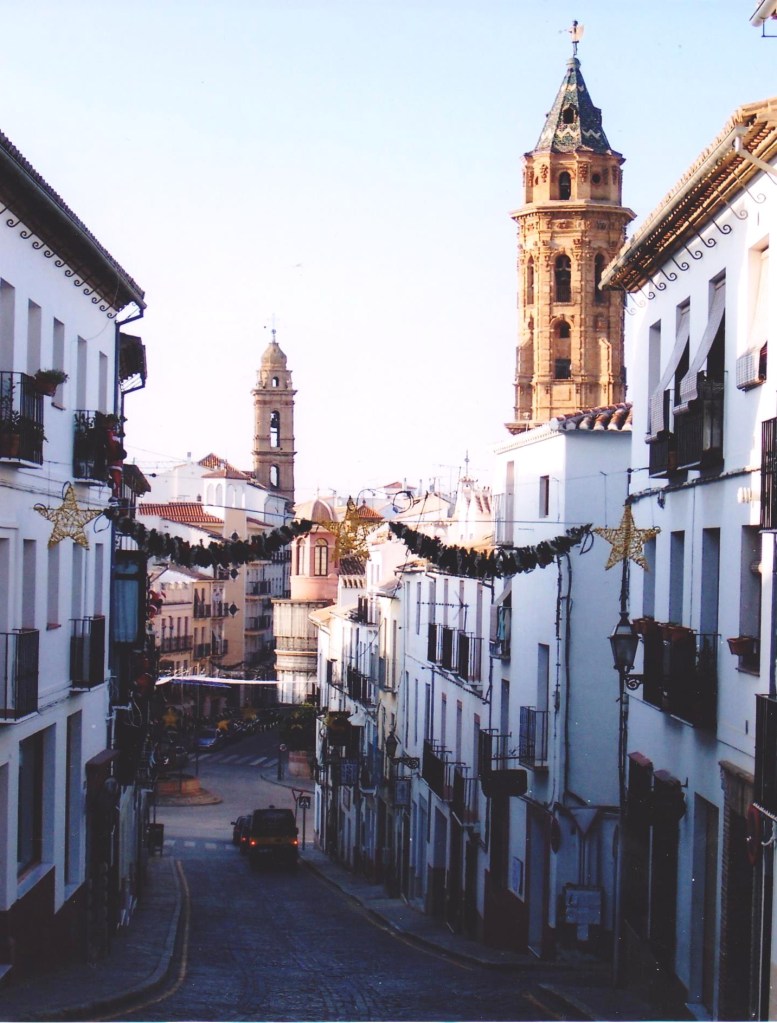
The El Chorro Gorge (1994 photo) and Antequera (2006 photo)
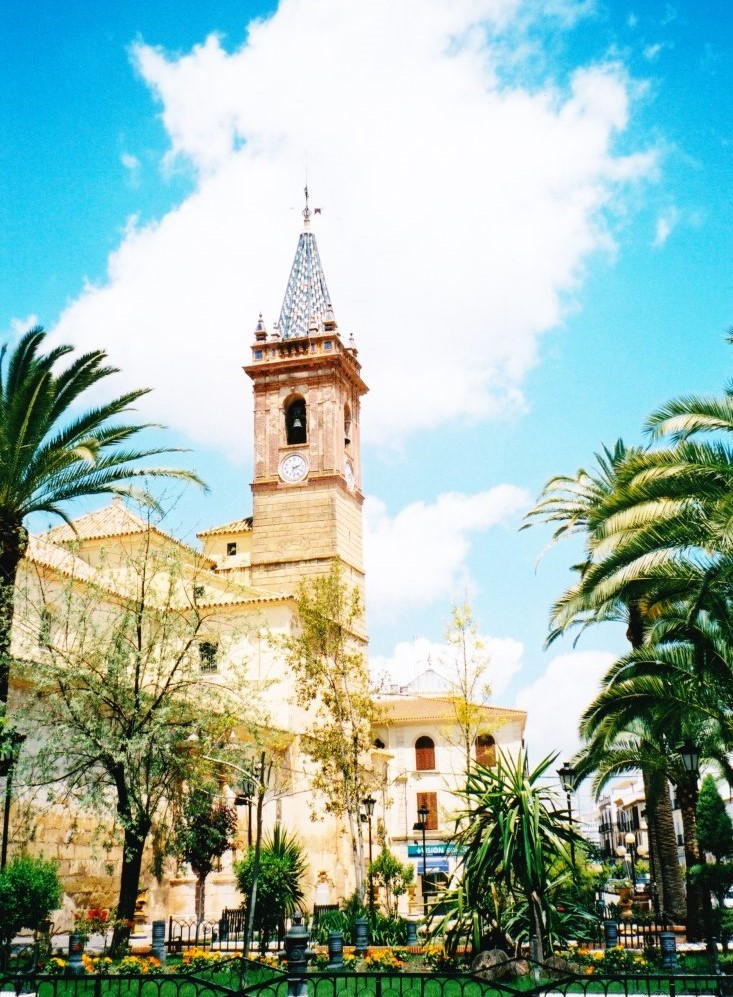
On the main route north from Málaga the market town of Antequera is worth a visit, with several baroque churches, an old bullring, a castle, Roman remains and the dolmens, megalithic burial chambers, recently accepted as a UNESCO world Heritage Site. To the west of Antequera is the small, quiet town of Campillos where Ted, Colin and I lived for some time. It provides a good flavour of small town Andalucían life. Nearby is Teba, a small white town with Scottish connections dating from the 14th century when a Scottish Crusader army under Black Douglas, with the heart of Robert the Bruce as a mascot, fought the Moors and lost – including the heart, which was rediscovered in the 20th century.

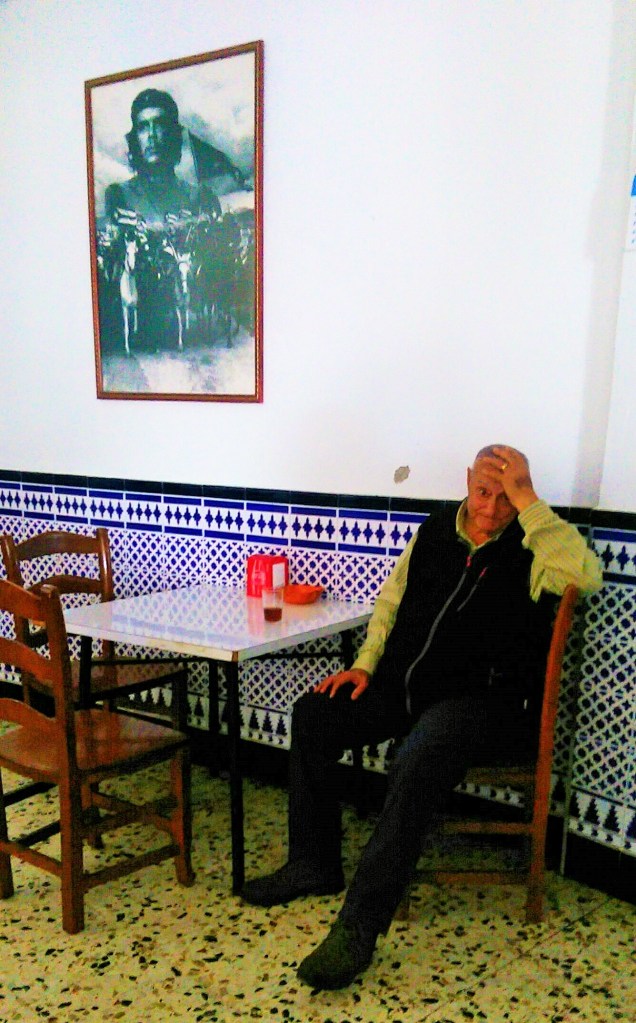
Happy days in the Communist Club, Campillos, where the people’s beer is always cheap, though Karl and Ché don’t seem that happy about it.
CÁDIZ (plus Gibraltar and Morocco)

Arriving in Cádiz province along the coast road from the Costa del Sol the first towns are La Linea and Algeciras, surrounded by an industrial area. La Linea de la Concepción is the border crossing for Gibraltar and is otherwise unremarkable. The main function of Algeciras is as a ferry and commercial port, and it is a dump. To be fair, there are a couple of pleasant squares in the old part of town, on the hill above the port area.
Apart from the views from the rock and a few smelly, flea-ridden apes, Gibraltar is pretty boring, and mainly functions as a base for offshore banking and internet gambling, a shopping centre for ex-pats who miss Marks and Spencers and Morrisons, and a source of cheap duty-free cigarettes.

Algeciras provides access to Africa via the frequent ferries to Tanger and Ceuta. Tanger is an interesting city but it is in quite a poor area of Morocco and some people, particularly women, feel hassled when they get there. Tours with a guide are available from the Costa del Sol. For a longer visit, there are regular trains from Tanger to Fes and Marrakech, both of which are tremendous cities to visit, and the countryside en route is fascinating. Ceuta, though in Africa, is part of Spain. It is unremarkable – but you can say you’ve been to Africa.

From Algeciras the road to Cádiz follows close to the Atlantic coast with views across to Morocco on a clear day. The first town is Tárifa, which is now a port for ferries to Tanger, and a well-known centre for windsurfing and kitesurfing from the nearby beaches. There is a series of resorts and fishing ports off the main road along the Costa de la Luz.
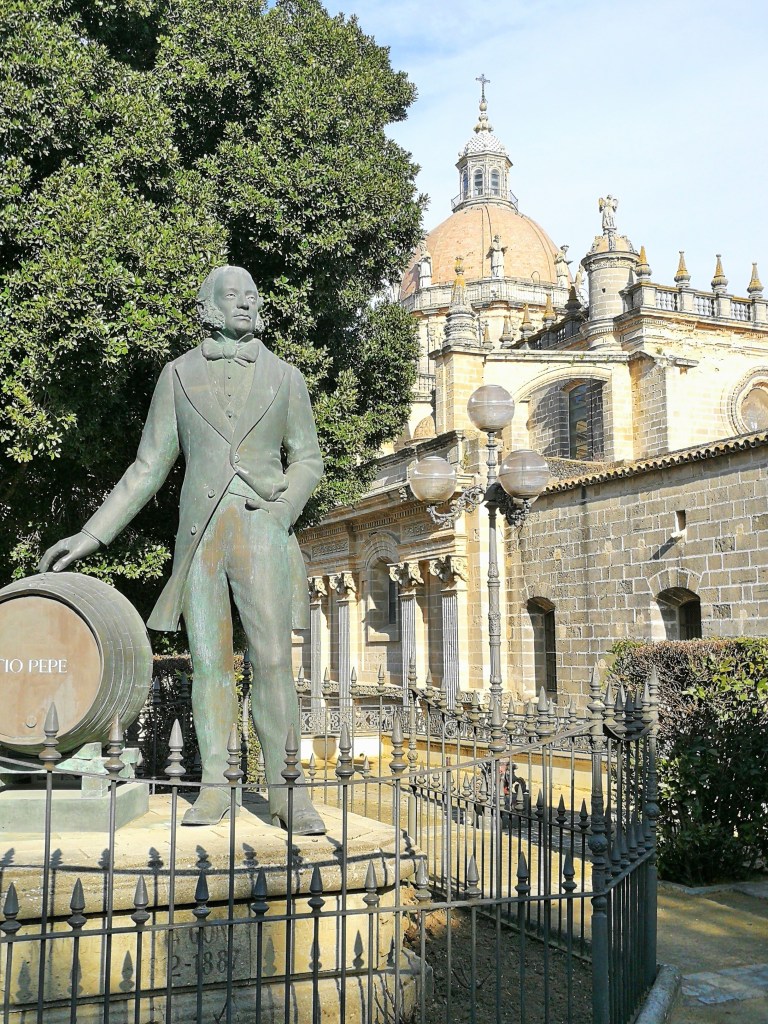
The inland route into the Cádiz province is from Ronda, through the mountains and past white villages to Arcos de la Frontera, an historic town with Moorish and Renaissance buildings perched on a cliff top overlooking the valley. The direct route is via Algodonales, while a scenic route is via the pretty village of Grazalema and the leather-working town of Ubrique.

Continuing westward, Jérez de la Frontera sits in an area of vineyards where the wine to make sherry is grown. The sherry companies have their warehouses and bodegas in the town, some of which operate tours for the public. Jerez is also the venue for the horse shows staged by the Andalucían School of Equestrian Art, which are impressive if you like horses being made to perform tricks for the benefit of humans.
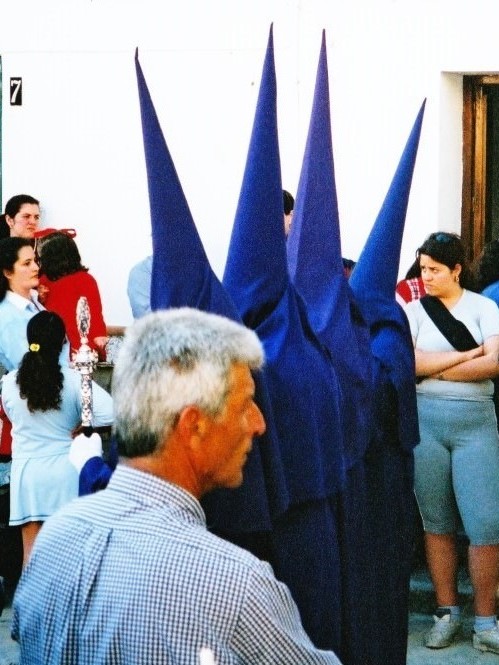
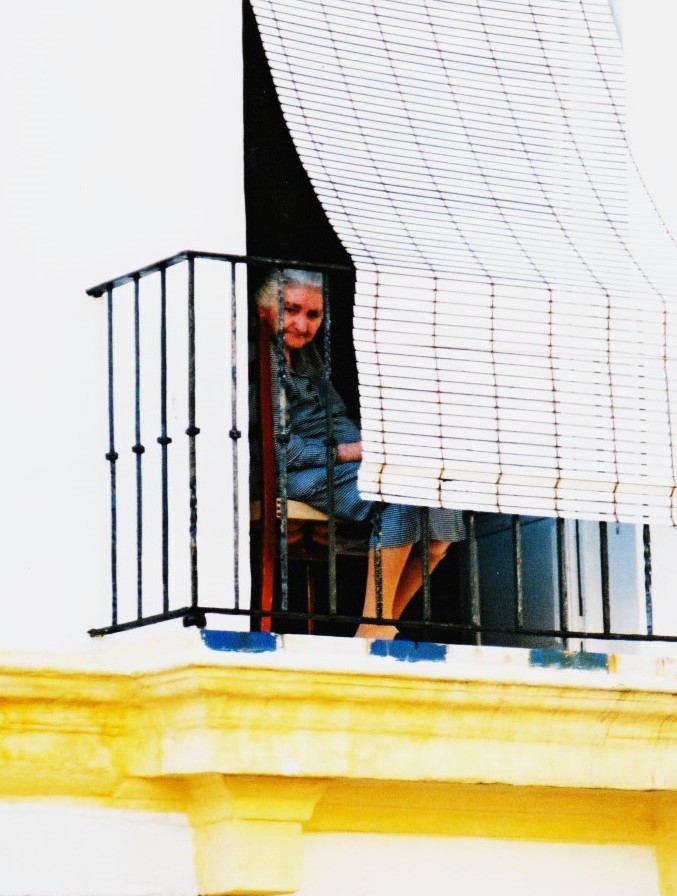
Watching the Semana Santa processions – Sanlucar de Barrameda (2001 photos)
Beyond Jerez is Sanlúcar de Barrameda, famous for seafood, creative tapas and Manzanilla wine – the bodegas can be visited. Magellan set off on his circumnavigation from here, as did Columbus on one of his voyages. It is also an access point for the Coto Doñana national park. In common with many towns in Andalucía it celebrates Semana Santa (Easter week) in a big way with huge religious floats carried through the streets by the local brotherhoods. We were there at Easter and able to witness this with very few tourists around. Cádiz city itself sits on a promontory, surrounded by the Atlantic and the old city is interesting to explore.
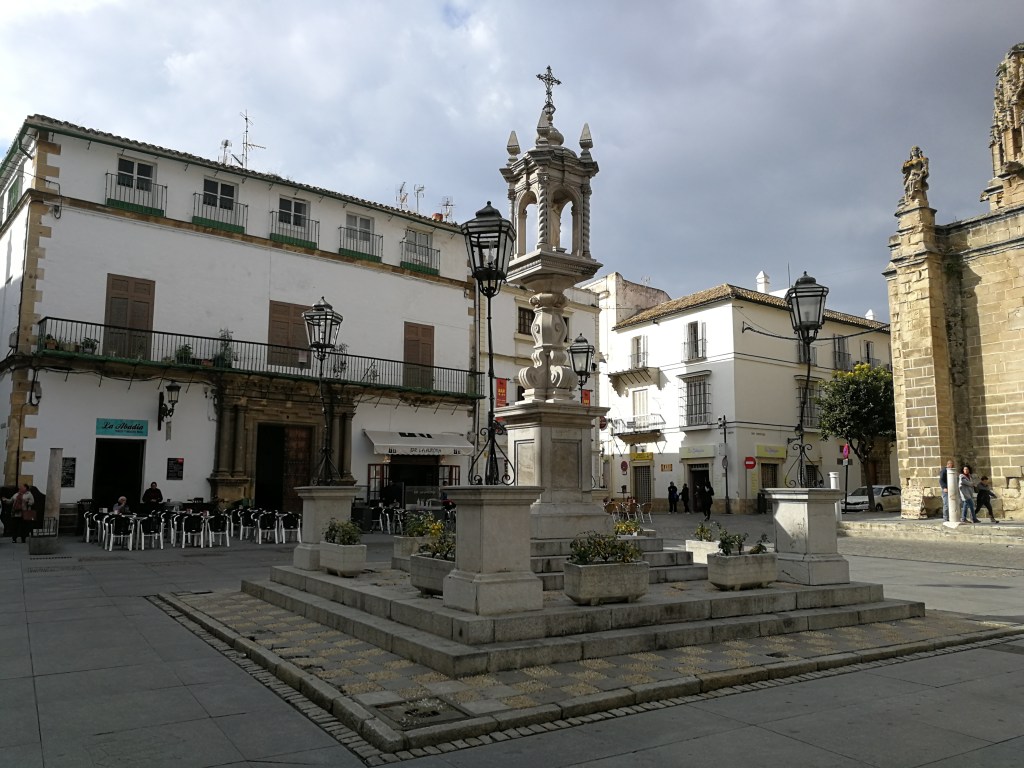
Across the Bay of Cadiz by ferry is the third centre of sherry production El Puerto de Santa Maria. We visited Jerez, Cádiz and El Puerto early in 2019 and the introductory guide written after that visit is here: Jerez and Cadiz.
HUELVA
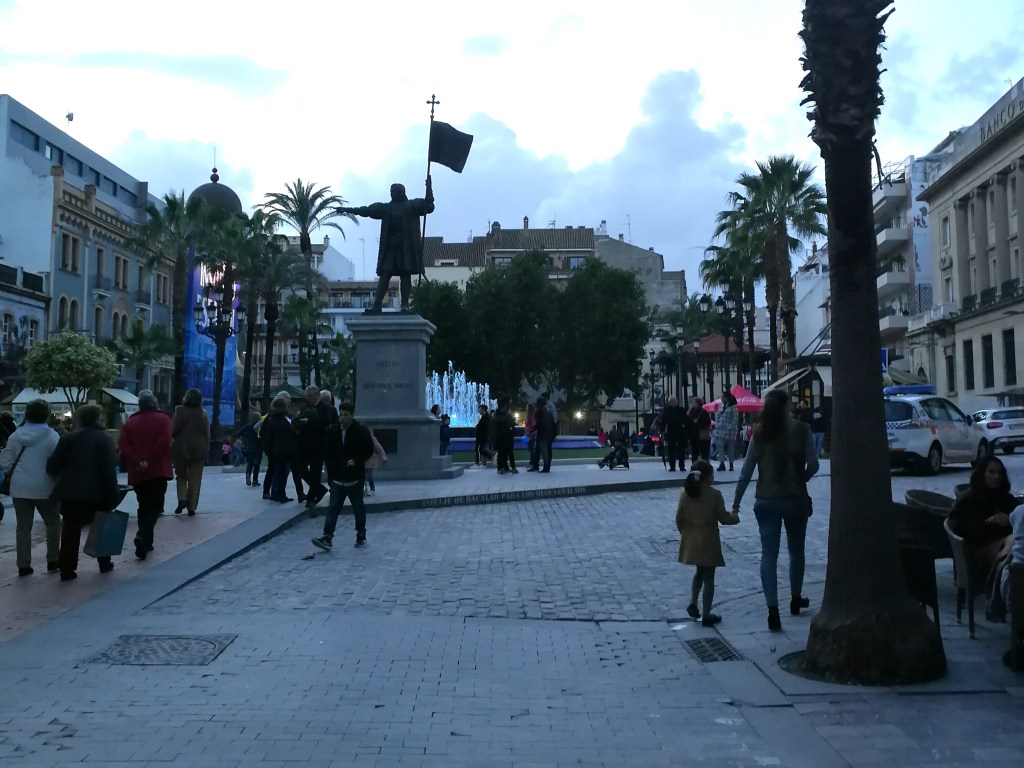
Our visits to the province have been confined to bus journeys between Sevilla and the Algarve, except for one visit in 2018. We visited Huelva city, then travelled on the Huelva – Zafra railway line, through the mountains of the Sierra de Aracena. The trip is written up here – Journeys – Huelva and Badajoz
SEVILLA

The city of Sevilla is the capital of Andalucía and the largest city of the region. The historic city is worth much more than a day trip, to allow time to visit the enormous cathedral, the gardens of the Real Alcázar Palace, the many other sights, visit the Roman remains at nearby Italica and eat tapas in the huge selection of bars. For more detail see Guide to Sevilla .
On the main railway line and road from Málaga to Sevilla is the town of Osuna, which seems to have more churches than people, plus streets of baroque and renaissance mansions houses from the 16th to 18th centuries, leading up to the old university on the hilltop. Its recent claim to fame is that scenes from Game of Thrones were filmed there in 2014.
Carmona, forty kilometres east of Sevilla has a well preserved and thriving old town on a hill overlooking the surrounding plains, enclosed by Roman and Moorish walls and gateways. North of the city the Sevilla – Zafra railway line winds through remote areas in the Sierra Morena mountains on its way to Extremadura (see Western Spain – from Galicia to Andalucia for that journey). We have yet to explore the area around Aracena.


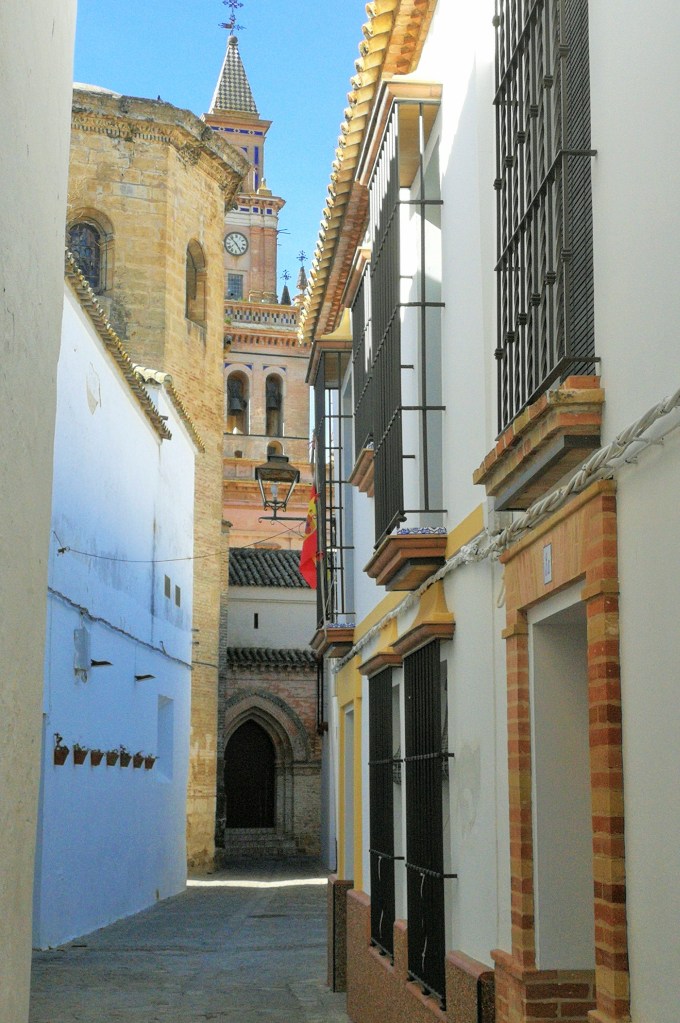
CÓRDOBA

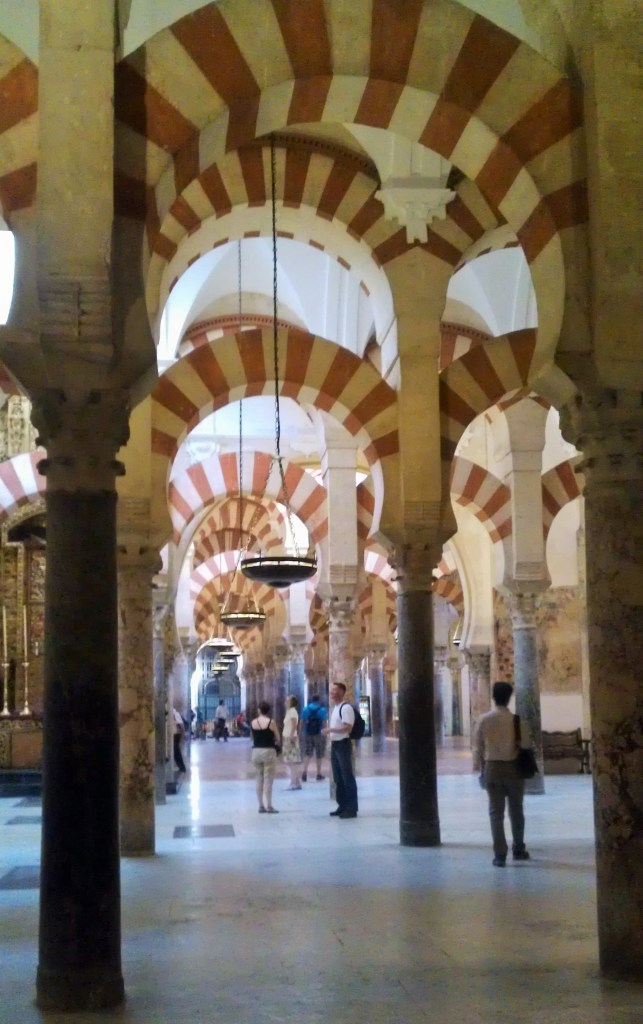
The city of Córdoba is known best for its mosque / cathedral, an outstanding building, built in stages by the Moors then adapted and extended by Christians after the reconquista. In addition, visit the Jewish quarter and other areas of the old city and drink in one of the many tapas bars. For more details see the city guide – Guide to Cordoba .

In the southeast of the province the town of Priego de Córdoba has an attractive old quarter overlooking the surrounding countryside. The baroque churches and mansions and the magnificent Fuente del Rey fountain date from the 18th century, when the town was very wealthy from silk production. The town is also home to this statue, not named ‘who bit my willy off’.
GRANADA
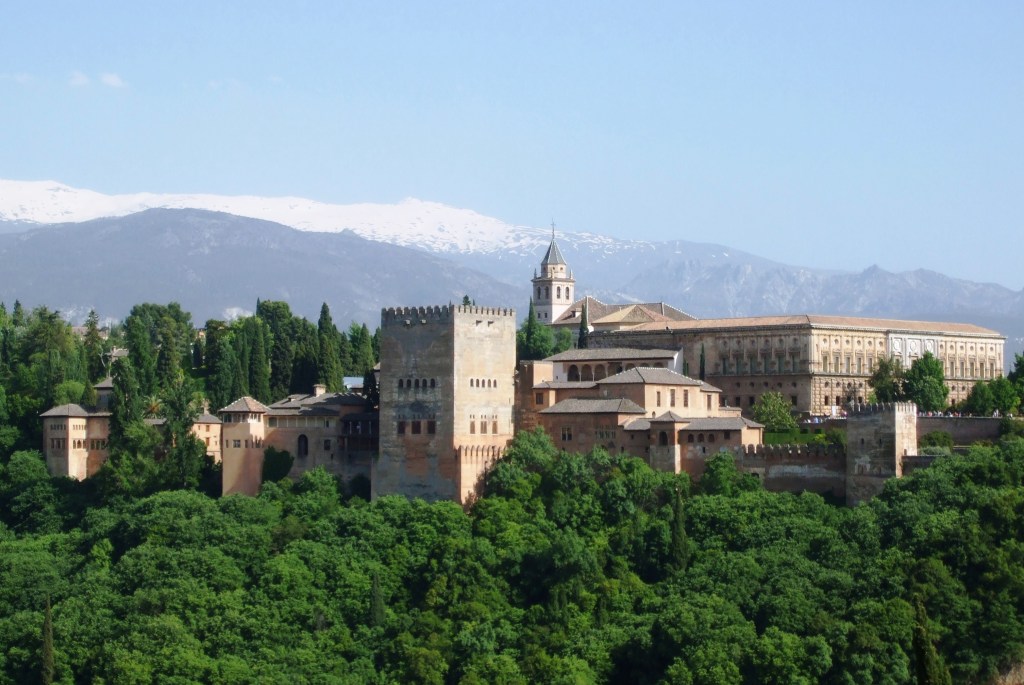
.In Granada city the main sights are the Alhambra, the cathedral and the Albaicin area. Visiting them requires more than a day trip. After sightseeing, visit the bars, which have kept the habit of providing a free tapa with every drink and compete to provide the best. See the separate Guide to Granada for more information. The city is the gateway to the ski resorts and mountain trails of the Sierra Nevada – on a warm spring day in the city it is often possible to see snow on the mountains.
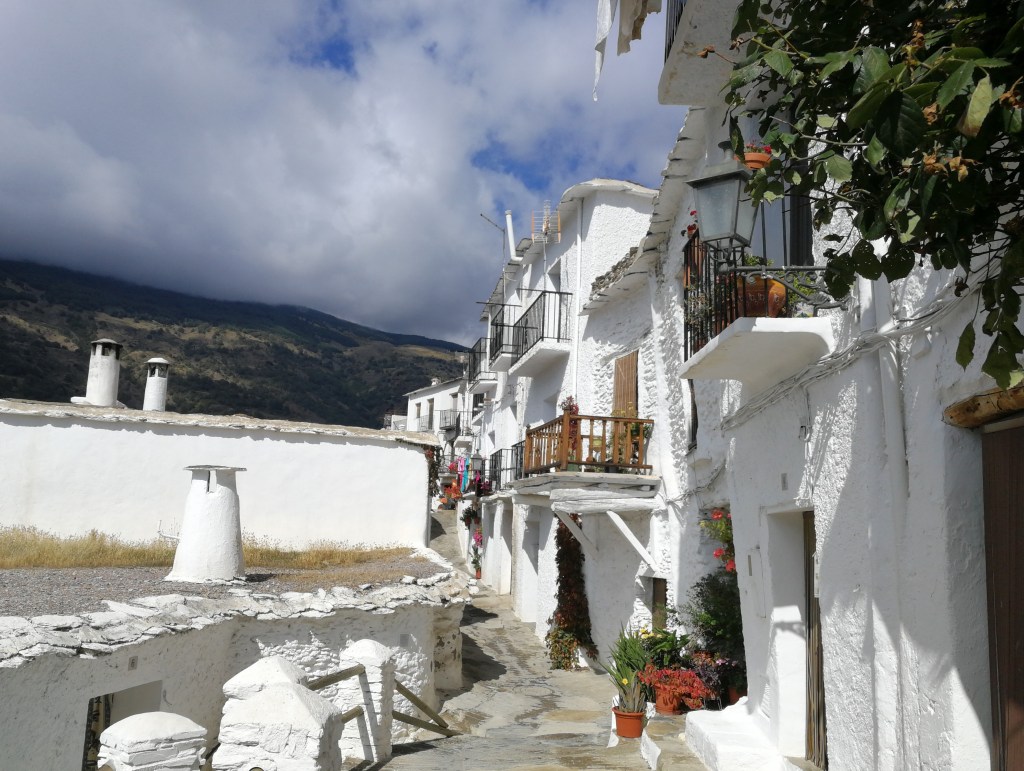
Between the Sierra Nevada and the coastal Contravesia mountains are Las Alpujarras – a series of valleys and villages which were the Moors last stronghold in Spain. The area was remote until recently and, while it is now better known to tourists, the mountainous landscape has prevented over-development and protected much of the traditional way of life.
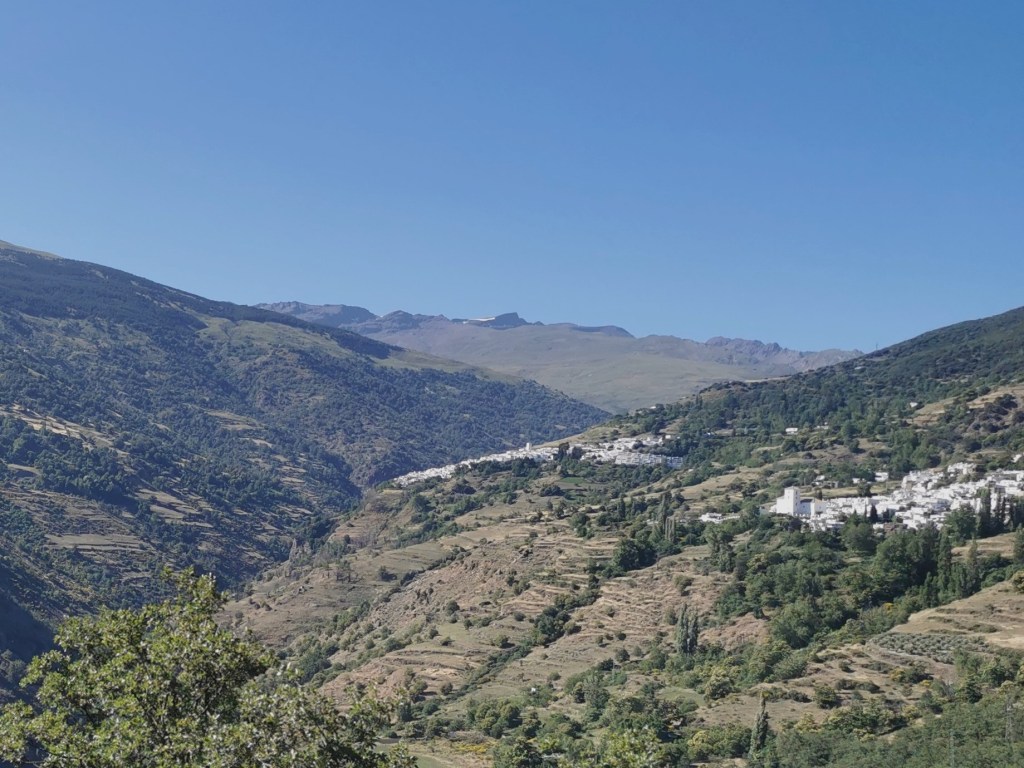
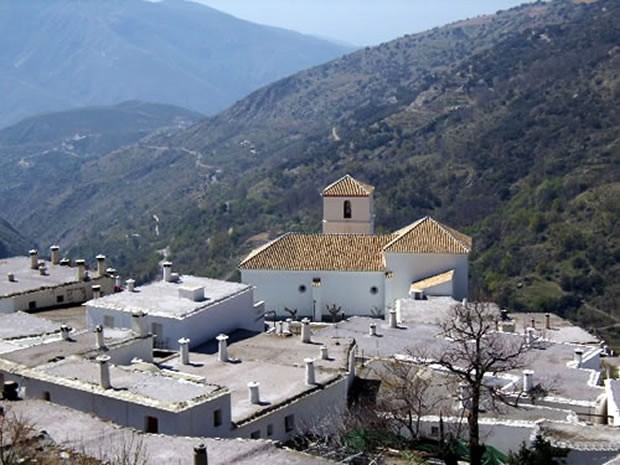
The small spa town of Lanjarón and the market town of Órgiva, popular with ageing hippies and New Age travellers, form the gateway the Western Alpujarras. A trio of villages Pampaneira, Bubión and Capileira are stunningly located by the gorge of the Barranco de Poqueira and surrounded by mountains with layers of ancient terraces. They retain the distinctive local architecture of the area.
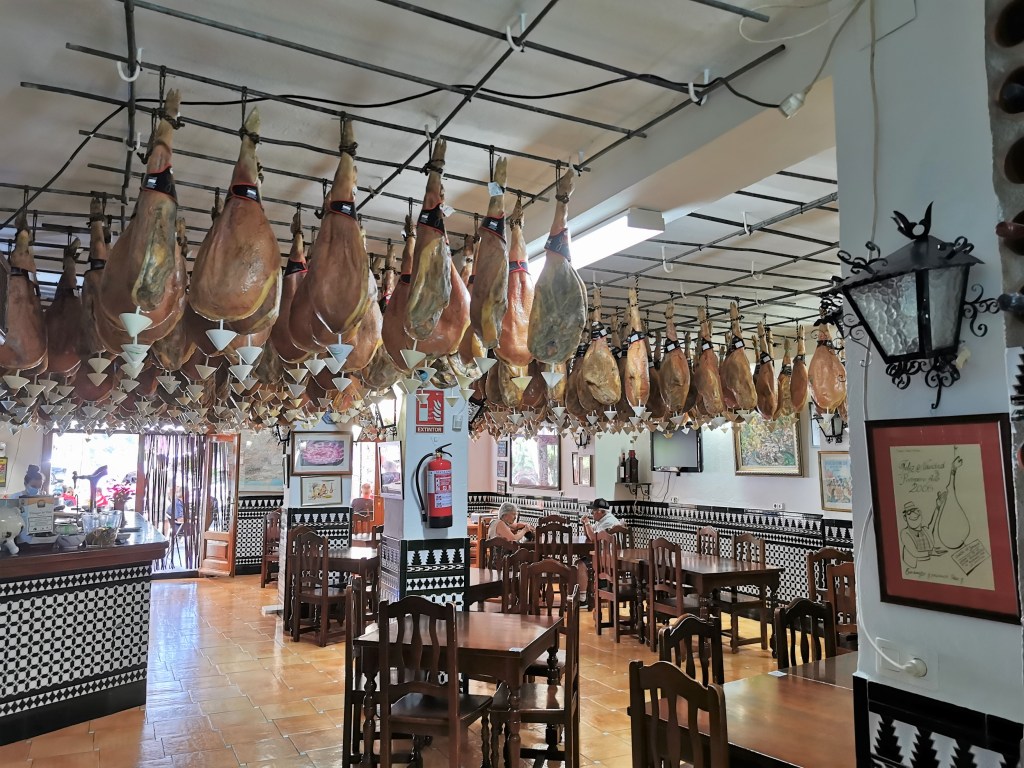
A little further east, Trevélez, 1500m above sea level, is one of the highest villages in Spain and is famous for the quality of its jamon serrano – the mountain air is ideal for drying hams. The southern Alpujarras is less dramatic but has its own charm with a series of small villages and market towns such as Ugíjar. We have visited the area 5 times between 2006 and 2021 and more details can be found here: The Alpujarras
The province also has its own stretch of coastline to the east of the Costa del Sol. Steep cliffs and small coves have limited development. The main resort along this stretch of coast is the pleasant town of Almuñecar.
JAÉN
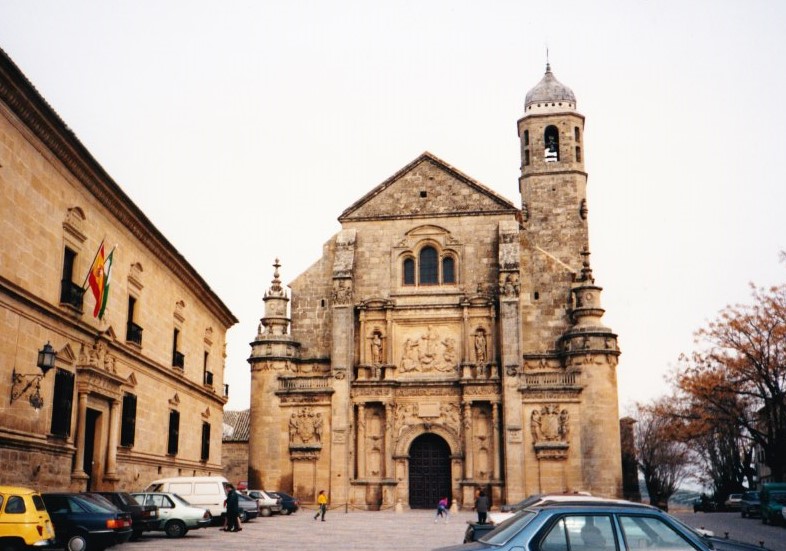
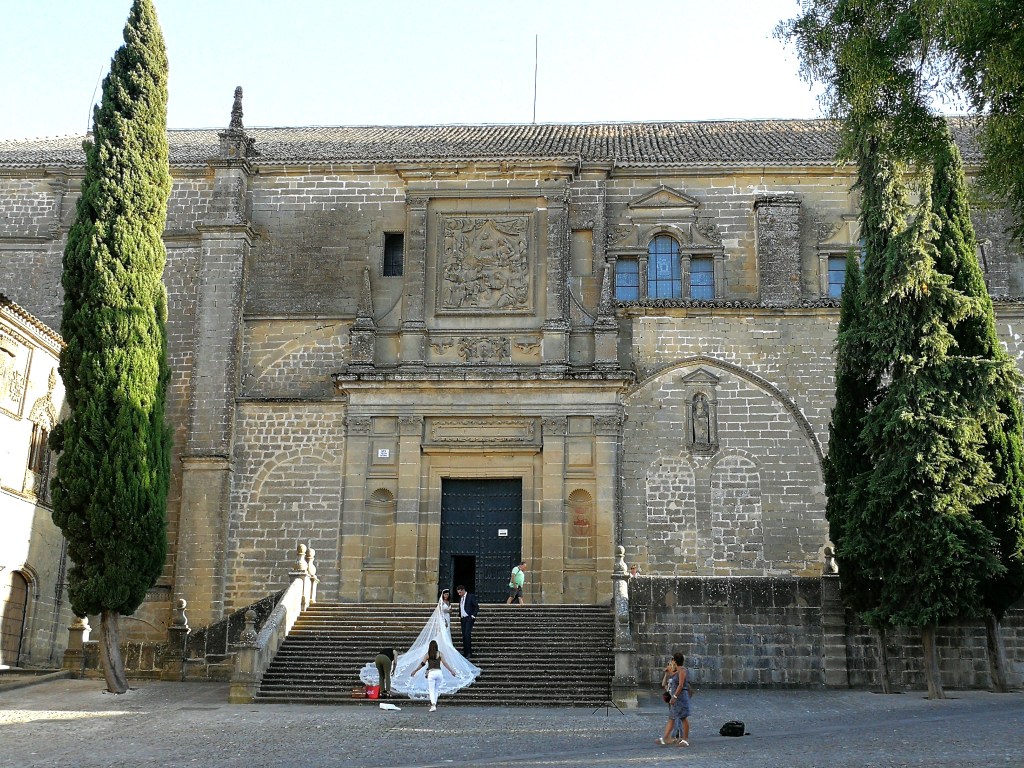
Jaén is the least well-known province of Andalucía to outsiders and we have only visited it briefly. In 1992 we visited the town of Úbeda (pictured) and stayed in the historic parador in the zona monumental, on one of the finest renaissance squares anywhere. I remember a pleasant evening exploring the tapas bars. In 2019 we visited and enjoyed Baeza, another fine historic town which, together with Ubeda, forms a UNESCO World Heritage Site. Our visit to Baeza is included in Andalucia to Aragon .
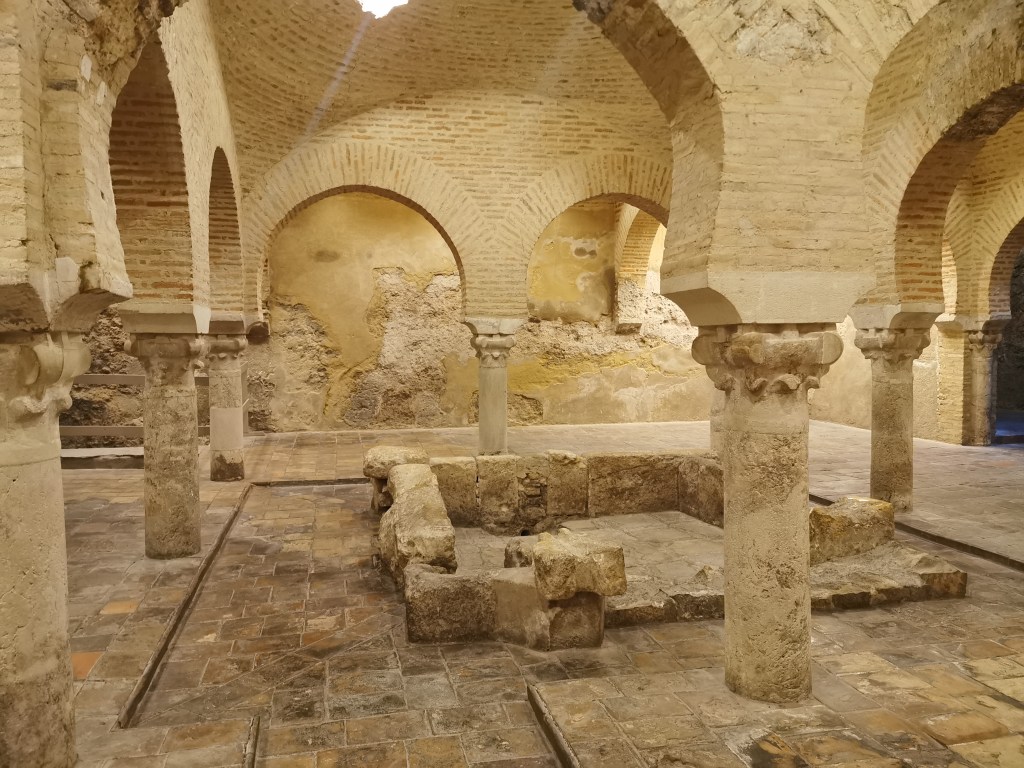
In December 2025 we finally got round to visiting the capital of the province, the city of Jaen. It is surrounded by olive groves and is well off the tourist trail. However, it is worth a visit to explore the substantial old town around the cathedral and the Plaza de la Constitucion. We were particularly impressed by the eleventh century Banos Arabes, the largest Moorish hamman in Spain, hidden beneath a sixteeenth century palace. Jaen is accessible by express coaches from Granada or by occasional train from Cordoba.
ALMERÍA
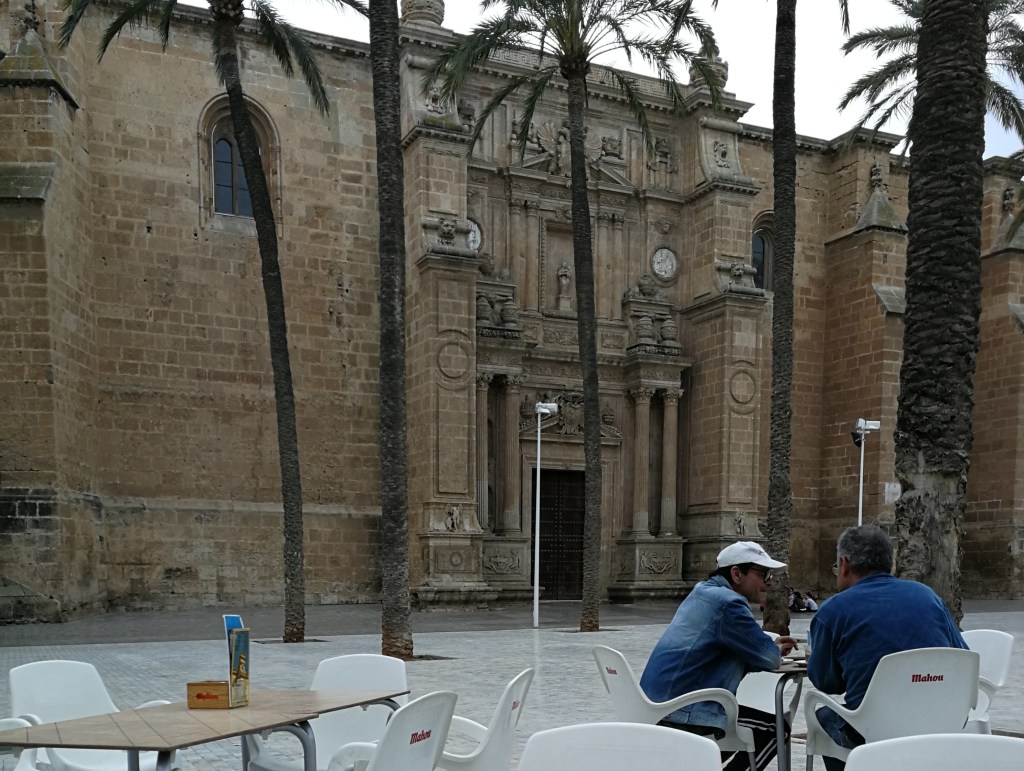
Almería is the easternmost province of Andalucía. It has its own airport and most visiting tourists arrive there and stay in one of the nearby resorts. We have had three short visits to the city of Almería. In 2010 we took a day trip by train from Granada. The journey itself was interesting through desert-like landscapes. In 2019 we stayed overnight and spent a few hours between buses in 2024. We haven’t had sufficient time to get to know the city well – the area around the cathedral is attractive and the Alcazaba fortress towers above the city. The coastal strip, particularly to the west of the city, consists of mile upon mile of plastic under which are grown tropical fruit and vegetables. This created a hideous landscape where there is nothing natural to be seen.
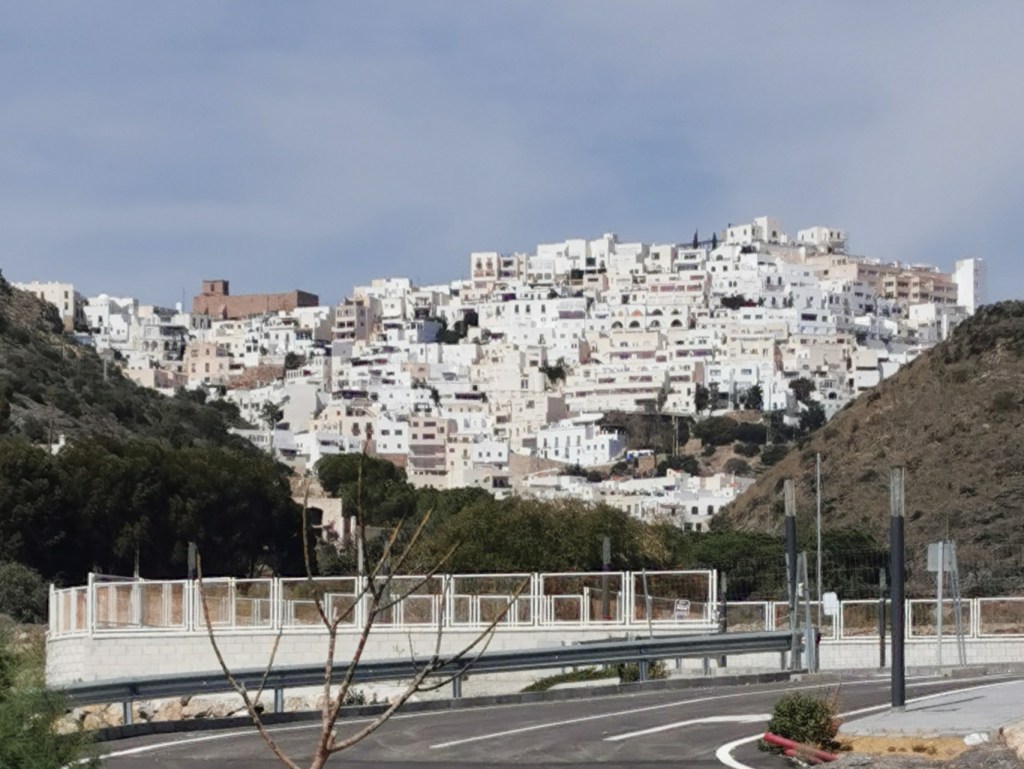
To the east of Almeria, close to the border with the region of Murcia, is Mojacar, where we spent some time in 2024. Mojacar Playa is a pleasant beach resort. A couple of kilometres inland is the impressive village of Mojaca Playa. See Murcia and Mojacar .
HOW TO GET THERE
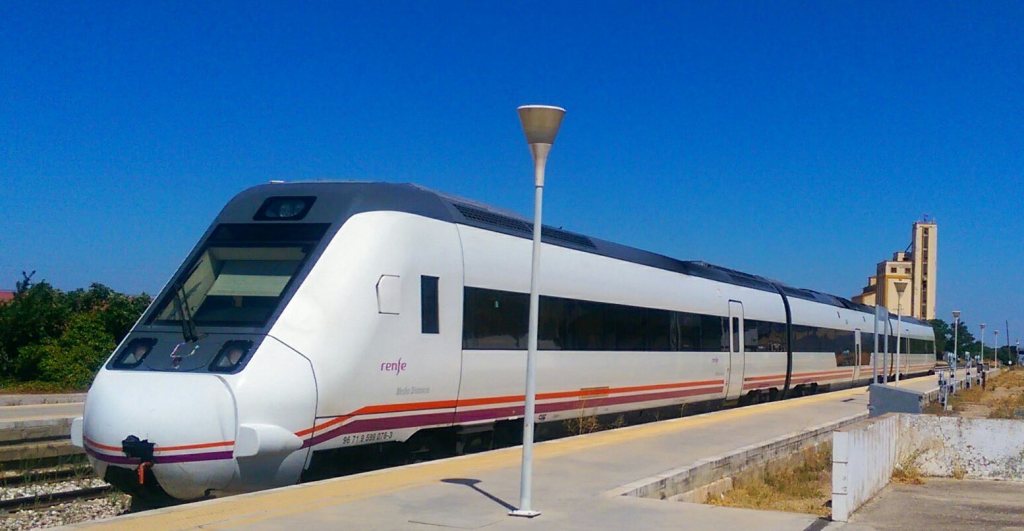
Ted and I use public transport to get around. This means that we can spend the time looking at the scenery rather than the road and have a few beers wherever we stop off. This section lists the main websites to obtain transport timetable and fare information and to buy tickets. Many also have their own app. Trains are modern, but do not expect buffet facilities other than a drinks machine, except on AVE high speed trains. All buses covering more than short distances are comfortable modern coaches, many with on-board toilets. On longer journeys they will stop for breaks.
Trains

Spanish trains within Andalucia are operated by Renfe www.renfe.com . The Renfe app covers all regional and intercity services. The Renfe Cercanias app covers suburban train services around Cadiz, Malaga and Sevilla.

Bus and coach services
Tne main companies providing intercity, longer distance and local bus services outside the urban areas are as follows:
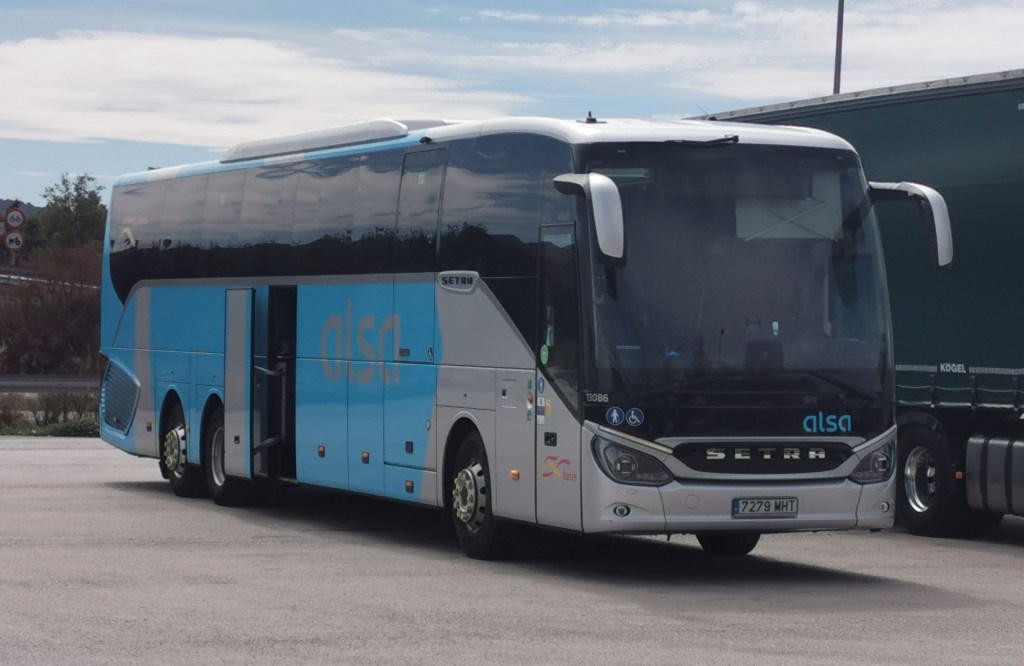
Alsa operates express services between Malaga, Sevilla, Granada, Cordoba and Almeria, and a wide range of regional and local servcies, particularly on the Eastern Costa del Sol and to the Alpujarras. See http://www.alsa.es and the alsa app.
Avanza opearates express bus services between Malaga and Marbella, Estepona, La Linea and Algeciras and local bus services along the Western Costa del Sol. See http://www.malaga.avanzagrupo.com/en and the Avanza – Costa del Sol app.
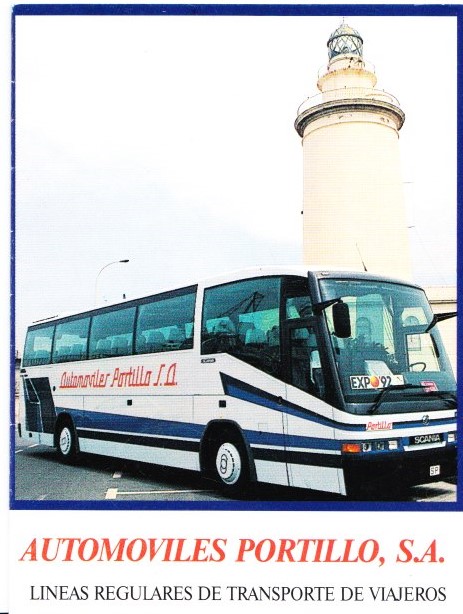
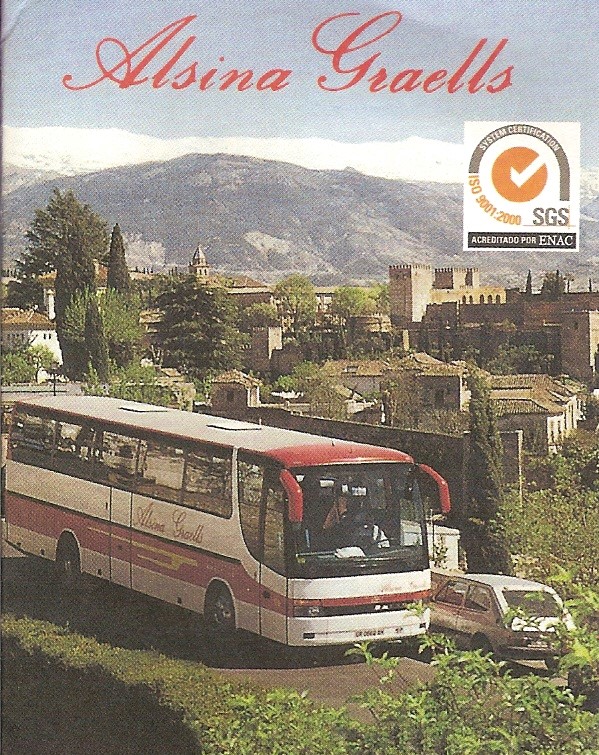
Old bus tickets for Portillo (now Avanza) and Alsina Graells (now Alsa)
Comes operates longer distances services to and from Cadiz and local services in Cadiz province. See http://www.tgcomes.es .
Damas operates services in Sevilla and Huelva provinces and the main service between Malaga and Ronda. See http://www.damas-sa.es .

Movelia can provide journey information and sell tickets for more than 100 spanish transport operators at the same price as buying directly from the companies themselves – http://www.movelia.es .
There is a network of metropolitan transport consortia (Consorcio de transportes metropolitano) which coordinate services in the metropolitan areas around the main cities. Their websites and apps contain timetable and fare information in these areas. They are: Almeria http://www.ctal.es ; Campo de Gibraltar (Algeciras, La Linea and Tarifa) http://www.ctmcg.es ; Bahia de Cadiz (Cadiz, El Puerto de Santa Maria and Jerez) http://www.cmtbc.es ; Cordoba http://www.ctco.es ; Granada http://www.ctagr.es ; Huelva http://www.cthu.es ; Jaen http://www.ctja.es ; Malaga (includes Torremolinos, Benalmadena, Mijas, Fuengirola, Alora and Coin) http://www.ctmam.es and the Consorcio Malaga app; Sevilla http://www.ctas.es .

The larger cities have a network of local bus services. Search for ‘autobus urbano’ plus the name of the city. They include Malaga http://www.emtmalaga.es ; Cordoba http://www.aucorsa.es ; Granada http://www.transportesrober.com and Sevilla http://www.tussam.es . Note that the green Consorcio de Transporte Metropolitano card from one city can be used in the other cities and gives discounted fares, often substantial, on the urban and metropolitan bus routes.
FURTHER INFORMATION

The Rough Guide to Andalucía is my preferred guidebook. The Andalucían Government tourism website is www.andalucia.org . The privately run site www.andalucia.com has comprehensive information including pages for each city. town and village. Almost every place has its own municipal website, though those for the smaller places are likely to be in Spanish only. Ted and I may be able to provide further information and can be contacted at gowithted@btinternet.com
Photographs: All the photographs are by Steve Gillon except for the map of Andalucía which is from http://www.mapsofworld.com, the El Toro de Osborne and the Sevilla poster which are from a very early paper version of this guide with no source mentioned, the photo of Bubion from andalucia rustica, and the Granada minibuses which is from http://www.peppylocals.com .
Copyright: All text and photos (except those mentioned above) are © Copyright 2018, 2019, 2025 Steve Gillon.
 Go with Ted